I started college at 13; they called me a "disappointment"
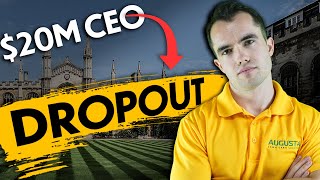
Mike Andes started college at 13 and dropped out of medical school to build Augusta Lawn Care, scaling it to roughly 100 North American locations. He argues that as a business influencer, he reaches more people than he would have as a surgeon.
Questions this video answers
13 years old.
11 years old.
17, almost 18.
Six weeks.
18 years old.
Chapters
Hey, everyone, it's Mike Handes. And today I'm gonna be telling you why I dropped out of medical school after starting college at the age of 13. And I was gonna become a surgeon, but instead I now make videos on YouTube and try to help other people grow their business. I am also the founder of Augusta Lawn Care. We have almost 100 locations around North America. And today, I just want to explain why this happened, because some people would call me a failure because I was gonna become the next Doogie Howser and be a really young doctor and all the rest of it. So let me walk you through my story just really briefly, and we'll why I decided to drop out of medical school and do something completely different. So I started college when I was 13 years old. I started mowing lawns when I was 11 years old in order to save up for college. I paid my way through college using mowing lawns. When I was 17, almost 18, I finished up my bachelor's degree. I went to Nairobi for six weeks as a medical student. Did a whole bunch of stuff inside of orphanages and clinics. It was great. I did all sorts of crazy procedures and I did, like, surgeries. It was crazy. Cool. Came back to the US Was pretty disheartened by the fact that there's a lot of insurance and bureaucracy and stuff that I didn't want to do for the rest of my life. And I didn't want to be stuck in one specialty of, you know, a certain type of surgery that I did every single day for the next 40 years of my career. So it's not like you can become a foot surgeon and then, like, you know what? I want to work on the heart. You can't do that. So I decided I was going to quit.
Train nice. So I decided to drop out of medical school and actually go take my lawn care business that I've been running on the side and scale it up. And that's when I started Augusta Lawn Care. That was when I was 18 years old. I started doing my Masters in Business Administration at night, and I did that. And now fast forward eight, nine years later. We have about 100 locations around North America. But I'm going to talk today because why did I do this? Why did I drop out? Okay, first of all, let's go over four different things that I kind of weighed out. And again, I probably wasn't this precise. Back in the day. I second guessed myself. I had a lot of my professors and peers be like, what are you doing? You were like, set up to Be like this really young doctor and everyone looked up to you and blah, blah, blah. So it was pretty tough actually for as a 17, 18 year old to be going through that to making the decision of, hey, I'm not doing this anymore. I know I've told everyone throughout my college career that I'm going to become a surgeon. Not happening anymore. And so my parents did not put any pressure on me. They were great, they've always been great. They never made me feel weird or different for going to college so young. But definitely professors and people like that were really, really disappointed and sent me not so nice emails saying I was wasting talent and all the rest of it anyways. Ultimately I think that most people, at least for myself, I want to make an impact on other people's lives. And that's big piece of becoming a doctor and trying to help people, people improve their life through surgery. Really hopefully save someone's life. Like that's awesome. That's so cool. And over in Africa, there's multiple instances where I can point and say, I helped save that person's life. I really helped them. They walked out happier after bad things happening. And so that was really fulfilling. But ultimately impact can be quantified and impact can be measured. And so why did I drop out of medical school and instead I started a lawn care business, grew it up and I started landscapebusinesscourse.com, lawncaremedia.com, lawncarewebdesign.com and really helped the whole industry of lawn care and landscaping. Started Augusta Lawn Care, the franchise. So we have 100 locations every single day. I'm very, very involved in trying to help those owners grow their companies. Why really comes down to impact. Because the same way that you can impact as a doctor, you can also impact in other ways. And I felt based upon this analysis I'm gonna give today, it was actually a better decision for me to go into business than it was to become a surgeon. Now for everyone that's in the comments saying it was a bad decision, you're a waste of talent. That was so dumb. You should become a doctor. Okay, you're probably new to the channel. Watch some other videos, go back, see other stuff I've done. I will do more in my lifetime than most doctors will combined, like a lot of them combined. And I plan to hopefully impact more people's lives than I could have ever done in multiple careers of surgery. So let me walk you through how I kind of thought about this though. When it comes to impact, there is multiple ways that you can have an impact on somebody's life. Depth. How deep do you go? How much of an impact do you make? And then you can also do width. So width or quantity, you could also measure the impact on people's life. The third thing is what's the frequency? What's the frequency of making that impact on someone's life? And the fourth thing is going to be scalability. How many people can I do this at the exact same time? And furthermore, when I help somebody, does it perpetuate? Does me helping one person allow them to help two people and those two people allow them to help four people? Alright, so that's scalability. So now let's do an analysis because we're going to compare being a surgeon. Surgion. Wait, I thought I had a fifth one but I must have forgot it. It's okay. Surgeon versus becoming a business influencer. Okay. And I didn't start off trying to be a business influencer to be perfectly hon honest. But that's kind of what's started to become. And it's very, very small influence, but it is an influencer nonetheless. Okay, so we're going to compare on these four different categories whether being a surgeon was the right move or being a business influencer. Because all of these different types of impact we can measure and quantify exactly what is the impact of being a surgeon or being a business influencer when it comes to impact. Because that's ultimately what I was trying to search for was I wanted to, when I worked and I did my job, I wanted to walk away and knew I had made a meaningful impact on somebody's life. So first and foremost let's talk about surgeon. Alright, so depth. How deep of an impact am I making? Really, really great. Alright, Life changing. If you're doing heart surgery, if you're doing bone surgery, if you're doing some sort of crazy cool stuff in the foot or the hand, you can literally change someone's life. This is life changing stuff. As a surgeon. So very, very positive, very, very good. Up for depth. You really make a massive impact on someone's life. Now personally, if I was just doing plastic surgery for things that were not burn related, I wouldn't feel like I was making a massive depth of impact on someone's life. However, even a plastic surgeon can really help someone that has gone through massive blows to their face, like scars, they can help a lot with burns. Like a surgeon. Super, super awesome depth of impact. Now when it comes to width or quantity. All right, so this is stage number two. I Give it a down, thumbs down. Why? Because the type of surgeries I want to do, like brain, heart, spine, like I wanted to go like the big deal. You're probably one to two operations a day that are big, you know, open heart surgery or you know, really, really complicated stuff. That's what I wanted to do. And you know, maybe I just. Some people are gonna comment like you just didn't have the IQ for it. That's what it was. He just wasn't smart enough. Don't give me this stuff about business. He was just giving up on organic chemistry. Maybe. Alright, third one, frequency. Alright, so we've already talked about width. No, we didn't talk about width. We talked about the fact that as a surgeon is bad for quantity. Because I can maybe do one or two people a day. That's the impact that I can have. Again, impact quantity, one to two a day, maybe three a day. Maybe I impact 10 people a week. Like the patients themselves. Right. Okay, third thing, frequency. How often can I impact this person's life? Again, a down arrow for being a surgeon. Why? Because I'm probably gonna see this person one time. Maybe I'll do some follow up after visits to make sure they're doing fine. But like I do their surgery and then I never see them again. And it's that one time impact, which is great. It's massive depth, extremely impactful for that one person. But I only do it one time. Okay, so massive impact, massive impact in terms of depth. But it's going to be a quantity is low quantity. And I'm gonna again have a weird low amount of frequency. I'm only gonna see this person one time. Probably for a big surgery. You separate Siamese twins like one time and then that's it. And they might remember you or touch base with you down the road and that can give you a good feeling of making an impact. But it's like a one time frequency. Fourth thing is scalability. All right? And when I look at scalability I think about, okay, it's great that I wanna make an impact on other people, but can my impact on other people allow them to, to make a better impact on people around them? Because if that happens now, you get a multiplicative effect. I can actually make a real impact. As you know, maybe I don't get the credit or people know that I was able to help other people that then helped other people. But the scalability of being a surgeon is relatively low because if I do heart surgery on this person, it's not like they're going to be able to go do heart surgery on somebody else who can then do heart surgery on another person. So it's very, very hard because such a high level of stuff skill that.
There is no multiplication. And so the scalability of this is low. Now it could be said that me improving that one person like saving their life has a massive ripple effect on our community and their family. But in terms of actually the scalability of the impact that I make, it doesn't scale very well. Okay. Because it might impact their family, their relatives, et cetera. But then they can't go make another impact, another wave impact on other people's lives. Okay, business influencer, let's go through these. Alright now something I have said a couple times that I now have kind of put into words. And so an audacious goal is I want to be for business, small businesses, what Dave Ramsey is for personal finance. And that is when someone thinks about starting their own business, someone's like, hey, you should go check out Mike Andy's content. It'll really help you find, get started. It'll give you the tools, the resources, the ideas, a call in, show a talk, questions and answers. To be able to answer small business questions, I want that, that's what I want my impact from a business standpoint to be. So I'm a business influencer, I don't have a lot of following right now. I understand that. But the small influence I do have, I try to make an impact positively. So when we talk about depth, honestly, let's just be honest, the depth is not like life changing, okay? Because at the end of the day, I'm just making a video. I'm standing in front of a whiteboard in the middle of this office and I'm making a video. And that video is just a video. It's like digital media. It's like bits of information on some YouTube or Facebook, whatever that's being recorded. It's not like massively changing your life. 99% of people that watch my content, I'll never even know because it doesn't make enough of an impact on their life for them to even tell me about it. So ultimately, really not that great of depth when it comes to business influence. Now again, this is on average it's low because there's going to be multiple, there's going to be like franchisees of Augusta Lawn Care that I believe over the next 10 years all the really, really deep impact on. But as an average across all of the influence and the impact that I'm making is Relatively low compared to like changing someone's life or in the ER like saving them from going to cardiac arrest. Okay, so the next thing though is width. Okay, this is the quantity or width. Well again as a surgeon I can take a couple people a day, help them do a procedure, et cetera. Great. Now as a business influencer, like last month on YouTube alone we had almost 5 million views. That's pretty cool. Now I didn't like change their life. It wasn't super deep, but it was absolutely high. Massive amounts of quantity. And every single day I can reach tens of thousands of people in terms of quantity, in terms of hopefully making an impact on their business, which makes an impact on their life, which makes an impact on their family, etcetera, Their employees, etcetera. So massive amount of quantity when it comes to the impact that I can have from being a business influencer. The next thing is frequency. And this is great because guess what, I get to make videos every single day and you get to come, unfortunately probably have to look at my face every day. We have an interaction, we have long term relationships. I've seen people for years now as franchisees of Augusta Lawn Care. I've seen people for years now that come to Landscape Summit or been part of landscapebusinesscourse.com or I've been to help with their business. Like I get to see them all the time. Maybe it's annually at conference, maybe it's on a webinar, maybe it is. They ask a question like it's constant feedback. That frequency is something that I love because it's not just a one time impact like a surgery would be. It is over and over and over like literally every single day. I am able to make content and hopefully make at least a small again, it's small, small impact on someone's life and their business. Okay. Now fourth thing, scalability. Again, a massive upside to this because honestly if I'm able to impact and make a change for the business owners, it's going to have a trickle down effect because they're going to hopefully take on the things that we talk about in terms of open book management, training your employees correctly using pay for performance P4P. All of those things that I teach. The fact of the matter is the fact it's gonna scale because the owner, they're gonna change the, the mindset of their employees and that's going to change the financial success of them and they're going to go talk to other people about P4P and they're going to talk to their boss and their boss is going to come listen to the content and it's going to hopefully change their business. And the business owner is going to talk to other business owners at a networking event and it's going to hopefully have some sort of multiplicative event. It's going to have an opportunity to scale the impact that I made. And I'm just like the little rock that goes in the water and there's all the ripples. Like, there's more scalability to putting out this content and putting out this media because it can scale from one person to the next and they can share it and they can tell so and so. And that's why it's, you know, social media's taken off, is because it's so easy to scale and share information. So it's really hard to share the skills required to give surgery and to take your patient to now being able to make someone else a patient and help them do their surgery, you can't do that. Whereas with this, if I can teach the someone, I can show them how to fish, they'll be able to show someone else how to fish. That's fantastic. And that's kind of overall why I decided to become a business influencer and make videos on YouTube and online instead of becoming a surgeon. And I know in the moment I let a lot of people down in their mind because they thought that was like the pinnacle of success was me becoming a doctor in my 20s. And, you know, again, like, every time I would go to do shadowing at physicians and go to hospitals, it was like the Doogie Howser thing, right? Everyone called me that. But ultimately, I'm very, very happy with the impact that I've started to make. And I see the scalability of what I'm wanting to do, having a much broader, deeper and overall larger magnitude of an impact on the community and on other people's lives than being a surgeon. Not to take away from people who are in surgery. I love the medical field. I have a lot of respect for these people, but I feel like I can make more impact on more people's lives. And over time, even though it's a low amount of depth, there's going to be that one in a million that I actually do really change their life because it allows them to get out of bankruptcy, it allows them to get back with their family because they're able to start providing for them. Those are the type of things that I live for and I love making this impact on other people's business. So I hope that was helpful. If you like this type of content, watch this video here where I talk about the steps of kind of how this all happened. Me starting off as selling insurance and being a personal trainer to now you know, Augusta Lawn Care has 100 locations, so hope it's helpful.






