"I tried performance pay... it FAILED"
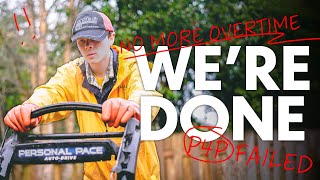
Mike Andes walks through why performance pay fails in landscaping during spring rush: employees hit base pay caps instead of bonuses, killing morale. His fix: be transparent about slow early months, temporarily boost prices or payout percentages to 40%, and keep crews at 32-35 hours so they actually earn above base.
Chapters
Hey, everyone, it's Mike Andes, and today is a special episode. We're going to be talking about pay for performance, but we're going to be answering some questions from callers that have tried to implement P4P, and it's actually gone wrong. It's gone bad. Now, if you don't know what P4P is, it's pay for performance. And that's where you pay people a percentage of the revenue that they bring to the business instead of an hourly wage. I really believe it's the future for the lawn care, landscaping, home improvement service industries. And today I want to talk about some of the flaws in it. And that is what when it gets really, really tall, the grass and the sun is shining and you're getting rain back and forth, the grass is going like crazy. It's very difficult to sometimes make above base pay for your employees. So what do you do? It's very demoralizing to be working out in the rain, working the hardest time of the year, and you're not making above base pay. And the cultural aspect is like, look, if the employees don't understand P4P, if they don't actually get above base pay and there's absolutely no incentive to working harder, why in the world do they want to work out in the elements all day at the hardest time of the year? So we're gonna play this today. If you have not implemented P4P, don't worry. This is a really good topic, even if you're doing hourly, to be able to make sure that the culture of your team stays intact during the hardest period and time of the year, which is typically for most of us, the spring rush. We got a knot of new employees, the weather's the worst. And so let's talk about this today. And if you want more information about P4P, check out p4psoftware.com training. Stephen edited the video. He's trying to pretend like he's very busy. So see you there. 801 number. Go ahead.
Hi, I'm Josh Greenland, lawn care and landscaping in Utah. Utah. And I've got a question for you. It's a cultural question. I've been working on implementing P3P for the last two years. And when you're hiring people, you get them on and they work really, really well at the beginning, but then they start to drop off. And in the current market, hiring market, it's kind of really hard to find new people. I'm just wondering, what do you do in that situation with P4P? It's not really working with these certain people. Some of your past material you've mentioned, you know, kind of using firing as an example, but it's so hard to find new people to replace them. Do you have any ideas what you do in there?
Some.
Some way to incentivize them to be a little bit more productive with P4P?
Totally. So the main thing is, as I'm sure you know. A quick question. Have you already implemented P4P? Are you kind of running in the back end?
We've got it in the foreground right now with our. With our new guys that we've got this season, so.
Got it. And on average, what percentage of them hit above base pay on any given pay period? Just average. What percentage?
So all.
All of our guys are brand new and none of them have actually hit above base pay yet. They've all just barely finished training within the last two weeks.
Got it. Okay. So what you want to do is be really upfront and honest with them, and that is that for the first few pay periods, they're not going to hit above base pay. So we tell people right from the get, like, it's very rare that someone in the first three paychecks will get a dollar above base pay. But the goal is to be able to get trained up and be as efficient as possible. So after that, you can make, you know, you can make more money. And it takes. It takes one paycheck for them to get really good performance dollars above base pay and that. It clicks for them. And so what you want to do, you can kind of artificially make that happen. By doing this one, if you're booked out really far, you can make sure that you get some jobs that are. You've put too many budget hours on and you've kind of stacked the revenue of the job towards the labor side. So you might actually like, not charge S fees or dump fees, but you give them more hours. So they beat budget hours and they just crush it on P4P. Same thing goes for. For a great time to institute P4P is during the time when, you know, the lawns don't grow very fast and you know the guys are going to crush it on P4P. It's a great time to institute it because when they taste the P4P, even when it gets harder to mow, they know it's possible. They start to understand it. They start to ask good questions about what P4P is and how to make better P4P. And so the bottom line is you can artificially do this by one, increasing the hours, kind of like bulking up some jobs so that you, you know, they're going to get above it. The second thing you can do is raise prices because again, if you raise price to the customer, you're essentially giving a percentage of that to the employees. It's easier for them to get above base pay, the higher prices are. And so I've seen it several times where I've, I've told owners to raise their prices not because they need more money, they were just in hyper growth. But they kept having this cultural issue that guys weren't grabbing on a P4P, only half of the crew is making above base pay. It's like, look, raise your prices. So immediately they're all going to be making a couple dollars extra per hour, which will put them above base pay. And that is the, the spark you need to give them a much better footing and understanding. Does that make sense?
Yeah, yeah, it does.
Okay, cool. No, yeah, like it's, it's P4Pmeans absolutely zero. If more, more than 50 of your crew is hitting base pay, you each, each pay period. Because it starts to become like, look, I'm not going to work harder for a couple dollars more per hour and I'm not going to work harder if half the time I hit base pay anyways. So that's when they just, they just check out. You want it to be worth like 80, 90, 95% of your crew is getting above base pay. And the only reason they don't is if they're in training those first few weeks or if they're making massive damage cases in yellow slips that slow them down. Outside of that, we want them above base pay. Right. So to give them that artificial kind of taste of that is raise hourly rate to the customer, I. E. Raise prices or B, beef up a few jobs so they can really crush it and kind of get that taste.
Yeah, that sounds like a good strategy there. Quick, quick question to follow up with that. If your guys just aren't motivated by pay, is that something even worth trying to fight, fight for in that, in that regard? So they're more motivated by time off and things like that rather than just the revenue.
Totally. Yeah.
So you want them on your team?
Yeah. No. Right. So it's very difficult as owners for us who are very money motivated to sometimes even make sense of some of their reasoning. And it's difficult. But in this labor market where I was talking about this with our franchisees a couple weeks ago, the average net worth of households in America have increased their net worth by 140% compared to 2019. And now that might mean they went from $3,000 to $7,000 net worth money in their bank assets, et cetera. But they feel rich, so they don't feel the need to work long hours. And they're more inclined to quit if they feel like they're being overworked or they're getting lots of overtime, like no one wants overtime now. And so, and the reason is because they feel like they have wealth. And so a, we can complain about that, and that's easy because we as owners are very money motivated. But also what we've tried to focus on the past, you know, eight months or so is how do we make it where people do not need to work 40 hours, we schedule as if they're going to work 32 or 35, and so that they want off if they need an extra day off that we're not in a bind if they don't show up. We want people wanting to show up to work because they need the hours, they want the hours. And so we can either A, try to find the perfect person that wants to work crazy hours, or B, make it where they're only getting 32, 33 hours a week. And so the person that really needs 40, they want to show up to work, they're like, hey, can I do something extra on the weekend? Is there someone else that can help when I get back from the shop, stop my route, can I go help someone else? And that's the kind of culture I want. And so the, the catch 22 here is in order for that to happen, you have to go hire more people. That allows that to happen. Right? And so that would be what I'd be trying to do if I was you. And I know it's easier said than done finding enough people to where they don't need to work 45, 50 hours a week. And you're actually, you know, you're not asking them to come into work because they're actually like, hey, can. Is there more can do? I need more. I need more hours. I want people asking for more hours. And I have yet to ever give someone off an extra day or tell them, hey, you don't have to come in tomorrow, you can be off earlier today. And I'm like, oh, man, it's very rare. The only time that ever happens is on P4P when someone is crushing it in a week and they want to make more money. But.
It'S not common for them to want to Work more right now.
Right. Well, thank you so much. That, that was very helpful, Mike.
Cool. You got. Take care, brother. All right, next question is going to come from Lancaster, Pennsylvania. I've been waiting for 16 minutes. I apologize. Go ahead. The number. Go ahead. Yep.
Hi, this is Ryan. I'm from York, Pennsylvania. Hey, we're, we're starting P4P. We started back in March.
March 1st is when we started our season. And, and then ever since we started mowing, really struggling to have the guys hit P for P. I think I know what you're going to tell me. What the problem is, is my pricing. But, but we're, I'm just having a very hard time having my guys be able to get P4P within like, like a nine hour day.
Okay.
They end up making the.
Yeah. I'm going to ask you a couple questions here. And they kind of seem left field, but they're for a reason. So first off, how many years have you been in business?
This is my fifth season.
Okay. How many employees do you have?
I have six employees.
Cool. And then your hourly rate, do you feel like it is like above. Above average or kind of average in your market?
I feel like it's.
A little slightly above average.
Okay, cool.
Two for 60.
And yeah, so I wouldn't go there first because that could be the case. Like you could raise prices. You could always say that. Right. Like we talked about earlier. However, I would consider the fact that you might want to raise the percentage that you're giving the employees during this season of time. Right. During May, June, when the grass is just taking off. You might want to give them a higher percentage on P4P in comparison to other months of the year where they get the lawn done twice as fast.
Okay. All right. Yeah, we're, we're at 35% now. Would you recommend going higher?
I don't like going higher than 35 year round, but we do go to 40 in our local market during the really, really fast growing months of April, May. We do move that up to 40%. So what I would recommend doing is, you know, you're, you've been in business for five years, so you know which months that is going to be very hard to hit for them to hit P for P. The bottom line is everyone's like, well, why would you raise the percentage? The thing is, you're not actually paying anyone more if you are always. If they're hitting base pay all the time, like you only paid them more when they're hitting base pay. And so I'd Rather have that number fixed by, say, raising that to 40%, you effectively are going to give them a 14 raise by raising that from 35% to 40%. Okay? And so that will probably be enough to get them above base pay and then make them more efficient. Because now they actually see dollar signs. They actually see more efficient, more money, and then now all of a sudden, you can catch up. They're not working as many hours, and you're not paying that much overtime. If someone hitting base pay and going in overtime, you should be raising your percentage in order to make sure they get above base pay. So I would consider definitely looking at the numbers over the next couple pay periods. Like, okay, if I paid them 40% or even just go back in time. If you've been running P4P for a while, go back in time, look at the past couple papers and say, okay, if I ran 40%, where would this put the guys? I would guess it's gonna put them just above base pay, which is enough to whet their appetite and start making them more efficient. Because as soon as they hit base pay consistently, and it's like the spring rush, there's rain, grass is growing really fast, and they can't make above base pay. That's when they'll check out. And so the goal is to keep them above base pay. And if you've artificially raised your percentage that you give them in order for that to happen during those couple months, I would do it in a heartbeat. That's why we aren't really profitable during those months, because all of our, you know, profits are really going out in the form of P4P. But it's to keep them above base pay. I do not want people checking out in spring rush because PvP is impossible. Like, it's the worst thing for. I'll lose all my good guys. And they all think PvP is rigged and all think it's a joke, and that's the last thing I want. So I'm willing to give up some profits during those high growth seasons in order to make sure that the rest of the year they buy into P4P, they understand that they get it, and they don't leave and think it's just another scam bonus structure.
Okay, all right, so you're saying just raise it. Bump them up to 40% temporarily until, like, June, and not tell them that I'm raising it to 40. That way, you know, in June, I can go back down to 33. Or is that what you're saying?
No, I would tell them because like the bottom line with P4P. And it kind of sounds like there's other issues here. They don't have any idea how the numbers are working right now. The fact that you, you kind of insinuate that you could potentially even pull that off is probable that they just have no idea what people is and they don't care and they don't need to know because they're just hitting base pay. So what I would recommend doing is having a meeting with him. Like, hey guys, I want this P4P thing to work and I want you to be incentivized. The harder you work, the more money you make. I see right now that we're all at, I'm making up numbers. We're at 14, 15, $16 per hour. They're all earning on P4P, but base pays at 17. I want you guys to make more than 17. I want you to be able to feel like you can make 18, 19 or 20 in order for that to happen. During these months when it's really hard because the grass is growing fast mowing, we're always behind on, it's raining. I'm going to move up P4P to 40% just for these months because I want you all to be able to make above base pay. If you come from that perspective, they'll buy in. There's nothing but upside for them. It's not like you're, you're giving them a raise, for crying out loud. The only problem you'll ever have issues with P4P is if you're lowering that percentage, right? But if you're honest with them, like, hey, I want you all to be able to make above base pay even when the grass is growing really, really tall and growing really fast and we're having a hard time with mowing in the spring rush, if you say that, you'll get lots of buy in. And I would do that and be open and honest with them. So that way when they see their pay go up, they're like, oh, that's because of P4P. And now they start to ask questions. You want your employees to ask questions about P4P. Everyone gets like, oh man, I'm going to have all these questions and I'm going to have to explain the math. That's the best thing in the world as an owner to be able to explain P4P. Because when they ask questions, it means they actually care. They're starting to run the math in their head. And the more they can do that, the more efficient they'll be. And right now it sounds like they have no idea what P4P is. They don't really know it. They just probably get the numbers. They don't see it, they don't care because there's no money, no performance dollars on their paycheck. So we've got to get them to that level by increasing the percentage. And then they'll ask questions, then start figuring things out. Then when you switch back to 35% after the spring rush, they'll still be making above base pay simply because they've understood the system and now the grass has gone to a more manageable level in terms of mowing.
Right, right. Okay. All right. So like I said, this is, this is, P4P is fairly still brand new. And you're right, I don't think my guys truly understand, understand the. They, they, you know, nod their head, say, yeah, we get it, we get it. But I don't think they really understand how it works. So with it being new, how often and how much time would you devote into like trying to just, you know, bring them up to speed with it? Is it like, would you do a weekly meeting about it every week?
Or do you send, do you, are you sending the daily reports right now from P4P software or not?
No, we don't use P4P software right now.
Okay. So, okay, so if I wasn't using that, I would try to make it a point of topic basically every single day. And so that's what P4P software does, is like sends them the report and they actually see what they made on hourly versus P4P every single day. And that's going to lead to questions and there might be mess ups and they actually like, hey, this wasn't right, but that's good. It means they're actually paying attention to what their performance is. That is the goal. And so that would be, that's a big reason why P4P is there. And then what we're working right now is for them to be able to see actually their pay and trend over time. So if they're not even hitting base pay, that they can at least say, oh, like last week I made $15, this week I made $60 an hour, this week I'm making 70. Hopefully I can get above base pay within a couple of weeks. I'm getting more efficient. So the reporting is why the software was built like anyone could run PPP and Excel documents. But the reporting is the important part. And if you don't have that, you need to have at least a Couple times a week where you're explaining their paychecks. Like, I would recommend, like. Cause you're probably doing Excel right now, which is totally fine. But you've got to explain these numbers. If they don't understand it, it means absolutely nothing. Because what's worse, only thing that's worse than paying hourly is them getting random bonuses on their paycheck. And they don't know why, because they can't align me working harder and faster with I get paid more. The only way to do that is show the numbers. And so I would be showing them almost every single day. And that's why the software we have, the daily reports. I want them to see how much they made on hourly, how much they made on P4P. I want them to see manual deductions of yellow slips and see a reason why and see how that impacts their paycheck. I want them to feel and see that every single day. And so if you don't have the reports from the software, I would just. Literally every single day, once you ran P4P, if they come in the morning like, hey, guys, I can go over your paycheck and you can see exactly how much you made yesterday. I just need to talk to you each morning. Now, when you have a few employees, that's fine. The software's built so as you scale the business, you're not gonna have time to talk to every single person and show them their numbers every single day. Right. But for now, you gotta get them to understand the soft. Understand the system and explain explaining it is fine. Until they get P4P and they make above base pay, they will not care. It's just the unfortunate facts of it.
Yeah, yeah. No, I mean, yeah, that's what I'm living through right now. Because, I mean, we're trying it and the guys really aren't buying into it. And. And that's, you know, like you said, that's on me because I'm not teaching them properly. So. Okay, yeah, I'll focus on that.
Because even in the midterm.
Yeah. Thank you. For.
In the meantime, even if, for now, you had it where it was like you. They weren't hitting above base pay. And they would if they could see, oh, like last Yesterday, I made $164 on P4P. I made 180 on base pay, like hourly wages. And they can start to see that number like, oh, it's close. Well, then one day, this is what's gonna happen. This is why daily reports are so important. And try to get them hooked into P4P as fast as possible. If they're going to work one day, they're going to knock out an eight hour job in four hours. And they're going to see in their paycheck they've made $240 on P4P. And if they would be on hourly, it would have been like 110. And that's when it clicks like, oh my word, I made twice as much money because of this thing. I should figure this out. I should make sure that I get this every day so I actually achieve above base pay by the end of the pay period. And that's what you got to get. You got to give them a taste. And in my mind, the daily reports are that taste, taste that even after a few weeks, like a few days of being trained, they'll probably get one day, not a whole paycheck, but a one day where they're good of above base pay. And that's, that's the first like, oh my word, I made 30 extra dollars today. That's like extra four bucks an hour because I work harder today. Oh, I should do that tomorrow. I can, oh, if I do this enough, I'll get actually more money on my paycheck. Oh my word, I made 500 extra in the past couple of weeks on my paycheck. Like that is what keeps them motivated to P4P. Then they start running their own numbers, et cetera.






