I'm working 83 hrs/week and still losing $$$
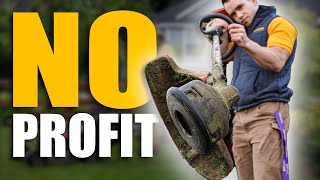
Mike Andes, founder of Augusta Lawn Care, breaks down four profit killers in home-improvement businesses: constantly starting and stopping jobs, bloated overhead, inefficient routes, and task switching instead of batching. He separates defensive moves (cutting waste) from offensive ones (raising prices and sales).
Today I'm going to be showing you four ways to double the profits of your service based home improvement business. And I guarantee these things are going to work.
My name is Mike Andes, I'm the founder of Augusta Lawn Care. We have almost 100 locations around North America. And today I'm showing you four areas in your business. They're right now sucking the profits out of the company. And if you'd fix these, it would completely change the business. The first area where I see so much waste happening in small businesses is starting and stopping jobs things. Think about it, let's just assume we're doing mowing. Every single job I have to take the weed whacker off the rack and then put it back on at the end and take it off and take every single job on, off, on, off maybe 20 times in a day. Every single time you start and stop a job, it creates an element of waste. There are crews, if you have two or three people that are going to be waiting on each other, they're never going to finish exactly at the same time. There's also going to be waste in the fact that when people start and stop and get in and out of the trucks, that's also a point in time when more waste happens. They're on their phone, they get distracted, they take a little nap, they get some food, they do other random stuff that should not be in part of their day and part of their job. Most waste happens around starting and stopping a job, both for recurring services like mowing, but also project based jobs and big landscape hardscape jobs. Or if you're installing fences and decks. Every single time you start a job, you've got to do the sales process, the estimate process, get the phone call, put the estimate into the CRM. You've got to then show the project to the crew. And for a lot of people, they literally will go and show their crew and four people will walk around the house and everyone will look and you'll point at things. That's an inefficient way of doing something. And every single time you start and stop the job, that creates and compounds more and more waste. So I'd always be looking. If you're like, where do I cut waste? Where do I increase the profits in my business? Look at where you start and stop jobs every single time. There is areas for improvement when it comes to waste reduction, increasing your profits. The second thing I see so many small businesses doing is they are very overhead heavy. They have like three or four people that are doing estimates in the Office and maybe three or four people out in the field working. This is extremely risky in a service based business. The goal is always to have as few people that are overhead an expense to the business. This is office people, people doing sales. Like, oh, sales is important, it is important. But if you actually break it down, you're not generating any revenue for the business. You are an expense. You're driving around, you're talking to customers, you're doing sales propositions, creating est. It's all fancy and fine and a lot of times these are the most expensive people, by the way, because they do need to be professional, all the rest of it. But if you have three, four, five people doing that and then four, five, six people on the field, you will never make money because literally half of your payroll is straight expense, straight overhead. You've got to get rid of overhead. Another thing that's considered overhead is things like shop expense. A really nice fancy office you're paying 3, 4, $5,000 a month for. You don't really need it, especially if you don't have a big office staff and all the rest of it. You don't need to be spending that kind of money. If you're just doing home improve improvement services, you probably literally need like a storage container, maybe some shop space, a place to park your trucks, your vans. This is not rocket science. And the more overhead you can get rid of the in the business, you can put that right to the bottom line. Because if I can take a $3,000 per month payment that I have to spend on shop space and rent and just by eliminating all of the office space and just do it where I just park my trucks, maybe I have a storage bin or a Conex box, but I'm able to get that from $3,000 to $1,000 per month. I just saved myself $2,000. That is going straight to the bottom line. Everything you can save on overhead is going straight to the bottom line, which means I had $24,000 in extra profits by making that cut in waste. So look at your overhead, both in the form of overhead labor and overhead in the form of assets and rent and fixed expenses. They're just weighing the business down. The third area where I see so much inefficiencies happening in small businesses is transport. Anytime you have.
Materials or labors, there's absolutely going to be waste. And so this is when it's very important to have a very centralized area that you're servicing. Because transport is less inefficient when you're able to Be close by to everything that you need. If you're traveling an hour, hour and a half and something breaks, you've got to go way back to your shop. That's extremely inefficient. If you break down, but you have another crew that's within a matter of mile or two miles away, it's not a big deal. You can get help to that person. You can at least get the laborers off of that truck and get them on another project very quickly because they're all close by. Instead of having a truck and a whole crew down for an entire day, which literally can cost thousands of dollars, not just for the truck to get repaired, but for the labor of all those laborers stuck with that truck all day long simply because they're an hour, two hours away from all your other jobs and all your other crews. So getting a tight centralized market that you want to focus on, put all your marketing dollars in that tight area and you might get some a little further out, that's fine. But try to stay focused on that core area and demographic that you're trying to go after. Windsh is the bane of every service based business's existence. No one is making money. You are not. The employees are not making money. If they're using P4P pay for performance. They want to be out working, getting jobs done so they can make more money on P4P. So therefore, by spreading all your jobs out, making them drive a long ways, they make less money, you make less money. And again, guess what? Your overhead, the cost of all that insurance and the truck maintenance and the fuel, like right now, you might as well be putting liquid gold in your gas tank. And so you better be making sure that you keep that centralized area for your route density. The fourth area where you can cut out waste and make massive profits in your business is by taking a look at every single time a crew member switches services or switches tasks while they're on a job. For example, you might say, well, we do mowing and we do bush trimming and we do mulch. But maybe instead of having a crew member go out at the beginning of the day and do mowing, bed maintenance, trimming, bushes, fertilization, core aeration, and all these other things on the same day, instead of doing that, batch them together. And this doesn't make sense for some people because they look at number three, transport. The part that we just talked about say, well, well, I don't want people to go back to the same property twice. And that is true. However, every single time that an employee has to switch services, switch the type of machine they're using. There's an ordinate amount of waste that is created and there's also a reduction in the level of quality. When they go from bush trimming one moment, then they go to bed maintenance, then they go to using a mower, then they go to cleaning out the gutter, then they all send their fertilizer, then they're using the core aerator. Like all of those things are just fine. All those services are fantastic. But when you batch them together, employees will be much more efficient and the quality of those services will go up because they're doing the same thing over and over instead of trying to switch gears. It's literally like I think of it every single time they switch services or switch tasks on a job. It's really like switching gears in a vehicle. Like there's a chance that you might grind the gears, you might mess something up. That's when transmissions fail, is usually when you're switching gears. And so I'd rather keep them in the same gear and go the same speed. And they're going to reduce the amount of errors that they make, the amount of damage cases that they have, and they're going to be much more efficient because every time they switch services, it's going to be more inefficient. And by sticking with the same service, they probably need less equipment, less trucks, less assets that are going to have to be with them throughout the day. So therefore they can be much more lean when it comes to the cost per truck that goes out every single day in terms of buying and getting another one on the road. Now those are four defensive measures for your business. Cutting out the waste, taking what you have and making it more profitable. And if you want to be on the offensive, you've got to focus on sales. It's really the only thing you got to focus on. And if you're trying to wonder like, well, what should I price my jobs at? Click this video. Here I go over two different pricing strategies that are really effective for your business. That you can close more jobs and grow the top line revenue and then implement the four things we talked about today. I'm Mike Andes and we'll see you tomorrow.






