INTERVENTION for a $750K Lawn Care Business
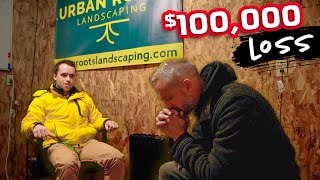
Mike Andes consults with Dylan's Seattle lawn-care company, Urban Roots, which hit $750K revenue but barely breaks even after adding overhead. Dylan must choose: chase $1M in sales or pause growth, raise prices, and actually profit so employees Michael and Charlie get paid what they're worth.
Questions this video answers
Seattle, Washington (stated by Mike Andes).
About $750,000 (episode repeatedly cites $700k–$750k and plans to exceed $750k).
Grew from ~$250,000 to ~$500,000, then added another ~$250,000 this year (pattern: +$200–250k per year).
Approximately $100,000 less profit from 2022 to 2023 (attributed to hiring admin/ops and moving to a shop).
$1,200 (stated as “1200” and referred to by Mike as “such a good deal”).
Chapters
You know what I'm gonna say? Don't do those jobs. There went our $100,000 of profit.
Hey, I think this guy might not work out.
God forbid someone's human. They make mistakes.
He's a bit of a control freak.
Stop. Watch out behind you. Watch out by Anya. Okay, I'm a control freak. I think it's great.
They love it because they don't have to think.
Every time I do this, I lose an extra year of my life from all the stress.
If something falls to the crack, it's his fault and you can come and you can nag on him.
I misunderstood what he was saying.
If I hear about it not being.
Done, I will have a problem with you.
Money is a big player, right?
You're on the low end.
I think unless you've owned a business, you don't really know or understand what a business owner goes through.
Your wife won't be negging you.
You're blowing my mind right now, Daddy. Why are you so busy?
We're in Seattle, Washington today to turn around this lawn care business that has grown to $700,000 in annual revenue in.
Just the past few years.
But Dylan has an all time low profit margin and we've got to turn round.
How's it going? How much do you have to pay for this shop?
12.
1200 is such a good deal, dude.
You think it's a good deal?
Oh, yes, dude.
I'm a cheapskate when it comes to everything.
That's amazing. You might recognize Dylan previously from other series on the channel like Business Boot Camp, where he was operating his business out of his personal home's garage.
It could be tough.
This caused some friction with the neighbors, but we found it really difficult to find a shop space that could accommodate his growing business.
A couple of my neighbors aren't super happy with me running the business. One day I hope to have a dedicated shop space away from our house.
You need the space, you got to.
Get out of the house.
So I was looking for spaces and everywhere would be like 40 minutes away from our main, like hub. Right. It's a little nerve wracking. It didn't feel like a situation that would work for us.
You can't keep doing what you're doing.
From where you're currently at.
You can't double in size.
Trying to accommodate for the neighbors. And the parking situation out here is not great. The search may have to continue on this one.
You know, try to go on to some of the local Facebook groups and.
I would just post them there.
Be like, hey, I need space to park about four to five trucks. I wouldn't try to go right now for like, necessarily a land where you.
Can dump and have, like, lots of space. Don't go for that yet. That will be something that will come.
To you over the next year or two.
It'll fall into your lap, like find.
A customer, be a big barn area or whatever.
How did you find it? Like Craigslist, Facebook or.
No, actually. So Facebook. It was actually a connection from a personal friend of a friend. I was like, hey, he screenshotted that this guy was advertising the rent and it just worked out perfect.
So, yeah, it's also helped us kind of expand a little bit towards this direction. We started picking up properties that are on the way to our main.
You're more staying north of this.
North.
Yeah, yeah. I was gonna say meeting him for the first time, like properly meeting him coming out to the shop is just a little surreal. My first thought was, like, it look a little different in person than he does on camera. Right.
Last month, Dylan booked a consulting call with me. We talked about the lack of profit in the business and making sure that he aligned the goals of his managers with profit sharing, alongside the fact they also want to grow the business. So the question is, do we continue to grow and have less profit, or do we slow down our growth rate, make it more profitable and be able to afford profit sharing? It's like we can build off the.
Back of having really two really solid team members, get them on board with what's going on, whether they want to be profitable or grow, which I think they're going to want to grow. And then you don't have to have this pressure on the back, man. I can't give them what I told them. I would like get them on the same page. The conversations with Charlie and Michael, those are like your highest priority.
The. I talked to him on the consultant call and kind of said, hey, have.
The meeting and talk about, like, next year and things.
How'd that go?
Michael has been with Dylan right from the start. He was actually his very first hire. And as he began to grow his business, he moved Michael into the office primarily to take some of the admin tasks off of his plate. Dylan also had an operations manager, someone who worked fantastically in the field. However, they didn't really quite work out when they actually moved into more of a management role. But now it looks like a new team member named Charlie might be a better fit.
But there's a catch.
So right now, Charlie is still Kind of on the fence about what he's gonna do next year. So we're kind of looking at the guys right now, seeing who steps up into a leadership role naturally, who really just fills it without being asked. So kind of just really keeping eyes on everyone, see who wants to step up for next year, just in the case that Charlie does move on.
Honestly, Charlie might not stick around. He sounds like a great candidate to be the operations manager for Urban Roots. However, he has his own goals and aspirations that might lead him to really leave the business and go start his own thing.
He's definitely gonna own his own business one day. I mean, he actually does stuff on the weekend already, so.
Got it.
He started with us part time because he was doing work business, like, half the week and the weekend. And then when Jose, our old operations manager, transitioned out, he stepped up. He's like, how about I'll go full time? And then that was really exciting news because he has all those, you know, leadership qualities that I'm looking for.
Right.
So he did tell me that he's looking to maybe leave. I don't know if it's going to be next year or the year after. And he said it kind of depends on what next year looks like. Basically, if he. If he feels like he's learning, he may stay long.
During my consulting call with Dylan, I tried to get him to understand that it's very important to get Michael and Charlie, his two key employees, on the same page about what next year is going to look like.
You're trying to grow and be profitable at the same time. You just need alignment with the guys, the two that matter the most in terms of which way that the business is going. And I personally think they're going to align with your vision, which lets us.
Go ahead and grow this thing.
And if we're a little bit less profitable, who cares? Because we'd like to be in these administrative roles. And at 6, 700,000, you can't afford to do that. So if Charlie's really wanting that, it's like, hey, I think I can make you head of, like, the team operations side of things. At a million, we can afford that. If we're going to grow there. Next year's probably not going to be super profitable. And you can just literally show 22, 2022 versus 20, 23 and say we grew 50%. If we do that again next year, we're not making a lot of profit. I want to make sure we're all on the same page, because we do. We want that or do we want, you know, the alternative?
I know we had the meeting with the consulting thing.
Yeah.
Have you already had the meeting with Charlie and Michael? Oh, you have?
Okay. So I wanted to do that. And honestly, I was talking with Michael.
And I was kind of inferring that he had already been discussed.
Okay.
I was really hoping that Dylan would have this meeting with his core guys prior to me showing up so we could really move the ball down the field. However, in general, I think if you have a core group of individuals that you want to keep in the business, it's important to have these type of conversations with them and stay on the same page.
So it just got crazy right this last week, and then like, we have a guy out sick today. And, you know, like, one of my bigger concerns was to. Was having to lay people off. And you're like, oh, just look at the history. Like, people will fall off, they'll get fired, they'll quit. Whatever.
You said you're going from seven to six. There's a really good chance within four weeks you're gonna go down to five. Something happens. You can see the math. There's attrition. Like, you can, you can count on one person leaving every single month. Which means if you just wait three months without hiring any new people, guess what's gonna happen? You're gonna have three or four guys going throughout the winter.
So we have one guy who's kind of flaking today, and then we have another guy that just quit, like, just ghosted us last week. So that's, that's two guys down. So I went from like, now I have a working interview today. So it's just like full circle. Right. Because I wanted to go all the way through November and with a six person crew.
But we're down.
We might be down to five now.
So the thing is, like, when you had one or two people, it's like you're used to them staying for six or eight months. And so you always plan for those people. When you have 6, 8, 9, 10 people, you can just always count on a certain number of them leaving. So when you're coming up against, oh, I don't have enough work, by the.
Time you actually run through your two.
Week backlog, you usually have lost a person or two. It's just kind of the nature of the game.
It's really time to figure out, is Urban Roots going to focus on profit or growth next year? Because it's very difficult to do both.
You know, I know we talked about, like, what's the leaning? Are we going to grow or are we going to make it more profitable?
So I'm leaning towards growing, right. So I think my ultimate goal is to try to maximize kind of like my office person, the overhead in the shop because I could fit another truck in here. I definitely think we can kind of grow it. But, you know, part of the conversation was like, that's going to be less profits, right. If we're going into growth mode. And then, you know, Michael's been part of the conversation and Charlie from the beginning about like, okay, you're gonna have profit sharing. And. But now the conversation goes to like, if we're in growth mode like we were this year, profitability is gonna be like, pretty much might not be there. So it's like, even though we're doing profit sharing, if we're going into growth mode, then that may mean delaying profit sharing until we go speed things up to a million revenue, roughly. And then we're gonna be in a position where in the future, maybe two years from now, we could see more of the profits on a bigger business. Or we can kind of take the approach of getting to a point where like, hey, let's stop growing, let's raise prices, keep the staff where we are this year, like pretty similar to what we're doing right now in terms of roles. But then we'll see, hopefully see more profits because we've already kind of spent the money, we have the infrastructure in place, and then we can see that bigger profit share. So it's kind of like delayed gratification. Right. It does affect the. Your bonus pay in the short term for next year if we decide to go into growth mode.
And there's trickle downs too, right. It's not only is it more profit and therefore profit sharing, but also like when you raise prices, you're effectively giving all your guys a raise for on P4P. So it even helps with things like retention, attraction of talent. And so that's why typically just raising prices and slowing down growth in general stabilize the business not only from profitability, but now all of a sudden, your guys just got like a $2 an hour bump for doing nothing. If you raise all your prices by 10 bucks per hour, you're essentially giving them all a $3.30 hour raise.
I feel like my prices are pretty high for what the market can take.
So I know about price in this area. Four locations around, you're on the low end. They're all above a hundred bucks, so don't be worried about that.
Signs around here, by the way.
Yeah.
Liz was like, you should just.
Tell him he needs to join Augusta and buy the bullet.
Dylan's a little bit concerned about how fast the business is growing. He wants it to grow faster, but honestly, he doubled his business, going from $250,000 in annual revenue to $500,000 in annual revenue. And this year he's looking to add another $250,000 and exceed $750,000 in annual revenue. His growth is starting to catch up with him though, because as you grow the business, it requires trucks, equipment, more employees, and growth sucks cash. But it makes it difficult now to decide whether or not he wants to endure another year of pain and grow and have less profits, or if he just wants to existing business more profitable.
By raising his prices.
This is the thing too. Like sometimes when we went from 200 to 500, for example, you basically doubled, right? And so everyone's like, I'm on this.
Doubling path, I'm going to go from.
500,000 to a million.
Yeah.
When in reality it's like, look, if you go from 250 to 500, you went up like 200, $250,000. We did the exact same thing this past year, right? And a lot of times we get stuck in like the percentage. But you if you actually just look at the last three years, you've gone like 200,000, 250, and then you added another 200, 250, and this year you'd add another 200, 250. A lot of times third and fourth year people get discouraged because like, oh, I didn't grow as much.
It's like, no, you grew the exact.
Same rate, just not the same percentage. Yeah, right, exactly.
And that was kind of my thought too. I'm like, oh, doubling every year the first couple years, and this time I'm like, huh, kind of fell short.
It's the law of big numbers, right? Like you can only double so many times before it. All of a sudden you're like, oh, I have to have a billion dollar lawn care company, right. So I think even if you looked at it like that, it's like, hey, if we just kept doing what we're doing, we're going to get to a million. We also know that most of the profits because we've upgraded overhead, like the extra hundred thousand dollars loss is essentially the cost of having the full time office person, having an operations person and moving to a shop there went $100,000 of profit from last 2022 to 2023. But that is also the foundation and Infrastructure required to go to 1 1.2 million.
A lot of Dylan's profit this year has really been spent on putting management in place, whether it be the admin side with Michael in the office or the operation side, someone like Charlie. And when a business gets to 750, $800,000 in annual revenue, you as the owner can no longer juggle all the balls of sales, admin and operations. You have to start delegating those things in order to grow past that point and make the business more systems centric and not everything hinging on you performing all roles of the company.
So the question is, do we slow down growth next year, raise prices, help with the P4P side, be able to give profit sharing to the top management, or do we just immediately jump for the 1.1.1 next year and do that way?
Right?
And that's why I think just like Michael, Charlie, etc. Getting on the same page is important. It sounds though, and this is what I think the pressure, I think, on you is you're probably going to lose Charlie if he doesn't have more on him. Like he's not learning and growing.
Is that right?
He did mention to me, like, he's really about Lear. He's younger and he admits, like, he doesn't have to be in a rush to like jump full time into his own business, so he's willing to stick around. But it's got to be really enticing in terms of learning.
Potentially looking to start my own location. That's kind of what I was doing before I even came here. Just doing my own jobs and everything. But I'm not the person who's like, I want to have my own company and do my own thing. That's not really my mentality. My mentality is more like just learning the ropes, how business works.
I mean, money is obviously the icing on the cake. Everybody's gonna want that bonus pay. But if I had to guess what's in his mind, he would probably, you know, just want that more of that responsibility, that leadership role and learn because he's. He's kind of like I was a couple of years ago when I worked for my buddy's company and just trying to learn. And I didn't care what I made. I was just like, I'd work, you know, lots of hours. I didn't care as long as I got to go on estimates and learn this and that. So I'm seeing the same qualities in Charlie where that's the real value for him. But again, I don't know his financial situation at home and where that bonus comes into play with him.
Well, obviously, money. Money is a big player.
Right?
But I obviously understand that there just has to be an exchange of value.
He really wants to see more of the P4P side, and he wants to see service autopilot and how I'm doing things with the software.
And he absorbs a lot of your content as well, so, I mean, it's kind of like. Was like a natural fit. I actually met him at your conference for the first time. Yeah.
Was he just there randomly?
Yeah, he was there randomly. Like, we're at a table and we found out we're both from Tacoma. And then we ended up just exchanging numbers, and I think he threw me a sob job and I threw him like, a maintenance. It was just kind of like a networking thing.
If you want to find your next.
Operations manager, you can come to Landscape Summit, too. Next time. We don't know the next date, so.
But we'll get them out soon.
Charlie is having trouble finding the alley that.
Oh, okay.
I think you went on the estimate, so.
Yeah, so there's. Hey, Charlie, there's tennis courts back there. Do you have the email where you can send him the pictures? The aerial pictures?
Yeah, I should be able to pull that up. One second. I'm going to get you the aerial view in WhatsApp.
Okay.
I found.
I found a dome. She can even just take a picture of it on your phone and text it.
Yeah, that might be easier.
Yep.
Yep, yep, yep, yep, yep, yep, yep, yep, yep.
I practically.
Nice guest now.
Yep.
That's the hedge.
Found it.
This is what they want pushed on.
Yep.
So basically, it's scratching up the sides of the buses.
What do you think, Charlie?
Thank you for the hours.
You're welcome. 16 budgeted hours, dude, you'll get that done at four. You got all day.
That's Charlie for you. He always gets it done right. Positive attitude, everything. So we definitely value him.






