Lee Confronts Mike and Business Bootcamp Behind the Scenes + DEMONITIZATION - Episode 005
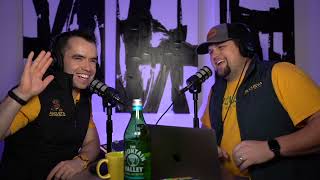
Mike and Lee discuss the behind-the-scenes of Mike's Business Boot Camp YouTube series, including how he picks participants and structures episodes. Mike explains why he removed ads from his channel, prioritizing creator ethics over revenue. They also touch on recession-proof businesses from a Forbes list.
Chapters
I don't drink. So this could be like really.
I know you. I know you don't drink. Cheers.
Yeah, man. I see cups on the table.
There are some cups on the table. Yeah. So I. I don't really want to bury the lead, but we'll maybe get to those in a little bit. So I did have this idea and hey, the better. The best part about editing is that no one ever has to see this. So we were actually talking about one of my bonuses. So let's just do. Let's just go straight unfiltered. As you know, I'm very money motivated employee. So I think from the last five years I've worked at Augusta. For those who don't know, I've worked at Augusta for a little over five years now. Every year my job has actually changed, which has been really cool. I think for me, I was never the person that was like, I'm going to go to this college, I'm going to do this thing with my life and I'm going to go here. I think I bounced around from like this thing to that thing, like in high school, just looking at that career, if you will, like baseball, dj, prom, like I was involved in all of it, but I wasn't like super passionate about any one thing. And I think that has been cool for me to get, I guess, that Range. Right. There's a great book out there called Range by David Epstein. Talks about how generalists can thrive in a specialized world nowadays. There's so many specialties. I think that's given me a lot of cool perspective in life. But I think now, having realized the whole last five years of my career at Augusta have always been changing, I think I'm settling into like a specific career path. Have you, have you thought that or have you noticed that? I don't know. I know you like thought about me.
Personally, but like sales. Like sales and. Yeah. Why? What are you thinking?
Yeah, I think, I think I'm just like moving toward pigeonhole. It's the wrong word.
But that typically as you move up an org or an organization grows, if you're at the top of it, you're, you're. Yeah. You're going more niche.
You're siloed.
Right. A little. Like you get labor and then manager of labor and then you start moving into leader. So. Yeah, yeah.
No, so I just thought like year one was labor, year two is kind of like project manager. Right. I got, I started to get more of the big projects assigned to me. I did the patios, the walls, the this, that, and the other year three was like, estimator. Year four was general manager, and then year five has been kind of franchise business consultant, sales, and coaching. So now I'm like, well, is year six just the same thing?
I don't know, man. We'll see.
We'll see.
Yeah, definitely more money.
That's not what I'm worried about. That's the thing. I'm not really worried about that. I guess I started by talking about my bonus, but that was more just, hey, that's what we were talking about this morning. And, like, I honestly want this podcast to be good for business owners and employees and managers, because obviously, at the end of the day, yes, you and I have a great relationship. I would consider it a professional friendship, but, like, at the end of the day, you're my boss. You could fire me at any moment, and I'm your employee, and I could. I could give you my two weeks tomorrow. Right.
Episode 13, if you guys want to skip ahead.
Right. So there. We still have that dynamic. I think the transparency that we can provide to others will be valuable. So I just didn't know if you had given thought to that. You know, now you've kind of seen me lay out my role. Is it, you know, do. Do you start siloing me, or do you keep me as more of a generalist, kind of at the top with you and Liz, or what does that look like for you? And this. Like I said, the public never has to see this.
Yeah, I think the. I think. I think what we've done over the past few years is a lot of growth and into new channels, which, yeah, really has been the franchise. You became more involved in the franchise in the past year.
I think that we probably have a good three years of doing the boring work now. We built the systems, and now it's like, now scale it. Right. So you came on at 50, got us to 100. We kind of stopped there, said, hey, like, let's just stick around this really, like, the past year, we haven't sold very many right now. I think the thing that I'd be pushing for is, like, you know, over the next few years, for you to see the hockey stick up to 500.
Cool.
Yeah. And then it's a matter of, like, well, where do you go from there? I don't know. I have a feeling you'd actually stay relatively in the same spot as we grow over the next few years, but then you'd probably end up investing more. So, like, you'd probably start some locations or do other stuff. Yeah. And then I don't know where it's going to go after that. Yeah. It's like the managers meeting. Like, we want numbers. I'm like, I don't really have numbers.
Yeah, well, yeah, at our last managers meeting, like, I think Lonnie and I, um, Lonnie, who's our, our manager over at the command center, she's awesome to work with. I think we were both like, well, we're goal oriented people. And you know, I, I don't know what at the end of the day drives her, but I know at the end of the day what drives me is like having a vision, like having pride in my work. Like, I want to work for something that I see is valuable. And then secondarily, as you know, like, I'm very money motivated. Like, if there's a dollar sign, like I want to achieve it, if there's a number, I'm going to hit it. And like, no one's going to prove me wrong because I believe I can get there. And. And so not necessarily about the money side, but I'm just interested to see, like, do I get siloed? Not in a bad way. I guess specialized is a better term, a more positive term. Am I more specialized in like a sales role? Teaching sales, doing outside sales, building a sales team. Like, that's what Hormozi talks about a lot, right? Alex Hormozi, building great sales teams. But at the same time, like, we've never really built a franchise together. So do we need a sales team? I don't know.
Yeah. Like the thing you and Liz are both unique in the fact that you've really seen every, every position of Augusta all the way up.
Yeah.
So you both kind of have seen the gen. You've been the generalist for so long. I think over the next year or two, it'll seem like it's a siloing, but then what'll happen? It'll actually go the opposite direction as you now have to start scaling out the individual departments. Right. So there will be a sales team. There will be a team of coaches. And so like you have to have trainers for the sales people, you have to have trainer for the coaches. Like, so that's what it'll. It'll probably be over the next three years is evolving into a leadership role of your current role the same way that Chuck was a gm, Right. As now regional manager for what was going to be 8G. Right. So I think it'll just be scaling what's currently there and then you'll go from being more, quote unquote, pigeonholed into actually like the opposite happening. Because now you'll be leading a department of what you're currently doing.
Yeah, yeah, just interesting. So, I don't know, thought I'd bring.
It up because currently we need about, we need about one coach per 70 to 80 franchisees. Right. So, you know, we're good now, but I think that as we hit like 4, 5, 600, that's when it's gonna. You have a team of franchise business consultants, a team of like. Okay. And just really systemize every single part of it more and more. And we're just getting, we're starting to get better and better. Like the coaching calls, the scorecards for each call that will become like, like, like laser like focus in terms of systems for what that looks like as it scales. So as it scales, we kind of built infrastructure now at 100, we stop, slow down. And now I feel like we go to 500 with quote, unquote, relative ease. Yeah. And so who knows what that's going to entail.
Yeah. The coaching call card. This is a random thought. Have you ever shared that with the public? Like what that looks like, is that. Keeping it close to the vest.
Keeping it close to the vest.
I feel like, I feel like for some people, like having, doing the introduction calls, obviously, I know you've did hundreds before me, but I feel like accountability is, is a big thing that people.
Why.
Why you would join a franchise right. At the end of the day, like you said, it's the only reason. So I almost feel like that just like you can see this, but you can't use it. Yeah.
As you know that like when we do sales, like it's a little different. We don't use a lot of those tactics. Yes. I know that there's certain things that could kind of hint at.
Right.
Or show and things like that. But ultimately, like if someone's going to be tricked into becoming a franchisee or even like sold on it, they can be tricked out of it. Sold out of it. So it's like, look, either you're gonna be part of Augusta Nation and this is like a long term commitment together that we make to you and you make to us and we're going to be better together and we're going to be able to get through the hard times of our relationship and still realize it's better together. But being sold into it is not like a great strategy, in my opinion.
Totally.
And so, yeah, as you know, like, it's very Informed of base sailing that we do, answering questions and, you know, taking down objections. But it's not. Here's what you could have now it's not there like, because like once, once that thing has been known to them and they actually know they've seen the coaching card. Yeah. Like, you see that 12 times in one year. It now is no longer. It's lost its shine. Right. Right. So if you come for the shine, the shine goes away. You gotta come for the fact that there is accountability. There are people that fall back on their systems and procedures in place of you to copy and paste your business model. And that's why you come.
Yeah, I've actually noticed a, I guess habit I've formed on, on my introductory sales calls. So I kind of just do general warmup, get to know you, you know, where are you from? Is that, you know, is that home? Or did you. And then I just kind of get to know my prospect, if you will. So I like to know, like, you know, family, current business, long term goals, why Augusta, how they found you, how they found us. And then as soon as I do that, I kind of have a transition phrase where I go to like opening it up more to a discussion and getting their questions. And I always just pop. And I look at the clock real quick because I want to see like, how much time to like, waste because it is informative selling. And I'm like, if I waste too much time at the beginning of the call, like, they might not get through all their questions. So I want to get to know my prospect quickly so that I can answer their questions in a way that best serves them right.
Yeah. And like we don't have a script. Right. So it's a little different. So we, there's sometimes you take 20 minutes just getting to know them.
Yeah.
And it's fine. And then other times, like three minutes and they're like, okay, so I want to know about this and this and this and roll with that. Right?
Yeah.
So it's a little bit different to the way we sell.
So anyways, rabbit hole there, but it was good. But you did mention a number in there. So I thought we'd, you know, we're, we're, we're lower highs, higher lows. But no, we hit 100. So we officially hit 100. I think we could say that it's pretty cool. I think it's active location, active locations. 100 active locations.
We hit 100 before, but we had a few closures along the way.
Yeah. Yeah. So we, we've theoretically hit 100. But we're, we're officially at 100 active locations. Couple are coming to training here in December. But I thought, you know, we celebrate a little bit.
Oh, yeah, Celebrate.
Just like the smallest amount of celebration. The smallest amount. So I know you know that why.
The cups are here.
Yeah, yeah. So I got the cup. So here's, here's a cup I got, I got to be careful here.
Apple cider.
I don't drink, so this could be, like, really anti.
I know you, I know you don't drink, but I'm a big water guy, so I got the best sparkling water. No, no, no. I, I. So I thought about doing my essencia bit. I got you the best sparkling water. So this stuff is actually, it's really good. It's a Alpine distillery.
Mountains.
Yeah, dude, it's the Alpine distillery.
Oh.
That was a setup.
It's, it's very sparkly. And then I got some other stuff. But, you know, people probably don't want to watch us eat. We're not an ASMR podcast, but if you don't know Mike's favorite food and actually mine is chips.
That's good.
So we got featured. We got some, some paleo chips.
Oh, made with avocado oil.
Yes, sir. And a little bit of organic.
Let's go.
So we're probably not gonna eat it on screen. Let's go. But I got the good stuff. Cheers.
Yeah, man.
All right, we're jumping in.
That's good.
Here's what I wanted to do, is on your main channel, Mike Andy's YouTube.
Yeah.
You've been doing Business Boot Camp.
Oh, I thought you're gonna ask about the demonetization.
You know, that would have been a better question. That would have been a way better question. Let's just bury the lead. Let's. Maybe we'll talk about that after. Because. Because I kind of want to wrap up Business Boot Camp with kind of long term goals for the channel. So I think that that's a good point. So. Yeah, that's egg on my face there. Business Boot Camp season one. So you did. Is it the idea you've toyed with before? You obviously had podcast called Business Boot Camp. Do you still post on that one?
No, no, no. Okay, now just Mike Andy show.
Okay, that's what I figured. So Business Boot Camp season one. What you guys did is picked four people in the home services industry, so not all landscapers. Hopefully diversifying that more. And maybe just what I wanted to do is do kind of a behind the scenes. So obviously People can go to your main channel, they can watch the long form videos. I think the longest one's like 50 minutes. Phenomenal editing job. Shout out to Stephen and Zach for everything they did and all the guys that were featured on it. So maybe just give me some behind the scenes. What are some things that, you know, people don't see? How did you, like, select maybe those four? Like, how many submissions did you get roughly? And how did you select those guys?
I think we got about 30 submissions. A lot of them were good. How we select them is a couple things. Number one, they got to be good on camera. They got to film themselves for 30 straight days.
Yeah.
So some people don't realize is that we require them to upload to Google Drive every single day. Okay, so this make me burp.
I know, it's extremely bubbly. My bad, my bad.
Every single day. Upload. It's a lot of work actually for them. Not so much the videoing as much as the uploading. Like, it's a lot of work actually. What it does though, is allows me to not have to do much video editing or video recording. So back in the day when we did daily videos, I would have to record at least two or three times a week for like, and I have to come with concepts. And now I show up to a call one time a week for 30 minutes with each of them.
So two hours.
That one was two hours. And I just do it one time, knock it out. And I was. All the media work I had to do for the whole week and probably.
Like less than five minutes of prep per call. Or did you do a little more?
No, Zach would do everything.
So he just gives you like a sheet.
He'd be like, hey, this is what they're going through. This is the kind of a summary. And I'm. Okay, I'm probably going to talk about. Need to talk about this, this and this. That'll become the storyline. So we're still getting better at this. Season one was a good learning experience. Season two is gonna be way better. By the time this comes out, Season two, episode one will be out. You'll see. Now we sent the media team to them.
Yeah. Okay.
Better establishing shots. Because the challenging part is you can't make like season one. You can't make a whole a great show based on someone just doing selfie. Right. You gotta have some good shots. So we did. We're gonna invest more into it and like send out the media team before. So it's gonna be way better. Season two is gonna be Fantastic. We'll get better at the video side. Editing is already nailed. I feel like the story is where we have to improve. How do we create a story? And it is difficult because most operators and business owners don't move fast enough to make four good episodes in one season. This is what we're hitting up against right now because like, for example, and I will jump in these more deep. But like Aaron, for example, he. The. The concept was the same throughout the entire season, which is like he has a bunch of debt, hardly any cash in the bank, and he likes to buy equipment. And so that was established in episode one and it did really well. Episode one. Right then we consistently saw the drop in each episode simply due to the fact that like, the story didn't change very much. Whereas if you look at cnbc, the Prophet with Marcus Lemonis, right, that is shot over the course like six to 12 months. So there's a lot of like, twists and turns. People get fired, Things change in the same 45 minute episode. But we only have 30 days. It's less likely that big things happen. And so it's harder to make a storyline without just it being the same story repeated in different variations four times. So that's what we're working on. We don't even know if down the road it will just be a month. We don't know if we'll have combinations of people. So season two is obviously just two instead of four per participants. We're going to test that out so it's easier to keep a storyline consistent. But we'll see how it goes.
Yeah, no, I thought, I thought it was great. I think it was extremely informative. So you had Aaron Carter, Dylan, and then I'm blanking on the headband movers.
David.
David. David. Yeah.
So what's crazy is you get to know them really well. Like on our end, even though I don't, I don't. I wasn't watching their daily videos. Just the fact that I spent two hours of the past month talking to like, that's more than most human beings in my life. So, like, I got to know them really well. And then obviously, like you're dissecting what you're doing too, and we're talking about the media team and what's. What's up?
Do you think you would ever do like a later check in, like a year later?
Definitely.
I think that would be really cool because I know a lot of like reality shows will do that or they'll do like a sit down or whatever.
So yeah, we need more money. Because then what we need to do is get more editors so that what we can do is drag the story out further than 30 days. I'd like to do like a six month one.
Yeah.
But the problem is that means you got to follow someone's story for six months and have like one editor on that team and then you've got to take the videos they're giving you. Because we don't go out and shoot. Right. It cost millions of dollars, so we don't do that. So we depend on their videos. But it's actually just as hard to like stitch everything together and make a story out of it. So what we're really working on season two and beyond is like having storylines that we don't curate and we don't. This is all real. These are not acting.
Right.
We need to have a storyline for each episode instead of just taking what footage they give us for the week and then trying to make something of it. It's too hard. It doesn't captivate the audience.
Yeah. I think speaking as, you know, an audience member, because I was not involved in this project in any way, obviously we work together, but I'm, I'm not involved with the media team. I think. Yeah. I watched episode four and I was like, man, like I feel like we're just getting started. Like, I feel like I know the guys, I know their stories. And then you had, you know, David who did a no show call and it's like that stinks to like end on it. And that's not me ragging on him. I'm just like, man, I wish I got more of his story because I think I just started to get to know him. So I think, yeah, maybe more form. Not in the length of the videos, but in the timeline of those stories.
And not even not needing weekly check ins. Like.
Right.
In the perfect world, we would probably do four episodes every other month for eight months. Because over eight months, lots changes.
Yeah.
People leave. Employee drama, big customer acquisition, big contracts, blow ups. And that's what the profit is able to capture. That's why the show is so cool.
Right.
But we just don't have, we don't have the resources because you need multi, you need many several editors. You also need someone curating all every single day. We're in touch with these guys. Like the media team gets all the credit for business boot camp because every day they have to watch the footage. They're directing, they're kind of being director from afar. Right. So we're just gonna get better and better. The thing that we. The reason I'm committed to Business Business Boot Camp is twofold. One, it's something we can do over and over and over again, get better and better and better until it's like Hollywood level. And I think we can get there in five to 10 episodes or seasons. And then the second reason we want to do it is because I believe if someone watches the 20th episode of Business Boot Camp and they like it, they'll go watch the other 19. Whereas in the past, the content I've made is like, here's the thing about door hangers. Here's something about marketing. They'll watch one video, they get what they need, they're out.
Yep.
The algorithm is not going to like us until. Because now we're posting way less. They don't like that.
Right.
We're down views. But what's going to happen, in my opinion is once we hit like three, four, five seasons and there's a chunk of videos, someone watches one and they watch all of them. YouTube loves that. They will push our videos so much when someone watches like fall, stumbles into our video, watches one of them, watches 20 other videos, like, they're all in.
Yeah.
So that's the goal.
Yeah, that's cool. I really like that. I think, you know, the guys that you picked are great. And I think, you know, one of my favorite shows, I don't really watch a ton of TV anymore, but one of my favorite shows for a while was Bar Rescue with John Taffer. Right. He's a, he's a restaurant mogul. Right. He knows the food and service industry like the back of his hand. And. But what he does is he's taking distressed businesses. And it's not necessarily the angle you guys are going for because, like, a distressed business is easy to create, like all this fake drama. But, like, how much help are you providing them from afar? Are you almost like burdening them more? Do you feel like you were ever, like, burdening, or do you feel like the media team ever felt like they were burdening the owners to get the footage. To get the footage? Or like, do you think that maybe the participants felt like they had to facilitate or create drama?
No, because I feel like if we showed up with cameras, it's 10 times more that feeling from the employees. Right. The owner's indifferent, like they're there for whatever, but the employees are way more authentic. I feel if there's not a bunch of third party cameras stuck in their face. And so what you got to realize on the profit and all these other. It's all been scripted. Even if it's an authentic reaction, it has been set up for the videos.
Right.
So even just doing this, I will watch if the CNBC ever posts another the profit episode. Goodness gracious. Like, hey, there's, there's someone who can take Marcus's spot. Anyways.
If and when I watch another episode, I will pick up on so much more. Yeah, because I will pick up on is. Okay, this was the storyline. This is how they set it up. They made sure the camera was there. They had a meeting place for these two people to meet and hash something out. But it was all scripted. Not scripted in the fact that here's your lines, but it takes a producer to figure this stuff out. And that's something that we. Zach has kind of been playing that role, but he has a whole bunch of other stuff we're doing. In the perfect world. I have another full time editor, so we have two storylines at the same time. So we could post more frequently, like every week instead of every 10 to 14 days. And I'd also have a full time producer which would be just getting all the videos from four to eight different businesses and then keeping the storylines entailed like, okay, this is what they're doing this week. Oh, can you please get a shot of that happening? So it's. So there's a lot of room for us to improve and so just as we get more money, I just want to make it better and better and better. I do feel like in a year like we could get it to the level of like the profit.
Yeah, I think good word for you were saying like it's not scripted. I think staged is a better word. Right. Because you're putting an element of like, okay, this big moment's going to happen. We're not prompted stage. I think that's a, that's a better way prompted. So what do you feel? What was like your favorite part? Like just honestly, was it certain conversations with certain guys? Was it seeing maybe one of them grow a little bit more? I know there are a couple heartfelt moments that we might get into, but.
Yeah, at the end, definitely they're all very heartfelt moments. Because you're done with this month long challenge. On my end, I've only talked to them four times.
Right.
They have been making videos for the media team every single day for a month. Yeah. So it's actually a big done wrap up for them. And so what I thought was really cool, special for me is like that I really did feel at the End of the month, there was meaningful impact. Good. And why I didn't want is it's just like a show and like, we kind of like make up, people do better. But, like, I could meaningfully say, like, after a month, all of them had something actionable. They changed their business, the direction of their company was changed, and, like, I was happy. I would have liked to have three to six months because then you can actually, like, not only see the change in direction, but also see the outcome. So that's what we'll have to do.
Follow up.
But that adds a lot of credibility to the show. And so we definitely need to follow up with them. But the problem is, of course, corrected some of them and I got the right direction. But that's why, like, coaching calls so important. You got to keep them on. Like, I have. I guarantee you half of the business boot campers after a month, they'll be like the directional change. And if I check them in six months later, they'll be right back to where they were doing before.
Yeah.
And that's where I'm afraid. But best feeling was. Yeah. Like the fourth episode, really looking at the show and because our first season. Okay, did we make meaningful impact? Yes. Did we have to create drama? No. Like, it was all authentic and I was proud of that. And, like, we got to do a way better job of making sure it reaches a wider audience and we can do a lot to improve that. Yeah.
I want to get specific to one of those heartfelt moments. Okay. Because as an audience member, I did read the comments and there were some people ragging on Aaron and I. And I got to meet Aaron in person, but. But I feel like he got dragged a little bit in the comments. Oh, yeah, 100%. But then he was in the comments responding and laughing it off. And honestly, I think he's a genuine guy with a good heart and he. And he really is doing what he thinks is best. But at the end, you had a very heartfelt moment and you were like, hey, love you, man. Like, appreciate you. So, like, do you feel like he's going to heed a lot of your advice? Do you feel like obviously there's still room for growth? I think we all can. Can see that. I mean, hey, if you're. If you're honest with yourself, we all have room for personal growth. But where do you feel like he's headed? I think that's what most people honestly are interested in right now.
I feel like he's very impressionable and he's influenceable. He's like wet cement. Which is great trait to have and that's why people really usually relate well with people and like have a good personality is they have their impressionable. The problem with that is I feel like we made a lot of headway in a month but unfortunately I feel like there are surrounding influences that he is involved with in the landscaping community that are going to dissuade him from what I've taught him. And I don't know if he'll be able to overcome those. I hope he does. I would love in six months. Yeah he has fifty, sixty thousand dollars as bank. No more debt. I don't think that's going to happen to be perfectly honest.
Yeah. If someone doesn't want to get dissuade from those things is there maybe a conference they could attend that would not talk about. You know that's what the big.
That's the thing. He is going to come to conference for three solid days.
That's awesome.
In January. Right. Very cool. If he gets off course I hope that that kind of helps A landscape summit. I don't know. I think he has a 5050 chance. I think all the other people I give him a higher probability. My concern with him is he is impressionable and he is surrounding himself with people that are going to push him towards debt. Big equipment, big projects which is not the way he should be going right now.
Interesting. So I did bury the lead a little bit.
Demonetization. So two days ago, just two. Right. Two days ago you made the official post. Yeah, I think it was on Monday or Sunday night. Either way it doesn't matter. You basically said I'm taking off ads from my YouTube channel. What's. What's going through your mind there guy?
So Saturday.
I. I don't know why but on my computer I couldn't log into my typical account so I use a different YouTube account. I was watching some videos while I was working.
Yep.
I forget what I was watching. Oh you know what I was going on rabbit trail. This other. It's about con like I, I've. I. I spend my my weekend long weekends typically recording for for NBA course and landscape business course and then typically thinking about the media side is like where I need to spend some time focusing on the future that I so was watching stuff about media anyways.
Like every single video on that I was watching and when I go to my channel was like these scam artist people dudes like Ferraris, Lamborghinis, women, cash.
Yeah.
Whiteboard on the beach like you can live fba fulfilled by Amazon Garbage. So I was like, it was annoying. And then I parlayed that with already last week. What happened with FTX Scandal, the established titles. Have you heard about this? No established titles or people. They were selling like a square foot in Scotland.
Oh yes, I have heard. That's horrible.
That's.
I know someone that bought one.
Oh my.
I tried like, I just like couldn't say anything because if I would have, I would have laughed. Like why would you?
Anyways, so all of that was happening with other content creators having to apologize, give their money back, all this stuff.
And everyone ties me to two people right now because they're kind of similar things. Meet Kevin and.
What's his name?
I. I know. Meet Kevin. I don't know.
No, I know.
Graham Stephan.
Stephan.
Okay, that was my guess.
But so everyone's linked me those two. However, Graham Stephan talking about it didn't happen till the day after. So Sunday I posted my post at like 7:30, 8 o'. Clock. 9:30 is when the iced coffee hour came out and Graham really starts talking about the dilemma of his FTX thing and what he should do and all the rest of it.
They promoted it hard.
Oh yeah. On all his whole channel on Millennial Money because of it. Wow. The whole channel's down. Wow. So I'm not gonna do that. Yeah, I'm not going to number one sponsor people would you never spawn? I never sponsored people secondarily. Which this one is like where everyone's like, oh, it's not bad. So bad because you're not actually making the posts, you're not actually promoting them. But Google is. And I get a cut of it, you know, 50%, 60. I think I get 55% of all the ad revenue. So one side of me is like, well I should just take the money because they're going to run the ad regardless. Right. So I've already in the past removed all the mid roll ads because it's just annoying as I'll get out.
Super annoying.
Super annoying.
But the pre roll ad they're going to run regardless and they're going to keep their money. However. Yeah, I don't want any of that money if those that. Because that money is created by people clicking. So basically I'm getting them some money because people are clicking. These scams that are typically before me. Why? Because I'm a young male. A lot of my audience is young males that is trying to make money, it's trying to be successful and have a business. That's who these people target Right. So I don't want any of their money. I'm going to actively putting ad slots in that say do not click on the ads. I'm going to say that do not click on the ads because 90% of them are garbage. Yeah. If YouTube comes out and allows me to block sponsors or advertisers, potentially I might do that. Now those scam artists are willing to pay an abhorrent amount of money. And that's why my cost per thousand, a revenue per thousand that I get is 2, 3, 4 times more than the average YouTube channel. Because it's finance money, et cetera. It's a high value listener. So these people are willing to pay out to wazoo for their garbage courses and stuff that they sell. Yeah. And because of them I get looped in with all of them. And so I hate their guts. Right. They sell courses, I sell courses. I have. I don't have anything to do with them. Yeah. Right.
So I have to delineate myself from the 110%. And then I also have to say I don't think it'll hurt me financially because it's a very small portion of our revenue. Although I could buy a brand new car every single year using the money.
It's a small piece of our revenue. I think it will create goodwill with our audience and ultimately it'll allow me to bash the ads and create separation between my brand and their brand. That's the goal.
So just. Yeah. Because you don't want to be standing on both sides of the fence.
Quote. Check this out. I was ready for this. Dude, I didn't even know we were gonna record today. Fantastic. Morning. I saw this. Gary V. Your personal brand is a quote. Your personal brand, your reputation and your reputation in perpetuity is the foundation of your career. Playing the long game and building your reputation always plays out in your favor. Thank you.
Yeah, I respect that. So my next question was going to be what do you say to the person says, mike, Andy's is grandstanding, he's just trying to look good.
They're, they're right about 50% of their right. Because I do believe that I am trying to look good. That's what my brand optics. Yeah. I'm trying to look good. And I believe that in doing that I will actually make more money. I was honest in my post. I said this is not about virtue signaling. Number one, they're creators that need to do this. That's how they make their money. That's not a bad deal. Secondly, I don't think I'm a good person or I'm doing this because I'm nice. I'm doing it because I think I'll make more money by distancing myself from these people, not taking a single penny from them, and, and then being able to bash the ads. And that way when I do promote a product which is typically my own, so I have control over it. So I have to apologize because I sponsored some garbage, then people should believe that what I'm talking about, I do believe in versus the free money that could just literally get by clicking four buttons. And it's not going to change the user experience at all. But I don't want any of that money because it's not money that I want to have. So yeah, they're 50%. Right.
So would you ever partner or have someone as like a sponsor for a video?
I turned $50,000 down the day.
Can I ask from who?
Software. CRM software.
Just like just one time or was it for recurring on like a monthly basis? Do you have to post so many times?
12 episodes.
That's wild.
Just need 15 seconds.
Well, to that company I will say unfiltered.
Links in the description.
No, we take sponsors on this podcast. Let me be very clear.
Take a lot of sponsors on this podcast. Whatever you want me to sell, I'll sell it. I will make sure everyone is buying.
So my soul for 50 I won't sell.
No, no, no, no. Too far. But I, but I will sell whatever products you have to offer if they are, if they are above board, like if they're, you know, kosher, if you will.
No, like ad money is relatively small. Right. So like. Right, I'll put some screenshot ups probably when I start bashing the ads. We're going to do some screenshots.
Let's go.
So it was my, my revenue per thousand. So my rev, I make about $11 per thousand views. My most, most money I've ever made. 60, $100 per month recently. And we're trending in a good direction. Yeah, but that's going bye bye. So I could theoretically buy a new car every single, every single year, sell it for half as much end of the year and just be fine. Yeah. Just by clicking the four buttons. However, it's a small portion of revenue like the sponsorships. If I just said yes to sponsors, we could probably pull in a quarter million a year.
I think pretty easily. Yeah, because I just need to choose sponsors. Right. I have someone offered me 50 grand for 12 episodes of business boot camp with a fair 15 second slot in each 15 seconds.
Nothing.
It was very tempting, but it's not happening because I can't control that product and I don't know what they're gonna do in five years. They're gonna drop, they get a roll up into some publicly traded company and I'm retracting my videos from. No, it's not happening. Like all that millennial money, that was great content, millions of views, lots of people were helped and now it's all gone because they sponsored something for short term money instead of just protecting the thing that they should and as their brand.
I think if you are a millennial male, you saw the ad that you know I'm talking about. I can't think of the guy's name, but he's in his garage. Oh, Ty Lopez, Dai Lopez. Any idiot, like every millennial male saw his YouTube ad.
Everyone the planet saw it.
He was like, you know, I got my garage, I got the Ferrari here in my garage.
That knowledge, bro, Dude.
But behind me, I'm proud of these.
Tai Lopez is making a comeback. Yeah, yeah, he, he flew under the radar for a couple years. Try to get his name cleaned out. He did a good job of that and now he's coming back on social media. Media. I think he's gonna crush it.
Yeah, I've no, I have no idea what he sells. I literally, I saw those ads and turned me out. Oh, is this courses is it?
Oh, yeah.
This is advice.
It's garbage. But he did a good job of cleaning his name by staying under the radar for two years and now he's coming back with like these feel good shorts and he's crushing it.
Trying to go the GaryVee route.
Relatable, feel good in terms of like, just like pet, like cat stuff. People helping other people and just growing like crazy. So he's going to use that as a way to like build up an audience that did not see that ad. That's what he's doing.
That's, that's funny.
He's gonna crush it. Yeah.
Shout out Knowledge.
I don't like them.
Awesome. Cool. Well, let's, let's, let's wrap this episode up with a little bit of an article. So I love trying to bring maybe one article to, to the table for every episode.
Yeah.
So Forbes, Forbes advisors, they had an op Ed, if you will. You know, and it was because, you.
Know, a lot of op Ed stand.
For again, Op Ed, it stands for.
Yep, I know what it means. All right.
I don't know. I don't remember off the top of my head.
Check with the editor.
Operational editorial.
Sarah's not here today.
Yeah.
Shout out.
She's reading her books.
Yeah, she is reading her books. She probably got, she got. We got the Christmas lights up. We're those people. We got the Christmas lights up. The fireplace is on like day after Thanksgiving. We're going ham, Charlie Brown, Christmas, Vince Gravaldi, trio, the whole nine. Dude, we're getting it.
It.
Forbes didn't op ed. So a lot of people are saying, hey, we're trending towards recession. Right? It's going to happen. All the experts, 20, 23, who knows what's going to happen? But that's it's happening. So I figured, hey, let's do a little research, you know, and see what experts say are the 10 most recession proof businesses. So this is an op ed from Forbes and they basically listed out 10 of the most recession proof businesses.
Okay. Alcohol has got to be on there.
So I would, I don't think these are in any particular order. And this is once again. Oh, opinion, Opinion, editorial, Opinion edition, Op.
Editorial sounds right, but I think op is opinion and editorial. Maybe, I don't know. Opinion, editorial. That sounds right. That sounds good.
Hey, I think it is. I think it is. So did you look it up?
Yeah, no, no, no.
So this is the article, but it's in no particular order. So do you want to try to guess like all 10? What do you do?
I think alcohol and tobacco have got to be on there.
Let's see, let's see, let's see.
And if it's not, they're lying.
I mean, okay, so they have food and beverage businesses.
Yeah, right. That's called, that's what you call alcohol.
Oh, so they're going like Uber Eats, Grubhub, DoorDash. That's what they're saying for food and beverage businesses.
Really? Yeah, I would not think that. I would think people would be eating out, eating out from home more. But anyways, that's just my guess. Alcohol, anything with recurring revenue. Anything that is maintenance instead of projects.
Utilities. These people start like people will not. People will let go of their cars.
Way before their house. Right.
That's why you're already seeing repos go up for cars. Not so much in houses. So yeah, but the majority of it is what can you live without? That's what's going to happen.
Yeah. So I'll just, I'll just read the title that they gave to each one and they're like broad. Right. It's not like this business, but it's more like this.
Like you need utilities, you need food, you need transportation, but that can be cut down some. You don't need like travel. So it's the bare necessities. That's what usually does well.
So they're number one. Once again, no particular order. Home improvement contracting, but more for maintenance and repairs.
Okay. This is a bias force. Oh, it's Forbes.
Okay, it's Forbes. It's Forbes.
So basically they're saying home advisor. Yeah, it's like of course, yeah.
So you need, you need repairs, you need plumbing, you need heating, you need H Vac. That's going to happen. Most people in a recession, their biggest asset is their home. So they have to take care of it. Right. And then you have online reselling as number two. So like reselling so hypebeast. I don't know like are like buying a cheap product.
Secondhand stuff. Yeah, right, yeah. So because people are looking for secondhand cleaning services.
So that's going to be, you know, once again kind of your recurring services. People still need. And they're specifically talking a little bit more business or as we would say like commercial. Right. So businesses still need sanitization to be versus yeah, B2B. Right, exactly. So like lobbies, bathrooms, carpets, that kind of stuff supposed to be taken care.
Of will crush it during a recession.
Yeah, stoked for that. Child care was next. So people still have children and they still need to be taken care of during a recession. So that is a good business. And then they just put in.
I wonder if that's because people get second jobs so they have to get their kids taken care of.
That would make sense. Or their work hours are different. Right. Their schedule gets changed or they'll take a night shift or this, that or the other. So yeah, but that was, that was another one. Then we had online free freelance which like.
Yeah, I guess.
But you have to have like a skill to freelance side hustling.
Right. Like hey, I need this extra cash. Yeah, that'll happen.
Yeah. But then it's like working from one gig to the next. It's just like one line and that I'm like, okay, so it's not really like a recession proof business. You have to have a skill or a trade that you can sell online.
Okay. See I was thinking more like what does well in a recession? This is recession proof.
Well that's, that's just what they said. Oh, that's just the title of the article. The next is online teaching. So elearning is continuing to grow and they are expecting this was a very interesting line. I wanted to read. Projected growth for E learning online teaching is going to be from $197 billion in 2020 to 840 billion in 2030. So in 10 years it's basically going.
To 4x MBA for entrepreneurs. Calm.
Yeah, exactly. I was good was gonna say are like courses including that I would assume so.
People are just gonna lose if you compare that. How much is spent on like Google this. How much is spent on college and university like and average tuition annual. No, no, no. Like total. Total. What would you call it? Total market cap. I don't know. Target total money spent on like I want like it's gonna be trilly. It's gonna trillions. It'd be. I would imagine it's probably around 2 trillion a year.
Should I just do like on tuition? Total money spent on.
Yeah, college tuition. Just tuition America just tuition A college tuition annual usa. Let's see what that numbers. I'm gonna guess right now is like 1.5. Wait, wait, wait. Right now you said it was 200 for online.
Well so yeah. So basically what the article said in 2020 it was 197 billion. Okay.
So right now it's probably like 300. Okay. It's gotta be at least a trillion dollars on tuition. Yeah.
See I knew this would happen. It's giving me like average college toy. I know, I'm.
Well, I'm just gonna need a. Jamie. I'm gonna get us way more on college. So what you're just gonna see is a good chunk of that like 20 or 25% as you can move towards online because people are losing confidence in the piece of paper as they should. And so yeah, people will learn more. They'll learn faster. They'll learn a much cheaper cost online from home than in a college classroom.
Yeah, I think too there's. There's some devaluations of college degrees. Nowadays you have so many like gurus and experts and successful people that are basically like trash. Whatever.
It's trash, dude.
I recently saw a Conan o' Brien sketch where he was speaking. What?
I'm sorry, I'm just joking. Go ahead.
What you're sorry that I saw Conan o'.
Brien?
I actually thought he was good. I think he's one of the late night guys that was actually kind of funny. Personally. Personally, I think he appeals to my style of humor. I don't know but he was speaking of college graduation and he just went full on like scorched earth on him like in, in the most like comedian Way. So he's like, congratulations on doing what? 90% of other. And. And he's like. He's like, look at you. Not looking like those sucker dropouts like Bill Gates and Mark Zuckerberg. You finished college, and with all the.
College loan forgiveness stuff, it's just gonna make tuition go up higher. Yeah.
Yeah. So, all right, next we had accounting, bookkeeping, financial planning. That's a big deal in a recession. People are still gonna pay for those services.
Yep.
Next week.
Because you're trying to save money. Right. You're trying to save taxes.
Yeah. Next we have car repairs. So once again, like the maintenance on cars. Right. So you're still gonna have to pay your tabs. You're still gonna have to get your emissions checked. You're still gonna have to get tires, brakes. This one was extremely interesting to me. So the last one is food and beverage business. So we already talked about that. But this one was extremely interesting to me. And I want to read one of the lines. It is the beauty industry.
Yeah, I've heard this too.
So there is something called the lipstick effect.
Yeah, yeah, yeah. This is.
I never heard of this.
Similar happened right after Covid. A lot of the.
Like, a lot of the brands for beauty did bad during COVID because everyone had mass.
Yeah.
So they didn't really care about makeup. And then, like, as the reopening happened, like. Like Stitch fix and all these other companies, like, rented out clothes. Just crushed.
Yeah.
Because everyone's like, all of a sudden, like, oh, I don't have anything in my closet because I have not gone to, like, a event for a year and a half. And, like, those did great. So.
So. So this is the direct line from this article. According to the lipstick effect, people tend to spend money on small indulgences like hair salons or nails to compensate for bigger sacrifices during a recession.
Vacation.
Like a vacation or like a spa day. Right. It's like, oh, I can't afford a spa day, but I can spend lipstick. Yeah. But I could spend, you know, like, if I. Spa days, you know, I don't know. I don't do spa days.
He's like, last weekend. Let me see, let me see.
I went down to the Chrysalis. I had a nice avocado lime mask. Now I'm just thinking of the guacamole sitting there. Yeah. But it was just interesting. But I think about it because, like, if, say, you were a person that indulged in spa days or vacations, this, like, spa is probably, what, 200, 500 bucks? I don't know, like a massage, right? Yeah, but then, like, oh, but I can spend 50, get my nails done, right?
Like, that stuff adds up, though, dude.
Oh, totally, yeah.
Nails, hair, eyelashes, skin, face, hydrafacials. Like, whoo. A lot of money in that stuff.
Just give me my dove. Men plus care. Call it a day.
Hair, body, and face.
I'm not that guy. I don't do. I don't do the all in one. I've graduated, Right. I'm married.
We understand.
I'm married. I'm married.
What you need to buy now? We need to buy your gifts.
Yeah.
For real.
Awesome, man. Cool. Well, that's honestly all I got.
Let's go, dude. So, POD five. Pod number five, still unfiltered. What is it called?
C Suite. Unfiltered.
I don't know. I haven't.
Just haven't thought of a better name.
I know we got better suggestions, bro.
Just got to do something simple. Yeah. In the comments. Leave a comment. Give us a suggestion.
Yeah, we got to pick things up.
Peace.
Cool.






