Modern Estimates Feature Release Webinar
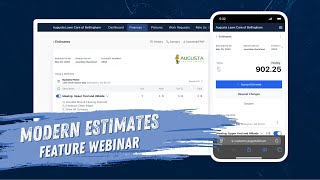
Copilot's Modern Estimates feature rebuilds the Stripe integration and redesigns estimates for mobile. The new system captures decline reasons, streamlines deposit flows with ACH for enterprise, and early customers report higher close rates. The webinar includes a live demo of the customer portal and Q&A on roadmap, integrations, and workflows.
Questions this video answers
Parker (host), Josh Kahl (VP of Product), Stephen George (product manager), Nathan (product team), Mike Andes (content creator referenced)
Stripe integration (rebuilt to enable faster innovation and capture more actionable payment/customer data).
Customers can select a decline reason (pricing, scheduling, other) and optionally leave comments; these decline reasons surface in the CRM and estimate table.
Accept-and-pay deposit flow with ability to require deposits above a threshold (percentage or fixed amount); ACH enabled for enterprise customers; saved payment methods persist on customer profiles.
Approximately 80% of usage is on mobile (as stated by Josh).
Chapters
Hello, everyone, and welcome to our Modern Estimates feature release webinar. Thank you guys for all joining and registering and taking the time out of your day to come see what's up with Copilot lately with our new Modern Estimates release today, we've got a whole bunch of people on our product team that you may or may not have met before or seen before, and we're kind of going to talk through what this release means for Copilot. What are the details of this release, give a demo and offer a Q and A at the end for you guys to be able to ask any questions that you've had now that you've been able to play around with it for a few days. Maybe you have some questions about how things work and maybe questions about where we're going with this moving forward. One of the presenters I want to bring up now is our VP of product, Josh Kahl, and he's going to be going through some information. So, Josh, without further ado, feel free to take it away.
Thanks, man. Hey, everybody, I'm Josh Kahl from the product team here at Copilot. Really excited just to be here with you all today.
The release of Estimates improvements is really a significant step forward for Copilot and also for our customers. There was a significant body of work that our engineering team did to rebuild our stripe integration and implementation, which was really critical work that just allows us to really quickly innovate and just improve some of the critical payment functions of the platform. It also provides you with more actionable data, like customer details and payment methods in your stripe account. So there's really some significant work under the hood of the platform, and what you're really seeing in the UI or inside of the app is really kind of like the tip of the iceberg. That said, our UX teams also did some significant work just to start solving some of the platform's usability problems. So I'm going to start with a few here slides here just to cover some of those major UX improvements and. And then gonna pass it off to Steven, our senior product manager, who's gonna jump into a demo and then kind of walk through some of the flows and then we'll open it up to some discussions in Q and A. So the first thing most people noticed was just like, improved design and layout. We put a lot of thought and a lot of work into just modernizing the experience, and we feel very strongly that we wanna help you put your best foot forward. And this is the first kind of initial touch point that you have with your customers often and we wanna make sure you look professional. There was a lot of thought and effort and design that went into kind of some of the nuances that Steven through in the demo, but a lot of thought done. Also on mobile, when we look at the data, I think it's almost 80% of usage is on mobile. So we're really kind of thinking mobile first here as a company. And what we're starting to do is establish some patterns that we're going to be replicating throughout the rest of the platform. We realize this is just a slice of functionality specifically with estimates, but you can imagine that this kind of pattern of design will replicate throughout the rest of the platform.
Decline reasons. This is a major kind of flag on the ground for us as a business. We don't see any of our competitors doing this and we've gotten some really good feedback that this is valuable. You know, we really want to help push you guys to ensure that you're getting an answer on an estimate. Mike talks about all the time in his content that getting ghosted is kind of the worst case scenario. So anything you can do on your end to get a yes or even a no. A no is much better than a ghosting. And when you're getting that, no understanding why, right? So if it's pricing or scheduling or frequency or other, and then you can, you know, kind of pivot based on that information, you know, so if you understand it comes in quickly and it's pricing, you can quickly reach out to that customer. If it's others, it's just giving you kind of just in time information to make some decisions on how to save that estimate in that deal. So there's going to be, I think, kind of a longer tale of, you know, what do we do with that data in the platform, how do we report on it, how do we let you take action on it or automate on it. But for now, you know, I think it's a really good start to helping you guys understand why estimates are being declined. So I'm curious to hear feedback when we open it up to you all around this. The other big thing is just a lot of improvements around helping you get paid up front. You know, again, we want to, you know, part of our mission here at Copilot we've spoken about in the past is helping you make more money. And we realize that's a little bit on the nose, but you know, that's really our intent and so we want to focus on the areas where you have those initial touch points. With your customers and reduce friction and allow for them for easy, quick pay in advance of projects. So we've really kind of streamlined that entire deposit process. We've allowed for ACH for enterprise customers and really kind of streamline that deposit flow, just helping customers commit more quickly. I'm going to pass it over to Steven. I do have some other kind of feedback on this, this deck that I can come back to. But Steven, are you ready to kind of walk through a demo?
Yeah, absolutely. Thank you, Josh.
Cool.
Well, nice to meet you everyone. If I haven't met you already. I know I've talked to a few of you, but my name is Stephen George. I am also one of the product managers here at Copilot and I'm very excited today to show you live in production. This is in your accounts right now. So if you haven't seen it yet, definitely go check it out for yourself. But just demo some of the things that Josh touched on in his presentation. If we can get that up. There we go. Perfect. This is the customer portal view. When you send an estimate to a customer, when they click that link, this is what will open up in their customer portal. As you can see, the design here is really nice. It's really nicely laid out. There's a couple of things that I wanted to touch on specifically with making your business look professional. We know that's really important. Usually estimates are the first kind of touch point where potential customers are building their impression of your business. So it's really important that we present you in a professional manner. So as you can see, the design reflects that. There's really nice touches like we have a contact button up here so they can contact the company with your company info here. And then some nice things like when they for instance toggle on and off line items from the estimate. As you can see, we have nice toast notifications. You might have seen that the total will do this nice animation where it rolls up and rolls down. Just really thoughtful polish on all of this. But let me get into the kind of the meat and potatoes of our features here. So Josh touched on the decline reasons. That's one of the cool things that we launched in this. And as you can see, if a customer chooses to decline an estimate, this modal launches and they can choose to put in a reason whether that's pricing, scheduling or other. And then when they click other, they can also leave comments in this box like this doesn't work for me.
Hopefully they give you better insight than that. And then they can click decline and these Decline reasons will show up in your CRM both on the estimate itself. So as you can see, I can see the decline reason right there, but also it'll show up on the estimate table with the decline reasons right here. So we're really hoping this gives you really fast data into why the estimates are getting declined and you can make moves in your business based on trends that you're seeing in this data. So for instance, if you were to see, you know, multiple estimates in a single week get declined because of pricing, maybe that's a key indicator that you should take a look at your pricing. So that's decline reasons. And then let me give you a demo of paying a deposit on an estimate as well.
So as you can see on this estimate, on the accept button, we have a accept and pay deposit option. So in your CRM settings you can set a threshold that basically says anytime an estimate is above a certain number, you can require a deposit on it, whether that be a percentage or a fixed amount. And in this case, this estimate requires a deposit. So if I click this button.
They'Ll be presented with another modal where they can either choose from payment method, payment methods already saved on their account. So as you can see, this customer has a bank account they can choose from or a credit card, or they can go ahead and set up a new credit card or bank account and these new ones will get automatically saved into their customer profile. So after they pay this deposit, you don't have to go searching for a payment method down the road when you're ready to invoice the customer. So I'm just going to use this credit card that I have on file, click pay. There's a nice loading animation, the button turns green, there's a nice toast notification and the estimate is already accepted. So now you can go into Jobs confidently knowing that you have some money down and that you have a payment method on file. So that's some of the key changes that we implemented in this estimates release. Hope this brings a lot of value to your guys business and I'm excited to see the potential changes that we're going to implement in the future. So I think is that back to you or Josh Parker? Not sure who it goes to.
Yeah, just me, quickly for a few minutes. Thank you Stephen. Really appreciate that. We'll open it up to questions right after this. I did want to share some customer feedback, both good and bad, that we're seeing just in the social channels. We've got a lot of positive feedback. Of course, I'll start with that but a lot of good commentary around kind of the deposit changes. I think there was a lot of friction previously or I know there's a lot of friction previously and just even accepting a deposit, customers have to go to multiple screens and it was often, you know, confusing and frustrating for customers. Chris McFarland mentioned we've also had a significant drop in customers reaching out to us with questions about how to accept their estimate or decline certain line items. Let's save them quite a bit of time. Some other feedback around it just being awesome, the toggles instead of the button, the counter when you remove the items. Just looking forward to more. One that really stood out to me. I think Mike had posed a question to social channel like how is this impacting your close rate? Britta had said, you know there's previously was 26 to 56, now it's at 82% which is incredible. Right. It's doubling their close rate. Right. We don't have a ton of data here. You know, we're talking about it in a week and a half but we'd love to hear back feedback from you all as you're starting to use this and being more intentional about your estimating process and trying to get people to a yes or a no, how it really impacts that close ratio. And then our customers love how easy is view estimates accept and pay. We can't wait to see what's next. We love seeing this feedback. Of course on the other side there was some feedback, some recommendations and there's just like a few of them. There's quite a few more but the recommended tags we positioned below the line items. You know, the logo maybe needs to be a little bit bigger or smaller. There's also feedback on how the taxes line being confusing in the table. So I just wanted to share some of the feedback and just, just make you all aware that we're very closely monitoring all of your feedback on the social channels and it's super valuable. So please don't feel like you need to hold back or not be honest or candid. We need all of the feedback that we're taking this and we're kind of putting it into some fast follows. A lot of this, not all of it per se, but what are the things that we're quickly following up with just to kind of improve this experience. It's really all based off of feedback that you're providing. So please continue giving that as you see fit. I think that's all I had on my end just for the presentation. I don't know Parker, if we want to open it up to Q A at this point.
Yeah, we'll open it up to Q A. So I'll get some of these product people on the panel here so that we can kind of jump around and see if we want to answer any questions.
Yeah, maybe I'll start picking some questions and then maybe you guys can decide which one of you wants to answer them. But we'll kind of start with some of the ones that I see some of us in chat have been responding to. But maybe if we want to give a little bit more of a in depth answer. First one from Brian Fox about the prepay option they offer. Can we customize deposit requirements so it reflects 100%? Somebody want to take this one?
Nathan, you want to take it?
Yeah, let me. Let me speak a little bit about current state and then a little tease. So currently we do have the ability to control your deposit requirement at the global level. So you can set a global baseline. You can also customize it per customer. The ability for you to execute on for fertilizer estimates would probably mean doing it on a per estimate basis or on a per line item basis. We don't currently offer that functionality, but it does sound like we're exposing some future ideas that might be really beneficial. We also have heard the feedback that there is potentially value in having a prepay option available as an alternate to a standard deposit of just opening up that ability. And that is a thing that the product team is looking very closely at right now.
Sweet. Awesome. And I think that kind of two bird one stones Paul's question here. What does it lock into that particular estimate? Which is awesome. Thank you, Nathan, for that. Looks like we got a few more questions down below here. One from Derek Palermo, Derek's longtime user says, will there be a change to the mobile version? I think the giant total price that pops up when you open it on your phone scares customers away and confuses people. They don't know to scroll down some of them.
Nathan, you want to take that one too?
Yeah, sure, sure, sure, I'll take that one. Yeah, that one's. That one's named right at me. Yeah. Derek, I really appreciate that. You're not the only person who's voiced this, and we want to be.
The whole goal of this is to make accepting and driving delivery of estimates more functional for you and your business. I think from a. From a design standpoint, there is a conviction that putting those CTAs in a place of primacy has a lot of value in getting the answer even if it is a decline. But I think we have heard that that might not be aligned with everyone's workflow and so I think we are working to help you.
Help make the case that the estimates like help develop a story around how well you're closing estimates now versus maybe historically. And then we're looking into the ability of what level of customization do we need to provide for our customers when they're showing it to their customers. Should you be able to control how you display line Items, where those CTAs fall, what additional metadata you show? So I don't know that we have anything that we're committed to in that path right now, but we've heard that there are a lot of different ways people use estimates and we want to make sure that we're giving you the control you need to deliver a good estimates experience.
Sweet.
Looks like we got a little follow up from Brian on that says feature request prepay option would be great. Is awesome. Another one coming from Nathan Hart says will there be in hold on. Will there be a way in the future to manually choose a decline reason? Many clients will often decline via email or over the phone but won't click the decline button. I've seen this one personally in the Facebook group and in some of the support chats recently saying like hey me as the business when I decline it I want to be able to leave a note somewhere. I know someone in the Facebook group, I think right before this just said that they're putting the decline reason inside of the customer notes like profile notes so that they can at least keep track of it. Do we think this will be added moving forward?
Yeah, we've seen this quite a bit as well. You know just the ask for it not just to be on the customer portal and would just kind of say similar to what Nathan has said, we're kind of taking it under advisement. We definitely realize that there's a use case there. One of the things that was being advised relatively recently was that you know, you could kind of act on behalf of the end customer and go into their portal. So we I think are trying to remove some friction there. If they have login requirements turned on so you can act on their behalf and kind of go in and do the decline reasons for them. Realize that's not totally ideal. Right. But I think short answer your question is yes, we're definitely considering moving that functionality into the CRM so that you can act on customers behalf. Nathan, anything to add?
Just if I could speak to that. This was A net new feature and it's really focused on those end customers and capturing that data. What we did do, just so everyone understands how it currently works, when you do a decline from the CRM side, it just auto fills that for you. We wanted to make sure that as we built a new way to capture data that the ones that were declined on the CRM weren't falling through. That is being captured but everyone is speaking correctly that it just kind of auto assigns it as like other decline by business. And it would be I think really advantageous in the future for us to explore what it looks like adding the ability to like either provide a different decline reason or at least provide a note in that context so you don't have to track it elsewhere. So that's. Those are. Those are. It's very good feedback that we're hearing that there's value in extending that feature set.
Agreed.
Nice.
Well I think that is the last like big question that's here in the group. We got a couple feedback things. Brian says that Nathan's idea is great like they always are.
Let's see Derek coming in with another one here. Let's read it. The mobile version. If the line item title is too long it gets blocked by the recommended wording or something else blocks it and cuts it off and it can get confusing for the customer because they can't read it.
Derek, you're right. You're absolutely right. There's a lot of I think fine tuning to get the mobile experience up to the standard we expect. And I think part of that is us revisiting some of the design decisions that we stepped out of the gate with which is already underway. And again I think similar to the primacy of the CTAs that we talked about is exploring how much of a, of a given line item should be under the control of our customers to present, you know, like how much, how much of the description do you want to show how much of like a recommended tab tax totals? I think we've kind of heard different people have different use cases of what they want to present as a line item and I think we need to continue to explore how we're giving you the right controls there. But yes, some of the low hanging fruit line items getting cut off. Yeah, there's some mobile polish to be added for sure.
Brian. Brian's coming in and stealing the show. Interested to know what the plan is to upgrade the client portal over time. Would the client portal get more of a modern feel and look over time? So I think I've gotten this question a lot in support is like, okay, well you're not doing the whole client portal. Is this like the end state of the client portal? Like, why did you only do the estimates? Someone want to speak on releasing this over time?
Josh, do you want to speak to them? Do you want me to take that?
Sure, I'll speak to. And you can just add some additional color. So the way we're thinking about it is we're going to incrementally working through the platform to really improve the core objects. We started with estimates again, like I said at the top of the call, focusing, I think someone in the social channel said where the rubber meets the road, where you're getting paid and making sure that's really good. You know, starting with payments and then estimates both in the portal and kind of moving into CRM. So like at a super high level, we're, we're thinking of kind of updates to the other key objects within the platform, like invoices and visits and other kind of portal pages like the dashboards and reviews starting to be incrementally updated in the portal and then also kind of the representation of that in the CRM kind of in the coming months, you know, through the rest of this year. Again, this first release was really mainly focused a lot under the hood and the platform that really helps us scale and allow us to incrementally move throughout the platform. But in short, to answer your question, that's how we're thinking about it. You'll see incremental improvements throughout the portal and then also some representation of that and how it's managed within the CRM. Anything to add, Nathan or anybody else?
Yeah, I think that's very well said. The other thing I would add is that shipping iteratively this way allows us to provide value much quicker. There is definitely on the horizon and I think when we first stepped out under this project, the intent to fix the whole client portal and we understood what it was going to take to do that collectively and do it well. And we didn't want to wait that long to be able to provide value. So I think it's very much under that guise that we're trying to deliver what doesn't feel like a fractured experience and able to upgrade certain primary flows and try to pick off different pages as we are able to increase our scope, but didn't want to limit what we could deliver to you all without needing to have the whole thing done.
Product delivery is always a little bit iterative. I think it'll be in Fits and starts, but with a focus on trying to provide value as quick as we can.
And I think you'll also see to that end that this last release was major and massive. It was important because we had to make some really foundational changes. I think what you'll start seeing moving forward is much smaller releases more frequently. That's at least our intent. And we're going to try to make really clear what those releases are, what the little shifts and changes are over time. Just so you guys are super aware. But you can imagine that we won't be going months and months without releases like this last time. We won't be doing that again.
Nice. Thank you, guys. I'm going to jump around over here. I see a message from Brian that I want to touch on a little bit here. He says, tie the core loop components together. When you have an assessment, be able to create an estimate from it. Then when you accept it, create visits from that estimate. And then when you invoice, it pulls over the invoice amounts automatically from that visit. We do currently have all of these things. So you can on the estimate, click convert to visit and then you take that visit and when you complete it, it creates an invoice. So I'd love to hear like you touching more on that if there's anything in specific that's kind of not as intuitive as you were hoping for. So I'll give you a chance if you want to put that in the comments too. I will bounce around back to. Can I touch on that actually, Parker? Yeah, go for it.
Sorry not to interrupt you. I think the one thing in Brian's comment that we don't currently have is that when you have an assessment on the schedule, you can't create an estimate directly from that. Which is actually a conversation that we had with engineering recently, this week, actually. So it's all fresh on everybody's minds. But yeah, having that workflow where it's like, okay, I have a work request. What's the next step? Putting an assessment on the schedule from that assessment directly. Like you're saying, creating the estimate right there instead of having to go to plus new. Doing that whole thing, especially on mobile, where the workflow becomes really broken up. Yeah, I think that's the one thing that we're missing. If we have that, obviously iterating on the other steps of the core loop process. But I think that's a really, really good point that Brian brought up. Something that we definitely need to look into adding.
That's great. You got me. I forgot you can create an estimate from the work request directly, but you cannot from the assessment that's scheduled from the work requ. So that is definitely a great thing that we should be able to add because I know like, one of the big things about Jobber is it's super easy to tell, you know, what stage of, you know, that client core loop, like we like to call it at copilot process. Is this estimate in, is this invoice in? And it clearly shows you the next steps that you need to take. And so that's definitely a great thing to iterate on. Like you said, we got a lot of comments here coming through, so I will work to the next one.
Parker, we got a lot. Go for it, guys.
Josh, did you want to go?
I was teeing you up because I think we have so many thoughts about that last comment.
Yeah.
It was it, Brian. Yeah, Brian, your lips to God's ears. This is like the mantra of. I think the entirety of our design team and product team is trying to make functionality that may in fact exist in the CRM really feel first party and like each piece talks to. It talks to each other. These line items are on an estimate. I should be able to create a visit, pull from those, you know, slice it up by. This estimate has two locations on it. I can go there pre, you know, pre flight. The invoices, like all of these things from a request all the way down to an invoice or an assessment. They should all speak the same language and be interoperable. That is a huge, massive body of work and we are trying to chop it up so that we can deliver a lot of the value along the way and not wait until it's all done. But that is a huge North Star for us right now. So, like, of all the stuff I've seen, I think there's a lot of value in what people are calling out. But that is kind of like the big story that Josh and myself, design and product have been. Have been trying to put some shape to over the last few months.
Plus one.
Nice. Got a little small one here from Paul Smith. Just saying on the main page in that client portal, removing the total paid amount. I've gotten this one a couple times over the years in support chats, people not wanting to show the customers the total amount paid of all time because sometimes it can scare people, like, how much have I spent on lawn mowing over the last five years? People don't necessarily want to see that. So I could totally see that being a little bit useful, kind of taking the modular approach of maybe being able to show or hide certain things for customers, depending on what kind of business you are. And I definitely see us, you know, kind of implementing stuff like that as we're working and refining the UI of Copilot for sure. Jamar has a note here about the CTA saying prominent CTAs work. If your primary goal is click through rate, look at our estimates as sales letters that are telling a story. Price in the HERO section is rarely ever a good idea unless you're selling on price. Do we want to touch on maybe why we decided to, you know, put the price in the HERO model and, and touch on that a little bit more as well?
I think Nathan, not to put you on spot, has some interesting thoughts around what is actually being represented in this object of an estimate and often like what exactly is the intent?
I don't want to.
Yeah, I mean, that's fair. You did. I think that the call out here is really good. I think one of the things that we built was a first party and a first class experience for an estimate as we internally understood how that object functions. I think you're calling out for you. Was it Jamar? Jamar, yeah. For him, these function in his business as a sales letter and we've heard, I think even other versions of that in terms of like this is kind of a menu, which again, maybe is the sales letter, maybe it's slightly different, but there's different use cases of how this object is being utilized in a business and we need to be able to pivot, expand, differentiate those use cases. So I think that all of that feedback is incredibly valid and we are taking it in immediate under immediate advisement for how we can continue to grow this. There was a very much a narrow focus scope of like here's how Mike Andes and Augusta Lawncare thinks about this estimate and this software has an opinion about what an estimate is meant to do and how do we optimize that use case? I think from here it's going to be continuing to grow and understand other ways that that object is used by different businesses.
Yeah.
And Jamar, just a note, I'll follow up with you just to talk through more about your specific kind of use case here. I'd love to kind of dig into it more and how you're. I know you've sent us some videos. I don't know if it was specific to this, but I'll connect with you soon. Yeah.
And, and to speak to that, I think it was in one of the videos I think, and if not in the video, other people have presented this of like think sales letter adjacent where it's like I want to show multiple line items and it's only one of these types. Right. Like I, I'm trying to build a, a different thing than like here's a receipt. Will you sign off on this? It's a different experience and I think that does require a holistic review of what's currently there and what would we need to change to really deliver on this. So that's not a small slice of work, but we do think it's really important and we're trying to understand better all of those kind of ways that people use an estimate. So please keep the feedback coming.
Sweet. Next one. Here's got a lot of reactions from Nathan Hart. One thing that will help my company is implementing sub line items and estimates that are hidden from the client. This is a huge bottleneck for us since we're having to use a spreadsheet to calculate all the different parts of a job like materials, labor, drive time, etc. Any word on this coming in the future?
It's interesting that this was brought up because I actually just had a call today with Mike Callahan from Simple Growth or Simple Green? Simple Growth. Right. Just about how critical this is and basically being able to represent things on the estimate that you don't necessarily want your end customer to see, like parts and how much supplies and materials that you're needing. So this kind of falls in a similar bucket to what Nathan was talking about around. A lot of this is just edification and learning on our end of what's really important for you and specific use cases and this one is relatively well known, at least at the product level. And it's something that yeah, we're starting to kind of dig into as well. I'm sorry, I don't remember who asked that question, but it's a great question and realize how critical this is for a lot of workflows.
Sweet. Thank you for that, Josh. Jamar, adding to Brian's comments about Brian was talking about having things follow through your flow from assessment to estimate to visit to invoice. Jamar wants to add that it would be helpful for notes to follow through that path as well. I've heard this quite a bit. Maybe if I'm having certain notes on estimates because there's one specific thing that I want to make sure that we capture about it, maybe when I create that visit that that note gets added to the visit somehow. Following through with notes as well has been one that I've gotten a bit as well. Do you guys want to touch on that one a little bit maybe?
I think it's a great idea.
Same.
Yeah, yeah, I think it's an awesome idea. I really want to this is very blue sky, the future that someday we will all reach. But I would love for you to be able to see your invoice and be able to walk back all the things that preceded it. Like walk back to the visit to the estimate, to all the to do's who worked on what and be able to like navigate back that historical journey almost like a feed in reverse chronological chronological order and see where notes changed, see where adjustments were made. I think these, all of these core pieces need to talk to each other for this to be a true industry leading CRM that helps you do the work you do. So yes. Plus one to notes plus one to all the things that need to flow through.
Sweet.
Brian chiming in saying thank you all, enjoy using the CRM and looking forward to future features. Heck yeah.
Here we go.
James Anderson on the topic of automations, are there any plans to introduce more advanced automation features such as Public API to enhance integration and streamline workflows?
That is a great question. One of the things we've been looking at lately with automations is really just ensuring reliability and stability and also observability. Observability, That's a tough word sometimes on our end so that we can tell when things are working right. Like there was a long period of time where automations were unreliable and we know a lot of people abandoned them over time. So they're really working initially up until this point to get it like rock solid and building a new queuing system just kind of, kind of cleaning out the craft. We have started to have some discussions around a public API. Brian Heck, I think that's who it was from Augusta. I spoke to him at the Blue Collar Summit in quite a bit of detail about some specific use cases. We realize there's quite a bit of value and use case there and exposing a public API. I'll just say it's really conceptual on our end at this point. James, if you have some specific kind of use cases, maybe I'll leave my email address in the comments or chat. Would love to talk to you more about it. I'll just say that it's probably not something that's going to happen real soon, but would love to learn more about how you intend to use it. We are also thinking about automations very broadly in the sense that a Lot of the automations that are in the platform really should just kind of be settings and that you shouldn't have to go configure a really simple automation to kick off like estimate reminders at 1 day, 3 day, 5 day, 7 day like you we that should be incumbent upon the platform to have an opinion about. This is what usually works and you guys just kind of check a box as opposed to having to configure that entire thing. So again, very broadly speaking we do have some kind of aim with automations to make it much more simple but also still really flexible for a lot of use cases. So I'd love for folks to reach out to me just with more specifics around how the public API might interplay there and just other automations feedback. So James, I'll leave my email address right now if it's helpful. If you're interested in reaching out, please do.
Perfect. Kind of along the same vein there of integrations Brian Fox says will tags ever flow through the Zapier integration? Is that on the roadmap? And I'll kind of broaden this a little bit instead of just tags. Do we have plans to keep adding Zapier triggers and actions? Because right now we have a kind of a limited amount and I know a lot of members have reached out to me asking, you know, when is this action or this trigger going to be added to Zapier or do we plan on expanding at all or is this kind of, you know, what we plan on it looking like moving forward?
I would say that I'm curious Steven or Aid, if you guys have more like perspective on current but we don't have any immediate plans. I'm talking like in our very immediate future of expanding that this is another area of just like discovery that I think would be useful if people are interested in reaching out and telling us more about specifically what they're looking to do. You know, is it stuff that can be completed in the platform or is it stuff that really needs to live outside, you know, via a zap? So yeah, please reach out I think James, you just said you reach out. We'd love to have more discussions and kind of kick off some more discovery work there. Steven, or I don't know if you have anything else to add about specifically with Zapier for now.
Yeah, I mean I would add I think one of our goals at Copilot and I think Nathan touched on this earlier, is we want to give you guys a holistic solution and I realize like Zapier is super powerful and you can do a lot of outside integrations to that, but ideally we would love for all of those.
For us to ship a product that has thoughts and opinions about how those things should be done in your business.
I do think we could probably add to Zapier in the future. I know tagging would unlock a lot of key workflows in there, so maybe that's a quick thing that we can work on or do some exploration on. But just to caveat that a lot of our focus going in the immediate future at least is going to be how can we give you a more holistic product to improve your business.
Brian Fox says we wouldn't need Zapier integration so much if we could see open rates on emails that are sent out to customers. I currently use mailchimp. That's one that I've heard in the Facebook group as well today. Just being able to see the metrics. I know someone was saying they were using another marketing platform in the past and it's very common to be able to see your open rates, your bounce rates, other different metrics that typically come across in marketing first softwares Copilot is more of a CRM with great marketing features. But do we plan on adding the ability for people to be able to see their metrics right within their account?
I would say that Brian not speaking to the Roadmap, but I think more yes, ending Steven's previous comment, I would also very much agree that this is something that should be handled, that you shouldn't need a ZAP to be able to track these metrics, that you shouldn't need to reach out to an external tool, wire this up, keep that maintained just to see who's opening the emails that you send from that first tool. So I think this holistic story and a CRM that's solving your business would be providing as a first party service.
Awesome. Jamar coming in with another one saying any plans for visual lead flow tracking? Right now it's hard to tell what stage a new lead is at unless we're constantly checking manually. So I'm assuming he's talking something of like a pipeline.
Yeah, I've actually heard this come up. Maybe Jamar, you brought this up at Blue Collar. I heard it from several people. Like.
We call ourselves the CRM, but we don't really have kind of traditional CRM CRM pipeline in the sense of knowing where where your, you know, prospect is before they become a customer. And so I would just say it's known, Jamar, but it isn't something we're immediately tackling. But yeah, it's something definitely in discovery. Something. Maybe we can follow up again, Jamar, while we connect, talk more about it. But yeah, I think the, the, the need is understood.
I'll add to that as well a little bit because I know someone's probably typing it right now. Same for like a lead pipeline. What about a sales pipeline? So people who maybe like to give their sales representatives commission, you know, if a customer reaches out because they saw John put the door hanger on their door, maybe they get a little bit of commission. Do we have anything at least being in discovery for some sort of a sales pipeline or being able to track those sales representatives metrics a little bit easier?
Yeah, I think it's kind of the same story. There isn't currently a mechanism for pipelining, but I think it's pretty common in the industry and kind of very common, a direct line to, you know, a CRM. So I think that's, it's kind of similar, Parker. Not necessarily one in the same, but it's kind of the same concept of tracking prospects or sales people across the timeline is something that we don't do yet, but maybe should. So Jamar says, what's our overarching vision and goal for the rest of the year? That's a very good and loaded question, Jamar. I would say it's something that we're very actively in discussions with across the entire team. You know, over the past couple of months we've brought on a lot of senior talent on both, you know, product design and engineering and kind of have the philosophy that all of them have a seat at the table of deciding what's really next and most critical for the business. I mentioned it kind of at the top of the call. Like the current thinking is, you know, indeed going through the core objects of the platform and just making our core absolutely rock solid and just kind of having that connective tissue from, you know, when lead comes in all the way through to it being invoiced. I think what you'll see probably relatively soon after we've gotten through some of this, you know, these fast follows and this initial follow up work from estimates is just a continuation of a similar type of concept that we've done with estimates. We're just going to improve it small, start to get your feedback and then iterate that over time. One thing that we're trying to avoid doing, and I know this is probably frustrating to hear, but is giving too much of a projective roadmap of here's what we're going to be doing in the next 12 months. You all have probably been part of that in the past where say we're doing this and don't deliver on it and we're not going to do that anymore. And it's not because we're trying to hide anything from you. It's because, you know, the way this often works and product delivery and building is that there's, there's only so much you can see in front of you and really understand what's the most important right now. So we're really kind of trying to adhere to that. So, Jamar, I don't know if that answers your question, but I think this year you're going to see a much more usable, reliable platform and that has more of a holistic and kind of opinionated vision of how we do things. And we're going to be working really closely with you all with your feedback that guides that vision.
Thank you guys all for watching. Hopefully you guys have a great rest of your day and we'll see you guys later. Take care, everybody.
Thanks, all.
Thank you.






