My $500,000+ Per Year Anytime Fitness Gym!
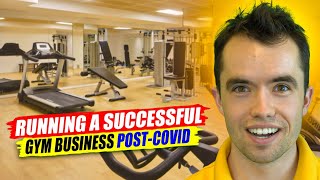
Mike Andes rebuilt his Anytime Fitness gym to $500k+ annual revenue after COVID by shifting from memberships to training sales. He raised prices to $50/month for memberships and $379-400/month for small-group training, invested $6-7k in body-composition scanners, and enforced multi-month contracts to boost customer lifetime value against virtual competitors like Peloton.
Questions this video answers
About $500,000+ per year
October 28, 2020
About three months (closed for three months)
He estimates 20–40% of memberships left for many clubs
He says his club is in the top 5–10% of the Anytime Fitness system
Chapters
Hey, everyone, it's Mike Andes and you're listening to the Business Bootcamp podcast. Today I'm talking to gym owners that have gone through 2020 whose business has been decimated by COVID 19 and talk about the things that you need to be doing and we have done at our gym to make sure that we get through this time and can continue to grow our gym businesses going forward. Before we get into today's show, a big thank you, today's sponsor, which is Gusta, if you haven't already, go to gusto.combootcamp try out their software completely free, where you can do direct deposits for all your employee wages, benefits and much, much more. Go to gusto.combootcamp and try out today completely free for 90 days. Alright, so usually people know me, Mike Andes, as the guy from landscape business course, the guy that talks about landscaping that has 2530 locations around North America for Augusta Lawn Care. But today I'm gonna talk a little bit about something that I don't talk a lot about, and that's the gym business. So you're probably watching this now if you are a gym owner. And so if you are a gym owner, you've gone through a lot in 2020. In our landscaping business, we've had record numbers, we've had great profit margins, we've had to deal a little bit with labor issues around Covid, but nothing in terms of shutdowns or stopping our business for the most part. And so if you're a gym owner, though, you know what it's like to be told you cannot operate. And in the past six months you've been told that. Well, you have not been told. People have left your gym. And for most of us, it's 20 to 40% of our gym membership have left. People don't feel comfortable working out. And I know that as I'm recording this, even though it's been six months, some gyms still cannot open. And this has completely changed the gym industry, completely reversed the trend of more and more box gyms open up in terms of clubs, in terms of physical locations. This is going to dramatically increase the rate of technology taking over this industry. Companies like Peloton have absolutely quadrupled and 5x their valuations on the stock market as people work out from home, as they start to watch their budget. And so as we went through March, April 2020, that's what we saw the biggest changes. Not only were we closed at our local gym, so I'm an owner at Anytime Fitness and have been for the past Few years and we're a pretty successful club. We're probably in the top five, 5 to 10% of the system.
But come March, we were closed down for three months and we had to quickly shift to online training and to virtual classes. Very, very difficult. Still completely obliterated our revenues because we were not allowed to by the state charge for our dues. We had to stop. It's not like even if members wanted to keep paying, we were not allowed to keep paying their dues when we were closed. So we had to shut down all billing. And that was pretty horrible. But the biggest thing that changed in this industry is that for the past 10, 12 years, people have had a good amount of money. The economy's been growing, unemployment rate's been going down, and people that have had gym memberships never used a club, they would still be paying. And now though they're watching their billing, they're watching their statements, their bank statements, they're seeing their budgeting app and actually looking at all the recurring transactions. And so for those people that had gym memberships but hadn't used it for 12, 24, 36 months now, they started to cancel. And so when we came back after three months of being closed and everyone's billing got turned on, we had a wave of cancellations. So for many business owners right now in the gym industry, you are struggling. This is not something that's over for most of us. But I want to talk about how we have been able to restore all of our revenue back at our club, how we had to pivot, change. It was not easy, but we've hired two more people than we did pre Covid and I really feel like the long term health of the club is actually on a better trajectory now than it was before. Not saying this to brag. I'm hoping that though some of the things I had to learn and pay dearly for over the past six months can be beneficial to you as you try to get back on track with your gym. Alright, so a few different things when it comes to owning and running a really good club. And some of this is generic for any gym owner, not just someone who's gone through Covid, but if you're literally just starting a brand new gym, number one is find a great club manager. I feel like this is the heartbeat of the club. The person that is sort of the face of the business, especially for someone like myself that is there maybe five to ten minutes a day until less than an hour a week I'm at the club and so I really Depend on having a great club manager that does all the billing, that takes care of the customers, that does all the sales and manages the scheduling, and does all the payroll and does all of the expense Categorization, like everything comes down to a great club manager. They are kind of the heartbeat of the club. Finding that person very, very important. Number two is focus on training and not on memberships. This is something that anytime fitness is a brand I felt was very weak on. Pre Covid is like, they're like, yeah, like make sure you do training and sell training. But then all that they would do for advertising is like get a seven day free membership. And everything was about the membership. And still the bulk. 95 plus percent of the revenues within the system came from memberships. And you know, for us it was about 12, only less than 12% of our revenue came from training in comparison to memberships. And memberships was great. You sold 24, 7 gym access, you got access to 4,500 plus clubs around the world as part of the franchise. And you know, so the gym memberships, they sold themselves, we charged a premium price in our market. We charged $50 approximately per month. And that was really where most of the money came from. And training was kind of a side thing. It was something that we didn't pay attention to a whole lot. We didn't have high margins, didn't really focus on a sales system or training or role playing or any of that stuff. We really focused on just mostly memberships because that was where 85, 90% of the revenue came from. But the reason you want to focus on training is number three, and that is annual value per customer. Very, very important. And that is if someone's willing to pay $50 per month for a gym membership, but they're also willing to pay $500 a month for training, I've literally just 10x'd the value of that customer on an annual or monthly basis. Therefore, I might have less members at my club, but if I am charging them five and ten times as much per month, I can get away with less membership. And this is something that you've got to do as a gym owner right now. You've got to focus on the value per customer, not on number of customers. In the past, that was our golden method of measurement of the success of a club. How many members do you have? Well, now it's no longer about that. It's like value per member is what we really are focused on. Because if I can get 10 people to give me $1,000 a month, that's $10,000. Or I can get a thousand thousand people to give me. Sorry. Or I can get 100 people to give me $10. Still $1,000. So the amount of money I made, same the amount of problems I have with 10 people in comparison to 100 people, a whole lot less. And traditionally, the person who's getting training is gonna get results and they're gonna be the one that stays at the gym the longest. So retention. So we have really shifted our model to focus less on number of members and the number of new sales and really focus on retention as well as the value per customer in our system. So that means selling more training because again, $50 a month membership, great, that's fine. That keeps the bill, pays the bills, keeps the lights on, but it does not make a whole lot of profit. But if I get $500 a month or more from a customer for training, that's what's going to make money. Number four is really focusing on member engagement and community, Focusing on the things that they can't get from a screen, they can't watching on Instagram or YouTube or, you know, even riding their peloton bike. Obviously, something like peloton I don't think is going to wipe out the gym, the gym industry, because it's one piece of equipment and people usually get bored of just riding a bike. They want to have a treadmill and an elliptical and weight machines and free weights and plyo boxes and all the other different variety. And I feel like that's the most healthy thing to do is have all the different types of workouts. However, you've got to really replace the fact that when they jump on that peloton, they have, like, celebrity trainers in front of them and great music and a great environment. You've got to match and exceed that in your gym. You've got to create that member engagement. You've got to create that community. You've got to create employees that care, trainers that care, and members that care for one another. I've gone to clubs before where the music's super loud, everyone has their headphones in, no one's, like, talking to each other. Whereas what my measurement of community inside my club is like, when I go in there, I want to see people talking, I want to see people dapping people up, I want people interacting. That's that sense of community that cannot be replaced when someone's at home by themselves watching a screen cannot be replaced in the same way. So really focusing on what can you provide that a screen or virtual Training cannot. Number five, take science.
Use science to really increase the perceived value of your membership and of your club training and charge accordingly. So we have really invested significantly in body composition scanner, heart rate monitoring systems and other ways for our trainer to really prove that we use science. We don't just like, you know, guess we don't just like, oh, here's a workout program that we just printed off. Our diets are based upon the BMR and the basal metabolic rate and things like that for the client. It's not just like, oh, yeah, we give this to all of our customers. And oh, yeah, we just make your workout based upon, you know, the one we give to everybody. No, it's based upon your size. We give heart rate monitors that are on the screen that they can see their heart rate, they can see their perceived, their perceived exertion rate, it's called. And really begin to tailor our offering to them based upon science. Like a body composition scanner using bioelectrical impedance is expensive. Like, we paid six, almost $7,000 for this scanner that scans them and gives them measurements of their bone density, water weight, muscle mass, all the rest of it. Very, very precise. A very medical piece of equipment. Like, you don't get this kind of a scale even at a doctor's office. Like, it's very precise, it's expensive. But we made sure we invest in that because it increases the perceived value of a membership and especially for trainees of our trainers, really gives them the value they're looking for. And really because of that, that's why we're able to charge 4, $500 a month for small group personal training. We're not, you know, we used to spend, used to have people pay $100 a month for the same thing that we're basically charging now, $400 or $379. So almost 4X. We've 4X'd the prices on our training and we've also increased the prices of our membership by about 10%. Like, why, like, why do you increase your prices after a pandemic? Because we wanted to be able to take that money and focus on the customer that was willing to spend more and get results. And that's through training. That's through someone who wants to get on a bioelectrical impedance scanner and see their results and track their results. Someone who wants to wear a heart rate monitor. Those are the people who are gonna get results, those are the people who are willing to pay, and those are the people that can afford to stay long term. And we can retain them. So focusing less on numbers of customers, numbers of members, and focusing more on the members that we do have, are we getting them results and are we getting them in terms of value to the club at a 5-10x multiple of what we would have in the past? So we want to increase the perceived value of a membership by using technology and medical science and we want to charge for that increased perceived value. So we're going to charge more. Like we increased our prices by 4x went from $100 a month to $379 a month. The same thing of small group training. And then for our memberships we basically went to bi weekly billing. And so now people are paying about 52 to $54 per month instead of 48 to $50 per month. Last thing, if you're owning a gym, have agreements, do not have month to month contracts. This is something that is really been a big debate topic in the gym community in terms of like, oh, I shouldn't have these contracts for my members. Well, if you do not have contracts and over 2020, you lost a lot more customers and a lot more members. Because when fear struck over Covid, so many people would have left if they are month to month. We were fortunate enough to have most of our clients on 12 to 48, 12 to 24 month contracts where they could not cancel. And if they did, it was $199 cancellation fee. Therefore we only lost about 15 to 20% of our member base instead of the 31st, 40 and 50% which a lot of other clubs did that were just on month to month basis. So I hope something out of those six things you learned from if you're starting your gym, if you've been going through Covid and you own a club, I wish you all the best. Comment below if there's anything I can do to help you. By no means am I the pro. I don't have like 15 or 20 clubs like some people do. I have one that performs very well, is very, very profitable. We do about half a million in revin, a little over half a million million in revenue each year. And we've now got back to pre Covid levels in terms of revenue by replacing what we've lost in membership with training. If you have any questions, comment below. You've been listening to the Business Bootcamp podcast. I'm Mike Andes. Until next time. Be great because nothing else pays.






