My Story: How I Built a $65M Lawn Care Business
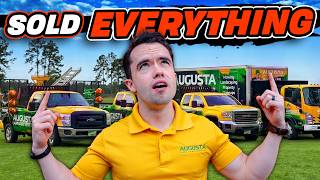
Mike Andes built a $65 million lawn care and software business over two decades, starting as a teenage side hustle. A near-fatal truck accident forced him to systematize operations. He later created Copilot CRM, franchised the business, and bought out his co-founder to retain control.
Chapters
Whether you're just starting out or you have a 7-figure business, this video will show you the strategies that actually work. I've been in the home service industry for 20 years. I built a home service franchise that produced over $65 million last year. I've coached thousands of home service business owners across the country. Don't do it, bro. That's a horrible deal. There's like plenty of employees that have become billionaires. The one you warranty, that's the one. If anything goes wrong, we will cover it. And then you mark that up and you're selling insurance. More importantly, our revenue gets flattened for the whole year. Oh my gosh. Gosh, that's a great idea. I'm gonna break down the lessons I have learned throughout my career so you can avoid the mistakes I've made. It's very tempting when someone says, "I'll give you $10 million for the business." Like, very tempting at my lowest moment for that. I've broken these into 6 seasons of my life. So let's jump into it. First season is when I was 11 years old and I started Andy's Lawn Care with my brother. And the reason we started was because we needed to pay our way through college. And I knew I was gonna go to college really early. Because I looked at college as kind of my way out and my way to be able to be financially free. And I knew I wanted to become a doctor and more specifically a surgeon, ideally brain or spine. That was kind of like where I was thinking. And so I wanted to go to college early because I didn't really like work at school and bookwork and that sort of thing. I liked dealing with the patients, and so I wanted to speed through school as fast as possible. So I skipped a couple of grades. I started kindergarten when I was young. That's how I was able to then start college when I was 13 years old. So we were mowing grass when I was 11. At 13, I started college and I just want to get through as quickly as possible. I was able to pay my way through college using Andy's Lawn Care. Now, I still remember when the day came, I was 18 years old and I realized I was not going to go any further in my medical career. And for all those years from 13, really 10, 9, 10, 11, all the way up until I was 18, medicine was everything to me. I had all the wall, the pictures on my wall, like the banners of like skeletons and the muscle groups and like, oh, I memorized all the muscles and the brain and all this sort of thing. And I would watch for fun just surgeries. That was like my go-to. It was so wrapped up in my identity as a young person. And then at 18, I decided I wasn't going to do it anymore. And that came as a result of going to Africa for a couple months, Kenya, and volunteering a whole bunch in different clinics and different orphanages. And I loved being there. And I was able to do all sorts of procedures there I could never do in the US, whether it be birthing or surgery. I worked a lot in the burn unit and the pediatric side of things, and I loved that. But when I came back to the US and was doing shadowing with different doctors and specialties, I realized that I didn't want to be doing the same thing for the next 40 years. And I definitely wasn't thrilled about working with like the bureaucracy, the politics, the medication side, pharmaceutical side of the industry in the US. And so the only skill I really got, in my opinion, from that period of time when I was 13 to 18, going to college, being young, I learned the skill to do the boring work, the work that I didn't enjoy. I didn't love reading books. It didn't even come easy to me. A lot of people think like, oh, you must have photographic memory. I don't. Like, I still worked like crazy hard to be able to get through biochem, get through kinesiology, get through biology. Like, All of those things were very difficult for me, and I was able to pass. I was able to get through it, but it wasn't like I enjoyed doing it. But that skill has served me well, and that is the ability to stay applied to something that you don't enjoy doing, but knowing that the result— in this case for college, a piece of paper— was the result I was looking for, and I was willing to stay applied to that. The thing that I would say is, if you're trying to be exceptional, by definition you will be the exception and you will feel lonely. And so if you're in the situation when you're doing something that none of your friends are doing, you're doing something none of your family has done before, you're going to feel lonely at times. Saturday morning, I'm just heading to our local auto auction. It's in Bellingham here. And so there's a couple of trucks I'm interested in, one for an estimate truck, another small Isuzu dump truck, which would work great for small loads for landscaping jobs. And then also it has a dump. There was no one else doing what I was doing or the same level of expectations that I had for myself. So when I went around friends or people that were my age, I felt somewhat disconnected. Again, if you are trying to do something that no one else is trying to do, expect to feel somewhat alone, but do in your heart what you know you must do in order to be able to achieve the end result. And what I knew I needed to do was eventually drop out because I knew that I didn't want to be doing this for the rest of my career. The same 1 or 2 procedures deep into surgery. As robotics came along, eventually it would be mostly laparoscopic. I didn't want to deal with that. And so that's when I dropped out of the medical career kind of path and said, hey, like, the only skill I really know is lawn care. And so that really takes me in the next season of my life, which is when I burned the boats and started Augusta Lawn Care. Hi, my name is Mike Andes. I'm the owner here at Augusta Lawn Care Services. Augusta Lawn Care was named that because I just played a lot of golf. Augusta National is where they had a whole bunch of golf happening. It was like the iconic place to be able to have the PGA Tour and all this stuff. And so I actually took what they wear, the white uniforms that their caddies wear, and that was the uniform. We had these overalls, you'd zip them up, and on the back it just says "Greenskeeper." It's like our slogan was "Your personal greenskeeper." And that's, that's when I started Augusta Lawn Care. Now, doing that, there was a lot of social pressure from my peers as well as my professors, especially on the research side in the lab, to like, hey, you are crazy. Like, They always called me like the Doogie Howser because I didn't even know what that was for a long time. And then I figured out it's like this old, old TV show about a young kid that was a doctor. Okay. But they always called me that. And it was a lot of pressure from them, like, hey, what are you doing? Like, you're such a waste of talent to go from trying to do everything we were trying to do in the research lab and medical and going to become a surgeon. And now you're going to mow grass. And so certainly the first few years of Augusta Lawn Care in this next season, I doubted myself a lot because for so long my identity had been wrapped up in being a medical student, going to college, even like research and all these things I was so focused on. It was, it was part of my identity. And I would encourage you, if you have an identity that you've associated with self in the past, be careful trying to hold on to that if you're trying to move on to something new or bigger. And at the time, I had no evidence that what I was doing was any bigger or better because for the first few years I just worked like a dog out doing mowing grass. At night, I would go and get my MBA at night at Western Washington University. I do my night classes there. So my typical day was like, I'd wake up at 5 or 6, go out and mow grass all day long, get back home, shower, have dinner. And then at 6 o'clock, my evening classes would start at the college and those would go to 10, usually 10:30 or 11. I'd finish with like doing projects with the class and my peers and I'd get home at like 12. And I just did that for like 2 solid years. And the MBA thing was mostly kind of like a backup plan. I was like, hey, look, if I don't, this lawn care thing doesn't work out, at least I'll have my master's in business administration and I can go get a corporate job. That was really the plan. And I had no evidence that what I had done and the decision I had made to drop out of college was actually a good move for probably 5 to 8 years. And so I say this because the grind and the work ethic that you're putting into the current thing that you're honing and trying to work on, it might take a long period of time for you to see any evidence that's working. Everyone expects to start their business and the next week, the next month, even the next year, to wake up and be like, this is a good business and I like this industry and I'm like the top of my market. It doesn't usually work that way. We're gonna be profitable every single month besides one, because there's gonna be another one where there's 3 pay periods and that those are tough. If we can, January 1st, we're gonna start doing medical benefits, um, for everyone here. And I say that so that if you're just getting started, if you're 1, 2, 3 years and you're just feeling like I'm not getting the traction, I'm not feeling like I understand a lot of these elements, still have a lot of problems in the business, I don't have any systems in the business, just understand that it took me a solid 5 to 8 years to feel like I even could do this lawn care thing and scale it and make something meaningful. When I did Augusta Lawn Care and those days looked very much the same, wake up early, mow grass all day long. Finally got my first employee, but still work out in the field a lot. I actually had a ton of allergies. And so I would actually wear two shirts throughout the day. I'd wear one and usually by 11, 12 o'clock it'd start to get warm and my allergies would pick up. So I'd get rash all over my chest. My throat would constrict a bunch. My eyes, that was the hardest part, would get all puffy and it was hard to see, like they get blurry. It was horrible. So I would, at about 11 or 12 o'clock, I would switch out my shirt, get my new one on, 'cause it was all sweaty, and then that would irritate my chest and all the rash. So I would take the first one off, and I'd just use that as my snot rag. The percentage of people that mow grass for a living and are also allergic to it is mind-boggling. But the thing that I learned here was there are 3 levels of stress in a business. The first is physical stress, and that's what I was going through at this time. The second is you begin to grow and you have a manager, you become a manager and you have employees. Now you have financial stress because you got to make payroll because you have more overhead. Your profit margins aren't as high as when you were a solo operator. And so I was experiencing that. And then as you begin to grow the business, usually past $750,000, $800,000 in revenue, that's when you start having psychological stress because every single day you wake up, something's going wrong. Something is broken. A customer is leaving a bad review. An employee has walked off the job. There's just all these problems in the business. And so I was experiencing at this season the evolution and the morphing of physical stress and being on the field all the time, having all these issues around my allergies, to then having financial stress because now I hired my first 1, 2, 3, 4 employees, having a lot of stress, which is like making payroll and scraping by. And then third was as the business grew past $750,000, $800,000 in revenue and you have 8, 9, 10 employees, Now it's psychological stress because there's just— everything is happening bad all the time. And you start with a clear schedule and a few estimates, and by the end of the day, you're working 8, 9, 10 o'clock at night trying to fix something that was broken, mend a relationship with the customer that went bad. And it is stressful. So keep that in mind as you grow a business, that it's not that the stress goes away. It just morphs into a different type of stress, from physical stress to financial stress to psychological stress. Now, the next season really happened when I had my own turnaround. Now, since then, we've had what we call the Turnaround Show, and I fly out around the country and help other people turn around their business. The more you can plan for it, the more likely in September you actually pull the trigger. Yeah, I think that's a good idea for the winter, for sure. I wouldn't not do this, first off, if it was a matter of I didn't think you were working your butt off. The difference between your F- and their C- is the effort. I would also recommend a franchise advisory council as soon as possible. Possible. It'll change your game. Like, this whole rollout, if you had a Franchise Advisory Council, would be different. But my business needed a turnaround because I had been doing it for like 3 or 4 years, growing the business to almost $1 million in annual revenue. But I didn't have systems, I didn't have procedures. And this season was when I had the accident, and I was underneath the dump truck and my hoodie got caught in the PTO, which is the thing that spins really fast, dumps the back of the truck. Uh, it got caught in there, and if you Just look up on YouTube like PTO accidents. You'll see some very gruesome stories and videos of people that get caught in PTOs. And so I was very fortunate enough to wear my hoodie, my t-shirt cinched up around my neck in a split second and got really, really tight. And then it just shredded and I fell out. But it put me out for a couple of weeks from being able to do the work. And what I learned is I needed systems. Everything I had learned in my MBA, I hadn't applied inside my lawn care business. And so having standard operating procedures and systems and having an admin person, all these things I had not actually done in my own business. And so I still remember being at the hospital on the bed, videoing, FaceTiming my crew so they could see the next project. And why? Because I didn't have a system. I didn't have estimate notes or an estimate video to be able to give them so they could get the job done without me. And it all just relied on me working 80, 90, 100 hours a week to make sure that customers were served. And I've just learned that I need systems and I need to make sure that not everything is hinging on me working all these crazy hours and that the business is systems dependent instead of personality dependent. I highly recommend for anyone listening, don't wait on a life-threatening situation to make the changes you know you need to see in the business. And you might listen to my content or read a book or podcast and you know that you're the bottleneck. You know that you're, not having systems in the business. You don't have a good website. You don't have anyone answering the phone. That takes a long time for you to get back to leads. You know, those problems don't make it take a life-threatening experience like I had to make the changes necessary that are hard and difficult and take time. And it's not fun and it's not easy, but make those changes now for the good of the people that you are providing for and the people that you are stewarding. For me, I was lucky enough to— when this happened, I didn't have a wife, I didn't have kids, I didn't have any dependents. And fortunately, the business was relatively small. But I have seen Millions of dollars of revenue go out the door for large companies when the owner gets injured. There's a family emergency. They have a mental breakdown. They have a family emergency. They have to leave for a couple of weeks or there's problems in their relationship. These are things that happen to everybody, but we don't plan for it and we don't actually create systems in the business that they can run without us. And so the big concept of like the Copy and Paste Millionaire book is really just a matter of how do you build a business that runs without you? And the reason it's important is because I learned firsthand experience building a business that depends on you for every single aspect of sales, operations, and admin. If I get taken out of the equation and in this case literally like get in an accident, hit by a bus, the business would go out, it would go under. I was so fortunate when that happened that I didn't have dependents because otherwise I would have to declare bankruptcy. I would not have been able to provide. And so I just implore everyone that watches this to do the hard work of creating systems in the business so that inevitably when life happens and you have to step away for some period of time, the business continues. You don't have to lay people off, you don't have to go bankrupt, you don't have to go into huge amounts of debt. And that's what I learned from that season. The fourth season was when I decided to franchise Augusta. And after turning around my own business in a matter of a couple of years, I was able to now go from work— working crazy amounts of hours to where I'd go to the office once a week to meet up with the to general manager, and I went from making no money to making almost $300,000 in distributions. And so I wanted to share this. I wanted to tell other people in lawn care, landscaping, home services about everything I had done in the past year and a half to turn the business around. Pay for performance, all the systems around estimate videos, all these things I had learned I wanted to share. So I started making videos on YouTube, but no one would listen. And that's when I decided I would franchise the business because my whole goal was to prevent what happened to me happening to other people. That would have dependents and would have a family that they'd be having to provide for, or a bigger business than I had, and be in a really bad spot if that happened to them. And I knew that it could be avoided, that pain, if they had systems, if they had a pay-for-performance model where employees were paid based upon how hard they worked and not just how many hours they clocked in a day. These are the systems I had to build during that time, and it helped my business tremendously. And so I started sharing on YouTube, didn't see anyone listening. Say, look, I'm going to franchise so that everyone that joins the franchise, I'm wearing the same uniform as them. We're all incentivized and on the same team. We all want to grow. And then they'll actually adopt these systems. So that's when we franchised Augusta Lawn Care. Our objective here, though, is, is that I'd much rather be allowed to have a franchisee be somebody who's worked here or worked at an Augusta location. That way they get to know what it's like to work in the field. Because like, I hate personally, like, when people people just start businesses because they have money and they don't know what it's like to work outside. They don't know what it's like to grind and work in the rain and all that sort of thing. So I feel like it's part of like our culture for the owners to know what that's like. Kind of the phrase that kept going through my mind is something I had learned way back when I was golfing as a young kid, and it was sacrifice or grit, you choose. When we started a franchise, just realizing that scaling an organization of that size was just such a big different task than I had done, like, just doing my one location, even my second location. It was like, okay, now we have all over different— all over the country, all over the continent, all over the world. It's like, this is a totally different level that I have not been accustomed to, and it would require a huge amount of capital. And so this is when I lived inside the closet of the studio. This is where I sleep. It's, it's a whopping— I think it's about 6.5 square feet by 6.5 square feet. I can, I can hardly walk in here without falling into my bed, basically. It's not as bad as it sounds. In the office, we rented this little office space to be able to train the owners of Augusta Lawn Care when they come in as franchisees. But I lived in that closet and I just lived on the floor on this little mattress. There was no running, no hot water. So I'd go next door to the gym to take a shower. There was no like kitchen there. So I would— a lot of stuff I was just doing snacking. But I did that for over 2 years, almost 2 and a half years. I lived in the closet of the studio and the lesson that I learned is investing back into the business, living frugally and not taking from tomorrow's harvest today. By allowing the seed to germinate and let it sit there and grow, that's what gets me the yield down the road. And so if you're in your first few years of growing a business, I highly recommend sacrifice now. Don't have the big fancy car. Don't have the big fancy house. You don't need those things to get the business growing, to get off the ground. And there's so much momentum is required and so much effort and energy and money that is required to grow a business, if you're also siphoning it off to live a very luxurious lifestyle or live beyond your means, it is very good chance that you will not only stunt but potentially suffocate the business from growth. And so this is when I reduced all my personal expenses. I got down to as low as possible so we could invest into the franchise without having to go get investors, debt, or private equity. The founder of L&M, Mark Bradley, has sold out his position in LMM. I see this as a massive loss to the industry. And the reason for that is because once the founder has left, I— you can consistently see these companies flounder. They do not innovate. They do not push the envelope and they stop investing in their product. And because of that, our industry falls behind. I had to cut out like real estate stuff that I was doing. I had to cut out this food service thing that I was doing and cut out everything that was not this one thing. And I was becoming a better leader for Augusta Nation. For those of you listening, like, what can you apply in your own business is go all in. I think about 10-year swings when it comes to business, and that is, if you can't— if you're not going to dedicate 10 years to it, don't do it. And if you're going to start, don't expect to be successful in 1, 2, or 3 years. It's going to take a solid 10 years for you to be able to be like, that was a— that was a great swing. If you think about it in that term, man, that's daunting. That's a long time. There's a really good chance you have 4 or 5 really good swings in your career. Most people spend 6 months, 12 months going after thing after thing and getting distracted with all these different options of real estate and crypto and investing in the stock market and then doing video and I'm doing content creation and they go all these different directions instead of just saying, I'm just gonna pick the one thing and do it for the next 10 years. And that's what I had come to grips with when I dropped out of medical school. I was like, I only know how to do lawn care. I'm gonna do it for the next 10 years. I'm just gonna focus on becoming the I'm going to be the best person at lawn care and go all in on it. And that led to the long hours out in the field. That led to having to sleep on the floor of the closet inside of a studio. It led to those things. But I had dedicated 10 years and then went all in on it. And when you have that sort of mentality, you are typically going to do what others are not willing to do. And that might be the only moat you have. That might be the only thing that separates you from everyone else in your— all your competition. All the people in your market might be the fact that you were just willing to do what they aren't willing to do. Why would I ask for a bunch of equity and give away the thing that I love the most, which is the business? The next season after franchising was software, and this is where I started Copilot CRM. It's now been rebranded to HomeWorks. I was asked if I would ever start a CRM and start a software business, and at the time I said, I don't want to start a CRM. I don't have any plans to start a CRM, but there was again another huge skill gap that I had because I had to learn leadership when it came to the franchising side and leading leaders. When it came to the software side, I had technical inabilities. I had never scaled a software company before. And you might be a great leader, but if you don't have the technical chops in software, it just became a nightmare. And we went into what we call bug hell. Today, there's over 50 bugs. Is that good, Mike? And that's after like 2 weeks of just solid fighting bugs. At least once a day I think I want to quit. And it was months, not just like a couple days or weeks, it was months of us trying to catch up with so many people joining the software. We had a whole bunch of scammers get in because we allowed the free version to have email and text, which just messed everything up, and allowed to run payments. It was really bad and they messed It just messed everything up. Bugs were everywhere, like hundreds of bugs that we had identified. And it was mostly because like the overarching infrastructure, the foundation was not built for that kind of scale. And so when we started and it started scaling, it was doing really good. And I was like, oh my word, this is great. At the same time, it was like, okay, there's so many problems starting to come because the foundation, the code base is not built for this many people or for this level of use. Like a million plus dollars a day of transactions is a lot of invoices, estimates, clocking in and out, employees, people breaking the system, doing weird stuff, hackers trying to get in all of that. It was not built for that because by this time I was flying out in person to do the turnaround show with people that were struggling in their own business. And that's really how we promoted the franchise, Home Service Web Design, Lawn Care Web Design, as well as the software HomeWorks. I still remember the one time I spent 3— this is the longest I've never not slept. 3 nights of not sleeping. I just saw no way out. And honestly, those 3 nights of not sleeping wasn't like me, like intensely working and, you know, being so hardcore. This was me just so stressed. I couldn't, I couldn't get, go to sleep because everything was breaking. You're constantly publicly apologizing. Your whole reputation is kind of getting flushed down the toilet. I'm losing reputation with the owners of Augusta that I personally know, love, and want them to win so bad. And like, I'm hurting their business when everything I've done in my career is trying to help these people, and now I'm actually hurting them. And so I was just so stressed out of my mind. Like, there's just— I remember like feeling cortisol pumping through my veins. It's like, not being able to sleep was crazy. And it wasn't just those 3 days. That was like the most acute. I remember that so distinctly because I then had to go on a turnaround show right after that. It was like 3 days of that. Then that night I flew out on a turnaround show with the media team, and it was just— it was horrible. Like, everything in that period of life was so brutal. My ab— I have never had my ab lock up like that in my whole life. Your ab locked up? Dude, it was brutal. I was trying to crawl to my to my phone to text Brianna. Dang, dude. It still hurts. Did it just like stop over time? No, it locked. I couldn't move. I've never had that much. And the guy was like, dude, are you okay? I'm like, it's okay, it's okay, it's okay. Oh my God. You know what that is? Probably lack of sleep. I've had her lack of sleep before. Fortunately, I was single because I would have been a horrible husband. But my goodness, it was a very humbling experience. It humbled me to the core because everything I'd built before that, we already had over 100 locations at Augusta. Things were going well by all optics, even though I was— I just moved out of the, of the, the, the closet. Like, I got my own apartment and like I was going forward. And then all of a sudden, like, very humbling experience. And then at that moment when everything was going bad, I had to double down and buy out my co-founder. He owned 40% of the business, and I knew that we would have to spend millions of dollars to turn the company around, get the type of engineering talent and the type of people. The team would have to get rebuilt. To do that, it would take millions of dollars. I didn't want to go with private equity. I knew that they have perverse incentives. I had seen over and over again what they do to companies. I didn't want to go that direction, even though it's very tempting when someone says, I'll give you $10 million for the business. Like, very tempting at my lowest moment for that. I turned down an offer to buy a majority stake ownership of Augusta Lawn Care. And put the valuation above 8 figures, above $10 million. Most venture capitalists, most private equity, they think in terms of 5 years is like the max. But usually it's more like 2 years, 2 to 5 years. And I know what they would do. I know immediately what they would do if I gave them control. They'd raise prices. They would take away the flat fee model and they'd raise— they'd almost double the prices at Command Center. And so I know that's what they would do. And I know that in in the short term, they would make a bunch of money and everyone would live happily ever after. And I would be so mad because that's not the goal. That's not the end vision, is not just extrapolating more cash. It's a matter of the goal of Augusta is to change the level of professionalism in the industry, period. And I believe that we're going to be able to do that next 10 to 15 years. And I truly believe that in, in 5 years, 5 to 10 years, people will say it is stupid not to join Augusta Lawn Care. I truly believe that. You know, I truly believe in the next 12 months I will be called either a genius or an absolute fool for turning down millions of dollars and accepting millions of dollars in debt. I'm either going to be called a fool or a genius, but at the end of the day, either way, I'll be glad I made this decision. And so I had to buy out my co-founder, 40%. So I sold off all my real estate, not all of it, but a big chunk of it. 5 properties that I had, duplexes or multifamily, I sold it all so I could buy out my co-founder and be able to own 100% of the business because I knew that I would need that control to be able to go then spend more money on hiring and getting the right team and recruiting high-level engineers and product and support. And like, it was going to be a huge investment. The defining moments for most entrepreneurs— and this is me saying this in hindsight for myself, but like in hindsight, looking back— is the people that can go all in and double down when there is no evidence as to why they should are the people who win in the long term. The people that take the biggest bets on themselves. And that's what I was doing. I still remember being like, okay, I could take this money, continue this very much like linear growth of Augusta and real estate and growing my personal wealth. Or I could just go all in on the software thing that I know is going to be the thing that in 10 years I would need for Augusta to really take over the market. But like, it's not easy. It's not easy. And so if you're at this point where you're like, man, I don't know if I can get to the next level of my business. It's going to require a huge amount of sacrifice, of time, of investment back into the business. And I just realized that I was going to have to pay for this talent to go faster. Like, I would have to pay way more than I ever felt comfortable or ever done in terms of salaries to attract people from very large companies that were publicly traded or at hundreds of millions of dollars worth of revenue. I would have to attract them to my little startup that was a dumpster fire and in by all optics, simply an influencer shilling a pathetic piece of software. To anyone outside, that's probably what it looked like. And I would have to convince them to come work on this thing because I genuinely believe that software would be a key component of me being able to scale the Turnaround Show. Because I'd gone out one by one by one and helped these people with their turnaround on their business. It's kind of mind-blowing because it's not really the amount of time that he spends with you, it's just that value that he brings in such a short amount of time. Honestly, really, it wasn't until last night that really hit me and started to feel very surreal. Oh my gosh, he's actually coming. I am so thrilled to have him here. I think this has definitely been super helpful for kind of helping me make sense of what's going on in my life and my business. And then I wrote this book showing the 13 steps of what I was using on the Turn On Show. So I made the roadmap, the blueprint to be able to turn your business around yourself using this book. But the problem was people would have to like self-medicate. They'd have to self-prescribe the problem they had in the business and they'd have to read a book for 3 or 4 hours. That's not going to happen. And so I went from one-to-one with the Turnaround Show. Then I wrote the book and I was like, the best way to do this is actually just know the data of the companies and be able to tell them what to do. And that's where the software is going to go over the next several years is using AI, but more importantly, using everything I talk about, about close ratio and efficiency scores and pay for performance and and profit sharing. All of these things can be tied into a software where all of that data is already there. I already know what their service area is like. I already know which services are most profitable, which customers are most profitable, when they should raise prices. That's all in the software. So the whole objective was I need to have a service. They click a button and it raises their prices. They click a button and it optimizes their route. It clicks a button and it changes the efficiency of their team. And that's why I knew the software is important. My goodness, it was hard. And I just encourage you, when there is no evidence that you're going to win, bet on yourself. And that's what I did when I sold everything and I bought out my co-founder and then took the rest of my money and then spent it on hiring great talent and realizing that was what was required to be able to get to the next level. This is the Mike Perfect shovel trick shot. Ah! The next season, is where everyone says things are better and good and improving. That's when we started the Holdco. So I decided after stabilizing Homeworks and getting the software back on track and getting an amazing team that was so privileged and honored for them, for them to join this little startup, I realized that I wanted to win with other people. And so I had owned 100% of the business up until this point. And so I decided, hey, there's key engineers. I'm going to have to give them pieces of equity in order for them to join. And I want to give opportunity to the first couple hundred owners inside of Augusta an opportunity to also join in the holdco. And the objective was go public in 8 to 12 years, use the money from going public to be able to, to invest heavily into robotics, but then have the infrastructure built around software, the franchise for distribution and command center to be able to use the robotics in a very efficient way. So that was like the overarching long-term plan. But I realized that I wanted to win with all the people that support supported me early on and took a big bet on me. And so we allowed the initial owners of Augusta Lawn Care to join. I gave 5% of my equity towards that, and they were able to buy in what's called a SAFE, Standard Agreement for Future Equity. Basically, when we go public, they get equity, uh, and be able to take the franchise, the software, and the media team together as a holdco public down the road. And the lesson that I learned at this stage, whether it be the holdco, the turnaround show, and making these constant improvements was a principle from Alex Hormozi, which is more and better before new, and just constantly doing more reps of what you're currently doing to be able to gain the muscle required. Do it better by honing what— how you're doing it every single time. And it's so easy to jump to the next new thing. It's always the next shiny, it's better, new service, new industry, new service area. It's always doing things new. But if you can just focus on doing things more and better than everyone else, that's where all the money's made. That's where the top 1% get, not just in wealth, but also in impact. Just focusing on doing more of what you're doing and doing it better. But the thing is, it is boring doing the same thing all the time, every single time, and just making 1%, 2%, 3% tweaks. Because we all want a double, we all want a 10x, but we don't want to do the daily 1 to 2% little adjustments. And I have been able to adjust my thinking to much more around this concept and philosophy of I just need to make small tweaks over and over again. And when I wake up in 5 or 10 years, that's when it'll be something special. And I think winning with others is an undervalued asset when it comes to building a life that is meaningful, whether it be a family, whether it be a spouse, whether it be, uh, your employees. Uh, have a group of people around you, a community that you build that wins with you. And if you winning means other people have to get torn down, I don't see that as successful. If you winning means that a whole bunch of other people win, I see that as a successful venture, a successful business, a successful life. And that's what I learned in this last season of The Holdco and the whole vision of going public and the turnaround show and making these constant improvements and getting the 3 elements and 3 pillars of the whole code together and then giving a piece of that to the owners inside of Augusta Lawn Care and then realizing like profit sharing is way more fun. Having 21 Stages of Success for owners and technicians and general managers in Augusta is way more fun to see them win, to see them get to the next stage of their career. To win with others is so valuable. Those are the 6 seasons of my career, and my goal now is to make home service business owners rich. I travel the country fixing struggling businesses. We do it completely free because of all of the community that supports and all the products I sell. If you want my help, you can also get a turnaround and I'll come out for free. Just use the link down in the description. I share all my best advice for free on my website. So just go to MikeAndes.com. There's a bunch of courses and workshops on there completely for free. And you can also subscribe to my YouTube channel if you want advice on growing a 7-figure home service business, click here or watch this video here where I give you the sales, marketing, and hiring playbook that I use at Augusta Lawn Care. Again, my name is Mike Andes, Augusta Lawn Care Services. Thank you so much for listening.






