Not Stressed? You're a Low Performer - Episode 024
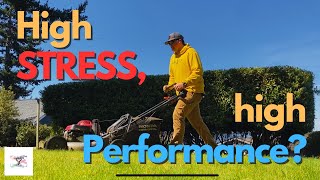
Mike and Lee debate Andy Frisella's claim that stress equals high performance, arguing context matters: acute stress can drive results, but chronic stress tanks them. They discuss Lee's corporate role, Dave Ramsey's debt advice, and creators like Alex Hormozi.
Chapters
That's not a lot. I mean, in America.
That was weird.
Random.
Okay.
Well, folks, it's another episode of the C Suite, unfiltered. We're going to go ahead and kick things off. I had a couple of things I wanted to go over, which is quite the turn of events. But seeing that you worked on Saturday out in the field, I figured I should pick up some slack on the pod for Monday.
We're good.
So, first and foremost, I did want to hand out a rose for your work on Saturday. Thank you. I find it quite admirable that you would be willing or want to or not want to, but be willing to go out and work out in the field with the guys. So for everyone watching you do, obviously the coaching calls for the franchise sales calls as well, along with Chuck. But you also kind of manage the Bellingham shop and just make sure that they're running, especially because they're new general managers. And then Chuck takes care of the other ones. And, yeah, I saw your name on the dispatch board, and I was like, oh, man. But I know it's tough to go from, like, office job than, like, go out and work in the field for on a hot day, so I appreciate it.
Yeah. Thank you. It was fun. I don't need any flowers. I'm good. If I got some sun. Oh, dude. I got some sun. Yeah. If I would not have done 75 hard prior, I would have died, dude.
I was thinking the same thing. I was like, okay, I'm GLAD he did 75 hard because it won't be as bad.
Yeah. So this is one thing I didn't share with you. Cause we didn't talk about it. I was like, you know, some things are better left unsaid. Like, I'm just going to go work in the field, and, you know, sometimes you just got to pick it up. Sometimes you just got to go. I vlogged everything.
Really?
I vlogged everything.
Did you tell the media team?
I have not yet. I vlogged everything.
That's going to be great. I.
That's what I told. Because Chuck texted me. He was like, bro, you're going out mowing. And I was like, yes, I am, Chuck. And I said, but I'm going to make it positive. I will vlog everything.
That's awesome.
So you get some of my raw, unfiltered thoughts about having to step up as a manager and mow on a Saturday, as well as some fun tips. I also got a new customer, and I got an upsell.
Let's go.
And I made Dylan Give me 50 bucks in the team meeting this morning. I was like, guys, it's that easy. I mowed once this year. Once. And I got a new customer and I got 50 bucks. Yeah.
Yeah, let's go.
It was awesome. I talked to so many of our customers. Here's one thing. I know the people that support our channel, I assume, obviously have followed you for a long time, but people that are new to the channel, like, our customers, love us. At Augusta, I know we post a lot of shorts of all the drama, the bad reviews and the horrible calls. Dude, all but one customer on Saturday came out and thanked me, gave me a water bottle, gave me a tip, talked to me, like, asked me questions about how my day was. I was like, dude, our customers are the best, man. Yeah. Yeah.
So it was fun. I have, like, I would say from my perspective, it is probably the number one trait I look for in a manager is the ability to, you know, kind of take off. Take off their. Their manager hat and be able to do frontline work. It's. It's something like, obviously I can't, like, put a job description, but, like, it's one of those things that's like, I can kind of, like, I put a lot of confidence in that there's a lot of people that are willing to come in and clock in and clock out and they can rise up in the organization so far. Then there's people that go next mile, which is they're willing to work overtime or weekends or go, you know, go extra mile when the team is behind. And then there's the next level. And that is people who are willing to humble themselves, quote, unquote, and actually go backwards in their career in order to be able to pick up slack for the team. So highly admire that. I appreciate it. I. I was going to text you on Saturday, and I was like, I'll just. I'll save it for the pod.
No, I appreciate it. Honestly. It was fun, and it just was. Once again, creates a lot of respect. It's a good reminder. And I know you're going to go start your own location, but for me, it's like, this is, like, why we do it, is for the guys that are in the position that want to better themselves, that want to build a business. And, dude, it's a grind. It was like, I know for us it's. It's Washington, but for us, it was like 75, and I was like, this is warm. Yeah, it was the hottest day of the year so far. So I was like, this is hot. It's a little warm today. Like, I'm getting the respect. And I was pushing that 30x. I made some comments in my vlogs. I was like, mike, you got trucks with AC touch screens now. I was like, when I was in the field, it was. Liz asked us, do the windows roll down? She was like, good, you don't need AC now. These guys have touch screen trucks and ac.
It's funny. Your video will have to compete with. With Chuck's now, dude. He's got some fire vlogs coming up. They have a bunch of footage they've been getting for him. And we're kind of behind now, which is good, because we're gonna get way behind over the summer. We have a whole bunch of footage coming in, and then we'll have more footage throughout the winter. But they got some really good stuff because a couple of the locations are crushing it. They're having more trucks already down North Carolina. And so. Yeah, yeah, that's gonna be a pretty good vlog. You got several coming down the pipe.
Yeah. Mine won't be a ton of drama, though, because I'm just by myself all day.
Yeah.
So it's just Lee talking to the camera.
Yeah, but those do good, dude. I'm telling you.
We'll take it.
All right. I had one other thing. Okay, these are, like, no particular order. Second topic here, I had. So for the person that might be watching, this is either a manager or maybe an owner. Here's a question for you. Why have you not started your own Augusta and left corporate? I know potentially down the road you're gonna do one virtually, like, with a manager, but, like, why have you not left, like, Marcus. Marcus, for talking to you, bro. Marcus comes along and obviously crushed as a gm, but then decided to do his own. What for you was like, hey, instead of doing your own? Cause, like, I'd say it'd probably take you three or four years maybe to replace your current salary, like, as an owner in terms of, like, you know, what you take home in taxable income, but after that, like, obviously you have equity. So, like, why would you not do that now?
Mm. Yeah. And it's a great question. And I honestly get asked quite a bit. Like, I do the introductory calls for Augusta, and people will ask, like, well, you've been there, like, five and a half years. Why haven't you taken. If it's such a great opportunity that you're currently trying to sell to me, why haven't you done it? And sometimes my answer varies. I think for me, I am like an intrapreneur, as they say. I love supporting you as the entrepreneur. I'm a very good operator. I think I know my strengths and my weaknesses. And for me, this is something that, like, my wife and I have talked about a lot. And just the dynamics of a relationship is I do really well with insane rigidity. Like, if I have every rule down to a T, I'm good. I can follow every single rule. And then I do great when there's no rules at all. Right. And then I feel like entrepreneurship is this weird blend of, like, you know what you need to do, but you also have the freedom to do whatever you want because it's your business. And I feel like I need to hone that in between space in order to better be an entrepreneur, a successful entrepreneur. I could go and do it tomorrow. Tomorrow, like, guaranteed. I have the knowledge. I've learned so much from you, from others in Augusta. I could go start a very successful location tomorrow. But I think the skill set of living in that awkward in between of, well, there is rigidity, and I have to follow certain rules when you run a business. But I also am the entrepreneur. At the end of the day, I can do whatever I want. I could sell the business tomorrow. And so I think for me, it's honing that skill set. Number one, I think number two, I just love the position I'm in. Like, in 100 honesty. I love working for you. I love working with Liz, Chuck, other members of our team. It's just so fun to be a part of a team. And I don't know if I want to go out and try to build my own team right now. I. I can thrive by myself, but it's just something about being a part of this team, being caught up in the vision and what you do and the roles you've put me in allow me to express my strengths. Whereas if I went and start a location tomorrow, you'd be back to Saturday again. Yeah, I'd be mellon on Saturdays again. I feel like this is getting, like, really serious, but I just think my skill set is not best suited at, like, a small business. And that can sound.
Good point.
That can sound conceited. Like, no, but.
No, no, it sounds good, though, because like. Like, it's not a bad thing to be more of a corporate person.
Yeah.
Like that. To recognize that that's your skill set.
Yeah. I think my skillset is great because I'm a good sounding board for you. For Liz, I can think big picture. I can adapt very Quickly. Like, Liz talks about this when we have franchisees come to training is she goes around the room and asks everyone what their superpower is. And then, of course, she asks you and I. So that way, you know, they all feel comfortable, and we all can share what we're good at. And my superpower is adaptability. You can put me in any situation. I'll figure it out. I will adapt. I will blend in. Whatever you need. I think in a corporate world, sometimes you need someone like that on your team, and you can tell me I'm wrong, but I just feel like every single year I've worked at Augusta, my job title has changed. That shows adaptability, and that's my strength. And I feel like as you continue to grow Augusta, I can flex that strength aggressively, because every year, you'll need me to do something different, and I'll just say, cool. Like, I'll figure it out and we'll do it together. So I think I just love being at the center of it all. I think that's what it comes down to.
That's cool.
Let's go, dude. Yeah.
So, no, I agree. I agree with that premise, and that is that some people.
There. There's a lot of pride right now, like, in the past 10 years to being the entrepreneur, when I think that 95% of people are. Are actually better equipped to be in a corporate position. And, like, when I did my MBA, everyone in that class, probably 90% of them weren't business owners. They were corporate people. And so I got a really good understanding of how they looked at the world versus, like, the three or four of us in the comp. In the. The class that were business owners, it's very different. Even though we were learning about the same stuff, and I think I did start to appreciate is that there's. There's skill sets there that, like, we as the entrepreneurs didn't have, that the corporate people did have and, like, structure and organization, organization operational efficiencies and things like that, that, like, we're like, oh, flip a coin. Who cares? Like, and I still have that notion, but ultimately, like, things do have to be done in the. In the business operationally. So, you know, I appreciate it.
Yeah, I love operating. I think there are times when you give me that extreme rigidity of, like, this needs to get done by X date and the numbers need to equal X.
Right.
And then there's other times where you're like, yeah, just figure it out, Lee. And so it allows me to flex a little bit of my. My range, my Adaptability to the, to the tasks that you asked me to get done. And that's what makes it fun for me too.
So cool. All right, third topic. So in the franchisee Facebook group. Oh, wait, it just jumped on me.
Sick.
I had it. Okay. I screenshot it.
Oh, whoa.
Look at that. Look. I'm okay. Here we go.
So I have no idea where this is going.
Yeah, sorry. I had this other Facebook group pulled up the service. Autopilot misfits group.
Are you in there? No, dude, you gotta check it out.
I've had to been very careful recently. Okay, so in the Facebook group, one of the franchisees on the weekend posted a quote. I'm gonna read it from Andy Frisella.
Oh, okay.
If you're a low stress person, you're most likely a low performer. Like a diamond, you're designed to be put under pressure. All right, so that was the quote. There was quite a bit of, of back and forth, dialogue, debate, whatever you.
Want to call it.
I'm a big fan of that. I don't think it's bad to debate. I've had several occasions where posts in the franchisee Facebook group, people have DM'd me or emailed me and be like, I think they should be taking down. I've never taken down a post to my knowledge I can remember, have I?
I think there was one that got taken down from someone who is no longer a franchisee.
Oh, I don't remember.
Oh, it was politically charged.
Oh, okay. I don't remember.
I don't know if you took it down or Liz or if I might have taken it down.
I don't know.
But someone was like, this needs to get taken down. Okay.
Anyways. But anyways, I've had a couple times people email me and what I typically respond back is like, you should go on that post and comment your thoughts. Like, it's okay to have like healthy debate and like dialogue and disagree on stuff. And like, between your two opinions, there's probably some sort of truth.
So.
So I'm always a fan when someone says something, something controversial. So I like the post. Yeah. Which I know, I know that some people, before they say negative, they're probably looking for that.
Yeah, it's.
I want to kind of prod a little bit. So it was good. Couple people comment back and forth. Yeah. Did you want to bring the counter argument to that?
Yeah, because I, I, my thumb hovered over, like, I was like, well, hold on a second.
It' good thought provoking stuff.
It's very thought provoking.
Anyone can post a comment that we all like. And there's 50 likes at the end of the day. Anyone can do that.
Can you read it again? Can you pull. Sorry, I don't have it right here on my screen.
Andy Frisella is a. Okay, so let's break this down. You give the counter argument, then we'll talk about our opinion of Andy Frisella and then we'll. We'll dive deeper into like what potentially could be in the in between. So the quote, if you're a low stress person, you're most likely a low performer. Like a diamond, we're designed to be put under pressure.
Okay. And you agree with that?
Oh, no, I'm not saying I agree with it. I'm saying that I liked it just to fraud the fire. Actually, I loved it. Look at that.
Oh, wow.
And then you got one person said, I disagree. I would say I'm a pretty low stress person, but a high performer. Then you had someone else say, I also say I'm a pretty low stress person. Don't sweat this petty stuff. Don't pet the sweaty stuff. Don't sweat the petty stuff. Don't pet the sweaty stuff. I'd never heard that one before.
Sounds like a very southern phrase.
And then another person says, this is a very interesting topic to me and something I have thought a lot about this year. I am certainly a high stress person and feel like I am a pretty high performer most of the time because of that. However, stress does kill and I don't feel like it is healthy for me to allow stress to control the way I run my business and interfere with my relationships with family and employees. I am really working to change this and not allow my stress to dictate my interactions. Not easy to do after 50 years. Then we had someone else say, low stress person equals self control and better decision making. So what's the counter argument? I guess I kind of outlined them in what I said there. But maybe you go ahead. Because I was gonna make a video. I was gonna talk about the mastermind. Yeah, no, I'll leave it for the pod.
That's good. I love it. Thank you. Great content piece. I think the counter argument is it's almost like zooming out from what stress is. And I don't want to get all like, like philosophical here.
Go ahead.
But I really think that it's the context in which you perform is not necessarily stress based. I think we are very reductive about how we think of stress.
Like, whoa, reductive. Dude, please break this down for Us minions, I think.
I think we're very reductive.
What's reductive mean?
We reduce it to a lower form of itself. We're reductive.
Okay.
We're reductive with how we label stress. It's like that person's moving fast, they're sweating. They're. They're acting unusual, out of character, and it's like they're stressed. And I'm like, well, not necessarily. Like, I don't think that. I think as a society, we just label everything as stressful. And it's like, well, what are the conditions that have induced that state? And then we just label it stress. So here's my disagreement.
Okay. With the quote.
With the quote. Okay?
So the quote is basically saying that you need to have stress, otherwise you pretend you're unproductive or not a high performer. High performer, right.
So I would. My disagreement with that is, I think if people see me at our conference, they would probably be like, lee's stressed right now. And I would say, I'm not stressed. Like, maybe I'm sweating. I'm talking a little bit faster. I'm moving rapidly. I'm jumping around a lot, but I am at my peak sometimes in those situations, but I'm not stressed. I think we associate certain symptoms like, that is stress. And I'm like, well, just because I'm sweating, just because I'm moving fast, I'm talking a little bit faster, it doesn't mean I'm stressed because I'm actually performing at a very high level. So my disagreement would be that I think we just label things stress just to, like, act tough. And this is where I'm going. Real philosophical. I think it's a. It's like, almost like a masculinity issue a little bit. Or pride. If we want to open to other.
Folks based upon Andy Frisella's Persona, I would agree with that.
I think it's mostly pride.
Yeah, Pride that you're stressed.
Yeah, like, I'm stressed, but I'm a high performer.
And, like, it's kind of like saying I can lift a lot of weight because that's what stress is. Is like, weight. And so therefore, I can carry a lot.
Right. But then if you get, like, a point, a.
Like a.
A bodybuilder that goes and benches £200, which is a lot to the average.
Weight or stress, you could then say is subjective of.
Yeah. And I think that's what I'm getting at. And I think it. It's almost like a prideful thing. That we label like, oh, he's such a high performer under stress. And for me, like this morning I had a pretty intense one on one with someone and I'm more stressed in that meeting, knowing exactly what I need to say than I am on stage at conference in front of 400 people.
I can't wait to hear about that off camera.
But I, but I, but you would look at me at conference and be like, oh, least stressed. And I'm like, no, I'm in my element right there. So that's where I disagree with, I think, I disagree with the labeling of stress. And I think that the environment we create around ourselves, it depends. It's. The environment we create around ourselves doesn't determine if you're a high performer or low performer. Does that make sense?
Yeah, this is my thought on it. When you take the analogy of the diamond, like diamonds created because of stress, like pressure, right. The thing is this, and I think actually the people that I looked at is who was commenting and I was trying to think about where they were at in their life, right? And so what is, is, is what's interesting is in order to create diamond, you need to have stress and there's pressure that's created in order to create the diamond. However, that does not need to be sustained in order to enjoy the benefit and the beauty of the diamond. And so for someone that might be older, they went through the years of stress, that might be a good time to actually back off the stress and enjoy the diamond and like, like look at it and see it in its beauty. And then I also think, also think that we need to be more introspective in terms of realizing when there's enough stress and we've gotten the diamond clear enough and valuable enough towards, like, I'm going to step back a little bit and I'm not going to have pressure. And I'm not afraid that by me letting off of the stress and the pressure, it's going to reduce the value of the diamond because it doesn't change. Mm. After that pressure has been initiated, the diamonds created forever. And so I think like someone, like the longer comment that I read there is from someone who's been down the road a little, had family, all of that. And so they potentially are in the stage of I've created diamond because the pressure that I've had in my life and now I can enjoy it. And I feel like what is, can be negative from that quote is the thought that you've got to maintain pressure to create diamonds. You don't Once that pressure has been made and the diamond has been formed is up to the person whether or not they think the clarity and the value of the diamond needs to keep increasing. That's the only reason you'd continue having stress otherwise. You can sit back and enjoy that stress. You can enjoy that diamond, the fruits of your labor.
But I don't think. I don't think pressure produces stress. Put trash in a trash compact or what is it? Compacted trash. It's not a diamond. Like, I know it's a. That's a dumb analogy.
Theoretically, if you actually broke it down, if it was under enough pressure, it would become carbon, and if carbon was pressurized enough, it would become a diamond.
I mean, I agree, like, if you.
Break it down elemental level. But.
Just like, here's what, here's. Here's where I'm going with that. If you have a trash idea and it's. It's bad, and you're just like, but I can make it work. I can make it work. I can make it work. I'm a high performer. It's still trash at the end of the day, no matter how much pressure you put on yourself. Right. To produce whatever you're trying to produce. Yeah.
And that's like, what I said. I think my comment was only like, you know, every good argument, every good debate hat needs context or every good quote needs context. And then I listen to the whole podcast that that quote was in. Right. And I see. I know he's coming from. And I think we all know where he's coming from. But that quote, isolated by itself, is what we're all debating.
Yeah.
So that's a good idea. That's a good thing. To compacted trash. I like that. I'm going to use that one day.
Like, I just don't see how, like, just because I think I'm going back to the context thing. Just because we say it's stressful and you got out of it doesn't make you a high performer. I'm sorry. It just doesn't. People thrive in different environments.
Right.
And that's where I think for myself, just self analysis. Because this is where I went to when I first read that quote. I was like, I thrive at conference. And this is one thing I've like, said to myself, like a little bit of a personal mantra is like, I thrive in the chaos. When it's a little more chaotic, I'm a little bit sharper like people. And then for some people, when it's a little bit chaotic, they just shut Down. They can't handle it. And then there are people that can work in a quiet, dark room and just crush. And I would be like, I need noise. I need something. I need interaction. I need an interruption. But you would label mine as stress because it's loud, it's chaotic. But the other person who's, like, calm and in a. In a better environment, they're not stressed. Does that make sense? Yeah. I feel like I'm just trying to, like, fully come up with a thought. I'm like halfway to a thought.
So. Yeah, that was. That was my top. My topics, man. Yeah, it was a good debate. I like it.
So. But you don't like the quote overall?
To be perfectly honest, I'm a huge fan of Andrew for seller.
I know the name Big dude.
You know, sounds like a bodybuilder. Looks like a bodybuilder, is a bodybuilder. Big health dude on steroids. Like, kind of a. A dirty mouth.
Okay.
That kind of turns me off a little bit. I don't mind when someone like, I'm like, whatever. I can get ignored. Who cares? You know, if you're eating a pie throughout the pits. If they hit occasionally. One. Yeah. But like, when someone, like, every sentence, it just is like, okay, dude, either your vocabulary stinks.
Yeah.
Or like, it just gets. Well, it just. I don't know, it makes me feel like they have a lower iq. Like when it's all the time. Yeah.
But you really like Gary Vee. But I guess he's not all the time.
I don't like Gary Vee, though.
Well, you used to.
I used to. And, and, but, but. And the swearing, though, like, when he says on stage, he point. He pointedly puts in a very good spot that makes people laugh. Yeah, Right. And if you notice, compare his talks five years ago versus now of how he swears. It is minuscule now. Yeah, minuscule. And that's why he's gone mainstream, because people are more embracing of it. But anyways, I don't mind Andy Priscilla. I like him, but I hate Gary Vee and him for one reason. When they interview people, they just talk about themselves. Oh, yeah, I hate that. Like, you're going to come on my show and all I'm going to do is talk about myself and my feelings. What I think it's like, dude, shut up and interview your guest. Like Gary Vee, if you took up what he used to do, the Gary Vee show, and he have people come on and he'd be like, named after the pot. The podcast we named after the person and you get on there and Gary vee talks for 60 to 70% of the time and cuts them off after, like, asking them a question. It's like, dude, you are rude. And. Yeah. Anyways, that annoys me. Like when people cut people off all the time, they're like so self absorbed about their feelings and their opinions and they're interviewing someone, it's like, shut up.
No, you're good. You didn't cut me off. You're good. I almost cut you off and that.
Would have been rude of me. But this, this, this part is not yours or mine. This is like a discussion.
Yeah, it's. It's discourse.
Yeah. When someone invites someone else on their show and then all they do is talk about themselves. Andy Frisella does that a little bit and a little bit annoys me.
Yeah, I get that. I remember one time we were talking about, like conference or public speaking or something. It was you and I and you were like, you don't undervalue, like the perfect placement of a swear word.
Yeah.
You're like, it does. It grabs the audience, it hooks them. And you're like, whoa, Especially you. Like, no one in the public has ever heard.
Well, I've never, I've never heard you say, I never sworn. Like, but like, just from a public speaking perspective, like, I will think. I never think swear words.
Yeah.
But when I'm publicly speaking and I'm trying to be like a sentence ahead of myself, I know where they could be placed really well. And so usually I'll just default for my common language. Like, stinks like that one. There's other ones. Like, but I never think swear words, so. And it's weird because I listen to a lot of guys that swear a lot.
But that's interesting.
Yeah. I don't think swear words. Although. Although. Funny, funny fact. Turkey sandwich has replaced probably a swear word for me.
Turkey sandwich.
I say turkey all the time. Yeah. It's a funny joke around copilot. Because they hear me say it all the time.
Fair enough. Yeah. I guess I've never thought of that before. It is weird, like, how you think, like, your vocabulary. But I don't swear much either.
Yeah.
But I feel like I think in those words because, like, guys like Alex Hormozi.
Oh, you.
Do you think that I think I do think them. Not like, actively interesting, but, like, I think there will be times where I'm like, this is so blank and stupid.
Yeah.
But I'm not going to say that out loud. Like, what value.
Right.
Just Saying that word out loud. Have to anyone? Yeah, but it's not an active thought that I'm gonna, like, use. I don't know. I almost, like, wish I didn't. Now that you say it, if I.
If I ever said it, you would know that I was so mad.
Oh, yeah.
I had no control over my brain whatsoever.
Dude. That would be nuts. Random thought.
Yeah.
I listened to the Nelk boys interview. Trump.
Yeah.
You said on the last pod that you would listen to.
Oh, yeah, yeah, yeah.
So what were your thoughts on that?
Well, they edited a lot of it out.
Oh, yeah.
So I didn't watch the unedited version. I watched it also at 2x speed. Because Trump is slow.
Oh, yeah. Whoa.
What?
Slow?
Yeah.
Mentally or. No. Are you making a political statement?
Don't worry, I listen to everything. 1.5 or above.
Oh, yeah.
It's. Whether it's 1.5, 1.75 or 2.0 or 2.25. That's the differentiator. On. On YouTube, you can only go to 2x speed. Yes. On Audible, you can go to 3 React speed.
Yeah.
Dude. If you listen to audiobook at two and a half speed. Let's go.
So I was this. This weekend, I was listening to Jocko Willink. Dichotomy of leadership.
Oh, you could listen to him at, like, 5x.
So I was listening on two something, right? And. And I. And I was playing it out loud in my house. My wife was like, the producer who's not here, but the producer of the pod, she was like, how do you listen to that? Like, it's so fast. I was like, you want to hear jocko at one speed?
When you go backwards, too, from two to one, it seems.
So I played jocko at one speed, and in a matter of 10 seconds, he said two words. I was like, geez.
So we were sitting on the top of the rooftop and I had my ak.
That's how it is.
Devil dogs. Yeah. It's weird. You want to. Do you want to get humbled?
All right.
If you. If you want to get humbled or anyone out there. I don't know where I was going with this, but I was thinking. I was thinking of, like, language and listening to Gary vee listen on 2x speed.
Yeah.
Install read AI on your Zoom or anything else you use.
You've got it now, right?
I have it.
Good.
And it is the most humbling experience.
Why your grammar?
I feel like now my grammar's phenomenal. I have such an eloquent vocabulary.
Productive. Yeah. So why Is it humbling?
Because I feel like.
Let's paraphrase read. I basically is your assistant. It hops inside your Zoom call. It records everything, transcribes it gives you scores on how well you're doing, and then gives a summary to the other. Other participants in the room.
Correct.
So you use it for sales calls.
Just sales right now.
Just sales.
Yeah, yeah. So it basically just records the whole conversation.
And we try it with audio only.
It does work for audio only because sometimes on sales calls, people will just call in because they're like, oh, I'm out working. Like, I can't get on zoom. And it works. It tracks everything.
Okay, let's talk about this after. Yeah, sorry.
So there. You're good. So, yeah, just I attracts literally everything in the call. I feel weird about it. Just generally speaking from like a, you know, anti establishment guy. Like, I'm not trying to get political out here, but like, as if no.
One wasn't listening to your Zoom already, dude.
Yeah, dude. Pro, Pro tip. Like, you can just get those hair nets from, like, kitchens, put them over your face, and then facial recognition will get you.
Really?
Yeah. Oh, yeah. Just distort some, like, hair nets. Yeah.
Really?
Yeah, Facial recognition blocks it.
Just a hair net.
Not like the super wispy, like thin crisscross ones, but like one of the, like, more cheap, vinylly type hair nets. Oh, yeah. That you can see through, but it covers your face.
Dude, you're gonna walk around.
Going down the rabbit hole sometimes. Anyways, where am I going with this? Okay, read AI. It tracks everything in your conversation. It highlights keywords, it highlights filler words, it highlights non inclusive language. So I got to stop saying you guys. Yeah, it's non inclusive language, Mike. Even when I'm talking to two guys on a zoom call. Non inclusive language. And I have always prided myself. I actually do not. And now people are probably going to wait for this. I don't say and a lot when I'm in a fluid conversation on podcast. I'm for my thoughts. I probably say a lot more, but on a sales call, I know what I'm going to say 99% of the time. So I don't say, um, and a lot, but I say what. What words do you think I say the most?
Totally. That's what I say.
That's. That's your word. I'm. I'm sure I'm up there, but there's a. It's a one. It's a filler word.
As soon as you say it too, it's going to make a lot of sense.
It's two letters.
Yeah.
So do you.
That's very common.
I know.
Especially when you don't know what to say your next sentence. And you end the. You end a sentence with so. And it allows the person to keep talk the other person. It hands the conversation over to them without you having to complete your thought.
Yeah.
So see, like that I. Yeah, I.
Hate that I say it, though.
Yeah. But it's very. It's very common when you run out of something to say, it's hard to stop that. I do it sometimes, too. I do it quite often.
Yeah. So if people don't know what this is, like, install it on zoom and have a zoom call with someone and you will. You will be humbled very quickly.
Yeah, it's very. It's very like, next time, if you just play with it. It's a way of handing the conversation back to the person. You don't know what to say next. So. So. Right.
It makes sense.
Yeah.
So. And like is up there a little bit. I say, like, not a ton, but I also feel like I use a lot of analogies.
Yeah, you do.
And metaphors, especially, like storytelling. You know, it's like this sometimes your business, one of those things.
It's good to be aware of those things. But also it's about being natural.
Yeah.
Like, I think if you can. If you can make it seem natural and without filler words, it's great. But like, I genuinely do believe that, like, when I say, sometimes people perceive me as more authentic, that makes sense. Like if I'm too button down with like, without filler words, it's like, it's not real. It's the same thing. Like, we're working with AI right now.
Yeah.
It's like, hey, I need to say more often because otherwise it seems too good.
Robotic.
Yeah. Yeah.
I was. I went over this with the producer, my wife, and I was like, you know what other word I say a lot? She was like, right. Like R, I, G, H, T. And I was like, yeah. How'd you know that? She's like, because sometimes when you confirm something you said three times in a row, like, right, right, right.
I was like, okay, that was a cut I didn't need right now. I say right a lot. So, yeah, I'm trying to correct. He just said so. That's annoying.
All right. Because you don't, you know what you're going to say next and you look down your computer.
That is fair. That is fair. Now I know what I want to say. So I. Oh, it's going to bother me so much now. I said so much. But that was a descriptive word.
It's reductive.
All right, all right. You have another topic?
Yeah. Viral Dave Ramsey clip. It was viral like a week and a half ago.
Okay.
But it got pushed back on the podcast. But it was very interesting. I don't know if you saw this. It was because he does his call in show, right? And every once in a while one goes ultra viral. And this one was huge. All over Tik Tok, all over Instagram, all over Snapchat. It was a 32 year old and a 29 year old married couple. They're almost a million dollars in debt. Dude. The household income is 200. So have you, have you seen this clip? Oh, great, now we get your raw take on this.
Dude, I don't watch any content besides the ones that media gives me.
That's fair. The household income is around 230k yearly. Combined.
Combined.
Combined. I think they had a couple kids, but that doesn't really come into play much.
Here. Take 10 years to pay this off.
The mortgage is 210,000 of the debt.
Oh, oh, oh, wait. 210,000 of the debt is mortgage. Oh, wow. What's the rest?
Yeah, dude, exactly.
Student loans. Massive.
335,000 in student loans. They both have secondary degrees. They both work in the government.
500,000. So what else is there?
There's 136,000 in credit card debt.
Okay. So we have 350 left.
We're at 44,000 in personal loans.
Okay.
And 35,000 in car loans. So the clickbait is almost a million. So it's around 800,000. It's around. But the clickbait gets you. That's what blew up. Like all the titles were a million in debt.
So I'm guessing he thinks it's going to take them at least seven years.
Yeah, I think it was longer than that.
Yeah. Like. Well, like if you went hardcore.
Yeah, yeah.
So, yeah. What happened?
Well, I mean, I, I went actually more into like the analysis side of it. To be 100 honest. I don't really remember what Dave Ramsey says. The analysis side of it is interesting because here's what everyone's freaking out about. Like, that's astronomical. That's insane. And I am stealing this a little bit from someone else who already did most of the research. But all of their debts, except for the credit card debt, is in the average category of U.S. citizens compared to their.
Their income.
Correct. Which is nuts. When you think about it like, because 230,000 yearly combined isn't much, that's 115k each. That's not a lot. I mean in America.
That'S weird.
Random. Okay, one, like so after tax you're probably looking 150k. Right. So then if you take like what cost, basic living expenses, that's half of that, let's call it 75. So they've got 75,000 a year. If they cut everything down, they could probably throw at the debt.
Yeah.
So that's why I take at least 10 years. Yeah.
So the breakdown here is the average graduate student debt is $120,000. So they both had post grad degrees so that their student debt is average. Like it's a little, maybe a hair above average, but not if one of us a PhD candidate, then it's average. Their car loan is right in the middle of average. Assuming it's one car.
Right.
If it's two, then they've paid some debt down. But average used car loan in the US is 28k. Average new car loan is 42k. So they're right in the middle. Personal loans was slightly above average. Credit card was the highest one. But the everything else was right in the average category for their income level.
Crazy.
Which puts things kind of into perspective as a, as a US citizen. Yeah, that's a lot of debt.
Yeah, nuts, dude. Yeah. People shouldn't go to college and they don't know what they want to do. Yeah.
I mean they have good paying jobs. Like they're well above the average income in the U.S. yeah.
But you go through that, you go through that thought process for 4, 5, 10, 10 years or whatever that they spent and then you come up the other end. It's like, okay, now what's next? Oh, you got to get a house. Oh, now you've got to get nice cars now. And so you're on this treadmill and then you literally have to spend till you're 40 to get to the point of like freedom.
Yeah.
That's sad.
What was. Oh shoot. I wanted to, I got to bring this up now.
Like theoretically, the person that after high school started at McDonald's and now I was making $25 an hour 10 years later is ahead of them.
Yeah.
And it's like, oh well no, they're making so much more. It's like, no, like look at their net worth. They're negative.
Versus someone who's like added skills, their skill set. In another 10 years, maybe they're out of debt. Yes. But what are the other person. What if they're now making 250,000 a year because they figured out how to, like, take their skills? Right. And what about all the lost opportunity of that couple that for the next 10 years will have to buckle down, do nothing else but work? Like, what about quality of life then?
And they're both government jobs. Oh.
But I want to call it for four years and parted it up. Yeah. And you spend next 20 years trying to pay it off.
Yeah. And they're both government jobs. So this is a classic from one of my best friend's dads who worked in government his whole life. He said, work for the government. You're never going to be poor, but you're never going to be rich. Like, they're never going to make a ton of money or, like, get a massive promotion to suddenly pay down this debt.
Like, they're stuck and you got to keep that job.
Yeah. And most of their skill. Well, that's egregious. But most of their skills probably aren't going to be as highly valued in the private sector.
Right.
Let's be honest.
What were they doing?
Well, I'm just saying. Oh, like they're probably. They're a government employee, dude. They're overpaid. I'm just gonna. I'm just gonna say it without a filter. It's unfiltered, baby. Like, they're so overpaid. I love that public records, dude. Do you ever go into, like, our local community? I love looking that up. If I know someone works for the government. Oh, I go straight into public record. I love knowing how much they're making and then hearing how much they just complain about work. I'm like, you're making so much money. So you posted this. This is perfect transition here. You posted on the Mike Andy Show.
Okay.
Your other channel. Your other other channel.
Oh, I haven't looked the comments.
This is your other channel. But the Mike Andy show is your other other channel. You posted a video. This was yesterday, 22 hours ago. Yeah. At the time of recording, I sold 5.4 million in real estate.
I haven't looked at my comments.
Don't do it.
Really?
Yeah.
People tearing me up.
No, that's. That was the title.
Oh, that was don't do it. Okay.
But here's something that someone commented that I thought was very interesting.
Okay.
And it relates to this whole debt topic on Dave Ramsey and find it. It's from Horace Nelson is the name.
Oh, I see it.
Most people fail to understand that living a life without Passive income isn't worth much except trying to pay off debts and loans. It has two likes.
In the words of Alex Hormozi, passive income is a fallacy.
There's no such thing as passive income.
100% passive.
There's just not. Like you might, you might get to where it is even 100% passive, but the build up, you have to create value in order for an exchange to happen. So nothing happens passively. You're like, oh, I have property managers. Well, you still have to acquire the, you have to get the capital to buy the property anyways. Yeah.
So this person commented, most people fail to understand that living a life without passive income isn't worth much except trying to pay off debts and loans. And we understand what they mean by saying passive income. No, we don't have to get into the theory of passive income, do we?
I don't agree with that statement though.
Okay, tell us why.
Because you don't have passive income and you decide to do that.
You're taking my point.
Oh, is that what you're going to say?
I was going to say I feel like an American society. Society. I am a unicorn from a financial perspective.
Say it again. Good, go ahead.
The only debt I have in my life is my mortgage. I own my car, I own my wife. Well, my wife and I, we share it's marriage, but we own my wife's car. We have, we have a little bit of student debt for her, but that's strictly because I don't want to pay it because we're not paying any interest on it yet. And I know I could pay it all three times over tomorrow. It's very, very, very responsible.
So why. But why is passive income somehow tied to.
Life without passive income? No, here you go.
Sorry.
Isn't worth much. Like that's, that's.
Except trying to pay off debts and loans. And that's where I felt like I have a mortgage, which is debt, but I have zero loans. I own my car, we own my wife's car, I'm saving consistently. I'm not living paycheck to paycheck. But he's not.
This person is assuming that life isn't worth much. Yes, a life isn't worth much if you don't have passive income. That is the deduction he's trying to make.
Yeah, it's a personal attack on me.
That's stupid.
You're just roasting someone supporting your content.
No, I love Horace Nelson. I hate the comment. Okay, so that's false because I don't have any Passive income in my life, most people don't. And the people who have, have created so much value and put so much work into creating something of value to where people are willing to pay with them in perpetuity without any addition additional effort on their behalf. But the initial inertia of creating enough value for the transaction to happen has to take place. And there's not a single thing I do that is passive. Right. And so anything that is truly 100 passive is also at massive risk of being overturned because it will not last. That's why these companies that make all this great revenue, recurring revenue and dtc, like direct to consumer brands that were like bragging about their 40, 50% margins, now where are they? They're not worth anything because guess what happened? Competition comes in and takes those margins away. And so without actively increasing the value of that transaction, your passive income is in jeopardy. So anything truly passive that you don't do any work for is in jeopardy and will likely, in a true free market within 24 months will likely be evaporated. And that's why like, people even sell courses, like if they're not actively increasing the course value, if they're not constantly adding to the, the brand image, adjusting the value proposition in a matter of usually a year or two, that that course is gone, people don't care about it. And the reason is because people like just buy into the fallacy of passive income is not true. Passive income is at massive risk of being wiped out and secondarily is never truly passive because even creating a course about whatever took a massive amount of learning and educating on your, on your behalf or at least creating and producing the course take a lot of inertia in terms of effort and skill.
I mean, I completely agree with you. I think it is, it's, it's kind of a sad statement. That's like, I almost like that's where I'm kind of joking, but I like took it personally. I was like, well, I don't have massive debts and loans and I would consider myself pretty successful and a little bit ahead of the curve in terms of American finances. Yeah, no, well, because I don't understand.
He's making passive income above financial freedom because financial freedom is not having the debts and the loans. You know, it doesn't matter if you have passive income or not. That's freedom. Freedom is being above zero. Right, right. Like in my opinion, as soon as you're above zero, that's freedom. When you're negative net worth, I. E. More debt than you have in Terms of just value that you create to the economy. That's a very scary place.
Slave to the debtor.
Exactly. And so that's why I would say that someone that is 25, 26, working for $25 an hour is ahead of the person that's 31, 32, making a quarter million a year, but a million dollars in debt because they're in the hole.
Yep.
You're like, oh, but the trajectory is so much higher. It's like, yeah, the trajectory of NFT was pretty great last year too. So things that go up fast, they come down crashing fast.
Yeah.
So sorry I took away your.
No, I loved it. That was good. I think that that's. I'd wrap it up right there and it's perfect. Transition into some advice.
Oh, yeah.
Now, did you have anything planned?
I didn't. You go ahead. I'll.
Oh, no, you're good. So our not financial advice will be answering a question from a viewer. A listener. Okay. So will Kelly shout out business boot camp veteran?
Yeah.
That plays both ways.
Yeah.
He said, who do each of you currently look up to on YouTube or podcast and gain value from their content on marketing, content creation and overall how to grow a more successful business?
Interesting. So currently my first million is actually a pod I'm listening to. It's very unfrequently. It's very infrequent that I get kind of a grab onto something. I listen to everything. Yep. So this was probably a year and a half, two years ago. Alex Hormozi had 15,000 subs. Michael maybe 18,000. I subscribed. Talking about gym content. I own a gym. I thought it was valuable for at least a year. I watched every single thing kind of fell off now because I feel like I. I can generally know he's going to say next. Right. I've listened to a lot of it. My first million, I liked it a lot. Right. Now, I'd say for the past two, three months, every pod that comes out, I listen to the whole thing. I would also say that one of the things they recently talked about is really helpful for me and that is their tax strategies around movies. There's a good chance I create a movie next.
Let's go.
The tax strategy around it. You can write off the full production cost of a. Of a movie when it starts production for the entire production. So if a production can take three years and it cost a million dollars and you can write it all off in this year and then you can take that deduction in this year, 100% of it. There's obviously certain things you have to do. There's certain requirements. It's the same thing like with real estate. You have to have a certain amount of time being spent on it. You have to be like a media professional. I could easily pass that requirement with everything I do. And the reason that came up and I parallel another guest they had that is put a Netflix TV show. It's called how to Get Rich and I don't watch Netflix ever. But I downloaded Netflix because I wanted to watch this document or this, this series called how to Get Rich. And it's basically a guy that has been in the personal finance space on social media for a very long time. Ramit Sadie. And he goes basically into people's houses on top of what we just talked about. And that is he goes in their house to talk about their debts, he wants to see their credit card statements and then he literally just outlays everything. Kind of like Dave, Dave Ramsey, but in person.
Yeah.
Like coming into their house.
Like a reality show.
Yes, we could totally. So I had a meeting with the media team.
Let's go.
I think we're gonna, that's what we're gonna turn business boot camp into more of. I won't go there in person. Could be in a foreign. Can't afford that. My time or just like the cost. But more importantly, what we can do is instead of just breaking down like we do like a one time call with them right now what we're going to try to do is like they have to submit their bank statements, they have to submit their credit card statements. So I can really tear into things. And yeah, we have, we have some pretty good ideas. And then like I have to get, I give them homework because that's what he does. He gives them homework they have to get done and then a check in and it all be in one episode. So it's more like a TV show beginning, a middle and a finish. So that's my most recent learning in education.
Okay. So it's my first million. The podcast that's probably.
And then watch the show how to get Rich.
How to Get Rich. Yeah, Netflix, it's great. I love it. I'm gonna go a different route. I also listen to my first million. I'm also a big hormozy guy. I'm gonna go and I, I don't know how to pronounce his last name.
Oh, come on. You can't say his last name.
Oh, come on, give it a try.
Vin Young. I think that's how you Say it. Vin. Vin is how you say his first name so good. Yeah, he's great.
So just for the, the audience. V I N H G I A N G. Yeah. Okay, cool.
So he do. So he is. Well, his about is. My name is Vin Young and I teach people how to amplify the best parts of who they are. And he is essentially, I believe he originally was like a magician and did like sleight of hand and now he does essentially public speaking, communication and like kind of bringing out the best in yourself and others around you. It's very inspirational. He's very, very, I would say, like he just kind of pops off the screen. Like, he's very engaging. That's a good word for him. He's very engaging. So I've been trying to watch a lot of his content to learn more about storytelling, more about communication, effectively speaking to people. I obviously do a lot of zoom calls. I do a lot of impersonal phone calls, you know, where I don't get to see people and use it. One of the things that he's been kind of teaching me through his content is using your voice as an instrument. He's like, all of us have the instrument of our voice and we need to learn how to change our pitch. We need to learn to change our tonality. We need to learn when to press, when to retreat. And it's, it's very interesting. So just really, if you want to get better at communication, just a great resource, like phenomenal resource. I've been learning a lot from him, honestly, just on general communication skills.
That's cool. If you're.
If you have bad vocal range, this is a great tip. Here's the not financial advice tip from. From him. If you have bad vocal range, take a book and read it as if your voice was a siren. Start low and then get really, really, really, really high. And then you have to bring it back down to low. And he says that it helps with your vocal pitch and your range.
That's hilarious.
Like that you. Come on. We've both been a lot of conferences. We've both heard a lot of people speak. There are people that are right here.
Yeah.
The whole time they speak. I'm sure you hear people on the phone that are like, hello, this is X with Augusta Lawn Care. How can I help you today?
Yeah. Yeah.
It's horrible. Yeah. Yes. It's brutal. So that's Vin Young.
Vin Young.
Yang. That's good, Yang.
Yeah. You want some other non financial advice?
Hit me with it.
Take baths.
Yo.
Okay. Yeah, I'VE been on the stick recently. Almost a bath every night.
Nice.
Yeah, dude.
Yes.
I go in these weird spirits. I'll go a month, I won't have a bath. I probably didn't have a bath for like at least like months. Yeah. But yeah, recently I have been for two reasons, mostly really sore because I'm built for business. I'm now in the strength phase, so that really helps. But then also, like, I only need five or 10 minutes and so I can watch something. It's kind of like my decompressment. I don't watch TV or anything like that. So like, it's like, I'll throw you something on YouTube, watch a podcast, something. Five, 10 minutes. I kind of like it.
You light some candles, some glass of wine.
Have you been in my bathroom? Candles would be a fire hazard very quickly.
I completely agree with you. I don't want this to go on too long. I completely agree with you. As. As you know, I'm six one, you know, it's an unfortunate burden having to be awesome and tall, but I just don't fit into baths.
But you can get a bigger jacuzzi bath.
Yeah. So anytime my wife and I travel, like, I always look for rooms that have them.
Really?
The big jacuzzi tub.
That's good.
Yeah. Baths are legit, dude.
So I might be selling this property and if I do, my thought is this. I could live between the headquarter building and then I could also have my tiny house down in Mount Vernon. They're like probably a 28 to 30 minute drive between each other. I could have both of those. And then so for now I just live in my. In my closet in Blaine most of the time. And like in the weekend I get spend down at Mount Vernon.
Nice.
Just a little place, you know, small, which I'm fine with.
Have the hot tub. Got a fire pit there.
I like that, dude.
Yes. Yeah, dude. It is the vibe. But like, it'd be a great work spot for me.
Yeah. You lock in there?
Yeah. So we'll see. Phone calls, dude.
I've been doing a lot of interviews. Prior interviewee. All right, that's the pod. All right, thank you everyone. Like, and subscribe.
Bye.






