P4P (Pay-for-Performance) Explained!
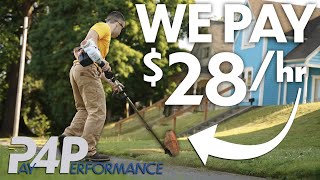
Mike Andes explains pay-for-performance for home-service businesses: a guaranteed base wage plus a percentage of labor revenue generated. It replaces micromanagement, requires legal guardrails like overtime at 1.5× base pay, and includes quality checks called yellow slips. P4PSoftware offers a 30-day free trial with daily performance reports and team leaderboards.
Questions this video answers
April 24, 2022
p4psoftware.com — 30-day free trial
$15 per hour (example): 40 hours × $15 = $600 guaranteed in a week
Pay overtime at 1.5× the base pay (time-and-a-half) for overtime hours
Efficiency = budget hours ÷ clocked hours (shown in daily/month-to-date reports)
Chapters
Hello and good morning, everyone. This is a live stream, and we're gonna be talking about pay for performance. I know a lot of you are just about to jump in live, so I'm gonna talk a little bit about sort of why I believe in P4P so much. But before I get started, a lot of times I know when you join a webinar or some sort of live stream, like, are they gonna sell me something? Are they going to sell me something again? And let me be very upfront and honest, yes, I'm gonna try to sell you on something at the end this webinar. It's gonna be something that changed my business. I've poured hundreds of thousands of dollars into developing and continuing to do so because I believe in it massively. It changed my business, changed my relationship with my business. It changed my relationship with my employees. And I truly believe that it is going to replace what is currently known as the dollar per hour system. And I feel like the people that jump on the bandwagon now will be the ones that get the talent out of a very, very difficult labor economy. I'm very, very passionate about P4P pay for performance. And so when I say that I'm going to sell you on something at the end of this webinar, I have absolutely no guilt in saying that because I believe in the product 110%. It's changed my business, and I believe it'll change your business as well. So let's go ahead and jump in. I'm going to go ahead and go through a bit of a slide deck and talking about P4P pay for performance. And then I'll open up the questions at the end and just answer as many as I possibly can. Any questions that you might have, I can absolutely go through those. So let's go through the slide deck first, though, and then I'll jump into questions after that. Just go ahead and pull this up. Boom. All right, so P4P. Let's go ahead started. The premise of P4P pay for performance is that unmanaged labor is the root cause of unprofitability in just about every home service business, whether you are installing fences, doing maid service and janitorial lawn care, landscaping, pool services, whatever home improvement business that you're in that uses labor as what we are selling, because what we are, the products that we are selling to the customer is the labor of our employees. And the whole arbitrage of great generating profit is I hire someone at one rate and I am able to sell that, that labor at a higher rate to the customer. And hopefully that Delta covers your overhead. And so the premise here though, is that your overhead and the waste that is caused by unmanaged labor, that is you not be able to keep eyes on your employees at all times of the day, is what creates unprofitability in your small business. Now, some people get try to get around P4P by implementing other ways to manage their employees. It's called micromanagement. It's called putting cameras in all of your trucks. It's called recording putting audio devices inside of all of your trucks. It is showing up. This is. This just boggles my mind. It makes me so mad when, when owners say this, they just roll up on employees occasionally at job sites. Like, I hate that. Like, can you not trust them? Because if you can't, what you're saying is that they're. That you do not have. You have an unmanaged labor problem. You don't manage your labor correctly. And in my opinion, what allows a small business to grow and go beyond just one or two employees is having a system that manages the labors instead of you, your eyeballs literally seeing the employees all day long. The reason you can be so efficient and profitable at one or two employees talk about this all the time. Why people retreat back to this. Because when you get above two employees and you have two trucks, three trucks, four trucks, five employees, six employees, etc. We start getting that direction. What happens is you cannot keep eyes on them all day long. You cannot be managing them via micromanagement. You cannot be watching every single move they take while they're on the crew with you. Now, when you are small, one, two employees, you can do that. And you don't need P4P during that time simply because you are the system by which you are managing the labor. But as you grow, you cannot do that. And so you're either going to go one of two directions. You're either a. Well, I guess you could do three options. 3. The first option is really bad, and that is just let laborers run loose. They just do whatever they want. They're super inefficient. They stop at every gas station, they take naps, they show up to work late. All this other garbage that happens that makes businesses unprofitable and usually causes the owner to retreat back to being solo. Which. Or one or two employees. That's the first option. Second option would be that you micromanage them, that you essentially record them, you track them, you make them send screenshots of where they're at every single time they get into the truck that you maniacally watch a map of all their trucks moving throughout the day. And if they stop, you literally call them. That's micromanagement. The third option is P4P4P is where you allow the system of compensation that you create in your business to manage and manage labor. When you can't see them, when they're unmanaged, you allow the system to manage them and you allow the compensation to dictate how much money they make based upon how hard they work. All right? So the whole premise of P4P is that I believe unmanaged labor leads to waste. And I cannot have. I cannot afford the overhead of having multiple management and people doing quality control and people watching maps of trucks, you know, driving around all day. I can't afford that in my small business. And so therefore, I'm going to have to have a system that manages the labor. All right? I truly believe that paying dollars per hour will become antiquated. The reason for that is because as more and more companies adopt P4P, what's going to happen is the highest performers, the laborers in every industry that are the highest performers are going to want to work for the companies that have P4P because they know they can make more money because they work hard. And the companies that do not institute P4P will be the ones that attract everyone that wants dollars per hour because they know they have a guaranteed income regardless of how hard they work, regardless of whether or not they're scrolling TikTok for three out of the eight hours that they are clocked in. And regardless of whether or not they actually push themselves and work hard throughout the day, they will make a certain amount of money. That is, who will be attracted to non P4P companies down the road as the labor market gets tighter and tighter. And the reason I believe so much in P4P and I'm pumping a a lot of money into it, like originally, P4P was only going to be for Gusta Lawn Care. As I began to realize how powerful it was, I knew we had to build the software. And in order to do so, we've been pumping hundreds of thousands of dollars into it. And the roadmap at which we are wanting to execute on is going to require a lot more money. So we were not going to be able to afford that with just Augusta Lanca. It would have been impossible. We don't charge the franchisees for the software and wasn't impossible. So we opened up to the Public to literally fund the software I know is required in order to run a very successful and profitable home improvement business. And I truly believe dollars per hour will become antiquated. The same way that when you look at like something like car sales, everyone just knows that you're not going to get a dollar per hour wage as a car salesman. You're going to get some sort of compensation and commission based salary. You're going to get some sort of commission, some sort of bonus structure based on how many you sell and how well you perform. And that is going to trickle down in the labor market because that's the only way you'll be able to be able to be competitive with the likes of Amazon, FedEx, UPS, Costco and all these massive companies. They can afford, trust me, you look at their quarterly reports, they can afford to pay people more money. You said you just had Apple pay their top developers $200,000 in cash bonuses. And then you expect, you know, companies like P4P Software to be able to compete with developers is extremely expensive. And that's going to happen in the labor market. As we've seen in the past 10 to 15 years, a massive shortage of developers. Now we're just starting to see the same thing happen in the labor market because we were going from a very high tech, very hard, sophisticated, something that no one knows how to do technology and developing coding. And now we're going to labor something that no one wants to do anymore. No one wants to work outside, no one wants to work out in the heat, no one wants to work out in the cold. So guess what's going to happen? We're going to have to get creative with the way that we compensate or else we're going to become the way of the dodo bird. Like we're going to lose businesses. The reason I'm so passionate about this is because people who do not institute their P in the next 10 years will go out of business. And I truly believe that. And we will not be able to. It's not going to be because of your competitor down the street. It's not going to because of the other landscaper. It's not going to be because the other janitorial service. It's going to be because of Amazon and these massive conglomerates, Walmart moving in that can afford 20, $25 per hour, their frontline staff. And when there's a labor shortage, they just move up their dollars per hour because they can afford it, because they have massive amounts, billions of dollars that you're competing against. So Stop thinking you're competing against every other landscaper, every other home improvement contractor, every other janitorial service for laborers. You're not. You're competing against Fortune 500 companies. And this is why I've talked about. When you look at the jobs reports over the past several months, the massive amount of jobs gains that everyone's bragging about right now politically is going to massive companies, is not going to small businesses. Small businesses are in aggregate, massively lower than when we first started Covid. And all those jobs that lower unemployment rate that everyone's bragging about has shifted. All those jobs have gone to massive companies. That's who you're competing against. And the only way, the only way to stay competitive with them is using P4P in my mind. And that is going to allow those highest performers to make more money. I truly believe that dollars per hour not only is bad for your employees because they cannot make more money if they're high performers. Using the hourly system. It might literally take them six months to get a raise or go me you're starting pays at $15 an hour. It might take them a year or two to get to $20 per hour. That's not fair. If they're kicking butt from day one and they're producing at the level that they should be paying, being paid 20 or $22 per hour from day one because they're high performers and you're going to probably they're going to leave like man churn is so high. No, you didn't have a system in place to pay them and compensate them adequately fast enough. And so yes, they went and got another job that they could instantly make that $20 per hour. I truly believe that dollars per hour, though is also bad for you, as the owner could change you to the business and limits your best employees. It changed you to the business because you are required to manage the employees. You have to make sure they get out out of the shop in the morning instead of ditto, dialing for 20 or 30 minutes and drinking coffee and talking about whatever they did on the weekend. You have to make sure. You have to manage them and make sure that they're not sleeping and stopping at gas stations. And why did you guys stop five times a day between jobs? A job is one mile away from another between stops. Why it take you 35 minutes? Oh, well, you know, we had to just make sure we put the notes in the job like that. Frustration is what constantly changed people to their businesses. Because you constantly are living in this stress of are my Employees working right now, I'd never have that. Now that I'm on P4P, if I see them on their phone, if I see an employee on their phone, I really don't care because either a, they're looking at their job notes and that's fantastic and they need to do that for their job or secondarily they, they're browsing, whatever, and that's fine. It's up to them. If they want to work hard, they'll make more money. If they want to scroll on their phone, they'll make less money. It's up to them. The system is now governing how much money they make. Instead of me constantly breathing down their throat of what they should be doing and micromanaging, they hate it. High performers hate when you're breathing down their neck, telling them what they should be doing and watching them on a map and recording them and rolling up on them a job to see if they're working hard. That is extremely demotivating to your frontline highest performers and it limits what they can make. Your highest performers literally can show up day one and be more profitable for your business. The people that have worked for your business for five and 10 years, but there somehow the person working for you for five or ten years is making more money simply because they get a dollar bonus every single year per hour like that is so ludicrous. The fact that someone that might be hungry, 20, 21 year old, but willing to work their brains out and learn and go home and watch YouTube videos on how to do the job better and they're somehow making less simply because they haven't worked with you as long, that's not fair. It's going to demotivate your highest performers by having the dollar per hour system. It's gonna take them a long time to get to where they should be making. And furthermore, you're gonna end up paying people not because of how much they produce for the business, not because of how much profit they earn for the company, but simply because they asked for a raise. They are going through a family trouble, they had some unforeseen medical bills. And I'm not to say that those things don't happen or just seem like I don't care about those things. But the fact of the matter is not just or fair or equitable that employees get paid more and get raises based upon those things. It should be strictly a meritocracy by which the harder you work, the more efficient you are and the better you at your job, you make more money, period. And it doesn't matter how long you've been with the company, whether or not you go hunting with the boss on the weekend, or whether or not you bought them a gift for their last birthday and therefore they gave you a bonus. That is not fair. And it's going to limit and demotivate your highest performing employees. Your lowest performing employees are always thrilled with dollars per hour. The people that are always going to give you trouble when you transition dollars to P4P is going to be your lower performers. It's not going to be your high performers that are hungry and wanting to make more money and, and willing to work hard because they know they pull 90% of the workload out in the field.
All right, some people like, hey, I want to switch to P4P. But what about legally? And what are some of the accounting ramifications?
Is it really legal to give someone this type of pay in the labor market? So from a legal standpoint, obviously you talk to an accountant, you should talk to an attorney, all that good stuff. But at the end of the day, what we do when we are advertising is we advertise the base pay. Again, with P4P, they are guaranteed a dollar amount per hour. They cannot go lower in terms of clocked hours. If they work 40 hours and your base pay is 15 per hour, they cannot make less than that 600 in that week. Okay, now anything above that is performance dollars, and that's based upon P4P. But that, that 600 of that base pay is protected. And that is what we advertise in terms of the base pay we give. We say, hey, look, this is what you're making per hour plus bonuses, because you make a percentage of all the revenue you make for the business. And in case you don't know, that's what P4P is. You essentially, if you could wrap it all up in one sentence, P4P is you make a percentage of the labor revenue that you earn for the business every single day. That's how you explain it to employees. And that usually makes a lot of sense to them upfront. Even if they don't understand the numbers and the math and how it all works, they haven't worked with you for a long time. They conceptually understand, especially if they are a high performer, especially if they worked at places before where they've had to pick everyone's slack. They're very motivated during an interview when you tell them they're going to make a cut of everything they bring to the business. Like you can tell just when you say that whether or not you should hire a person. Because if you, if you say that and they, their eyes light up and they, they've been in the past disillusioned by the fact that they get out and work their butts off by two people, sit in the truck, make the same amount per hour as them, and are on their phones and take a nap. That person's gonna, their eyes are gonna light up, they're gonna enjoy the fact that P4P is happening. If someone's like, oh, well, that doesn't really make sense. You mean I, I don't get money if I, if I don't have to have a bad day? Like what if the weather's bad? That person in an interview, you just know they're not going to perform well on P4P and they're probably not someone you want on your team. But from a legal standpoint, you have to make sure that you honor minimum wage for that base pay. And you have to give time and a half, 1.5 times that base pay on overtime. All right? So you have to make sure you do that. And if you cut into that at any given point using P4P, you are against the law in just about every single state. You cannot do that. And do try to do 1099s in this labor industry. 99 of people using 1099s are doing it illegally in this industry. Right? If someone, you're telling them to show up and you're telling them to clock in and you're, they're wearing your uniform and you're using your trucks and your equipment, they're not 1099s, they are W2s. But this is still legal using. The fact that you are still doing minimum wage and anything above base pay is considered a bonus is subjective to the system of P4P that they sign off on when they come for employment. So it's part of our employment package. They sign off on our two page document which is available for everyone here for free p4psoftware.com and they sign off on that. They understand it and they're good to, good to go. They understand the fact that performance dollars are bonuses. They are not entitled to their performance dollars. Those things are on the table when it comes to quality lapses. What we call yellow slips. People making mistakes out in the field because they're going so fast. That's going to be a yellow slip. So that is the balance to going fast and trying to make as much money as possible during the day as an employee is if you Have a callback. If you have a yellow slip, the customer complains. If you go, go back to a property, guess what? There's no more revenue being generated. Therefore, you are going to not make as much money on P4P. All right, in terms of accounting, same thing. Most accounting softwares, gusto, QuickBooks, etc. You're going to have an hourly rate which is gonna be your base pay. You're gonna multiply about how many hours they worked in that week. And then anything that they earn on P4P above that amount is gonna be what's called performance dollars, and it's gonna be a bonus on their paycheck. So every single week, they just see a dollar amount for base pay, dollar per hour, how many hours they worked, and then if they made above that on P4P, they'll see a bonus. And that's the part when it becomes 3, 4, 5, 6, $700 per per pay period that they're making in performance dollar bonuses. Trust me, they start to understand what P4Pmeans and they start to calculate it. And they start to understand that having yellow slips damage cases is going to negatively impact their bottom line every two weeks on their pay period.
How to convert your business from hourly to P4P. This is the game. This is why no one. This is why, like, literally we have less than a hundred members@p4psoftware.com and thousands of people have heard me talk about this, and thousands of people have seen what it's done in other people's business. And thousands of people want to implement P4P. And the reason they won't is because the conversion process is not easy. This is not something I can run ads against P4P software, as much as I know it will help people's businesses. People are like, I've talked to other, like, SaaS companies because obviously we're burning through a lot of money and trying to create this product because I believe in it. But a lot of people are like, well, you just run ads. Like, it's such a great product that's helping all your members. Like, you just run ads and run testimonials. It's not something you just like, flip a switch, turn on the software, and then you're going to change your business. It changes your entire business. It changes the way that you estimate. It changes the way you're interacting with your employees. It changes everything. And so switching to P4P is not easy, not for everybody. And I am absolutely aware, aware that you will lose employees and people will leave when you institute P4P, you have to do it correctly. @p4psoftware.com training I walk you through these three steps. Number one, you've got to run the numbers in the background. That's why I believe every single person here. Even if you're going to switch to P4P in next spring, you should be on P4P software, running the numbers, understanding how it works, running calculations in the background so you understand how everything works. Because you need to understand it. And you're going to run those numbers in the background, seeing kind of where everyone's at, not telling your employees. You're just going to run the numbers in the background using the software. Second step is you're going to talk to your employees, actually show them what P4P is. We have a two page document inside of the software that you can literally walk through your employees and show them the entire thing. And it makes a lot of sense. It's two pages. Anyone can understand it. Literally just the front page is all you need. The back page is kind of the fine print about yellow slips and things like that. The third stage, because after stage two, you explain it to me, say, hey guys, this is what PVP is. We're going to try this for the next two pay periods. And in these two pay periods, you cannot make less than P4P or hourly wage. So right now, the only problem, the only friction you're going to have if you're trying to switch to P4P is if your current employees make more than the base pay that you're guaranteeing inside of the system. If you do that, if you, if you're going to have to do that, that's when you might lose some employees because you're paying people 25, 26 per hour and your base is now going to be 17, 18. There, there's gonna be some friction because their guaranteed pay is now being cut. But guess what, what we found is that most of the employees who left that were getting paid a lot more, they didn't actually earn that much money on P4P. They had just been making more money because they had been there for a longer time, they were older, they had more experience or whatever, but they didn't actually bring business results and profits to the bottom line. And so, you know, that's conversion. First step, run the numbers in the background. Step two, introduce it to your employees, run it for two pay periods and tell them they cannot make less than what they're currently making an hourly or P4P. And then every single person you're going to sit down in front of them after each paycheck of those two pay periods and say, do you want what do you want? P4P? Here's what you made or do an hourly. And if you have run your numbers correctly and made sure that your pricing is dialed in, they will make more on P4P. And like, oh yeah, of course I want 300 extra on this paycheck, boss. Thanks a lot. You do that a couple times, all of a sudden you will convince your entire team that they should have P4P. And then the third step is voting. And I truly believe you should have your team vote on whether or not P4P should be implemented. If you've done step one and step two correctly, everyone should be voting yes. You'll have one or two people vote no, and they'll probably leave organically within the first few weeks of P4P. Happens every single time. And usually those are the people that have been around for a long time. They've been paid a bunch of money, and all of a sudden when they leave, you get all sorts of stories about how they would sit in the truck and watch people work, how they would tell people what to do and then go be on their cell phone for two hours. You'll suddenly get these, these, these stories. And you thought all along they were your best employees. They're the ones that you could not live without. They were your trainers, they're the ones that were making your company great. And it's not true. They're the ones that you were putting on salary, giving them extra benefits, extra cash on the side, increasing their base pay. And actually, they were their least performing employees, dragging down the morale of all the high performers and causing those high performers to want to leave. Because the most demotivating thing for an A player is to have to work with B and C and D players all day long. And sometimes those are the people that have been around your business for the longest amount of time and you're paying the highest currently on hourly. So that's the three step process to switch over to P4P. Why I did not switch to P4P before I did so. I still remember the very day when I told my team, man, I just wish there's a way we could pay employees based upon how hard they worked and how much money they made for the business. The first reason I did not do this is fear of losing staff. Because I knew that there were people getting paid more simply because they had asked for a raise. Because at the time of them asking for a raise. I needed workers and I could not afford to let them go. So I just paid them more. Not because they earned it, not because they were better employed, not because they were more efficient, not because they were more profitable. It's simply because I needed them and I could not afford to lose them, so I paid them more. And a lot of times the reason people get paid more on a base pay on an hourly basis is because the owner needed the work really bad, because a couple people left. Okay, we'll just raise the base pay for this person. We'll hire them. Or you know what I'm getting, I got a vacation next weekend. We're way behind. I'm going to hire more people. I'm just going to raise their base pay. I'm going to raise. Their hourly rate is so not tied to their performance and how hard they work. Second thing, fear of bad culture. I truly believed and one of the fears that I had of implementing P4P was that if I did so, everyone would be at each other's throats and everyone would want other people to lose. They'd be competitive and like wanting other people to have a lower dollar amount than them. And that people would be trying to go really, really fast and quality of the work would, would diminish. All those things were wrong. And all of those excuses are absolute shadows of an insecurity because ultimately we are lazy as business owners. It is extremely easy to convince someone to work for you by simply raising their hourly rate, by simply telling them a dollar per hour rate, because that's what they're comparing you against everyone else. So it's very easy and lazy for us to do hours per hour. Why? Because like, hey, just clock in at the end of the week. I'll pay you based upon how many hours you work. How many hours someone worked has absolutely no correlation to the profitability, effectiveness or efficiency of the labor hours that were actually performed. Absolutely no correlation. And so the fact of the matter is it's easy to do that though. Clock your hours. I'll multiply by how many, how much I pay you per hour and I'll give you a paycheck. That's simple, it's easy, it's seamless. And the goal P4P softwares to try to make it easier to do P4P because I understand the time to calculate number three. The time to calculate is a big barrier as to why people will not switch to P4P because it's like, man, I got to calculate how much revenue they earn every day. And then I've got to take away yellow slips, like deductions, and then I've got to like, they do damage cases. And I'm, I, this is truly why I did not institute P4P. I'm like, well, ultimately, if it takes us 30 minutes to figure out per employee how much P4P they earned, why in the world would I do that? If I have 10 employees, that'd be five hours. It'd be a full time job, just calculating. And you're right, it would be. And so this is why we had to do P4P software to make it faster. And our goal is under one minute per employee per day to calculate their P4P. And for most employees it's like 13, 14, 15 seconds. We're at, now at the beginning, it's gonna be a minute. It's gonna be a minute for you to calculate per employee per day and take you a minute to calculate P4P using the software. All right. And so this is why I did not switch to P4P originally. I said, look, ultimately if I cannot do this fast, if I cannot make it like quick enough to run these numbers, and it's going to take me all day for someone to look at how much they earn and take this deduction and then give them a percentage and break the money between projects. If there's four people in the job, I just, we could not handle it. We could not afford to do that if the time to calculate was going to be too high. Fourth reason why I did not switch to P4P was because it was, you know, very, it just was not easy to explain and understand. And I just really, really wrestled with the fact of, like, how do I explain this to an employee when they're in an interview process? How do I explain this to an employee when they have questions and they are literally saying that I'm cheating them out of their paycheck? I need to understand this. I need to understand the concepts and be able to explain it simply and easily to an applicant as well as to an employee that is literally telling me that I'm, I didn't pay them enough on their last paycheck. And I need to be able to have the guidelines be simple to understand. Two pages is what we have it down to. And that explains every single thing of P4P. That two page document has explained every single part of P4P. There's never been a time when it's like, oh, this is outside of P4P and people will always come up with excuses and solutions. And like, oh, it's different in my business. Inside p4psoftware.com we have had pressure. Washing companies, fencing companies, decking companies, roofing companies, cleaning companies, janitorial companies, landscapers, lawn care professionals, builders, a vast variety of contractors. And guess what? P4P works for all of them. But there will always be an excuse as to why you will not switch to P4P after this webinar. You know, the 150, 200 people that are watching this, there'll be excuses. There will be people that will have excuses to why it will not work for them. And I just see time and time again this is not true. And time and time again people say what? Oh, hourly is the only thing that people look at my in my industry, you know, salaries, which was expected in my area, all the laborers just expect salary. And time and time again people will come with excuses the same way I did with these four things. And I should have done PRP years prior to when I made the switch. All right? And all of these things are false. Every single one of them have been false in the long run. Short term pain, long term benefit of P4P, there's going to be a couple months of pain. When you're going through those three steps of transition, it's not easy. You're going to lose some of your employees. Some people are not going to think that you are doing things right. Some people are going to think that you're cheating the employees, all the rest of it. But it's the right thing for them. It's the right thing for the business and it's the right thing for you as the owner. And trust me, they the 1. The high performers will like the fact that you're not breathing down their neck, that you're not tracking their trucks, you're not recording them in their vehicles, that you're not maniacally showing up on their job sites and checking what they're doing. People don't like that. They don't like to be micromanaged. Let the system govern their behavior and let them go perform.
So there's a 30 day free trial. Just go P4P software.com for today. We you don't have to have a the code to get in. So if you've been waiting for that, feel free to join. Visit the book. The book also has a Bunch more information P4P. Just search P4PMike Andes on Amazon. I'm gonna get a bunch of questions here in just a second, so feel free to start popping Those in. But this is some of the screenshots from inside of P4P. This one's actually from an actual location in the Midwest of their employees. And so it shows your efficiency score, which is basically your budget hours divided by your clocked hours. It shows your effective hourly rate on a monthly basis, month to date, which is going to be your total labor revenue divided by your clocked hours. Clocked hours is actually they do clock in. So P4P, the app, the employee still clocks in and out. This kind of serves like a time clock. Honestly too. All of your employees clock in and clock out on the app that creates a time card and then you run P4P based upon that time card. It also has this team scoreboard where it's going to rank your employees. And they see this, they see and you can determine what they see, but it ranks them based upon efficiency. Again, kind of getting that camaraderie and that, that push and that cultural pool towards becoming more efficient. Because guess what, if you're doing hour dollars per hour right now, what they are actually doing on the field, I can guarantee you is they know who pulls their weight, they know who slacks off, they know who stops more at gas stations, they know who milks the clock the most, they know the minute they switch to overtime, they know the second it happens. And so truly believe that having this type of culture, this thing that I was literally fearing and that was cultural like issues inside of my business because of P4P changes to where literally. At our last off site meeting we had a very open discussion about P4P, what their thoughts are when they first joined, did they think it was a scam? When did they understand it wasn't a scam? And the amount of buy in you'll get from your employees when you do this and they start to see that the cultural drift of the company is towards performance and working harder, that will attract great people every single day. Your employees are going to get an emailed report similar to this. If they're on a one day route, it's going to look like this. If it's a project, it's going to look on the right hand side here showing where they're at in terms of status of that job, keeping them on track throughout the day, again trying to get the the report as close to the performance as possible. They don't have to wait to the end of the pay period, they don't have to wait for quarterly bonus, they don't have to wait for an annual bonus based upon how well the company does or if we don't do any damages, we'll have this pot of money. We'll split at the end of the year. Employees are not incentivized by that. They're not going to run across the parking lot for a bonus that's coming in 11 months. It's not happening. Getting this report every single day in their inbox for the day prior's worth of work is what motivates them. And they start to see over time, oh, yesterday I really kicked butt. Here's why, I got out of the shop faster. I didn't take a bunch of breaks. And they start to see the progression. And it's extremely important to get that daily report. This is what's going to be emailed to you As a manager, you will see giving your score to your team and we call it moteam, but it's for any one day route and it's going to give you them a score. It's going to literally score your employees so that regardless of whether or not you are there, like these employees this day specifically, I'm not there. I have never, I had no idea what jobs are. I don't know these, these customers, I don't know what's going on these projects. But as a, as someone who's not even on site, as a manager who is, is absentee, I can manage my business, know what my high performers are making, my low performers are making, who potentially over time needs help based upon these daily metrics that are sent to me. And this is kind of why we're here today and why I'm trying to push people to join the software because we do need money to keep developing it. We're still losing money on. And the reason I'm here today is to convince enough people to join P4P so we can continue to develop these features. Some of the things that we're working on right now is trends and graphs. So instead of just seeing the daily reports or month to date metrics and how they're performing, they're actually going to see over time graph graphically how they're performing. The employees and managers to be able to see over the course of a year, like, hey, look, when an employee comes to you, like, man, how can I get more money? Let's look at, let's look at your PVP graph and we'll see that over the course of time they went from an average of $15 per hour to now making $22 per hour and see which months they did better in and see who they worked with that made them more efficient, what kind of jobs they were most efficient at, these trends and graphs, this data driven HR number two, here is something we're really going to be trying to work on in 2022 and that is telling you who should work with who based upon their efficiency. Hey, this person, they've been really inefficient the past two weeks. Let's put them with so and so who's been really, really efficient on these specific types of jobs and let's see how they perform together. So we're going to take all of this data that's coming in and be able to give you really good ideas in terms of who should work with who and then work for you on the back end and tell employees what you wish you could say, but you don't because you don't want to hurt their feelings. Like hey, last couple of weeks you haven't been performing as high, there's something wrong. Maybe talk with the manager, maybe talk with so and so who's been doing the same type of work and has been crushing on P4PMaybe if you can get a tip or two from them, give them tips as they're learning and they just got it started in P4P on encouraging them that hey, you had a really bad day today. It's probably going to bring your P4P down. Here's the things you could have done to improve. This is what think about. Here's, here's the logic. Be able to say all the things that you want to say to them. We'll be able to do on the back end with this data driven hr looking at number of overtime hours and then you'll see your budget hours that are on the schedule and you'll tell you when you're going need to hire somebody. Not, not, oh my word, next week we're busy, but three, four weeks in advance, like hey, your overtime hours are getting this certain point. Number of budget hours on the schedule has been increasing at x percent per week and assuming the same rate continues in three weeks, you're going to need two more employees. This is the type of information we're trying to work for. And the third thing that if you read the P4P book, you know I'm very passionate about and that's open book management and profit sharing, which is the culmination of creating great culture in my opinion, P4P being the base, open book management, profit sharing creates the pyramid of what I believe is a great and strong culture. And you need all three in My opinion, to really make a great team. And so this is going to be something we integrate down the road as we get into QuickBooks integrations and things in 2023 to be able to share with the employees in a very simple sense what profit sharing is looking like. What? Like where the business is at from a very simplistic standpoint. Not a spreadsheet, not a P and L, but a very simplistic standpoint for them to be able to know. Hey, how's my quarterly bonus looking for profit sharing? Oh my goodness, it just dropped. What happened? Oh, we had payroll yesterday and $50,000 came out. That's why my profit sharing kind of looked like it dropped. And then we'll see live over the course of a quarter. What happens to profit sharing? What happens to every single part of the business when it comes to open book management? These are the things I believe in. These are things that why P4P software exists. And this is why I encourage you to join selfishly without any sort of remorse. I need people to join so we can continue to fund the development of these features. There is no shame in me saying that we don't have any private equity. I don't have any investors. I mean it's all of my own pocket. And this is why we've had to make it public and outside of Augusta, because we could just simply not afford to continue spending 40 and $50,000 a month developing the software. And that's what it costs because developers are extremely hard to come by. They're extremely being pulled the directions of the Facebooks and the Amazons and the Apples of the world where they can make hundreds of thousands of dollars. So it's expensive. But I truly believe this is the right thing for me to be doing right now and spending my own personal money on this. And so that's what we're doing. So please, please, Please join people software.com it's free. 30 days. And then Brad is a CPA. He works for me. He's worked in the field and worked with me while we were implementing P4P. So all the things I talked about, people asking for raises and he saw all the shakedown of the implementation process and we didn't have a guide to follow. We were making it up on the fly, the voting. He was there for that. He was there for all of that in the field, by the way. And he's a CPA certified public accountant and he can help you implement P4P. You can talk to him for free. Just sign up for a free Trial and then go on the right hand side, go to the resource center and book a call with him. Talk to you for 30 minutes on Zoom. Go through the software with you if you, if you have any questions. If you're like, if right now you are thinking through this, this whole presentation like, no, there's a reason I can't join P2P and this is why, just book a call with Brad. Please let him show you inside the software how you could manipulate it to make it work. We've working on now is trying to make it as customizable as possible in terms like hourly rates, adjust adjustable additional rates, percentages, all the rest of the things that make it as customizable as possible. I can guarantee you if you just think creatively you can make it work 100%. And so please join. I'd really appreciate the support. I know there's some people in there that have literally said they are literally just doing the 99amonth and supporting it and next year they're joining. I really appreciate that. We need that right now to be able to afford the constant development that we're pouring into it. But ultimately I believe it's going to change your business. And so even if over the next couple months you are in here just running numbers on the back end, not talking about P4P with your employees, do it because you're going to understand what, how PVP starts to work and what the reports look like and who on your team is the most efficient. It's incredible. When people start running the numbers, they start realizing who actually makes the business money instead of just who performs well when you're around. That's what usually happens in a small business. So I hope that presentation was helpful. I'm going to jump into questions now and hopefully I can get as many of these as possible answered. Let's see here.
Going through Here.
Have a P4P structure already set up for our tree crews. Thankfully the crews are loving it. Absolutely.
Landscape only. Anyone have any landscape clients that they visit only once monthly, year round? This is what we're shooting for here. Anyone who's successful had any advice? Ultimately if you have like monthly contracts or they have level billing, remember that level billing. The problem with that is even though the billing is level, the amount of work being done is not level. Right. You're gonna have periods of time when there's more work to be done. So the whole goal is to be able to pay the employee accurately based upon budget hours for every single visit. Right. So it's not super Difficult, though. For example, say, okay, let's just say we're doing a maintenance contract for a commercial building. We need mowing, bush trimming, and leaf cleanup. Okay, so what we're going to do when we do the estimate, we're going to figure out how many budget hours we've got to put on this estimate. We're going to figure out, okay, let's say there's three budget hours promoting visit multiplied by 30 visits in the year. 90 hours. Great. Then we're going to have bush trimming. We're going to do it five times a year and take us 10 hours per time. Leaf cleanup, we're going to six times and take us three hours per time. You're going to add up all those hours multiplied by your hourly rate, divide that number by 12, and there's your monthly level billing amount. But then what you're going to do is you're going to go schedule that mowing service for those 30 visits, and they're all going to have that number of budget hours allocated to that service. Same thing goes for the leaf cleanup, same thing goes for the bush trimming. So that way when the crew shows up, they don't see this big contract with a dollar amount. The end. What they see is mowing five hours. Okay? Next week they come do mowing again. Next week they do mowing again. Next week they show up, there's mowing and bush trimming, and the bush trimming is an additional 10 hours for them. This is how you have accuracy on your estimates and then you pay your employees accurately on P4P. Having contracts and level billing is no excuse to not have PvP. It works just fine. And the way that you build the estimate is the same way that you then set up the contract. It's absolutely possible.
All right, let's see here. I keep trying to think of how this is applying to manufacturing business. Ultimately, you're looking at output, right? So this, we. There's been a couple companies already do this on manufacturing, especially when it came to food manufacturing. And they are paying employees based upon whatever service or task they want them to do. And it's just a numbers game. It's like, okay, if you do X, you get X amount of dollars per x amount of output, right? So ultimately, we sell budgeted hours. We sell hours, units of time to our customer. That's what we're selling. And so what we're trying to do is sell. Sell it for them to for at 70, $80 per hour, and then pay our employees a percentage of that and so when any, when it comes to any sort of variable in terms of labor, if the employee works harder, they can get more done in that hour and therefore they should be paid more. Right. So as long as you can make a unit economic out of whatever is being produced from the labor, you can make P4P work.
I once worked at a stone making place and you got extra, extra cash if you made 100 plus stones. Yeah.
Also a buddy that worked at a pallet place and he got paid per pallet made per day. Exactly. And then you have to have a backup system for quality. Right. You can't just pay someone based upon unit production. You rather than have a system by which quality is enforced. And that's what the yellow slip system does and the damage case system inside P4P does. Do you pay every person the same base hourly rate and percentage of revenue or do the team leaders, drivers and people doing billing get higher hourly and more percentage of the revenue or same all around? We do the same all around. I'm a big, big, big advocate of doing the same base pay for everybody on the team. And the only reason you would change this is if there are employees that are doing things that do not create revenue and they need to be compensated for this. All right, so this would be something. If they're doing billing, for example, or you're having them do shop tasks that needs to be paid outside of P4P. So for example, we have someone at our local shop really good at mechanics. They spend maybe five, six hours a week, seven hours a week. Be kind of like the shop mechanic. They get paid a dollar per hour base rate that's higher than our base pay when they're doing those things. And that's manual time being added. But everything else, when they're out in the field working, they are on P4P, the same base pay as everyone else. That's the most fair. Okay. And ultimately this might mean that you need to simplify services somewhat. But more importantly, even if you're doing excavation and all the rest of it, if you're doing a more complicated service, your hour, your dollars per hour on that budgeted hour is going to be higher. If I do mowing, for example, and I charge $50 per hour for mowing, and I give, let's just say 40% of labor revenue to my employees. If I give 40% of labor revenue to my employees and then I charge $150 per hour because during excavation, guess what? That employee is going to make more money. So I'm a big fan of having the same base pay and the same percentage going to the employees across the board.
In my companies, we've never changed that. Because if someone's so good, if they're so experienced, it should show up in their performance. They should be able to make more money, they should be more efficient, and they should be able to.






