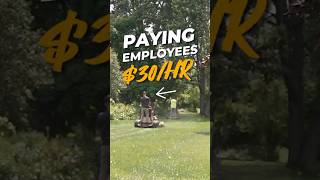
Mike Andes advises a lawn-care owner on keeping workers by tying pay to performance. Instead of a flat hourly rate, pay whichever is higher: current wage or one-third of labor revenue. A faster crew completes more yards in the same 10-hour day, so speed directly raises take-home pay.
Questions this video answers
$30 per hour.
$20 per hour.
Pay the higher of the employee's current hourly wage or one-third of labor revenue.
Monday–Thursday, 10-hour days; same properties repeated each day.
I really want to pay my employees more. I just lost a guy who's been with me for seven years. He got a job at a local warehouse to make 30 bucks an hour. I can't compete.
This is what I would probably do in your case, because you have. Guys have been here forever.
Yeah.
I say either you have two options. Make what you're currently making, pay the 20 bucks an hour, or you get a third of labor revenue. Whichever one is higher, I will give you. So now there's no downside to him feeling like you're trying to gift him.
Right? Right.
If he does move faster and he does hustle, he'll make an extra 50.
Bucks because they're doing more yards in.
The same amount of time.
Yeah, yeah. My mowing guys mow Monday through Thursday, 10 hour days. They mow same properties Monday, same properties Tuesday, same properties Wednesday, same properties Thursday. So I would just have to add on to them, like.
Because they get done faster.
Yeah. If they got done fast, you now.
Increased your capacity for your business without having to buy any more trucks or hire more people. Because now all of a sudden, Instead of doing 50 lawns in a week, they can do 60, and the extra 10 goes into their pocket. So you increase capacity because right now you say, hey, I can't really take a whole lot more customers on. Yeah, now you can, because they get done so much faster.