STEP-BY-STEP GUIDE to Build a $1M Service Business
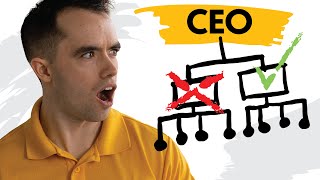
Mike Andes breaks down how to scale a service business to seven figures through three departments (Sales, Fulfillment, Admin), four leadership stages, and two key moves: simplification and standardization. He walks through the math of opening a new location for $80,000 and returning $216,000 over five years, and warns against chasing every new thing when systems work.
Questions this video answers
$399 per ticket.
Approximately 0.03% chance of selling (10,000 sold vs 32 million started).
$80,000 initial investment.
About $216,000 returned over five years.
Total return ≈170% and annualized ROI ≈22%.
Chapters
If you're trying to grow a home service business past a million dollars, this presentation is for you. It's actually a keynote, full length keynote from last year's Landscape Summit conference. And I'm talking about your organizational chart that you will need to grow your business past seven figures and beyond, as well as the systems and procedures you will need to make sure you're doing so profitably. Without any further delay, let's go back to last year's Landscape Summit and hit it off.
All right. Let's expect the unexpected. Crazy is this slide. Next slide was actually shown already. Dan early in the week already covered this, so I'm go through it pretty quickly here. But this is the slide showed basically charting the growth of a company from zero to $10 million in revenue. I would actually say in terms of the number in the U.S. obviously that's off because that's the entire industry. But a lot of times people will look at this and say in terms of percentages, like okay, what? Well, if there's 16 million solopreneurs, 300,000 growth companies that are going up for that $10 million marker, et cetera, but then I can assume that it's about 3% when in reality in our industry it's much different because the barrier to entry is so low. You can be a solopreneur so easily and so it's much more common. Like 1 or 2% is actually even in the seven figure business in our industry. So just be clear on that. But there's a great, great graphic if you want to take a picture of it. It's fantastic what you're going to be struggling with at each stage of growth, but something just tying into what we talked about last year and we've already kind of covered a little bit this year is what is the certain types of stresses you're going to be facing at each stage of the growth pattern for the business. And so what I would say is this is kind of just an overlay I put on top of this is physical stress, financial stress and psychological stress as you begin to grow. And the reason I say that is because a lot of times we become.
We're not content with the type of stress that we're dealing with or we think that the grass is always greener on the other side and that if we just grow our business, things will somehow be better. And yes it will. Like you're not going to be working 10, 12 hours a day out in the field perhaps, but that's what your stage of growth is currently at and you're experiencing physical stress as you begin to grow the business though. And now you have more overhead. Now your margins go from 50 and 60% down to 50, 15 and 20%. Because now you have overhead costs, now you have employees, now you have an office. Now you have advertising costs to keep everyone busy during the slow time. And so because of those extra expenses, typically the stress I see at this mid stage, this sort of 100,000, in this case a million marker, is more of a financial stress that comes on the business owner after that. Now it comes more psychological because now you're focusing more on leadership, your team. Every single day at that size of business, something bad is happening. An employee is leaving, a customer is mad at you, something has broken. There's been a massive, unexpected, unfair, unforeseen expense. There's always something bad happening in that stage. And that can create a massive psychological toll and psychological stress on you as the owner and the operator. Now I also want to break down a little bit. Again, this is my stuff. It's not as great and awesome as the stuff that infusionsoft made, which made that graphic. But stage one, in my opinion, this is kind of how the leadership organization kind of breaks down. Again, I could be wrong, but this is how it makes sense to me. One person operation. This is stage one. You're a solo operator. You do everything inside the business. Stage two is you are a player coach. This is again from a leadership perspective. And that is you at the top of the org with maybe 3, 4, 5, maybe up to even 8 employees at this point you are a player coach, which means you are coaching the team, but you also step on the field and play occasionally. Now this is usually a pretty dysfunctional stage of the business when it comes to leadership. The same reason why no good NFL coach steps on and tries to block for their players, they would die. A lot of them. You wonder if they even can get out of bed in the morning sometimes. It's incredible. However, a player coach is on the field and the player coach does have billable hours, typically that they're actually working for the organization. We call this at Augusta the working GM model. You can have like three to five, maybe six, seven employees underneath. You do maybe up to 800,000 in revenue. It's a good model if as long as you make sure that player coach is extremely good, good at being able to sell and manage, that's really the only two things that they need to do. But this player coach will step on the field and play occasionally. They will do Work occasionally. How we basically break it down is you have number of budget hours that you expect your staff to do. You as a player coach get an hour off for every estimate and you get half an hour off, sorry, an hour off for every interview. If you're doing hiring outside of that, we expect the same amount of budgeted hours. We keep them accountable the same way we would the guys on P4P. Out in the field, the player coach is going to have, whether you're a GM or you're an owner operator can have again, three, four, five, six, maybe up to eight employees and you still step on the field and play. The reason it's dysfunctional is because you're starting to cross between a leader and a follower and someone that is a co worker and then also the boss. It can get very murky in terms of what the team recognizes you as. A lot of times it's easy to get started and complacent inside of being a player coach because it's easy to easy to keep tabs on everything in the business. You don't have to worry about what the crew is saying behind your back when they leave in the morning because you're going to be with them tomorrow on another job and you'll kind of get a pulse of where they're at. It's very easy to keep control of the culture in this stage because you have direct connection to every single person in the organization. As I've talked about before, this is the octopus stage. You have one head and you have a whole bunch of tentacles. But ultimately all the tentacles still tie back to the head and if the head was ever knocked out, all the tentacles would die. All right, so what ultimately that means is you have a bunch of minions running around doing exactly what you tell them to do. And without that direction, they would not be able to operate. Without the head of the octopus, tentacles die. That's player coach. Stage three is what I call intermediate supervision. This is sometimes the hardest step in training and leadership development is because now you have a form of hierarchy everyone loves. Number two, because we are a flat organization and we're going to like have everyone have access to the top of the org and everyone can just talk to the CEO anytime and all these other things. But ultimately in stage three, in order for the business to grow, you have to start creating some hierarchy. You have to start creating some sort of leadership system inside the business. And this is going to be what I call intermediate supervision. This is where you have mid level managers for the very first time. This Is very hard to keep control of the culture compared to player coach. Because now you don't have direct impact or direct connection with the front, frontline team members. Now you might see them in the morning, you might still be the salesperson even at this stage. Especially if you only have one person underneath you in mid level management, like an ops person in your sales. And then you have 10, 15, 20 employees. Intermediate supervision is tough though, because now you again, you are not working with them directly. They're not seeing you do the work that they did. So now what you have to lean on as a leader is your leadership abilities and not the fact that you just work hard. Because at the beginning, I was talking to someone downstairs. It's very important. They were asking a question about leadership. Well, should I get out and show them how to do it and prove them that I can and show them that they need to blow off things a certain way? Yes, but that is not leading with the vision. That is not leading by the core piece of what we talked about this morning about leadership. And it's much more difficult to lead with vision and be removed from daily operations and removed from being able to. No, don't do that. No, no, no, you're doing that wrong. Don't. No, no, stop. Don't do that. It's a different form of leadership now where you have no control over that, but rather you're creating the systems for someone else to be the person to do intermediate supervision and be a mid level manager. All right. Whoa. No, no, don't go forward. Oh, good. I'm glad. Broken. Good. All right. Formal organization stage four. This is now where you have managers of your managers.
Okay.
This is usually going to be an organization of 40 plus people. Again, round numbers. Every industry is a little bit different. If you were doing tech development, it'd be totally different compared to lawn care and landscaping versus roofing. But let's just use a generalization and say 40 plus 50 plus people, you're gonna have a formal org where you have managers to your managers. This is typically where you start to have cultural divergence. And you can have to have. You can start to have fragmented culture because people inside of each of these departments can become a subculture of what you actually want the vision to be representing. And so this is a lot of times where companies say they grew too fast. A lot of times this is what happens when companies get a lot of money. I was talking with Dan in the back about this. When companies get a lot of cash infusion, what happens to the culture because now all the problems they used to face and that stress of we've got to do more with less disappears because all the cash is available. And all of a sudden you start adding all of these different departments and organizations and we start adding more people and the budgets for each department get higher. And now there's different cultures inside of marketing, there's different cultures inside of hr, there's different cultures inside of ops, there's different cultures inside of the executive. And so you can have a very fragmented culture if you're not careful. At every single one of these stages. There are risks, there are vulnerabilities and there are stresses. It's not to say that one is better than the other. It is simply to recognize what is your stage of leadership and where do you need to shine and focus on as a leader. Because what you're focusing on right now as a player coach is not what you need to be focused on if you're an intermediate supervision. Because if you have a mid level manager and their job is operations and yours is sales and you step out on a job site and start telling the crew what to do, you just undermine them and they're completely crippled from doing the job you asked them to do. Gonna completely crush your culture. It's gonna eliminate the ability for people to move up inside the organization, it's gonna handicap your growth and ultimately it's gonna handicap you from ever getting out of the business by allowing other people to operate without you. All right, three departments. This is what I would say for the vast majority of us. The reason I put this one in here is because yesterday when he asked who wants to build like a 3 to 5 million dollar business, like a lot of people hands put up. So if that's your goal, whether that be one location or multiple, this works across the board. This is typically what I kind of see. I see businesses in this way. Again, this is just my opinion, probably wrong. I see it as sales, fulfillment and admin. You can basically break most organizations into these three departments. Yes, there's some others that you could do. But until you're very, very big, this is typically what you're looking at. Sales, that's like before the transaction. Typically in my mind I'm thinking sales is like before the transaction happens. This is marketing, advertising, the actual estimate process, all of that, that's sales, fulfillment. You gotta fulfill on what you sold. Alright, really basic. I'm gonna sell something, I'm gonna deliver on it and then I'm going to make sure I invoice them and Take care of all the garbage that happens in between this whole transaction. That's what admin is. All right, so for us as business owners in Lawn Care Landscaping, this is the hierarchy or the org structure I see a lot of times needs to be filled if your goal is a bigger business. All right, so.
This is the thing. You gotta be very careful as you build your org chart that it doesn't get top heavy because it'll create massive financial pressure and issues inside the business. So if we look at this, what I have here is just an example. All right, but let's go ahead and use a pointer because that's so much cool. All right, we got sales underneath sales. I need one person as the CEO to talk to and get a report on something. I don't need 10. I don't need all three of these people to report to. If you start to have this size of team, you cannot get a lot of direct reports. It'll slow your decision making process down. It'll also handicap them from doing their job because they're constantly worrying about reporting back to you, which is not their job. Their job is to go get stuff done. You are an expense to the business by needing them to report and regurgitate stuff that's going on inside their org, inside their side of the business. So an estimator, I would, in this department, in this size of business, I'd say, hey, you're the main estimator, dude. I'm gonna come to you if I see the close ratio mess up. I'm gonna come to you if I see problems with our pricing. I'm gonna come to you if I show up at a job and everyone's complaining because there's not enough budget hours on the job, I'm coming to you. You are not in that situation going to talk to the frontline staff because you're going to throw that estimator under the bus. It's poor leadership. But that estimator is responsible for, in this case, two other estimators. This could be less or more depending on what services you offer. If you're design, build or tree services, you're probably actually more estimators. There's a lot more salespeople. H Vac can literally sometimes be one estimator to every three guys out in the field. Just depending on every industry is different. I'm just making an example. Hopefully when you take a picture of this, if Your goal is 40, 50 people in your org and a 5, 6 million dollar business, you take a picture of this, you put out on a chart exactly what it is and then start putting people's names in. Okay. Yep. Sally is now gonna be my estimator. Fantastic. I don't have anyone underneath her, but the spots are available as we fill in the org chart. All right. Fulfillment. This is typically in our industry gonna be field operations or an operations manager. At the very beginning for me, that was Liz moved on to Lee and then they've handed on to different general managers out at the Bellingham shop. But ultimately, fulfillment is important. You have to deliver on the customer's promise, the promises you made to the customer, and actually install the mulch, install the sod, cut the grass, et cetera. They're gonna be responsible for everything to do with the field in terms of the work getting done, their project management, they are in charge of making sure the equipment is taken care of, et cetera. They might go delegate some things like equipment blade sharpening to one of these people down at the bottom. But I'm not going to create a separate department for blade sharpening. And then they have to report back to me if the blades are not bad or not good. Well, too many people in this size organization do, in my opinion in this industry Is they have 15 to 20 people out of their 40 reporting directly back to them because they want. They simply are just wanting to micromanage without being able to get into their hands into everything because they can't sharpen the blades every single morning. They're going to make sure that the person who does reports back to them. You do not need to know that if you see a problem with the blades being sharp or there's a complaint that comes in that you see, you should go talk to your operations manager and say what's up? Because they're ultimately the leader of that department. So don't cripple them and undermine them by going directly to the front staff and saying something. As I have a whole bunch of different locations, some of the employees I don't know out in the field sometimes because they know I'm the owner, those randomly DM me or text me about something that's going on and ask the. Ask for something like can I get an extra? Can I get a pay advance? Or whatever. They know the answer to that one, but they ask it anyways. And if I would ever give an answer, I would undermine whoever was the mid level manager above them. I never ever do. Even when I'm in the Bellingham shop, I'm there once a week for maybe 20 to 30 minutes and they will ask Me something. If it's not in my realm, you have to say, you need to go talk to Dylan. You have to go talk to the general manager. You have to go talk to the ops manager.
All right?
If you start to undermine your mid level managers, they will not trust you and they will not feel respected. This is something I have to learn the hard way because I did this to Liz a lot. Especially as we're in a place of growing very quickly. We were kind of hitting up against each other and a lot of what our roles and responsibilities were. But as we grew, we've been able to say, hey, this is your department, this is my department. This is who reports to me, this is who reports to you. You've got to figure this stuff out if you're gonna grow a bigger organization.
So in this scenario, we got your fulfillment, you got admin office manager. Great. Underneath them, as the company grows to 60, 70, 90 people, you're probably not going to have just one office manager. You need several assistants to answer the phone, do the email. They might delegate payroll to one individual, they might delegate expense tracking to another individual, they might do automations, another person. There's a whole bunch of stuff that's got to get done in admin, invoicing, scheduling, all the rest of it. But ultimately you need one person that if something drops, if something goes against what you believe should be happening for the org, you go to that main manager. All right, now what's typically going to happen for the vast majority of us is this position right here, operations manager is the first mid level manager you're gonna hire. Because most of us as entrepreneurs and type A people are gonna be good at sales. So what you're going to typically do is say, hey, I'll take the estimates, the sales side and I'll take the admin side. You go be ops for people that are really organized, that's what they're gonna do for people who are like super scatterbrained. You should probably hire an office manager person first. Let them take the phone calls, let them take the emails. That's not your forte. The vast majority of entrepreneurs are not good office people. Horrible, in fact. And so again, you're not gonna fill all of these from day one. If you have 10 people right now, don't be like, okay, I'm looking for my estimator and there are two helpers. I'm looking for a fulfillment guy and I'm gonna look for a couple people in the office. No, that's not what you need to do. But this is the eventual hierarchy and org chart that you're probably gonna fit into as time goes on. Alright, so in this example that we used here, it's made up. This is what I want you to track though over the course of. As you move into this org chart on overhead. Yes, you are overhead. You are a CEO. You are no longer a player coach. After stage two of leadership of being a player coach, you no longer produce revenue. Therefore you are overhead ops manager, operations manager, also overhead office person. There's five people. How do I know that? Because I have an office manager. And there are four assistants back here on my org chart right there. Okay, you got three people in sales, one is my estimator head. And the two assistants that would potentially fill in the gaps or do different departments, et cetera. What I'm looking for in every single organization is looking at this number here. Revenue producing team members versus team members that are overhead. Okay? So in this example, by the way, these are eight crews. Inside of each of these crews are four to eight team members. All right? So down here, if there was four people in every one of these crews, that would be 4, 8, 32, 32 people. Okay? So if you have crews of four in this example, most of you are not gonna have four people in a crew. I understand that. I'm using this as an example. You're gonna have four, four, four. Four times eight is 32. So you're gonna have ultimately 32 people out in the field with their eight crew leads. Okay, that'd be five people on a crew, one crew lead, four crew members. If you do the math and that 40 people are out in the field producing revenue to 10 people in the office or in doing overhead, doing anything that's not producing revenue. And the ratio there is four to one. This is a ratio that I would personally recommend you use as you build out your org chart. Because I see so often times when a company is growing very quickly is they accelerate their overhead labor positions for far too quickly compared to the team members out in the field. Because it's easier typically to find someone in the office than it is for someone out in the field. That's going to be long term. And it's easier to typically get them started in terms of like lick those envelopes. Great, you're done. Okay, good. You can do something else where it's a little harder to get someone started when it comes to lawn care and landscaping services. So it's usually something we will try to find faster. It's easier. But the problem is I'm looking at the ratio. Alright, well we grew like we grew last year. We went from 300,000 to 600,000. Great. How many people were in your office? Well, we had none and now we have three. Okay, this is starting to get a little troublesome because now you have three people in the office, you as the fourth person and maybe five or six employees. So now what you're telling me is you have four to five non revenue producing team members and maybe five or six revenue producing team members. That's a ratio that is almost ultimate, almost guaranteed to not be profitable in this industry. The only industries in the service based businesses that get away with that is usually gonna be things like H vac and garage doors. That's why A1 he said like Htech made a million dollars. The reason for that is because the amount of sales that they have to do and the amount of overhead people is so much greater than our industry. All right. I went to an H Vac company the other day, one to one ratio of overhead producing, overhead positions, people in the office, salespeople et cetera. And then people that were out in the field working, they can do that because they're charging 1 50, $200 per hour for the guys that are out in the field. All right, I want to talk about how to exit your business. As we take all this into account. Leadership org charts trying to figure out the hierarchy of your business. How do you exit? Ultimately I believe all of us should be building our business to exit. Obviously there's a great book about built to sell. People have mentioned it before, but the amount of people that actually sell when it comes to small businesses is extremely low. We talked about in the MBA for Entrepreneurs course, it's literally like less than 1% of entrepreneurs will sell their business. Out of the percent that start, less than 1% actually sell their business. So I'm always a little bit humored by the fact that everyone thinks they're going to sell a private equity and everything. It's like, look, let's just run the odds. One, two, let's just call it three and a half people out of this room will sell their business. Okay? It's just math. So it's very unlikely. However, I do believe that we should build our businesses to sell them because selling is just another way of exiting. And a lot of times when people build their business to sell, they build it in a way that gives them other options outside of selling that is very healthy for the business. All right, so if you're trying to sell your Business, great. That's how you could exit. That's how you go live on a beach. If you wanted to, you could go do something different. You can invest in other things, do something less stressful, whatever that might be, whatever you want. The second way to exit your business is to systematize it. And this is usually the one that people will opt for if they can't sell their business once the reality sets in that private equity is not going to give you a 10x multiple on your revenue.
Hey everyone, Mike Gannies here. Just a quick intermission. I didn't do any mid roll ads on this video because I want to just really quickly talk to you you about Landscape Summit.
This is, this, this whole keynote that.
You'Re watching is from last year's event in Bellingham, Washington. However, this year we were actually moving the event to Louisville, Kentucky because it's right next to what's called Equip Expo, which is like the biggest event for landscapers and people in the green industry. So if you're in the green industry, if you have a lawn care, landscaping, tree business and you would like to come to Summit Landscape Summit 2023 in Kentucky, Louisville, go to mikeandys.com summit. It costs $399 per ticket. But we're at the event on a Monday and a Tuesday right before Wednesday when Equip Expo starts. So you can kill two birds with one stone and come to the event.
For our two days and then go.
Straight into the biggest event of the year for green industry experts. But they really focus on the equipment and you know, demoing big pieces of machinery and mowers and all the rest of it. We focus on business, a lot of business. And we're going to be having more than 10 speakers and and many of them have built very successful lawn care and landscaping businesses. I think it'll benefit you and your business tremendously. Bring your spouse, bring a manager, a key employee and make sure you're on the same page so you can scale up your business in 2024. I look forward to seeing you in Louisville.
Private equity is not going to give you a 10x multiple on your revenue. Then they realize that they're going to go systematize their business and let it run on systems and procedures. So when they do that, the first question that always comes to me is well, how do I create systems, how do I create procedures and how do I make sure that things run smoothly in the business without my personal intervention? I'm going to talk about just a second, the ways to Go through these things. Higher leverage opportunity is the third one. I'm going to go through these in more detail. Higher leverage opportunity, that's the third way that you could exit the business. Stay inside the same industry, but elevate the size to where you're working within a higher leverage opportunity. We're going to go through each one. Alright, so the first option to sell. Oh, here we go. Let's go. About 10,000 businesses are sold annually. 32 million are started every single year. You have a 0.03% chance of selling your business in 2023. Fantastic. All right, systematize. So this is the one that the vast majority of us need to focus on. Because if you systematize your business, number one and number three, become pretty easy in terms of the options. If you don't nail number two, you will never really get a great multiple. Number one. That's the wrong slide. It's fantastic. Please move it forward. Thank you. All right, so there's two different ways to systematize your business. Everyone always asks me, how do I create systems? How do I create procedures? Give me an example. Give me an example of what I need to systematize in my business, because I want to do that. Great. Here's the two easiest things that you can do to make sure you create systems inside your business. And when everyone asks, like, what's the systems of Augusta? I still remember sitting down and saying, okay, what is the systems of Augusta? What is a franchise going to look like? Because you probably got to have some systems. This is what I did. Simplification and standardization. Number one, simplify. Cut things out. Bring down the skill required at every level of organizational, departmental level. So, for example, sales need to simplify it. Ops need to simplify it. Admin need to simplify it. Everything needs to be simplified. It's so much easier to create a system around simplicity than it is complexity. It is much easier to create a system around something that is simple than something that is complex. That's why McDonald's crushes it, because they figure out a way to make burgers, milkshakes, ice cream. I don't know what else they sell. Sean Spencer was at McDonald's the other day. What was up with that? Where did he go?
Oh, yeah, yeah. That's what they all say. Okay, so simplification. What they did at McDonald's is they cut out the prime rib. Oh, no. But prime rib is fantastic. It tastes so good. And what about clam chowder? We got some clam. What about some fish? We should have Some fish, and we should have some salmon and have a couple different options of how they want to make it. And do they want it rare, do they want it well done? What kind of, what kind of steak do you want? That's all fantastic, but there's great steakhouses out there. There's companies making out there thousands of dollars per steak. Sure there is. But what they realize they got to cut out things in order to bring down the skill required. Because in order to sell that $1,000 steak, you need a five star Michelin chef. And good luck trying to find them. Not like they're rolling around in the labor market right now. Whereas if I'm trying to simplify things, I can take a 15 year old and train them how to make a burger, flip some fries, make a little bit of ketchup come out and make it to a standardized product that everyone expects every single time the same exact way so that Sean Spencer can roll up with his family and make them all happy in a matter of just a couple minutes. So simplification, very important. This is why I talk about cutting out services. Everyone always thinks when I say simplification, I mean make things stupid and like, oh, we only do lawn care and mowing because it's simple. No, that's not what I'm talking about. Maybe you cut out lawn care because you're actually trying to focus on projects. That's fine. Simplify your business. Stop trying to do both. Stop trying to be 10 different services, your customers. And everyone sells it underneath the guise of, well, I look at someone like, perfect cut, and they do all these different services. They do sweeping on the parking lot. They do, they do snow plowing, they do lawn care. They do massive landscape install projects, the excavation. I see all these massive trucks. It's fantastic. I should do that too, because me doing that will make them successful. No, it won't. Look at his first truck. What is he doing? He's pushing a lawn mower around. And for you to think that you need to do what they're doing now at $40 million in revenue and you're doing 150,000 is not gonna work. They added services once they were larger and they wanted to do that so they can encapsulate their commercial clients and keep them as clients for all the different services they needed. What they did not do is add a whole bunch of servers at the beginning. So they needed all that trucks and equipment to be able to suffice all of those different services. But yet that those trucks and those pieces of equipment were only used 5, 10, 15, 20% out of the hours in a given week. And that's what so many of us do. We look at the large operators like, oh, I've got to do what they got they've done because they're successful. I want to be successful. I've got to do all these services. Incorrect. All right? Even if you look at Tommy, look at the first few, like, the start of what they did, they usually focused on one service, crushed it, and once they did that, then they added more services. All right, Simplification, cut things out. I can't overemphasize this enough. You need to cut things out. It's the only way to create systems. Creating a system around installing a $250,000 landscape project, pond, patio, outdoor kitchen, is extremely difficult. Make life easier for yourself and simplify things. Just like, okay, we're going to do the retaining walls and the paver patio, but all the hookup of the appliances and the pool, we're out. Maybe you sub it. Maybe that's a good step to get out of that service. But ultimately, the easiest way to simplify or the easiest way to systematize your business is simplify it. All right? Standardization. This is the alternative to simplification. Because if you're doing extremely hard projects and high level skill work, you might not be able to simplify what you do. You might actually sell the fact that what you do is not simple and every single job is custom. However, another way to easily make systems is to standardize things. All right? Make it duplicatable the same way every single time. Because no customer is going to see the other 10 walls that you installed last year. They're only going to see the one that you built. So what do you need to do? Do you really need 1000 different options with 400 different colors of what 300 different designs they could potentially have on that wall? No. You don't need 1, 2, maybe 3 in order to be able to fulfill the vast majority. We're talking 95 to 99% of people. If you show them two or three different options of colors, designs, and what type of rock they want a wall, they will accept it. How do I know that? Because back when Bellingham did do walls, we cut it down to one singular rock. One singular color. Do we allow two colors? I don't know. We might allow two colors, but it's the same block, same shape, same design every single time. And literally on one hand, I could count how many people were like, oh, no, we need something custom we want something different. You simply add a picture inside of a binder, estimate it would show them, say, do you like this? Yes. Fantastic. Close the book. Done. We're not going to give them a Belgard manual that of course your supplier is giving you. You know why? Because they don't care about your business. They, they don't care about your standardization. They want to sell more product. And you know how they sell more product? They make you buy a bunch of stuff you've never used before. So when you cut it up on all the excess that's sitting in your yard and sitting there waste, you'll never use it again. But guess what? They were able to sell twice as much product to you and you were stuck holding the bag. Standardization makes that all much easier. Because when you duplicate what type of products and what type of materials you're using, when you don't finish them up, guess what you do? You put in the back of your shop and you use them on the next job. And so we would order massive amounts of these wall blocks back in the day because we just knew we would use them at some point. It's the only ones we used. We had them on stock at all times, never had to go back to the supplier again. Extremely efficient, easier to systematize. And you know what? This is the cool thing when you standardize it makes it simpler because now I can reduce the amount of skill required for my crew to install the same standard product in one day. We would train them on flagstone, one type of flagstone. We would train them on the one type of wall block I just mentioned. And we would train them on the one type of paver that we would install. Here, get this. One type of paver, one design, one color. That's it. We had two pictures on a piece of paper laminate. We'd show them one was a pathway, the other was a patio. Do you like this? It was very middle of the road in terms of price. Very modern gray color. Actually a pretty complicated design. But guess what? When you can train all your guys in day and all four of those different things, and maybe after one or two projects, they could literally be a project manager. For every single wall we do every single pave or patio and every single flagstone pathway, not so bad. Standardization is the key to that. Because if you're gonna change the design, change the type of product, change the manufacturer every single time on every single project, it's gonna be extremely hard to create a system around that. Alright, making.
I said this three years ago. Why didn't you listen back then? I'm just joking. Just joking. Just joking. All right, so sales, fulfillment, admin, these are typically the things that you're trying to create systems around. And for each one of these, simplification, standardization applies. I just talked a lot about ops there. You could do the same thing with sales. We can spend the next hour on simplification, standardization, and systematization of sales. We could also do the same exact thing. I probably wouldn't be the best for it. Liz would be better. And then a standardization, simplification and systematization around your admin side. How do you make it where, like for August, longer? We have a hundred different locations and we gotta run payroll for all of them, every single different state. How do we make that work? You've got to standardize and simplify. Okay. The third way that you can exit your business is going through a higher leverage opportunity. I know pyramids have a bad rap, but we're going to use one. Okay, so we got labor, management and owner at the bottom there. This would be the equivalent of a bricklayer. If you go on a construction site and you see the guy laying the bricks, he's providing lab. That's the level, the leverage opportunity. He is selling his time for money. He's selling time for money. That's the leverage that he is providing. Now, if you have the brick contractor, this is the person that is the contractor and has multiple bricklayers working for them. Their leverage, the thing that they are selling for a markup and a premium to the market, is their ability to manage the bricklayers. For the vast majority of us in here that have employees, this is where we fit in. And we always talk about management and leadership and all the rest of it. And that's the majority of where most of us will be at as management, the BRIC contractor, they get paid, they get their cut of the bill because they are willing and able to manage the schedules, the invoicing, the sales, do everything that we've just talked about. They're able and willing to do that, and therefore they are the management. They get paid better, by the way, than the guy sweating bullets putting out bricks on the construction project because they're selling something, that's higher leverage and that's management. The third thing I'd recommend and really encourage people to go for, if your personal capacity can handle it, and thinking outside of just.
A typical landscaper's mindset or contractor's mindset, is thinking of that of an owner, a higher leverage opportunity. In this case, which in the case of construction, if we have a bricklayer, a brick contractor, there's a developer behind this project, the investor that literally never, might never set foot on this project again, might never even see the project, probably bought it on an auction somewhere online and literally hires the contractor, who then hires the bricklayer. And what I encourage some of you that think you want to get out of your business or you're going to sell because that is such a small fragment and piece of the actual industry that's actually going to sell their business. And the numbers are even worse for lawn care, by the way, because most people don't want to buy a lawn care business. But if you're actually going to try to get out of the business, this is what I would recommend you do. Once you've systematized to look at this, and that is go hire good managers. Go look at the org chart that we just talked about and find yourself some good managers, Find yourself some mid level people that can manage the operations, manage the sales and manage the admin. Once you've done that, you can now thinking more like an investor, a developer, someone that actually puts their capital at risk because at the very beginning, the person at the bottom, they were risking labor, they were risking time, the person in the middle of the manager, they were risking the ability to be able to manage other people. The psychological stress that comes along with that. The owner is simply putting at risk their capital and they're looking for a return on their investment the same way that someone putting money into stocks or real estate, we call them an investor. You are an investor when you start to step out of the daily operations and start to look at your business as a system, an organism that you start tweaking and you start making little adjustments here and there. But ultimately the developer and investor only contributes capital.
And they start to ask themselves, okay, will I get a 10% return in this market? Will I get 20% return in this investment? Will I get a 15% return over here? Because this is the thing about capital, it's extremely scalable. Because that developer, investor, he doesn't have to be on any one project, he doesn't have to be in any one city. He can actually begin to own multiple properties, multiple houses and allow his capital go to work for him without him ever shedding a bead of sweat or having to manage any people. So moving up to a higher leverage opportunity inside of your career. I said career because it literally will take you 5, 10, 15, 20 years potentially to go from management into owner. But when you Achieve that position, you can exit the business. I want to talk about the five stages of shiny object syndrome. This was done in a podcast. One person was Alex Hormozi. Another person, they were talking back and forth. This is what he brought up. These are the five different stages of the shiny object syndrome. He just walked out. But Brian Connor was cured of this disease. Bless his heart. Uninformed optimism. So this is when you see this girl in a shiny dress. You've seen the meme before, probably, like, the girl in the red dress is walking by, and the boyfriend is distracted. Uninformed optimism is when you see the girl in the red dress walk by. This is something like crypto. It's like, oh, my word, this is fantastic. Let's go. We're gonna change the world. Don't know what you were talking about. The grass is greener on the other side. Okay, this is what people say. You know, we get distracted. Shiny object syndrome. This is the stages of grief, I would say almost. Okay, so informed pessimism. Okay, so now you actually are informed. You know what the hairy parts of the business are? Okay, so uninformed optimism in this industry looks like this. You're working nine to five. Like, man, I'm not working for the man anymore. I'm gonna do my own thing. Forget this. I'm gonna go start a lawn care business. Let's go. I'm gonna make money my own. I can make more money on the weekend than I make the whole week working my nine to five. Forget this. That's uninformed optimism. And then you start your lawn care business, and you realize there's a lot of hard work and things break and you get dirty, and it's hard. And finding employees is hard, and marketing is hard, and pricing is hard, and there's all these other things, and it's not as pretty as you want. You realize that the girl in the shiny dress don't look so hot. Why don't you take a little bit of a closer look? Got some rules. We won't go any further on that one. Okay, so.
Informed pessimism. That's what that part is. That's the second stage. Third stage is your low low. This is the valley of despair. You have lots of problems. Everyone's quitting at this stage. As an entrepreneur, you quit and you look for the shiny object syndrome again and again. You're distracted with a girl in the shiny dress. Another, newer, hotter version of the girl in the shiny red dress comes walking by your way. And now I was about to pick on him. Now you're selling used cars in the front of your dealership. Now you're doing this on the side. I'm gonna do a taco truck. I'm doing a restaurant. Airbnb. I'm gonna do some real estate. I'm gonna invest in cryptocurrency. Oh, have you seen the stock market? So I'm gonna invest in there. All over the place. The girl in the red shiny dress. There's like the circuit of Victoria's Secret people. And you're like, oh, let's go. And they get better and better and better. And you're on this, like, constant merry go round of the girl in the red shiny dress. Here's the thing. You only need to do number one once as leave your job and get started with something. And because that decision was so fulfilling to us, because you quit, and the next week, you were like, man, this is the best thing ever. I have so much independence. I can control my own schedule. This is fantastic. I'm making lots of money. And because you got such positive reinforcement on the first time that you started this process, we go back to it. We want that jolt again. That's why everyone's like, I just love starting businesses. I start 5,000 of them. It's just new LLCs and a new URLs, just like, oh, my goodness, like, the best thing ever. That is simply going from this cycle of value to spare. Like, oh, man, forget this industry. Landscaping is so horrible. Can't find employees. Bunch of useless people. I don't want to deal with sweat and grime. And I can see, like, Tommy Mello's up here doing garage. I think that's respectable. I could do that. That's definitely easier. I can make a million dollars per guy on the field. Let's go. I could do that all day long. I'd like to be in a garage rather than out in the heat, all the rest of it. And so the problem with this, again, is you only need to enter this process one time. But because the vast majority of us have been addicted to the girl in the red shiny dress, and we've bought into this notion of the next shiny thing, we consistently go from number three back to number one, two, three, back to number one, two, three, back to number one. And all your family is like, oh, yeah, you're starting another business. And they're right, because you're just consistently going from uninformed optimism. You figure out it's not so great. And then you get into valley despair, where everything is horrible. You're about to collapse and you're like, oh, there's a new thing. This is way better. We're going to focus on this other service and it's going to be revolutionary, Mike. We're going to add fertilizations. It's going to change our business. There's so much more money now. We're going to do snow plowing. I heard that Corey made a lot of profit margin. It's going to be fantastic. And then you have the Valley of Despair and you hop on the next thing. But very few entrepreneurs. What I encourage us all to do is to really focus on getting past the Valley of Despair. Notice the value of despair is exactly what we talked about this morning when it came to every single market cycle and the emotions of the marketplace. And despair is where most give up. But if you can get past that, the best results in any market is one after the Valley of Despair. And if you can get past that, now you have informed optimism. You understand the challenges of this industry and the dirt and the opportunity. Oh, sorry. And the dirt in this opportunity of being a lawn care, being a landscaper. But now you know how to overcome them. And that's why we have conferences that hopefully get you from number three to number four. That's the whole goal. The Valley of Despair into informed op. Informed optimism. You know the mistakes, you know the problems. But you know what? I still love her. Even the way she looks now, that comes from informed optimism. You know there's flaws, know there's mistakes, but I still love this person anyways. I love, I know that the flaws of this industry. I know how hard it is. I know how hard it is to find people and tame them and train them and all the rest of it. But I'm in it for the long run. Number five is you achieve the goal and then you reset the benchmark and go to a higher level of capital, typically moving up that pyramid from labor to management and then into an owner's mindset. Achieve the goal, reset the benchmark. For those here, you gotta rinse and repeat, copy and paste. If your goal is money, don't switch industries, investment vehicles or service mix. Okay? What I mean by that is if you're trying to make more money, you don't need to go find another industry. I'll explain. Just a second. If you want to go scratch another itch. Now you've gotten to the point where you've probably built out this organization chart. Let's see if this works. You probably build this org chart out to the point where you can actually go make this happen and go into another industry because you figured out how to make this happen.
Alright, if we're going to rinse and repeat and we're going to copy and paste, I implore you, if your goal is making more money, to not think you need to go to the next shiny thing, even at this stage. Let me prove my point. All right, so let's go ahead and just kind of run an example here. I'm using $80,000 simply because that's what I spend to start a new location. This could be you starting a new crew, a new division, or potentially a new location if you wanted. And this is basically how I run when I start new locations. So invest about $80,000. That includes working capital, all the investment that gets them up and running. I don't take any money. For the first year I could, but now that I'm into the top tier of that pyramid thing, I'm looking at owner, I'm looking at capital distribution. I'm not really worried about getting my capital back tomorrow. I don't need to. It's simply a numbers of return on investment. The game you start to play when you deploy capital and this seems out of reach, Trust me, in 10 years, 10 years of working extremely hard, you can move from labor to management and then into more of an owner's mindset where you deploy capital instead of your hard work. Blood, sweat and tears. All right, 10 years.
10 years. All right. Who in here has been in business for more than 10 years? Raise your hand. Great. So for the 95% of other people inside of this room, 10 years. That's the benchmark that we need to start elevating ourselves to stay in the valley of despair and get through it and to inform pessimism. 10 years. You know, many times I wanted to quit at like year five, six, four, four is brutal. Those are all horrible years. That was the valley of despair. But you never get where I'm now. If I would have just given up and like, oh, you know what, forget lawn care, landscaping. I'm gonna go do something else. I want to go start a gym or whatever it is. Okay, here we go. So example number five is rinse and repeat. So 80,000 invested the first year. I personally don't take anything out. Typically in the second year. Our goal is to be able to do a $2,000 distribution. My one location just ended its second year, so I started this. We're starting four more locations. In addition ones I have now, this coming spring, $24,000 distribution year number two again, $2,000 per month. If you did 4,000 in the year number three, that's 48,000. If you do $5,000 distribution year number four again, established business at this point, right now you're switching to profitability mode. You probably have a good management team. You're five, you can actually take seven. That's not unheard of. To take $84,000 of distribution after five years in business, that is not unrealistic. Very achievable. Very, very achievable. Most of you can do this in like year two or three. This is not hard. But if I'm just looking at distributions without thinking about the at the end of the year, typically what I do is like, okay, how much is in the bank account? We don't need that much working capital. I'll take another distribution just once at the end of the year. But if we just take our monthly distributions and we're thinking like an owner in terms of capital allocation instead of thinking about trucks and equipment and equipment, what we're for, blades and all this other garbage, that really doesn't make any sense. When you look at the spreadsheet and that is the profit and loss statement of your business, it doesn't really matter. You're thinking like an owner now, which is money in to my business, which is a system, and I should have a return on that investment on the other side. That's all that matters to an owner. So if you do that, here is the return on investment. You can type this in a calculator, check my math. Probably wrong. Amount invested is $80,000. Five years later, it has returned.
$216,000 back to me. Not unheard of. This is very, very achievable. Remember, I don't take a single dollar out for year one and then $2,000 a month, $24,000, that's like a part time person. Year number two, very achievable. These are not like astronomically high numbers, okay? It's extremely realistic. Five years later, my investment game is 136,000. My return on investment is 170%. And my annualized ROI, which is the number that you really want to focus on as an investor is 22%. There's very few industries and places where you can invest your money where you're going to get 22% return on your investment. If I had.
What'S it called, sorry, a fund, like any sort of fund. I was trying to get fancy there. Just a fund where I say, hey guys, give me a Thousand dollars. I'm gonna go invest in the stock market and real estate. I'm gonna make money for you. If I was able to get close to 22%, I would be a multi billionaire, probably trillionaire, because that's what Vanguard does. They make these little funds and all the rest of it, and people give them money to basically put between a bunch of different stock companies and all the rest of it. And they make billions and billions of dollars doing it. And they are lucky, fortunate and extremely happy. If their annualized ROI is 8 to 10%, massive kudos to them. This year, 2022. If you had anything positive before the number you are doing very, very good. And there was not very many of those funds that had a positive year in 2022. Most of them lost money. If you can build a business in this industry that has 22% return on investment, you are outperforming the market by double.
Berkshire Hathaway and Mr. Buffett would die to be able to have that return on investment.
All right, this is the power of small business. And if you think that the next shiny thing, the next industry, the next service that you offer somehow going to be the next thing that alleviates your pain and allows you to make a bunch of money, just realize that lawn care and landscaping, very conservatively can give you a 22% return on investment. So my question is, what's so hot and sexy about the next thing that's been walking by you that you keep getting distracted by? Because I promise you, very few of them have this percent return and you have full control of it. Because the reason I don't like the stock market is I have absolutely no control. What Tim Cook does tomorrow, iPhone production, I have absolutely no control any of these executives do. And I don't have any control of the macro economy that's going to affect the stock market. And why do I'm not super thrilled about real estate. I don't know what's going to happen with interest rates. I can't control it. Mr. Chairman, Fed Powell does the interest rate and completely mess us up. I don't know what that's going to happen. I have no control over that. Your business, you have full control. You hire, you fire, you market, you determine how fast you grow. When you turn into profitability mode, which you what trucks you buy, you have full control of your business and you're getting a 22% return investment. Why in the world do we get so distracted and we somehow have this inferiority complex that we only do lawn care and landscaping here's why. Because the law of small numbers, remember we talked about on Thursday, if you have $15,000 and you just get your business started, 22% return investment is like 3 or $4,000, but it's still 22% return on investment. If you focus on that number, you'll be much less inclined to go chase the next thing. Because even at its peak, crypto is offering about an 8 to 9 to 12% max return. If you just parked your money there, if you got USD coin or you got one of these, you know, tokens, you say, hey, we'll give you like an 8% temperature. That's like the peak of like the most weirdest asset in the world, the most risk in the world. And yet your business that you fully control has a 22% return. And in my opinion, most of you have a greater return than this. But because we have small numbers, we're constantly chasing the next things, like, oh, they made $200,000 over doing this like concrete. Oh my goodness, we should do that. Batteries. Oh my goodness. Solar is going to change everything. Oh my word. And you know what? Doing that is the mark that we're all fed by these manufacturers, that they're only incentivized to sell us more stuff instead of focusing on that number. And when you ask me why you focus on used trucks and get started small and all these other things, because I'm only looking at that. It's the only number that you should be thinking about as an owner and when you start looking at where your capital could otherwise go. So we got to really get over this whole, like, I'm just a lawn care guy, I'm just a landscaper. And realize you're outperforming the market massively.
Thanks so much for watching. And make sure you book your tickets for Landscape Summit 2023 coming up in just several weeks. Make sure you book your hotel rooms because those are booking out very quickly. Go to mikeandys.com I guarantee you the networking and the education you'll receive from this two day event is unmatched in this industry. And I look forward to seeing you in Louisville.






