Struggling to Keep Employees? Here’s WHY They’re Quitting…
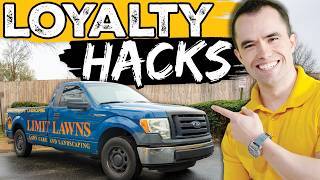
Mike Andes coaches small service-business owners on why employees quit: brutal heat, bad trucks, low pay. He walks through hiring filters, pricing strategy with premium anchors and downsells, seasonal hiring, and automation tools like Stripe and Copilot to reduce admin work and cash flow problems.
Chapters
How to keep employees during the heat, 110 degrees and all, all no call, no show. So ultimately there's several things you can do in terms of actually improving their working conditions so that be better trucks have better AC uniforms that allow for that kind of heat, adjusting their hours of operation. So earlier in the day or late in the evening for example, depending on where you live, giving them shorter days or three day weekends like Fridays off for example, there's all sorts of things you can do to actually make the workload a little bit easier. I think ultimately when it comes to attracting talent is everyone is willing to show up on time and do the work for some price. And if I can pay 5 to $10 more per hour in my market than the going rate for my industry, I'm going to attract the best people that are willing to do the work. And so I've always really optimized towards how do I optimize for a better money model, to use Alex's terminology, in order to be able to create profits that are higher than anyone else can afford to pay their in terms of going rate Fair employees got Brandon Fisher having trouble finding reliable employees that speak English. What do you recommend again? What I just said I would say again, if you make the place that you work, you are creating a job for better to work in terms of conditions, the type of equipment they have, properties, all of that. If you just make it better to work there and then you pay them more, the likelihood that you'll be able to attract the highest quality talent in your market or instead other otherwise you'll be able to add more filters to your hiring system. So for example, if you don't want people to smoke, if you want people have a clean drive record, if you don't want them to have a back history, these are all filters you're putting in and that's fine. Just realize that in order to be able to get that level of detailed and filtered down employees that you're going to have to pay more, you're going to have better working conditions and ultimately to afford that, I'm going to try to make a more Prof. Profitable business.
So I own a mobile detailing business and this will be our first full year in business. I think that we'll probably end up doing around 160,000 this year. I have one full time employee and my question is I'm wondering if I should like fully just reach for the stars and raise my prices now by 25%. If I did do that, it would probably put us it would Put us at the top of the market and we would most likely, from my research, we would be the most expensive mobile detailing company in our area. So I'm wondering if I should do that now and then continue to grow or if I should just continue to grow and just wait to raise prices. But you know, the reason I'm thinking about doing that is just because I would attract, you know, continue to attract higher end clients and better clients and, and I would be able to, I would have enough margin to get out of the field myself and continue to grow, grow the business. If I raise prices by 25% right now I'm still having to just be in the field until I get a second technician. So I wanted to hear your take on that.
Yes, this is my $0.02. Because you haven't built the business and the infrastructure and now you're like got to raise prices to prevent that from happening. I would challenge you on this. I would say instead of raising your prices 25%, what do you need to do to raise your prices by 50%? And, and so instead of thinking do I offer enough value to raise my prices? I want you to think what do I have to offer in terms of value to get this price? So if right now you're charging $200 and you're like oh, I'm going to move it up to $250, 25% increase, I want to ask what do we need to do yet to 300 and like that's going to be the highest market. Great. Now we have a differentiating point with this business and people have to ask, ask why are they 300 and they're 150? And so there's all these other things that you can do, whether it be air freshening, there can be treats, there can be handwritten cards, there can be gift cards, there can be a referral program that's like unbeatable. There's so much you can pack in terms of value, even things like recurring services being way more discounted. So you go 50% higher in price but then a massive downsell into recurring services, even quarterly for mobile detailing. So I would really challenge you. How do we make, how do we increase the value of this service to where they can't even compare us to apples. To apples. Because the reason that you said you're the highest in the market if you raise prices by 25% that is an indicator of me in a commodity commoditized market. I want you to think in terms of, I want to get out of this. They cannot Compare me, because I don't just do their, do the mobile detailing. I do all these other things that no one else is doing. And so I would really challenge you to do that because if you can increase your prices by 50%, you will absolutely have enough money to scale and you'll have the money to actually produce such outsized value to the customer that your competition will not be able to compete with you.
Yeah, that's, that's interesting. I didn't even, I mean it didn't even cross my mind to raise my price. My price is 50%. Our average ticket right now is like about $320. And that's, that's average. So, you know, some people are willing to book in our top tier package, which is about 450, and then they can choose add ons too. So I know there's a market where there's like customers that are not price sensitive at all. But yeah, the reason I was thinking about doing 25% is because I already know how, like, I mean, and you know, this is just my perspective, but I already know how great we are and how professional we are. We already have like incentive for quarterly book bookings and maintenance plans that are monthly. And you know, we show up in uniform, have decal trucks, and you know, just really do our best to provide a stellar service past just cleaning the cars. So, you know, I mean, 50 would be like $320. Average ticket to 640. That would be, I mean no one's doing that unless they're offering like paint corrections and ceramic coatings.
So that's because of that question, right? It's like, what, like the margin of the two services you just mentioned at the very end there are very high. And so it's like, do I do something like that and roll it into my service? I'm not saying you should, by the way, but like, it's all the little things that get mentioned in a review that are not the actual cleaning of the car. It's the communication. It is the fact that they left me a personalized note. Like I, I got mobile detailing once to my car. Sorry, twice. And the second company got a. They wrote. I didn't remember the first one there for a second. They wrote me a personalized note. They gave me a $5 gift card to the coffee shop that I was parked next to because they came to me and like did it while I was at the office. And so like, I will always use that company. And they charge. I remember looking at the invoice, I just Gave them my car, said, you know, whatever they, they are twice as the cost as the first person. I don't even remember the first person's name. I remember the name of the technicians and the name of the company of the second one. And I remember like I would have, I might have left a review. I don't leave reviews very often. And so I would really lean into like what are those moments that you are able to give the customer that, that they actually talk about. And here's the other thing is maybe you raise prices by 50% but then you're only using that to anchor them and then get them on the recurring service. So to increase your average, you know, your average ticket might not go up, but now the annual value of a customer goes up because you get them to do two or three extra services. So for example, if I was you, great, it's 699. That's our, our premium package. And some people by the way are not going to box. They're just going to roll with it. And then the other part of it, big chunk of it, that's a little expensive. What about, hey, you know what, actually it's 690 if you commit to it in annual or quarterly or whatever. Now it's four, nine. You bring that massive chunk back to you. And now you might, your annual, your average ticket might not move much, might stay at 320, but now your annual value goes to 600 because you get people to double book like another, another booking out of each person. So you double the size of the business with the same number of customers and technically your pricing doesn't change at all. So I would, I would increase the price as an anchor on one time services to only downsell the recurring because I'm going to go out in a limb and say right now you're selling one time services and then upselling them into recurrence. I would take every single one time job and say here's the price and then I'm doing a downsell. I'm like, oh, it's cheaper if you do this on an annual basic. Today you can save $200 if you just sign up for an annual package, for example.
Yeah, so can I, can I hit on that for one second?
Yeah, go for it. Absolutely.
Okay, so are like typical funnel is if they book in a job through like phone call or they book online or however they do it and we get in front of them after we work on their car when we're walking them through the final product and finishing up everything with Them we will offer them a 10% discount on that service if they book a future job with us before we leave for like the next quarter or six months from now or something like that. Which the reason behind that for me has always just been to like you know, raise the lifetime value of the customer which can, I can justify spending more on ads and doing, doing more stuff like that. But so that, that's kind of like how we've been doing the funnel and running that funnel is just offering them a discount to book again in advance.
Yeah, I like it. I think that you take that exact same mentality though and you go to the great. Their point of greatest pain is when their car is dirty. And so even though they're happy at the end, it's like they do not currently have that pain like anymore. Right. It's like the classic hey, do you want another steak? I just had another. A steak. Like why are you selling me other steak? Yeah, yeah, I would do it before. And furthermore, I'm now raising my prices so that when instead of saying 10% off, it's 30% off. Right. And then also by doing that I don't need them to be present to the upsell because I'm going to go out on a limit. Guess that right now sometimes you're not able to get that upsell in simply because they're not around.
Right.
And so I'm going to try to on the upfront. And furthermore, especially if you have them the phone. Great opportunity to do the price anchor. Some people are going to accept by the way, they're just going to accept 699. But if anyone says no, anyone says no because of price or box at all, it's like, hey, by the way, that's our one time deal. Oh, I misinterpreted you. I'm going to get you on the annual package and immediately bring that way back down. And then now you have someone locked in recurring and then it comes your job to make sure you don't have churn. You don't have people that leave after get them for the quarterly, they don't leave and I wouldn't do contracts and all the rest of it. I'd just be like, hey, I'm charging this price already. But now I've already got them on the schedule for the next four visits. And if you could take your current lifetime buy in 3 exit. This is a different business.
Yeah, yeah, yeah. Okay, that makes sense. I appreciate, I appreciate your insight. That was very helpful.
Awesome. Thanks so much, brother. You have a Good one.
Right now we're late in the, you know, late in season. August we still have, we have a regular mowing route and quite a bit of landscape stuff. Would you recommend hiring or look, I guess hiring somebody still this late in the season. If we're about two weeks booked out and still have an estimate come in, is there like a two to three weeks that you're seeing that you're, you'd like to see a constant work coming in or do you think it's kind of late in the season?
I think like we all think that people want full time, year round work, but if you went and made an ad say, hey, for the next 90 days I need someone, I'm looking for someone, I would rather pay someone a little bit more. But they know they're leaving in three months, then you have to hire them on full time. They expect that. And then you hit the off season and you're like, they're working 40 hours and you really need them for 50. So if I was you, I would just make the hiring ad. Hey, this is a temporary position. It's full time for the next three months for example, or you know your market and then during the off season you're available, you're allowed to, you know, leave and come back in the spring or you can work for 10 to 15 hours a week as we need you. So I think just being clear with the expectations in the job and the hiring process, the interview process is really the key.
Okay, okay, sounds good. As long as we're all on the same page because right now I'm jumping in a few days out of the week just to kind of help with the over, over budget hours that we have during the week. So. But as long as I guess we have that clear with, with the person and they're okay with it, then I think it should be good.
Yeah, I think you'll be amazed that like not everybody wants full time. There are people, they're like, that's perfect. I'm going back to, you know, I'm taking the quarter off the fall quarter of college and that's perfect. I'll have my holidays and I'll go back to school in January. So I think we all just assume that people want full time work year round when reality it's not really the case. I went to business school for two years to get my mba, my Master's in Business administration. I've compiled all that information into over a hundred videos that are useful for small business owners. You can find it MBA for entrepreneurs com it's completely free and it takes those two years of business school and smashes it down an online course completely free.
I've had my lawn care business about three years now. I'm on track to do about half a million this year. I'm 20 years old and I live with my parents so I do plan on moving out next year. But I just wanted some advice as far as like what's the best thing that you'd recommend? I have the cash to, you know, go buy maybe a small piece of property but I don't, I don't know if I want to have everything tied up into that or I don't know if I should just go, go get storage. Right now I store everything at my parents house. I dump there as well. So that's been nice. I pay little to no rent. Reason why I've been able to grow so profitably and fast.
I made a video on home service Millionaire channel going through like all the different options from like garage to shop space to storage, renting versus buying. And I think at your age, if I was you, I would really just focus on growing the business. Because if you go out right now and buy a shop space, let's say you find a really good deal but you're still going to put down like 50 to 100 grand minimum because you're not going to be like FHA loans, right? So like that's really what you're looking at to go to a commercially rated shop space. I think if you put that money into the business, you could double, triple, quadruple the business size. And then when you have a $1.52 million business, you can go afford a larger shop space that actually fits your needs. The one, the one caveat I would put to that is like if you're in the market to also move out of your, your family' it wouldn't be a horrible idea to do an FHA loan because you can get like 2, 3% down and then just make sure that whatever you're buying would double up as your shop space. It really comes down to if you can find a property that is residential that would qualify and zone for you to run your business out of. And so like what area of the country do you live in?
Kansas City. Missouri.
Yeah, so like depending on where your service area is and which side of Kansas City, like there are areas where there'd be a residentially zoned, you know, a few acres where you have a house that you can get an FHA loan on that also has a shop Space. And so I would be encouraging that, especially, like, if you're thinking more long term, like, are you willing to say this, keep this business for like, 10, 15 years?
Um, yeah. I mean, I'm not sure.
Yeah.
As of now.
Yeah.
But I know things can change, and that was really my main concern. You know, if I could find something like that with the house and residential and I could, you know, run it out of there, I'm fine with it. I just didn't want to get tied to, you know, a shop space that's, you know, 3, $400,000 at 20 years old, when could obviously put that money towards the business.
Right. And it's not even the 300, $400,000 of the shop space. To me, it's more a matter of distraction. And from a cash allocation perspective, if you spent that money on the business, like another truck, another couple employees, a whole bunch of marketing, you'd probably double or triple the size of business. So definitely take a look at that specific video. I mean, home service millionaire, break down the math on it. But for the vast majority of people, in my opinion, the ability to be able to get an FHA loan is like the best of both worlds. If you can find a place that's residential and you can rent, that's probably most ideal. If you have the capital, how much cash do you have sitting that you could put towards a shop without affecting the business too much?
I have right now probably about 185 saved. So I'd say probably keeping about 50k, you know, on hand. So probably around 135. And if I could pour into something else.
Okay, that's great, Great data point. Because if you have 185 cash at your age, get an FHA loan. Probably not a bad idea. Because even if you. If you spend 10 years building this business and then you decide you go someplace else now, you built up equity inside the house and you could sell it. So if, in my opinion, I would get really serious about an FHA loan, talk to a loan officer. For 2, 3% down, you can get in the building. And this is the thing, you might spend $3,000 for the shop you want per month on rent, and for four grand a month on a really nice property that has a house plus the shop space, you pay four grand. So I would really look at an FHA loan, make sure it's zoned correctly. Watch that video I made on hsm, because it kind of goes through, like, you got to make sure the zoning is correct. Because I've seen people do this, they get in the bill and then there's like, oh, it's not zone to run a business out of, even though it has a shop space.
And then hypothetically, you know, if I'm not able to find anything of that sort, do you think really the best option is just running out of storage unit?
Yep, 100%. I've rent out a storage unit I as cheap as I can, but I'd also be trying to get as close as I can to my customers and also where my employees live.
Okay, and then from like a personal finance point, would you say renting over buying, even with how much capital I have on hand and just waiting until something comes up? Or do you think it's okay to find something small, like, you know, a smaller apartment where I could pay off personally, you know, in the next two years?
I'm not opposed to that. I think the thing is, when it comes to real estate, anyone that gets in a rush, I always see they're the ones who get burned. Like, if you think about real estate from a 10 to 15, 20 year window, you almost always win. It's when people are like, I'm gonna be here for a year or two, I'm gonna try to flip it or I'm gonna try like improve it or it's like, that's a risky game. But real estate investors that stick with properties for 10, 15, 20 years, they've been, they do great. And even from like a depreciation perspective, this is a home run too for a, it sounds like a very profitable business. You have to be able to take a big chunk of that mortgage and throw that off as, you know, the office cost. Like there's a lot of tax benefits here too. So I would talk to a loan officer, I talked to your accountant and try to find the fha. But I take it slow, like there's no rush here. And I do think you could find a place that you can rent out for two grand a month. That isn't most ideal. It doesn't have a big shop space. But because enough rural, you're not going to get reported and you're renting, so who cares? The worst thing is you get kicked out and so you could run, you know, the business from there if needs be.
Okay.
So probably take just a more passive approach to it.
And I don't want to see, I don't want to see you sink 100 grand into a property that's short term and that is probably eventually just going to become a rental property. Because I still think 100 grand in your business now is probably a better bet in terms of like, just if you built this at 20 with 185 grand means you have a profitable business. I happen to believe you keeping cash on hand and just growing like that business will make you way better returns than any piece of real estate. And so I would focus on it. And anything that takes your attention away from that I think is bad. Unless you're doing a 10, 15 year play on what sounds like you're moving out anyways, you might as well have that combined if you can find it. But take it slow. Get a real estate agent, get a mortgage broker, and just take it really slow. And then in the meantime, go rent someplace that's rural where you can at least park everything, pay significantly less, and if the worst case a neighbor report to whatever, you have six months to move out.
Perfect. Okay, Mike, if you don't mind, I have one more question. So as far as you know, I'm young and looking out into the future.
I don't.
I know you have the franchise and it goes up. How did you kind of distribute, you know, all your wealth? Like, should I be investing in other things with all this cash I have or just pouring it straight back into the business? I just wanted your take on that.
What size is the business now in terms of revenue?
It'll be at half a million this year.
Cool. So, like, in my opinion, I'd be trying to shoot for at least 800,000 to a million. I try to get it to the place where once I get there, I'm able to raise prices, make it even more profitable. And I think you've done really, really well. I think building it at the point, though, where you could afford a general manager and still be profitable without you working like a dog like you are now, which is totally fine. It's great. That's what you should do at 20. But like, you want the business to be profitable with someone else doing the work you're currently doing. And so that's like the next level of profitability. And you've been. You've been able to build the business very successfully off the back of your hard work. Now it's a matter of making the business 20 to 25% more profitable so that it can cover the wages of a general manager that will do your job. And so I would really be focused on building that right now. And that will take your full time and attention of like, architecting and building the systems required for that general manager to be successful, building the business away From a pricing perspective, from an SOP perspective, admin sales and operations being dialed in, you looking and actually creating checklists and models for how everything should be working. That's the job of the next three years. And anything that takes your time away from that, in my opinion, is a bad use of time because you have the best returning asset right in front of you. And so if you invest in the stock market today and you have 8% returns, you know, you put 100 grand in, okay, next year we have 108. The year after that we have 120. Year after that we have 132. Like in three years, you take that money, put it in your business. Now you could potentially have a 1.5 to 2 million dollar business that has 2, 2 managers, 3 managers and is profitable without you. 150 to $200,000 in distributions a year. You're not getting that from the stock market or from real estate. And so I think doubling down on your strengths is where most wealth is built. And as you get older, like you're 20 years old, that's why I'm talking like more. You're much more risk on as you get 35, 40, 50, if you have family, depends, you start diversifying, you put some of that towards real estate, maybe buy a nice shop space like what I just talked about, and you kind of add on to it and build equity inside that asset. But for now, I think you have a good thing going. I just double down on it.
Perfect. Thanks, Mike. I appreciate all the advice.
You got it.
Just wanted to quickly ask you, Mike, two quick questions. One is, I posted this on the Facebook, but since you were live, I just decided to ask you now. We want to rebrand our company because right now it's just called Alvarez Brothers, which is like not a very memorable name. And like we want to grow it and it's like easiest to rebrand when you're kind of small. We're fully in profit mode. So it's like no problem, money wise to do something like this. So that's not the problem. It's more like we've never done trademarking.
Before for a new name.
And I just want to like know how to go about that, I suppose.
Yeah, I wouldn't stress too much about trademarking mostly because when you do a local business license in your local area, you're going to be okay because like you can't do the exact same name as someone else in your local market. Like a certain city, if you get a business license there. Now, the only reason I would be concerned about this. If you think that people outside of your market and in markets that you future, in the future want to enter if they're going to start the business with the same name. So do you already have a name? You're like, oh, it's pretty common or you think someone's going to steal it?
I like. So that kind of goes to. My second question is we were going to do like a rebranding with a really professional company and spend the money to get like a really nice design, logo, etc. You know, tagline, everything. Because we do eventually want to grow to like multiple locations, model pretty much how Augusta more or less does it. And I know there's a lot there. But yeah, like, we're like, okay, we have a great idea for a name and all that and we don't want it. Yeah. Stolen pretty much by someone else.
Yeah. To be honest, like, I don't think that's the differentiating factor in 10 years, like, that's always ask myself when it comes to trademarks, patents, copyrights, et cetera, it's like, in 10 years, am I gonna be like, man, because I got that trademark. That was the make and break. Businesses aren't built on this. And this is why, like, there are companies like Tesla that don't even, you know, patent or they have open patents where they allow people to see everything they're doing because it really doesn't differentiate the strategy. Now if you think someone's gonna be malicious and open up their own trademarks to block you from getting to know the markets, then yeah, maybe you do a trademark. But like, in my opinion, this is, this is time and energy spent that could just be deployed towards the core offering to the customer and making that more valuable. But I don't think a trade unless you're going national. If you're going to try to go national, you should probably get a trademark. But I would also say that you could focus your time and energy right now in the local business, growing it till it's really, really strong. And then when you want to expand, you now have the money to actually get a real trademark because you can go on to a host of online companies and pay a couple hundred bucks to get a trademark registered. But then will it actually hold up in court is whether or not, what level of attorney did you hire to make that, that trademark application? And so in my opinion, I would just grow the business like crazy in your local market. When you're ready to expand outside of your state, that is when I would Think about trademarking.
Okay, okay.
That's fair. And then you mentioned local licenses. At least here in the state of Michigan. A lot of cities don't require it. So that's why I'm also like. So anyone could take the name technically, but I don't think anyone will. So that's kind of. I was just worried about something. I guess that wasn't a huge problem.
It's because right now to you, it's like new and special and, you know, fuzzy. Right. And so like names really don't mean a whole lot. It's the brand associated with it. And so I would not stress out about this. I would just focus. Like, especially if you don't. So for example, if you don't have to work in that area, like specifically Michigan means that they could just name their business whatever they want and do it unlicensed anyways and rip you off. And so you're just protecting licensed companies from. With the trademark. So I would just deploy all that energy and time in towards growing the business.
Okay. Okay, cool.
Appreciate it. Thank you so much.
You got it. Have a good one. The Augusta business model is to do $800,000 in annual revenue, $200,000 in profits. How is that possible? Because of command center taking our phone calls, emails, text messages, and even running payroll doing all the admin work so we can focus on growing the business. If you think having someone answer your phone throughout the day would be a relief for you and your business, go to augustalawncare services.com franchise book a call and see if joining Augusta Nation would be the right fit for you.
I have a business and probably going to do around 400,000 this year and I'm really interested in getting into next year like fertilization and more design build work. Right now we're doing mowing and then basic landscaping work. Thoughts on kind of getting into those services? Should I do that or should I focus on trying to build the business to a little bit more revenue before I go into that kind of stuff?
So are you trying to do this as an add on service? Are you trying to move away from maintenance towards design, build and chemical?
No, add on. Add on.
Okay, cool. So. So the bottom line, how many mowing customers do you have now?
It's around 100, I think.
Cool. So in my opinion, like this is, this is my threshold for adding new services. This is my new thing is I am not going to add a service unless it's going to keep a truck busy five days a week, like full time from day one. So if you think, okay, if I have 100 mowing customers and if I sent an email or a text message blast and upsold them all into a treatment package, if I think I could get 30 of them, okay, great. That doesn't fill someone's schedule though. And so the reason I say this because what happens is people like, oh, it's higher margin or whatever. So same thing goes for design, build and, or chemicals. Like, I'm gonna go to another truck, I'm gonna get all the spray tanks, I've got everything set up, and then they get 20 or 30 customers and they use it one day a week. And so I'm against poor asset utilization. And so my thing is either a, you grow the mowing to 300 customers or so, whatever you think that is. And then you know, you're, you've tested it, you know you're going to get 50% of them and convert. Great, that's 150 people. They'll keep one truck busy all the time. I'll get the technician, I'll get the licensing, I'll get the tank. And now you make the investment knowing that you already have a whole bunch of revenue backing it up, up. So that would be like the safest route. The other approach is you want to add this on for strategic reasons or you like it more or whatever, and you're going to deploy all your marketing dollars towards it in order to get it to where the truck is fully utilized. Same thing goes for design, build. People go in like, I'm going to have to buy a bigger dump trailer, I'm going to have to buy an excavator and I'm going to be getting a walk behind skid steer and all these other things. And then they sit there and they get used maybe once a week. And so I love adding these other services on. I would just put the benchmark in the most conservative measure as I will do this once I know I can fill one, one, one truck schedule full time. And so how many, how many treatment customers, for example, do you think you could service with one truck?
Honestly, I have no idea. I haven't even considered. I haven't even considered that yet. It's something I have to look into more.
Awesome. So I would stay in this world of educating yourself before pulling the trigger on this. And not because I think that if you did it, you would make less revenue, you will grow the business. I just also believe that you will add another layer of complexity for probably adding an additional 20 or 30% of revenue to the business that if you just didn't focus on this thing and just deployed it towards your existing services and your existing business, you'd probably go to the business 20, 30% anyways. Or if you deployed this energy and time and thoughtfulness and communication to customers towards a price increase, you'd probably have the same profitable profitability outcome as well. And so I think we have limited time and energy. And so if you deploy it towards something new, you're going to have a lower return than just doubling down what you're currently doing. And so either A, I would go all in on the mowing thing and like, okay, great, I know how to get 100 mowing customers. High likelihood I can get 300. Let's focus on that. Knowing that then I only need one third of them, for example, to be able to fill up a truck on chemicals. And when I do so from day one, it'll be profitable. I'm not going to go invest in a truck and training and licensing and figure out the chemicals. And then storing the chemicals is way more, more like from a commercial leasing perspective is more expensive. Like there's so many other levels of things that distract you from your core business. And so I'm not trying to dissuade you. I would just say I don't think personally you've done enough educating to actually go all in on it. You would be looking at this like, hey, this is a passive add on to my existing business, but I don't do that until I know I can fill a truck and it's fully utilized. If I'm going to do something quote passively as an add on, does that make sense? And you just deploy it towards your existing services and your existing business, you'd probably go to the business 20, 30% anyways. Or if you deployed this energy and time and thoughtfulness and communication to customers towards a price increase, you'd probably have the same profitability outcome as well. And so I think we have limited time and energy. And so if you deploy it towards something new, you're gonna have a lower.
Return than yeah, yeah, no, absolutely. I, absolutely. That does. I appreciate it.
Absolutely, man. What's up, Mike? My name is Zach. I want to grow my lawn care business, but I have school starting on Tuesday. I have 10 lawns total, all weekly and occasional landscaping. How do I grow? Just doubling down on what you're currently doing. And so either A, I would go all in on the mowing thing and like, okay, great, I know how to get 100 mowing customers. You're at capacity. It sounds like you can't get any more customers without skipping out on school, which probably shouldn't do. So they're going to raise prices to high likelihood. I can get 300. Let's focus on that. Knowing that then I only need one third of them, for example, to be able to fill up a truck on chemical, be able to keep the capacity down. Or you're going to go hire someone that can work while you're in school so you can increase capacity.
What is the. The best way to keep accounts receivable low?
Yep.
And maybe to catch up on.
And when I do so from day one, it'll be profitable. I'm not going to go invest in a truck. And training and licensing and figuring out the chemicals and then storing the chemicals is way more like from a commercial leasing perspective is more expensive. Like there's so many other levels of things that distract you from your core business. And so I'm not trying to all.
This now that we're at this spot.
Totally. So first off, changing your estimate terms and conditions to make it very clear that everything's due to dissuade you. I would just say I don't think personally you've done enough educating to actually go all within seven days. That's the first thing. Now this, this appears to be much more of a systems problem in that you don't have a system for billing and invoicing customers after the job is completed on it you would be looking. It's like, hey, there's a passive add on to my existing business. But I don't do that until I know I can fill a truck. So first that's like. Because I can't even tell someone they're overdue and start charging them late fees, for example, if I never sent them the estimate. And so what CRM do you use right now? And it's fully utilized. If I'm going to do something, quote passively as an add on, does that make sense?
Yeah, yeah, no, absolutely. I. Absolutely, that does. I appreciate it.
Absolutely. Man.
We use copilot.
Yeah. So like, okay, great. So this is a function of. You can automate this. So I would, I would have call with support and be like, hey, what's up, Mike? My name is Zach. I want to grow my lawn care business, but I have school starting on Tuesday. Here's our current process. What do we need to do to make this that whenever we complete a job, it's going to send the invoice. And my question to you is, do you think you have Would have to button up some systems to make sure that you could even allow invoices to go automatically.
Oh yeah, absolutely. The only issue is we don't have emails. We have phone numbers now.
Every.
Everything's updated on phone numbers. But our email part, we're really bad at getting those and we're just now trying to build those emails up.
Yeah. So I would, I would probably text all my customers a link to the customer profile in the portal and say, hey, could you put your email in? I would tie it to some sort of incentive, for example, if needs be. Or call, I just call them. Okay. Just checking in. Do a mid season check in. Making sure you're happy, enjoying your summer. Awesome. Hey, I noticed you didn't have an email on file. You got to get their emails. You already have their phone number so you can text them from copilot. So I don't actually see that even as a constraint because I still believe you can automatically invoice customers when a job is completed. It just goes to them automatically at the end of the day or end of the week, however you set it up and so you could text to them. Text them as well.
Oh, okay. Send that as a text.
So set up, set up a zoom call with support and if you have your admin team on that call, I'd highly recommend it. Like if you book it with any of the team. But if you can get like Kendra or Parker or any of them on a zoom call and just say, hey, like here's my current process. I want it to be when I complete this job. It sends out an invoice at the end of the day or end of the week and you're like, well, I want to check everything over. Great. That's when we say okay, it's going to auto send on every Sunday night. That means that on Friday one of the tasks for the afternoon for your admin team is go through all pending invoices that are going to automatically be sent Sunday. So this way you as an owner's perspective know that you will never have overdoing to invoices or sorry, invoices that have not been sent. I would then say changing the process like requiring cards on file before the estimate is accepted is now super streamless, seamless inside of copilot. You check that one box. And now every single time they accept an estimate, you know a card is.
On file or ach, we, we're doing sprinkler work so it's more like a one time deal. So usually I was going to Ask with that card on file how there's some certain guidelines for those credit cards that we're supposed to follow. And the last time the office did that, they, they got super scared because someone sent them a letter saying hey, you're not following these guidelines and we're going to shut you down or something like that. And so they've been trying to do without credit cards. They can call in and they'll input it, but only through the phone. But they won't. They're not using like a square or a, or other credit card stuff. So I was wondering how much of a task is it if we started using copilot credit card stuff system, do they take care of that, the credit card and all that?
You set up a stripe account. Very secure. It's industry leading in terms of online payments. You set up your stripe account, you go into copilot, go to the payments inside your settings and connect the two and money will flow. When invoice is paid, go straight into your stripe account. And so I don't know what predatory mail you got from some random person that scrubs Internet and sends that to probably every business owner. That is not true unless you were using some crazy processor back in the day. But like you connect stripe to your Copilot account. I have 10 lawns total, all weekly and occasional landscaping. How do I grow? You're at capacity. It sounds like you can't get any more customers without skipping out on school, which probably shouldn't do. So either you're going to raise prices to be able to keep the capacity down or you're going to go hire someone that can work while you're in school so you can increase capacity. Choir, click one button. One button inside your settings that says require credit cards to accept an estimate and customers. It will not drop your close rate. Like we have measured this a lot. When it comes to the new estimate side of how they see things, it's very organic for them to really quickly add their card. A lot of it saved on their phone is click one button and immediately the cards on file. And even if you're doing one time jobs like you're doing at least now, when the job is completed now, not only can you automate the invoice, send you automate the charge of the card. And so the eventual goal here for you in my opinion is we eventually have it where every Sunday all the invoices get sent and they all get charged. You don't have a cash flow problem and you don't even have to rely on your admin necessarily to make sure they send out invoices. But we can't go through all of spring rush and invoices sent out. It's got to be an automated process.
Yeah, that would help out a lot. So we'll get that booked out on that, see about maybe getting the admin to use that function because that would make life a lot easier for the office. And I just, they were worried about that and I don't know if they had time to even call and ask but now I can let them know, hey, they take care of all that and it's just as simple as making accounts.
Yeah.
And like thank you, Mike.
Yep. Absolutely. The thing is this inside just copilot, there's millions of dollars being tracked and transacted every single day through Stripe. Stripe is the leading credit card online payment processor. And so if they got hacked, we have a lot bigger problems than your software account. I can, I can promise you that. And so I just highly recommend everyone having credit cards on file not doing net 30 where I require paint within 7 days. How do I require that? Well if you have their card on file, the only way that it would ever go to seven days overdue is if that card somehow gets declined, is non sufficient funds, etc. Well now I'm going to within seven days have a follow up process automations text messages trying to get them to update that card information. But the likelihood of payment is just a lot higher when you click one button which is required credit card on file prior to accepting an estimate. And it's very streamlined.
What is the best way to keep accounts receivable low?
Yep.
So maybe to catch up on.






