Taylor Swift, Messi, and Writers Strike - Episode 033
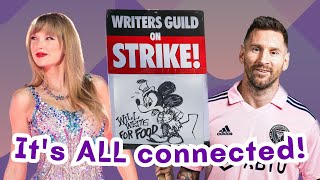
Mike Andes and a co-host discuss Taylor Swift's tour logistics and economic impact, Messi's move to Inter Miami, and updates on Copilot's stability improvements and AWS migration.
Chapters
Yeah, we're good, dude.
Sweet.
Back in the studio after a week off in Nampa. Napa Valley, baby.
Napa Valley, California. Yeah, you know me, didn't do any wine tasting. I went for the sun and the golf.
No, you went for the wine tasting. There was no wine tasting to be had because there's too many reservations.
Yeah. So not financial advice. If anyone listening wants to go with their significant other to Napa Valley, California, book your wine tastings like a week or two in advance. Did not know that. So we didn't taste any wine. But we did go to the Mariners game. Mariners were playing at the San Francisco.
Oh, that's pretty cool.
Yeah. So on the 4th of July.
Oh, that's awesome.
Yeah, it was super cool. Yeah, so that was very American.
Speaking of Seattle, you have the hat on. They had a really good wild card weekend.
Yeah, the All Star game.
Our All Star. What did I say?
Wild card. Yeah, All Star. They crushed it.
It was a good, good showing.
I thought from a media perspective they made it like a whole two week long like celebration. Leading up to it, they were doing free movies in the parks. They did like the sand a lot, like all sorts.
Seattle does a good job. I feel like sometimes it's like we kind of lost city because we're so far away from everyone else. A lot of big events don't come our way.
Right.
So even like Taylor Swift is coming and the entire county is calling it like a week of Taylor Swift. Everything in the whole county, all the cities are like doing stuff for it. I think like we do a good job because we don't get very many big events. Yeah. And it's kind of true because like even like landscaping that there's never anything up here. And that's why for a while we did landscape business courses. Like there's nothing on the west coast coast. Yeah.
So yeah, funny note on the Taylor Swift thing. I saw something on Instagram was crazy. It was like kids give credit where credit's due for these tours. And it showed the stadium that she had just finished in. I don't know what city, but inside of like a football stadium there were 27 full size semi trucks fully loaded. That's all the gear for her tour is 27 semi trucks full.
They were, they're measuring the economic impact of this tour. They think for GDP is like $5 billion. Because like the just in, in Seattle. They're planning this whole week thing. They think the economic impact is going to be over half a billion, like 500 something million dollars.
That's nuts. That's so cool.
It's crazy.
Yeah, that is really cool. It's cool that people are interested in that. Like, I mean, I'm not a big. Are you a concert person?
Yeah.
Well, I guess you're not really, like, a music.
Not music or anything, but. But. But I'm interested in the whole business of it. Right. Promotion setup. Like, you have. Let's call it an event that you do two or three DS in a row, and then you gotta go on the road and take it with you and do it over and over and over again. And. And yes, there's always little, you know, hiccups along the way, but the fact that, like, you get through all that without a massive media, like, backlash of something wrong happening or, like, you showing up late. And like, right now, like, that's the popular thing, is if you show up late, everyone, like, booze you out. So it's very interesting. Like, she has an incredible PR com team around her and, like, making sure things go well in that regard. Like, I don't listen to her music. Can never tell you who's her song. Nothing in that. But, like, it's very interesting to me, like, the whole production and now that's the way music is going. And I think it's really separated, like, the winners versus, like, everyone else is who can go on tour and just draw massive crowds. Now with music being digital, it's just. You can share it. So the hearing of it, you don't make money when you go on tour. They expect her to make over a billion dollars in profit.
That's crazy. That's so crazy. I saw another stat too. Just kind of interesting. They said she's basically doing a half marathon to a marathon every concert. It's four hours long.
Oh, it's incredible, dude. Like, that is also, like, the stamina of her as an actor or anyone is doing that much movement for that long and then on the road and doing it night after night. And then like, it's like what Michael Jordan said. Like, what if someone's coming and watching and they spent their last dollar of their paycheck to be here? Like, I'm gonna put all on the. On the field kind of thing. Like, that person shows up and they're expect. They don't care about your tour.
Yeah.
They want that night to be the best. Yeah. And so that's. It's just like, the level of pressure on that. Like, everyone's obviously gonna jump on. Like, it should be making. Like, I looked at some of the comments, like, Making this money is crazy. Like, okay, you go try to do one.
Yeah.
One song. You go try to do like, one event and then get people to come back. And one of you spending thousands of dollars to show up again. Like, it's. It's an exceptional. It takes an exceptional team to do that same thing.
Kind of parallels. As soon as Messi announced. Right. Did you know this? Messi announced he's playing for Inter Miami now in the mls? I'm not going to lie. I said. And I went and looked at the Sounder schedule. I was like, if Messi comes to Seattle, like, I'd go. And they said, like, tickets on average went up like 4.
400. Yeah.
For to see Messi, I'm like, oh, my gosh, that's cool.
Though the terms of his deal is pretty cool, too. But the fact that I saw a couple commentaries I thought was interesting. Like, they. The person was saying is down the road, there'll probably be a time when we say pre messy and post messy soccer.
Yeah.
In the US because if he really comes and, like, then brings that much attention and because where money is, attention follows. And so if that much people get involved with it, man, like, it could really make soccer or, you know, football in a really important sport in the US which would be interesting. Yeah, I think it'd be great. I think soccer is a very healthy sport.
Yeah.
Because there's lots of running and for kids to get involved in. It's super healthy. I think so. I'm a big fan of it.
Well, and it's a low barrier to entry for kids as well.
They need a ball and stuff like that.
You need a ball on a field.
Football and like ice hockey, for example, extremely expensive. Like, lots of gear, huge amounts of equipment. And so, yeah, soccer is. I love that.
And very selective. Like, you can't just go to a hockey rink. Like, we have one in Bellingham and we have like, almost 3,000 people in our county. Or 300,000.
Yeah. Well. And they talk like. Like the Dominican, for example, why there's so many people in the MLB from Dominican and like those countries is because it's. It doesn't cost a lot to do. So you can, like, you know, lift weights with rocks. You can do whatever you need if you're, you know, just, you know, barely have any money. So.
Yeah, that's cool. I think David Beckham walked so Messi could run. Look at you.
Yeah.
Because David Beckham did bring, like, some allure to it. But I think as a whole, soccer still wasn't that big. I think he signed with like LA Galaxy in like the early 2000s.
Right.
So Sock. The MLS was still young, relatively speaking in terms of professional sports. But then Messi coming. Okay. MLS has been expanding. There have been like three or four new teams in the last couple years. I think. Like you said, I think there is going to be a pre messy MLS and a post and I'm here for it, dude.
Now did they.
I just love sports.
They pull a. The Saudi come in here and buy out the mls. That's the question. Like they do with live golf.
That'd be nuts.
Wouldn't that be crazy?
That's wild too, man. We're getting on a lot of tangents, but did you see Rory? Rory said if live golf was the last place I could play competitively, I would retire.
Yeah, that's huge.
He's like the biggest name in golf right now, arguably. I mean, obviously Tiger woods, but he's not in every event.
Yeah.
So it's really Rory kind of as the main face.
Yeah. No, it's crazy, man. Nuts.
So anyways, well, welcome back. We're in the studio. Some wild tangents, but that's what we do. So let's talk Copilot. Actually, we haven't really talked about in a while since you've been gone focused on the 30 day challenge, focused on Augusta, how you. How you're growing personally as a leader and all the drama there. But Copilot has had some very cool updates recently. You've had Christian on your team who's been helping you do more demos. And obviously you have the 747s with Stephen, George and Christian. But you guys have been recently talking about automated scheduling. So I'm just gonna leave that open ended. What, what, what is the. What is the main goal of automated scheduling? Like, where are we going?
Yes. Like in the more short term.
We'Ve been actually focusing mostly on stability. It's kind of a weird spot right now. Cause I have this time crunch of like when we need to get certain features done. But then also like we've been really trying to do more stability stuff and I was. It kind of comes back like I was reading this book about like. Cause I'm trying to learn like how to build a SaaS company here. Right. So I've been reading lots of books for several years as like we were doing P4P and stuff. But like now obviously it's a much larger, you know. Org. So I'm trying to just like be the best executive I can for a technology company. So I was listening to the book and I it talked out like Maslow's hierarchy of needs and then it related it to SaaS. And so for SaaS, it's like features is not the most like the foundational level, right? It is like, can I log in? Like, is it on?
Yeah, yeah, yeah, yeah.
And so like that's important. Then the next one was like speed, like you gotta have it fast. And like features are like fourth like on the hierarchy of needs. And so what's weird right now is like we need, we do need certain features, especially for larger companies. But on the flip side, like I have to think about like retention of our, of our, of our users and like their overall satisfaction. And so one of the big things we did or we've done the past month is completely changed our testing method. So there's been way less bugs introduced in the past month, like I'd say about half. To reduce that even more is we are going to be doing where we basically launch all of our features and bug fixes to like 10 users. Okay. And it's delayed like a week before it goes into production. So not a fan of that because it slows us down a little bit. However, it'll prevent 99% of users from ever seeing a bug that would otherwise been released into the public.
Okay.
And there'll still be some get through because you can only have so many use cases with testing then only so many use cases with like 10 users. But what we're trying to do is like get a group of 10 people that are like, like kind of using it from all different angles and services and ways they do it, et cetera. So hopefully they'll break anything before it gets into production.
Do those 10 people know you're doing it?
Oh yeah, a hundred percent.
Are they like volunteer voluntary accounts?
Okay, cool.
Yeah, yeah, I figured. But I was like, how do you select them? Is it voluntary? Is it.
Yeah. So we're selecting it mostly based upon like we already know which users are most communicative. We already know which ones are okay with feature releases having some bugs. And they are really good about giving us feedback. They're the ones like, have done lots of zoom calls. They've given us list. They're usually pretty technical too.
That's the first thing we're doing. The second thing we're doing is we got to switch all our server base over to aws. So when we first originally did the code base switch from Lawn Pro over to Copilot, we stayed on their servers, not their servers. But with their company that does their servers and.






