The #1 Reason Customers REFUSE Your Estimates (Fix This Now!)
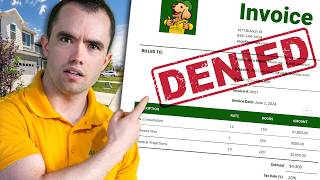
Mike Andes breaks down why customers reject estimates and how to fix it. Customers often miss estimate emails, so send via text instead. A lawn-care company that added follow-up calls and personal videos to declined estimates saw close rates jump from 36% to 68%, and revenue grew from $300k to $780k in one year.
Questions this video answers
From 36% to 68% (as stated in the transcript).
From $300,000 to $780,000 in annual revenue (one year).
Over 50 Google reviews (from fewer than 10 prior).
About $27–$28k in the prior year.
About one out of five (20%).
Chapters
This video will show you the six reasons why customers are not accepting your estimates. At the end of the video I will show you how a landscaping company went from $300,000 in annual revenue to $780,000 in annual revenue without spending any money on ads because they use the strategies we're going to talk about in this video.
The first reason that customers don't accept your estimates is because they don't even see see the email. When you send out the email, I want to send it via text and email at the same time.
If you're only sending it via email, send it via text as well.
And if your CRM doesn't have the ability to send out text, just copy.
The link or attach a PDF and.
Send it via imessage.
You want to get to the customer and if they don't see the estimate.
They will never accept it. I'm also going to automatically resend the estimate to a customer until I hear back from them.
I'm going to attach the PDF to the email. I need to make sure they see the estimate. So if they don't want to click on a link to my CRM and my customer portal, I'm going to attach a PDF, see the estimate.
They can never accept the estimate. So I'm going to make sure I set up automated resends of my estimates.
Also, I'm going to make sure that they do have to click on a link to go to my customer portal.
I'm not going to require a login. I don't want them to have to have an email login with a bunch of security questions or have passwords. I want to ensure that when they.
Click on the link to my estimate.
It immediately shows it to them because otherwise there'll be a huge drop off.
In the amount of people that actually.
Get to see the quote.
If they can't see it, they can't accept it.
Now a big challenge in 2024 became when email deliverability started to become extremely difficult. Email providers like Gmail, Yahoo and Outlook are putting massive amounts of spam filters in place and if you dump a.
Bunch of images or links onto the.
Email that goes to the customer with.
Your estimate, it very might well end.
Up in their spam folder.
And usually the very first email you.
Send a customer is your estimate. It is the initial proposal and if.
They can't open it because they don't get it in their inbox and the reason they don't get it in their inbox is cause of the spam filter and the reason the spam filter got it. Is because a bunch of links, a.
Bunch of text, a bunch of gifs, a bunch of video attachments, and a.
Whole bunch of images, I might actually.
Reduce the amount of media that's on.
The estimate email just to make sure it actually gets through the spam filter.
And into their inbox.
The second reason why customers will not accept your estimates is because your competition beats you to the punch. In other words, they simply outmaneuver you.
They get through the quoting process much.
Faster by the time the customer asks.
For the quote, and then you show up at their property and then you send them the estimate and then they accept is a bunch of different steps.
And a lot of people like, oh, I get to estimates within 24 hours.
Yeah, great. But how long does it take you to put together the estimate and then.
Send it to the customer? I want to get to that quote as fast as possible.
And in the perfect world, I would.
Actually do the estimates over the phone, so it doesn't even require the extra day of me going and meeting the customer and putting together the quote.
Even better yet, I would do instant.
Pricing for my website, so it doesn't even require me to answer the phone.
And rather they can select their pricing.
Accept the job, put their credit card on file, and I can have the job scheduled within a matter of minutes.
Now, instead of copilot on every single estimate that we send, we're going to.
Ask when did the customer request this estimate or why? We're trying to measure the speed to lead.
We're trying to get to that quote.
As fast as possible.
And from the time they ask for.
The quote to the time you actually.
Send it, we want to track that.
Because I can guarantee you not a single customer will ask that their quote take longer to get put together. Not a single customer will ask for your estimate to be more expensive. We know that customers will always want things faster and cheaper.
And I don't want to compete on.
Cheaper, I want to compete on faster. So if I can carry technology to do over the phone estimates or, or better yet, instant quote pricing, and even.
If I need to meet with them.
In person, I need to make sure I get that quote to them very quickly. That's why having estimate templates and making.
Sure that I'm not custom making a.
New estimate for every single job is extremely important.
It allows me to copy and paste and use a template over and over and over again. And within a matter of a minute or two, I can put together a.
20, $30,000 project by just changing a few variables. By doing this, it allows me to shrink the amount of time it takes me to put together the quote and get back to the customer much faster. Many times when it comes to home services, the company that gets the quote to the customer first is the company that wins the job.
The third reason why customers do not accept your estimates because you're not tracking the reasons why they decline your estimates.
I want to know, like, do most.
Of my customers think that I'm overpriced? Are people not accepting my estimates because they're scheduled two, three, four, five weeks from now?
Are they not accepting my price because they don't understand my estimate? I need to know why people are.
Declining, because if I can solve those problems in my business, I can then get more people to accept. Two of the major reasons why people decline an estimate is because of price. Because if it was zero, they'd usually accept and because of scheduling.
And there's a host of other reasons they might not accept you.
Like they didn't like your uniform or they didn't like how long it took you to get the quote back to them.
But I need to know that so I can solve those problems in the business. And recently at Copilot CRM, we made it. When a customer clicks on decline of an estimate, it requires them to tell.
Us a reason why. Is it price? Is it because of scheduling or is it something else?
And we need that information as business owners to be able to actually know how to adjust the things in our business. Like, if everyone is saying that price is the problem, I'm probably going to start creating different tiered options for each service. Instead of doing the deluxe package, I'm.
Going to have a standard package that.
Is a lower price tier that I.
Might be able to get them in.
The door on and then upsell them.
Into the deluxe package down the road.
It is crazy to me that we as business owners spend an hour, two.
Hours, three hours, creating an estimate and a proposal.
We send it back to our office, we take the incoming lead, we paid for that lead from an ad agency. And yet we, we are not willing to call the customer or ask them.
Why did you decline my estimate?
And if we're not tracking that, there is no way for us to improve.
Our close ratio and improve the number of estimates are being accepted.
And a lot of CRMs, when your customers hit decline, you don't get any actionable insights or any data about hitting decline on that estimate. So now in Copilot, when customer clicks decline, they're actually Prompted with a few options. And this data that they give you when they click decline goes right into your CRM so that you can make quick decisions on what you need to alter either to win that customer or as a whole in your business. For instance, if you see 10 estimates get declined be all because their price is too high, it might be time to reevaluate your pricing and try to be more competitive in your region with the other businesses. So giving you real data to win customers, we found, was really important. And so now, yeah, that is an option in copad.
The fourth reason why customers are not.
Accepting your estimates is because you assume that they declined due to price.
And so whenever someone says no to your quote, you just assume you need to be cheaper. And this is what leads to everyone constantly undercutting each other in this industry. We just assume that they thought it.
Was expensive and therefore they did not accept the proposal. But what if, what if you actually undersold them?
What if they actually wanted a $10,000 job?
And on your quote, you only had a $2,000 job.
And I know this for a fact because there was an actual time when.
A customer asked me to change the shape of their flower bed.
And so I gave them a quote for about $2,000 for putting in some edging and extending out their flower bed and adding a little bit of dimension.
To it and a bit of a curve. And they declined the estimate. And I was like, oh man, too bad. You know, it would have been a nice one day job. Could have made some good money on it.
Well, turns out the next week I saw one of my competitors locally doing.
The work on that customer' property.
And we even did mowing service for that customer. And I was just like, why are they using someone else?
They declined mine.
So I went to this, this competitor and we had a good relationship.
And I said, hey, look, I gave a quote to them. What was your price?
And I fully assumed it was gonna.
Be $1,000 or $1,500. And they just underbid me.
But they accepted a $10,000 estimate. And what they ended up doing was.
Installing a whole bunch of trees, drip.
Irrigation, and then putting a small retaining wall all along the flower bed. And here I was thinking that it was price that caused them to not buy the job. It was price that made them decline the estimate. When reality I undersold the customer, I didn't actually solve their problem. Instead, I was trying to think about what's the cheapest, what's the most cost effective, when in reality, they were willing to spend $10,000.
And yet if I wouldn't have talked.
To that competitor, I would have just.
Thought, oh, they declined because of price. How can you get around this on your estimates? You can give optional line items or you can put recommended.
This allows the customer to choose and select which items of the estimate they actually want to add to their job. What I should have done is I should have had an estimate for what.
They told me they wanted, which was the edging a $2,000 job.
But I should have given them an.
Optional addition, and that was to add the retaining wall.
I should have given them an optional additional line item on that quote to.
Be able to add the irrigation and.
Add in the extra shrubbery. That could have led to a five times they want. They were willing to spend five times what I thought was going to be because of price.
And this could have all been avoided by simply taking a big project and breaking it down into optional items to upsell the customer.
This is a great way to do upsells right from the estimate. So if you include your base services, but you want to give the customer an option to spend more. Kind of like when you're on Amazon and you're checking out and it says like related items or, you know, customers frequently buy these things with whatever else you're buying. It's a great way to do that. So you can add these line items and they can be unchecked on the estimate and allow your customer to go in there and read the description and say, actually, that sounds like something I really want.
This allows the customer to customize their price using the different line items that you have. And so if you have a $50,000 job, you don't want them to be on. Well, on item 47.
Could we take that off?
Could we adjust this? Now all of a sudden you're doing.
A bunch of work order changes, and it's very complicated.
I would rather break down that $50,000 job and into five $10,000 jobs and make it where the customer, if they say that price is a problem, no worries, Mr. Jones. We'll just do four out of the five. And then down the road we can.
Once your budget allows, we can add in that fifth item. Once you are completed another year and.
They can click the toggle, they'll see this really nice animation of the total rolling up and they'll get a little toast notification that says you've added this item to your estimate. When they click accept, you can know that you, you upsold them and then you can go through your scheduling process to make sure that they get that service they opted in for.
This allows you to get around the price. Objection. Without discounting because I'm able to fit within your $40,000 budget and it's going.
To require changing the scope of work.
And that's easily done because I've already.
Broken the job into a bunch of different line items.
The fifth reason why customers do not accept your estimates is because of the abandoned cart.
This is also known as follow up.
Now, inside of online retail, it is very popular to send an email or a follow up message when you have abandoned your cart. In other words, you have put things inside of the cart and then you did not check out. And this happens every single day in home services. People ask for an estimate, you give them a proposal and then you never hear from them. And why is it that we in the home services don't follow up with customers? Why don't we like these great online.
Retailers that send emails saying, hey, this.
Was in your cart, why don't you.
Go ahead and put it back in.
And let's go ahead and check out instead.
We in home services just send the quote out, cross our fingers, hold our.
Breath and hope they click accept when reality. First off, they might not have seen it.
Secondly, they might have just forgot about it.
Why are we not following up? Last year at Augusta Lawn Care, I studied over 100 locations and what their close ratio was. Close ratio is the number of accepted estimates divided by the total number of estimates that were sent. Now, 36% of estimates that were sent to customers were accepted. If there was no follow up, if we never called them and we simply sent the quote to them. But that close ratio jumped from 36% to 68% by changing just one thing. No, the price wasn't lower. No, there was nothing changed around the advertising or the way the quote looked. Only one thing changed and that is that at least three times the quote was followed up on. They called the customer at least three times, they tried to answer questions about the quote, they confirmed that the customer.
Received the quote and they made sure they actually got a yes or no.
From the customer simply by following up on the people that have asked for.
A quote but never accepted or rejected the quote will massively impact the number.
Of accepted estimates you receive.
Sometimes your customers just have busy lives and they'll forget that you even sent them an estimate. So with Copilot, you can actually use, we call it our sequence automation feature. You can use it to build out pretty robust automations that take that load off of you trying to remember it and automate the process of following up with an estimate. So we've seen this use case quite a bit. There's a lot of companies that will set up an automation as a estimate follow up process. And the nice thing about these is they're fully customizable, fully editable for whatever is best for your company. But you can actually use that then to trigger an automation when you send an estimate and then have automatic follow ups that you can do every one day, three days, seven days, and send different emails each time to your customer to remind them that they have an estimate. And then that automation you can set up that will automatically end when the estimate is either accepted or declined so you don't accidentally continue sending them follow ups even though the estimate changed status.
Now, when it comes to follow up, yes, you can call them and that's powerful. But you can also do other things.
Like grab your iPhone and make an imessage video. They're going to open it up. The response rate on text messages that we sent out from copilot is almost 100%. Whereas an email, you might be lucky at 30, 40, 50% open rate, let.
Alone them actually reading it. People will read their text messages now.
If you want to take it to the next level though, send it with.
An imessage because they know when they see that blue bubble, they know there's a real person. This is not automated at all.
The question is, are you willing to do follow up? But honestly, you can do 10, 15.
Follow up videos in an hour.
I believe that in the hour at least one or two new jobs will be accepted. And so if you have a lifetime.
Value of a new customer's $5,000 over the course of several years that you.
Do service for them, and I'm able.
To get one or two of them in an hour's worth of just making videos on my iPhone.
I think that's a good trade. Another thing you can do to follow.
Up on people that have not accepted the estimate, they haven't declined it, and they're just kind of the status of the estimate is just pending.
I can actually send them a screen.
Recording and use this tool like loom.
There's a whole bunch of other screen.
Recorders and just literally have a video camera on my face from my computer.
And then also just be walking through.
The quote, explaining the quote to them.
You're like, oh, I already met them in person. They already know what's on the quote. Yeah, but they haven't seen you Actually.
Explain every line item.
They might just be confused about one line item on your quote and for that reason they haven't clicked accept.
We trim the shrubs, winter prune, trim the trees. I know you don't have any shrubbery really up front, but you have some in the back, by the back patio trim, remove low hanging branches, edge garden beds, walkways. But we also include snow removal. So we would do your front steps right here, your walkway and then your driveway, and then we'd go up to your mailbox, which would be just right here. So that way you can still use your home and your driveway and everything else like normal and it's all clean and ready to go.
I don't want one tiny little question.
Like they don't know what type of bark mulch I'm putting in or the type of bush that I said on the estimate. They're not sure what that looks like. I don't want something like that blocking.
Them from clicking Accept. And if I don't follow up on.
That abandoned cartoon on that pending quote that I just didn't hear back from, you will never get the job accepted.
Because usually it's just one little question.
About scheduling, about a certain material, about a certain installation, of how that's going to work.
And once you resolve that, once you get through that one question, they want to accept the job. Because ultimately the customer did not contact.
You to get a quote.
They contacted you to solve a problem. And until they accept the quote, transact.
With you and you come do the work.
They never actually achieved what they are looking to do, which is solve the.
Actual root of the problem.
The sixth reason why customers do not accept your estimates is because you have a lack of social proof once they.
Look at your estimate.
We have tracked at Lawn Care, web design and homeservicewebdesign.com and seen that people.
Once they get their quote, will many.
Times go look at your website. What are they doing? They're looking for social proof. They're trying to validate whether or not choosing your service is a good decision. What are they looking for?
They're looking first and foremost for your website.
Is there videos? Is there pictures? Is there reviews?
Is there pictures of work you've done in the past? Is there pictures of your truck, your uniforms? Is it clear to them that you've been around for a while, you're a.
Reputable company and you're going to do good work? They're gonna look at your Google reviews, and trust me, they usually go to your website first. So you should probably have your Google reviews on your website.
They're also gonna go into your social.
Media like Instagram on Facebook.
And so if you're trying to be on Instagram, being an influencer in your industry, probably not going to be a.
Great look for your customers. Be local. Show local jobs that you're working on.
Show behind the scenes of your crew.
Show behind the scenes of your office or maybe maintenance on your equipment.
Show the before and after of work that you're doing on the main drag of your community. So they know, oh, I can trust them.
They're local.
I can trust them because they've done this for years. I can see all these posts time and time again, all these different jobs. Oh, I can trust them because they have a call center. I can trust them because they answer their phones. I can trust them because they did it for Mr. Jones, who lives on Main street.
That's the type of social proof they're looking for. And so if you don't have a website, you don't have Google reviews, and.
You don't have any social media presence that shows you're a local company, they're not going to trust you. And after they look at your estimate and they try to validate social proof.
They will not click accept on the estimate.
Now, one of our clients at Lawn.
Care Web Design recently came to us. They had no profit in the business. They're doing $300,000 in annual revenue. And in one year they got the website, and in one year they were making $780,000. Now, I'm going to go over exactly what they did. The very first thing they did, they stopped marketing. They spent no money on ads.
The year prior, they had spent 27.
Or $28,000 on Facebook ads and Google Ads. It was a lot of money. That's like over $2,000 a month on average. And I think during the spring, they're spending like three or four thousand dollars on advertising.
What they also did is they followed up on every single estimate they sent out.
And they create automations inside of copilot that would text the customer the link to the quote a day, three days.
Five days, seven days.
And then in between that, they would call the customer and make sure they receive the quote and ask if they had questions.
The third thing they did is they set a personal video to every single.
New lead after they sent the quote. So they would send the quote via copilot via text and email, and then.
They would pick up their iPhone and say, hey, Mr. Jones, it's Mike over here. At Mike's Lawn Care and just sending over your quote now. You'll see that in your inbox and in your text messages. If you have any questions whatsoever, please hit us up.
We really look forward to serving at your property. Something along those lines.
They would see that personal video after.
Every single quote was sent out.
The fourth thing that they did is they called every declined estimate.
Now here's what's crazy.
They called every single quote that was declined by their customers and just asked why.
And get this.
One out of five of the quotes declined estimates actually ended up accepting the.
Quote because they declined it because of price. And then they were able to negotiate or they were able to cut out pieces of the job to fit within the customer's budget.
Or they actually declined the estimate simply because they didn't understand something or were.
Wondering about the scheduling.
And so now instead of Copilot they.
Can actually the customer can just click request changes instead of declining the estimate.
Because many times they just want some sort of revision and then they're ready to accept.
The fifth and final thing that they did to improve their business and go from $300,000 to $780,000 in one year without any advertising was they improved their website, they used lawn care web design and got over 50 Google reviews in.
The first year they had less than.
10 reviews and their website didn't even show up on the second or third page of Google. Within six months they got 50 reviews and got to the very top of Google, ranking inside of their market. Many times in home services we believe we have a leads problem when reality the leads we got are just fine. We just stink at following up and closing those jobs from leads into paying customers.
If you want to see everything that.
We'Re doing with the customer portal inside of Copilot CRM to make sure the highest percentage of your estimates get accepted, go to copilot CRM.com.






