The Government's Plan to Crush Small Businesses... is Working!
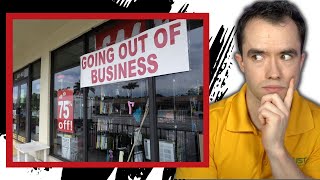
Mike Andes shows how the Federal Reserve's rising interest rates are squeezing small businesses. Owners are cutting borrowing, delaying expansion, and facing weaker customer demand as credit card rates and loan costs spike. He recommends collecting upfront payments and building recurring revenue to survive.
Questions this video answers
46% (survey of roughly 600 small businesses, November).
0.75 percentage point (November; described as the fourth such increase that year).
A fine-dining restaurant saw debt service rise by $2,000 (from $3,000 to $5,000 monthly).
Chapters
Rising interest rates put small business owners plans on hold. Some firms are cutting back on borrowing or delaying expansion, while others brace for indirect impact like weaker customer demand. All right, we've all been hearing about rising interest rates. I'm going to talk about why that affects the small business owner on so many different levels and more importantly, that this is part of the plan from the Fed. This is not small surprising. This is exactly what they expected to happen and it's going according to their plan. And that might seem dark or sinister, but it's exactly what their plan for. All right, let's go ahead and jump into this article here in the Wall Street Journal. Adding rising interest rates to the challenges that small businesses are already grappling with, including inflation, labor shortages and strained supply chains. Some small businesses are cutting back on borrowing, paying down debt, or delaying expansion plans as interest rates rise. So all three of those things is what allows inflation to come down, is spend less, borrow less and ensure that whatever you are buying is going to be needed soon. Because if you're going to expand and grow and it's in 12 months from now, well, if interest rates are low, you can get free, you know, basically free money, very low interest rate. Well then you should buy it now, but if it's going to be 12 months from now, but you, you don't really have the cash because you just spent that on paying down your debt. And the reason you need to pay down your debt is because now your interest rate just went tripled over the past 12 months. This is what causes inflation to come down because people stop spending money. So let's talk more though about what's exactly happening here. Small businesses are cutting back on borrowing, paying down debt or delaying expansion plans as interest rates rise. Others worry that rising rates will boost prices charged by suppliers and crimp supply customer demand. V8 speed and resto shop, which specializes in restoring and upgrading muscle cars, began asking customers to prepay for parts orders totaling $10,000 or more two years ago as delivery times lengthened this fall with interest rates rising. If you can begin requiring prepayments on orders exceeding $2,000 to reduce financing costs incurred when it pays vendors up front, but doesn't collect money from customers until the part is finished, this is a big deal. This is why it's so important to collect money prior to actually install installation of work. The more money you can get on the upfront, the better because it reduces the need for you to dip into a line of credit or have more liquid cash stored up in working capital. To be able to fund the parts that and the products and the cost of goods sold that is required to get the jobs done. Because for the vast majority of small business owners, 50 to 80% of the revenue we collect goes out the door in cost of goods sold. That's labor, that's materials, that's cost of the actual product and the materials that go into it. That is a huge chunk of money. And if we're having to fund that prior to getting getting the money from the customer, it can lead to a big issue when a lot of your funding comes from a line of credit and and now the cost of that is going double or triple, this business owner says. We're trying not to need the lines of credit or the credit card, says Kelly Ostay, owner of the 28 person muscle car restoration shop based in Red Bud, Illinois. In November, the Federal Reserve raised its benchmark federal funds rate by 0.75 percentage point, the fourth such increase this year, and said further rate increases were likely for small businesses. Those rate increases translate to higher costs on everything from credit cards to lines of credit to variable rate small business loans. New financing has also gotten more costly. Dave Gill, chief executive Cold Freight Services, a provider of dry ice and refrigerated courier services in Georgia, has been seeing the interest rate on his company business credit card jump from 21%, jump to 21%, from 17% to since April. We use credit cards for everything, including fuel, hotels, supplies and other expenses, said Mr. Gill, who has about 40 employees. We are kind of hostage to the rate. So first and foremost lesson to be learned here, don't use credit cards and don't have a balance on if at all possible. They are literally like an emergency case scenario so you don't go bankrupt if you in the case of needing money and needing funds. But the objective should be that regardless of interest rates, you you have the ability to be able to have great cash flow. You get paid the cost of goods sold prior to the job being installed if at all possible. And ideally, if you're going to float the difference, make sure that it's less than 30 days so you can pay off the credit card and have the money in the bank before you actually have to pay off the credit card. So just a little bit of a note there.
46% of small business owners said higher interest rates are affecting their business, according to a November survey of roughly 600 small businesses for the Wall Street Journal Business Coaching. This is who they got it from. Another 25% of those surveyed said rising Rates hasn't affected, hadn't had yet had an effect, but anticipated that they would. For some small businesses, the impact is indirect. Rising interest rates have already hurt sales at Brooklyn Solarworks, designer and builder of rooftop solar systems. About one third of residential customers finance their solar systems, which typically cost 30 to $70,000. This is why for the past several years I have hounded people to get into recurring work. Because the project based work, the work that is 10, 15, 20, $100,000, those big projects are typically financed by consumers. And so when the cost of interest, cost of borrowing and interest rates go up, now that $50,000 project no longer cost them $55,000 with interest payments. Now it's going to cost them $75,000 with interest payments. Oh, and by the way, they just got laid off from their tech job. So project based work is great and fantastic and you make a lot of money doing one off jobs. But in every home service industry, I recommend try to create some sort of maintenance program, some sort of package that has some sort of recurring revenue. Not only is it better for the valuation of the business, it helps you get through these economic uncertainty times. Because most people, for example, lawn care, most people will not allow their lawn to get a foot and a half tall with grass like that could literally happen in a couple weeks. So whether they need recurring service. Whereas do they really need the paver patio every single year? Do they really need a new landscape installation every single month? No. And so people will delay those things by two, three or four years when you get an economic recession. And if we're going into one right now, because interest rates are so high, people can't finance these things and they can't take cheap HELOC loans like what happening in 2020, 2021, 2022, cheap HELOC loans are no longer going to be the case because now that HELOC loan is harder to apply for. People are upside down on the equity of their home. As you head into a recession and the interest rate on that home equity line of credit makes it unfeasible to actually use it for a project based job around their house, which is the vast majority of big 20, 50, $100,000 projects, a lot of them are being financed and a lot of them are using the equity inside their house. Financing options that let buyers buy down the interest rate to 1% or 2% have largely disappeared. So back in the day you could literally have where you'd buy down the interest rate. So if you have high interest rates like okay, for $5,000 extra on this 10,000, $15,000 vehicle. We will go ahead and go from a 6% interest rate down to a 1% interest rate. Well now that's not even possible because people don't know just how high these interest rates are going to go. Uncertainty over the future direction of interest rates makes it difficult to determine whether a solar installation will save money after factoring in financing costs and what will happen during the months it takes to get a project done. The interest rate part of it. It's pretty rough waters out there right now, Mr. Ludwig would say. This is the thing I actually think the bigger issue is going to be that no one's thinking about is when the equity on people's homes see a year over year decrease, which is going to happen this spring and summer for the first time for years, we're going to see a drop in the average home value of the majority of Americans. Right now it's still like 3, 4, 5% positive year over year because we're comparing to last year. But guess what? January, February, March 2021, then we have like a war in Ukraine and all the rest of it and inflation spikes. Housing prices start to come down because interest rates start to go up. Just wait until year over year data from housing is down. You're going to see massive amount of fear and less people willing to tap into home equity lines of credit when their house is going down in value. At Reverence, a fine dining restaurant in the Harlem neighborhood of New York, higher interest rates have pushed monthly debt service costs $2,000 higher, bringing them to $5,000, which means they were paying $3,000 on their interest payments and now they're paying $5,000. That is a set like a 70% increase in their debt service in just a matter of a few months. For a business like mine, that $2,000 is my paycheck, said Jeff Russell Jackson, who owns the three year old restaurant with his wife Laura. Higher rates are also compounding the challenges of rising costs such as Covid tests. Customer traffic has been slowed to rebound. We are struggling, said Mr. Jackson, who has two employees down from as many as eight and is looking for additional finance. And we are fighting tooth and nail. This is what leads to unemployment going up. This is what leads to business closures. This is really is going to hurt small businesses that have not prepared themselves. And this is why I said people that have gone into debt over the past few years have grown their business and expanded and everything has been hunky dory and everyone's been laughing but when, when interest rates go up and the cost of debt goes up and people can no longer buy these big projects and have cheap debt on their home because they have so much equity, when that goes away and your interest payments go from $3,000 a month to $5,000 a month, you stop being able to be profitable. And if this recession takes 12 or 24 months, which most time, I don't think it's going to take that long. But if it does and unemployment really, really hits hard, like going from eight employees to two employees, that's six people that lost their job and there's going to be an opportunity for the people that have built their businesses in a way that is cash flow positive despite high interest rates, despite debt because they don't have as much of it, they don't have debt on depreciating assets where they upside down on the asset value compared to what they owe on it. The people that built their business that way can take advantage during in recession because guess what, those six employees that left this establishment are going to go get hired by the person that's actually expanding and absorbing all those that customer demand into a business that they now can go expand into and invest into the recession.
Christopher Klein said. He also said he has reduced hours by 25% for most employees at Eric and Christopher, a maker of silk screen pillows and totes after large retailers with too much inventory cut back on new purchases. Normally I rely on these accounts to help fund research and Developments and Mr. Ms. Mr. Klein, who has 25 employees, the owner is delaying investments that could open up new markets. Borrowing to finance these expenditures has become too costly, he said. Now that the rate on the company's line of credit has increased to 6.5% from 3.75% in March, some entrepreneurs are taking steps to reduce borrowing costs. Design Supply Doors, a Kansas City City company that does subcon commercial subcontractor pays cash when it purchased four small SUVs for its sales team this summer. When interest rates are at 3 to 4%, it's not that painful, said Rebecca Stowe, a chief executive of the 38 person company, which supplies and installs frames, doors and hardware in hospitals, hotels and office buildings. When it's 6 or 7% on vehicle loans, it doesn't make sense to sit on the cash. All right, so this is, this makes a lot of sense. Pay for things in cash when interest rates are really high and then when interest rates are really low, what do people do? They go into debt. The problem is if you get too Much debt. That's variable interest. And it has an interest rate that goes up and down. Well, interest rates go up. You, you are caught with your pants down. And furthermore, even if you have fixed debt, because this is what a lot of people are like, well, I bought this piece of equipment, you know, it was $80,000 but 0% interest. Great. As interest rates go up, people are willing to spend less on these pieces of equipment. So now that $80,000 piece of equipment is going to be worth 50,000. You're still going to owe 80 on it. You're upside down on this piece of equipment. That's what leads to repossessions, foreclosures and the like thereof. Because people literally start wake up when they realize that they owe more than what the value of that piece of equipment or that asset is.
All right, let's just see here because what I want to prove now is the fact that this was all very much a plan. Let's check this out. This goes back to just a couple weeks ago. This Fed chow, Fed chair pals. This is Jerome Powell. He, he had a comment he was making here and I do not care about that. Okay, January 10th. When taken out of context, the words Jerome Powell spoke on January 10th feel ominous. Restoring price stability when inflation is high can require measures that are not popular in the short term as we raise interest rates to slow the economy. This is the goal. Slow the economy. This is not out of the blue. This is not taking anyone by surprise. This is their plan. They must do this. This is what they should have done a year and a half ago. The absence of direct political control over our decisions allows us to take these necessary measures without considering short term political factors. I actually don't believe this personally simply due to the fact that the, the pivot on what was happening with interest rates happened literally right after the Fed chair was renominated by the current administration after the past election. So I just feel like this was a bit of a joke. Honestly that comment there like yes, they're supposed to be apolitical, but there's just a lot of things being said. However, let's go back to August of 2022. Fed chairman. Remember this is back a little while ago, a few months back. This is another comment from Jerome Powell. Fred. Chairman Jerome Powell on Friday pledged that the central bank will use our tools forcefully to attack inflation that is still running near its highest level in more than 40 years. In its annual Jackson Hole, Wyoming policy speech, Powell added that added higher interest rates likely will persist for some time. The historical Record cautions strongly against prematurely loosening policy. So in other words, they're going to raise interest rates higher and they're going to keep them there longer than all of us expect. And it's going to create pain in the market. All right. Federal Reserve Chairman Jerome Powell delivered a stern commitment Friday to halting inflation, warning that he expects the central bank to continue raising interest rates in a way that will cause some pain, quote, to the U.S. economy. So this is, this is what's happening. Interest rates are increasing in order to slow down inflation. The reason inflation comes down when interest rates go up is because people spend less money, businesses spend less money, consumers spend less money. And then we start to find out who actually built their business in a way that was going to be resistant to a recession and could actually expand and grow in a recession because they were not tied to that interest rate that is going way up and the cost of debt is going way up. Oh, and by the way, you know what was the most money? The US Government owing trillions and trillions and trillions of dollars with a massive deficit. And guess what? Their interest payments are going up too. And this is why I'm very scared for the US Economy as a whole and our country as a whole is the fact that we have adopted so much debt over the past 10, 20, 30 years that now we can't have interest rates go very high because the cost of our debt service, the interest payments that we are paying on our debt are becoming trillions of dollars every single year. You can't balance a budget when literally 30% of it is going out the door just for interest payments. So along with many businesses and personal people's personal finances, our government is also over leveraged and susceptible to these rising interest rates that yes, we'll crush inflation, but to do it, we are literally going to go through hell. And small business owners, personal people's personal finances and our government are going to have a reckoning with debt and the high flying. We can buy anything we want, we can do stimulus checks, we can buy new equipment, we can buy houses, we can do whatever we want. That all goes away when interest rates go up and the cost of debt service is increased.






