The Mindset REQUIRED to Build a Million Dollar Lawn Care Business!
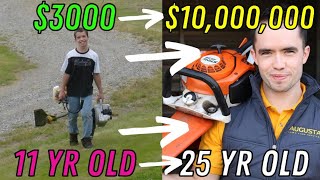
Mike Andes walks through the gut-punch setbacks of running a lawn care business: a $3,000 French door claim, employee turnover, bad reviews, cash flow problems. Building to a million dollars takes years of patience and staying on offense with hiring, systems, and growth. Resilience after failure is what separates people who make it.
Questions this video answers
$3,000
12–14 hours
Year three
Landscapebusinesscourse.com
Chapters
Look, I get it. I know it's brutal. You maybe got home from a long day, 12, 14 hours out in the field, only to come to a text message or an email or a voice message from one of your customers. Seeing that you or any of your crew messed up. They're not happy. They're complaining about the service and it literally feels like a gut punch just directly into your stomach and like that gut wrenching feeling of knowing you disappointed, you let down a customer, maybe you damaged something. And now you're literally looking at your first insurance claim that you're going to have to make. You broke a window or you damaged someone's fencing. I know what it's like. I know what it feels like to have. I still remember driving in my car and the very first damage case ever came from a lawn. I had put a little pebble through someone's French door. $3,000. $3,000 for a French door. Because it had never, it was no longer in production. The company had gone out of business. It was like a one off thing I had to order. Like a gut punch. Maybe it's an employee leaving you. The employee you've had for a long time, you've trusted on, you've depended on you, you've built your business on. And now they just say, look, I gotta go. Maybe it's not because of you, maybe it's not because of anything. But you know that all of the weight, all the work that they've been doing is now going to fall on your shoulders. The 40, 50 lawns they've been mowing every week, now that's your job. And now you've been left with the responsibility to get, take care of the work or go find someone else out in this labor market, it's so hard to find people that want to work hard outside. Maybe an online review, a scathing online review on Facebook or on Google or on Yelp or on Angie's List and someone's literally roasting you. And they're not questioning your work, they're not questioning how hard you work, they're not questioning your pricing, but rather they're questioning your integrity as a human being. And maybe because of that damage case and because of that employee leaving and now you're behind on work and now you're having to reschedule jobs, reschedule appointments, you're running around town like a chicken without a head, trying to juggle getting the work done and then getting new work for the future estimates, an account balance that's low. You got a notification on Your phone saying, look, you're, you're overdrafted, you've overdrafted on payroll, or maybe your supplier contacting you say, look, we try to charge the credit card and it said insufficient funds. Like that is that gut punch that we as business owners are almost becoming. We have to become almost. It's part of the game. It's part of what we do. And it's not easy, it's not fun. It's not the thing that we post about on social media or glamorize in the public eye, but something that all of us are facing. All of us. Whether godless, if you're a seven, eight figure business, or whether you're just getting started and you have a few lawns on the side. These are the gut punches that we deal with. Maybe you're having pressure from your family or from your spouse because they're like, look, you've tried this whole lawn care landscaping thing. Why don't you go get a real job? Why don't you go back and get a job for the thing that you went to school for and you went to college for? And now here you are doing lawns, doing Lansing. It's not working. You aren't putting money, you are not putting money aside. You're not, you're not profitable. You're running ragged. You're working hard. You're working hours that are beyond what's regular. You're working into the night, you're working on the weekends. You're tired and you're stressed. And now there's pressure on top of everything we talked about. There's pressure from your family to give up, to quit, to go get a regular job and stop this whole lawn care landscaping thing because everyone else thinks that this industry, you can't make money. Oh, it's a horrible industry. Anyone can do it. It's a race to the bottom. There's no profit in mowing lawns or in doing landscaping. You can't make money laying pavers. That's for people that I've heard, I've heard crazy stuff. I've heard people say that only people that are, have, are ex convicts, should be doing landscaping and doing lawn care. And that starts to play with your head, so starts to play with your mind when you've just got that gut punch and when you're not feeling like everything is going well, when the employee did leave and the customer did leave, the bad online review and your bank account is low. Those are the times when you're up against the ropes, when it feels like there's just no more hope in the fight. And you wonder if you have any fight left inside of you. That's when you have to remember why you got started in your lawn care business. And guess what? It's not gonna be fast, it's not gonna be easy, it's not gonna be an overnight win. This is an 8 round, 10 round boxing match. This is not gonna be a one hit wonder in the first round. A KO. Most small businesses don't start, they don't end, they do not go that way. And because of social media, because what happened with Instagram, within one year they got purchased for, you know, Evans, a billion dollars, A billion dollar business in one year. And now that becomes the standard somehow of which a successful business has to operate in. Guess what? That's not how it works. And in the lawn care landscape business, to think that you're going to become a millionaire or you're going to become some great business that runs without you going to work on the business within six or 12 months is ludicrous. If you're starting and you're going to be bootstrapping this thing and you don't have outside equity or a big a bunch a bunch of loans and debt and you're trying to finance this thing yourself, you do not expect first year to think just everything go rosy. How I look is like the first year. You're just trying to figure things out, you're trying to get the thing started, trying to figure out how to sell, you're figuring out how to do what your your unique selling proposition is, your clients. You're trying to figure out software and systems. Year two, you're trying to figure out hiring, you're trying to figure out who can I trust, who can I get on my second truck, who can get on my third truck. How do I actually make the system work where now I have multiple people and how do I manage, how do I have team meetings, how do I do pay for performance, how to open book management, how do I empathize with someone who just lost a family member? These are the parts of leadership now you're learning in year number two. It's not in my opinion till year number three where you can really judge yourself and your business. So why are we so hard on ourselves? Why do we compare ourselves to the tech startups that are raising hundreds of millions and billions of dollars within 612 on the an idea of something that could literally vanish tomorrow. And yet we have bootstrapped this ourselves. We're grinding, we're hustling and it feels like there's just no hope. And we're not getting any attention. We're not getting the New York Times showing up on our doorstep taking pictures. We're not going on the New York Stock Exchange ringing the bell on the nasdaq. That's not what's happening. Rather, you're stuck in your truck because you can't make payroll because a customer of yours that you've done business with so long is beginning to question your morals and your integrity as a business owner and is publicly telling people that you're a scam, scam artist, that you shouldn't do business with this person. They have questionable business activities and you know inside of you that's not your intention. But it doesn't take away from the gut punch that comes with those words. It's time that you be patient, that you realize this is a long term game, this is a marathon and not a sprint. This is a nine inning game and we're just in the bottom of the first. You've got to be patient. Most small businesses are solo operators. They don't even have employees. So the thought that you are going to have a business or have multiple employees and it run without you, you're literally talking about a fraction of a percent, a fraction of the small businesses in this country. They're going to actually make it to a million dollars in revenue. And yet you think it's going to happen overnight. And the social media mentality is plagued. Our mind is that we got to have riches tomorrow. We've got to have the big business tomorrow, we've got to have the five acre big shop tomorrow and a pole barn tomorrow. And we have employees and an office staff and big trucks and a nice brand tomorrow. And that's not how.
Takes a lot of grind and a lot of hustle. Like put your head down and work for three years and then come back and talk to me. Don't tell me because in three, six or 12 months that things aren't going your way and you haven't figured out what your target customer really wants and how to maximize the value of that customer, how to find good employees or where your employees are going to come from and how to pay them correctly and what the correct market rate is and what the going price structure is in your market. Those are the things that take time, those are the things that take patience. And you're just in the first inning, don't get distracted by bitcoin and the next thing is oh, Tesla this and oh, I gotta get an Ethereum. And I gotta, I gotta get an altcoin and I gotta get NFTs, NFTs of real estate. I've gotta do real estate. I heard this from this influencer. I gotta do. I can flip real estate, I can rent out, I gotta do multi family. I do 40 units. Look at lawn care landscaping. Not as the end all, be all. For most of us, we don't aspire to mow lawns our whole life. But it could be the financial pillar, the thing that you build that becomes solid. It might take five, ten years to build, but over that time you get a solid business that runs on systems, is profitable, and then you have a solid pillar by which you can build around. You can go do some investing in real estate, you can invest in some stocks, you can invest in some bonds, you can go on a vacation. But you've got to build that financial pillar that's going to hold up the rest of the building, that's going to give you the latitude to go and do other things. And to build that pillar is not easy. If it was easy, everyone would do it. Most landscapers are not going to be successful. Most landscapers will not have employees. Most landscapers will not build a million dollar business. And most landscapers will not build a business that can run without them for a week or two weeks and still sell jobs, still provide for their employees and their team not go kaput because they're out of town. You better be ready for the time when you are up against the ropes and when you have had that gut punching feeling when the bank balance is low to keep grinding, keep your gloves up and keep fighting the fight.
Ask yourself every single day, what could put my business out of business? Why did not the taxi cabs of New York come up with Uber? Why did the hotels, the Marriotts and the Hampton Inns, why did they not come up with Airbnb? They had all the inventory of hotels and empty, empty rooms at night. They could have easily beat Airbnb, but what did they do? They got lax, they got lazy. They sat back on their laurels. And while they did that, they let some small business, which started small and they took their lunch. And what you've got to realize is that you can't just sit back, you can't just build a business and then step back and everything is run and everything, everything's gonna be peachy. I'm gonna work for a year and then this business be perfect, be wonderful. No, you've got to stay on the offensive. You've got to Keep grinding. You've got to realize that the moment you step back and don't care about your employees, the moment you step back and don't care about the business, the moment you step back and don't care about your customers is the moment that a competitor, some hungry small business, is going to come and eat your lunch. If you don't care about building up your employees, there's going to come a time, just like we saw in 2020, when unemployment benefits start becoming really appealing. Appealing. That culture, if it's not strong at your business, it will eat your lunch. You've got to be on the offensive. You've got to pick your gloves back up when you're up against the ropes and realize the best defense is a great offense. If you've been punched, if you feel down, if you feel low, this is the time to go on the offense, to go back into the offensive mode, to strike back at the thing that's trying to take you down. Whether that be getting more customers, hiring more people, beginning to actually embrace the fact that this is going to take a year, two, three years of dedication and this is not going to be an overnight fix. Overnight fixes lead to long term damage for your business and you've got to be hungry. You've got to realize that. You've got to be the Airbnb, you've got to be the Uber that's looking for opportunities for weakness in those big competition. And everyone tell me, oh, there's so much competition, there's so much. No, you've got to be the company that looks for the opportunity. You've got to be the company that looks at defense and says, my best defense is growth and building and offense and fighting back at that one star review that you just got punched with. The best way to fight back is go get five, five star reviews. So when you're punched in the gut, when your arms are feeling tired, maybe one of your eyes have been split open, that's the time to remember why you started your business. When you feel like you're down for the count and there's no time left, why did you start this business? Why did you start mowing grass and shoveling gravel in the hot heat of the summer? Did you do it for your family? Maybe why you started a business for the employees, for your community to be able to give back to other people who are less fortunate, did not have opportunity. And you want to give them a future. You want to give them something that they can work towards, something that can become part of something they can get to the next place of their career and that you can be proud of. Keep your hands up, get off the mat, and keep fighting. I'm Mike Andes. I'll see you in the next video. Hey, everyone, Mike Andes here. Thank you so much for watching the video. If you're just starting your lawn care landscaping business or you want to take it to the next level, check out the link below. Landscapebusinesscourse.com is going to give you the steps to get your business to $100,000 in monthly revenue. Check it out. We'll see you next video.






