The shocking truth about growing a $10 million business by age 20
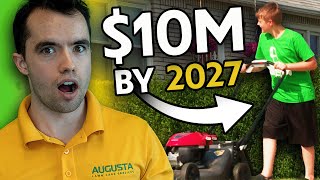
Sam, 16, runs a $250k landscaping business and wants to hit $10M by age 20. He's switched to monthly subscriptions at $100-$300 per customer with a $25 acquisition cost. Mike Andes tells him to drop one-off projects, double down on recurring mowing, and partner with hardscaping companies instead of taking on their work.
Questions this video answers
"250" (stated in transcript; interpreted as $250,000).
$25 per customer.
Approximately $100–$300 per month per customer.
$2,000,000 (stated target for the year).
Grow to $10,000,000 by age 20 (Sam is 16 at time of call).
Chapters
Account for that because we're trying to go to 2 million this year.
So you're trying to go to 2 million this year. Next caller is coming from.
229. Welcome show. Thanks for coming on.
Hey, Mike, how are you? So my question for you is we changed up our billing and basically our entire recurring system for our mowing route. So what we had before was a bill per service. The issue with that was say we're charging for a weekly service and the customer may put it off for a month during the winter, but in our market we still have leaves falling and things like that. So it almost takes. It takes the exact same amount of time during the winter in order to be able to do that service. So what we have changed is we changed over to a subscription based mowing. And so we only take weekly. We only have card on balance. That kind of allowed us to do all of those things that we were wanting to do separately, all in that one package. So everyone is subscription based. It may be 100, 200, $300 a month per person. And then we charge however much their monthly rate is. We bill that monthly. We charge that monthly rate to get started. So we have a $25 customer acquisition cost. And then if we acquire them for $25, say we have a minimum of $100 monthly cost that we recoup. So basically every customer that signs up, we get four times the return without doing anything just for signing them up. But my question for you is, should we cut out projects if we haven't found a way to make those profitable yet? And should we sub those out? Should we recommend other companies? Should we continue doing those and just figure out a way to make those profitable and hire more team or open and separate the two divisions? I don't know.
What was your total annual revenue last year?
250.
Okay. And why do you want to add projects?
So we're currently doing projects, so we're looking to possibly cut projects. And so what we have right now is two to three days of recurring mowing, and then we have maybe three days of project for our team. But what we're looking to do is possibly cut those projects, dump the money into marketing, and then we can recoup that amount quickly and hire more team and purchase more trucks and things to account for that. Because we're trying to go to 2 million this year.
So you're trying to go to 2 million this year?
I don't know what?
Yes, sir, I would not recommend that. Why, why are you going from 200,000 to 2 million.
We're trying to grow to 10 million by the time I turn 20. So currently I'm 16. We're aiming for 2 million. And so I wanted to kind of grow this location.
To the point where it's large enough and we can just swap in a profitability, profitability mode this year. And then after this year we can begin opening up other locations and we can kind of learn the systems on this one to know what works and just kind of plug and play.
So you're saying we. Is it just you as the owner right now?
We have two. Two people right now that are full time.
Okay. And I mean like, in terms of ownership, are you at the top and like there's no other owners or is someone else involved?
Yes, sir, it's just me.
So let me. Look, I do not want to be negative and I appreciate the hustle, but this is. My problem is going from 200,000 to a $2 million business is probably going to require at least 2 to $300,000 worth of acquisition of just your trucks and equipment. Like, do you have that kind of capital?
We don't.
Right. So the reason I'm saying this is because what I don't want you to do is set yourself up for. I'm going to make $22 million this year and then it comes out to 400,000. You feel like a failure because that's like 100% growth and very admirable and incredibly amazing at your age. So I don't want to, I don't want you to set up these goals too much for your. For what is going to become a failure in your mind. But it's going to be a phenomenal success if it's actually step back and taken a look at from a much more objective standpoint. And so there's just no way without the capital that is going to be, or massive amounts of debt that, that you're going to go from 200,000 last year to 2 million this coming, this in 2023. I appreciate the massive aspiration, but I don't want you to quit because in August you realize you're going to make 500,000 and you like, oh man, I'm way shorter my goal. Right. So I would take a step back. I would do, I would do a projection for this year every single month of what you're going to do in revenue. And then ask yourself, in order to hit these revenue targets, what am I going to have to buy in terms of trucks, equipment, how many people am I going to have to hire, you're going to have to upgrade your shop massively, even if you double in size in revenue this year, let alone 10x it. Right. So I would be much more objective about the size that you're going to grow this year. And whether or not you do projects or mowing is inconsequential. Right now. What I'm trying to prevent you from doing is setting a goal so high that you do an amazing job as a teenager this year, and yet you see yourself as a failure because you fall short of your $2 million goal. And so I don't. I'm not saying you're not capable of that. I'm just making sure that you set realistic expectations of amount of capital it's going to be required. And experience that is required to build a $2 million organization is pretty intense. Does that make sense?
Yeah. No. I completely get it. I like shooting for big goals, and so sometimes I hit them, sometimes I don't. And so honestly, if I don't hit it, it won't kill me. But it's also something where I don't want to get halfway through the year and say I am for 500,000. I don't want to get halfway through the year, hit 500,000, and kind of sit back. So I try to aim for whatever's unreachable. So last year, we were at 10,000 at starting of last year, and we wanted to hit 100,000 by the end of last year, and we hit 250. And so we grew by. I don't know, what would that be? 2,500% or 2500%? Something like that. And so that's just kind of the number that we set to aim for this year. When I say we, that's just all of us, workers included.
Okay, cool. So your. Your question is, is, should you split the divisions? Is that kind of what your question is for projects versus mowing?
Yes. And so, like, if. If basically, if we have a profitable mowing system and we can do shrub trimming, things like that should be cut out because we're currently. We don't have the equipment. We rent the equipment for projects just because the maintenance on the equipment doesn't make sense to purchase it at this point. And so before we grow that massively, would it be a lot better just to focus down on mowing and get that so perfected that with all of our advertising and everything, we can hire someone? Because right now we have a week or two turnaround time before someone's profitable. And so just to keep that system and just grow mowing and not even offer anything past something that we can do with hedge trimmers and like obviously spreading, straw edging, bed weeding, stuff like that we can offer. But should we cut out all of these retaining walls and sod jobs? And like, for instance, this weekend we had a $3,000 sod job and I was out laying sod till 2 in the morning because it's raining and we just don't have enough time to do it all.
Yep. Yeah. So my recommendation would be like, just step back and realize your age. And I'm not into age. Like, obviously I started when I was really young too, but realize that the number one thing you don't have right now is experience. And so what you should be focused on is getting experience, because that's your lack. And so in my opinion, building the organization in size. Because if you have aspirations to grow a $10 million business, what you need is management experience. You need to learn how to grow with other people. And that's going to be much done, much easier by growing a land, a mowing and simple service business where you have a bunch of employees, you got to train them versus trying to also then stack. On top of that, the fact that you lack experience of excavation and grading and a lot of this equipment, you don't have the equipment, you're trying to rent it. So that's going to be a whole different ball game, a whole different business in my opinion, compared to like what the skills you're going to be required to have to just manage the team, manage the people, do the marketing. So in my personal opinion, I would focus on what was work, is working well with your subscription model for mowing and simple services. And that means you can do push trimming, you can do pulling weeds, you might even do some fertilization or mulch installs, but you're not going to do these paver patios and stuff you got to rent massive equipment for, and then focus on getting the skills required for marketing, hiring, building a team, managing them. That's what's going to be useful down the road when maybe you add projects to go from a $2 million business to a $10 million business down the road. But I would focus on those skills that are going to be much more.
Transferable as you begin to grow the company.
So with that, with those leads that are still coming in for projects, should we just tell them that we don't offer that or should we refer someone else or what would you rec like what would be the Most professional way to handle someone that we've marketed to, marketed sod laying to for the last year. And when they call for sod laying, what's the best way to kind of tell them that we don't offer that anymore?
Yeah, it's rare that someone saw an ad eight months ago for sod laying is giving you a call because of that. Because they didn't have the need back then. It literally was white space in their brain.
So.
So as long as your current marketing cuts that out as well as your website doesn't offer that as a service anymore, and you're very clear what services you do and do not offer, then you just weed out whatever gets through on the ads and on the office side, like the phone call side or even lead intake from your lead estimate request form. So just weed them out. Realize that that's going to be more at the beginning because people have seen you working out, doing these type of projects, but literally within six months, you, you will get way less of those type of leads coming in because you wouldn't have been doing the work, you wouldn't have been posting about them on social media. And so that those type of services will just diminish in the amount that you're getting in terms of leads.
Should we find a company in town to sell those leads to?
Or like I would find a project.
Recommend them to, or just tell them that we don't do it.
I would find a hardscaping company that you can refer them to and then just tell that hardscaping company like, hey, here's the agreement. I will give you all my hardscaping jobs if you can just give me all of your mowing customers. Because they're getting the same thing on there, which is they're getting all these mowing customers and people asking, asking about their service. Just, hey, can you guys just hand those all over to me? I'll hand you all my leads. That's going to be the cleanest way to do it. Don't try to do subbing and get five or ten points on something. You're going to have all the headache and all the liability. And again, your focus is going to be scaling up your organization on the, on the lawn care side.
Okay? All right.
All right, brother. Best of luck to you. Take care.
Sam.






