the UGLY TRUTH about running an ECO FRIENDLY business
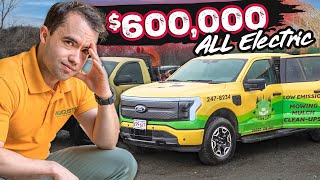
Mike Andes and Cyrus discuss running eco-friendly lawn care businesses. Cyrus's company hit $400k revenue in 2024 and aims for $500-600k next year, but electrification costs and cashflow strain the margins. They break down the 4L framework (liquidity, leads, labor, leadership) and why most eco lawn companies fail on money, not mission.
Questions this video answers
A little over $400,000
$325,000 (approximate)
As many as 12 employees
About $6,000 each (typically bought on sale for ~$4,000 when on sale)
About a 90 kilowatt-hour (kWh) battery
Chapters
Can we charge that truck there any way, shape or form? Like, can we put an inverter there or anything?
It's not going to work.
No.
Today we're in Northampton, Massachusetts, visiting Cyrus from Eco Valley Lawn Care. Cyrus made over $400,000 in annual revenue last year. However, he had as many as 12 employees at the same time, telling me that his prices are far too low.
Scared of shooting myself in the foot. Raising prices too much for our customers that give us that, you know, good lifetime value of all three, four services that we offer through. We can't say this is going to be 500 bucks this year, Ms. Jones, but then it ends up being $1,000 worth of work.
Revenue drops between 80 and 90% during the off season.
I've lived off 25k for, like, every year I can remember since college doing that comfortably. Once we have a kid in the mix, I would say probably closer to.
40 or 50 would be. Let's go with 50. Cyrus. Wife want to start a family, but money is too tight.
To go all in on this from a business perspective is still nerve wracking.
My name is Mike Gandies. I'm the founder of Augusta Lawn Care, where we have over 170 LOC around the world. I travel around the country fixing struggling businesses. Our goal is to give Cyrus a strategy to turn around the business in the next six weeks and get it back on track. I'm like this. This company will lose money hand over fist.
What's up, Cyrus?
What's going on, man? The myth, the mensch, the legend.
The mensch.
How you doing?
Good to see you, man. This is the.
Yeah, this is the spot. So we acquired this about a year ago, this property.
Oh, nice. The whole place?
The whole place, yeah.
How big is it?
Like 2 acres, 4 acres? So we got a lot of land, heavily wooded for the majority. There's only about an acre cleared. We started in Hadley out of a rental property in a garage about this size. One half of it, and the other half was another apartment. We got the boot from there. They sold it. This was kind of like a silver lining. We were, like, scrambling to find. Find a place. We had a rental property already, but then we had no place to live. And we were like, let's see if we can find something that might have some business potential to it. It's not zoned for business use, but we have one farmer over there who, you know, is already making a ruckus and has a couple tractors and machines, so. And then a big quarry company over there.
Oh, cool. That works.
We've been rolling now for about four years. We're going into our fourth spring season. So fourth full year. We started in the fall of 2021. So it's going to be foreign change pretty soon. It's been quite a ride.
Do the guys show up here in the morning or that?
Not yet. So now that we own this truck and we don't have the capacity to charge it at our rental space, we have to start going from two spots because this is going to be our main MOW vehicle and also a spring cleanup and fall cleanup trailer. That's what we bought it for the electric truck. Starting this year, after spring cleanups, we'll start having a MOW crew. At least one leave from here. That's what's got me kind of anxious about splitting myself between. Between two locations. But for the spring, we're going to be going cruising in from here to Hadley together. Get full team meetings going. Make sure everybody's on the same page. All the tools will be over there. I'm starting to think about setting this up for service. You know, I got a dozen tools to unbox. My guys will be coming to help me here.
So do you think you'll kind of like build this into two different shop spaces eventually?
That's what I wanted to ask you about. Right. I mean, I don't want to jump ahead of myself since I don't have a good hierarchy in place right now with lots of long term employees. But I do have a pretty responsible new staff, you know, that I think could handle one crew coming here, meeting them and staggering, leaving from here, going from Hadley. You know, that's what we're going to have to do at some point probably if we want to keep this truck and try and eventually get two locations doing that 800k mark would be the end goal. But that's definitely like more of a medium term, especially with the investment of all the electric equipment. To get started. I had 30k scrap together saved to start this. We were running it out of our rental property. That was enough for a truck. The first utility trailer. And then we started off with one residential mower. This 52 here. It comes with six batteries and it's out the door for 6500.
Oh really? Yep. That's not bad.
It does not. It does not get you through a full day of service with even eight longs. So then what happens is we started investing in some other things called these battery banks here. So at the shop we have a little battery shed that houses all of Our consumer grade ego equipment. So those are all of our string trimmers, blowers, as well as zero turn mowers, all run on those same battery systems. I nicknamed them our 110, 10 pound jerry cans because they are literally like close to 100 pounds.
So basically like a backup.
They're a goal zero battery bank designed for camper van life. But they're the most robust and, you know, feasible option I could find to supplement those out on the road overnight. You can get 70 on one outlet and then really scale that. The battery charging is there. But the equipment that we use with those sorts of batteries isn't quite up to the professional standard we're looking for. So it makes you wonder, you know, is it worth investing?
I have nothing inherently wrong with being electric. Electric. It's just a function of like, does it make you more money? Like, it just adds another variable to the business that makes it tough. Like, this is hard enough running a business.
It's tough to get the infrastructure right with the batteries. There's so many different avenues you can go. And with our limited amount of space, you know, we've, we've made it work so far, but who knows what the future holds?
So. So how long would it take for this to charge the smaller motor?
About four hours for a full charge. The only problem with this whole setup is these cost six grand.
What? This cost six thousand dollars.
Four grand on sale. I've only bought them on sale. You get this. The charge and discharge cycles are only meant to be about 2,000. So they're not meant for the wear and tear we put them through. So they've been lasting me less than a year. So that is not mercy. Yeah, I mean, about a year to two years if I'm lucky. Some of them less than a year. This is the consequence of early electric adoption on the cheap. Right. If you can't have your battery built into the mower or you can't have electric trucks or trailers that have some kind of supercharger attached with like all the infrastructure built out for hundreds of thousands, this is what you're dealing with. But my game plan potentially is to move away from these mowers completely. Because just like these aren't designed for the wear and tear we're putting them through, neither are these. They're prosumer grade at best. Right. This thing already has some kind of electrical thing that's causing it, the left wheel, not to spin. So we have one working. We have one working. 42.
The actual function of the mower doesn't Change a whole lot. It is literally just how to feel it. And the electric motors I ran, I really like them. Especially the zero turns and the can equipment. I like them a lot.
I actually like that better, honestly, than gasoline. Even though you have to swap batteries, it's still, it's just more beneficial. It's easier on everybody. I mean, you're still going to get noise, but it's still a lot quieter than something, you know, gasoline powered.
This is the first electric truck.
This is the first and only electric truck. This is probably the first and only, you know, new truck that I'll ever buy. I never thought in a million years, personally or for the business purposes I would, but when we started having charging issues with the smaller batteries plus needed one more vehicle, I said if you can kill two birds with one stone for 70 grand, that's a little different than just having a mode of transportation. Because it's got the 120 volt outlets out the back.
So this charge throughout the day, it's.
Got a 90 kilowatt hour battery in it. So for all of our smaller like ego batteries and things for the blowers, weed whackers in the computer, consumer grade mowers, we can plug them right in right there and then things stay juiced up for the whole day. And then we just have one thing that's getting plugged in instead of schlepping battery banks around. So it's something we're looking to try. We went all in on this and hopefully it works out pretty good. This season will really tell whether it's really necessary or if it's just to walk the walk and you know, to show off for the customers that we really do want to be fully electric to the extent possible.
It's just a function of like, there is serious range anxiety, especially when you can only charge your truck at your house. So that becomes a artificial cap to growth. So if you wonder why is it that every massive landscaping company does not adopt electric. Because they can't figure out a scale it they would throw in like the ego batteries in the back of the truck. Yep. Charge those throughout the day in a bank while they're doing their other stuff.
Yeah, this is the bank.
Exactly.
So like for fall cleanup, the battery drain is massive because those things, like you get like 40 minutes out of commercial, you know, two battery backpack, and then you're sleeping around.
Even the backpacks?
Even the backpacks. So the biggest batteries they make, and ego makes the biggest one, they last maybe 40 minutes to an hour. And then the Half life of them as they get older, they last six, seven years. But you better believe like every 20 minutes you're running back to the truck to swap. This simplifies that and allows us to get away from the battery bank usage.
Basically trying to cut out the $6,000.
Battery that fail within two years. Yeah, because I mean, that's just not sustainable. They're not rugged enough. Nothing on the market is as rugged as that. Yet they fail within a year or two, which is unacceptable. That's not a year or two's worth.
They can pay for the payment on this thing.
Yeah.
$500 a month.
Exactly.
Right. Which is like 7, $800 a month for this.
Right around 900.
The hope is we can cut out the battery banks, we can charge on the road. Not that we're schlepping those things around. It doesn't matter. Does the customer care enough to pay me? Right. And that's the part where like, it's just unproven. I don't know.
It's always scary. Right? And it's the, the jury's out on whether it really does make good economic sense. Because, you know, I thought it was more like 50 to 70% of the people probably care, and they do, about the environmental and quiet aspect, but maybe it's only closer to 10% who care enough to reach in and go, you know, deeper into their pocketbook to pay what we require in order to, to finance those higher upfront costs.
On the electric thing, is that like more of a personal thing? Is it like you use it for marketing?
I think a bit of both. I came from, you know, pedal people, cooperative. That's what got me into the whole like home service business mindset. They had essentially a trash recycling and compost hauling business. Everything's done by bike and trailer. It's true. Zero emission, not low emission or.
No. Yeah, let's go.
It was crazy.
Yep.
Hauling 500 pounds around on like 12 totes on a bike trailer to the, to the local recycling facilities.
The real mowers. Yeah.
So they had a yard carry unit and that's how I got started. I would like really haul trash for six hours, take a nap in Dunkin Donuts and then go mow lawns until the sun came down with them. And since it was a worker owner co OP, they gave 66% was back to the employees and only 33% for overhead and admin. Because they store all their trailers at the customers houses, they have no central location except for the founders duplex. They are scrappy as all get out, 25 years they've been in business, they have over a thousand customers. It came with its own plus and minuses. I really enjoyed being a part of something like that and seeing what was possible from some scrappy individuals who, you know, come together and say, look, you don't need to even utilize fossil fuels to run a trash company successfully, depending on what your definition of success is. Right. No one's getting rich, but they're. They're definitely giving themselves a pretty decent hourly wage. They're able to work, you know, 20, 25, 30 hours a week, not have to have so much over commitment to work. And they do a lot for the community too. So it was a really cool thing to be a part of. So at this point, I feel like we're too deep in it to go back. I can't say whether I would have done it any differently because I've never started a gas company and seen how fast you can grow that with how little headache. It's allowed us to grow pretty quickly, I think. And the jury's still out on how much more people are willing to pay. Right around 10, 20, maybe up to 50% in some cases of people who are really aligned, you know, with paying a premium for that. But that's certainly like our biggest unique selling proposition.
Very rarely is a customer willing to pay a dollar more for electric compared to gas because they are paying for grass to be short, bushes to be trimmed, multiple to be installed. That's all they care about. And so if we can't make it an actual cost advantage, it doesn't really make sense from a financial perspective unless we have a big reason. Like, it's our reason for living is to not have gas equipment. Then we have electric. Yeah, like, the. The challenge I see is like just the scaling part of it. Like, even right now, it's like bring the truck back here to charge. You know, we run out of batteries, like, it becomes very difficult to scale. And I think that's why I see a lot of the electric guys still being solo. Maybe one helper think the smaller. So it's like, which one do you want? Like, do you want to scale or like. Or do we want to stay like 1, 2, 3, and 4 employees? A couple trucks? Like, what do we want?
No, I mean, we're already way past that. My first season, it was 1, 2, 3 employees. The second season it was like 4, 5. We really need 6 to 8 at a minimum, and then for snow removal, you know, double that. So we're past that. I think it's possible to get to an 800k mark, which isn't massive scale.
Right.
Like it can be done using electric equipment. I just gotta figure out the best way and you know, the, you know how fast paced that can actually happen without going broke.
So it's been like almost a year. You've been here then?
Yep, one year exactly in March. Yeah, good stuff.
And then is your wife helping the business or she.
Nope, she's got her own thing going. Oh, here's a cat.
So 2023 was 325 approximately. Then 2024 last year is 400. A little over 400,000.
Yep.
For this year, you shooting for like basically 500,000. That's kind of your goal.
Probably closer to 600. I mean, 150 a year is a comfortable growth rate for me because I've done it every single year since inception. In 2021, our first year, we did 150. Then we did 312. Then last year, I was hoping for 500. But we had all these setbacks with employees either having to be let go or getting injured. And we stayed right around 412, 450 this year, I think, easily granted, we have another truck, you know, we're going to get another mower and we have a more experienced crew and we have that many more, you know, clients. Now the way I'm treating this from an accounting perspective in this property is the mortgage is 2,600. We're paying three grand total. Between my wife and I, the business pays a thousand, I pay a thousand, and she pays the other thousand. I'm treating that as rent on the balance sheet though, because technically it's not a commercial property. It's never going to have any worth on the balance sheet itself. So it's just I'm renting to myself for 1000 bucks a month. So all in, we're like 1800.
There's only four real reasons why your business stops growing. And I call it the 4L framework. It's either because of liquidity, leads, labor, or leadership. And when you first get your business started, you need liquidity, you need cash, and you turn that liquidity into leads. How? By advertising. And then once you get a bunch of leads, you get a bunch of customers. What do you need? Labor. Because we're in the home service industry, we gotta actually go do the work. And once you get a bunch of laborers, you need leadership to be able to run the business and be able to run it when you're not even there. We have liquidity up here, like right now. I know you had mentioned you and your wife kind of wanting to have start a family thing like that. Right now we have like 20,000 in the bank. What does that need to be for you to like. Okay, from a liquidity perspective, cash flow perspective, I feel comfortable to like move that personal goal forward. What's the goal on that?
Right, yeah, that's a good question. I'd say, you know, I built up 16 in my personal savings because I've, you know, that's. It seems like a year's. Anywhere from six months to a year's worth of living expenses.
The reason you've been able to run this business is because you kept your personal expenses in check. Right. Just want to say that you've done a really good job. I can tell by the way you keep track of the finances, everything. Like that's why you've been able to deal with the lower rate. Like usually when I see 45, 50 effective hourly rate, I'm like this, this company will lose money hand over fist. But you've been so frugal on your personal side and I can tell how much you're taking out of the business. That's why you've been able to keep growing it. Right. And so like, kudos to you. The reason he has so much cash is because he's only taking minimal amount of owners draw. And that's why him and his wife, girlfriend, they can't afford to have a kid. You'll need to take more money the business to have the family. And so like, okay, so right now we have 16,000 in the bank, like end of year. What does that need to be to like move that forward?
Yeah, I mean, I've lived off 25k for like every year I can remember since college. Essentially.
Doing that comfortably. Once we have a kid in the mix, I would say probably closer to 40 or 50 would be.
Let's go with 50. That's still pretty good. Well, if you're making $60,000 a month in revenue, ideally I'd like if we're around $60,000 and so they are in their 30s, they want to have kids, but they can't afford it. We need to make some more money. As we know money solves everything. So if we get more money, we can have a family.
So, okay, so from a liquidity perspective, we need to have, let's just call it $3,000 more a month that we can take out of the business. Yep. Because right now if we're living off of 25, we need to be able to immediately basically 50k distributions slash salary coming out of the business annually. That's like goal number one. So if we, if, let's just say we take 100 customers. No, we're at 150 because that's going to be our capacity. We take 150 customers and we raise all their prices by $50 a month. That's about a 25% increase probably. That is literally $7,000. That's why like we can nickel and dime and think about batteries and all this other stuff. I don't care. I want to hit 150 customers. I want to raise prices and be making extra 6 to $7,000 of cash flow a month. That immediately solves the liquidity problem.
Yeah, I think that that's probably a good goal. 150 weekly customers through our main season and then that'll allow us to really be much more discretionary. Actually do work for when those rush seasons come about and we're not going to feel as desperate to take, you know, the lower bid or negotiate with them at all.
We got liquidity. Basically we need to get to $50,000 take home pay. We know that's going to be done through price increases. The price increase is going to happen at 150 customers. So then the really the whole game here is how do you get 50 more customers if you got 50 more customers, we hit capacity and we have to raise prices. He's probably going to fix 90% of his problem by just raising his price. If you're only charging $50 an hour, you're not going to make money. If you're paying W2s, you're paying taxes, you're above board, you're not hiring illegals, you got to pay more. Be charging more than 50 an hour. Especially if you're buying trucks for $75,000 and then the mowers. Like the thing is he's running up against right now with his mowers is he can't use residential equipment anymore because it's starting to break. So he's gonna have to buy commercial electric equipment. Commercial zero turns that are electric are 20 to 30 thousand dollars minimum. Plus all the batteries, plus all the charging. It's not cheap.
It seems really enticing to want to grow like an $800,000 business just in Northampton. I think it is possible. I just don't know whether that's where I want to focus all of my marketing efforts this year. Right. Is it better to have a higher customer value spread out among multiple towns or A lower, you know, customer lifetime value all in one town and just keep taking mowing only maybe spring cleanup here, fall cleanup there.
Moving. Expanding your service area is always going to increase in that customers you can have. It's the fastest way to grow because you simply increase the amount of surface area of people that could potentially use your services. The challenging part, I think is by saying, hey, we have to tap into people who care about electric that all of a sudden just cut our market by like 90% because most people don't care. My thought is we use the electric part and if that's something that means a lot to you and you think there are a portion of people that care. But can we make it efficient enough to where anyone that needs lawn care service, anyone that needs landscaping, we can still serve them and be profitable on them and be competitive. Because most customers, 90% of them don't care about the electric thing. They literally just look into the price and if it's a little quieter, cool, but they could care less. And so if we can become competitive in that market, we can 10x the market that we can serve here. And if you're building a $600,000 business in this market, I look at like the lead side, like your website and other things that I see, we can double it easily, easily. So I think going into a different market is always the simplest solution because yes, you will immediately unlock that 10% that cares about electric and you don't have any competition. So, like, you will get those customers. And so it seems then intuitive we'll go to the next city and also use massive service area. Driving 35 minutes from here saps all your electric stuff. Now you got stuff so far away, it becomes even more. You have to invest more in batteries because you can't afford them to come back here. I would really say, like, based upon what I've seen on the marketing side, if you just focus on this area, you can easily get to like a million. It's just a matter. It's a function of can we get more efficient so we can, we can actually serve a market that doesn't care. Electric just needs the lawn care side. That's 100% of the market versus maybe 10%. I think that's what I would be focusing on because as soon as you get into a wider, a wider service area, you're less efficient now. So I, I would really encourage you to stay, stay in the current area. So then from a leads perspective, we need more leads. Okay, how do we undo that? First off, when I Look at, at the website work. We're on the second page of Google. We only have 15 Google reviews. There's so much opportunity there. Just putting your estimate request form on the front of the page, above the fold, that alone will get you 30, 40% more leads. So like that, those are the things that, like when I look at the leads opportunity, like I see, I see these hires. The thing is, if we get dumped leads, like if tomorrow you're getting like 10, 15 leads a day, you would, you would end up forcing yourself to raise prices, right? Because right now, like the function, the real problem is the fact that we have such a low hourly rate, right? Like we're just not making enough per hour. Therefore we can't pay our guys enough on P4P to keep them sticking around. So we go back to hourly rate simply because 40% on a low margin service is still not enough for them. If we could pay everyone 28, $29 an hour, we would keep a better group. But we can't afford to do that because the margin like our prices are too low, we're too inefficient. And so the only way for me to convince you to raise that to where you're actually making the 80 to $100 per hour is just dump leads on. And that's where I actually see the opportunity. And that's why you're wanting to go in a different market. I need more leads. Right, I agree with you. Like in the world of leads just being dumped on you, you raise prices, you can be able to pay your employee, employees more. You buy the extra mower, whatever you need. And so I actually see this as a lead problem. And you know, I rarely actually say that. Like, usually I'm like, efficiency, like, let's nail this thing down. Let's get weight, you know, cut P for P. All this other stuff. It's very rare as, hey, we just need tons of tons. And that's why I say going to another market is so attractive to you because you know, immediately you unlock leads. But when I look at what you currently have with the website, the current operations, like what you can do with the marketing, we're not tapping into it. It's very rare that I would ever say that leads the actual constraint to the business. But in reality, it's the pricing. But the fact is, if right now he raised his pricing, he believes he losing too many customers and therefore I don't think he'll actually raise his pricing, I generally believe he's raised price by 25% right now, he wouldn't lose a lot of customers. However, he needs to be able to grow the business to capacity and then be forced to raise prices so he can lose some customers.
I mean, I wanted to call around and see about someone on Upwork helping me get the SEO dialed in. I mean, I have the option of putting 36 Lawrence Plain Road in Hadley as a official address. We could ask the landlord about that on Google. Should I do that, you think to.
Having any address on Google is any positive? Because at least you show up on the map and right now with Google listing integrated directly. Now with maps like you want an address, you're showing up on the second page, but you are showing up with first on Google listing. And that's because no one around here has Google Reviews. You have 15 and it's like the most. If you can get above 30, at least in terms of reviews, that'll help. If you can also get an address verified on the map, even better. Now, ideally it is in Northampton. If I'm looking at a map like, are we what, three, four miles from the center of your kind of like service area?
About probably closer to 10.
No, I mean your shop space.
Oh, my shop space. Yeah, my shop space a little closer.
Verify that one. Use that one as a verification. It's already a commercial address. It'll be easier to verify if you just have that verified and you get 30 Google reviews. Just that alone will probably put in the first page of Google. And so like that alone, just that one move will get you 20% more leads. I'd say on the second page of Google, everything dies like no one cares. You've got five competitors above you from an organic search. None of them have Google listing. Like, none of, none of them are taking Google reviews seriously. Inside service autopilot. If you can just simply make an automation based upon when you complete a job, it's sending them an automated.
I have that. Yeah. I mean it goes, it's going out with the invoice. I don't know if that's a mistake. It should be a separate email.
Then what you can do is just have it where it's like every 90 days or 120 days, you send a review request to customers. Now instead of asking for review, what you want to do is you want to say, was your service satisfactory? And then if they click yes, it goes to Google. If they click no, it goes to have Google form and sends information to you. And then what I would say is inside that, tell them that you're. If they leave a review for your crew that they get a $50 bonus because then they're much more inclined to leave a review. Especially so I like to do is for recurring service, I like to go was your, was your property status? Was, was the service satisfactory? Yes or no. More of a survey based. And if they say yes, it's going to Google. They say no, it's going to a Google form to keep that internal information for one time projects. I would change that one. The reason you're getting very few reviews on that is people typically don't care about your business, but they do care about the guys who showed up to their property and did the work. And so you say hey Mr. Jones, Billy Bob, Joe and whatever was at your property, they love doing the service. If you leave us a review, they get a $50 bonus. If you do that, you'll get way more from the one time jobs. Because now the customer cares about the people who show up at their property. They really could care less about ecobound.
That's what I found. I mean when I was doing, I mean I still know every customer on a first name basis nearly, you know, but it's, it's true. As we start getting more and more folks, you know, doing the service and I'm not there, they're getting to know my folks and I'm making sure they're gregarious, outgoing, knowledgeable and can take, you know, the place as the face of the business. And that's really, people care more about that than you know, the business itself.
Like if you even wanted to get 20 reviews in a week, this is what I do. I would put a picture of your team. I would say we're getting ready for the spring season. You know, this is our team. If you've done service with us in the past and our work was quality, let us know, leave us a review. And for every review that we get, we're going to put $50 towards a party for our team or whatever like and we're going to go off site, do a meeting, do it all around. The team though they don't care about your business, they care about the team. Especially because you know their names, they know your employees names. They like Bob last year because he installed the mulch like focus on that side and you'll get 15 to 20 pretty quickly. And then just set up the automation so that it's every three months, every four months is collecting reviews organically all the time. So then from a lead perspective.
Web design and if you want us to do it, I'll do six months, I'll cover it for you. Just so you can get a really good look at what it's going to look like and you'll make an accurate assessment and you can copy on wix. I could care less. But ultimately from the web design perspective we are where the we, the estimate request form is going above the fold on the homepage. We're going to put that truck right front and center. When you look at that site like you have the $75,000 use. Yeah. Ideally we have a video. If you can get a drone shot of it or something cool like that, use it like it'll look so good, it'll completely take you the website to the next level. You can take your version from 1 to 50 to 1 out of 25. You doubled your lead. So as a request form, a website design. Okay, we need 30 Google reviews. How are we going to do that? We're going to do automations inside service and those automations are going to go twofold. One is going to go to immediately existing customers.
Yeah.
And say hey we're, we're, this is our team. We really appreciate your service.
Yeah, that's a great idea.
Review money going towards a spring party for them. Then we've got two different automations. One is every 30, 30 to 90 days. I'm sorry every 90 to 120 days you're sent to existing recurring customers and it's like was your service satisfactory? Yes or no? Yes. Going to Google review. No, going to a Google form and then when you send an invoice out to one time jobs also automation will be going saying hey, if your service is satisfactory, give us a review. Your crew get 50 bucks.
I got that all listed out here. That's great. I think doubling down on our current market in Northampton that has treated us so well up until now that Mike has given the go ahead on that is the best strategy to put our, you know, dollars in. You know all of our efforts is going to be huge. Right. And then dialing in and spending as much money or time as I need to get the SEO and website side of things, you know, figured out once and for all so I can kind of cut down on my marketing costs moving forward I think will be huge for this next year to get us, you know, past that 500k point of no return.
But I want to show you the rest of this property just to get your 2 cents on really how much investment is this worth over the next 5, 10, 15, 20 years with the zoning issue of like do I ask Permission or you know, for forgiveness. Right. Two properties. You know, what would you do in my shoes and what do you think the best step is trying to, you know, is the business out of place where I think it can, can, can sustain that and start branching out into two locations under one roof with me as you know, you know, still managing everything as long as I can get some ops managers who are going to be coming back for next year and then be able to have people leaving from here with Crossworth trustworthy crew and not have to be in two places at one time. We want to make this essentially the business side of thing. Hidden behind the garage and then everything to the left of the garage. Pleasure.
Right.
But that's, that's where the bulk of the land is. But it's way too wooded to really be worth anything right now. This is the only place I can see us parking anything. It's going to take a good bit of excavation to really get this flat and then a good bit of bulk materials. I think you could get away with running a decent sized business here and putting up even more of a privacy hedge along here. So that way no one at all bats an eye. Do I think it would be smart to do an 800k business with like 6 to 8 trucks? I don't know.
Well, they're not gonna report you. They're not gonna report you. There's nothing over there. Yeah.
And our nearest neighbor to the back is about a quarter mile.
Yeah.
So I'd do it. Yeah.
As long as you have to invest a bunch. The problem is you're gonna do all these stump grinding.
It'd be nice to eventually have an excavator and a skid steer on this property. And I know some folks that lent me those, you know, for, for free or for cheap. So there's ways to, to figure this out for not a lot of money.
Yeah. Like I would try to get one location in profit mode with higher prices well above 500,000 before I start, start breaking it apart. Also from a leadership perspective. No one to be able to like start team meeting at the other spot, anything like that. What was, was nice is like as you hire this year you can say hey this is on the horizon. Next few years that we want to do and then potentially you get someone that's a little early and you can kind of foster them into that role. But I would not be pushing for that. Especially like the fact that right now you're only splitting the two locations because you can charge the truck here. Like you're driving extra 15 or 20 minutes now simply to charge the truck. And so like, can we charge that truck there any way, shape or form? Like, can we put an inverter there or anything?
It's not gonna work.
No.
And then you would have to bring that truck basically then every day.
Yeah. Which is not possible.
How much do you pay for rent? The shop?
825 right now for about a 70 by 70 gravel pad. It's just a shipping container on a dirt lot of a bigger landscaping company. There's some serious benefits to having a spot like that. He's loading us up with mulch, he's hooking us up with salt any time of night. He, you know, any bulk material we need, he's got. He's got the loaders for those. We're not having to drive to get them. When we first got there, he said, don't come near my stuff. Like, I don't want you guys anywhere near my equipment. And then I was like, we're gonna have to leave if you can't hook us up with this electric hookup. And he said, yeah, let's do it. He's got a big, massive, like, you know, 30 person company. So rightfully, he didn't trust us at first, but have gained his trust. I have hired a foreman to be an ops manager in training. You know, I have people who are well fit for those roles who now seem like they'd be committed for at least a year, two years, three years.
It just starts to feel janky for the employees when like there's two different start sites. The one that you currently have over there at the shop space is at a different landscaping company's property. Yeah, here's your house. It starts to feel janky from an employee's perspective. If you look back here, we have a very, very successful business. There's probably what, like probably 20, 30 trucks. I think he said, like, it's a huge business, probably 10, $15 million, very successful. It's just a little weird for team members to come back here to the very back and pass all their employees, etc. And they have a big office and a bunch of fancy equipment. So you're comparing the two and like there's probably potentially more upside opportunity to start actually working here if you're going to grow the business with Cyrus. But driving through that every day, difficult to be like, yeah, I'm coming back here. And that's where turn off comes. They don't feel like it's a real business. And there's no camaraderie. No culture. You don't start in the same place every day. See you every day. And that's when you start to get low morale. People leave because they don't see you for three or four days. They think you're out partying like doing whatever, like. So that's where I get concerned at the size of business is splitting is actually from a cultural perspective, retention. When we first got started, yeah, we were at a similar spot. We were in a shop space. There was like we were sharing space with a bunch of other contractors and it was just awkward because like they'd offer my guys jobs, they would see their truck. It was just tough to build a culture that was like this is ours. And so whether it be your own shop space or whether it be your house or you know, some place where you can keep your team together I think is valuable. It's hard to put a dollar figure on it. But I know driving past that every day and then having a small business with three trucks wherever like this business started like this. And so if there was someone back in the day that started with this company, when there's three trucks, they probably are now like the foreman or the general manager. So there's a lot of opportunity of starting as a small business. It's disillusioning when you have to share space with a very, very successful business when you're just going to start it.
Can we move the whole thing here? I mean we could in theory with enough work in space.
Well, 800 bucks a month isn't so bad either. Yeah. So like what you could do is like you could probably grow into this. So even if you didn't like full scale going like let's build this whole shop sale now, we're going to slowly move into this. But when we hit the 800 million plus now is an 8. 800 bucks a month is not going to kill. You have a secondary spot, you might have a couple pieces of equipment there. It's closer to your service area. And don't treat a separate like separate locations, but more or less here's where we keep maybe the trailers or like the landscape stuff. It's closer to our service area, they have the loaders, etc. You can make sense of spending 800 bucks a month to have those type of savings. But I would not split the locations up until you have someone that has been here for a few years. They're like your general manager. They're not just like here and they're a good worker but like they run team meetings they do hiring, they do all aspects of the business. I wouldn't split the two. The whole notion of part time employees and like very much like a transient employment base happens when it's like, oh, yeah, we kind of start here sometimes, we start over here sometimes. We never really see the owner. There's no real leadership, there's no accountability. They get less efficient throughout the day. They forget stuff throughout the day. Like, it just becomes a mess. So I would really try to keep it centralized. And if that means starting here, fine. You know, three trucks, you could start here pretty quickly, right? You just need to park the trucks, then have parking for the employees. You say you park the. You pull the truck out, you park where the truck was at and then have like 800amonth is not a horrible thing to keep. If you can have saving, if you make some of it financially from a. Just savings of like material parking up there, whatever it might be.
Yeah.
Do you need that? If you had this all built out, would you even need that, you think?
I suppose we wouldn't. Honestly, I. But then there's the risk of this not being zoned and it's like.
Right, I know, I know.
It's like a long term. I want to go all in. And you know, we have no other option because this is, you know, now our home and we have, you know, a mortgage out on it. You know, there's already set up and changes. So hard, you know, moving from all that, from that space over to here. Like, there's a lot of equipment, 40 foot shipping container.
But that's closer to your service area, right?
It is.
Well, you could just have like a scaled down version of all the equipment on the trucks here. And that's like your equipment depot. It's like, hey, if you guys are out throughout the day or you need more batteries or you need to go pick up one of the battery luggage things that's all over there. But then they start here. You have meetings, you're like, this is a good environment, I feel like, for the team versus being in someone else's yard. It's a weird thing for an employee. Like, yeah, I show up here, but yeah. And it says other landscape all around me. There's a massive company. It's also very appealing for them to just like fail. So, like, personally, I think this would be a more controlled environment. You have really nice space for them. You know, you can build this out exactly the way you want it, organize the shop so you don't have a competitor around you. It is a weird experience. For an employee they feel very much like second rate. Then, then labor. So then labor is a matter of like we gotta have improved retention. And like I, I see it as especially in this market like if people can make consistently 26, $27 an hour, that'll be very incentivized. We also want to reduce the churn because it is going to demotivate the highest performing employees when they constantly assume people churn through. I think that having a unified spot where you're starting throughout the day will be very beneficial because they see you people make stuff up in their head, you could be slaving away on estimates and they think that you're like probably just vacationing. From a labor perspective, our goal is P4P still being high enough like average 25 plus per hour throughout the whole season. We do that because we are able to raise prices because we have enough and so labor PvP, that's great. Reduce churn. I think that comes in the form of the culture side and having decentralized spot every morning have a stand up meeting. They're able to make sure you get the right tools, get the right equipment. Personally I would probably try to get this to like where I can get them here as soon as possible. If you brought the box over here for example equipment, move some of that into there, made that a space like it just, it just. This feels like a shop better vibe. Yeah. Versus I'm showing up and I feel like the little guy in the block because we have two trucks and this company has 20. Honestly from more from a culture perspective than even the economic.
Like literally if I was you, like so much of this gets solved with more leads. That's why like I don't know if you look at like the turnaround show but like I hardly have ever said that because I know if you get enough lead to get hit capacity you'll raise prices and if you raise prices you'll get be able to get better liquidity. You'll be able to pay people more a month on P4P so they won't leave. It all comes back to raising prices. But I don't think that's fixed now because you're going to be stuck in this weird limbo spot and you want to grow. So hey, go ahead and grow. Get 50 more customers. That's all that matters. Okay, great. We have three months of spring rush. We need to have one new customer every single day net. And if you do that by end of spring rush you'll be raising prices and I would raise price by a minimum of 20% during the Middle of the season. Right.
Even after mowing starts, we'll hit it.
Because the goal is like that we're getting 1, 2, 3 customers a day and then we're going to hit in the middle of May. You're like sick. I need to raise prices. Raise price, everyone's prices across the board right then. And you could raise prices now. Like, you know, if there's 10, 15 customers, you know, you increase or whatever, go for it especially you know, like, but, but again, like a 5% increase just doesn't do a lot. I want to get to the point where you want to lose customers.
Yeah, me too.
As much as I love them all.
Yeah. Cool.
Some folks been with us five years, you have the emotional connection, you know their financial situation and you're not going have to.






