They WON'T Let Us Build - Episode 045
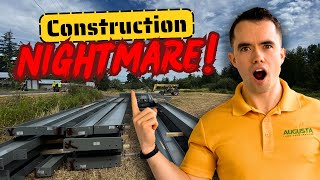
Mike Andes updates on wetlands discovery delaying their HQ build, explains the shift to multi-location systems and profit-share compensation for managers, and discusses why they won't use chemical treatments or franchise the model.
Chapters
Sweet. Well, welcome back. Might be a shorter pod today. We're a little packed for time. Someone asked me the other day, they're like, yeah, man, I was watching your pod. How short is Mike? They were like in one episode. You look just huge compared to. I was like, well, generally speaking, I am larger than most people, but yeah. So how tall are you?
Five. Five. That'd be like a very good day with good hair.
Okay.
Yeah, probably a solid 54 I gave you.
I think I said 5 6. I wasn't sure. I rounded up.
It's like subway sandwich.
Yeah, ye cool. Well, we passed 700 subscribers. Thank you guys. And so I made a post. I said, Hey, 700 subscribers. Anything you want us to talk about? You know, we want to fish and see what ideas you guys have. So I got some questions from the audience. We'll just bang them out and if we have time, we'll go into some other topics. First question it was, I said, it's a sore subject, but people want to know HQ update. They said publicly. I know, I responded them. I said, sore subject, but I'll ask.
So tomorrow, tomorrow actually the local team's gonna go have weed whack a bunch of stuff there because the. The they found wetlands on the neighbor's property. Yep. Whose setbacks are going to impact our building.
Yeah.
So it's just a one fiasco after the next. We just live in a very tree hugging area. And so no Washington state. We're gonna try to like weed whack everything down that I mowed a couple years ago or like a year ago just to make it look better for the wetlands inspection.
So they'll get intomorrow projected timeline.
Dude, I've been saying next year, but literally I would say it could be in two weeks. I could get a notice. It could also be six months. And either one of those would not surprise me at this point.
So there's the HQ update. Source object, everyone. But I asked.
It'll go fast, dude, once we break ground, it'll go really fast. We have all the supplies, everything's lined up. But we just need the permit because.
This is a steel structured like pole building.
Yeah, we have all the material, literally. I don't know if you saw the email I sent over the office. I was like, hey, we need to like weed whack around all the materials because we have like massive beams and.
Like sheets of metal everywhere and joists and things. So building. Okay, well there's your HQ update. Here's one. I'm gonna read it. Verbatim but you can, you can look at it too if you want. When did Mike go from blindly building a business that was working with the first location? Or did he just have an immense vision of thousands of locations from near the beginning of building the first location? Also, was he already thinking about continuing to build his business before dropping out of medical. Medical school, or was it, well, now I'm here situation, I better improvise. Simply put, there was, was there ever a point where he was thinking smaller in business? So we'll start with that and then there's kind of a follow up.
Good question. I have to say yes because I do remember recalling thinking like, if I could make a million dollar business, like I could live the life. And being like I could, I would stop there. That was the finish line. What I was unaware of is that like the game is what I love. And so it was kind of similar, like when I was in medical school stuff and like learning, you know, microbiology and all the rest of it. Like the game was I wanted to win, like, I wanted to beat everybody. And it wasn't a matter of like, do I need this grade? Like, there's times like I knew my average was 95, 96, I was like, I want to ace this test. I'm going to say all night. Yeah. So it's the game, the hunt. And I think in terms of size, I knew after I got hurt and I saw like the impact to my business of being out of operations and like how I need systems and then seeing landscape, business course and then like being like, okay, this is not working. Because I wanted to help people, like do what I had done with the business, that I could make it, make it profitable. This is not working. The only way to people listen in this industry is if you go compete with them.
Yeah.
So, okay, great, I'll make a thousand of these locations to go compete with them. And then people might listen. So that's, that is the current pursuit.
Okay, so the, the follow up question, I think this one you can go a little more off the cuff with. It doesn't just have to be a yes or no. Did life just guide you to building an empire or was it intentional from the beginning?
Life guide me. I don't know. It's a much more philosophical question.
Yeah.
I would say you could fight either. Like it's. Yeah, it's a philosophical question because like I would say yes. Like me getting hurt caused me to be like, my business is not built correctly and turn to systems and procedures which then caused me to Care about other people that I saw failing also and was like, oh, I could just share my, how I learned this and then realizing like that that was not working, that method was not going to work in the long term if I wanted to change the industry. But like, I've always wanted to be the best and to this day it's now more a matter of like I want to be the best version of myself. So like I am willing to put in the time, spend money on coaching, like travel, talk to people, do whatever is required for me to be the best human. And whether it be in business, personal life, relationships, physical health, like I want to be the best and so that will probably hurt me in some areas in life. Like I always want to be the best and like there's anything less than first is like an absolute blow to me. So and so.
I don't think it'll end or change or like that, that kind of game, I guess.
Yeah. So would you say that life didn't necessarily guide you to build an empire, but the realization of kind of this like never ending game and the fun you can have while doing it, but also help other people is what led you down this path?
I don't know. It comes down to your belief system totally. Like if you believe that God has a plan and everything and he works everything out for the good, then yes. And I would say that's where I would stand on that. Like, I believe that like me going to Africa is super important because I'd probably otherwise be in the medical system right now and I would probably honestly figure out a way to win that game. Like I would, yeah. And I'd probably be very happy. But comparatively to what I have now, and not just material, but like what I, how much I enjoy and like how much like.
Fulfillment I get now, I, I don't think it could compare. And so yeah, I think like that's, there's definitely a plan and a purpose in that. But then other people, they don't believe in that. So like that's up to them.
Yeah, yeah. It's kind of like when athletes get towards the end of their productive careers, like they'd be a great athlete for a long time, making millions, huge contracts. And then they get towards the end and they aren't producing as much, they're. So then they have the choice like, do I fight for a better contract or do I like stay on a winning team to keep playing the game that I love? And then you get all these online debates about, well like he's not producing as much like. But he just wants the money. He's selfish. Like, he knows he's not worth it. And then you get the guys that are like, no, I'll take a salary cut to stay on this championship team because I just love the game and I love the guys, and I love the journey. And I think a lot of people are drawn to that latter athlete that's like, yeah, take the pay cut and just, like, be on the team you love. Help the guys around you and, like, do it for the love of the game. I respect athletes that do that. I think that's really cool. But then. But then, like, the flip side, it's like, they have a family to take care about. They have their future. Like, they make millions for five, 10 years. Some guys a lot less, and then they have to live off that the rest of their life. So it's a tough spot.
Yeah, it's a tough. I just want to win. I would.
Yeah.
I was a professional athlete. The problem with that analogy to some extent is the amount of money is copious regardless when it comes to, like, big contracts. Like, do you want 40 million or 50 million? Right. Wow, this is tough. Right. So it's not really a great analogy. However, I would always want to be on a winning team. I would. I. I would hate to play sports, and I would hate to play business in a game that's not. We're not winning. And so anytime I see areas of the business we are not winning, it makes me very, very mad.
Yeah.
So, yeah, I would not want to be on a losing team.
Yeah. This is. This is a tangent, but, you know, I'm a big sports guy. I try to follow it as much as. Are you a salary cap guy? Like, do you think teams should have a salary cap? Like, everyone plays by the same set of rules. That is, ownership can't spend over X. Or do you like games where ownership can spend whatever they want?
It just depends. It depends. Like, if. It depends if I'm the commissioner of the league. It depends if I'm an owner of a team, and it depends if I'm a fan. Because if you're a fan, you just want people to spend it up, baby. Let's make this an open market. I think in the spirit of the game, in this regard, you do need to fix the. Fix the rules a little bit, because otherwise you would have dynasties that are like two or three teams that actually have a chance, and then you'd have everyone else.
Yeah.
And so it wouldn't be as competitive, and they would Actually hurt the league. So the league has to do this in order to make sure that every prime time game is prime time. And there's not like only two or three teams you want to watch because they have the biggest salary.
Yeah, yeah. That's like the NFL has like a hard salary cap.
Right.
They can't spend over X. But baseball is much more fluid. And as a long suffering Mariners fan.
We look at the.
I'm on a tangent now, but you look at the Mariners profit and loss statement. We're the most profitable franchise over the last like three or four years because we don't spend money and it's annoying. Like, go and buy some players. Like, yes, we have guys that for the love of the game want to play. But like, you got to spend money if you want to win championships. So that's a tangent. I'm just salty. I'm salty about the Mariners right now.
I would do one day, I would love to own the Mariners.
Yeah.
It's not like a life ambition, but like, if I ever had so much money and they came available, like, I.
Agree in the Jets, I would.
No, no. He has like a profound way of like thinking about the jets and it means something. It does not mean much to me. But if I were like 70 and I had tons of money, I would love to do it and I would just be like, I just want to see for. I just want a World Series. I don't care anything about the money and I just go all in on it.
Yeah.
Because like, safe, safe. Go t Mobile park. And like Mariners, they do a great job of like entertaining people. Like, great job. That's why they're probably so profitable.
Yes.
But there's nothing that beats when they're doing well. And that whole place is packed out. Like the Seattle crowd is awesome. Yeah. So, and I like, that's the sport I was raised on. And like, we always like professional sports. Was the Mariners. That was it.
Yeah.
We listened to every single game. It would just be fun. But like, it's definitely not like a cult. And like, I will be just fine in my life if I don't have them, but if I ever have billions of dollars down the road and I'm like, old.
Yeah.
Such a fun project.
What about. Because we're on the tangent now. What about like lower level teams? Like, I'm sure you've heard, I thought.
About this Ryan Reynolds and Banana Savannah Bananas.
No, no, no. I'm thinking of Ryan Reynolds and there's another famous actor. They bought a lower level soccer club Wrexham.
Oh, yeah.
And now they have like a. Like a Netflix series on them. And like they have this huge social media, like celebrities that bought a lower level team.
Perfect. Just by a team too.
Yeah, yeah. And barstool. They've bought a couple like that. They're very invested in the lacrosse league that's like emerging in the US and like, have you ever thought about that? Like lower level teams.
I would probably only do is baseball just because it has like some nostalgia and it's like super family friendly too. I like that. I would. I would. I would buy the Bellis. Bellingham. Bellingham Bells.
Nice.
I would buy them because, like, it's local. It just be like, yeah, what's a summer ball? Yeah, yeah. It's so fun and it's like so wholesome for the family and just make it super fun.
I love it.
I would love to buy them.
Yeah.
Like, that is probably like a 20 year. We could knock that out. So cool. Yeah. And just it's not about the money at that point. Just like, it's a Bellingham staple. I want to keep it. I want to get really good and then like pour the marketing on, like, make the games really amazing. And like, I would enjoy that.
Yeah.
It'd be a project, like, for fun, though.
Totally.
That's not the most profitable.
No, no, no, no. It's definitely not. Well, yeah, the Bells is like, now we're getting into the. I don't need to go down that road. But it's summer ball. It's not even like technically an affiliate.
Technically? What, Double A?
Well, no. So it's technically for like college guys. It's just a summer ball league for like higher up college guys or guys that haven't made it into the minors to just keep playing throughout the summer.
I'd probably try to get upgraded and be in the farm system.
Yeah.
Yeah, I try to get that. Be fun.
Yes. Double A, Triple A ball. It's the best. So anyways, that was a tangent, but dude, if you ever want to go on a lower level club, like, that's like a dream mind. That'd be so fun.
You could be the manager.
Yeah, I love that. Or like president operations.
I'd bring Ben Silva back.
Yes, dude. Shout out Ben Silva. Yeah, he's great. Dude. Yeah. Like lower level sports. I just think it's. It's not like a fun thing that like celebrities are doing or like organizations are just like, this is a cool way to get our brand out there, but also do something we enjoy.
So.
All right, back to the Questions here. No, you're good. I love it. This is a little bit more tactical of a question. You've answered it before on the YouTube. But I told people, submit their questions, we'll answer them. So when and how did you hire your first production manager? That's the verbiage they used. Explain what their role was and how, what their pay would be.
So really like Liz was my admin person.
Right.
So production in my mind is like more operations. But she became that. Like she was kind of like I mentioned this in the Simply lawn care turnaround. Like the most efficient setup for an $800,000 business is like maxing two people out and that is have one person doing admins and ops and then one person doing sales. That's like the most efficient manner. Sometimes you have like a founder that does sales. They're doing the estimates of the day and they're doing operations. And then you have someone in the. In the office is crushing on admin. So Liz and I, I would say like, she was great at admin. I kind of handled sales and ops while I was still there. Right. At like 800,000, 900,000. And I was like, you could have stayed there and make it really profitable. But she would be like my first admin person. I would say like now, like really until we had the general manager role, like when you show up as gm, that would probably be the most first, like quote unquote, production manager.
Yeah. Do you want to answer the second part? Like the roles and pay. I'm comfortable with it, but I think.
The biggest thing is like it just depends on their responsibility. The more, the more responsibility they have for driving bottom line revenue. I would be tying more and more into incentives around profit sharing, things like that.
Yeah. And I can say, you know, because we share this fairly publicly, like general managers at Augusta typically make between like 50 to 65k is kind of like the guarantee depending on the size of location, the scope of the work, what is expected of them. And then there are incentives around profitability, efficiency, things of that nature.
Yeah. Like if a GM and Augusta for my locations, I do 35% distributions of profits to the GMs. If that's. If they start one from scratch. If they start one, it's already existing, that would be lower, like 20, 25, etc. But 35% gets really interesting if you want to grow one location, stay around for a while. So it really incentivizes people sticking around because 35% of, let's just call it 200, $300,000 in distributions that on top of a salary, plus like benefits and things like you're looking at like 150, $200,000 you can get there. It might take you six, seven years, but it's definitely possible.
Yeah.
And so I've kind of built the GM and the regional managers compensation away. Like if you stick around, it gets better and better and better. And then we now add the starter, which again allows someone to like start a location, get it above 20,000amonth, hand it off, and then get residuals of that location, which is perpetuity. So that's pretty cool. Yeah, so yeah, it just. You got to match the compensation to the team member though. Some people don't care about profit sharing, other people only want their base. Like they just want a higher base. They more security driven. And so you're more entrepreneurial and so you enjoy commissions, pieces of the pie. And you see the value in that long term. Some of you don't.
Yeah, that's fair. That kind of leads into this next question. Someone else commented the org chart for Mike's corporate location, specifically the new ones in North Carolina, you kind of touched on it, maybe go a little deeper. Trying to run around half a million annual revenue. What would each position in that org chart be responsible for? How do you systematize that?
Yeah, like right now it's relatively flat because we only have the seven locations. Right. This will probably change in the future. So like right now Chuck is the regional manager. I would be considered just like a shareholder, but he's the regional manager kind of the top of the org. Then you have general managers underneath him. As time goes on, he would basically become more of the national manager. You have regional managers and you have general managers of the individual locations. So what becomes like, I do believe, like, and I've said this before, like I have an inclination that I will end up owning 500 locations and that the rest of them would be owned by franchisees. The problem is twofold. One, the best returns come from my location because I enforce the systems religiously. And then secondly is there's only so many people that want to buy franchises. So I could wait 20 years and just do a thousand that way, but I think I can do it in 10 if, if I start doing my own locations and then just running them that way. And then we could figure out some way of like handing them off to general managers or selling them to people to run them as locations. But like I just would rather go faster. And so that will end up happening. Chuck will probably be at the top of it with regionals, underneath it with locations. But it all hinges on them doing well, because as you add that structure above a gm, that all costs overhead, and so the locations have to remain above 20 profitable for that to happen. Right?
Yeah.
Great.
Now, this one is. It's not a question, it's a directive.
Okay.
They're telling us what to do. Discuss why Augusta stays out of chemicals.
We don't. We don't necessarily say that we shouldn't.
I think maybe they're implying, like, the corporate locations, your locations specifically. I can't speak to the North Carolinas, but I know we stay fairly out of treatments for. For that.
Yeah, yeah. Like, there's no right and wrong. Like, I think there's. There's actually really good money in chemicals and, like, pest control and grub control and spraying lawns and houses.
I think the thing is, like, it's very scalable. It's very high profit margins, et cetera. In part, it is the fact that I'm not as.
Passionate about changing that part of the industry as much as lawn care landscaping, because I feel like there's more demand for professionalism in terms of, like, a need and a lack, and it's where I started. It's also easier to get, like, registration licensing in every state. You can get a mower, you get weed whacker, you get a blower, and you're gonna start mowing grass with a business license. In most states, there's. There's all varying degrees of licensing for chemicals and applicators, licenses and tests and all the other stuff. So it'd be a lot more difficult for us at the corporate level, which we would then, in turn, not be able to afford the current structure that we have, because we have simple services. We are able to have simple coaching, simple systems, simple procedures. We don't have to do different things for every single state. I'm not going to be held liable for, like, chemical imbalances as a franchisor, so I don't have to, like, raise the cost of the franchise for the sake of legal. Legalities and, like, extra. All that protection. So there's a lot of stuff like that. It's just like, if you make good money. Yes. But look at those franchises that do that. They are charging very pretty high premiums of royalties and marketing spend and all the rest of it. And so I think it's a better deal for the owners of Augusta Nation if I don't get involved in that, because then they almost would have to use it in order to actually get the value of their cost.
That makes sense.
Franchise. And so I've just been more like hey if you want to do it great. We have the website you can add to. You can use all these templates and all the rest of it. All the marketing is there but it's not like I'm going to push up my businesses because like it's harder to find a GM then it's I need all these boxes checked. I won't get a GM for 50 or 60 grand as base salary only 80 or 90 because they have 10 years of experience and they have a chemical applicators license and they have management and all this other stuff. I want to and I'm not super passionate about taking those people as much as the person that is like just a hard crazy good worker and has the ability like just want to work on themselves and make themselves a better human being. I'm really passionate about like promoting that person, giving them a shot. And that's going to be harder in a more chemical based environment where there's a lot more legalities involved.
Yeah.
And I'm not against it. Like you make so much money and I've I before starting the lawn care side like Augusta lawn care like Augusta Longer could have gone more the way of like Spring green, true green etc. I just wasn't as passionate about changing that industry, honestly.
Yeah, that's fair. That makes sense. And I would say to this person's question that probably 30 to 40% of all of Augusta does do treatments machine based spray spreaders. So it's completely allowed inside Augusta. I want to make sure that's clean.
I think it's actually going to become more once we start working the upsell features inside of the website. Yeah. Because it's such an easy add on.
Yeah. Well we have a couple of minutes left. Not sure if you want to dive into this.
Go for it. Do you call.
Should we cut it?
Go ahead.
Let's see how quick you can go over this graph. All right, so I want to, I want to check this out. So this is the from CNBC chart of the day. So they have an account where they post different charts graphs of certain financials. This was on credit card balances in the US they just passed 1 trillion so historic highs. And then in that second image there and I can post these on the screen for everyone. Then they said what the average interest rate of U.S. credit cards from commercial banks is. And the graph goes way up. All of a sudden interest rates have been up and then they go over delinquency rates on credit card loans in the US So I know you're seeing these charts for the first time, but I didn't know if you had any overall thoughts on this. Obviously, you know, you and I both listen to the all in podcast. They feel like the recession is here and maybe Q1, Q2 of next year, they're going to see a lot of shakeups in their industry, specifically startups and tech. A lot of tech companies are going out. I know this isn't specifically relate, but just kind of looking at general economics. What are your thoughts on these charts?
I wish I could go back further because what I'm trying to look for is a correlation between delinquencies and credit card balances. I think what we are inferring is that as credit card balances go up, that defaults will go up. That is a assumption that I can't say from these Graphs. I believe 100. The reason for that is because it wouldn't. It would. You would be. I would be led to believe that by having higher balances way far in excess of what we had in 2007, 2008.
Okay, this is. This is. This is it. This is it. All right. This is the problem with these charts. Yes, this is the problem with these charts. 100%. So this. Yeah, this is. This is CNBC at its finest. Okay, I can poke holes in this all day.
Let's do it.
Okay. This very first chart, the problem is it doesn't show back to 2005, 2006, 2007. Right. When these credit card balances, I don't know, were they higher? I would assume they were. But you're saying this is the first time ever we've gone above a trillion.
That's what they said. Yes.
Can you look it up real quick? Let's look at credit card balances, Credit card balance.
Totals, and let's do 2007.
So, yeah, peaked around 900 billion. So we're close to that figure. So I would. But again, inflation, cost of living has gone up, wages have gone up. I would say, like, I just have a hard time believing. I don't. I know they're hiding data.
Yeah.
There's no doubt in my mind because that first chart doesn't show before 2019. And the reason I say that is because if you look at delinquencies, when it does actually show the math, and we're nowhere close to the recession levels of 2007, 2008, internal delinquency rates. Right. And delinquency rates is what drives a recession. Now what has to be would have, you'd have to have more information to determine whether or not the total, total credit card limits or amounts actually correlate with delinquency rates. Right.
That I get what you're saying.
That is important and if that is true, then yes, it would be very evident that a recession is on the way if the precursor to delinquency rate are higher balances and credit cards. But I don't based on those graphs, I think that's inconclusive. I think there's a, a headline grabber and that is like highest it's been in years, blah blah. And it's like well give me graph back to 2000, 2006, 2007. So that would be my only thing.
Yeah. And it's also to note it is from Q2 data of this year. I think it'd be very interesting to look these graphs once they have Q3 and Q4 data. I think that then you will either see that correlation or not. I think you need a couple more quarters to find out.
Yeah.
So I thought they were interesting graphs. It got me, it was clickbait. I was like oh, that's an interesting title. Yeah.
You always got to look at graphs X and Y axis and see if they match. If they don't, it's almost always they're hiding something. So they are, I guarantee you hiding the fact that those loan amounts as we just determined have been this high before. And this is not like anything crazy new. The question has to become is is it a 6 or 12 month lagger of credit card debt amounts to delinquency rates? I would assume that is a true factual statement. I can't based on this.
So what, what is the goal of sharing these clickbait more web traffic fear monger.
No, it's valuable. It's very cool. Like obviously it's on the rise. Interest rates are on the rise, rates are on that. That's important data. But the fact to say that like we're literally a third of the amount of delinquency compared to 2007, 2008. Right. So and is it higher than pre Covid conditions? Yes, we just passed it just right in terms of delinquency rates. So that's where I'm just like yes, they are fear mongering and that's what gets clicks and 1676 people like this post. So those suckers, they were bought into the logic.
I didn't like it.
I just. Screenshot.
Well yeah, thanks for giving us your thoughts on it. I thought like I said, I just thought they were interesting graphs. I figured you'd have some thoughts on.
It and it's important data. It's good. It's obviously it doesn't take a rock scientist to know people are going to credit card debt. We're going to tough time economically. So it's good to know this sort of thing. But CNBC always like I want to see the whole graph. Yeah.
Oh yeah, I get you. Well, do you want any non financial advice? One second.
I totally forgot. Go ahead.
I. Mine's a quote. Hold on, let me pull it up. I sent it to a couple people.
Okay. Mine on financial. Sign up for the webinar. They get to see your beautiful face on Saturday.
Yeah.
Mike.com/webinar. If you're thinking about joining Augusta, we don't ever do this like once a year and I'll do live Q and A. I'm actually gonna present do a presentation on why you should not join Augusta and why you should and then we'll do Q and A. So if you're interested, join on this Saturday, this coming Saturday, November 11th at 9:00am Pacific Standard Time, right after the cutting edge conference which starts at 7am Be there. Go.
My now financial advice is 32nd. It's a nugget.
Go.
Humans who are convinced of the righteousness of their cause have a tremendous ability to to justify any sort of tactical implications. David Sacks, just a phenomenal quote. Yeah, that's what I got. Thanks Senko like and subscribe.






