This Arborist Makes Big Money Risking His Life! How to Start a Tree Business
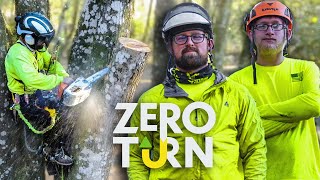
Joel runs Paradise Arbor and Outdoor in Florida with a three-person crew doing mostly commercial tree work. His insurance to work aloft costs $1,400 a month for a $2M umbrella policy, and he spends about 25% of revenue on labor burden. He's been in the business four years after a decade in the industry.
Questions this video answers
Approximately 80% commercial, with plans to increase residential in 2022.
In business ~4 years (2022 will be the fourth year); ~10 years in landscaping/tree industry experience.
Three core crew members (Joel, Mac, Eddie), plus equipment ("little giant").
$1,400 per month for insurance that allows working aloft (covers up to a $2 million umbrella policy).
A 15-inch chipper (can accept material that fits that opening).
Chapters
Hey, everybody. Welcome to another episode of Zero Turn. Today is a special episode. We got an arborist on.
Really anything can go wrong. We take a lot of calculated risks.
His name is Joel. He runs Paradise Arbor and Outdoor.
It kicked back enough that it scraped the bone and took off a little bit of the flesh and felt real nice.
Make sure you stick around and get a sneak peek into a neighboring industry of ours.
It can be a life or death type of decision just on a certain cut.
Today we're gonna hearing some trees falling, some wood cracking. You're not going to want to miss this.
Welcome to another episode of Zero Turn. Today we're dipping our toes into the arbori side of the outdoor business, Paradise Arbori and outdoors. Today we're here with Joel and Eddie and Mac. Nice to meet you guys. Thanks for coming on.
Appreciate it.
What goes into Arbery? What makes it different than like, obviously your average bush trimming? You guys aren't doing just like regular lawn maintenance.
So like the actual like textbook definition of what an arborist is, is they're people who specialize in the cultivation as well as like the care of trees. And that's like predominantly like where we work is in like the urban environments. So like your cities, suburbs, it's so much. We got prunings, removals, diagnosis, air spading. It goes on and on. Structural pruning.
There's so much commercial based, or is it a lot of residential work out here?
So we do probably 80% commercial. We've dived into the residential side, but because of my commercial landscape background, I used a lot of those contacts. That was where we started our business and it's kind of migrated from there. 2022, some of our goals are to get a little bit more hot and heavy in the residential side. We both enjoy that a little bit more. The removals, the trimmings, paying a little bit more attention to the finite details of what a homeowner really wants out of their. Out of their trees.
How long have you been doing Arbery?
I have been in the industry, landscape and tree work, 10 years, landscaping. I've been in the industry a lot longer because I grew up kind of helping out with a neighbor on the summers after school, that kind of thing. I've been in business. We're going on our fourth year, so been on my own for this will be 2022, will be the fourth year.
Can you tell me a time where maybe your safety gear failed or if you took a tumble out of any of these trees?
How would somebody, if they're just starting to look into the arbery side. What are a few of the key things they need to keep in mind before just jumping in and cutting down their neighbor's tree.
Mac's probably a good example because he got in the industry what, two and a half years ago.
Yeah, I haven't been doing tree work for very long. It's been like two years. It's, it's, it's like knowledge really. I don't know, like picking up books. There's so, there's like so much, it's like, it's crazy.
So like education, educating, probably like getting some type of mentor or getting with a company that has some type of training program. Mac even went to a big company and they were kind of thrown to the wind a little bit. But there was guys within his company that he was working at that he could rely on that. You could ask questions, you could get things answered. You could have good examples of what to do and what not to do. Because let's be honest, what we're doing is pretty dangerous. It can be a life or death type of decision just on a certain cut. Which is why gaining that experience is so crucial.
You're working with saws all day long. Is there any time where you've had a major mishap?
Yeah, like you had mentioned, it's a really dangerous job. It's not always boots on the ground. What are a few of the safety things that you guys have to take into consideration?
So definitely PPE holding up to ANSI standards and OSHA regulations with chainsaws. You know, we, we always are wearing. You'll see the guys with eye protection, ear protection, helmets, you know, those types of things we typically have in our communication system so that we don't have to yell while all the loud noises are going on. We can communicate effectively and efficiently. It's really turned everything into a much easier process. Just even having that in our ears. Chipper safety. Loading the chipper from the side and not from the back or using the machine really alleviates anything from really dangerous happening. Chainsaw equipment, you know, you name it, it can be, it can be dangerous and it can go, it can happen really fast.
You gotta kinda find someone that's maybe not so right in the head. Right?
Yeah.
A little bit crazy.
How large is your guys team at the moment?
So the three of us, Mac and Eddie and myself, and then we use the little giant that does a lot of our heavy lifting and moving and that probably replaces, I don't know, what do you think a couple Guys.
It'S our workhorse, so it carries piles and brush. I know we were moving stuff today 300 yards away that we couldn't get the chipper to and having to bring it there. Imagine all of us cutting and then dragging it that far. So.
How is it finding employees? Are people willing to climb up those 80 foot, 60 foot trees?
Yeah, you got to kind of find someone that's maybe not so right in the head. Right?
Yeah.
A little bit crazy, a little bit of that. Enjoys the heights or is kind of an adrenaline junkie. Not like to me, I don't want somebody that's so crazy that is going to, you know, drop a tree on a fence every day, you know, or they're so wild that they're not considerate of the guys underneath them or those types of things. When I'm looking for new guys, I'm prepping them on the ground and if they start to show an interest of getting into the tree, then, man, that's where you groom them. You start out slow, you teach them the basics. There's a couple good books I just gave the new guy. Knots by Jeff Jepsem and Tree Climbers Companion, which is another one. Between those two books, you can learn pretty much all the basics and then really it's up to them. It's essentially managing and nurturing that drive and that aspiring to, you know, learn to get in the trees, essentially.
So you're not just going to rock climbing gyms and handing out applications.
But maybe I should try would be worth it, right? Yeah.
At this point in this market, right?
Yeah, absolutely. But there's a lot of tree competitions. The community itself is very close knit, so understanding that if they leave you, they kind of migrate back or they go to a bigger company to get different experiences and those types of things. But I'm in a people business that does trees. So learning to nurture the younger guys in the next generation and understanding that, hey, man, it's just giving those guys an opportunity to learn, be educated and really learn safe techniques. Keeping them, you know, safe and healthy for their, for their families. That's really the goal.
Going into expenses a little bit more. You obviously have a higher insurance doing this sort of work.
I pay $1,400 a month to be able to work a loft.
I notice you have all ten finger.
I do.
You're working with saws all day long. Is there any time where you've had a major mishap, like running to the hospital, something like that?
Not running to the hospital, but I have A nice scar on my, on my shin right here from a kickback. I wasn't even working at the time it happened to be at the house, you know, of course, and I was doing an undercut and it just, it kicked back enough that it scraped the bone and took off a little bit of the flesh and felt real nice and been very blessed and thankful that. No, no big mishaps, man.
Well, good. I hope it stays that way.
Yeah, that's perfect.
So what is your training process when you are bringing on new recruits? Is there a base level where you're like, you have to have this much experience?
Everybody starts on the ground. Everybody.
We actually had that conversation today about kind of like what the process is for my business and what I kind of expect for him of how, okay, we're going to start on the ground, let's understand our knots, let's understand the groundwork, and then we kind of move on from there. Learning to use the machine, learning how to service the equipment, the chippers and cleaning the saws. He has what, maybe a little bit of an interesting possibly to climb, you know, mastering the basics on the ground first and then kind of working and doing, getting into the air. And that's honestly, if you want to, if you have no desire to, then no big deal. And you enjoy being on the ground, no problem.
There you go. It sounds like there's a plenty of work on the ground to be done.
Oh, yeah.
Most people are like watching the guy up in the tree, but that all comes down below and then you got to do something with it.
Yeah.
What is your guys's like, relationship with all the debris that comes down your chipping? All of it, right?
Most of the time, yeah. So that's a 15 inch chipper. So I mean, you're talking anything that can fit in there, we chip typically.
And 15 inches, is that that opening that we put the wood into? That's what he means by 15 inch. So pretty much anything within that range we can, we can chip. And if it's too large, we usually just put it on in our dump trailer.
Gotcha. And then do you guys have to take that then to the dump?
There's actually a guy not far from here, that little hobby farmer guy that has been taking a lot of our chips. He loves it for his compost, for his chicken coops, for a lot of other things that, for his animals and that kind of thing that he uses. Otherwise, dump it at the dump for free. Actually, right around the corner here, they take chips for free, which is nice Any big wood they charge. And typically in Florida, in this area, in central Florida, palms always cost something because they have to process it more times to break it down.
I hope you're enjoying the episode so far. If you take a look right over here, you can see the subscribe button over in the reeds hang out in its natural habitat. You actually find a subscribe button in your own natural habitat right below in the link of this video. Safely interact with the subscribe button. Make sure you click it. Do not smash the subscribe button or you could lose your hand.
Duh.
Can you tell me a time where maybe you're safe, gear failed or if you took a tumble out of any of these trees?
Sure, yeah. We were climbing a Washingtonian palm. It was probably a 65 footer, really inaccessible, so I had to manually climb them. Well, so you climb all the way up, you set your system and then you descend. Well, the palm head had narrowed out just below where I set the choke on the system. Well, when I was coming down, unfortunately I was coming down a little hot and heavy faster than I would have liked and I slowed myself down about 10 to 15ft from the ground. I shock loaded the system so much that it dropped and it slid down the palm enough. Thankfully I landed on my butt and I didn't land on the saw and everything kind of just like landed out. It was one of these. You're dropping, you're dropping, stop, boom. So at least you were already almost done. Yes. So it wasn't a, it wasn't a high fall. Been very blessed to not have that happen. Definitely checking and rechecking your systems before you're coming out of the tree is like a good, good practice.
As far as the legal side of that goes. What sort of insurance do you have.
To have to run this? Yeah, so we. So I carry a liability insurance in a worker's comp package, but the insurance allows me to work aloft. When I had a landscape business, I was allowed to do anything up to 12ft. Right. My insurance, for a good example, when I had my landscape side, you're talking a couple hundred bucks a month. I pay like fourteen hundred dollars a month to be able to work aloft. And that's a $2 million pretty standard umbrella policy that covers me, but that allows me to remove trees, work my guys to be able to work in the trees. It also allows us to during hurricane season, allows us to work in hazardous situations, that kind of thing.
What sort of things are you taking into consideration in your pricing jobs?
Obviously first and foremost for me is burden labor. That's probably our number one expense. Outside of equipment, with tree work, workers comp, insurance, taxes, everything else, I'm looking at right about 25%, which is much higher than the landscape side. For myself, when you're talking for every hundred bucks, you're Talking an extra $25 on that labor, which is pretty expensive. But we also work in a really dangerous environment. So labor, equipment, disposal fees, and then really just kind of, what is it technical? Do we have to do a lot of rigging or do we have the space to be able to just drop the tree or trimming wise, how long is it going to take? Canopy size, type of tree, those types of things. There's a lot of factors that go into it that sometimes you just don't end up like keying in on everything every time. So it's been a lot of trial and error, which is okay, you know, and then you, you kind of start to tweak it and you figure out, okay, this has taken us this long before roughly the same size or the same, you know, caliber of tree.
What other sort of overhead do you guys have? Just in general operations, typically you don't.
Need a chipper unless you're running, you know, running large amounts of wood through, you know, processing wood. You know, we got the giant that you've seen some of those machinery, type of pieces of equipment. We do have a small track area, lift. Those are some of those overhead, essentially maintenance on those machines and those types of things that kind of come up every once in a while. We typically need a little bit of a bigger truck to kind of haul material, those types of things. If we can't, we, we end up calling grapple trucks in. So they come in big clam truck, take the material away. We either bring it out to the road or to a specific spot where they can get to it.
How do you go about finding customers and building that clientele?
Yeah, some of it's cold call type stuff. One of my good clients that I have, he owns a smaller, probably not even a smaller landscape company, but a medium sized landscape company in the Orlando market. And I randomly called him up one day and said, hey, are you looking for anybody to do your tree work or are you looking for anybody? Any other options? You know, the worst thing, thing they can say is no. So I figured I'd take a shot and see what happens. But a lot of it, because I'd been in the commercial landscape industry for so long, I use a lot of my contacts, reached out When I left the corporate landscape company, I turned around and like, asked if I could work for them. So using a lot of those guys that had left, move, migrated to different companies. So my specialty is probably working for smaller landscape companies that don't have a tree service that they have in house or that they use regularly.
So when it comes to, like, insurance and that sort of thing, that obviously would, like, raise your overhead overall.
Hey, guys.
Oh, man. Eric Thompson from deland.
Hi, Lucas.
So you touched on hurricane seasons. We're obviously here in Florida.
Yeah. So I have chosen not to chase the storms because I have really good clientele that I've been able to stay home for. Right before I started my business was the last time that we had a hurricane. I think it was Matthew that actually came in right in our area. We had a tornado in town a year ago or two years ago that came through the middle of town. I decided to stay away from it. I don't know. I feel a little uneasy about doing it. A lot of guys do it and they do a really good job. I've never dove into the insurance piece of how to, you know, receive payments from the insurance company, but we do do hazardous tree removals, you know, on houses, on cars, on tennis courts, those types of things. We've been very blessed not to have a hurricane come in this area at the moment. So we'll see. I think it's supposed to be a bad hurricane season.
Fingers crossed that that just blows by.
Yeah, yeah. It's a lot of extra work. So.
Yeah.
What do you gu to make sure that you're staying profitable, staying lean?
I have two types of essentially work, repeat business, which is my trimming work, palm trimming, tree trimming, that type of stuff that we do. And I can almost similar to a landscape company kind of budget for. Okay. Every August, I have this property that we're trimming these palms here. That helps me throughout the year to know my labor. Right. Okay. I'm heavier in palm trimming season, so I might need a extra guy or two or I'm lighter in the winter. But we're gonna do more residential because that's kind of. We're using it as fillers. The nice part is I've been able to put in enough commercial that like my residential kind of just. Kind of just fills the gaps. Right. So residentially for me is probably. It's not necessarily more profitable. It's just cash at the end of the job. Right. So budgeting wise and managing my cash for expenses for future business, I don't know, bills, whatever you want to call it. It's nice to have that come in where typically with, like, commercial, you're net 30, net 45, you know, if you work some county work or state work, it's net 60, you know, so it may be a little bit further out. So that's nice to be able to have that residential piece.
Could you tell us about a time where maybe you lost your shirt on a job?
Let's see. The one that I'm thinking of the most is a palm trim job. I underestimated the amount of work, the size of the palms, how heavy they were, But I was kind of guaranteed a opportunity, not guaranteed the work on the oaks. And we had a good conversation with the HOA community and going, hey, like, we missed a bunch of counts. These were a little bit heavier than we thought. But is it okay that we kind of make up some of the difference when we trim your oak trees? They kind of went back and forth a little bit, but ended up. We kind of split the difference. On the oak trim job, we didn't lose out. We didn't make any money, but we definitely, like. We definitely didn't, like, lose. Lose our shirt, but there are definitely jobs that I underestimate. The magnitude of the tree or just the amount of volume that's coming off the tree or just in general. The accessibility sometimes is a lot what kills us. You know, accessibility from the truck to the position of where we're pulling the material from, sometimes that just is, you know, if I can't get the. The giant in there, then we're dragging it out, and that's on us. My goal has always been as a business owner to be able to pick up up the slack. You know, I'm not going to ask guys to do what I'm not willing to do myself. So guess who's the first one that's going to be Dragon Brush? This guy right here. And sometimes we got to dig deep and get the job done. I typically, with the guys, I try to take full responsibility on that because that's not them outbidding the work, but that's on. That's on me and my estimating abilities.
Yeah.
So, yeah, that's probably the one that comes to mind. It was. It was like a $15,000 job, so. And we probably. On the palm trimming, we were more like 17. So we were able to make that $2,000 up on the oak trimming later in the year. So we didn't really see it, like, right away, but later in the year we were right there. When you added them together, we were able to wash both jobs.
So if somebody is in the area looking to join your team or get service for the residential or commercial property, do you want to let them know where they could find you?
Yeah. You can call us at 407-698-6465. That's my cell phone number. We're out of Deland, Florida. We do have a little bit of a Facebook page. You know, find us. We're a great team. The guys are awesome. And come be a part of the family.
Awesome. Well, thanks so much for coming on the show, Joel. I appreciate it.
Appreciate it.
Guys. Don't be fooled. I'm freezing. Just because we're in Florida does not mean it's warm. But you know what is warm? Our invitation to you to sign up to be on zero turn. Go to mikeannies.com signup and you could be on the next episode of Zero turn. I want to see you there and be somewhere warm, please.
Nice to meet you guys. Thanks for coming on. So do you guys want to tell us a little bit about. Oh, my God.
Eric Thompson, Answer right now and yell at that guy.
Hey, Eric. How's it going? You're on speakerphone. We're in the middle of the interview.
I'm just not being cheap like that. Those guys over at Paradise. I want to offer to take you guys out to dinner tonight.
Oh, wow.
Man. Well, I'll give you a call back, Eric, after we're done with this. I'd be down to get some food.
All right, we'll do. Thanks, Eric.
That was awesome. That was funny. All right, so we'll just start with that.






