"This is where I failed..." Episode 064
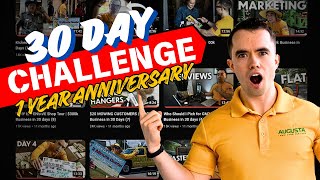
Mike Andes breaks down a failed 30-day launch in South Park, NC that cost between $50k and $140k, explaining why he chose a scrappy start over hiring a general manager. He covers social media strategy, customer acquisition costs versus lifetime value, and why he's adding Christmas-light services to his Augusta business for off-season revenue.
Chapters
The true spirit of Christmas. That's exactly what we're doing.
Dude, the Grinch is coming out hardcore on this one, dude. Santa's coming down the stack and the Grinch is collecting at the front door.
Sweet.
Then on the story road trend.
I like it.
Increase my followers by 25% in the past.
Oh, dude, let's go.
Increase my followers by 25 in the past month. But really posting stories more often.
I like the stories, they're good. Uh, is it. Do you think it's because of your little like candid snippets?
Uh, I have no idea. I think it's just like I never post on, I've never paid attention to it. So we're changing a little bit of stuff in the content. You won't be seeing like snippets of the turnarounds anymore because it's too hard to actually create a story in a minute on like a 40 minute episode that we cut from four hours. Right. And it's usually like out of context or it's hard to actually like make a story. So we're changing all my stories. All the shorts are going to be business related and more story based. So the hard part for me is the people that watch the shorts will usually know who I'm talking about. But. And so in their mind, they think I'm sharing all the information, but just to them that they're going to know that I'm talking about them because I talk to them. So like what I'm thinking is like now, every day, usually I talk to like 20, 30 business owners, owners in Augusta, etc. And so I figured instead of trying to make little like tips and tricks, I'll just tell stories and I won't say their names, I'll keep it anonymous. But like I was like, in my mind, it's like, here's what I learned today. So I'm, when I'm driving is like my time to think. I like it. And so if I'm like, you know, just listen to a sermon or a podcast or whatever, I can just like pause it. Like, hey, this is what I'm thinking about right now. I'm just gonna shoot it. So yesterday I made like eight of them. I'm like, hey, let's like try this for a bit. It's not gonna like take off, but my audience will like it more. And what's cool about stories is I can get see how many people like it and who liked it. And so I was able to test that and be like, okay, the amount of engagement, like 5x. Right. Because I started sharing things that were actually meaningful and useful instead of just like random stuff. So we're gonna try it out. It's not gonna be high view count, but Alex is like on this kick and I'm following behind him. So you know, to your point, you always say like, what's it? Replicate instead of iterate.
Yeah.
So Alex is obviously like the person I've really followed and I'm close in his inner circle, so I, I want to kind of like stick to that.
He's been using that phrase a lot lately.
Yeah.
Like doubling back down on it. Yeah, I've enjoyed it. And like almost every piece of content, he, he has said something along the lines of replicate before you iterate.
I think the reason that it's so difficult to actually say and do that is the fact that it takes the level of humility to realize that you're going to copy someone else. Agreed.
Yeah.
Right. And so like Mr. Beast was talking in an interview the other day, he said like.
Instead of copy and paste, it's copy with paste.
Right.
So instead of ripping someone off and copy and pasting their work, like copy what's working and then just add your flavor, add your perspective, add your unique spin on things. And so what Alex has done really, like I know his original, he's taken out their names more recently and it's smart of him to do that because he's far eclipse them. But like, you know, when he says a mentor, I. If you go way back, you can figure out who those people are. Yeah. Like whether Grant Cardone or Dean Graziosi or Andy Frisella. Yeah. You know, he mentions his name still, but Snap click Funnels guy.
Oh yeah, I can't think of his name.
Oh, dude, I'm listening to his stinking book. Yeah. If you just click funnels, it comes right. It starts with a D. Starts with a D. I know that. Just do clickfunnels Owner.
Oh yeah.
It's gonna be something sick.
Russell Brunson.
Russell Brunson. There you go. So like if you look at his old videos, he actually has all three of his books, like sitting on the shelf.
Oh yeah, yeah, yeah.
All the things he talks about. And like even the other day he made that video where he said like, I've spent hundreds of thousands of dollars following, you know, courses, education. He's done these things. He's done replicate and then now he's iterating.
Yes.
And so most people are just uncomfortable with the humility aspect of for five years Just being like, yeah, I'm just gonna, like, take take courses, learn from other people, and that's all I'm going to do. They think they have to create something new and fresh. And it's like, it is humbling. And, like, this is the part. Like, if I. If Alex can do that at his level, like, there's. It's stupid to be like, oh, I'm, like, kind of doing this myself.
Yeah.
And it takes a level of humility. I get that. And so, like, when you say it at franchise training, like, I think back to, okay, like, I expect of the owners inside of Augusta Nation to, you know, replicate before they iterate. I need to be doing the same thing.
Gotcha.
So whether it be following Alex and I literally. I know it's everyone. Sometimes when you say this sort of thing, people think you're in an echo chamber. But for me, it's always served me well when I go really, really deep with one person. And so whether it be like, I literally got his coach and like, the person he works with, his business partner to help me, and I've done all these things. And then, you know, there's always going to be times when you're replicating someone else's work or. Or when you're copying and tasting that.
You'Re gonna see aspects that, like, I don't like that or, like, that doesn't fit me or my personality. But it is a matter of saying that that does not take away from the formula. It doesn't take away from the recipe. And so, you know, I think it's, first replicate and then you can iterate. Hey, this part doesn't fit me. Or, like, I would do better. This doesn't my personality, whatever. So, anyways, I'm going very deep on. I have for years, like, really since we started the franchise. Um, and so, yeah, that's kind of been something I've been thinking about lately.
I like it. One of my favorite things Alex said in his. One of his most recent videos was, do you want to win or do you want to be right?
Yeah.
And I feel like that is. That's an extremely. Going back to what you said, humbling a question. Because there are certain ways to do things, and if you just do them, you will win.
Yeah.
Or do you want to be right by saying, I'm different, my market's different, my situation is different, whatever you want to say.
And.
And those are just excuses or limiting beliefs that I think, you know, I use those on a regular basis. We all do. It's human Nature.
And whether it be like when a customer complains or you have problems in the business, it's like, do you want to win or do you want to be right? Is so good because it's a matter of like, if you want to win, you will take someone that is saying something in a stupid way or in a harsh way or out of line, inappropriate, immature, et cetera, and you'll just be like, let me take that and actually distill it down without all the emotion and actually become better because I want to win. Now if you want to be right, you'll start defending yourself. You start being defensive. You'll. You'll add your own emotion to it and attack them. And those are sometimes just the easiest moments when someone acts an emotion. Like, I've gotten better at being like, okay, like I could pick this, I could pick this. And it's just like, oh. But no, I, I'm not going to. I want to win. I don't care about being right. And that's really difficult. Most people want to be right and they will say they want to win, but they would rather be right and they would rather lose being dying on their own hill. Yeah. Yeah. They want the appearance of being correct. They do not want to win. That's actually the truth of most case that makes sense.
Well, we're diving right into this. Welcome back. Another episode of the SE Suite unfiltered.
I have my, my, my, my non financial advice. I hope I don't lose it at the end.
Fantastic. I love it. I, I have some as well.
Oh, good, good.
All right, well, we're going to dive in here if we haven't already. I have to say to you, Happy one year anniversary. Do you know what this is about?
One year anniversary? One year anniversary. It's not co pilot. That's a little over a year. What's today is like today.
It'll be on Friday. What's May 31, 2023.
One year.
You posted your first video from.
The 30 Day Challenge.
Oh yeah.
Moving across the country and starting in Augusta location.
So we were, we were, we flew into Charlotte last week and we were reminiscing. So we actually went to one of the restaurants that was next to our apartment. It was completely happenstance. Like I don't know where we're going until literally we're flying.
Right. Because your team handles all that.
Yeah. So usually I don't even know until like we land because I don't listen to like the announcements and stuff. Yeah, I'm just like, give me the gate and I'll be there. And so this game like we're landing in Charlotte. I'm like, wait a second, we've been here. So like we looked up and I went to like a restaurant that was close to our Airbnb. We stayed for the month. So it was very reminiscing. But yeah, it's been month. And like I remember like we driving down the street, I'm like, dude, I remember all the bad things that were happening.
Yes. So one year anniversary of the South Park, North Carolina location, what was the reasoning again? Remind us all the reasoning.
Two things. Like one of it was to prove to myself what the other, the more important thing was. A year before I told everyone I was going to do it. And we only had like 50 locations. So I was like totally pulled us off. We didn't have copilot at the time. None of that had like even was on the horizon. And so everything was simpler back in those days. And now I was like, oh yeah, we could totally take a month off and just like knock this out. So that was the impetus of like one, to prove people I could still do it, quote unquote. Cause I hadn't been in the field for so long. Two was I did want to create like a 30 day roadmap for new owners inside of a gusto nation that didn't have tons of money and were in the need to kind of roll up their sleeve and get, get jobs the dirty way. So yeah, that was the impetus behind it.
Yeah, got it. So obviously you've built some successful businesses and I think this was like you said, a roadmap for owners inside of Augusta as well as for the public. And I guess maybe if someone doesn't know what we're talking about. Just to clarify, you moved from Bellingham, Washington to Charlotte, North Carolina, started in Augusta location from scratch. Thirty days was the challenge to prove that you could scale quickly using the Augusta system.
Start. I would say start. I would say scale. Start.
Start. Start. A foundation to allow scalability. Let's, let's go with that. What do you think in your time doing that? Because you've obviously scaled large businesses, but you're back boots on the ground doing the small scale tasks to build that foundation. What were some of maybe the highlights of doing that and maybe some of the lowlights of doing that overall?
Really the thing that I, if I would do it over again, I would have gone, I taken more clear path because I kind of split my like focus twice. So I was trying to do a lot of it for the content of. For augustination. And so the problem that I did is I try to split two different things. One is I tried to be really, really scrappy and pretend like I had no money, which was standing on the side of the door, side of the road with a sign, doing door hangers, et cetera. But then I also use a strategy that would only recommend someone use if they have over $100,000. And that's from day one, I'm looking for a general manager, right? So it was. I was really trying too much. I should have been like, okay, I'm gonna be here for three months. I'm gonna take either of these paths. One, I'm gonna start with no money. I'm gonna actually do it the right way, or I'm gonna go the general manager path. And that's why my general manager wasn't set up for success because, like, I literally had one week to get them set up. Right. Whereas if I. I actually had a hundred. Like, we recommend if someone wants a general manager from day one. Usually I like $140,000. Yeah, that's general manager, two employees, two trucks, trailers, full setup with $30,000 to spend on marketing. The first year I was trying to like not spend the 30,000 on marketing and do door hangers. And so, like, I. It was half baked. It really was like if I would do it again or I would recommend to someone. If I'd go back and do the 30 day challenge, I'd either say, hey, look, here's like, I would have put more constraints in the challenge. Like, we're gonna start with x amount of money. And for that reason, I'm going to do door hangers and yard signs and all this other garbage. And I can't be doing a yard sign and then go hire a general manager. I would tell anyone. That's stupid. The thing that I was trying to do is I was trying to like, give both sides of the story for someone who was starting with a general manager and someone starting with no money. But that didn't work for the location because then my general manager didn't. Wasn't set up for success. And my. I was spending most of my time, like, doing very low level tasks.
Do you think that that clouded maybe the viewer's perspective? Like, your goal was okay for, for Augusta and for the general public? Obviously, if you were in Augusta Nation, you got exclusive content kind of behind the scenes of the 30 days. But even for the public, do you feel like that was cloudy for them where they're like, okay, so he's, he is being scrappy, but he's hiring a general manager. Like what, what are your thoughts on.
Clarifying that if I was staying there longer, the general manager thing would have worked out. Like, but like literally a week before we left, he got into an accident. I had to let him, like, let him go. So, you know, remember that I'm trying to be delicate with people on the show. So is, is if it's delicate, if you like, man, he really treat him nice. Just remember, like behind the scenes, I am a little bit more ruthless and cutthroat. I'm not going to publicly say stuff.
Yeah.
So, you know, the goal is never to make the team feel like if I, if I'm going to dole out.
Consequences that it's publicly aired, of course I'm only going to make them. I'm going to try my best to make them look good. So anyways, that's a caveat just for everyone that watches the video. Because the most video viewed video is the one where my manager gets in a wreck and it seems like I'm promoting him. But anyways.
What was I gonna say? We were going down a path? I would say I would. If I would've stayed there longer, that general manager would have been successful. I would have been able to train them up, I would have been handed off. I would have been able to keep the marketing machine going because when I left, like it was six weeks before the next lead would have gone on the schedule. And so the general manager that came up literally had just less than a week with me. And then what? He had only been in the industry for a couple months. He was not set up for success. Right. If I would have actually had 140,000 and that was my budget, I would have got someone had more experience, I would have trained them up way more. And then I would have been spending money on marketing and online ads instead of door hangers and yard signs. And my time would have otherwise been spent on the general manager.
Yeah, training.
So if someone has like 50 grand, they should follow most of the first 80% of that show, which is like be scrappy, keep trying things, keep testing things. And then the problem is I could have had this weird 30 day limit that you usually don't have. I had to like manufacture the last part to hand it off to someone. Right. Where usually you'd spend more time with them. I would not be spending doing door hangers and holding a sign. I would spend time with my general manager. And so if someone had some had 50,000. I would say 80% of that show valid. If someone has 140,000, take what I did in the last week or two with my general manager and finding them and all the rest of it, and then just spend more time with them.
Right.
And spend more money on the marketing so you don't spend your time on the other weird garbage I was trying to, like, help smaller operators with. And then if you have, like 600,000 or 500,000, we're gonna start multiple locations, have general managers from day one. That's when you're, like, gonna have a regional manager. And that's. We didn't even go down that path. I'm thankful we didn't. But I would say I split my attention, and it was in part because I had to leave in 30 days. That's very rare. Yeah.
Yeah.
And then I was doing. Trying to do, like, really, the budget for that location was probably.
50 to 60 grand max, maybe a little less. And so, you know, if I would have just committed to, like, we are scrappy. I'm not getting a general manager because I am scrappy. It's rare that we would never allow someone to join Augusta or I would never recommend someone $50,000. Like, yeah, from day one. Within a month, I'm gonna have a general manager. Could be completely remote and live on the other side of the country. It's not gonna work well. Right. So I tried to do that too quickly, and. And it was because of the constraint in time.
Do you think that, if anything, because of the time constraint, because of the effort to show two different paths while building a business that you unintentionally showed that you just aren't going to find success in 30 days. Not that it wasn't successful, but I think what you did is kind of change the narrative around. I'm going to be my own boss and be my own manager. Like, you showed how hard it actually is and that 30 days is nothing in the grand scheme of building a business.
In part, I would argue if I would have chose a path from the get and actually been more intentional, like, hey, the objective of this location is not to get to. What was it? $300,000? Like, basically $1,000 a day.
Yeah.
It's not that it is. To have a general manager be running this location being profitable within 30 days, that's a completely different objective. Because if that was the case, my budget would go up. I would have spent money on marketing, and I would have spent literally three weeks with my general manager going over whiteboard stuff, going over training, they would have been in with me with the truck. I probably worked with my GM for one, maybe two days, like in the field, and they didn't have a ton of experience because my budget, I was trying to play this weird budget game because I knew that's where most people would start. Right. And if I went immediately to like hiring a general manager the first week, people would be like, I'm out. Yeah. So I kind of did both from a content perspective. It's what I needed for Augusta because I wanted to see that last week where I was trying to find a general manager and all, like the hiring process and then crazy stuff happened with the accidents, like switching that all of a sudden. That was actually a really good snapshot of what it's like to start multiple locations. Your general manager, you gotta figure that out. If I would've had more time, that the manager that we brought in would have just crushed. Unfortunately, the manager went on to move the MBA and like, he got an offer. Did you hear about this?
Yes. Yeah.
So that stinks in front of the business perspective. But no, he would have been super successful if I would have had more time with him. Right. You can't expect a gm, I would say, in a week and I can't expect in a month for a location that has a 40 to $50,000 budget to. Then the owner moves away and never talks to the GM again. And so I would just. If I would do it again, I would say I would do a 30 day challenge. And if you look at the comments, people are like, this is not fair because he's starting with like all this money on a truck. And. And like, no one starts with that. Yeah, I would have started with like actual scrappy and actually played that game. But the problem is, like, I needed enough money so I could show the other part. And so it was a weird hybrid. And if I would do it again with less views, I'd probably be like, hey, the budget is 150,000. The goal is not to get any sort of revenue. It's for me to leave this location with one full time employee and a general manager fully booked. Right. And like, who cares about revenue? Who cares about the budget? Because, like, I'm going to spend a ton of money on marketing so I can spend time with my general manager and not be doing door hangers and yard signs. And so it was, it was just kind of both things. But I only had 30 days. I wanted to show the GM part because I know that's helpful for Owners of Augusta that are starting multiple locations because the hardest thing to go from one location to two.
Yeah. Do you think that there would ever be another challenge? You do like that. But it's. It's focused on the ladder.
Oh, dude. It's so difficult. It's so much hard. So hard from a time perspective. Yeah. Because by that time we were ramping co pilot. Augusta had 100 plus locations. We had. We were revamping AI stuff with Max. Like, like, literally 80% of my day was still. I still had to operate.
Yeah.
And so, you know, tons of zoom meetings. So, like, I'm out doing estimates, like doing zoom and like, there's bad service in parts of Charlotte. So, like, I quickly had to navigate that and, like, realize where there's service and not. But it was just like, like, no sleeping for a long time.
Yeah. Well, happy, happy anniversary to that.
Thank you. Thank you. Not actually, like, when we were there, I was like, dude, I. It was so bad. Like, I just. I'm so glad. Grateful times over.
I didn't even talk to you like, that whole month.
I know, dude, you're right.
I was like, I know you have so much on your plate. I'm just gonna keep crushing my.
Appreciate it. I appreciate it.
And not bother you.
You're doing a lot through that one too.
What would you. Simple question. However you want to define it. Would you define it as a success? The 30 day challenge?
Yeah. Because, like, my main objective was to give a 30 day roadmap for Augusta. So even, like publicly, I. But there's twice as much, you know, probably three times as much content that create each day for Augusta. And like, when they join, they get the 30 day roadmap of like the behind the scenes. So they see the public video, like, what happened and then they see me, like, explaining it, what I did, and the numbers and all that sort of thing. And so that, to me, was the most valuable.
Yeah. The public videos, for those who don't know, or maybe this might be news to some people, is that the public videos tell an awesome story with elements that you can extrapolate and apply in your business as you're scaling up. What Augusta got was like the very raw, slightly emotional numbers and like late.
Nights between 11 and p.m. and 4am.
Each night, which that is not that what you put out publicly wasn't reality. It was. You do your best, your team does their best to make sure they're always demonstrating the reality. But you have to throw out a storyline, you have to create a narrative to keep to Keep people engaged with your content. But we also, inside of Augusta, got the very raw side of building a business. And that holds a lot of value too, because. Because not that you don't share that publicly, you do, but that was just an extra level of depth at which you shared, which was very beneficial. So I would say that alone was successful.
Yeah, like, really, like, if I would have been able to stay there, I, like, in one way, dude, I was so ready to get out. I was so drained, like on the video. It was so hard, dude, to like, just keep a good face and, like, try to keep plowing through and, like, take all my meetings. But I was dead. Like, when we were coming back, like, Zach and I were both exhausted. We just want to get back. But if I had three months, dude, we could have crushed it. Yeah, totally. What you cannot take away from the challenge is the fact we were literally, if someone would have booked a job the last day of the challenge, they would be six weeks later that they'd be on the schedule. Six weeks is like, literally how far we were booked. We were consistently making a thousand dollars a day. Like, that can't be taken away. And so that's where I'm like, okay, if someone actually follows this 30 day roadmap actually gets as ground, like, as like boots to the ground as I did in terms of doing all the door hangers, doing all this stuff, they will be successful. So I like checking. The part where I feel like I failed is I didn't have enough time to actually get the general manager ramped up. And I wish I would have either a, increased my budget and brought the general manager from day one and train them the whole month, but that would have been horrible content. It's like, okay, so we're gonna sit in this living room and talk about marketing and how to do the schedule and how to budgeting. Like, we wouldn't be able to make any content. And like, and I kept balancing, okay, do I make this location successful or do I make the content required to make 100,000 other people successful? And I defaulted to the second one. I knew for the vast majority of people getting a business off the ground, they just need to do the rule of 100 to keep pounding pavement. Like, showing how to hire their general manager is going to go to like 01% of the audience. So if I'm actually trying to serve the audience, I go the direction of, like, get the business off the ground, not train a general manager. And so that split attention, though, messed me up. Yeah, I would say in general.
Fair enough. I appreciate the deep dive.
Deep dive.
All righty, we'll switch it up here. So I have a comment from the YouTube comment section. Unfiltered. You're fine.
I usually try to.
Now, is this name I highlighted. Is that Chow? Is that how you say that?
I would say so.
Ciao, Mora.
Yeah, maybe keep in mind that these are usernames. People can make stuff.
Exactly.
That could also be like, chow more. Like, eat more.
Oh, yeah, There you go. I like it. 9637. That is the username. They made a comment on one of our recent videos, and they wanted your opinion on this.
We need more comments. I don't know how many comments there's been, but we need more of.
Yeah, that's fair. It's been like.
We usually get like, 800 to a thousand views.
Yeah, yeah. Everything's been a little bit slower recently.
Okay.
So maybe we haven't been as engaging.
Yeah. Come on.
I apologize.
Come on. Yeah, I know, exactly.
That's kind of what's happening. I'm working on it. So, yeah, like, subscribe.
What do you want in the comments? Like, questions.
I would love questions.
What about topics. They want us to talk topics.
Topics and. Or questions.
If you.
I have always said. And this is, you know, where we're at. If you leave a question, I will ask it.
I left a question or a comment last time, but I. I left it like 20 minutes in the video being posted.
Yeah.
Do you remember what it was?
Yes, it was.
I was on a plane.
Oh. If you know, you know, the.
I was just sitting here with my bed. Jet.
Yeah. Just sitting here with my bed. If you know, you know. Yes.
Because only the people who got to the end of the video would actually know what we're talking.
Ty Lopez. Fantastic.
Alrighty.
So this person commented my candies.
Yeah.
They didn't say her name, but I'm assuming they're addressing you. What do you think about getting loans or using credit cards for marketing spend in order to hit capacity?
Marketing spend. Okay. That was a different turn. Usually it's a matter of getting a.
Truck for marketing spend to hit capacity fast.
Yeah. So that you want me actually dive deep in it.
Yeah. Let's go.
So.
I like that. Typically to extend capacity, because it is a measurable asset that can be sold. So, like, if you go into debt for a truck, there is a measurable asset. So you always have the opportunity to sell the truck for like 50, 60, 70% of what you bought it for. So you're always. Hedging there, but yet you get 100% of the value of that truck from day one. That's why I like debt when it comes to equipment, because I get 100% of the value of the truck at maybe, like, 5% of the cost. And I can pay that over time. That's a huge lever in the business. That's why debt is so powerful when it comes to marketing. The problem that I find most time is people don't actually have as a lever in the business. They don't know how much their customer acquisition cost is, and they don't know what the lifetime value of their customers, I. E. Or even just know how many they're churning out. So I see people like, I'm gonna go into debt. Mike said, $20,000 I need to spend, and then they go blow 20 grand and maybe come away with a hundred customers. 20 grand divided by a hundred is $200 customer acronym cost. Great. We just need to know that number and then be able to make sure that makes sense. You're like, well, it doesn't make sense unless I keep customers, like, at least a year or two if I'm doing recurring services, or I sell them all a $5,000 project. Okay, well, maybe we should split this budget to be able to fill your schedule with profitable work with projects. And then instead of going after 100 mowing customers, let's go after, say, 70 or 80, and then that will be the recurring revenue that keep you through the off season. So most people don't know their customer acquisition cost. They haven't run ads on Facebook and Google to know. Okay, I am getting leads at 20, 30, 40 bucks. I am closing. 50% of my customer equity cost is $80. Okay. It changed because last month it was 50. Now it's 80. Why? Oh, we're getting out of spring rush. Okay, should I switch now from pitching from one service to a different service? Because the seasonality of it. So most people don't know that. And so the confidence I have in saying, go buy a truck, even on debt, I have this huge hedge in that it has an asset value.
Yes. Increases overhead expenses. There's downsides. But, like, it has a value versus marketing. Once it's spent, it's spent, it's gone. Like Mark Zucky, Zuck is not giving your money back if it doesn't work out.
Right.
And so knowing that number is important before you go get a loan. So I would give them my approval to fill the capacity if somebody knew their customer acquisition cost and then knew how many Customers, they would need to get to capacity and they could reasonably tell me that if I spend ten grand on marketing, I will increase my revenue by X amount number of customers using customer acquisition cost. And then I will be able to raise prices and increase my profit by 2, 3, $4,000 extra profit because I hit capacity and raise prices. That's when I start having good thoughts about that sort of situation. Most people don't actually know what their customer acquisition cost is. I have heard people say on stage the weirdest stuff and I'm just like, I'm not going to ask you to prove that. Like I need to see the actual ad. I want to see what your cost per click is, your cost per lead and your customer acquisition cost. I want to see your close ratio and then that number is what you can work with and that changes literally week to week. Like in the United August nation, we see this massive drop for about two weeks. Why? Because like everyone is Memorial Day graduations and for two weeks people check out, people are getting off school, et cetera. We know that comes back. But that's usually a pretty indication, good indication of when people switch from spring rush recurring work to wanting to focus on projects.
Yes.
In terms of our marketing spend being most effective. So things like that, not knowing that is what leads people to going into debt. That they will never get any sort of asset return round whatsoever. That was a very long answer, but it was good.
I. I'm surprised you didn't say something before getting loans or using credit cards for marketing pre selling. No, no. This is a Mike Andy special, especially inside of Augusta.
Wait, wait, wait. What?
Before you spend a single dollar on marketing. Oh, you should always.
Okay. I'm assuming this is a new business, right? I'm assuming it's a new business.
Gotcha.
Got it. You're saying it's an existing business? Yes.
I don't know. I don't know if he's an existing or not.
Yeah, you're right. See, this is why context matters. Mike Minutes Mastermind. If you give me your real name, we can work with you. Okay, so assuming someone actually has a.
Business because it sounds like. Because he said to hit capacity fast. I took that as I already have assets, I already have employees. I need to hit my capacity.
Text matters, baby.
That's how I took it.
Yeah. That's great. So in this case, obviously my first word is have you tapped out one click Estimate emails. Are you upselling every single customer? Are you doing all the things that you should be doing that cost $0? Because if you're not willing to do that to warm leads people in your database, why are we spending money on cold traffic? Right. So yes, that would be the asterisk. If you have an existing business and if you have a meaningful database because someone might have an existing business, have 20 million customers and maybe 150 people in their database. That's going to be more difficult to like scale up because if you did a one click estimate, well, you might only get one or two estimates. That's not going to fill your schedule to capacity. So yeah, that's what I would say. Assuming you don't have a thousand plus people in your database, et cetera, assuming that you already do one click estimate emails, you already have exhausted the reach out to warm traffic, then, you know, then everything I just said would then apply.
Yeah, yeah, I'm just, I'm just checking. I know, you're right. That's what that's always, that's always what I would recommend. Obviously you know why you can't clip.
One piece of what I say? Yes, people have done this and they're like you said XYZ. I'm like, yeah, I was talking to a $2 million business on that turnaround and you don't have any employees.
Yeah, anyways, yeah, no, that's fair. No, I think it's a good take. I think, you know, there are times where you can leverage loans. It is, it is a lever. Right. Loans or credit card debt in order to expand the business. I think what people need to really game plan. And I have talked to some owners in Augusta, owners that have been with us for two, three years where we created a game plan to get them to pay off that debt as soon as possible because they took out loans or credit card for either assets or marketing. I think, sure, do it. Take Mike's advice. There's a lot of variables we don't know, but have a game plan for how you're going to pay that off before you take out the loan, before you use the credit cards or max things out. That would be my piece of advice.
If you have no idea what you're doing, that's fine. You're going to pay the ignorant tax of working crazy amounts of hours and making a bunch of mistakes. And that's okay because that's what I did.
Yeah, fair enough. You had something on the mastermind. This is not directly related, but somebody asked if they were saving up cash to start a second location. They're like, what should I do with it? Like, what should I do with the cash.
Oh, yeah, that was a good question.
I think it was Mr. Anonymous.
Yeah, it was a weird spelling one. Yeah. Yeah.
Inside joke here. If you're not in a destination, there are. There are a lot of weird names that get submitted.
The Mastermind, Mike's Masterminds, which is actually more entertaining. Leaving it blank.
Yeah.
But it is hard if they actually want business advice for me to give it because I know most were. I almost. I would say, I know we're like 90 plus percent of the owners based on their name. I get. I know where their business is at. The other 10%, usually it's newer ones. So it takes me a while to get a pulse on, based on coaching and like their questions and things. But most times they give me their name. I give way better advice.
Yeah, but any context.
But you can submit your questions and honestly. So.
So somebody asked, hey, I want to start a second location with Augusta down the road. Fantastic. They said, what should I do with my capital? You gave them some advice. You said you could put it in like a high yield savings account. You could invest in the S and P. But like, is it worth it for the capital gains tax? Whatever. Maybe. What about pivoting towards this? Let's say it's end of summer and I know leads are going to fall off. Let's say this person's in a market where the leads just drastically fall off in winter. They've never really done a lot of winter work. Obviously, that's a different conversation. Would you say that they should take whatever cash they have at end of summer, put it in like a high yield savings account to deploy next spring when they know they can crush customer acquisition cost?
Yeah. I would say that ideally, in the perfect world, you take that capital and deploy it against a service that actually can allow you to grow during the winter. And it's like, no. Have we talked about Christmas lights?
Not on the pod.
On the pod, no. Yeah. Augusta's going hardcore. We're getting trademarks. I'm legaling up over it. Like, everything we're spilling out. Massive website infrastructure. Like, we're going to kick butt because I want people to be able to. To be profitable and keep that. The stack of cash all these landscapers have in October and November, I want to be able to deploy that into something that actually grows versus being like, put it in a high yield savings account so the next spring rush, you have enough capital. Like, it's like telling a starving child once they have a whole bunch of food, be like, just hold on. Like, it's so difficult.
Yeah, that's fair.
Especially when you're like, well, do I want to save against taxes? And everyone then wants to expend the money and then they go into the spring rush and then they need the loan to figure out the marketing because everything's booming. Right. So if we can just take it where. Yeah, that extra 40 grand, you have 50 grand sitting around in cash and the year. Go spend that on Christmas lights and make it into 100 grand so that when spring rush comes around, you actually deploy it and really scale the business. So that's what I would focus on. If you're like, hey, I'm not doing that, or I'm going to lockdown mode, which is another track inside Augusta during the off season. That would be again, yeah, sure, great. Like lock up the money so you don't touch it. But I would rather like, if you're trying to grow, go spend the money on growing the business. If you're in growth mode, if you're in profit mode, then like, you're siphoning cash off anyways and putting it somewhere. Whether it be a high yield savings account or S P500, I don't really care. The context of that question was, do I want to take the risk of the S P5, S P500 dropping 20% versus on average going up say 8 or 10% on 150 grand. That's like 10, 15 grand. Not a huge. Like is you're getting 10 or 15 grand on 100 grand is not going to be the. The. The deal breaker or deal maker of your success of that location. It going down 20% could mean that you don't. Can't open up the location because now you have 20 grand less or you.
Have way less to deploy for marketing.
Right. And like, I'm not going to put in jeopardy a location that could potentially in three years be printing 50 to 100 grand in distributions to me. I'm not going to put that at risk for the extra upside of 10 to 15 grand.
Yeah. So we're going in on Christmas lights.
Yeah.
Dude, should we.
Is.
Is the site live? Should we tell people if they want to see it? All right.
No, no. We just have. We bought the domain. I gotta get all the legal stuff, trademarks, all that stuff I'm going through. So you don't really work with the trademark attorney. You work with the franchise one.
The franchise attorney.
So, yeah, the trademark one. We're working through it. We're gonna like, kick butt. There's no one nationally that actually does what lights like we do, we're gonna kick butt at SEO. We're going to just annihilate, destroy, absolutely. Slaughter, pillage. The Christmas light market.
The true spirit of Christmas. That's exactly what we're doing.
Dude, the Grinch is coming out hardcore on this one, dude. Santa's coming down the pipe or coming down the stack and the Grinch is collecting at the front door.
Fair enough. Do you feel that Christmas lights. Okay, let's just transition to that Augusta. We're leaning into it pretty heavily. It's not going to be required. It's not going to be forced on any owner. It is if you want to. If you want to grow, if you want to have profit going through the winter months. We see this as a very viable option. Do you feel that we're leaning into it because it is such an untapped market? Like obviously people are doing it, but do you feel that it's what mowing was in say the 80s and 90s, where now it's just starting to become more popularized?
I think that it serves the most ideal customer because if you're spending money for someone to put up your lights.
Yeah.
You have expendable money. Yeah. And so I think that these leads are worth money to us in the spring, regardless if we can sell them Christmas lights because they are our ideal customer. I also think that anyone has their lawn mowed and their trees trimmed and their mulch installed for them is also an ideal candidate for Christmas lights. So really good cross sell. The. The. The challenge is like the whole rebrand part and that's what I'm really working on and making sure it's like it's Augusta Christmas Lights. It is not Augusta Lawn Care. It's a completely different website. It'll look differently. How do we rebrand all this stuff? Marketing, blah, blah, blah, blah. The. In my opinion, the reason that most lawn care businesses and home service businesses in general that have a seasonality component is the fact that they cannot figure out a service that actually works during the off season. And for the most of lawn care Lantern has been snow. Well, snow is very intermittent. And whether it's global warming or just like the fact that we have tens trending of like more dramatic swings in weather which stinks. Because if you have more dramatic swings in weather, you could have 20 plows and the next year have three events. Like, that's worse. That's worse than having no revenue.
Yeah.
Because you have to. You have to equipment all the way up for it. And then the values of like contracts Go down because like they're like, oh, last year only came three times. We want to renegotiate the contract. It's so difficult. Lots of insurance, etc. So I think that a lot of people when we do this and we're going to kick butt at it, we're actually crush it. In three to five years, this will become more of a normal thing for lawn care landscaping, which I will love. Because people will start, start putting together Christmas lights and lawn care in their brain. That customers, if the whole industry follows us, which is fantastic. Let's go. I'm happy about it. They will follow and then people will start associating lawn care with Christmas lights more often. And when they search for it, guess who's gonna show up. So that's our objective. It's like three to five years is what we just want to dominate the national market online so that when the rest of the nation falls, which I'm super thrilled about, the industry making more money, rising tide. Like if you don't join us, fine. You will see what we do with Christmas lights. Go ahead and copy us. Let's go. I want every customer in the world to think that whoever moves my grass can also install my lights. That's a hard connection right now. That doesn't exist.
Yeah.
That's why we have to do the whole rebrand thing.
But in three to five years when that is more established and we have, you know, four or 500 locations and then I have 10,000 other landscapers that are doing the same thing and then the brand switch happens in the customer's mind. They will search Christmas lights and guess who is going to show up, baby. We're going to dominate because no one else is doing national. There's other competitors that we have that do national lawn care landscaping. No one does Christmas lights. We are going to slaughter, pillage. Almost a bad word. Sorry. We're going to mess it up. Okay. Yeah.
Yeah. We're going to go hard. We're going to go hard. That's a good way to put it. Are you going to go to that Christmas light training? The in person one?
I can't make it to that one. I'll be in Memphis though.
Yeah.
And I'm sure there'll be a lot.
Of stuff around thinking about going to.
That Nick is going fall just for. He's doing Christmas.
Yeah. Just for education. Just so I can learn. Because I know. I know nothing.
Yeah.
There's a. I've put them up on my house.
Yeah.
But like not at this level. Not the industrial size or scale.
There is a new videos we put up on the dashboard by the way. Training videos on 10 part series. Oh really? Yeah, yeah, I just put up yesterday. I haven't announced it yet.
Cool, let's go.
I'll let everyone know. Day.
Cool. I love it. Well that's, that's where we're headed. Any not financial advice for the people.
So this is an actual real thing. So this is my new little mantra. It came to me randomly. Don't know how it came to me. Oh, you, you have advice on videos.
Yeah, yeah, sorry, my apologies.
No, you're good. So my, my non financial advice is three words. All right. Dig, Build. Barry.
Oh yes, I saw you post.
Yeah, dude, that made so much sense to me. I don't know how it came to me or why exactly last Sunday it just made so much sense to me. It's like the building, the foundation is the like not like is not glorified. It is not fun or exciting because you literally dig lots of work. You build something and then you bury it and you never see it. And like if you look at like a skyscraper, everyone looks up, but they don't look at the fact that it took like a lot of effort, time, energy and money to go down in the ground and build something and then bury it all and it's not fun and exciting. No one will ever see the work you're putting in today. And in my opinion, the foundation takes three to five years to build. And that is the most unsexy, horrible part about building a business is the part that no one sees. There's no glory in it. It's hard work, it's expensive. And there's absolutely no one cheering you on because you're not doing anything. They can see there's no evidence of success to point to Whoops in saying like, that's my skyscraper. It's not like, yeah, I'm building a skyscraper. Right? So yeah, that was my, my three words of I like it.
No, no, it makes a lot of sense. It's. It really kind of is a new spin on, you know, the overnight success theory that, you know, people will look at you and be like, oh, this guy's an overnight success. And you're like, I've been doing this for years. Like this is 10 years with Augusta and even before that I've been preparing to build, you know, what we're working on. But yeah, just bury it and like just know that it's not going to get seen. But it's the most important part like the cool windows, the cool lighting, the LED on skyscrapers, that's what people look at. But like the best part of that building is the fact that there's a foundation keeping it upright.
And honestly, the building, the foundation is so brutal and so hard and so painful, you actually don't want to talk about it. Right. So Alex talks about the fact that he wish he one regret in life he has is he wish he took more pictures when he was going through this phase. But the thing is you do. You just so do not want to even think about sharing or opening up or communicating about this area and what you're going through because it's so extremely painful. Yeah. Like, even, even like, so we're just coming out of bug hell with copilot. Right. And so like, even during that, that time, I only made two quick videos about like how painful it was because like, you do not want to talk about it. Like, it is crushingly difficult.
Yeah.
And so I did make one video. I. I'll probably share it at conference. I'll see if I can tie it into my, my, my talk. But like it's. It's me and my most like, demoralized middle of the night. Just like everything is horrible. Life is horrible. Everything is broken. This is like life is gonna die. And so I being like, I. So I deleted the video.
Yeah.
And then I actually found it in my trash in my Google Drive. I should probably keep this. Yeah. And I'm glad I did. And it's not even something that now I can share because we're still coming out of it. But in six months, I think it'll be like more evidence. And then like, I think in five years when like it'll be like more. Much more common and like, it'll be more clear the vision that we're trying to do and then be show that and like that's the foundation. And without that, you're not going to see what we build in five years. And unfortunately most people in that moment, like, I was like, you do you just want to give up, dude?
Yeah.
And I don't blame anyone wants to give up in their first three to five years. It's just like, it is, it's horrible. Yeah. You don't even want to think about it. Like even going back to like North Carolina, having a taste of it for that month, like just going back, like, it's like, dude, like, I don't want to ever do this.
Yeah.
It's horrible. So anyway, sorry, Big Bill Barry, dude. Yeah. I want to bury it and never think about it again.
Totally.
Oh man.
Yeah. Alrighty. My not financial advice is just as light hearted.
Okay, Good.
Scott Galloway, Ted Talk.
Oh really?
How the U.S. is Destroying Young people's future.
I stay away from the story of content. I'm sure it's interesting.
It is phenomenal.
Really? Okay, I got to watch it.
Yes you should. It's only 18 minutes.
Okay. Can you send it to me?
Yeah, you can watch it. 1 1/2 speed.
3 2x speed at least.
Okay. I'm just saying. Well, it's a lot of data so you know, one and a half, two.
He's a slow talker too.
Yeah, a little bit. But anyways, phenomenal video. He was at TED conference at Vancouver, British Columbia a few a few weeks ago. And I will say the audience a lot of awkward chuckles and half claps. He's basically calling out all elites and the great transfer of wealth from young to old. And if you just look at all the data, it's not looking great for America's future.
Okay, so I don't like those. Yeah.
But I don't and I don't agree with all of it but it's very thought provoking.
Yeah.
And there, there's statistics on you know like mental health and like you know, self harm. Like one of the things is like self harm rates among teenage girls is like skyrocketed since the dot com bauble and since media went on social and he's like these, all these things are like destroying our youth. And also the financial, the financial well being of our youth is in jeopardy too.
I, I think it's gonna be great. I will watch the whole thing. My thing is I can't control that. Like it is interesting. So I can't control that. Like the only thing I care about is like people inside of Augusta Nation, my family and people on copilot. Yeah. And like because that's the world I actually can actually move the needle for and like being in pain and feeling horrible and torturing myself will actually benefit them that I cannot control.
Yeah.
Like if I was like Mark Zuckerberg I could probably attack some of those stats. I could change it. But man, I'm trying to get away from things like news like is there's always like there's always bad things happening. Yeah. I can't fix them. So like it's just going to be one massive dump of like problems and I can't fix them. So like I don't want to even hear.
Well I mean I don't want to be tongue in cheek. But, like, that's why you have your civic duty to vote. And, like, I know it's stupid, but, like, I still like to try to believe, bringing it back to politics. I still, I like to believe that we still operate in a democratic republic, right? And that.






