Touring a $1.8M Shop on the Road to Selling for Millions!
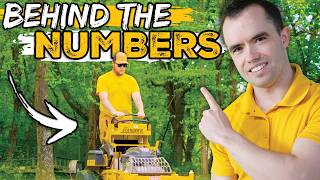
Mike Andes tours the Knoxville Augusta Lawn Care franchise with GM Caleb Storts. Founders Jason and Tracy grew the business from $300-400k to $1.5M after joining the franchise and implementing systems. The shop handles off-season revenue through winter services and Christmas lights to smooth cashflow.
Chapters
The difference in culture is huge. We don't work for Jason anymore. We work for Augusta Lawn Care. The result that I'm getting is coming from actions that I'm taking. And if the actions don't change, the results not going to change. So I have to change.
Hey, Josh. How you doing, man? Good to meet you. I'm Mike.
Nice to meet you, man.
Awesome. You wrapping up the schedule? Yeah, let's go. Good stuff.
Still in the middle of it. Yeah. This is Josh's and then Jason's here.
Okay. Hey, everyone, it's Mike Andes. I'm the founder of Augusta Lawn Care. We have over 200 locations around the world, but today we're actually going to go on a shop tour of one of our locations. There's $1.5 million in revenue. Now. Caleb Stortz is the general manager and has been there for the last couple of years, but this business has actually been in business for more than 15 years. Jason and Tracy Storts, Caleb's mom and dad, actually started the business kind of around 300 to $400,000 in annual revenue for 10 to 15 years. They joined Augusta Lawn Care and then using the systems and then having Caleb join as their general manager, and they've been able to scale up massively. I think there's a lot of lessons, the way that they treat their general managers, the way they think about their team and it's the organization and the systems they've used. I'm super proud of them for being able to start implementing software, start having systems in place and treating their people like gold. I think this is a really good shop tour. You'll get a lot of nuggets. So stay tuned for Caleb Storz, general manager at the Knoxville, Tennessee location. And what's really your division on that in turn to three of you is it operations and he in sales.
Josh is general manager, and he started at the beginning of this year. He's done fantastic with it. It's been great. Jason is really mostly sales. He still dabbles in management. Occasionally they step on each other's toes as it goes. But.
I would say. What would you say Jason's main role is? I mean, it's sales. Yeah, but he does so much of everything, you know, you know how it is. He really has recently been just tracking numbers more than anything. We're trying to do a lot better job of staying on top of understanding where the money's going and organizing it, making sure it's. You know, there's been a lot of stuff recently that he's like, I had no idea that we had inefficiencies in areas that we do. And if it doesn't get tracked, it doesn't, you know.
Yeah.
Nothing changes. Yeah. So, yeah, we're trying to. I think that's his main focus right now. He give you a. Did he tell you his disappointment about not being able to be here?
Oh, yeah. Oh, yeah. But they're on vacation.
They're not missing us at all. Yeah.
This is very cool. So then this is where Tracy and Bri are at.
Yeah. So they're in here. Oh, must fall down. Yeah. So, yeah, Bri and Tracy, we've got my cousins that come by to. To help with, you know, random stuff as needed. Cool. We need to turn a light on. We good. Might need a. Yes, that one.
Yeah. They're in here.
Trying to think all the office stuff. So as quotes come in, they, you know, figure out where those need to go. And then. Yeah, Josh manages. Cool.
So and then with. With your mom out, is Brie kind of take. It'll take most.
Yeah, She's. She's been at home just doing everything from.
From home because they only come in, like, kind of periodically into here.
Right. Tracy's here every day.
She's.
All the time. Yeah. Weekends, all the time. Yeah, she's always here. Bree's pretty much set schedule five days a week, but, yeah, sometimes, you know, she'll have lighter days on when need be, which has been great because Bria originally came on wanting to be pretty much just part time, but Tracy was like, I need somebody full time, so you're promoted. But she's enjoyed it. I think they. They work great together. So. Yeah. Which is a blessing in disguise because Tracy has a hard time, like, not necessarily. Not necessarily delegating tasks, but finding somebody that you can mesh with, especially when you're this close to each other. As you know, it's a big deal, especially for.
Especially for somebody who's never really worked in.
Any type of task that you have to figure out how to delegate. So I think it's been huge for her. So she's very happy in terms of.
Developing the GM side. Like, obviously, is Josh right here and then Michael over there. What do you see as some of the common traits of a good general manager and even, like, what you've had to see Michael learn over the past year. What are some of the traits that are. Make them successful?
It's interesting that you bring that up. We are doing coaching with Miranda with.
You know who I'm talking about. Right. Cycle ZPA might be. It's the guy that comes and speaks. What's his name? My brain's blank.
Oh, you're talking about bald dude.
Yes, I forget.
I know exactly.
It's right there on the tip of my tongue too.
Yeah.
But they've been fantastic. And my. One of my responsibilities here recently has been to kind of build out a.
Training program, somewhat of a course for general managers, really more of like what we're looking for in a general manager as we continue to scale. Yeah. So I've been thinking a lot about that question.
Yeah.
I think the biggest thing is, and Josh was actually the one that prompted this at dinner a while back, he said, I think the biggest thing to look for in a potential general manager is somebody that is always here, just somebody that is never. They don't ever have anything that comes up like in their personal life, somebody that just wants to be here. This is where they're at and they understand that that's part of their responsibility and something that if they want to grow and develop into something bigger, like that's what they're going to do. They're going to be here at work. And from Josh's perspective, when he took over my role, the role technically changed a decent amount. Especially because we have this location now. It wasn't really feasible for me to be at the storage facility at the end of every single day. So. So now he's here till the end of every single day. Now that's a little bit different from what he was used to seeing me do. And there's just other minor things that change. But the biggest thing that he realized is like you have to want to be here all the time. Like this is kind of, you know, it's a full time job. It's not just, you know, make your P4P and go home at 4 o' clock or at 2 if you get done early, you know. And having somebody, an employee that is willing to say, hey, is there anything else I can do before I leave? Or you know, just doing little things that need to be done without having to be told to do them is huge. And it goes so far. I think personal development just in general is huge as well. But the industry that we work in, that's hard to find somebody that wants to further develop themselves. And if they currently are, chances are they're going to go and start their own thing, you know.
So hiring from within, I think that's the biggest thing that we're actively looking for is like an employee that just wants to be here, wants to do more, wants to work the weekend if we have work available. I think that was how he phrased the statement is like, if we have work on the weekend, it's that guy that always comes and does it. I think that's huge. Yeah.
And you were kind of in the GM role and now you've handed off to Josh and then duplicating that with Michael.
Correct.
If you were to do that again, where it's like, hey, almost like an owner handing this off to a gm, what would you do differently in that scenario? And like, I know Nick is working on like kind of that course and like testing this and like, how do we actually formalize this structure, but from what you have to hand off. And you know what's nice too is they know that you've done their job before.
Correct.
But what was that kind of learning process for you?
Better communication, man. Like, you can't ever communicate with somebody enough as to like, what this role entails. Even if you do, there's always going to be a disconnect. I feel like it looks great on paper. You know, we get salary. Wow. We've never experienced that. But it's not like chances are you're still going to be making the same hourly. It's going to be better. But, you know, there's. It's just a lot more work. And for a lot of guys too, like Josh and Michael both. The biggest struggle for Josh in the beginning and also Michael too was learning how to use the software. Like we're using Jabra right now. And actually Maryville is on Copilot, but like getting them comfortable with scheduling all the time, especially for Josh, because there's a lot. We've got three to four routes every single day that you're having to schedule. And if you don't get your budgeted hours right or you're sending crews to the wrong locations, like, it becomes, you know, messy really quick. And neither of the guys want to rely on somebody even in the beginning. Like, they don't want to be calling Caleb up or Jason up to figure out, hey, I don't know how to, you know, make this work. And it's 8pm you know, so I think just communication, extremely clear communication with that.
Potential general manager, helping them understand what the role entails and then never expecting that they understand, you know, following through and being hands on, very hands on for the first few months until, like, they understand everything about it. I think that was the biggest thing that I kind of fumbled with Josh because I really.
When I was getting Michael into Marable, like, it was. I probably. I don't even know that I worked with him one on one much at all in Marable because he was really just taking over mowing. It was like, go here, cut the grass. We're gonna phase you into scheduling. Jason did the scheduling for him on Copilot for a while, and then he kind of got used to it and took it over. But Jason worked with Michael in the beginning. My role with Josh, bringing him into that role was basically what Jason did with Michael. And so I worked with him one on one. But even then.
Scheduling, when it came down to, like, hey, we're in mowing season, it's time to do this on a daily basis, I wasn't as hands on as I should have been. And he got frustrated much quicker than he would have if I was, like, doing it with him every single morning or every single evening. It's just hard. It's a lot more hours.
Was that sort of the main skill that Michael had developed over? Cause like you said, a few months, let's say someone does that and still, like, they're not picking it up. Like, where do you draw the line? Where, okay, maybe we made the wrong call on this. Cause a great team member might not be a great general manager. And especially in that environment where he's going from an 8, 10 person team to now by himself, scaling location up. Sounds good on paper, right? Where did you all be like, hey, we're still gonna stick with this gm, keep investing into him, keep training him and give him a shot here?
It wasn't a matter of, hey, this person is getting it or they're not getting it. It's a matter of they just didn't give up. Because, like, there were a lot of times Josh, he. He's pretty independent. Like, he's not usually one to just ask for help.
Michael is also the same way. But.
Things would fall through the cracks and then Jason would pick up on it. And that's when it would, you know, when. When we'd have to, you know, push him back in, say, hey, like, let's fix this. Let's do this differently. The biggest thing, though, I feel like, and I think Jason would say the same thing, is just the fact that Michael's still here, you know, And Jason has never really.
Had second thoughts about saying, hey, I don't think this is going to work. I think it was at conference and he might have talked to you about this.
Where he was like, he was.
Right on the edge. He didn't know.
He was like, yeah, well. And it wasn't necessarily the fact that he wasn't sure that Michael would be a good general manager. It was the. The difference between a general manager that can scale versus one that can. What's the two that I'm looking for?
Stay in profit mode. Yes.
Yeah.
And just manage.
Yeah. Michael, he even. He still talks about it. He's like, man, I just want to. I just want to manage people. He's like, I want to be in the office scheduling, you know, managing people. Whereas. And I don't know that Josh would necessarily say that he would be better at scaling, but.
That is something that I have yet to figure out the major differences between. It's like, how do you go about figuring out if. If a general manager is going to be good, a potential general manager, somebody that's still working in the field, if they're going to be better at scaling or if they're going to be better at, you know, staying in profit mode. That's the challenge.
Right.
I kind of forgot.
And even if they have the skill because, like, they came here to work in the field. Right. The likelihood that they're going to want to knock on doors and do estimates is low.
Right.
And so that's where I see a lot of times the trouble is, like, if you put them into a new location. Well, now it's not just doing the work and managing people. It's doing the work, managing people. And you got to do sales, do door hangers, expect to follow up phone calls, et cetera.
It's a lot.
And it's totally different skills than they've ever had versus you put them into a location established. It's like, hey, manage people, keep mowing the grass, keep all the trucks looking good. It's all operations.
Well, and not only that, but if it's a. If it's an operations gm, they've seen a GM do it. If you're throwing them into a new location, chances are they've never watched somebody grow a location before. Yeah. So it is. It's. I think finding somebody that can scale a location is like one in a million versus somebody that can manage, you know, because if they can scale a location, why don't they just go and do it themselves? Whether it's on their own or with Augusta. Right. You know, that's a hard one. I think, honestly, if I would have communicated to Michael better, he might not have wanted the position. If I had done, you know, what I feel like I should have with him, he might have Been like, I don't. I don't know that I want to do this. I don't. You know, I don't genuinely believe that. But.
Yeah, I think it's.
Figuring out the general manager that you have on your hands if you're going to hire from within, figuring out what type of position they need to be put in is a massive challenge. At least it has been for us. Yeah. No, that's super cool.
Do you want to go see?
Yes, let's do it.
That's all the fun stuff.
Josh disappeared.
And this is pretty. How far is this from, like, Knoxville Central?
We're pretty central, right? So we've got east Knoxville, which is that direction, I would say, is.
I mean, our close. We've got yards that are just right up the street.
Oh, that's awesome.
And then that carry 25 minutes east. And then I would say the farthest west that we go is probably the same, about 20, 25 minutes. So we're really right in the middle.
That's cool. And how far her. How far is Murrayville from here?
It's 30, 25 to 30.
And they have, like, a shop space, kind of a storage.
No, they have a. They have a storage facility. It's. I don't remember what size it is. It's a. It's a large unit, though.
Cool.
And what was kind of the thing.
That changed for him, like, was this year, or is this, like, steady, slow growth over there?
For Michael, the gm, it was really this year. I mean, when we first brought him in, there was. I wasn't sure about him, to be honest. He's got a great attitude, super fun to be around, but he had a hard time showing up on time. He was having car troubles when we first brought him in, so there was, like. He had some transportation reliability issues. There were several times that he'd either have a flat or break down, like, five minutes from the shop. I'd have to go pick him up and then figure out what to do with his. So there was, like. There was that kind of stuff going on. I had a real frank, straight conversation with him, though. It was like, michael, you. You're not going to survive anywhere if these issues continue to, you know, go on in your life. I was like, you got to figure this stuff out now.
Whether it's with us or a different company, like, it's just not gonna work. And he changed immediately, and I won't.
When was that? Like, this time?
Last year or year before, really? I believe so.
He'd already been with you for Like a year or two before even starting, actually. I don't know.
It might have. He might have been here for, like, eight months, nine months.
Got.
Was pretty early on that I had to have a combo with him because, I mean, it was. It was consistent. Like, it was a. It was a weekly thing. I was like, michael, where are you at? You know? But one conversation that I was straight with him, it was like, this is not going to work if you continue showing up late. And I don't think until the time that he was general manager, he was ever late again. And I was like, that. That in and of itself shows me that he wants to grow. He just needs, like, he needs somebody to hold him accountable. And even if you ask him now, he'll still tell you, like, I will get this done. Sometimes I just need somebody to tell me how important it is, you know, have somebody there to hold you accountable. Yeah, I think that's why accountability coaching is, like, a thing, because people just need that sometimes. I think we all can benefit from it. So. Yeah, that's. I would go to say this year really has been Michael's, like, massive growth year. It's been really cool to watch.
The Augusta business model is to do $800,000 in annual revenue, $200,000 in profits. How is that possible? Because of command center taking our phone calls, emails, text messages, and even running payroll doing all the admin work so we can focus on growing the business. If you think having someone answer your phone throughout the day would be a relief for you and your business, go to augustalawncare services.com franchise, book a call, and see if joining Augusta Nation would be the right fit for you. Is he planning to get, like, another employee pretty soon, you think, or probably.
Next spring kind of jumping in? Probably next spring, yeah. The likelihood that he's going to have enough work to keep three guys busy is fairly slim, I would say. And. And if we need that, we'll just shuffle a guy from Knoxville. Like, the Knoxville branch is kind of. You know, this is where it all happens, and we just kind of dabble and try and grow other places, but.
Yeah, that's awesome. So then this is Bay one.
This is bay one. Yeah. All of our landscape stuff is in here. Cool. It does the job. It's a little cluttered right now. Yeah. But, yeah, we. We don't do really any install work, so it's just recurring maintenance. Yeah.
Like mulching, bush trimming, all that sort of thing. Yeah, yeah, that's good. And then how's the, like, Is there a lot of theft around here on the street?
We have yet to run into that.
Good.
Knock on some wood.
That's good.
But.
Seas of change. They dealt with felons. That was mostly what they would hire. Right. And they do a lot of, like, missionary work and outreach and stuff like that. So they had a different crowd coming in and out of here. Right. I don't know if that attracted, you know, a lot of different people. I'm sure it did. Yeah. But Harry, the guy that we rent from, he actually. He just replaced our front door. And he was mentioning. He was like, y' all need not only a padlock, but also a door lock. He was like, you're not going to stop somebody. Well, you're going to slow them down. And he was like, there's rough people around here. Really? He's seen it a lot more than we have, obviously, because he's been here a long time. I don't know that it will be an issue, but it hasn't been yet.
So that's really good. It's been, like, four months now. Three months you've had this place?
I think so, yeah. Sounds about right.
What's the difference between just, like, getting over here? Is it better for the team, you think? What's the benefit?
100%. The difference in culture is huge. I think it just feels like a job, you know, it's not. We don't work for Jason anymore. We work for Augusta Lawn Care. Yeah. I think. I know you've mentioned a lot here recently, like, the importance of, you know, limiting your overhead. Yeah. And I think that's huge. But there does come a point where you kind of start to outgrow that storage facility or your home base makes more sense to be a little bit more centralized, cut down on drive time. Yeah. I think sometimes owners will overlook the increase in or the culture that comes with having, like, a legit spot. Right. Yeah. You can't really measure it, but if you've got a good leader, along with having a legit location, I think it's huge. And being the general manager for Knoxville, that was something that I was, like, pushing for for the longest time. I was like, I don't want to be in this storage facility any longer.
And you're already doing over a million in revenue there. It's like. It's more of a rounding area. It's when someone has 200,000 in revenue and they're like, yes, we need this. No, no, no. They did a million and then they moved here.
Exactly.
So that's awesome. Good stuff. Hey, cool. Bay two and three. This is more like the mowers, then.
Yeah. So this is all landscape. This is mowing stuff. Cool. We still got. I don't. Couple crews out. Yeah, we're. We got, what, three mowers out still? But, yeah, it's. It does the job. It's not pretty, but it's. It's. You could see where we were at in our storage facility. You'd be like, guys, this is great.
It looks better than when your dad did the video originally.
Yeah, I know.
He had said the. The landlord is now, like, investing back in getting new doors and everything is like someone's taking care of the property.
Yeah. Every time he pops in, he's always super happy to have us here. He's like, Cee's was great. We loved their vision, but they were just messy. Well, we do our best to not be, you know, we do our best to try and keep everything organized. Josh does a good job with.
Is. It's just a team effort. When you've got an operation, you know, that starts to get a little bit sizable. Like, everybody has to pitch in on it.
Yeah.
Just take care of things, communicate when things are broken, you know, tag stuff when it goes down, and, you know, we keep everything running smooth.
But that's super cool. Good stuff, man. Those are probably a lot of the stuff that's new. Or is that all from seeds of change? Do they already have all that stuff up this.
We had that metal shelf in the storage facility.
Got it.
This shelf was here. The shelf behind. Behind there is. Was here already. Cool. We. We used to go through a company to do all of our blade sharpening, and we've, like, brought that back in, which is great. Yeah. You remember what our monthly expense was.
For blades? Yeah.
For blades sharpening.
It's crazy. So it's like just those little things that you can kind of bring back in. Yeah. It's not a huge enough.
You have power at the place. Oh, brutal. That's brutal.
It was. Yeah. And when the winter time came around, it was. Yeah, it's rough. Everybody's just freezing in the morning. Meetings and stuff. You know how it goes. But we had a space heater, but even then, like, we'd have to stand in the dark because we'd have to shut the door, you know, and everybody huddle around. So having. Yeah, having a space is great. We love it.
Good stuff.
So. Yeah, we can head back over this direction. Of course. Let's do it.
Super cool. Is there, like, a big facility then? For the Amerigas. They have a whole bunch of trucks back there.
Yeah. Okay, that's cool. Yeah. Yeah. When we first.
Came over and kind of toured the spot, I was like, I can't wait until Amerigas moves out.
And we can just.
More expansion.
Oh, man.
Dreams.
Oh, this was the thing he was talking about.
The.
The new patio they just put in.
Yeah, they just redid all of this last. Last weekend. Yeah. And then. And then there's steps on the other side as well. They got redone. Very cool. Little bathroom here for the guys outside. That's good.
But how has it been kind of from. For your perspective? Because you were in the field for a bit, then became gm, and now you're kind of like. Are you kind of, like, going for regional manager? Is that what you're thinking?
I'm running Farragut, so we've got. Okay. I've just really. It's really just an expansion of Knoxville.
Got it.
But, yeah, I've been working on that.
Just trying to grow that service area.
Got it. Which has been great. I've loved it. And it's a completely different clientele, a lot of really old money, and it's definitely the most wealthy part of Knoxville.
It's more like full service almost stuff.
Yeah. It's turning out to be really. Whether I want it to be or not.
Right.
I've noticed that a lot of my. Especially, like, the customers that, you know, have the 1.2 million dollar home, they call and they're just like, I want everything. Just take care of it.
Right. I don't care.
Just take care of it. So, yeah, there's going to be, you know, different headaches with that as there is with anything, but I think. I think Farragut is a fantastic opportunity, and it'll be really interesting to see how just that service territory differs from Knoxville and also from Marable. Marable is a little bit lower end, so it'll really just be a volume thing out there. Knoxville is a really good middle ground. But then Farragut is just. It's a different ballgame. It really is. And the customers are. You either have fantastic customers who are so understanding and understand how this business operates, or they're just. They don't understand anything about it, and they can kind of be a pain in the neck to work for it.
It stopped raining five minutes ago. Why exactly.
Yeah. Where are you at? Yeah, you know, it's. Yeah. You know how it goes.
And so you're really almost like starting that one out correct.
Yeah.
Okay, cool.
So I started, I guess, in February. Really?
Oh, really?
I think I've got 42 or 43 clients out there. Nothing crazy, but. And I haven't pushed as hard as I could have.
You know, that's about the size, though, that Maryville was when you broke that off, right?
Yes.
When it.
Like, originally, Yes. I think they might have had closer to 50, but then we did a price increase fairly soon after the transition, and so I think we were back down to, like, 30, 35.
So it was. Yeah, it. It was.
That transition was interesting. Yeah, it's been a blessing. Yeah, we're really excited to have it, but, yeah, we're about in the same spot there.
That's good.
It's gaining clients out there. It's interesting. I've talked to Connor. A decent amount.
He. I feel like his service territory is fairly similar to Farragut, obviously not in size, but the clients that we deal with, I feel like are similar in a lot of aspects. Running, I cut above, which is who we used to be. Just doing everything, pen and paper, you know, how we started, it was a challenge and something that I never wanted to be a part of. And then, you know, when my parents wanted to move into a franchise, it was. You know, I was hesitant, of course, but after having done so, it's. It just changes your business model. It really does. And it. It makes everything feel so much more legit, not only to yourself and your staff, but to those that you bring in. And. And your hiring power, I feel like, has increased exponentially. It's not really something that you can put a dollar amount to. I get questions on social media on a regular basis because I post a decent amount, and people are like, do you feel like it's worth it? And I'm like, dude, you can't pay for this. Like, it's not. You can't. There's not a dollar amount that you.
Can put on it.
It's just. There's not. And I don't feel like there's many other franchises that many people could say that about. I think the biggest thing that I find value in is helping other people grow. I think that's, like. That's what makes me the happiest. I'm like, man, that is so cool to see. Josh has a crazy story. Like, when we brought him on, he had just gotten out of jail, took the bus to work every single day. Like, I was hesitant to hire him. And then just seeing his growth is crazy. Yeah, like, it's. It's. Yeah, it's like something you read in a magazine or see in a movie, you know, it's not. It's. It takes a long time, but if you ride it out, it feels a whole lot quicker after it's happened than it does in the middle. And it's very satisfying. And seeing Michael's growth, too, is awesome. I don't get to spend as much time with him as I would like to because I'm over here all the time. But when we are able to hang out and go to dinner or whatever, it's very cool. It is very satisfying. I think there's a lot of headache. But the blessing is being able to bring all of these people together and offer services to other people that are valuable. That, without Augusta, wouldn't be possible, at least not this easy. And with this little headache.
Yeah, I was trying to think about last night. I was like, okay, so when I remember me, your mom and dad at the conference and be like, they're doing 400,000. He's like, I'm getting older. I'm eventually got to get out of this. I've been doing this for 15. 10, 15 years?
Yeah, at least 15. We're at 21 now.
15 years. And so my thing is this. Like, yes, you joined Augusta. That's one thing. But, like, outside of that, what do you think they had to change to go from basically, what, three, four years ago, doing 400, 500,000 stuck up there for years.
Right.
And now to combine, they're probably 1.4, 1.5 this year. Like, aside from joint Augusta, but, like, right. If you took that out and just whitewashed that, what changed? Because, like, you wanted to come back? I feel like they've grown a lot. Yes, but, like, what had to change for the person that might not ever join Augusta, but, like, they have a $400,000 business still in the field. They're burning out their 55, 60, 65 years old. Like, I've got to figure something out here.
Right. What had to change systems, I feel like, is number one. But also, in order to learn systems, you have to grow personally and be willing to. If you've ran a business for 10 years and you're stuck at a certain, you know, a certain revenue mark, chances are you're stubborn in some way. Like, it sounds bad to say that, but you have to be willing to say, hey, the result that I'm getting is coming from actions that I'm taking. And if the actions don't change, the results, not going to change. And so I have to change whether that's Becoming a better leader to bring in better employees or better managers or to just implement systems, it still takes personal growth. Like a lot of guys these days are not super computer savvy. That's my generation. That's us guys that are 40, 50 years old, that's difficult for them. And so you simply have to look in the mirror and say, hey, I have to be willing to implement these things and take the risk and say, I'm not comfortable with this software. I might make some customers mad. There's going to be frustration, but we have to grow. And so I think systems is huge. That was probably the most beneficial thing for us. And then here comes the train on cue and then just personal development. I think Jason's. I think that's been the biggest thing for him personally is like understanding how to grow leaders, because he was really in the spot where it made sense to just hire. And in order to hire guys, you've got to learn how to delegate and you got to be a good leader.
What could you tangibly tell someone else that is turning their GMs? And they were great being the manager with their employees, but then as soon as they had to manage a manager, things fall apart.
Yes, I think. And you've had a lot of. You've had just as much experience with this as we have. Corey in Bellingham is in the field all the time. I think employees feel connected with their GM when they see them out in the field hustling just as hard as they are. Their pay structure might be different, their responsibilities might be different, but they are still out there grinding just as hard as everybody else. As long as the left as playing field is even, it is very difficult to go into the office at the end of the day and disrespect your general manager who you just worked with. If you haven't seen them all day, it's going to be a little bit different. You know, if they screwed the schedule up in the morning and then you didn't hear from them or see them until that evening, it's going to be real easy to go in and yell at them. But if they've been out there with you, like, you know, it's not going to happen. And I think as you climb the ladder and delegate more and more and more, you have to keep the playing field somewhat level where everybody sees each other and that the grind is level. You know, I think that's, that's a major reason as to why Josh hasn't had more turnover than he has this year. He's Got a fantastic crew. And it's because they see him grind whether he wants to be here or not. He was sick. What is today? Tuesday. He was sick as a dog yesterday and he was here. You know, I feel like. I hate to say it, but I feel like most general managers, if they're as sick as a dog, they might not want to come to work. You know, they can do it from home, but it's showing up and being here in person every day before anybody else gets here and then the last one to leave. It's hard to disrespect somebody like that.
There's obviously a lot more that goes into it. You know, you've got to. If your schedule is always screwed up or you're always upset, don't know how to handle your emotions. There's going to be other things that play a major factor as well. But I think even if you have some limitations, if they see you grinding just as hard as they are, I think that's the biggest. The biggest thing that a lot of people could improve on tomorrow.
Is it true you live here?
Yes.
Let's go.
Yeah. So the. We can look at it if you want, try to clean it up as best.
Yeah, let's do it.
Yeah, we can take a peek.
Your mom or chaser was like, ah, you got it. He got to show him the spot.
Yeah, Just it's. It's convenient and I don't want a wrench. I cannot stand just paying rent somewhere.
So I'm already paying here.
Exactly. Yeah.
This is it.
Let's go. So. Oh, you got your bike. Let's go. This is a little spot that's.
I'm.
I want to get like a fold out bed.
Yeah. Oh, yeah.
A futon, Air mattresses. Yeah. Cutting it for now. Yeah.
Yeah. It's. When I first became general manager, I actually live in a pickup truck. I'm sure you might have heard. Yeah. Oh, yes.
I remember you telling us. Yeah, yeah.
Well, I talked about it on the interview that I did with Liz.
Yep.
Wild experience. But I will say I have a hard time, again, time management and also, like.
I have a hard time performing if I'm comfortable, which I feel like is common. But it is very difficult for me to get up and go work if I have comfort, you know, like, everything is where it needs to be. I can work the bare minimum and be happy. I don't need a lot as a guy, but in order to build something large you have, like, you can't make it about yourself because, like, it doesn't take a ton of work to provide for one person.
And you don't generally have a lot to lose when you're young. And so in order to build something big, it can't be about yourself at all by any means. You have to have some sort of a vision or something that you want to achieve. And so this is like my way of doing that. His being somewhat uncomfortable because if I had an apartment right now, like, I'd be at home, you know, I wouldn't be here. So yeah, this is kind of my way of just throwing myself in the mess. And yeah, it motivates me, but I like it. Yeah, it does the job.
You even got the desk going up and down. Let's go.
I love does the job. I can't complain.
One way to make sure you're always here when they show up.
I know I'm always here. I am. Retaining clients is interesting. I don't remember exactly how we did it last year. I think we did.
Mostly personalized email and also some personalized video. I know Jason did some personalized video. I don't know how many of our clients received those. But.
You have to go much further above and beyond than just saying, hey, don't opt out. If you want the service, like, or yeah, it's.
You have to like, make sure the client understands this is what we're doing. This is how this works. This is how we go about this service with everybody. It's just how we do business versus, you know, just expecting they know because it's foreign to them. For most people, especially, you know, in the south where we have seasons, like customers like their grass cut and then it's winter, and then you come back in the spring. They don't understand that a business still has to float itself. And in order to do that takes a lot of capital. And if we can fix that, then that means that the client gets to see the same employee next year. And that's huge for a lot of clients. And so really, like maximize, like writing down all of the benefits to the customer and capitalizing on that, selling that to the client, because you really do have to sell it again. It's not just a matter of, hey, I have this client. You don't have this client for the winter. You have to resell the client for the winter season. It's not. They don't just carry over. And I would like to say that that is some of the franchise owners struggle is that they feel like they have the client and we're just gonna flow them over into Winter services. It's not. It's not always that easy. Sometimes it is. Sometimes you get lucky with a batch, you know, might be in a neighborhood that is. You know, they make good money and they don't mind you being there all the time. But especially like in Marable, it's very difficult sometimes to get clients to realize, hey, this is how we go about it. I don't even know how many converted from Marable last year. It wasn't much, which we also didn't have many, but I would go to say that it was less than 50%, which I feel like is probably common for the first year, but it's still like, okay, how do we float a GM?
You know, what's Knoxville at now? Is it like 60, 65% conversion, you think?
I would say so, yeah. I feel like that's pretty accurate. I don't think it was 70, but I know it was over 50.
But it was more a matter of like, hey, when we get to fall, we have to sell them again on this other service that even if they had it last year, we gotta, like, make sure they know what the value is here. And you leaned into the fact that, hey, this is part how we keep the same crew coming back to your property next year.
Yes, because there's so many clients that love that, especially if they have, like, a detailed property. They don't want somebody else coming out next year. Like, they got to explain it all over again. I don't care how good your job notes are, the client's going to be out there, and they don't want that. There's several clients that we've got here at the Knoxville branch that Josh, like, the clients come out, and it's like when Josh just runs through to check on everybody, on all the clients and whatnot, he'll just drive around and go knock on doors and, you know, check on everybody. There's. We've got Todd Richardson that wants to be serviced by Josh, you know, and that's. It's one of those things where the client loves the same person showing up every single time. And I think if you can sell that to the client, you're going to retain a lot more of them. They don't seem to respond from door hangers as well as I thought that they would. I haven't done as many as I should have, so obviously there's a. You know, there's volume in there as well, is a factor. It's a huge factor. I think with the right amount of volume, you can do pretty much Anything. But it is very interesting to see, like, there's whole neighborhoods that I would do, and not a single response. And I'd hit on two or three times. And I'm like, this is crazy. If this neighborhood was in Knoxville, we would have picked up half the neighborhood already. And it's just a different response, which is really interesting for me to see. It's been a great experience overall. Great learning experience. You don't have time off when there's winter. You're working because you're doing winter services. And then when it's summer and everybody's taking vacation, you're in the busiest part of the year. So I think just getting it straight in your head, like, hey, we're gonna fix fourth quarter and we're gonna work year round. Just part of it. Get used to it.
I think the biggest transition is understanding.
How to retain people.
Mowing customers into service.
Correct. And also employees. Right. But we also had Christmas lights this past year. Do you look at the P and L? Is that what you're talking about? Yeah. So that was a big. Which. We weren't super profitable with Christmas lights. I'm sure you saw that. But it's. We were buying everything, and it was our first year, but we're so hyped to go into it this year. I can't wait for Christmas light season.
Not excited to be on a roof again. But outside of that.
Outside of that, yeah.
Yeah. So it's.
If you can solve. Which you know this better than anybody, but for everybody watching, if you can solve Q4, your business is probably pretty solid regardless of how much revenue you're doing. You know, it's the fact that your business is seasonal. It kills you every year. That's what gets you behind. If you had enough to just fund your hiring. Not just hiring, but the downtime that you have from hiring because all your guys are new and nobody's efficient for the first three months of the. Of the busiest season of the year in spring, when everybody hates their lives because they're mowing, you know, cutting the yard three times.
And you had enough to cover your advertisement, like, you'd be fine. You'd be fine. Your business would be fine. It's the fact that you burn it all in Q4 that kills you. And so winter services and Christmas lights, if you can swing that too. It's huge. It's massive. Yeah.
Winter services, just staying busy in the off season in general. I looked at the P. Ls from 2023 versus 2024, and the big hinge was winter. We did really good at now. So walk me through that evolution. Even from your perspective and even from.
The business side, it's hard. That's really hard. If you've never tried to fix fourth quarter and you've always been in the service industry trying to.
Trying to wrap your mind around not having a break in the year is a challenge.
Thanks for letting us stop by. I really appreciate it, man.
I'm glad you came by.
I'm sorry. I knew they were gone, but I was also like, you know what? I'm kind of happy. I'm glad I get to talk to just Caleb and see his perspective. So I'm happy.
Awesome. Yeah. I'm glad you guys were able to swing it.






