Using Google Maps to Give Mowing Prices Over the Phone | RoundUP ep.28
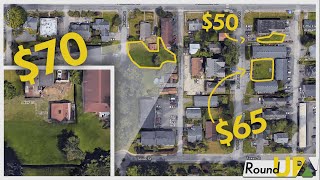
Gilly left the oil fields to start a lawn care business with his brother. He uses Google Maps to quote mowing prices over the phone without visiting properties, and plans to expand by renting storage facilities to scale operations.
Chapters
Hey, folks, Mike Andes here for another episode of the Roundup podcast. Today we're talking to Gilly, who started his business about six years ago. He was working the oil fields, and him and his brother decided to start this thing part time, doing mowing, doing landscaping. Three years ago, they went full time, and now they've grown the business to over 300,000 in annual revenue. They're trying to double that in 2022. Today we're going to be talking about how they've gotten a second storage facility, and they're using storage units as a way to grow their business, as well as how they've really professionalized their operations as they've grown the company and actually do estimates over the phone for mowing and for lawn care services. So it's going to be a great episode. If you're just getting started, you're thinking about getting started, or you're trying to take your business to the next level. They're going to be shooting for 600,000 plus this coming year, and I think it's going to be a lot of insight for all of us. Here we go.
Let's go.
Thanks for coming on, Gilly. I really appreciate it. And so maybe just kind of kick things off. Tell us why you started the lawn care business and what kind of got you into the industry.
So to make a long story short, we were. My brother and I were in the oil field for several years, and six. About six years ago.
We got really slow. So the oil field got really slow. So we just decided to just. It wasn't even supposed to be a business. It was just supposed to be something that we just started just to get by and to try to, you know, bring more income. So we went, we got us a mower. We had a trailer already, and we had a push mower. And we just went out and kind of just advertised it on Facebook with family and friends and got us a few yards. And that's kind of how. How it started.
And then how is it in terms of just like working with your brother, obviously, having to kind of, right from day one, I assume, provide and kind of replace the income you were making previously from your job in the oil industry? Was that difficult that first year or two, or did you already kind of start with a run, kind of a Runway, doing some of the lawns on the weekend and kind of easing yourself into it?
Well, it was pretty hard at first. Like I said, we were slow. So we had that time to just, you know, both of us, you know, help each other out and but as we got, as we got busier with the oil industry, it became a little harder because we had different days offs. So whenever I wasn't off, he was cutting a few yards or whenever, you know, we just kind of took turns on that.
Awesome. And then, and then, did both of you at the time already have a family when you got the business started?
We did, yeah. Yeah. So we both had married and kids.
What'd your spouse think about that? Like, was it more difficult to kind of convince, like, hey, because I'm assuming the oil industry was a little more stable. You'd been in that field for a while. Was the transition to the entrepreneurship self employment side something you had to kind of sell them on.
For our families? Is that what you're saying?
Yeah.
Yes, it was. I mean, you know, we just like, you know, we like, I feel like we had our dream job, you know, like that was, we had great benefits, we had, you know, paid vacation and so it was, everything was there. So we felt like that was like that was a dream job, you know. And whenever this opened up and for one thing, I believe it was just God. Like, it wasn't. God was just aligning things for us to work for ourselves, you know, and we really started pursuing this landscape industry and it, we really liked it. You know, we liked the work and you know, our dream was to, to one day leave the oil field and just dedicate ourselves to, to just being, you know, self employed and having our own business.
So it was the numbers in those first few years in terms of revenues and were you focused mostly on the, the residential mowing side or what was some of the services you were focused on at the beginning?
So the first three years. So we've been in business for six years and the first three years, I really don't want to count them. I mean, we were in business and we were, you know, our LLC and things like that, but we, we didn't keep track of things like whatever money we were making, it was for us. So it was. And we, of course, we learned a lot from that. You know, it was one of those things that, that we just wanted to start just to, just to get us by until the old industry picked back up. And the last three years was whenever we really started saying, man, this is, this is it. This, this is a business that we can, that we can live off of and, and make great income. So the first three years, to be honest, we don't even really know. I want to say somewhere around 20 to 30,000.
And I have it Somewhere we used to use yard books, so I had some. Some of that notes and stuff there. But we kind of got off that we're using Java now. So the.
Starting in 2019, like, we made 100, I want to say 137,000. And 2020, we went up to about 196. And then 2021 was like 340.
So it really grew these past three years. And that, you know, that first year in 2019 was whenever we were like, man, this is it. We can. We can really, you know, make a living out of this and doing what we really like to do, you know.
Did you feel somewhat vindicated in 2020 when the oil industry probably also had a massive slowdown and now you had. You had the business actually to fall on?
Yes, yes. So a few things that we didn't mention in 2020.
It was my brother and I and one employee, and we were still in the oil industry.
We left for a little bit and then we, you know, we came back still doing the long service. We met this great guy that helped us out. And in 2020, I would work seven days. Seven days and be off seven days. And the seven days that I was off, I was doing long service and my brother was. We were alternating. So he was working seven days that I was off. And then we would kind of alternate. So it was just two guys in that year, 2020, basically, two guys, you know, us and then another guy. And in 2021, in. In March or in April was whenever we just decided to just quit the old industry, you know, and go full time. So this is what was.
What was sort of the deciding factor there. Like, why did you go full time then Was just a matter of, like, you knew that's what needed to grow beyond just the two of you or what was kind of that deciding factor.
The main thing was, was our, you know, we were growing so quick as well, just for. For being two guys. And that we weren't really pushing for us to grow. It was just word of mouth and things like that that were just, you know, what was coming in. And also our schedule, like, our schedule in the old industry was really, you know, it was bad. Like, we were. Sometimes we ended up working 30 hours straight, you know, and, you know, working night shift and things. We didn't have a consistent schedule. And that's whenever we decided, like, man, let's do it. And I believe we should have done it, you know, maybe a year back ago, you know, maybe even two years back. But it was. It was kind of like a, you know, I guess sometimes scared, I want to say, or, you know, just afraid to take that leap, you know, into just going full time.
Do you feel like it was helpful having those few years where you kind of doing it part time though, with your job? It just in terms of confidence knowing that you would have a ton of work when you did go full time. Was that helpful at least though, from like a financial or even just a fear kind of factor of going full time?
Yeah, definitely. Definitely. Like, you know, it helped so much because like you were saying, we gained confidence and giving better estimates and just having that, that conversation with customers and trying to sell work. So yeah, definitely. Those first three years were real critical. We made so many mistakes and we. Those have helped us so much, you know, because we. If we would have went full time then, you know, I don't know how hard it would have been, you know, for us.
Last year, I assume you did you have one or two employees then.
So, you know, whenever it's two employees and my brother and I. So it's four of us now. The, the third, you know, the. Our second employee, I want to say he came in the end of July and so he's worked with us throughout the whole season, you know. And so it was three of us, I want to say, the first half of the year, and then we, we added someone else.
And then this year your plans are you want to double the business. So I'm assuming probably like 600,000 or so is the goal. What steps are you taking from an infrastructure standpoint, whether it be trucks or a shop space or what have you been doing? Just kind of allow and facilitate that growth? Like, are you operating out of a garage? Are you operating a storage facility? What have you done from an infrastructure standpoint to make sure you can continue to grow?
So the steps that we've taken now is we've doubled our storage space. We're actually here in our storage. We operate out of a stor storage facility and we have one and now we're going to have the one right beside it.
How much do you pay for those each month?
We're paying like 160, right? About 160amonth. So we're going to have the other one be another 160.
How many square feet are those? Like 10ft by fellow.






