using SIMPLE SERVICES to reach $5M+ in annual revenue 🤯
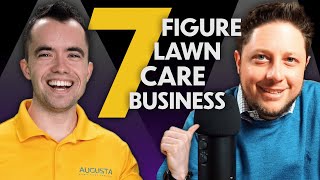
EJ McCoy built lawn and home-services businesses to over $5M annual revenue by starting with mowing as a teen and adding pest control and pet-waste removal. He scaled using H2B visa workers and subcontractors, survived a 2016 visa shortage by rapidly recruiting, and financed growth mostly through vehicle debt while exploring SBA loans.
Questions this video answers
Over $6 million in annual revenue.
Over 35 employees.
2019.
~$100,000 first year; 2007 ≈ $135,000; following year ≈ $225–250k; then ≈ $300–350k; by 2011 ≈ $500k; 2012 ≈ $1 million (first million-year).
Used H2B in 2013, 2014, 2015; got away from it in 2016 due to visa shortfalls.
Chapters
Hey, everyone, it's Mike Andes. Another episode of Roundup. This is a great episode. It's the largest company we've ever had on an episode of Roundup.
You're in business and you don't have to work for anybody and you make the same amount of money on a fraction of the time. And he created a Monster.
There's over $6 million in annual revenue, over 35 employees, and there's a multitude of different outdoor services.
$25 quarter acre lot that includes not only your MO, blow and go, but it included, man, I'd trim your shrubs. I do just about anything.
It's going to be an absolute game changer. A podcast. Make sure you take notes on this one here.
Hey, ej, how's it going? Maybe kind of walk us through how you got started in lawn care. Obviously now a very large company, McKinney, Texas. 35 plus employees, 6 million in revenue, and really a lot of different services that you're offering. How did you get into the original part, though? Getting started in the industry?
Yeah. So I started. Well, I started pushing lawnmowers, you know, 10 years old. And then fast forward a couple of years and I get really excited to be able to, you know, go to the local grocery store and start making some money at 15. And I show my dad my plan on all the money I'm going to make working the maximum 20 hours a week after school. And he said, EJ, just keep mowing yards and mow four yards a week and you cut your time in half and you're in business and. And you don't have to work for anybody and you make the same amount of money on a fraction of the time. And he created a monster.
And so then did you grow that same Chorby? So Torvy's the name of the company did you start?
Not at all. So, gosh, it was all sorts of things back then. It was McCoy Lawn and Garden, McCoy Lawn and Landscaping. I got out of it. I hate it. I hated the business in general for years because I thought there was such something better for me, something sexier. And no, Chorby didn't. Wasn't founded until 2019. Just, just coming up on now, three years ago, Emerald Lawn Care. When I was 21, I incorporated with an LLC, Emerald Lawn Care. After going back and forth doing different things, I incorporated Emerald Lawn Care and said, I'm going to do this until new business opportunities arise, until something else comes my way. And I finally kind of grew up a little bit. Not a lot, but a little bit and, and decided that I'm just going to do this until something better comes along. But this job thing is not going to be for me. And so I still had a few jobs after that, but not many. And that was 2006 and fast forward four years or so. I've got about a $400,000 lawn mowing business, three or four trucks here in North Texas and don't even have a website. I'm not terribly tech savvy, although I love to think about the future and strategize and I see the value in it now. Back then I didn't and so I don't even have a website. And I had a good friend that I had met five years ago through church, through ministry and he was still in that ministry and was looking to get back in the business world. And at that same time I just bought my first house there in McKinney and right down the road was this pet waste removal business that I kept seeing advertisements for. Pet waste removal. You familiar with that industry?
Yep.
And so I thought that there was something to that and I had this good friend of mine and I said, look, help me build this mowing business and then we'll partner completely separately and we'll start this pet waste removal business. And that's what we did. And so he later on, a couple of years later, through basically sweat equity, got ownership in Emerald Lawn Care. And we were also partners in what is now today Scoop Soldiers. And we've built those two businesses along with a spin off of our, of our lawn care business, which is executive lawn care. So we operate really three businesses in the service industry.
All, all kind of in the service industry. Although very unique in their own brands.
Totally. I think one of the things that is unique about even having you on is a lot of times we talk to smaller or more importantly younger founders. And that is in terms of two, three years in business, four years of business. What's unique about I think your story is that you've been in business really for 14 plus years and is one of the few people that actually was in business be during the recession. The longer one, you know, 2006, 2007, 2008. I know you were smaller at that time when that was all happening, but do you remember some of the kind of the struggles there? The reason I bring this up is because I really feel like for most founders, including myself, like I didn't have a big business when 2008 recession was happening and I've gotten kind of used of a great economy, great Housing market, money's there, economy's hot. What was it like though, during that time when everyone's house prices were plummeting? You know, there's a bazillion houses for sale on the market. Everyone was afraid of their job being lost. Growing the business at that point, what was that like?
Yeah, so I was so young and immature in business in a lot of ways. I've often looked back at that and thought, well, I was using that to my advantage. I was cheap, I was really inexpensive. I mean, I can remember my first advertisements were like $25 quarter acre lot that include not only your MO, blow and go, which was kind of that standard, but it included, man, I'd trim your shrubs, I'd do just about anything. And of course I quickly figured out I was going to go broke doing that. But the.
Economy at that point, I was so naive and so broke, 23, 21, 22 years old, that it probably, if anything, did me favors because I was smaller. That's the only way I can look at it and I will. I've never. I like your talk about I'm still somewhat young, although I am old in some ways, but I'm still somewhat young. I also have had a good, pretty, pretty good, you know, in my business life. I haven't necessarily experienced a significant downturn because like you say, I started, I technically started in 06 before that, but I wasn't really fully building my business until oh, 70809 coming out of it. And so I didn't know any different at the time.
Absolutely. And then as, as the business grew. When was the point when you started adding these other services? I know obviously added the pet base. How big was the lawn care side before you did that? And was it something that you're, hey, look, it's a good idea to diversify, go into these different services or was it too soon? What was your experience adding a completely different, not just service, but almost like you said, a completely different business name, entity, et cetera?
Oh yeah, no, we could talk probably for an hour on that. I'm going to keep it short, real short here though. But we could talk a lot on that.
We had a long line of learning here. And so we actually went in the direction of what most people do and I would generally advise most people to do, and that is to focus on a handful of services and do those things really good. We, I believe, like you really liked the residential and ongoing revenue, the maintenance, the ongoing revenue of maintenance. So I started out doing landscaping type stuff, pulled Away from landscaping, focused on residential because it was ongoing. I could print a list every week, hand it to my crews and go to work building my business as opposed to having to be out selling landscaping every single day. And so we really kind of. I read the book Good to Great. I'm sure you've read that book. I joke now that I went completely against that book at Chorby, but I read that book in 2012 and we were real focused on that for a long time. It's what we with Scoop soldiers, it's what we focused on still. I mean we're just now introducing like our third service and we've been in business a decade. I mean it's very focused. So I'm the big believer in that. But what we learned as 2017, 2018, 2019 were hitting. We had matured as a business. I had matured as a leader, my business partner. We had both matured. And I was bored. I had a team like, like kind of like you've talked about. I had a team that was doing most of the day to day work, whereas just a few years before I was very reactionary. I had, I had bad culture and therefore I couldn't keep anybody. And so I was trying to figure out how do I, how do I do as little as possible for the most bang. Well, it shifted to where our culture was so good. It was like, well, what do we do next? What, what can we go into next? What can we build upon next? And that's where Chorby was born. In 2019 was my team and I, we essentially created the brand from scratch with the concept that we can go into all home services over time, all of them. And then like you, the vision is franchising. I'm a huge believer in franchising and what that can do for both franchisees and franchisors. I'm a huge believer in, in what that, what that can do. Now it's not for everybody to be a franchisee or a franchise or it's not for everybody at all. But I'm a huge believer in that. And so that's part of the long term vision of Chorby is to, is to franchise these services so that you get the passion in each of those individual service lines, each of those individual skill traits. But you also get something very unique in having a, what you call a command center. I think that's actually a really good term for it by the way. We stole that. Haha. But our command center, I hate call center, but a cohesive call center so that you know, you, you can call somebody for junk, one company for junk removal, mowing, or you name it.
When, when you were kind of starting 2006, as you begin to actually grow and really make it a legitimate business and starting to scale up, how long was it before you really felt like it was no longer a question about the financial kind of bearing of the company is more about scaling, growing the vision. And mostly my intention in asking that question is for the person that's like, okay, he does 6 million revenue. I'm going to do that by 2025. And like, here we go. What was that process like, maybe even potentially if you, if you're willing to kind of give a breakdown of the first five to six years of growth, what that looks like in terms of revenue.
Absolutely. It wasn't impressive. I can say that. Look, like I mentioned a minute ago, I started in 06, 21 years old. It wasn't until 2010 that I launched my first website. Paid a thousand bucks for it, did not know what the term SEO meant when I launched it. I was a year later.
So I had a long. And I'll give just about anything. If you want to give specifics or questions, I'll, I'll answer just about anything. But I was 100,000 the first year, 135,000, I think that was, oh, 7, 06. I bounced around. I barely even operated the business the full year. But 07 was first full year, 135,000. The following year we did, I think 225, 250. We doubled. Following year we hit, you know, 300, 350 and we kind of bounced in that range until 2011 until we really had some growth into about a half a million. From there we 2012, we did a million for the first year, so we're hitting our 10 year mark. Being over a million, that's a major milestone.
Of course you and I have both heard and I think you think you would agree. I definitely agree with the concept that the most painful point of your business is under a million. 400,000. 300,000 to a million is the most painful point of a business. You've got to get it scaled up or figure out your systems and your processes and stay where you're at. Does that answer your question?
Absolutely. And when was it that you were like, hey, obviously 2019 with tour beginning started. Was that when it's like, hey, we're going to really scale this or was it always the intention? Like you already had quite a few employees and was there ever A decision. It was like, I know that in order to get the business to the goals I have, I'm going to need to go from a few employees or a few crews or you know, even five or six crews for a million and I'm going to actually scale this up. Like a 5 million dollar business does not operate like a million dollar company.
Not at all.
Hey guys, hope you're enjoying this episode so far.
If you guys are a fan of.
This longer form content, make sure to drop a like and subscribe down below. It really helps out the video. If you guys are looking for a leg up this year on the competition, check out Lawn Care Web design. It's a great way to build a custom website and keep your SEO up to date, making sure that you get local customers in your area. Check out lawn careweb design.com if you need anything else. Mike, Andy, check out my gandies dot com. Get back to this episode.
A $5 million business does not operate like a million dollar company.
Not at all. Right.
What was that transition and the goals and thought process?
That's been the biggest challenge and the biggest lesson and the biggest growth curve for me. And that's people skills, soft skills, leadership skills, building a culture. And so I've personally and with my business partner and I both, we've always been extremely ambitious individuals. I mean where we're at now, like yourself, not even like we're just getting started in a lot of ways. And so we're very ambitious. But at the same time we were also immature and didn't know what we didn't know. And so when I think, I think back to 2016, so 2012 to 2016, we've kind of got an office. We're experimenting with, you know, corporate culture. We were using H2B visa for all of our MO crews. You know, we're learning about leadership. We're in our late 20s, early 30s, 2016 and beyond. We start figuring things out management wise, we start building that culture. And with that culture and with having the time to sit back as a business leader and think about what is the next two years, five years, ten years look like. That's when we really started seeing the bigger picture. The team helps us, helped us see that bigger picture by allowing us to have the time to do that as opposed to putting all the weight on our shoulders.
Was it about year six or seven when you added the pest remove or the.
That's, that's about right. So 2012, we added lawn care. 2011, my business partner comes on board with Me and he's, and I'm paying a company, I'm subbing it out because I, I, I hate tests. I'm not very good at test myself. So I was like, I don't want to take that test. I don't want to mess with that regulation. He said, Look, E.J. we're paying all this company all this money. Let's do it, let's do this. And I said, well look, you go get licensed. And that's again part of that sweat equity. I said, you go get licensed. Well, that was 2012 when we started that. Well, pest control in the state of Texas is regulated right alongside lawn care. It's, it's a little bit higher regulation, a little more, but not by much. And so we just kind of naturally evolved into the pest control and pest control still small. It's our third biggest operating line, but it's still, only, it's still under a million. You know, pest, mosquito, termite, that, that department is still under a million in itself and has been challenging in a lot of ways. But yeah, it kind of grew right along there with lawn care. And like you mentioned, we really started focusing on it in 2016, but we offered it starting about 2014, 15.
And the first couple years of that new product line, was that more of a learning experience or was it a matter of actually being super profitable because you just upsold your existing client database into a service that's high margin.
Lawn care was like that. Pest control less so because it was slower.
So pest control, it also required another line of skill set. So pest control was, has been a little bit more of an investment. It's been a little slower growth.
It requires a whole different line now lawn care, Lawn care was much more so when we really pushed lawn care, you know, we learned mowing is a low hanging fruit. There's a lot of opportunity in mowing because it's low hanging fruit. Every single blade of grass has to get mowed by somebody. And then we quickly learned that at least in our market, a huge percentage of people will eventually sign up for your lawn care service along with that.
Less so Pest. Pest is a whole different animal in the sales game.
Got it. And is that typically because it's more of an intent based like someone has a pest control issue, they go searching for pest control versus I can just upsell customers because they all need.
Exactly. Anyways the pest control business again, if you see a bug, you want a pest control service. Until then, why do you need a pest control service? Whereas lawns, you know, you're going to get weeds every single year, no matter what. And of course, most of the area we service HOAs kind of keep a handle on requiring you that lawn care to get that lawn care service.
I'm interested. Over the past couple years, I know you mentioned the HTB program. Have you pivoted away from that? And then more importantly, from a global perspective, the hiring situation at your size is going to be magnified, especially if you did have to move away from that program. What has that been like the past couple years as so many people have just become chucking a trucks because they got unemployment. They, you know, their job.
Right.
Their job dropped and they got unemployment checks. They went and started mowing lawns on the weekend. How have you dealt with that being your size, which is obviously magnifies the level of which this labor crisis is sort of impacting you.
Right, right. So I'll start with the first one, the H2B aspect. So rewind to 2013. As soon as we hit around a million dollars, it become clear, you know, I had been using one guy. He was actually, he's still. He's still one of our subcontractors today in his own business, but he was our second truck. And we kind of used him as our pipeline. And we kind of had bled out his pipeline of team members. Right. Of labor, of skilled labor. And so this is 2012. We realized we need H2B to get. To do it. Right. To continue to grow, to do it legitimately. And so we used H2B 2013, 14, 15 and 15. It gave us major problems. Luckily, we had two different H2B visas. We're about a two and a half million dollar business at this time. We had two separate visas, each with I think 15 or 20 guys on them. Well, we only got half of them. We only got one visa. Of course, a lot of people have.
Experienced that in like 30 seconds. Just for those who don't know, explain that HDB program, how it works with the lottery system, etc.
Absolutely. Yeah. So it's the best example or the best definition I'll give. So it's done through the Department of Labor. It's primarily the best country to get temporary work visas from is Mexico in most cases. But it's temporary labor legally done through the Department of Labor. But you have to go through a lot of bureaucracy. You usually have to hire a visa company. They help put you through the process. It costs. Back then it was around 1,000 bucks a person. Obviously you get volume. So if you have more people It's a little less, but. But it gets you legal labor from Mexico oftentimes skilled, not all the time. And look, if you're, if you've got to me, if you've got in house team members mowing volumes of, of, of mowing with volume, huge volumes of mowing, you're either using subcontractors, you're using H2B visa to some extent. I could not imagine doing it any other way. That's personally my, my experience at least down here in Texas. But that's H2B. We got away from it in 2016. Not, not on purpose. We got told. So our weekly mowing season starts the first week of April here.
I remember this, I remember this week. I literally remember this week.
Yeah. So yeah, I'm not the only one with this story, but this is 2016 and it actually has happened a few years since to some of my competitors and such. But 2016, mid March, we've got three weeks before weekly mowing. At the time we've got about 1250 weekly lawns that will start week of April. And we have six guys, we need 35. And we find out that those 30 other guys are not going to make it. We had trained them, they were the same guys from previous years. They were skilled guys, you know, had everything worked out. But because of essentially being in a stack of papers on the Department of Labor bureaucrats desk, I guess we weren't going to get them until the end of May because of delays. Of course the grass is still going to grow. So we rushed out inside of three weeks with business cards. This is something I don't like saying, but I do like to tell everybody. I've usually opened everything. This is one that's a secret, but no, I'm going to say it anyways. We rushed out in three weeks and basically went talking to every single person that I could that had a lawnmower in the back of a truck. Had to be a commercial lawnmower, but with a lawnmower in the back of a truck and essentially showed them our density, our route densities and everything else. And recruited and we got the work done. I think at that same year is when I spun off Executive Lawn Care. We had bought this company years before acquired it. It still had this awesome value in this website, but it was sitting there, it was stale. And I had a buddy that wanted in the business and so in a lot of ways he was our first franchise, if you will, because he bought in and took the website over and built this awesome business right Alongside ours. Anyways, that's a side note. Side note. But other than giving 200 bi weekly lawns up to him, and we all know what bi weekly yards mean, other than that, we managed to get all the work done. And since then we've been subcontract almost 100%. In fact, between both companies, we mow about 6,000 yards a week. And between both companies, we have one lawnmower, 21 inch. Toro. Let's go. And so office.
That's the office out front.
Yeah, exactly. Yeah, exactly. And so that in a lot of ways, especially moving into what Torby wanted to become, that was a blessing because it wasn't what we wanted to do necessarily, but it ended up one of the most challenging parts of our business and times of our business. We had just bought brand new trucks, you know, we just bought brand new Toyota Tacoma trucks, had them all rigged up, and just, you know, bought new equipment every year because we made sure to have all the best. And, and we had to phase through, phase out all of that stuff pretty quickly, especially, I mean, we weren't debt free, so we had to get out of those payments pretty quick as we move to that contractor model.
And even in the past couple of years, I know there's, there's quite a few companies I know that use this contracting model, and it's actually pretty popular in your area for some of the larger companies. Was it difficult to convince contractors to actually work with you when there was so much demand for labor that they could just go out, get the customers themselves and have the margin to themselves or what, what are you doing as a, A, you know, contractor to give a subcontractor value and they'd actually rather work underneath you?
Yeah, no, that's, that's always been a challenge. And you're right, it is a model. It's been a model that has definitely worked in this area for a number of companies, including ours.
We take care of them, we do what we say, we communicate. I've got an awesome, awesome. We call maintenance, maintenance division leader, and he handles all of these contractors. And they're doing everything from bush and bed mulch to mowing. That's it. Bush and bed mulch and mowing. And we take care of them. We do what we say. I've actually asked that question here recently and I. And to Luis, the gentleman that's been with me for almost 10 years and that manages most of these guys, I said, you know, have we had issues? Have we had guys come to us saying, well, you know, we need More we need this, you know, whether it's gas prices or inflation or anything else. And he's basically told me, yeah, he goes, he's had a few guys come to him and tell him, look, we're getting offers for this much, we're getting offers for this much. But we're staying with, we're staying with you because I have. You've never missed a paycheck. Every single Thursday, like clockwork. That check is there for them. Even early on when we were still figuring out that system and process, I can remember being on the phone, I was away and I can, I couldn't. I was the only signer and I mean, I drove out to the contractor to where he was because we made a mistake and made sure he got paid on time. That's extremely valuable. Dense routes is also an easy sell. We've got dense routes. We're covering all of the admin in a lot of ways. If I understand the way your command center works with your franchisees, we're handling all of that stuff for these contractors. So that at the end of the day it, it's a good partnership. It's a really good partnership. And so they stick around, by and large.
Absolutely. And so going forward, Obviously, you know, W2 is not necessarily going to be your problem. It's going to be finding subcontractors. Do you, have you found any issues as the labor market has heated up on the, even the W2 side that some of your subcontractors are going and getting jobs now? And it's actually because now they're competing against a potentially a 30, $40 an hour position someplace else.
You're not going to get those kinds of wages in North Texas. The market's just too saturated, if you will, so we don't see that often. If anything, it's more. It's going to another guy that's got a bunch of yards that they're going to be a subcontractor for. Most of our contractors, not all of them, a lot of some of them business owners, you know, they got full on businesses that they're running and would they use us as a stopgap until they build up enough, enough revenue. Now I'll also mention because we've talked a lot about the subcontractors on the maintenance side. We run a, you know, little under $2 million in lawn care, which is all still W2 labor. You know, we've got the lawn technicians running, doing fertilization, weed control and flower bed weed control. And Those guys are W2, excuse me, yeah, W2, they're driving our trucks, they've got benefits and everything else.
That because of our experience and the fact that this industry has just always had labor challenges, we've been generally fortunate that, you know, we haven't been hit as hard as other companies and other industries. Now it is about to be springtime and there has been a kind of a, a bit of change in turnover here for us in the last 90 days. And so we are a little short right now. But we have not experienced, Even on the W2 side, quite the, the issues that a lot of, a lot of the rest of the entire economy has seen, let alone these in this industry.
Cool. As, as kind of going forward. As you look into the future, do you see more of a consolidation of companies into similar models like Torby in terms of having a player that does 10 million in a market and has a bunch of subcontractors? And if so, what does that speak in terms of brand power versus a company that's simply going after direct marketing, trying to do door hangers and flyers and what's the power of that brand? Because obviously that becomes a moat to anyone else. Competing with you is the fact that you're already so established, it's like, why wouldn't you just be a subcontractor instead of spending five years trying to achieve profitability yourself? What do you think that's going to become a trend across the country?
Yes, I, I smiled as you were asking that question because I mean you, you speak in my language this all the time that you know, you look at every other industry, look at any industry, every industry, all indus industry has a. There's a cycle, there's a life cycle. The skilled trades industry is still, by comparison to most industry is still extremely fragmented and is, is really not touched by technology yet. They're working on it. A lot of people spending a lot of money in a lot of different ways. I'm not particularly impressed by most of what they're trying to do. You know, most of them are basically copying home advisors, but home advisor. But nonetheless there is going to be a consolidation. I use the restaurant industry as an analogy I often use. I'm not that old. But you know, you look back to the 60s, 50s, 60s, 70s, it was all mom and pop restaurants. There was no such thing as chains. Now you have mom and pop. So you're always going to have mom and pop, but you also are going to have consolidation in the Augusta Lawn Cares, the Chorbies. You're going to have consolidation. And as this in as these industries continue to professionalize, both professionalize, but also as technology continues to come into the industry and as things get, get worked out in that regard, the volumes are going to grow and certain companies are going to reap a lot more benefits. You'll still have mom and pop, but yeah, you're going to see a lot more consolidation in the next decade to two decades, I believe. I also believe franchising is a key to that. I don't believe that the valley crests of the world are going to be able to break into residential. It's gonna have to be franchise type models. That's my opinion.
When it comes to someone that is independent or is, you know, you know, like, hey, I'm never joining a franchise, I'm never being a subcontractor. What do they do that we can't? Or a large company can't? I should say a company like Torby is not able to do. What should they be focusing on to build a niche. And they're not like, they're not competing against you, but they're still going to be very profitable and make a good business. What are those services or models that is going to work well for that independent operator?
I'm a believer in recurring services first. Not always, never mind. I'll retract that. Because you can be an awesome landscaper and be a very skilled artistic landscaper. So I'll retract that. But it's that right there you've got to be creative, you've got to be you. I would focus on density. You know, if, I mean, you know, look at what we're building a territory at. Those territories can still produce million dollar plus dollar businesses. And so if you imagine, if you plan to solo operator or maybe just have one or two trucks, you can do that. In most parts of this country, urban or urban and suburban parts of this country, you can do that in like two zip codes. So become the guy in one or two zip codes, maybe five, but, but keep it small.
Absolutely. Very cool. Awesome. And then tell us kind of before we wrap up a little bit more about your plans for this specific year. As from an economic standpoint, what we see going on from a debt perspective, a company your size, is it something that you're looking at right now with interest rates going up? What would you say to someone that has debt, is trying to either get debt or get rid of debt in the environment that we're currently in? As you've obviously scaled the company and potentially use leverage? What's the relationship been with debt as you've grown the company.
Absolutely. Now this is actually one that you and I have a slightly different path on. I've built my whole business on debt. I haven't had the discipline that you've had, quite frankly. I think there's multiple right ways to do things. I have a tremendous respect for everything you're doing, by the way. But, but I've done a little differently on the debt side. I've always, I say always. Starting in 2014, I started buying brand new trucks. Interest is cheap, they're easy to get. I don't have to go shopping for them. I know what I'm getting. It's convenient, it's turnkey, it's worked for us. Of course, in this market, those trucks are worth more than when we paid for them. But we utilize debt. Interest rates. I'm a little bit nervous, but they're going to creep up. It's not like they're gonna, we're gonna wake up one day and they're gonna go, you know our rates right now we get three and a half percent on our trucks. Five year terms almost, if anything down. So we got great terms. Okay, that's going to go to four and a half percent. Okay, it's going to go to five. Okay, it might, you know, by a year from now, two years from now, it can be six. And yeah, I'm going to start thinking of my business strategy. I was just joking with my VP of operations today that I might have a whole different outlook on debt. When it's 7 and 8, 9% interest rates. That's a whole different game. You can't, you got to be careful on what you're leveraging at that. But no, we're, we're, you know, know, we're doing a lot. What you're doing, we're raising, we're going to the sba. Actually, I think like you're, I think you're doing that. We're working on that. 2022. I do want to get an SBA loan has nothing to do with interest rates or anything like that. It has to do with the timing of our business and where we're at. And the fact that we've got a lot of, we've got a lot to do and a lot of money to spend on what we're trying to do.
That's awesome. Well, if anyone wants to reach out, whether locally or online, where can they reach out to? EJ And I appreciate all the, the tips and things that you've shared.
Absolutely. Well, look like I said, I really like a lot of the stuff you're doing.
You probably do it far better than I would be doing it. But I am doing it and working to do that because I do see a value in this. I see a value in professionalizing this industry. I see a value in influencing this industry and getting out there. And so EJ McCoy.com we've actually recently launched that. We've got a handful of videos and podcasts pertaining to different things, everything from our vision in more detail about my story and our story, to what we plan to do in the future. Future. And so I'm a big believer in media as well. And I think obviously you are as well. So like I say, I give you major props to what you're doing. I'm a bit. I think you're doing it right. I think your philosophies are right. And I hope to see you some more. I hope to maybe get to see you and meet you in person or, or at least talk with you more offline.
Absolutely. Thank you, eg. I really appreciate having you back on sometime soon. Another great episode from Roundup here. I appreciate all of you watching, watching and listening. If that was interesting to you, check this video here for very actionable steps of what you need to be doing this time of year because a lot of people are being lulled to sleep right now when there's certain actionable items that need to get done in your lawn care landscaping business to ensure that this year is successful. Check that video out right here.






