VR Training, Running 24/7, and Operationalizing - Episode 090
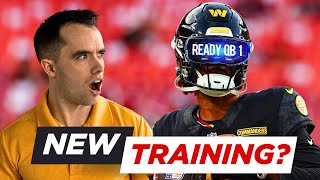
Jaden Daniels used German VR firm Cognolys at LSU to add 250-300 mental reps per week and reach defenses 80% faster. The conversation explores VR's limits beyond football, then shifts to running metrics: heart-rate zones, VO2 max, and how to operationalize health goals through inputs instead of outcomes.
Questions this video answers
2023
Cognolys (described as a German VR company)
About 250–300 reps per week (transcript cites 250; speakers mention 250–300)
Speakers mention increasing headset speed to 1.25, 1.5, 1.75 and up to 2x speed during training.
20 minutes duration, 4% incline, 7 miles per hour (goal: complete all 20 minutes without stopping).
Chapters
He is ready. He is back. Mike Andes, welcome back. Another episode. See you soon. Unfiltered. How we doing? Good, man, good. You, you had a little vacation. You got a little, little fun in the sun as it were.
Yes, sir.
Where'd you go? You did a cruise?
Yeah, it was like a three, four day cruise down in the Bahamas. So super cool. Think of the whole family, all the kids are like at the right age for eating as much food as they possibly can and spending six hours on a beach.
So that's fantastic. So I, I would like to want to know what, what you think your over under was on ounces of steak consumed. I'm gonna put the over under at 148 ounces.
Oh, way more, dude. Way more. Just, just in two meals I had two 36 ounce steaks.
Let's go, dude.
Anyways, cool. Well, we are back and we are going to switch up topics. We've been all over the map. It's been, you know, politics season. We got President Trump in, we had our landscape Summit and Augusta owner Summit. So lots, lots going on. But I want to take a completely different route because it is close to the super bowl and I wanted to talk about something specific in football and not necessarily about like the games or Taylor Swift or Travis Kelsey, but I wanted to zoom in on one player and that is Jaden Daniels. So, so do you know much about Jaden Daniels or have you heard anything about his unorthodox training?
No. No.
Okay, so Jaden Daniels is a, the, the quarterback for the Washington Commanders is his rookie season and they just made it to the NFC championship, so they made it to the final four teams and his, he won the Heisman in college, so he's the best college player. But halfway through his college career, a lot of people had given up on him. They thought that he was not going to succeed. He wasn't. As you know, he was overhyped. He was a, you know, five star rec that's never going to pan out. Right. He fell off. Whatever. Well, anyways, at LSU he introduced or someone introduced him to VR training to get him back up to speed. So I sent you a link if you want to watch it and then we'll reconvene. I'll put it here in the episode.
Is the key to Jaden Daniel's success. Virtual reality training. Daniels is able to get an extra 250 reps a week because the Commanders invested in Cognolys, a German VR company that's revolutionizing football training. Here's how it works. Washington loads in thousands of plays into a VR headset that Daniels puts on, and then he runs through realistic plays in realistic stadiums to train his brain for games without risking injury. So if the commander's next opponent is a blitz heavy defense, they can program in that defensive scheme for Daniels to get reps against. And because it's VR, coaches can actually increase the speed of defenders coming at Jaden, so he's able to read and react faster than needed in real life, thanks to VR. Jaden said he's able to reach defenses 80% faster than he used to. So it's no surprise the same technology is used for military training, Formula one racers and pilots. Jaden first started using this technology back in 2023 at LSU and that was the same year he won the Heisman Trophy. With Daniels having a historic rookie season so far, should other NFL teams be investing in VR training?
I love it. This is great. I look forward to having this technology when it comes to lawn care landscaping. Yeah, just strap this on and in a couple days I will make sure you're completely trained up and ready to roll.
Totally that. And that was kind of the parallel I wanted to make. But it's very interesting that, you know, he. He had me kind of written off in the football world. He transfers to lsu. Lsu. This German company that was actually, if you look at it from the business perspective, this German VR company was failing. They were actually originally creating this product, I believe, to work with football teams in Europe, I. E. Soccer teams, as we would call them in America. And the product was just not taking off. It wasn't working. And I'm just kind of, you know, summarizing here. Some of these facts might not be 100 accurate, but basically they were like, hey, we were failing. But then we were like, hey, what? We pivot to a different sport. Let's try football. The. The head of, like, performance training at LSU was like, hey, this is interesting. Let's try it. And then he started working with Jaden on doing it. And basically what they have done is they increase the speed. So they would bump up the game speed in the headset to like 1.25, 1.5, 1.75 to where Jaden started doing reps at 2x speed. So the real game started to slow down for him and they actually would mess with him when he had the headset on, and they would. They would bring down the speed from like 2 to 1.5. And he would be like, hey, guys, you put slow motion and he's like, they're like, no, no, no, it's still 1.5. It's not in slow motion. So he was able to get extra reps in, as that video said. Like, he was able to get in 250 to 300 more reps than other quarterbacks would in traditional practice, as well as when he was injured. He was on concussion protocol for a while at lsu. He was still able to do VR training when he couldn't do physical training on the field because that's against NCAA rules. Like, he can't physically. He cannot step onto a field when you're in concussion protocol. Well, he can sit in a weight room and have a VR headset on. So what are your thoughts on this kind of new. Embracing new technology as a way of training, you know, top tier athletes?
Yeah, like, it's very helpful. So, like, I use something similar for the workshop. So we recorded the entire workshop a couple months ago, you know, and there's like a thousand slides. So we recorded the entire thing. And then I just listened to it all at 2x speed because I wanted. I knew I was going heavy on slides. I had no notes, so it was more a matter of like, I needed to kind of know the next few slides were going to look like. And I was trying to prepare for what actually did happen, which was my slide stuff was messed up. Like the confidence monitor, every time you went back, it would shift one slide forward and then you'd have to wait for them to manually change it back. So it really actually helps, I think, I think along with the other bazillion reps, I did. But like, I do believe that, like, me just listening back at 2x speed allowed it to in person. Like, once we were there in person, I was able to slow down and like, have. It felt much slower. And I didn't have a lot of like, oh, what was that next slide like? I think it happened twice in like hundreds and hundreds of slides where I was like, oh, man, snap. I forgot the slide was here. I already knew what the next slide was. And furthermore, because I had done it 2x, it probably helped a little bit. I don't know. I have no scientific evidence and I don't play, you know, quarterback where I have lots of reps around this. But it probably helped a little bit to know, like, okay, this is. This seems slower. I can take my time and think about the next slide. I can think about what's coming next and tie it in before I actually go next on the slide. Cause I know it's coming. So. Yeah, but it's great. Yeah, I love this sort of thing.
Yeah, I think it's super cool just looking at it because, you know, obviously he did win the Heisman Award, which is the most prestigious award in college football. So obviously he had great expectations coming into the NFL, but I don't think anyone expected him to take his team, his rookie year to the NFC championship and be in one of the final four teams. And yes, obviously there's natural talent, there's work ethic, there's so many different things. But if you, if you are any way aware of professional sports, one of the most common theme them themes that you see pro athletes talk about is, oh man, how was the transition from college to pro? They're like, oh, you don't realize how fast the game is until you're in it. Right? They all say that. You know, they all make jokes about like all these best, these best college players don't make it in the NFL because they don't realize how much faster it is. And so Jaden's using that to his advantage. Hey, it is a faster game, but I'm going to speed it up even more now. What are your thoughts on maybe someone that does that, but it doesn't, it gives the opposite result. Do you think that naturally everyone will progress and they could adapt to that more aggressive speed, or do you think it might hinder some people because it's just too much to process?
Um, I think it's, you know, by immersion. You're basically using immersion therapy. And so I think by speeding up, like you basically over, you know, over correcting. And so I think it's true, like I've always said, like the difference between where you're at now and where you want to be is skills. And how do you get skills? You get, you have reps. And so if you're able to get reps, and I'll use a football analogy, if he's able to get reps when no one else can, because the only way for them to get reps is to get step on a field, then he has an inherent advantage to be able to get more reps when people can't. Because your body can only physically take so much, but your brain can take substantially more in terms of the number of reps. Like you might be able to throw the ball 300 times a day without like injuring yourself or putting yourself injury, but you might be able to get a thousand reps if you have this virtually. And then your brain starts getting these other aspects of the game that don't require Throwing. So there are physical limitations and there are mental limitations. And typically your mental limitations are further than your physical ones. Especially as you start to have injuries age, you need to be in peak performance. You can't push the physical limits as far. And so, you know, even like when I was, I kind of just keep going back to workshop because I've been doing for a while. So it was a matter of like I knew I had exhausted just talking out loud. So I was listening to myself on the recording bunch of times. And I'll get the similar reps because my, I can hear very easily and I can do it at 2x speed and so I can hear the whole thing in one day. And so like, I think it's like how do, how do I take the physical component out and, but still have the mental reps because, you know, when people say, you know, football is too fast or like it's a big mental side of things, well then let's train that as many times as possible without exhausting the physical side of the body. And so this is why it's like even like let's zero back to like home services. And like if you're out in the field and doing, you're, you're a solo operator in the field, it's like you might be, be physically exhausted after 10, 12 hour day out in the field. But if you can tap into 12 hours of content and be listening and like flexing the mental muscle for 12 hours, like you have a huge leg up. Like there are very, very few people, executives or, or people are successful that can, can take 12 hours. And if you listen to things at 2x speed, you listen literally 24 hours a day of content while you're out in the field working. And so that would be a huge unlock to what kind of what Jaden is doing with the reps. Like if you get 24 hours of content a day, that's literally like two, three books a day. It's a couple podcasts that are videos. And so it's like how do I hack the mental side? Because your brain can take so much more reps than typically your physical body can.
Yeah. And I think I also draw parallels to what, what Jocko teaches in one of his books. And I'm blanking on the exact term he uses. But when he's discussing taking account for every variable possible. When you're taking extreme ownership over a situation is when you are planning for an event. So he would use the analogy of, you know, when we were planning to go do a kill Capture mission and we were going out with the intent to do something, we would plan for every single variable possible. What this kind of VR training is doing is it, is, it is allowing you to account for every single kind of binary variable possible. Like, okay, I know this receiver is going to run route A, this one's going to route in route B, this one's going to run route C. Now if the defense does something different, that's a variable I can't control. But if I can practice the A, B and C over and over and over to account for every variable that my team might encounter, then I'm already a leg up. Like you're saying, like you just, you can just slowly chip away at how you can have more advantages now. You'll never be able to account for every variable, but if you can account for every variable that's in your control, that's just going to put you so much ahead of everyone else.
Yeah, this is, this is the reason we have the coaching program inside of Augusta for owners, because this is the, this is the advantage of being a coach is you see, you see the game played over and over and you don't have to play every game, but you get to see it and you get to step inside the quote unquote goggles of the qb, in this case the operator. And so if you look at people like Alex who every single day are talking to hundreds of business owners and seeing lots of profit and loss statements and getting Q and A, and they're seeing all these different industries, the advantage of being a coach is that you get that perspective over and over and over and you get immersion therapy and therefore it sharpens your own game. And so this is why, like the coaching program in Augusta we started last year has now been almost a year we've had it in place. The advantage to the coach is they get to see so many reps that otherwise another player in the game only gets to see one perspective and that's their business. A coach gets to see 10, 15, 20 other businesses every single month. And that, that, that is the, the skill, that is the advantage of being a coach is you get to see the game from perspectives over and you get more reps without actually having to build the business.
Yeah, no, that's good. That's good. Yeah. So what do you, what do you think the applications for this are? I know you've talked about it loosely, but let's jump straight into kind industry or home services in general. What do you see as VR training being an advantage or a disadvantage? For our industry, for home services. From a training perspective, from an efficiency perspective, where do you see this being implemented, if ever?
Yeah, I think there are more physical components of training in our industry compared to mental in something like football. And so muscle memory is a big piece of this. And so I think there's a mental training and then there is, you know, physical training, like learning the muscle memory. Like if he does not throw the ball, regardless if he can read the defense, he will not be able to execute the play. And so you still need to know how to physically do the work. You need to physically know how to pick up the weed whacker and mow the lawn, et cetera. And you can visualize that, oh, you want to watch videos all day long. But like, you still need to have the physical muscle memory to do certain tasks. And so I'm looking forward to when this gets integrated with more real world things. Like, for example, you hold a weed whacker and it sees that you're holding a weed whacker and you, you weed whack along an edge, quote unquote, which is you're in the middle of a, an open a room and you're weed whacking an edge. And it shows exactly what's going on. It can see what's going with a mower. Like you hop on a mower, a real mower, strap on the goggles and then you actually are playing with it and it's, and it's live and you don't need a 50, $100,000 piece of equipment. Like, we're a long ways from this because the equipment typically, in order to be able to assimilate the real world is very expensive because it needs to be real, real time. It can't have a lag because if you get like a one second lag on a zero turn, that's the difference between useful and completely useless. And so I think this is like, you know, it'll definitely keep improving. I think that down the road there'll be people that, hey, okay, we're gonna take a software application, put on top of this VR headset and it's going to scan the mower that you're currently sitting on. It's going to, you're going to do, okay, go all the way forward, okay, go all the way backwards, okay, do a left turn. It's going to scan all of that and know, okay, these are the controls and now we know what those look like. And then it would have a software application to be able to connect the two. That looks Very interesting. We are a long ways away from that. And I have a feeling that robotics might actually beat this out in terms of the cost effectiveness of this type of equipment.
Because how do you monetize this? This is the thing who wants to build that software package is someone either A, has tens of thousands of employees and they have actually millions of dollars worth of cost of training, or B, again, what I'm saying is like, okay, if we're gonna save millions of dollars, why not just put that towards robotics, right? That actually does the actual work in perpetuity versus just the training element. So I have a feeling robotics might beat out where this actually becomes where, you know, landscapers are getting trained, you know, in a blank room with a, a mower that doesn't turn on and a weed whacker that doesn't actually turn on, and they get trained up. I think that that is, if that application was to be played out, it'd be 15 to 20 years from now. And I think in 15 or 20 years, we figure out ro to where the human element is diminished and that we're not doing a lot of these things. We're either doing it, controlling it, we're doing line of sight, or we're just monitoring the robotics. So I have a feeling it might not, we not, might not ever actually see that application.
Yeah, and I could see that because with this VR training, like with, you know, football, compared to lawn care and landscaping, obviously it is, you know, football. You're, like you said, reading defenses, you're seeing what your receivers are doing, you're seeing what blitz packages are coming at you. Whereas with lawn care, it's like, okay, we always kind of trim one way, we always edge one way, we always mow, you know, one way. And then there are different patterns and there are different obstacles, right? There are different trees, different shapes of lawns, but it's always kind of done the same way. There aren't necessarily as many variables that you don't control. So then it becomes, well, is it worth it to invest in all of this technology that you're saying to offset training costs, or is it better to just get that employee out there, have a less efficient day? Right. Which is kind of the philosophy now is like, you put the employee in the truck on their first day, it's on the job training. Yes, you're not going to be as efficient, but, you know, hopefully they'll get to learn some skills. And, you know, our philosophy has been, you know, at your locations is, okay, when we get a new employee, it's like you're on the trimmer all day. Like, you don't touch any other piece of equipment, maybe the blower. And then it's like, okay, on day two, maybe you touch the push mower. Okay. And then maybe on day three, you touch the zero turn. And then maybe. Right. It's like a slow kind of stackable progression. And I don't know if I see the applications from just a trade off perspective of VR versus just on the job.
Yeah. It simply comes down to a return on your capital. And so if you have to spend $100,000 on a piece of equipment, well, that means I need to be able to train at five people a day for two years. Well, in two years, that equipment ancient. And also like, which businesses in one physical location are getting that number of employees? Very few. And so I, I just think that it might be, I, I would love for it to happen. I just think that robotics will probably beat this out in terms of, it's like if we're going to have all this equipment to basically, like, here's the thing. The reason the return on capital doesn't look as good is because you're probably saving between 2 and $4,000 on training someone how to mow grass versus if I can figure out a robot I'm replacing someone that would otherwise cost 50, 60, $70,000 and be much, much, much more infrequent in terms of their reliability. And so the cost benefit analysis of buying a $100,000 robot versus $100,000 piece of equipment to train my employees just looks very different because I can make sense of the $100,000 one within two years. Whereas the $100,000 where I'm training someone and saving two grand, unless I'm hiring hundreds of people, it's a hard, hard pill to swallow financially.
Yeah, no, makes total sense. Cool. Well, that is, that is VR and that is VR training. I want to take a hard right turn and talk about something completely different because you recently posted on your social pages your new 247 challenge. Am I quoting that correctly?
Let's go.
Yeah, so tell it, Tell us the details. If people have not seen that, what is the 247 challenge for? Mike Andes?
Okay, so it's 20 minutes, 4% incline and 7 miles per hour. So the goal is to get to all 20 minutes without stopping. But if you're just getting started with running, you're not going to be able to. And that's fine. You just go as long as you can. You then you go back to walking and you turn it back up to seven. Um, and it's basically like not a sprint, but it's a pretty good pace. Uh, and the four incline kind of gives you, it definitely makes you winded. And so the goal is just like, you just constantly are trying to see how much further, higher, how many more minutes can you go without turning it back to walking.
Yeah. So I like this challenge now. I, I did have some questions kind of related to it. That's just, that's my segue now. I've recently kind of, I've decided that I'm going to get into running more. That's going to be my kind of new preferred method of, of working out. I've actually, I've been enjoying it, so been doing a few miles here and there, not doing anything excessive. Definitely trying to focus on like sustainability with this transition. Like, I'm not gonna go out and run like seven miles tomorrow because that would just like destroy my knees. But I'm doing like two miles here, three miles there, a mile there. So then I, you know, I obviously started liking a couple posts on running and like how beginning runner progressions, like what you should look at, what you should focus on. So then when I.
Your feed and social media.
It'S all a bunch of like people running marathons, arguing about shoes and smartwatches. So super cool. But the, the biggest argument that I've seen now in the running community, and I wanted to ask your thoughts on this as a former personal trainer, as an owner of a gym, is heart rate zones. So everybody argues about heart rate zones in the running community. This is what I found. Like, I'll see a post that's like, if you're not training in zone two, you're gonna die. And then someone's like, if you're in zone two, you're taking it too easy. So what are your thoughts on this? Or do you know? Obviously you probably do know the kind of the heart rate zones. Could you give us some background on what these zones are? I know this is just like a spur of the moment question.
Yeah, I, I think RPE is better, like rate of perceived exertion. Um, it's always been more accurate because people's heart rates change a lot based upon a lot of different things. Stress, sleep, amount, hydration, temperature. It's like all over the place. And so I'm not a huge fan of using a heart rate zones. And when I did training, I was much more rpe. Like we had, we'd have heart rate monitors on, but we were much More looking at like their rate of perceived exertion. And so personally I think this is like in the weeds. People would like to just make things complicated. I think it's like if you just run. Great. I'm so thrilled.
Let's go.
I think people get into these weeds because it just is like tickles their fancy. The same way that entrepreneurs like to think about these things are way in the weeds that really don't have any application to them. I think runners like to think about all these very, very complex things. It's like, look, just run. It's like, that's why when it comes to health, it's like I just say like, you know, lift heavy things, eat meat and lift heavy things. Yeah, very simple. Just do that and you're good. Don't worry about like how many reps. And are you doing like low weight, high. Are you doing low reps, high weight? Like just lift heavy things and eat meat.
Let's go. Yeah, yeah. So, so what I've seen because, you know, it is an interesting conversation, there is obviously science behind it and I, I have not seen. I, I've heard of rpe, the RPE before, but I've never really looked at it because most people in like the running community talk about, you know, the heart rate zones and basically what I've seen, the general consensus is argued about is what is the best like heart rate zone for training. So basically five zones. Zone one is like resting heart rate. Zone two is basically an elevated heart rate, is kind of like working out. Zone four is like heavy exertion. And zone five, if you're in it for a prolonged state is like unsafe basically like your heart is at an unsafe level, your heart rate. So the argument is, should you be in zone two or not for training? Well, most people, zone two is like a, basically for me, zone two based on my Apple watch. So how accurate that is, I don't know. But based on my Apple watch, It's like a 13 minute mile pace that's not even like, it's like a 12, 13. It's not even like I'm, I'm bouncing in place. I'm not even really jogging at that point. And that's what people say on their runners that are arguing against it. They're like, it is such a turtle crawl of a pace that there's no way it could be good for conditioning. But then there are other people that are like, but it's actually optimal performance for your body to go at that slow of a pace because it's like, building up the stamina. I have no idea. So what are your thoughts on just, like, that part of the argument?
I'm a big fan of, like, increasing your VO2 max, like, your volume of oxygen. And you're not going to be able to do that thing in, in. In number two. Like, you're gonna have to push that upper limit if you want to increase your VO2 max if you want to. Personally, like, even, like, sweating, like, you gotta get push above 2. And so I'm a big fan. Like, keep it simple. Like, I wanna sweat every day. I know past two. And then also, like, the reason I like the 247 challenge is because if you actually do wear a heart rate monitor, you'll actually see when you get into stage five. It's. That's when you wanna quit. Like, you can literally see it like, you, man, I wanna quit. And it's like, how far can you stay in that before you turn the thing off? Off is the goal. And so. And then what happens is, what if you actually track it, it'll take you longer and longer to get into five, because your heart just gets stronger. It gets more efficient. And so, like, the same way we think of efficiency of a business or, like, budget hours, like, you think of the efficiency of your body. And so if you think about, in terms of. In terms of how many. How many heartbeats do you have in your lifetime instead of how many years do you have, you start to think, okay, if I can make my body more efficient and it can be, every pump of my. My heart is more efficient, then I can live longer. And we usually just assume, okay, like, if I eat healthy, if I. If I don't have. I'm overweight, I will live longer. But really, if we think about, like, your heart has a certain number of beats, and if you make it more efficient, you. You therefore get more longevity. And so that's what I like to think about. That's how I tell my training clients. It'd be like, hey, we're trying to make your heart efficient. And so to do that, we're going to track, like, how long does it take you to get into, you know, stage five, stage four, stage three, and the further you can make that efficient, your heart is, baby, every pump is more efficient. And so that's why resting heart rate is super important, because if you get your resting heart rate down, it has a pretty good correlation with longevity and a lot of other, you know, diseases that are warded off by it. So I, I'm a big fan of Pushing, you know, you know me, I'm typically going to get sick because I push too hard in the gym and then don't sleep enough.
So what's, what's you, you got a heart rate monitor on? What's the resting heart rate of Mike Andes? I'm gonna guess like you're probably like consistently low 50s, like right around 50 speed.
Yeah, I'm really low. Yeah, yeah, really low.
Yeah, yeah, mine's, mine's as of right now, 62, so not bad. So I'll give a big ticker.
Go get that efficiency score up, bro. Come on.
Yeah, 100. I know. So instead of budget hours, it's beats.
Per minute VPM over clock hours.
Yeah, it's just interesting too because like I am trying to focus on, you know, a conversation we had, you know, first pot of the year was like, what are kind of can't. Like my can't lose is like, I can't lose. I need more health. Like, I gotta get healthier. I gotta focus on some sustainable, healthy habits. And so far it's going really well. But then you start getting in the weeds and I kind of like the parallel of like an entrepreneur is like, I don't know what I need to focus on. And it's like, no, what I need to focus on is like I need to go outside, I need to sweat, I need to breathe heavy. That's going to be good for my body right now. That's all I need to do. But you just see like the, the VO2 Max and the heart rate stages and ideal conditioning states and like pre pre run stretching versus post run stretching and it's like, which is better for your muscle groups and which isn't. And I'm know I just want to go sweat. And so when I've done like based on my Apple watch, when I've done like zone two running, I don't feel like I worked out. But then when I like push and like I like see like my heart rate spiked at like Zone 5 and I did a shorter run, I feel like I worked out. So like, obviously there's a psychological element too of like, okay, I could tell I worked out because I'm like breathing hard, I'm sweating aggressively, whereas zone two, I'm like, I feel like I just went for like a light walk. Jog.
Yeah. So this is, this is, this is the opera. Opera. Oh mercy. The operationalization of health. And so this is actually a conversation how that happened yesterday. So this, this is, you know, Alex has talked about like, hey, if you Want to. If you tell someone, hey, be charismatic. They don't know what to do because you haven't operationalized what to do. Like, what are they? Well, when you walk through a door, you stand up tall, you ha. When you shake someone's hand, you do it with. You look at them in the eye, you say their name like you do. These things are actually tangible that you can do. Like, you operationalize is the definition of a word. And so I was talking about this yesterday. When it comes to things like health, love, etc, it's like, well, if I'm supposed to love someone, like, what is the operation? Like, what am I supposed to do? Like, what can I actually track? What can I measure? And so the same thing I think about health. It's like, well, I want to be more healthy this year or I want to lose more weight. Okay, great, fantastic. Let's operationalize that. Like, okay, I'm going to sweat every single day. I'm going to. What are the actual indicators of this? What is the. Like, we were talking about this yesterday. About. About, like what, what does loving someone mean? Because to one person, loving someone means accepting them for who they are, eating junk food with them, partying with them, et cetera, which to me would seem like a complete contrary of someone caring for me and for my needs. And so when we say, like, to love someone unconditionally, it's like, okay, well, so that just means like, whatever. It's like, why don't we create conditions and why. Why don't we operationalize what that actually means to us so we can actually improve it. Because if I see to. To you, you should go be healthy. What does that mean?
That's a good point.
Versus, like, I want you to sweat every day. I want you to be able to get your resting heart rate under this amount. Like, operationalizing that to know that those biometrics actually indicate that you are becoming more healthy. You can actually track it. You can actually know if you're doing a good job. Like, whether, like, do you love somebody? Well, what's the indicators of that? Yeah, yeah, right. Are you healthy? What's the indicators of that? Are you confident? What's the indicators of that? And so these are the type of things that I think Alex was talking about like that, and it just. I just like pull. It's like everything in, in my life is like, okay, we are using terms that have no definitions. We cannot operationalize them. And by telling someone to do something without those. That operation Opera, whatever, that word that I'm trying to Say is without that oper.
OPER authorizationalize.
Oper. Is that operationalize. There you go, operationalize. Without operationalizing it, you're setting the person up for failure. And so this is why I think like a lot of like New Year's resolutions fails. Because people say I'm going to lose weight. Okay, fantastic. So let's go ahead and like operationalize that. What does that mean? Like, are you, are you going to get a certain amount? What's your calorie intake going to change? You can track that. This measurable, you can actually do it. Are you going to cut a certain thing out of your diet? Are you going to work out a certain amount of times? When you work out, what is your heart rate going to be? Like, what kind of workouts are you going to do? Like, like that's, that's the definition. I think it makes it so much more successful. And I was talking specifically with Brianna about like our relationship and love. It's like, it's a very nebulous term. But what are the actual tangible things to be able to say? I am doing these things in order to then say that I love this person.
So anyways, no, I love that it's this, this is the most like one, two punch ever that I'm probably going to start overusing now because I already overused the first one, which is what are you optimizing for? And now it's how are you operationalizing that?
Yeah, 100%.
That's honestly it though. If you're optimizing to love this person, like I'm optimizing to love them. Okay, great. How do we operationalize that? It's such a good like one, two punch.
Well, it's like even when people like I've now I'm like really dissecting the way I talk. I'll say like, you need to grow to capacity. Okay, cool. What does that mean? Okay, well you need to do 100 door hangers a day. Your close ratio needs to get over 60% in order to do that. You need to be able follow up phone calls with every, every single person and do a video and do a loom. Like these are the things I can actually measure for sure is like, oh, I need to grow. Okay. And so yeah, anyways, yeah, no, I love that.
That's like I'm, I'm going to use that like non stop. Like I already asked people like, what are you optimizing for? Because like, you know, people like, should I join Augusta? I don't know. What are you optimizing for. What do you want? What do you want out of your business? What are you trying to get out of your business? First we need to answer that. And then, then it can become a conversation of, should I join Augusta? But then it's like, okay, let's say I want to grow a business that is a viable asset that I could potentially sell one day.
Right.
That has true market value that I could sell and I can walk away from. Fantastic. If that's what you're optimizing for, how do we operationalize that? Great. Augusta has the systems that allow you to operationalize that. Do you want to do that on your own or do you want to do it with Augusta? So I just. I just really like that framework. It's great.
And that's why, like, I think one of the most underrated things that we've done in 2024 to Augusta is we actually created the model. This is opera, whatever the word. We're getting over it. What we were doing was operationalizing what success looks like. Because if you don't do that and you just say, grow the business or make it better or make it more profitable. These terms are not defined. Instead of saying, here are the benchmarks, here's the roadmap, and when you hit these roadmarks and these, these metrics, then you are successful. This is the model. And so what is the model for love? What is the model for health? What is the model for confidence? What is the. The model for charisma? These things have to be defined. Otherwise we have no benchmarks, we have no way to measure it. And the same way we talk about heart rate monitor, no one has any sort of metric on these other nebulous terms. The reason that people like to go down these rabbit trails in health is because they have metrics to work with. But we don't have metrics for love. We don't have metrics for health in terms of what that means to you, what that means to me, what charisma means to you. And so anyways, no, it's good.
I would love to let you keep ranting, but I know you have a hard cut off here, so I would say I'm gonna go down the personal route here. Mike Candice, do you have advice for me in my operationalized now you got me tripping up on it of my. Right now, the way I've operationalized it is I have a workout tracker on my Apple Watch that I have to do a certain amount of physical activity a day. Mostly it's just cardio. Sometimes it's body weight stuff. And then I am using an app to track calories. So I'm tracking calories and tracking weight and things of that nature. And then I have a personal mantra that is the body can be hungry. And that is like, if I'm in a calorie deficit, I can physically be hungry, but also the body can be hungry for rest. And if I don't want to work out, it's like, hey, the body can be hungry for rest, it's okay to push it. To be hungry for rest, it's okay to push it and not have two servings at dinner. Like, one serving was enough. I can see the amount of calories I had in one serving. That's enough protein, that's enough carbs to get me through. The body can be hungry. So anything additional you would add on that, or should I just stay focused on that? Like, hit my goals in terms of working out, hit my tracking and then knowing that the body can be hungry.
Yeah. The nice thing about health is there are biometrics, biomarkers, right? So you could be like, hey, the number of calories, the grams of protein, the time I stop eating every night, the amount of minutes that I work out, or the amount of calories that I burn in a workout. Or is it six times a week? Is it five times a week? Like, creating those definitions. Because the thing is, like, what happened at conference is, like, we can only control the inputs. So the output of what everyone wants, you want to quote, lose weight, be more healthy. Okay, those are outputs. You can't actually control those. What you can control is, did you get the steps in for the day? Did you stop eating at 5pm? Did you not have that second helping? Those are the type of things that you can actually control the inputs. And if you just say, focus, input, inputs, the outputs will eventually happen, but everyone gets tied up in the outputs, and then they forget that there's actually a roadmap to it. And they never actually define what that looks like. And so then the output never happens. And so focusing on inputs is something you can control. You can control when you stop eating. Control whether you get second helping, control whether or not you get the steps in for the day. And so, yeah, those are good starters. And I think the more definition you can give around that, the more you want to know whether or not you do a good job at this.
This.
Right. The same way I would give a performance review, like, well, what are the metrics of success? We need to have metrics of success around health. So that we don't give up because the output's not happening. The inputs will only continue as long as we have metrics of success that indicate whether or not we are headed towards the. We're directionally correct towards the output that we want. And the reason most people quit is because I think about the output, they don't have inputs to measure and therefore the. We get a disillusion because we don't see success. We don't see the outputs where it's like if we make success hitting certain benchmarks, hitting certain inputs and just doing the work, the outputs will happen at some point in time. Yeah. I love it. Fantastic. If you're in a calorie deficit, you will lose weight, right? If, if you, if you work out and you exert your body, you will become healthier. You will increase your VO2 max. You'll increase your. Decrease your resting heart rate. Those are, those things are the outputs, but the inputs are the things to really operationalize that, I would say.
Yeah, perfect. All right. Any quick, not financial advice for the people to wrap up the pod?
You go ahead. I. I'll come up with something great.
I'm going European. Get a duvet. All right. Just get a duvet. They're just, they're game changer. So good. Just no questions asked.
Duvet cover.
Well, it's. A duvet is the holistic thing. So a duvet is a comforter inside a cover. Right? So it's like a big thick comforter, but you put like a giant sheet over it. The duvet cover. The whole thing is called a duvet. Fantastic. Completely changed my sleep game.
Okay. I thought everyone did that.
Do you have, do you, do you do DVE?
Yeah, yeah, 100%.
Yeah, it's. Dude, it's not as common in the U.S. it's very European.
Yeah, okay, okay.
But maybe in the comments I'll get roasted.
But.
My non financial advice. Let me see. Okay, let me think, let me think, let me think. Financial advice. I'm gonna have to. I'm gonna have to hang it up, Pete. I don't have any non financial advice today.
That's totally fine. Oh, man.
I'll come back strong next week.
Yeah, but you give us operationalized so that that counts.
There you go.
There it is. All right, well, that's the pod. Like. And subscribe. Subscribe. See ya.






