What it’s Like Running a $20M+ Lawn Care Business
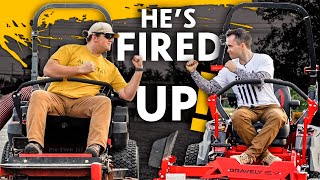
Mike Andes talks about running a lawn care business that does over $20 million in revenue. He covers growth strategies, franchisee relationships, and how to balance big vision with actually running the operation.
Chapters
It sounds so bad to say this, but, like, it doesn't seem like a lot of money now.
Totally. Maybe we can talk raises or something.
The moment you're not growing, you are dying. So why not just make it final? You know, put a nail in it, bro. Dude, this could get really deep.
Yeah, I know.
Keep going. Sorry.
What happens if the Elon of Augusta gets whacked?
I just. We care less.
All right, welcome everyone. Thanks for joining us. This is Lee Park. And as some of you had mentioned a few months ago, you mentioned, hey, why don't we have some interviews, get some more questions flowing? And so we've had Liz, we've had Brian, we've had Marcus, and now we have Lee. We'll probably have Brad on the show. And so this morning we're leaving the meeting and Lee is like, so is anything off the table? I was like, no, everything's good. And then like today I'm driving back from Mount Vernon. I'm like, oh, man, I'm kind of tired. Like, I gotta be on my game if Lee's gonna pull anything out on me. So I'm like, literally drinking caffeine, one of those ice drinks just to be like, make sure I'm on my game. Got back, turned the AC on so I'm not sweating. So I'm ready for the hot seat. But maybe give a little of intro on you and kind of what you've done just for anyone that might not know who you are.
Yeah, definitely. Well, thanks for having me on. Yeah, thanks everyone for being a part of the channel. Watching the videos, I wanted to start actually shout out to the media team. Honestly, the content has just gone through the roof recently in terms of just thumbnails, clickbait headlines. No, I'm just kidding. But the media team's been phenomenal. The transitions, the just the camera work, the audio work, everything's been great. So shout out those guys, first and foremost. But yeah, I got started with Augusta, as you know, about five years ago. Actually like almost a five year anniversary.
Really?
Yeah, yeah. So about five years ago, I just walked in the door. I had a seasonal job. I was a park ranger at a local private campground up in Blaine, near the old shop, like a mile down from the old shop. I saw the Augusta trucks driving by all the time. Didn't know anything about you guys. Walked in the door, gave Liz my resume, you guys gave me an interview, hopped on, and that's kind of all she wrote from there. Started in the field and then became.
Estimator and general manager. And then now you do the franchise business consultant.
Yep, exactly. So kind of worked my way through every stage of the business, essentially, from frontline field worker pushing lawns to estimator general manager, and now helping with the franchise consulting, coaching calls and selling franchises as well.
So first time we've ever had someone else in the room during a podcast. The PR manager, Lee over here, his wife Sarah. So, you know, if we look over here just to make sure we get the nod of approval, that's, that's what we're. Who we're looking at.
PRM makeup.
Cool. Well, let's go ahead and kick it off. Let's go.
Yeah, let's do it. Awesome. First, I want to say shout out Keith Kelfus. Shout out Essencia Water. Now, I do have a bone to pick real quick. So I haven't said this. I figured I'd say it for the pod. I did apply for Mike to be a Essentia brand ambassador.
Yes, absolutely.
We, unfortunately our application did not get approved.
Hit me up. Did you actually apply?
Yeah, 100%. Like, 100% real. I went through their whole, whole process. I, I think it came down to not enough followers, honestly. So to you folks, smash the like button. Smash the like button. Smash the subscribe button. Yeah. So unfortunately, if there's another water company out there that wants to be a have Mike as a brand ambassador, we're open to hearing options. So cool. Yeah, I have not a lot of direction for this. Mostly just really try to think ultimately with a lot of the viewers in mind for the CEOs, the business owners, the entrepreneurs, the employees, folks that want to know some of the deeper content about Mike. This is not really going to be about lawn care, just going to be 100% honest up front. So watch the next video with the thumbnail of some guy pushing a mower. We're going to try to get a little bit deeper here. So first question is kind of about your day. So in the vlog format that you've been doing a lot, you've said that 95% of your day is zoom calls, meetings, you know, checking in with your managers, checking in with command center appointments, banks, all that kind of stuff, ideally for you, what do you want your day to look like? Like, if you could structure your day and eliminate the things you don't like doing, what would those things be and how would you structure your day? Like, and I'm talking like midnight to midnight, like 24 hour cycle. Like, what is Mike Andy's day look like if he can take out all the minutia or the things he doesn't want to do.
Good question. I actually enjoy creating the content. Like that's kind of like my hobby. So that's sort of my thing I do for fun. Yeah, like I kind of, I haven't used the second channel for ages. But like that was really fun to me. Like talk about stocks or real estate, like random stuff I really enjoy. That's kind of like my hobby. I wouldn't do that 247 because become a job. I think whatever you do the least of in your day typically is what you enjoy because it's just scarcity, right? You can make golfing a job just by doing every single day and like you make it a job, right? So, you know, because it's 95% of the day, you start to dread it because like that's all you do. It just becomes super common. So you know, I like, I like making videos, but if I could do anything throughout the day, I'd probably want to focus 1, 100% of my time exclusively on thing about growth and strategy.
Within the franchise or just in general.
There'S a franchise for now at least, like in the short term it'd be the franchise. And I still think some of my day is that. But you know, if you're building a building, very, very little of your time is actually spent on the architecture and the plans and the designing phase. It's really like, let's go build the thing. Right. So that's why most of it is not that way. And I think over time it will become more of that. But as that happens, that starts to become a burden too because now 90% of your day is strategy. Right. And so it's just enjoying that process. The current 90% is, is, is important, I think. And I'll look back on with fond memories of being able to take phone calls and zoom calls when one day that's like off source. Like I don't do sales calls anymore. I miss that kind of a little bit, right? And then that's something that's probably you're like, man, like another one of these sales calls. Like, but just a matter of like I think we always as humans just kind of put down what we're going through now in terms of the value of it, looking forward to something else. And then we get to that and we look back and like, oh, like it was really good to be there and vice versa, then we're looking into thing. So I think just enjoying the moment is important and realizing that in five years I'll look back with fond memories and I'll probably like, man, I wish I could take some calls with some bankers right now. I don't get to do that anymore. I don't get to talk, like, about balance sheets, so. Because I have a finance guy. Right. So I think it just. Now it's a bit of a drudgery, but it's fine.
I get that. And I think probably a lot of, like, business owners out there, too. Like, I remember when I was your GM and the estimator had some scheduled time off. Marcus had like, you know, just vacation, like, everyone. And I hopped in to do some timed estimates and it was like, it's like the thrill of doing estimates again because you're like, oh, I'm going to close out. I know so much more about sales. Like, I'm going to close every single one, 100% close ratio. So I get that. In terms of, like, the media side. So you said content is obviously, you know, a big part of your day. It's what you really enjoy doing. You'd like to put more effort into that and, you know, really expand the media team.
Right.
And we'd love to have, you know, five or six guys in house doing editing, videography, content for the franchise side. But I guess for you, like, what, what's the limitation? Like, why aren't we pushing into that side? Like, what is it? Because strictly a time limitation, because you want to give 90, 95% of your time to the franchise, so you don't want to invest, put the time and money into the content side. Is that kind of the thought process or two things?
Right. So financially, like, this year, the media team will do over $1 million in revenue. Right. Which is nuts. Right. Last year is probably 400. Like, it'll probably triple year over year next several years. And like last month, for example, like, we literally made $660 profit. Like, every single dollar goes right back into the content. Hiring another person, you know, making things better. And when you making new websites, whatever, uh, it's very much top of the funnel awareness. It's what's fueled everything in terms of Augusta. Like, we don't spend money on marketing for the franchise. And in pure honesty, like, to just be perfectly honest, if I had five or six more people on the team, media, yeah, we'd get a lot more done, but it would ultimately probably require more of my time. And right now I feel very like, let's just be perfect. I would feel bad to spend any more time on the media. Okay. Because I Feel like very much that the franchisees deserve my time right now, and especially the first hundred fifty, one hundred that I've joined, that I need to, like, put my heart and soul into that and, like, every waking minute. And maybe I'm overdoing that in my mind a little bit, but I've just over indexed on the fact that they have to all become very successful. And maybe down the road, I'll let off the gas a little bit and focus on the media more. But it has to be very much where. Like the vlog, for example, I don't spend any real time on it because I'm just doing my day, and I'm like, oh, this should be a shot. And I usually forget, like, oh, this could be a quick shot. I'm, like, driving. It doesn't take any of my time. That's why it's actually worked out really well.
At least.
Least the last couple weeks, because it'll probably change. But at least last couple weeks worked well because it doesn't take any more time. And I don't feel that guilt, which is just pure honesty. Like, I feel guilty when I'm making content for the public, when there's people that have put their whole livelihood in the line with Augusta, and I feel responsible to make sure that that pays off in leaps and bounds.
That makes sense. So essentially, what I would deduce from that is that vlogging is super easy.
Well, for me, Steven has a hard job of making it entertaining. Like this random day, then putting, like, some sort of a theme together, and, like, they do a great job.
No, no, I just. I just joke because this morning, like, we had a team meeting and Mike's addressing the team. I was like, oh, this could be a vlog. So I just whipped out my phone, recorded it from a horrible angle. You guys are probably going to watch it.
I recorded it, you know that you recorded? Yeah, dude, I was on the game, man. I had it on the other table. We had a two angle.
Steven's gonna have two angles. Shout out Stephen. Yeah, but, you know, I think that totally makes sense. Like, wanting to give your effort and your majority of your attention to the people that have bought into Augusta that, you know, work for you or work with you. That. That makes sense, and I 100% respect that. Which kind of brings me to my next point is, like, in a recent video, Mike said, you know, we're not going to go full barstool. And I'm. I'm a little bit of a stoolie, to be honest. I listen to some of their pods. I like Dave Portnoy in terms of just as. As a business person, their branding, their marketing, just the way they handle themselves. So why wouldn't we go for full barstool? At least not now. Is it strictly for the privacy or for the fact that we have partnerships? There's, you know, maybe money on the line for some parties involved.
Oh, it's definitely not about money.
Yeah, I know.
If we started talking about all the issues that happen every single day, whether it be the franchisees or employees or the drama, every single day, the channel would blow up. Like, if you look at the top three videos of my channel that are over a million views, all drama.
Yeah.
Customer drama, employee drama, etc. If we did drama of what happens every single day of the calls that I can't record on the vlog, the channel would blow up, and I would make plenty of money. But the bottom line is, I don't want to walk into a room where there's a bunch of employees and immediately their thought is, I have to be on good behavior because he's gonna blast me if I don't. Right. I don't like that feeling. I like to be a real human and talk about funny stuff and say weird stuff to people and then say weird stuff to me and not think it's gonna be recorded or think it's gonna be talked about. And when someone's fired, I don't say their name and things like that for very specific reason. That is, someone going out the door with that in their mind is gonna have a very different perception. And so I don't want that yet. Maybe down the road, because it would be valuable, I think, for a lot of people to see that, But I don't think a lot of people would want to work in that environment. I wouldn't want to work in an environment where it's like, everything is talked about. Like, if you make a mistake, it's exploited for views. Like, that's really what it is. It's just a drama show. And so it's different, though, if everyone approached the workplace that my job here is mowing lawns. But by the way, most of my job is actually be an actor in this game.
Totally.
That's a different story. Right. And we're not there yet. I don't know if I want to be there yet because it just emphasizes drama, and I hate drama, so I don't like to talk about drama. Was it done? Like, when someone leaves is such a bunch of garbage. I just want to move on and you know, rehashing that is great for the Internet, but I don't think it's great for culture morale.
Yeah, I mean, I completely agree with that. Like you and me are on the same page. No drama. Same with Liz, Marcus, Lonnie, like the whole team, we cut out drama as fast as we can and we move on as a team. I just, I think there's, it could be fun, I guess, for lack of a better. And, and too, I think for the barstool as well. Their consumer, their customer is, is, is not the person going to be involved in that drama. Like, I'm from Bellingham, Washington and Barstool headquarters is in New York City and I don't know any of them personally. So their drama is funny to me as a consumer and it doesn't hurt me. Whereas our drama would be more interpersonal or managers or franchisees. Not saying that franchisees create drama, but. Right. That's what we deal with on a day to day basis. Like you've said in other videos that, you know, once in a lifetime events happen to you every day. Now as a CEO of, you know, over almost over 100 locations. Right. So we can't always put that in front of the public. Which I get.
Which I get.
So cool.
Well, recently we would get sued, bro. As a franchisor, we would get so sued out to a zoo if we started blasting stuff online because like a franchise or franchisee relationship is so legally binding that when you have, when you have anything legally binding, whether the marriage, a contract, anything, you just open yourself up to being sued because that's the only way to manipulate the contract. And so with a franchise or franchisee relationship, if someone could ever try to prove that their location failed because, because of what I said on a podcast or a video, well then they have legal grounds to come against the franchisor. Like, it just gets super messy. Like barstool is not in business with the people that they're talking about their employees that can be fired.
Right.
And so that gets a little bit different too. Like I could probably talk about like my locations, my GMs, my employees, but if you start talking about franchisees, like, you're just going to get in a world of hurt. And I think somebody would have a huge amount of fun. Like it'd be great entertainment, but it's not fun for the person you're picking on.
Totally. So I get it. I'll move on.
Always make another channel, bro. You can head up the new Barstool sports channel.
I love it. And barstool too. You think about it like they have ongoing litigation all the time. Any company that's making waves is just going to have litigation from everyone, their critics, their haters, the disgruntled folks. Like it's just going to happen. And that's just drama we want to avoid. So cool. Well, recently, the management team, you know, yourself, Liz, Lonnie Marcus and I have talking, been talking a little bit about vision. Vision for Augusta and for yourself. And I think one thing that's funny as I was trying to put together some questions to ask you, I think there's a switch that we kind of make as a society and these are just generalizations, but that as companies scale, it's like it turns into a corporation, right? And you have, and this isn't political, but you know, like the whole political argument, like, corporations aren't people, they don't get to vote. And you know, like, I agree to that to an extent. Like, but corporations are built by people, right? And like, you're building Augusta. Like, Liz is helping you build Augusta. I'm trying to help you build, build Augusta. And so Augusta will always be your business. Like, you are the one that built it. So do you feel that it's hard to express your vision as you bring in more partners and also have more eyes on you in terms of critics and third party opinions? Like, is it harder for you to express that vision, that passion in a private message? You know, I sent to you the other day, I said your vision needs to be big, bold, unapologetic and keep receipts. And, you know, do you feel it's hard to express? That is the question.
I don't really care about the, like, critics. I really don't. It doesn't really bother me a lot, people commenting like, it will never get to me. What I actually care about the most is people I care about, especially like franchisees, close employees, the ones that have been with us for a long time. When they say stuff, that's when I start to back up a bit on vision. Because especially if I'm being accused of unkept promises, right? So with the franchisees, if I feel like we're failing on something or we've let them down in a certain area, like, I back up on vision mostly due the fact that vision is stereotype typed that your heads are in the clouds and you're thinking far future. And that is the case many of the time. And someone gets so wrapped up in the future and what's going to happen the next technology that they forget about, like, actually making a profitable business now and supporting the people that they made promises to. And so I don't want to be guilty of that. And so I think when I feel operationally heavy and we're going through a lot and franchisees are going through a lot, that's when I tend to probably cower away from the vision, because it's like, I know that is important. I know it's the thing I should be doing, but it's also, like, in the moment, that person's not going to see that. Right? They don't have the vision of me. It being important for me to see vision and be focused on that. They're focused on like, hey, this strategically is not making sense. This is not making sense. This operationally is falling apart, and you need to step in and fix it. And so when. When I don't feel like I'm. When there's unkept promises on my part, that's usually when I probably back down from vision. And I've done that over the past six months. And so I feel like we've repaired a lot of those things and fixed a lot of those mistakes, and we operationally made a lot of things more sound and. And button things up. And so going forward, I know. I hope to, you know, peel back that onion a little bit more and flex that muscle again. But it's something that I don't like to be super public about. Not about, like, people out in the public. I made videos about, like, how we're gonna do in the future and thousands of locations and all this sort of thing. So it's out there, but I don't talk a whole lot about it, mostly due to the fact that the people closest to me are mostly worried about my daily execution and not what's gonna happen in 10 years, even though that's the thing that keeps me going every day.
So do you think the average person, Average employee, and I'm not saying Augusta employees, just in general, do you think the average employee can't make a distinguishing. A distinguishing mark between vision and a promise from their employer or their leader or their CEO? Like, they can't distinguish between that? Because I heard you. You said promise multiple times. I'm like, you have made me zero promises. Like, you've just given me a vision that I bought into and I'm gonna.
Work hard for, But I actually see provision and promises. If I. If the vision is expressed, I see it as a promise. Because if you don't have a plan to execute on vision, it's Just a wild ankle guess, dream, hope, pipe dream. And I, I'm not into that. And you know that like if I'm gonna express a vision, there's gonna be a plan and we're gonna execute on it. And if we're failing execut to talk about the vision anymore, I'm just going to execute on what I've said. Right. And so the average employee should not be expected to have the long range vision of what the company is doing. And so I need to be better about expressing that usually to inspire people. But that being said, you know, they're not. You know, I don't expect an employee to think 10 years down the road, right. If something's failing in the business, they're not going to be like, okay, like that's great. About 10 years from now we're going to change the industry and like we're going to have robots in 15 years and we're focused on software. They could care less. They just want their payroll fixed, this pay period. And so, and I have nothing against that because they're not in it for the 15 year goal. They might be. That's great. And you're going to get some people that buy into that. But most employees, they're much more short range because if they were long range, they probably go start their own business. They start, they do something else, they take bigger risks in life. And so especially Frontline, quote unquote, average employees. When you say that, that would be my response.
Yeah. So do you think as owners, like for the owners listening, that they need to be very clear about what they have in terms of vision for their companies versus, like what are promises they're making to employees on say, an individual basis? Because I know, you know, last year and we talked about this a lot at Landscape Summit, you know, we had a minor uprising, if you will, some employees at one point, and you know, you and I were both accused of unkept promises and, and I was like, I don't feel like I made any promises. Like this is a business, I would never promise anything to anyone. Like a promise me is an emotional transaction that you make. And so for me I was like, well no, I gave you plans and I told you we had to execute them. And if the plans fell apart, you know that that was a team failure, not a failed promise or a failure on my part to uphold that end. So do you think that's what you're trying to say? I guess that owners need to make a distinction between a vision for their company and the promises to individual employees.
In that case specifically? Well, yes, it was very different, I thought, I think. But when, because like they weren't like questioning our vision and they were not, definitely not aligning the vision of the business with the promises that were being made. I think that though, for me personally, when I express vision to a company like at a team meeting or at an off site meeting, I look at that as like this is a promise and if I don't execute on that, I lied. I don't think like the, the idea of vision has become so uplifted mostly due to people like Steve Jobs, right. That just, you know, just, just exuded vision and he was so ahead of his time. But he's one in. Like he's an anomaly. Most people do not have the ability to reach years in the future and pull out what the consumer is going to be doing and then manifest it and then tell their entire company who thinks they're crazy that they're wrong and go off in an opposite direction. Like the insanity that that's the average business owner is let alone a guy who mows lawns. Like you're just, you're really, you know, you're off your cage and that's what's led to a lot of like hyper growth stocks and you know, company startups that just have these massive valuations. It's someone that simply sold all the investors on what vision and most of them can't deliver on them. And I'm not going to be guilty of that. And so when I say what, what I talk about in terms of number of locations and what Augusta is going to do, that is a promise to everyone that's joined the franchise, everyone that hears that content, every single employee. And everyone believes in that, whether it be an investor, someone who's a franchisee and is believing that for their own personal finances and their family providing. That is a prom promise on my part and I will deliver on those things. So I try to keep in the vision sometimes because if I can't execute, I'm not going to talk about it. Okay.
I like that. Big fan think different from Apple.
So kind of still on the same gears of vision you were trying to be.






