When I Hit Rock Bottom...(My Story)
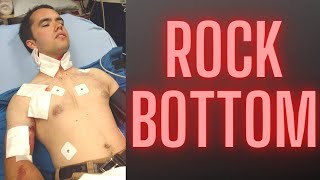
Mike Andes started mowing lawns at 11, went to college at 13, then chose entrepreneurship over med school. A PTO accident nearly killed him on August 4, 2016, the day his first book launched. He rebuilt by systematizing his lawn care business and franchised it to 40+ locations.
Questions this video answers
11 years old
$3,000
13 years old
August 4, 2016
Publication of his first book, Millennial
I was underneath, I had my hoodie on. And as I was adjusting turning off the pto, it caught my hoodie and basically tried to suck me into the pto.
Hey, everyone, Mike Andes here. And today I'm going to show you pictures of when I was a kid, when I started Augusta Lawn Care, when I almost killed myself underneath a dump truck. And kind of just the sequence, kind of like we're getting on a storybook, going through a scrapbook, going through a photo album from the past. I'm going to show you some of the stuff you might have heard about me in the past. We've never seen pictures. So before we get into the show, though, a big thank you, today's sponsor, which is Gusto, if you haven't Already, go to gusto.combootcamp Get a free 90 day trial of their software by using that link. So you can do benefits very seamlessly for your employees, as well as the regular paychecks and automatic transfer and, and their time tracking and all the rest of it. Check it out today. Go to gusto.combootcamp all right, so let's go ahead and jump right into it. I'm trying to make this as concise as possible. I'm going to be trying to make this as part of a series where I share more in depth stories of my past businesses and stuff that I've done and go in more depth. So if you're just getting started, you can be inspirational and educational for you. All right, so let's jump into it. As you're seeing the pictures, I'm going to comment on them. So this is when I was a little kid, you know, but I started mowing lawns when I was 11 years old. And here in this picture, obviously I was not old enough to drive. We, my brother and I would walk around our neighborhood and basically mow people's lawn. So I started when I was 11. He was like 13. And so for those first couple years, we'd walk around the neighborhood. I would use the weed whacker and the blower. He would push mow. Here's a picture of him push mowing. We did everything together. We played baseball together, the whole nine yards. My brother and I were very close. So we, you know, we now got our shirts, we got these purple shirts for our Uncle Andy's. Lawn care was the name of the business. And once he got his license at 15, we then upgraded to a green Dodge Caravan, one of those big old boxy ones. I unfortunately don't have a picture of it, but we would. The back trunk was broken, so we would wedge it open with a stick and then we'd put two push mowers in the back of that. That's how we got started. That very first year, when I was 11 years old, made $3,000 in revenue for the whole year. And we felt like we were millionaires. And we originally got the money to get started by doing a job for one of our friends. And they said, hey, look, instead of us giving you money for the job, why don't we pay for a mower, a blower and a weed whacker? It's about $1,000 to get us started. And that was about what we had earned in working for them for a couple weeks as kids. So that was great, got us started. And that was really the goal was to pay ourselves through college. And so my brother ended up becoming a teacher. I was dead set on becoming a medical professional and a doctor and a surgeon. So anyways, keep going here. And we now I played a ton of golf, ton of golf. Golf was a huge part of my life. This was a Solheim cup locally. But I traveled all around the state with the high school teams. Even though I was in college, I never actually attended the high schools, but I would play on their sports teams. So I played golf all over the place. That's actually a big reason why we now have Augusta. Lawn care is a big theme of my teenager life. Was playing golf a lot, especially when I was like 11, 12, 13, 14. Those years were like, golf was everything. Golfing and school, that was like it. And so throughout that whole period of time, I was going to Whatcom Community College. I started college at 13 years old. And those first couple years, 11, 12 years old, I was saving up for college. And then at 13, I started at Whatcom Community College for my associate's degree. This is now. My brother and I, we were graduating with our associate's degree at this time I would have been like 15, 16 years old, something like that. And then I transferred over to Western Washington University for my bachelor's degree. At the end of that degree, which was the end of my pre med sciences, I went on a six week trip to Nairobi, more specifically Tigoni and Kalangwari, which are kind of suburbs of Nairobi, Kenya. And on that trip I was a medical professional, medical student, and just had a whole bunch of really cool experiences. You can see here, I used a. Well for the very first time, where you actually put the bucket all the way down, you hit water. It was a cool, coolest Thing ever, But my goodness, it was a workout bringing that thing back up. But went to the hospitals, orphanages. There's two major orphanages that I worked with a bunch there. And it was crazy. It was awesome. I did everything from birthing to surgeries to working in the burn unit. That's the picture here with me and the kids in my bucket hat, working with the kids in the burn unit. It was just an incredible experience. Did so many different things. There was times where, you know, you'd realize, oh, my goodness, I haven't ate all day. Or I've worked 14, 15 hours on my feet just trying to help people. It was great. It was a great experience. And for someone like myself that had gone through college and pre med for years getting ready for this, this was the dream. This was the dream to be able to do all of this stuff and help people when they came in. It was just an incredible experience in so many different ways. It reset and calibrated me in my. Just my mindset and what I thought success was and what I thought contentment was and happiness, just seeing the orphans and all the rest of it. And then on the medical side, just completely opened up my eyes to, like, just how much could be done and just the feeling of accomplishment and helping someone walk out and be healthier and be happier and just incredible. And so that was an incredible experience. I came back, graduated from Western Washington University with my degree, and at this time, I was fully intending to go to medical school. I wanted to become a surgeon. And this few months here, though, after I graduated, I started shadowing a lot of doctors in the United States. Different professions or different specialties, I should say general practitioners, general surgeons, different specialties, all the rest of it. And I started realizing that this was something that I didn't think I could do in the U.S. because in the U.S. you know, you got eight years in school, you get a specialty, and you're stuck in that specialty really for the rest of your career. It's not like you can be like a brain surgeon one day and then go like, work on someone's hip. Like, that doesn't happen. You stick on one thing. And being entrepreneurial and always, even as a kid, scratching different itches and things I was interested in and selling things and being entrepreneurial. I did not want to be stuck in one thing for that long and have to go to school and go into a bunch of debt to get to that point and then be stuck in something. And so the big part of it, too, was insurance. Like, I didn't like the whole bureaucracy that's in the US in terms of like the number one thing is like, how is this going to get paid? You, you got the pharmaceutical companies involved. There's just more government involved. Whereas in Africa, like people would walk in. It was like, how can I help this person? All right, do it. It was a non profit and we were just, basically our job was to help people. They walk in, we make them feel better. Fantastic. And that was life transforming. And when I came back, I just realized I could not do this for the next 40 years in the one specialty in this system. And so I decided, you know, what I'm going to do. I know. And that's mowing lawns. So that's when I started Augusta Lawn Care. That name was absolutely, you know, really came from Augusta national, where they paid the masters. I fully intended on this, you know, here, here's my truck, my first truck and trailer, which, by the way, we still have the truck. We just sold the trailer. But it's. They're still alive and well. But this picture here is. I'm going to explain why I'm at a doctor's office, but I wanted to show you the uniforms because the uniforms is actually mirrored after Augusta national where they have the caddies wearing these white overalls, coveralls, whatever you want to call them. And so I started with that bad choice. First year. You know, you're going through all these different white uniforms because you're out in the mud, the dirt, you're mowing grass, it's sweaty, they rip. It was horrible. We would bleach them to try to make them last longer. It was great in theory, but it didn't work very well past one or two employees. Anyways got started, then finally switched over to, you know, getting yellow uniforms. My sister started working with me part time, helping me out in the field and the office. I actually, for a moment here, Augusta Cleaning Services actually existed. Lasted about six months before I realized the margins weren't as good as mowing and landscaping. And I decided to can that side of thing. Then we really started to grow. We started, I got a little shop where we could sell mulch and material. Here's the pricing list out in front of kind of like the little mobile office they had. And started selling mulch. And we would deliver it with dump trucks. Got a few employees. That's when Liz joined the team as office manager, still with us today. And then, you know, things that were going really well, you know, dump trucks, we would deliver the soil and the Gravel and the molts to local residents. I won an award for like the one of the startup, you know, one of the best startups in the county or something on one of the years. But then August 4, 2016 came and I was underneath one of these dump trucks here. You can actually see the dump truck that I got hurt underneath. I'm showing this to one of my my nephews and I was underneath trying to turn the PTO on and off manually because it wasn't working from the lever inside the truck. It's an old L7000 Ford. And so underneath the PTO, the power takeoff basically is what operates the dump powers that the dump to move. And there's a lot of force there. Well, I was underneath, I had my hoodie on and as I was adjusting turning off the pto, it caught my hoodie and basically try to suck me into the pto and thank God I bunch up against my neck and then tore and drop me out. But could have been a lot worse. A lot of people do die from getting sucked up into PTOs from clothing or they lose their hands and arms. And so very, very fortunate and thankful for that. But they did rush me to the hospital just thinking me, I broke my neck or had a concussion or something like that. After a couple of weeks, I was back in the field. I was able to work again. But really what was really, really crazy about that was August 4, 2016, was also the day that this book, Millennial, my first book, got published. If you go to Amazon, look at the day that this was published. August 4, 2016. That was the exact same day that I actually got stuck underneath the dump truck. And it was pretty crazy. So what that really made was incredible about that though was it put me out for a couple weeks and I started to realize where the holes in my business were in terms of the systems and procedures so the business could run without me. And that's literally two months later when I started landscapebusinesscourse.com where I help landscapers create the systems in their business so that they can run without them. So that's when I started Landscape Business course, the podcast. Trying to help other landscapers basically create the systems that I had in place that the business could run without me. And that was the first time where for two or three weeks I could not do work and the business kept going, had great people in place, but I could see where the little issues were, where the systems could be improved. The so I really started documenting how I improved and changed the business over the next Several months on landscapebusinesscourse.com business started growing from there. We won an award for the best place to work in our county and a lot of it now is history. More recently in terms of Augusta Lawn Care, we franchised it. We now have 40 plus locations around United States and Canada. And growing very quickly over the past year and a half is when we've been franchised. We ranked, Entrepreneur magazine ranked us in the top low cost franchise and the top new franchise for this year. And so really cool stuff, really happy about that. But what I hope to do over the next few weeks is share more of these stories. Things that really changed me as a person, changed me as a business owner that you could learn from. And when you're going through those tough times, it was not easy for me as someone who everyone thought all my acquaintances, my professors, my peers, like I got calls, emails, all the rest of it. When I decided, you know what, instead of going this medical school route, I'm going to go mow lawns, they trust me. There's a lot of people that did not like that, A lot of people that were disappointed that were, you know, that was the train of thought for me for so many years. I was that Doogie Howser 13 year old kid that was starting college and gonna become a doctor at like 20. Like that was what was in everyone's mind and my mind. And so for that to change, that was a, that was a low moment. When after year one and two, you're struggling to get revenues and grow your lawn care business and you're mowing grass outside for hours on end with allergies and in the back of your mind and what everyone else thought you were going to be was a doctor. Like, that's not easy. Going through the time when I was stuck underneath the dump truck and having to be bedridden, I guess for a couple weeks, that wasn't easy. Those are moments in time that all of us as business owners have to go through. And if you're in those one of those moments or you're in one of those times of transition, like going from school to owning your business or from your 9 to 5 job into owning your business, that is something that I think these stories and these things I share will help. And I don't want to just be the guy that has a big business. And like next year, yes, we will probably be in the top 100 landscaping companies in terms of revenue, in terms of size based on Augusta Lawn Care's growth next year, possibly the year after, but probably next year. And I don't want to be that because for most of us, we're just getting started. We're out in the field, we're out grinding. We're trying to figure out what uniform works best. We're trying to figure out which trucks work best. We're trying to figure these things out. And so I hope that as I share these stories and these points in time, of which many I've skipped over even today, that you're able to relate and realize that the grind is worth it, that getting to that place where your business can run on systems and procedures, it's worth it, that there's gonna be moments where you question yourself, you doubt yourself, you're afraid and the bank balance is low, you feel exhausted, you don't see any sort of return on the work that you're doing. And I hope that these stories help and encourage you, inspire you and educate you, help you grow your lawn care business. And check out landscapebusinesscourse.com for more of these details. Make sure you subscribe to the channel. And I hope that something is said that can help you in your lawn care business. I'm Mike Andes, landscapebusinesscourse.com We'll see you on the next video.
Hey everyone, Mike Andes here. Thank you so much for watching. The reason we make this content is for you to grow your lawn care and landscaping business. Our goal here at Augusta is to change the level of professionalism in this industry, and you are a big part of that. Thank you so much for watching. We'll see you tomorrow.
Thanks.






