WHY Top Notch FAILED... And Why It Will Succeed
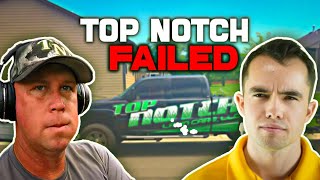
Brian Shane built Top Notch Lawn Care to 4-5 employees after landing a 70-80 property contract, then nearly collapsed when a $70-80k municipal job underpaid him and left him owed $30k. He scaled back to 30 residential clients, hired an office assistant, and now uses square-foot pricing and door hangers to build a business that runs without him.
Chapters
What I would be looking for if I was you is one thing, just take one thing away from the entire conference.
It's just past 12 o' clock midnight here and I'm taking a red eye flight out of Seattle going to Wichita, Kansas to meet with Brian Shane of Top Notch Lawn Care. Gonna be talking with him. This is a last minute flight. Booked this a couple days ago. Wanted to do this. So flying red eye, going to Dallas for a quick meeting and then six hours over in Kansas. Figured I'd throw the GoPro in and hopefully you all can learn something. Brian has recently scaled down his operation and gone to a solo operation and so hopefully you can learn from it. I'm going to be interviewing him, helping him with his business and I wanted to bring you along for the ride. So here we.
Go.
Tool is taught. Okay, I'll do an intro and all that fun stuff.
Let's do it.
So yeah, like I'm really interested to really kind of see how you started number one.
Okay.
And then follow where it's, where it was at and then why you kind of went backwards. Someone would say call it backwards. I don't feel it's that way. And I think it's a big shift from what I usually talk about in terms of getting a million grow, grow, grow. I want to see why you scaled back and then what your plan is going forward. So start off with how you started.
How I started. So it all started about six years ago. I was working two jobs and I was working for another lawn care company kind of on their summer mo crew and the light bulb just kind of went off in my head and I was like, well, why don't I just do this on my own Instead of coming here working part time, you know, 25, 30 hours a week and making $12 an hour, I can go cut a few lawns and I can make that, you know, on my own. So. So I did, I started my own company. And funny thing about it is the company that I was working for, which was a kind of a private company, they owned a lot of rentals and stuff. And the MOW crew I was on, we just mowed our own stuff. Their own stuff. They didn't venture out, they didn't mow for other people. They mowed for themselves.
Like their houses.
For their houses. So they, you know, they had like 70 or 80 rentals. Oh w. You know, they provided lawn care with their rentals. So. But it just so happened when I started my business, you know, I turned in my notice, told them I Wasn't gonna be working for them no more. The very next year they contacted me and was like, you know, we thought about hiring this out. Would you be interested? And I said, yeah. So I gave him a bid and I got it.
Really?
Yeah. So that's how I got started. And honestly, it was a very good start. You know, it was good money. I was full right off the bat. You know, I'm on 70, 80 properties from day one.
By yourself?
No.
Okay.
I hired a couple guys.
Year two now, right?
No, first year. Really first year. So basically I quit at the end of, you know, in the fall, you know, when the mowing stop. And then the next spring I got that contract. So I had to hire a couple guys right off the bat. There's no way I could do that all by myself. And that's kind of how it all started. In the first couple years, it was really, really good. I didn't advertise. I didn't need to advertise. I was full, you know what I mean?
Mostly those clients from that one just.
Just doing that one contract. So, you know, I picked up a few CL and there, but I never advertised. I didn't even have a website.
And everything seemed to be good. But then you start realizing, well, I got all my eggs in this one basket. So I started to venture out and I started to pick up some other stuff. And.
That'S when things kind of got hectic. You start getting real busy. Well, one thing that really.
Popped into my head that I didn't think of, I have no idea how to run a business. You know, I got all this stuff handed to me pretty much. I never had to work for anything, you know, I mean, I'm a hard worker, but you know what I mean? Just kind of got right place at the right time situation. And my business just wasn't going nowhere, you know, it was just I had no idea how to run a business. And then year three, year four, I moved those properties for four years.
Last year was the first time I didn't mow those properties. And I kind of wanted kind of.
Out of it because it was such a. I did.
So what happened is they got new management.
I didn't really like some of the things they did to us the previous years. And so we didn't really see eye to eye. So we just kind of parted ways.
Just pause there. Like, what would you say to someone that is like, has one client is making like 50 plus percent of their revenue? How was that experience talking to number one, knowing that like they're a big customer.
Well, I mean, it's, I've learned, you know, it was good money. Yeah, I mean, it was really good money. But it's not, I mean, especially commercial stuff like that, it's hard. I mean, man, it's just, it's hard to put all your eggs in that one basket because if that thing falls through.
What are you gonna do? That's a lot of your money. So my advice would be to keep it. It's good money, but you gotta try to venture out and do other things. You gotta try to pick up more clients. You gotta. Don't be content with just all your stuff in that one basket.
So how did you start to do that?
So, got a website and started advertising through the website and everything.
Hired an outside company to do my website, do all my SEO work and all that type of stuff. And then like I said, last year was the first year I didn't do those properties. We started getting some calls, but I kind of panicked a little bit. I kind of panicked and you know, because I'm looking at the numbers going, man, we just lost, you know, 90, $90,000 worth of stuff just like that. You know what I mean?
Contracts.
Yeah, I mean one, one big contract. Gone. It's gone. And at that point, what we do.
Right, 250 at that point?
No, we were right around the 140, 150. So like I said, I didn't pick up a whole lot other than that. That's why I kind of panicked. Because now I'm sitting there going, okay, well now I just, I just got, you know, 20, 30 clients, you know what I mean? I don't have a whole lot of stuff going on. So I panicked and I picked up some city work, some real big city work. 30, 30 acres, 35 acres, all that type of stuff. And it was with the lockers. No, no, I bought, I bought a 72 inch, right. Standard. And then we mowed it with that and it couple 52s definitely did not have the right equipment for it. But like I said, I kind of panicked a little bit. And this contract was right around the seventy to eighty thousand dollar range. And so I was like, well, that would make up for it. You know, I kind of knew in the back of my head that, man, I might be getting into something. I really don't know what I'm doing. But I was like, you know what, I'm gonna go for it. I'm gonna take the gamble. I'm gonna go for it.
How'd you get that contract, it's city contract. So was it like you had to bid against it or. So they're hard to get.
They are hard to get. So the way it works around here is one company gets most of the city stuff.
Got it.
They sell it all out.
Got it.
So what they did is they sent me this deal, this letter, had all the city stuff on there with prices. Say, pick, pick what you want. Yeah. So I picked the bigger stuff. I was like, man, let's go for it. You know, it's got the most money behind it, obviously, let's go for it. And so that's what we did. And that 100% backfired.
When did you know that was just not going to work out?
A couple months in. A couple months in. But we tried to stick it out as long as we could.
It backfired for two reasons. One.
The company wasn't paying us in a timely manner. And then two, we really didn't have the equipment for it. I mean, we got it done pretty decently, but we're using stuff that weren't made for that. You know what I mean? And the employees, it's hard, you think it's hard to keep employees on a regular mowing, you know, regular houses. Try putting them on 35 acres and say trim that thing.
Yeah.
You know what I mean? You go through a lot of employees, which I understand. So like I said, that 100% backfired. You know, I still haven't been paid fully for that account. I haven't.
That's years.
Yeah, that was last year.
That was last year.
That was last year.
Got it.
So, yeah, I'm still about $4,500 in the hole, so. Which is better than what they could have been.
So from a collection standpoint, what did you kind, what did that sort of teach you for commercial or large jobs going forward?
Oh, man. You know, I, I, I kind of have the mindset now I'm not dealing with commercial anymore. You know, it's just, it's just a lot of headache. You kind of. Most, most commercial is on their terms. I like residential because it's on my terms. I can dictate, you know, if we're going to do a weekly or a bi weekly or monthly billing, you know what I mean? It's all on my terms. Yeah. And that's what I like about residential the most. So, you know, not that commercial is bad. You know, a lot of people make a really good living out of commercial. And I wouldn't really say that's really commercial. That was a totally different thing.
But I got burnt pretty good. And it was a rough, rough year last year because you got to imagine we did that contract was $80,000 around there. And at one time that company owed me $30,000. So they're basically holding all my profit for the year hostage.
But yet I still got three or four guys working for me that I got to pay every week, Week. You know what I'm saying? So it was a really, really tough year. And, you know, I was in a really bad position. It's easy to say when a company owes you that money, just quit mowing. And maybe we should have. But I got three or four guys working for me. You know, I got, I got their lives in my hands pretty much. You know, I'm feeding their kids. That's a tough pill to swallow, you know what I mean? It really is. So that's where I was in. I was in a really big bind. I didn't know what to do. Eventually it got to the point. Last October, I had one guy, one, my lead guy got hurt. So that was kind of defining. Okay, we're done, we're done, Mullen, you owe us this amount of money. We're done. You know, and that made it a little bit easier. But anyway, so, yeah, last year was a rough year, so we decided to make a bunch of changes this year.
So I know something that I know beforehand, before we talked earlier, is that you have a full time job elsewhere.
I do.
Working Friday, Saturday and Sunday.
I do.
So I can imagine last year working, you working Monday, Tuesday, Wednesday, Thursday, Friday, and then going Friday night to another job. Talk to me about that. Not just from the stress level. I'm sure that was out to the roof, but talk to me about how to manage a lawn care business when you weren't there.
Sometimes it's, it's tough. It really is tough.
You know, obviously three, three to four kind of employees.
Yep. I had, you know, last year I got up to five employees. Average was right around four. Yeah. Sometimes ran with three just because you know what you gotta do sometimes. But, but yeah, it's, it's, it's tough. And it's doubly tough when you don't know how to manage. And I, I'm confident enough in myself to say that I don't know how to manage it. So, you know, it's not just something you need to do. You got to know how to talk to people, you got to know how to motivate people. You got to know how to kind of Be firm with people without being that, you know, that guy. You know what I'm saying? You know, this, you know, managing your team and creating a good work environment is half the battle, I think. And I wasn't very good at that. I just kind of, you know, like I said, we were just kind of willy nilly and just kind of, you know, trying to get everything done. You know, it was chaos. It was chaos. So that's why last year was really, really rough. And having a second job made it twice as rough, you know, because we're having to make stuff up on the weekends, we're having to, you know, do all kinds of different things because things weren't getting done in the five days that we had that we thought we were going to be able to get them all done. And then, you know, then I can't work on the weekend because I have my other job. And then, you know, things aren't getting done because boss ain't around. And then you got your wife and your family going. We never see you. So it was a tough year. It was a tough year all the way around.
So for someone that was in school, for instance, a lot of young guys start in school and they start getting an employee or two. I know you say you can't manage people yet or whatever, but what did you learn, you think, from that experience, in terms of managing from afar or not being able to be on the job site and there being employees, you.
Know, obviously you got to have that one guy you can trust. I mean, I think there has to be a relationship there where you guys both see eye to eye. You both, you know, you both know what needs to happen and you trust that person to get it done. You know, I've had some really good workers in my day that work for me. There's only one guy in my five years that I fully trust to get something done. And at that time.
You know, that was the one guy that got hurt last year. So, you know, but I put guys in positions that maybe they weren't ready for that position, you know, maybe they weren't ready to be a crew leader, but I had to have them as a crew member because I didn't have a choice. You know what I mean? Not really fair to them. They're not ready for that. And they, you know, they failed. I shouldn't say failed, but they didn't, you know, do some of the things that I thought needed to be done. But it all falls back on me. I take full responsibility for it, you know, but it just.
Do differently. I think you just, you know, you got. You gotta learn from your mistakes. You gotta see what works for your guys. Not one clear thing is gonna be, you know, I don't think it's. You know what I mean? You can't just manage one certain way. Different guys have to be managed different ways. But I'm a firm believer you gotta have a culture in your business. And like I said, my business, I had no processes in place as far as hiring people. No processes in place, just all throughout my business. So everything was chaos every week. It was just, you know, whatever you gotta do to get it done. And every week was chaos. And it's just hard to run a business that way when you're there, let alone be away.
So in October, your main guy gets hurt.
Main guy gets hurt, kind of.
Okay, done with this big contract.
Yep.
Was there a moment that you remember, like, okay, like, this is all gonna change?
Is.
Was it a moment for you? Like, this is going to be a humbling experience because you're so online and public with everything. What was that like? I'm taking a step back, but now I have to, like, face the music.
I'm just fine with it. You know, I'm a pretty open guy. I share a lot of stuff. And that's just because I think most people go through what most people have the same struggles. We all struggle, you know, And I think it's good for other people to see people going through the same thing they're going through. And not everything is peaches and creams. You know, run any business, let alone a lawn care business, is hard. It's really hard. But, you know, it was a little bit difficult, you know, I mean, it's something you got. You got to sit there and you got to say that, you know what? I messed up, I failed. I did whatever, whatever you want to call it, you know. But.
I'm comfortable enough with myself to know that I'm not a quitter. I work hard, I have the right intentions, I'm good to people.
All that type of stuff. To know that I can admit when I'm wrong. I can admit when I didn't do something right, I can admit to where I failed. But you can better believe I'm going to change things, I'm going to make things right. That's just the way I'm built, you know? So it was a little bit difficult. It's hard to get on camera and say, I failed, I screwed up, and ultimately it's my fault. I'm the business owner it's my fault, you know, it's nobody else's fault.
So going forward, you scale back. Now you're working by yourself. You have 30 or so clients, residential, you have an ideal customer. You start to implement system as we talked about, doing it by the square foot over the phone, getting an office assistant. What's going to change in your mind for yourself, not the business, but for yourself? How are you looking at the business going forward?
Probably the biggest thing is the stress level is going to be way down here now. There's still going to be a little, there's always going to be problems, but I'm not going to have 5, 6, 20 different problems going on at once.
I feel that's a big thing for me right now in my business, in my life. To simplify everything, to make things flow a little bit easier and just to kind of, and that's the whole point of scaling back, is to figure out what you did wrong. And don't, don't repeat that. You know, I still want to grow my business. I still want to, you know, I don't have a number. I don't, I don't know if I want to be a million or 10 million dollar company, but I want to just, I want to grow my business. You know, I don't want to be solo my whole life. You know, that's not something I really want, but that's something I'm looking forward to right now because I'm kind of getting back in the flow of things. You know, I kind of lost touch with the work and that kind of stuff. So.
Just the overall stress level, just being able to kind of take it a little bit easy and kind of step back and go, okay, here's the things we need to fix. We're going to fix these few things and things are gonna, things are gonna start growing better this time.
What I really respect about you, when I saw the first video and all that, was the level of self awareness, to know your limitations, where you excel and then where you need improvement.
Yeah.
And then being, and matching that with the humility to step back and say, I'm gonna try this again.
Sure.
And so going forward for the business side of things, you say there's certain things you're gonna change. I know we've talked about systems, things like that. What else is there? Is there things you're looking to change? And I know you don't have a number in mind or like certain projections, but for you and your mind and the business, what's it gonna be different than when you hired the first couple guys.
As far as hiring people, hiring and.
Just growing to whatever size you wanna.
Become in the future for hiring employees going forward, I think the biggest change is I don't need a crew leader anymore. The one change we talked about.
A lot of successful people will tell you the faster you can get off the truck and manage your business.
The more you'll grow. And I totally understand that. I'm going to take kind of opposite route. So I'm going to hire somebody to do the business side of the work, and I'm going to continue to do the work. I think that alleviates two problems. One, finding a crew leader that I can trust and to get the work done. I'll be that crew leader. I'll be the guy getting the work done.
But it also allows me to have somebody else to do something I'm not good at, to take care of the phone calls, to respond to customers, respond to emails, and do all that stuff that you have to do as a business owner to grow your business. I can have this person do that. This person that's qualified and has experience in doing that, Instead of me trying to learn on the fly, you know, I'm not good at that. I'm good at working. That's what I'm good at. That's what I've always been good at. So that's the biggest difference that's gonna happen in my business is especially with employees. Now I can be with somebody eight, nine hours a day. They're with me. I'm not sending them out there by themselves. And I think we can progress from that. They can figure out how I want things done by working with me. And hopefully, you know, that one guy, you know, I hire a guy, come work with me, and hopefully I can build that guy up and he can be my crew lead. So he's had experience working with me. He knows how I want things done. He knows how. He knows how everything's supposed to be. Now he can go do his own thing, you know what I'm saying? Kind of on the job training, you know, and that's just definitely something I've never had before. I've never took the time to really train my guys. And that's. That's another. You know, I could. I got a whole laundry list of stuff that I can tell you where I failed at, you know what I'm saying? But, yeah, I think those are the two biggest things. Very cool.
I had some people ask me questions when you first made that video, because I had Never watched a lot of your very early videos and so they had sent me a link to one that you kind of like what you wanted out of the business one day. Is that still the goal? Because I watched it once they sent to me and it was saying, you know, you want a million, you know, 10 trucks? Whatever it was, I forget exactly what it was. Is that still the goal? Have you made it more? Hey, it's gonna grow organically and I'm going to grow with it. Or how do you look at that now? Their point was like he's given up on his dreams. And I was like, I don't know if he's given up on his dreams. No, he just realized that that's still the dream possibly. Is it so, or sorry or were you kind of buying into to all of the hype around our industry of getting to like a seven figure company which I probably, I wouldn't say I.
Was like buying into the hype at the time. I really believed that, you know what I mean? It wasn't something that I didn't, you know, I wasn't being non truthful. And I'm not saying I don't want that right now.
But right now I just don't see that.
Right now what I want is I want to dominate a certain market. I don't want to, you know, to have 10 trucks to be a 10 million dollar business. I have to go outside of where my market is right now. I just have to, you know what I'm saying? So I have to start traveling, you know, for right now I want to dominate one market. If I can figure out how to do that and do it successfully, then I'll maybe take on another market and then take on another market, you know what I'm saying? But just to have, you know, just to have that plain goal of, you know, I want to do this, you know, without a clear plan, it's probably not going to work.
So what's the steps this year? Last question. What's the steps this year going for? Like marketing wise, are you going to hire somebody? You talk about hiring an office assistant.
Yep. So yeah, that's the first step. We hired an office assistant actually starting next Monday in a couple days. So I'm actually really, really excited about that. I think that's going to open up a lot of opportunities for me. We're going to be changing the way we're selling things, selling jobs. So the way we've done it in the past, the way most people do it is a guy calls up, they Want to bid, and you take down their address, you take down their email, you take down their name and all that stuff. And you say, well, I'll get back with you in a day or two. And then you get back with them and you never hear from them again. So we're going to start trying to sell the job, right? On the phone you told me you've done that. Jonathan does it. So that's where I got the idea at. And I think that's, you know, it just makes perfect sense to me. And, you know, we're gonna. We're gonna roll that way. And, you know, we got our ideal client in mind. We got our residential client that we can do multiple services for. And we're gonna. Just as far as advertising, we're just gonna try to saturate this market. I mean, we're gonna do door hangers. We're gonna do some, you know, we're thinking about doing mail, the direct mail. But I think we're going to start with door hangers. Might follow up with the direct mail in a month or two or something, but finding a way to keep in contact with these people. One of the biggest advertising things we're going to do this year is when I go mow a property, property that I've been mowing for years or whatever, you know, the houses next to it and the houses across the street, they're all going to get door hangers. You know what I mean? Got to put a price on there. Going to everything on there to where, you know, hey, this is what it would cost. You know, we could do this for you. You know, call our office if you have any questions. You know, that's just something I just never thought of before, you know, But I just want to get our name out there a little bit more. I want to get our name out there, and I want to just. I don't want to. I don't want to overdo it. I don't want to become a nuisance to people. But at the same time, you know, here, in a year, a year and a half, if you live in this market and you don't know who top notch lawn care is, if you've never heard that name, I'm doing something wrong. I want everybody to have seen my truck or heard my name once, at.
Least once before we let everyone go tell. I know you're on. Everyone knows you're on YouTube. But tell them, number one, what you. What you want out of the business personally, and number two, where they can find you.
Sure. So you know, my biggest goal for my business, I don't think we've actually talked about this, is I want my business to be self saving. I want to be able to have a business that could run without me. I think that is the ultimate success. When you're talking about a business that you've done such a good job of creating a team, hiring people, and creating an atmosphere in your business that it could run without you. I fully. I mean, that is. That to me, that's like the ultimate compliment. And that's what I want. I want something that can run whether I'm there or I'm not. And yeah, that's my goal for, for my business. And, you know, my channel is Top Notch Lawn Care and we do a lot of crazy stuff.






