"You are nothing..." - Episode 067
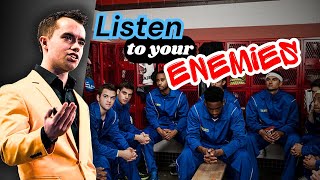
Mike Andes uses sports coaching to explain leadership in business. A coach up 3-0 stays humble and focused; after a blowout loss, he doubles down on accountability. The real work happens in the unsexy early years: what Andes calls "Dig, Build, Bury" - the foundation no one sees.
Chapters
Welcome back Another episode C Suite Unfiltered let's go. We are coming in hot here. Okay, so I had an idea or not an idea, a thought the other day that I wanted to ask you about. So put on your. Put on your coach's hat. We're going to dive right into it. At time of recording, the Boston Celtics just won the NBA Finals. All right. The Florida Panthers are playing the Edmonton Oilers in the Stanley cup finals.
Yeah.
The Boston Celtics and the Florida Panthers were both up three zero seven game series. First to four wins.
Right. All right. Boston won.
Yep. Boston won. At time of recording, Boston was up 3 0. Panthers were up 3L.
Yeah.
Then in game four, Boston lost, like, 120 to, like, 90, and the Panthers lost 8 to 1.
Yeah.
So these teams had a 30 lead. They are one game away from winning it all. Now Boston has one Panthers. Remains to be seen. What is. I had thought. What is Mike Andy's locker room speech to his team Going into the three and oh game, like, your team is up three and oh, what is it? Going into the three and o game. And then after you answer that, what is it? After you get Destroyed in Game 4.
With a 30 lead, lots of anger.
Yeah.
Yeah. Even before the game, I would be like, you think you're something special? Like, you think you've done anything. No one knows your name. Like, I'd be like, really drilling them into the dirt because they're so high in their own supply.
Yeah.
And so I just be, like, grinding. Like, you haven't done anything until you win and you haven't won yet. That's what. That's. That would be the notion, like, it's also, like, very much of an emotional.
Yeah.
This is not business. Sports. Yeah, this is sports.
But I wanted to be my move.
That'd be my move. It's like no one will know your name until your name is etched on that trophy. And your name is not etched that trophy. Don't you dare think you're taking a victory. That would be the notion if I was 30 going up into the game. And then if I lost, I would basically double down on it. I'd be like, both of those thought you were good. And I just drill them into the dirt.
Yeah. Because both of those losses were horrible. Like in hockey. 8:1. Yeah.
That's very bad.
That is. And then I. And then I don't know the exact score of the Celtics game. Celtics Mavs. But it was like 120 to, like, 90.
Yeah.
I mean, just brutal.
And I don't think that's a good leadership tactic. But for sports, you got to get their emotions involved and anger is a good move when they're. Otherwise, the. The elation is already starting to kick in and you got to like, like quell it a little bit.
Yeah, yeah. And that's the thing too is, like, you see athletes, you know, they get interviewed after they win a championship, right? And they're like, oh, yeah, like, this buddy was texting me and my parents were saying, oh, they were proud of me. And this, that and the other. And it's like, you can't get high on your own supply.
Yeah.
Like, it's. The job isn't done until the job's done.
Yeah, Like, I would probably require all. Like, I would try to do this. I don't know if it's even legal, but, like, I would try to get all my players to like, give their phones in so no one can communicate with them. If we won, like the first two games of like, all phones in, we're out. Yeah, like, you gotta tap out. You can pick up the phone once you've won.
You give everyone a burner just so they can like, report to tv.
Exactly.
Everybody gets a burner phone, dude. And like, you just send a text.
It just comes down to like, what are you willing to sacrifice? And then at the most elite level, you'll have to lock in. Like, that's like the pinnacle of their career. That's the pinnacle of their sport. That's pinnacle of their year. That's the pinnacle of like everything they strove for. Why can't you lock in for a few weeks? Like go into monk mode?
Yeah, yeah, no, I agree. I just. I wanted to know your thoughts.
Yeah.
Now, the Celtics won it all, so kudos to them. But now the Panthers are. It's a. It's a three to two series.
Oh, really?
So the Oilers just won at time of recording last night. So now we. We got a series. What would you. Now let's. Let's say maybe the Panthers lose in game seven. Like, they're up three zero and then they lose four straight. Oilers win it. Hypothetically. What's that look like? As a coach, if you're the Panthers, you had a 3, 0 lead and now you just lost.
I would probably go after legacy. Like, you want to get in the heads of your. Now, now, now you need them to be an underdog because if they're three, three, they have lost three in a row. And so they are humbled. They're already in the Dirt. Yeah. Now it's like inspire them to be the underdog that like, like it was so close and like people will either remember you as the, the ultimate failure because you lost or guess what will wipe all of that out. Oh, win tonight.
Yeah.
Like you will either be known as the champion or the team that absolutely dropped the ball at the like the last few minutes of the season. And so like tonight will determine your fate in history. Like it'll all about legacy. That's probably what I would lean into.
Yeah, yeah, I like it. I just want to pick your brain as a coach. What does that look like translating into business now? What does that look like for maybe say an owner in a business? Maybe you're talking to an owner and this is all hypothetical. This is a good, this is a.
Good little, little hype speech you got going, dude.
This is a complete hypothetical. I don't want anybody to think I'm thinking of a specific situation or a specific person out there or even a recent turnaround you've done. You're talking to an owner who's maybe high on his own supply. Maybe they are up 3, 0 in their business career. Like they just secured contracts from a competitor and their revenue levels are at or their profit margins are at record highs and they're a little high on their own supply. What does that conversation look like to them? Are you cheering them on? Because business doesn't have necessarily an end date. It's not, it's not a seven game series. It's okay, you're up three l ie, everything's going right. What does that conversation look like to a business owner?
It really depends if they're playing the infinite game or if they actually have certain goals that they've achieved. If they have, if they've won the Stanley Cup, I'm going to celebrate with them.
Yeah.
But if they're, if the audacity that they have to say that they have these massive goals and they're like, they hit 10% of it. It's like, great, good job. You haven't even got started.
Yeah.
And so it just comes down to their goals. And that's why I'm always very hesitant. Like some people, their goal is to make fun of 50, 60 thousand dollars on the side. And that is a huge, like that's their objective. They've won the Stanley Cup. I will celebrate with that person. And the same token, someone's like, I'm gonna build a multi million dollar business and it's been 10 years and they can't get their first employee. I'm gonna drill them pretty hard. And so it really comes down to, what have you defined as winning? And then comparing to that, that's why business is so much different. There's not, like, a definition of success. And that's why it's so important as owners to know what that is, to be able to know when to congratulate yourself, when to take a victory lap. Cause there's times for that versus being, like, cool. Next.
Yeah.
And that's, like, that's very difficult. And as a coach in business, that's the. That's why I'm always asking. Like, a lot of times it doesn't make it to the turnaround. I'm always like, so what's the goal? Like, what are you trying to build? What does success look like for you? Because then that's what I'm going to measure them against.
That makes sense. And so what if the owner expresses their goal, but you assess them as they're down? Oh, three. Right. They say, like, hey, here are my goals. But everything that they're. They're saying is their goals. The metrics don't line up. They are losing in the game of business. What does that.
It depends if they're low and they're humble or if they are thinking that, like, the losses are not registering.
Yeah.
Like, some people lose and lose and lose, and they're still proud because they're in the NBA. It's like, whoa, whoa, whoa. You're a loser in the NBA. So, like, just depends on where their head's at. Like, if someone's humble, like, I give so much grace and slack, and if they're willing to learn, like, kind of like the thing I posted this morning on the. Did you see that? On the Facebook group?
Yes. Yeah. Okay.
What was it about? Oh, no, it was last night. It was last night.
Yes.
I put on the Augusta Nation Facebook group. I put. Let's see here. It was last night. Late. One second.
I might have it here.
I'll beat you to it.
No.
I thought I got it. You did. Go ahead.
Fuel. Inadequate as a leader.
Good.
It means you recognize the hard work required to improve your skills. Daunting. Scary. Fear defined. Show me someone that cannot identify their lack, weakness, and deficiencies. I will show you someone incapable of improvement, change, or leadership. Don't know your lack of deficiencies. Don't ask your friends. Listen to your enemies.
Yeah.
Let's go.
You can put on the screens of people.
Yeah, yeah.
But anyways, that's what I would say is, like, if someone is losing, but they are aware of those things and they're trying to do what's best to make changes and improvements. I give like so much grace and like, my tone will change if someone is losing and doesn't see any sort of like, lack or where they can improve or how they're failing as a leader and they don't, aren't taking actions to like, improve that. Listen to audio books, listen to podcasts, get critical feedback, get coaching. Like, if they're, if they're not taking those steps, I give them like, okay, what are we doing here?
Yeah.
Like, do you think you're just going to keep doing what you're currently doing and like, somehow it's going to become better? No. And so if you're not making steps to change and you're not willing to change, you don't see the need for change, you're gonna keep losing. Yeah.
So, yeah, that's fair. It's easy for us. Like, sports is always an analogy for life, for business. But I just want to know your thoughts from like kind of the sports coach's perspective and also the business coach's perspective. Do you feel like, you know, going back to saying, hey, you're about to lose, you were up 3 0, now you're about to lose. Translate that to business. Do you kind of humble that person? Do you kind of stay on that, put them back in the dirt mode?
Well, the difference between sports and business is the fact that every sport has, has a, a pinnacle. Like there is a defined measure what success looks like. Win the Stanley cup, win the NBA Finals. And like it was defined, it's stitched like on the trophy, like who won last year here? There is no one who won last year in business.
Yeah.
There is no one that is more successful than someone else because it's all relative. And so if you build a million dollar business, great, someone else build a 10 million dollar business. And that's why we get this treadmill of like always comparing, comparing ourselves because we don't have actual, any measure of who won. And so we're. The infinite game is so like, so correct and like, so true in its meaning and like, but it also is frustrating for people because you don't ever have your name, you don't ever actually finish, have a finish line. It just keeps going. It's a treadmill. And so defining what the numbers on the treadmill need to say for you to get off and be like, I won is important. Otherwise you will just constantly looking for higher and higher numbers until one day you fall off the treadmill and die.
Yeah.
And so I think we will always be judged on the. I think any leader will be judged based upon the Delta and the difference between where they're at today and where their goals are at. So, like, I have massive goals and dreams, like, in terms of revenues and locations and, like, what we want to do for the industry. That's what I'll be judged on. Someone else will have $100,000 business, and they. Their entire friend group and people around them will say that they're crushing it because their goal is only 60,000 and want to do it part time. And now they're crushing it on the weekends, making more money than they were working part. Yeah, total time. And so it's all relative to the goals and, you know, what sort of audacious garbage you spit out in terms of what you want to accomplish. The difference. That's the gap, that's the lack of.
Got it.
And so it's all very relative.
Yeah, no, that makes sense. And I think that there is an element of people not realizing. Calling back to a previous episode, Success is contentment.
Right.
When we talked about Jonathan from Florida Turf Pros, he said, I am successful as a solo operator. I'm happy mowing grass solo because I'm content. This is the goal I set out to do. This is the life I want to live. I'm content. It's when we, as Alex Hormozi says, speak our desires, there is a deficiency. And so, Well, I want $1 million business or I want to take home 200,000 a year, whatever it is. Well, if you're not willing to put in the effort or the work, then you're never going to be content. So you have to first identify the goal. Is this what you're saying? I guess to summarize, identify the goal, put in the work to get there, and then be content once you've hit it.
Yeah. And I think that there's different ways, like, you can have a goal and then you have what contentment is. Right. Like, I'm content, but like my goals, that's what I'm going to be judged on because, like, I've stated what the facts of what I want to achieve, and that's what I'll be like. I can be content all day long and I have, quote, unquote, won that game. But there's a difference between what you'll be judged on as your goals. And you can have contentment here, where you're at today. And you're trying to Achieve that and then you can have goals and you'll be judged on this. And so traditionally you'll be happier when you make your goals closer to where your contentment level is. Usually that's the happiest people. The ones are like, my goals are pretty much where I'm going to be content. When you've passed contentment and then you still have a massive lag, that's where you have years of doing the boring work because you are happy. Like, you're satisfied. You're like, hey, I'm content. Like, there were nowhere close to where I want to achieve here.
Yeah. And so would you say the antithesis of that? Would you say that sometimes those people are maybe settling? Like, is contentment settling?
I'm very careful to say anyone settling because only, only they know their personal capacity. And so, like, I will only push someone on this topic if I know them very well. Right. I, I generally, I don't think I've ever said someone's settling. I have to like, really think about that. I will say if I think someone has more potential, I'm willing to push a lot harder on them. And I've done this recently to a couple of the managers, been like, hey, the reason I'm pushing is because, like, I see massive amounts of.
Of, of you potential. But then also I see you wanting to achieve more. And if those two things are aligned, I will pour in and I will make sure I push behind you and I'll push you and I'll say like, you know, critiques to be able to make you improve. And so some people don't have that. And then it's just a matter of like, you know, they're, they're, they're happy, they're content and they're not trying to improve or change. And then eventually they will usually be outgrown by the company if the company's growing. Same with a team. We'll move on individual. They stop practicing, stop improving, stop gaining muscle. They'll, their performance will eventually stagnate and then the team will move on in order to win championships. It will cut that person.
Yeah. I guess what I'm getting at there is the idea that maybe someone expresses, oh, no, like I'm content or I'm happy with my decisions. But going back to a phrase that you like to say, it's sacrifice now or regret later. And do you think that sometimes people speak kind of a false truth over themselves, which is, no. Like, I'm content, I'm happy with my decisions. Not knowing that in 5 10, 20 years, they're going to regret said decisions.
Well, they'd only regret in that situation if they're lying to themselves of what their goals are. If they're saying they're content, but they have this massive goal deficiency of where they want to be at, they will regret not sacrificing to get there. So being very clear of, like, what contentment looks like and you have succeeded versus where your goals are at is very, very different. And so.
Yeah.
Yeah, I like that. I was going to ask. I guess we already kind of went there, because you've been talking about this a lot internally at Augusta. So on the same topic, but a different way of looking at it, and you've said it in some of your public videos, is your. Your kind of new philosophy. Dig, build Barry. And we haven't talked about this on the podcast.
We haven't.
I don't think so.
Okay, cool.
Unless we have. Well, we're just going to recap it. Dig, build Barry. So this is kind of your new man, if you will, and it relates to kind of setting your goals and working towards them. So explain to us maybe a little bit more in depth, what Dig, build barriers.
Yeah. So, like, if you're building a skyscraper or any building, you typically, the first thing you do is actually go down. Like, you dig, you go into the dirt. It's very dirty, hard work. Furthermore, that work will never be seen. You bury the foundation. So you dig it, then you build the foundation. You put a bunch of time and energy and effort and architecture and leveling and all the rest of it, and then you bury the thing and literally looks like it was before with just like, some studs and like, some concrete levels and like, so you. You build it and it's very difficult. And then you bury it and you never think about. No one will ever see it again. No one ever walks up to a building, like, admires the foundation. Right. They just look up and see this massive structure. Like, that's awesome. Yeah. But what no one sees is the first three to five years of the business, when you actually made less money, worked more hours, and had to do put all this work into something that you would eventually bury it. And when I say bury, I mean you never want to think about it again. It's so painful and hurtful to think about it. You bury it in your mind and you actually don't even remember some of the pain that you have to go through. But then when everyone comes in, 10, 15 years down the road, those look up and see the building they'll admire it and people will travel all over the world to be able to see architecture and buildings that are built that are very tall, they just look up, they never look down and actually acknowledge the fact that someone spent time, energy and money actually digging into the ground and then burying the work they did. And I think that's like the first three to five years of business. Longer if you have little capital. And.
Yeah, it's just a lot of pain.
Yeah. So people just need to embrace the pain, basically. You know, note relating to the topic we were just on, know that you will not be content until you've built that foundation.
Realize the taller the building is, the deeper the foundation has to be, the.
Taller you want to make the building. So the bigger your goals, the bigger.
The goals, the more sacrifice will take. And if you don't build that building, if you don't build that foundation and dig and do the work and you know, to your point, if you don't sacrifice, you will regret. If you try to build this massive building, but you haven't built a foundation, I'm going to build this great building. Fantastic. If you don't do the boring work, if you don't take those years, actually build a solid foundation, you have this massive goal and you'll build this toppling tower that will eventually fall and hurt people. And this is where people like go into massive amounts of debt. What do they try to do? They tried to avoid the dirt, they tried to avoid the foundation. And I'm not saying everyone that goes into dad's bad, I'm not saying that. I'm just saying that is a form of going faster and sometimes that is good. But also there are times what you're trying to negate there is the foundation. You want to be careful of that because if you overextend, you start building too quickly without building that foundation of like knowing what my customer acquisition cost is, knowing the seasonality and the demand of my business, knowing how to hire and fire, understanding leadership so I can actually scale as business business with a solid foundation. Without that, you build a big business that topples. And so and those are those businesses.
That either one, crash and burn and close very quickly or two, they sell for parts.
Usually the person doesn't like to be in the in the dirt. They like to have the appearance of success because that is above the ground. What everyone sees and what everyone most time is driven by.
The desire to appear, appear successful. And because of that, they actually start building the building before they start the foundation. And.
Like they'll look good for a while, you know, usually propped up by debt. Usually they'll buy a lot of personal assets in their first few years of business. They'll get a bigger house, nicer car. They'll show it off on social media. But behind the scenes, there, there's no foundation. Like, they haven't developed themselves as a person. They're not listening to things that are going to coach them and improve them and improve their skills and dig them deeper. Like, if you're not, if you're building the building. The one thing is different in business. You can build the foundation deeper even after you've started building the building. So even if you, like, I'm at level 50 and I want to go to 100, just realized I don't have the foundation for it. In business, you can keep digging and you're like, okay, for the next year, I'm actually not going to keep growing. I'm going to, like, focus on myself and my leadership and getting better coaching, and I'm going to invest in like, like structure and infrastructure. Like, that is all part of the systems required to keep building higher. And so even what we're doing internally is basically being like, okay, what's got us here is great. We're going to go way deeper on the foundation. Better systems, more infrastructure, more hierarchy in order to be able to build taller.
Yep. And so, yeah, that makes sense. I think it's a perfect analogy. It's actually very funny that someone in my neighborhood, like five houses down, is building an ADU in their backyard and they've been building the found slab.
Is it slab or is it.
I think so. I. I don't know.
All the time you can do a slab. Yeah.
So they've been building the foundation for the last two plus months.
Yeah.
And then within a week, all the walls were up. And the. Whatever, whatever that's called the scaffolding or whatever. The framing, the framing up top is up.
Yeah.
Like, they literally need to put the roofing on the siding and then do the inside.
Success is not linear because it takes months to build the foundation. And then all of a sudden you're successful, you build this great view. Like, no, I've been doing this for months. Yeah. It's the same thing. True. In business. Like, people like, oh, man, you build such a great business. Like, yeah, where were you the first five years?
Yeah. Because from the road, you can't see that they're building this.
There is no evidence of success.
Yes. So I walk my dog right by the house, like, almost Every day. And so I've been seeing the process over the last couple months and it's like you see a little tweak here, a little thing there, and then you see like a level and then you see, you know, I don't know the technical terms, but from the road, nobody sees it. But then all of a sudden one day from the road, people are going to see, oh, that guy built an adu.
Yeah.
So it's just, it's a great analogy. I love it.
What an architectural genius he is. He built it in one day.
Exactly.
Overnight success, baby.
That's what it's going to look like.
So.
No, I think it's a great analogy. I like it. We went a little deep there, but any other kind of final thoughts on that or words of encouragement for anyone?
That's great.
All right, well, do you have any. Not financial advice? Short, short pod today?
I do. I'm going to put some air in some tires. So Copper Creek cuts.
Yes.
Executing on what we've been talking about off seasons. He's changed his channel from lawn care to trash, but he's doing both.
Okay.
So the trash is going to be like more year round trash pickup and then he has the lawn care. And so basically waste management pulled out in their county. So he's like filling that void with trash removal. Oh, interesting. So he's breaking all the numbers and things like that. He's definitely going that direction with his content, getting away from like the, you know, tall grass situations. And so I support him 100% in that endeavor. I think it's a good move. At the end he'll get mocked out of house and home because like your margins are so small. He has to do a lot of it manually. But I think he'll build a brand given the circumstances. And I wanted to shout him out. I know he listens to the pod. He listened to all the content and he's a supporter and I appreciate that.
Yeah, no, he's a great guy. So Brad.
Brad.
Brad. Yeah, Brad's great. Very cool. I love that. My not financial advice.
I'm sorry. My advice is to go watch him.
Go watch him.
I was shouting him out. Shout out. My non financial advice is to go watch Copper.
We'll get. We'll just pour out the love. So also go watch him. Mine is also a watch. I'm just stealing it because you sent the video. It's from a YouTube channel. I believe they're called the Act.
Oh. Acquired.
Acquired.
Dude, that was a. I was, I was thinking of doing that as my non financial advice. That was the best interview I've had like in so long. Yeah, that was so good.
This is a YouTube channel called acquired. They talk to businesses, business owners about their journey going public.
They usually don't talk to the owners though. Oh, they don't do a deep dive on the business. No video, just audio.
Interesting.
And they go like three hours deep on like the metrics of these of the companies. And I have. Love it.
Yeah.
But then they got Howard. Sorry.
No, you're good, you're good. You could, you can add. Basically Mike shared the video. So I'm stealing this. Yes. They had Howard Schultz on CEO of Starbucks.
Well, he's not CEO, he's founder. Former.
Former CEO. And he was. It was a three hour interview. And they go from literally him getting his first job at Starbucks while he was still selling Xerox, printing the acquisition and then all the way through. Yeah.
And then him being very candid of what he sees negative in the company.
Know.
Oh, it was just so good.
It was so good.
There's so many good parts of it.
Yeah, you just don't get that amount of candid information from large businesses.
Yeah. And that was so good.
It was like a. It was a condensed biography with more details.
Yeah, dude. Like if people don't understand just like how quickly you can move in entrepreneurship business now because of technology and like the fact that we can watch Howard Schultz who built like a multi billion dollar. Like it's.
Yeah.
Like, why would you not like. Oh, yeah, it was so good.
It was a phenomenon.
Like I think on the weekend. Right? Yeah, the leadership team. I was like, this is good. Yeah, this is like the best thing ever.
I think you just said like, good, listen. Yeah, I was like, all right, cool. Sounds good.
Did you finish it?
Yeah, yeah, I'll probably rewatch it.
Dude, I know. I don't ever rewatch stuff or listen. Re. Listen to stuff and I will.
It's a lot to digest, so I probably have to watch it once or twice.
Yeah, cool.
Yeah, that. The pie.
Let's go.






