062: Lynn Bishop on Freeing Yourself from Unhealthy & Disrespectful Relationships
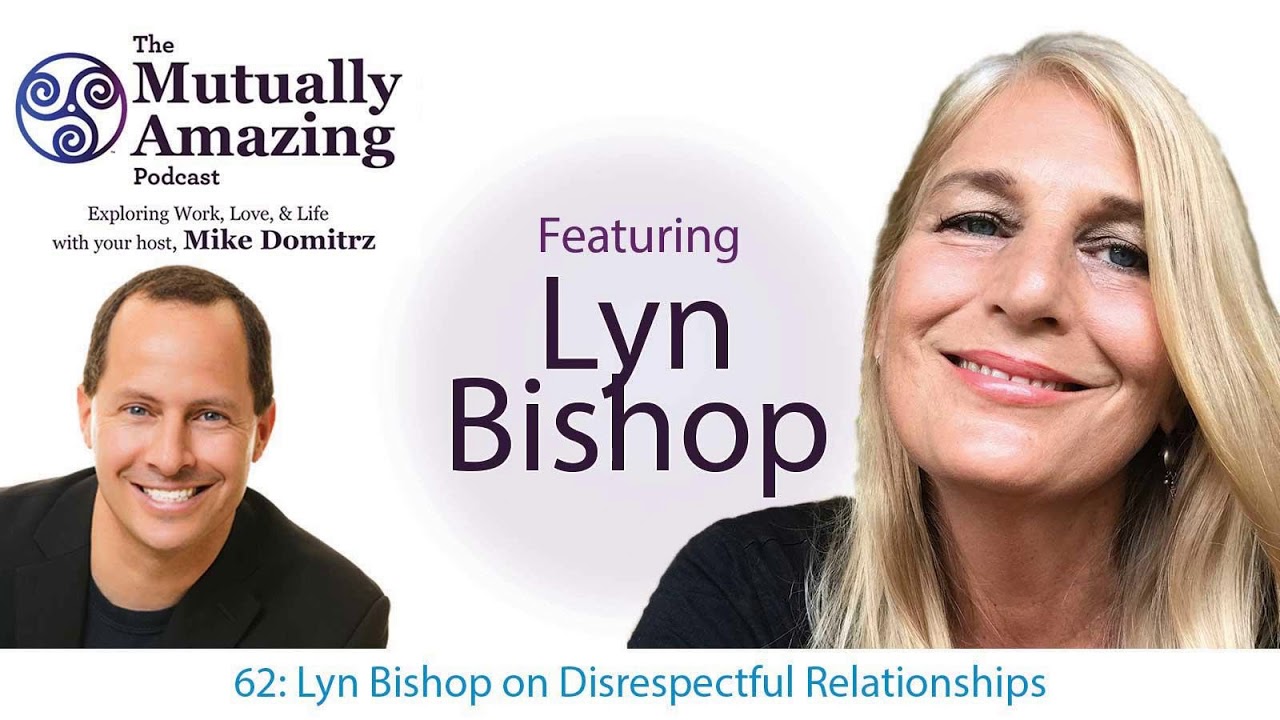
Lynn Bishop, a mentorship coach and farmer in Panama, shares how she broke free from childhood sexual abuse and an abusive relationship by recognizing subconscious patterns, establishing daily self-care practices like meditation and yoga, and setting firm boundaries. She now helps entrepreneurs build confidence and launch businesses, and cultivates cacao as a heart-opening medicine on her 16-acre farm.
Chapters
Welcome to the Mutually Amazing Podcast. I'm your host, Mike Domitrz, with the Center for Respect. The episode you're about to listen to was recorded when this show used to be called the Respect Podcast. So, you might hear that mentioned during this episode. Well, let's get to the show. And we want to dive right in. This week's guest is Lynn Bishop. Lynn works with amazing people who secretly fear they're not enough. She helps them embody confidence to live the successful, vibrant life they crave. Welcome, Lynn, to the show.
Thanks, Mike. It's great to be here.
Absolutely. To help all of our listeners, what's your backstory? When did you realize that self-love and respect were lacking in your own life to take you on the journey you've been on?
That is such a great question. You know, I think. many of us have these times in our life where we're just not having the confidence and the impact that we want in our life. And, you know, for me, it started early in childhood through some traumatic experiences that set me up to not have that respect for my own self. And, you know, I know your backstory and I know why you've come to the work that you're doing, and I really want to thank you for that. I was molested as a child, and that is The main cause of not having my own self-respect. And that's something that stayed with me through much of my corporate life. And it wasn't until I really got clear that I needed to heal that, that I was able to step into the respect for myself.
Well, I want to thank you first of all for sharing. That takes courage and strength in and of itself. So thank you, Lynn, for that. How did you identify that discovery? You know, that this was with me, that this was part of what had impacted my understanding of self-love and respect.
Oh my gosh. Well, you know, I look back on my life and mid-career, I saw myself as if I had already healed this big wound, but you know, the reality was I had only pushed it further down. And I'm like, oh, I've dealt with that. But the reality was I had never even dealt with it. And it wasn't until things just weren't working in my life, and honestly, it wasn't until I attracted an abusive relationship, which I never expected myself to have. I attracted this and it became my biggest life lesson in stepping into being respected. Being respected, respecting others, and most importantly, respecting myself.
And do you think what you, you know, you use the word you attracted this relationship, and I know some people could pause and go, I don't want her self-blaming. And I don't, and I want to let you explain that language because people could, what the version you're describing attracting that relationship, it doesn't have to be an intimate one. It could be a work relationship that's abusive. It could be a friendship that's abusive. So could you explain how that's not a victim-blaming statement when you say attracted?
Yeah, okay, that is a really good question. And here's the thing, oftentimes we are operating from our subconscious. So these things that we're doing are on automatic pilot. And if you have been abused in your life, if you've had trauma that is really deep and profound, a lot of times it is so well hidden within you That it is operating from a basis of your subconscious instead of being something that you really see and look at and understand on a logical level. So if we think about that, because we were disrespected in our past, it's very easy for us to accept that disrespect because it's almost a form of staying safe, as crazy as that sounds, because we know it. know what to expect. We know how to guard ourselves on this really crazy subconscious level. And so, you know, I think that for most of my life, I was sailing through doing just fine, thinking, oh, I've got this. But it wasn't until I really had this person in my life— I attracted it, I believe, as a way of stepping into the deeper healing and the deeper Letting go of that subconscious trauma and bringing it to the surface and being able to really release it. Did that make sense?
Yes. If I'm just to recall for myself, I'm trying to make sure I am understanding. I want to make sure I represent it correctly. That painful process helped you in the freeing of all the past, not just that painful relationship?
Absolutely, yes. So that painful relationship was the catapult really to releasing all of that past trauma.
Yeah, that makes complete sense. And that, that, that created the red flag for you, as people like to use that language, uh, or in some way people call it a trigger, but that's a life trigger, uh, that says something needs to change here. And you mentioned corporate America. Was it showing up in your work? Were you working in a large company?
Yeah, I was working in a large company and I was working on multimillion-dollar accounts in Japan. And for those of you who understand the Japanese work culture and being a woman, there is this kind of disregard almost, and it, it becomes quite cultural and you think that it's normal. But again, not having that self-confidence allowed those relationships to become even more unbalanced.
And could you give some specific ways that that can show itself? Just so if a listener's listening, they can go, oh, I'm in that situation because I can identify with that example.
Yeah. You know, this is gonna sound a little trivial, but in that example, a woman would, even in an engineering position, a high-level position, A woman would be the one who would make tea for all the men, even though she had something very valuable to contribute to the meeting. She would be excused and go make tea for everybody else.
It's an example that can happen in today's corporate— America's corporate atmosphere of who's getting the coffee.
Exactly.
You know, those, those differences can show themselves. That makes a lot of sense. Thank you for sharing that specific example. And so you went from this place of discovery and freeing to being able to own that confidence and respect. What were steps that were key for you along the way?
Oh boy. Well, first of all, it's, you know, just that aha moment. Like, this has to happen. This needs to change. Something has to change. It was that straw that broke the camel's back and, and really extracting myself from that relationship. And then I'd say it was really a process of embracing my own self-love. And I know that's a term that gets thrown around a lot these days, but I believe that it is the foundation for us living a respectful life, not only for ourselves, but being respectful for everyone else around us. Because when we have that level of self-love, there is— there becomes these boundaries that are so important to us that we're not going to let anybody else cross And, I don't mean that in a really negative way. It's just a way of honoring ourselves at such a high level. And so, this is really what the foundation is. I think it's really learning to love yourself, appreciate yourself, have the gratitude for yourself, cultivating those type of activities that allows you to fill your own cup to overflowing so that you can shine your greatest light out to everyone else around you. And that's respect.
Absolutely. And it's the key to respecting yourself is being compassionate to yourself, seeing yourself for the joy and wonder it is. You know, when we ask people, what does respect mean? The one phrase that I hear the most often around the world is to be seen for exactly who I am. And it's a— and to be valued in that moment of being seen. So, I love that you share that. What are some specific steps that people can take To help build more self-love for themselves?
Great question. Um, I think one of the biggest things is to give yourself a daily practice. And what I mean by that is find time for yourself every day, non-negotiable time for yourself, even if it's only 10 minutes, even if it's only 3 minutes. Um, it's a time when you get to recenter, when you get to call all of your scattered pieces of yourself back home to your heart space. And it could include things like meditation, it could just be quietly reading, it could be a yoga practice, it could be walking in nature. Whatever it is that you find joy in, that you can do by yourself to refuel your own sense of self-love, that's the key.
So for you, Lynn, is there a particular practice that That you really— if you get to do that, your day just starts on a— on the note you want to be in.
Every day, I, I actually live on a farm in Panama, and, um, the birds are incredible here. And so every morning I start my day by going outside, sitting on the terrace, and doing some type of a meditation for either 3 to 20 minutes. I allow myself to really feel the wonder, the gratitude, the joy of life around me. And that sets up my day so that I'm stepping forward being my very best instead of like being stressed out. And even people who are living a busy life, I think everyone can take 5 minutes just to give themselves that extra daily practice in doing something that really Brings them back home to themselves.
Yes. For me, it's— I live on water. And so for me, it's to go out on my kayak and there's like no one on the water when I'm out there in the morning and actually meditate in the kayak. So take like 20 minutes where it's just you and the water. And it's just a peace. I mean, some people might— it's just a place of peace and serenity. I know, 'cause some people are going, yeah, but I don't live on water. I don't live on a farm. It could be a house in your room. That you can find tranquility and quiet space in. Uh, it could be just sitting outside in a park. Maybe you don't have that in your house. There's chaos. You have little kids, you have everything. So it's going to a park down the street, but what a difference it can make. So I think that's so important you bring that up. So thank you so much for that. And you talk about helping others do this. So Lynn, what do you do now? Or is it, is it directly as a coach? Are you working with people or as a consultant?
Well, that's a great question too, because I wear several hats. And what my passion is, is to bring people into a sustainable life. And I use the word sustainable because I am the steward here on 16 acres. I grow organic food. I really love to cultivate things. And so in addition to my farm hat that I wear, I do wear a mentorship hat. Where I help people find that confidence to live that successful and vibrant life. And it sounds like it's so hard, but honestly, there are just a few steps that we need to take. And besides the daily practice, I'm gonna say it's showing up for yourself every single day in some way, big or small. And, um, so this is how I help my clients. I help them, you know, become accountable to themselves really through a series of, of different activities that we do together.
So, I can see, I can wonder if a few people might be going, so what's your title? So, what do you have a title for yourself?
Well, I call myself a mentorship coach or a mindset mentor or something, something of that nature. But I also call myself an artist and a farmer. Yeah.
Because I had honestly, before we talked, I had it down as artist, you know, that's, and I knew you did mentoring. So, I knew that, but I knew you as this artist also from what I had learned. So how did you, how does that imp— have you always been in art? Did that come later? And has this journey shown in your art?
Yeah. Prior to moving to Panama, my professional life, I was working in the graphic design industry and also dabbling in fine art and had a pretty successful fine art career, I guess you could say. And moving to Panama really switched that up. And it became less about me producing art for the masses or for collectors and becoming in tune with creating art here on the land. So a lot of the art that I do now is earth art, where I use material that I find here on the farm, including flowers and plants, leaves, sticks, rocks, crystals, those kinds of things. And I build mandalas that are temporary. And, those become meditation spaces. So, it all kind of focuses in on that inner healing. And, I love bringing my clients to the farm here where we actually get to do intensive work to release trauma, clear hidden and trapped emotions, and use this creative space as a way to move through these deeper issues.
That's beautiful. Why do you feel so many are struggling to find confidence and respect in their lives?
I don't think that we teach people at a young age how to love themselves or have respect for themselves. We're told to please others. And I think this— it's important that we have good manners and that we are, you know, able to work with others well. But if we're always sacrificing ourselves for the good of everyone else, we're not able to fill our own cup. And, that is when our cup is full and when we are actually understanding ourselves from a place of love and compassion, then we really understand ourselves and we know what our mojo is. We know what we're good at. We recognize our talents. And then, we can really shine our light and be of even greater service out in the world.
What part of the journey when it came— you're farming now.
I am.
Yeah, I have— we have farmers in the family and that's a job you have to be present for, right? You can't just walk away from. How has that impacted your work? How did you get to that place? Like what took you into farming?
Uh, yeah, accidental. It was actually an accidental journey. I never had the intention to be a farmer, but being here in Latin America and just being surrounded by the richness of nature, And being interested in permaculture principles really created that desire in me. And I'm going to be really honest, it's chocolate. Chocolate is one of the things that made me so desirous of being a farmer because chocolate is medicine. Chocolate is— it opens our heart. And as we do this work, being able to do it with an open heart. Makes it so much more effective. So, I am the steward of about 150 cacao trees and I cultivate chocolate here on the farm and do it organically and naturally and sustainably. And, I believe that chocolate is the key to all of it.
Okay. I love this. First of all, I've never heard it pronounced cacao before. I always thought it was cocoa. So, that's cool to know. I put it in my smoothie every morning. I put a teaspoon of cacao powder in the actual smoothie. So, I'm a big fan. So, if I'm understanding right, you actually liked it so much you're like, I wanna grow it?
Yeah. I mean, I found it to be such a powerful medicine. There's a lot of medicine that grows naturally in Panama, in the tropics. I kind of feel like I'm living in a pharmacy. And, cacao is one of the most powerful medicines. And, it's so wonderful to talk with the elders around here and hear the stories. stories of the sacredness of the plant and how it was used in the mountains as heart-opening medicine to, to really connect deeper with our inner self.
And so, this is awesome because I can hear a lot of people thinking, I can eat chocolate and know it's the sacred wonderful experience. Now, the chocolate you're referring to though is a pure chocolate. It's not candy bars. It's not Just sugar load it. When you say that it's sacred, what is the history? What would be too much, right? How— what's good use of cacao versus unhealthy use?
Well, usually when we do a chocolate ceremony, what we're working with is a lightly toasted bean that has been ground into almost a liquid form, but not quite. And then, we're adding that to, let's say, some warm sugarcane juice, which makes it super delicious, or even Even just a little bit of sugar, water in sugar boiled. And then, we're adding a little bit of cayenne pepper and a little bit of cinnamon perhaps. And, the cayenne pepper helps to open our veins in a faster way so that the cacao can really flow through us faster. And usually, we'll have 1 cup. And, that cup of cacao may have about anywhere between 15 and 40 grams of pure chocolate in it.
Wow.
And, that's where we're getting our ceremonial dose from. A 15-gram dosage is more of a homeopathic dose for somebody who might be really sensitive to caffeine or stimulants. A 40-gram dose is something that's much more potent and really opening up our heart space and is a full ceremonial dosage.
I love this. I was not planning on having a farming conversation on cacao, so this is awesome. Thank you for sharing that with our listeners. That's so powerful. I'm going to, I'm going to go back a little bit here, cause I want to make sure we get to a few things that I know are important to you. Uh, and that is, we talked about respect. Why do you believe setting intention is so important? And what do you mean by it?
Well, the intention is the magic that leads us into action. And so for instance, last night was the new moon. And, I work a lot with the lunar cycles because if we think about the Earth and we think about farming, we think about sustainability, things are controlled by those lunar cycles, our tides, the rising and setting of the sun, and the seasonal cycles. But, intention, especially when it's set using the lunar cycles, becomes a really powerful way to move into that manifestation. And, when I'm talking about setting intentions, I really love people to go into it as if what they want has already been manifested. So, that could be seeing yourself in that fully completed project. What does it feel like? Like, really feel it inside you. Like, When— what are you wearing when it's completed? Who is surrounding you? And to really, like, put it into that absolute visual, uh, sensory, uh, space. And that actually creates these dopamines and serotonins in us that our bodies think we have actually achieved it. And from there, we get this big push. to actually set inspired action, take inspired action to manifest that which we intend.
Awesome. What do you think is the biggest challenge for people to even get to this place, to, to start cultivating respect in their lives?
I think it really comes down to taking the time to get to know themselves. I think our life is so busy, there's so much to do, there's so much push There's so much, uh, desire to have the career, the job, the house, the car, the clothes that we lose sight of who we really are inside. And it's when we can reconnect to our authentic essence, that's when the real magic happens, I think.
And I love the fact that, I don't know if you know, but as you were saying that beautiful statement, the birds are singing behind you. That's just natural music scoring your discussion. So that was, that was cool. What are some of the successes you've seen in people once they have allowed respect in their lives? So people you've coached, you've worked with, what have been some of the impact and results?
Well, I work with a lot of entrepreneurs and people that have really wanted to shine their light by starting a business, but not, but having that fear of being seen. Of putting themselves out there, the fear of judgment, the fear of rejection. And what I've seen them is build really successful businesses after we've worked together, and they have found their home base inside of them and really confirmed those gifts and talents in a way that they see the value of themselves and of their talents, so that they have so much more confidence To actually start that business.
And that's what so many people need to get over that hurdle. That becomes such a critical part. It's not that they don't know how or are able to, it's just believing they can fight through the struggle to get there. Yeah.
And I don't even like to use the word fight. I like to just, you know, to move through the fear of being seen, being judged, of the rejection and, and getting to that place where it doesn't matter. what other people think. And you're not trying to, you know, change the whole world. What you're trying to change are those people who resonate with you, that can really understand your message, and that want to be a part of that movement.
I love it. And you have a point. And by the way, thanks for calling out the word fighting, because I'm— it's a word that I don't like to use either. So the fact you called me on it, I love that. Thank you. You recommend a book called One Straw Revolution by Masanobu Fukuoka, I believe is the pronunciation. Why that book?
Well, you know, we had this conversation about sustainability, right? And so, and growing cacao and how cacao opens our hearts. And why I love this book so much is because it is a very holistic book about growing without all these extra inputs. It's just growing the tree. It's not about putting a bunch of fertilizer on the tree. It's not about putting or pruning it or adding this or adding that. It is about letting the tree find its own authentic essence and be itself. And I just want to share one of the quotes from him because I think this really sums it up. He says in his book, The One Straw Revolution, the ultimate goal of farming is not the growing of crops, but the cultivation and perfection of human beings.
That's gorgeous. Beautiful. So thank you for sharing that. Then how can people get ahold of you if they want to come out and have this experience with you, learn from you, or just reach out to you? What's the best way?
Well, my email is lyn@lynbishop.com. And, I have a YouTube channel. I have an Instagram. Instagram is a great way to reach out to me. I think you're going to add those links and Facebook as well.
Yes, we have all those links in the shownotes for the listeners.
Absolutely. So, just reach out with a personal note. I absolutely would love to invite anybody into a virtual coffee for 15 minutes and just talk about Anything that we discussed today, whether it be cacao, whether it be confidence, whether it be, you know, getting through, uh, trauma and, uh, removing trapped emotions. I, I love talking about all of this.
Well, this has been a powerful and fun conversation. So thank you so much for joining us today, Lynn.
Oh, thank you, Mike. It's been my pleasure.
Absolutely. And for our listeners, you know what's coming up next. That is the question of the week. And the question is, Mike, where did you come up with the design concept for your new logo for the Center for Respect? Well, this was a very personal mission for me. When I knew we were going to change the name of our organization to the Center for Respect, I wanted to personally dive into this element because I knew wherever I was going to go, it was going to represent me and our organization. So I started doing this search under symbolism of respect, and we came up with a circle, and then I went a little deeper of circle and respect, and we came up with the Triskelion. That's the name of what our logo looks like. Now, if you go to centerforrespect.com, you can see it there. You can also see it on the show notes here at the podcast, and you'll see it, and it's got 3 mini circles within the circle. Now, this is what I love so much. Those 3 circles and the Triskelion itself represent forward progress. Sometimes over history, they represent revolution, but forward progress. And that's what we really love, because what you'll find with the history of the Triskelion as a symbol itself was that it's been used many different ways by many different people and groups over history. And so the possibilities can really be customized and tailored for how you want to use it. And we love the idea of 3 forces moving us forward. At the center, we customized our Triskelion To fit us. And at the center, we had a circle all by itself there in the center. Well, that's the foundation of respect at the center. Then you had the 3 energy sources coming out, the 3 circular shapes coming out of that circle. And for us at the Center for Respect, that is dignity, empathy, and mutuality. And the outer circle that connects all of it together, that is the ongoing process of transformation for us. And those we serve. That's what we love about this symbol. It is so in alignment with what we believe in at the Center for Respect. I hope you'll check it out at centerforrespect.com. We'd love to hear your questions, your thoughts, and your ideas. And the best place to leave those with us is on our Facebook page at facebook.com/mutuallyamazingpodcast. Of course, you can always contact us on our website at mutuallyamazingpodcast.com. podcast.com. Remember to subscribe to this show so you automatically get it every week. And if you could take one moment to leave a review, that really helps other people find the show, which we are greatly appreciative of. So thank you so much for joining us. May you make today and every day a life full of mutually amazing relationships.








