#28 - Being Present
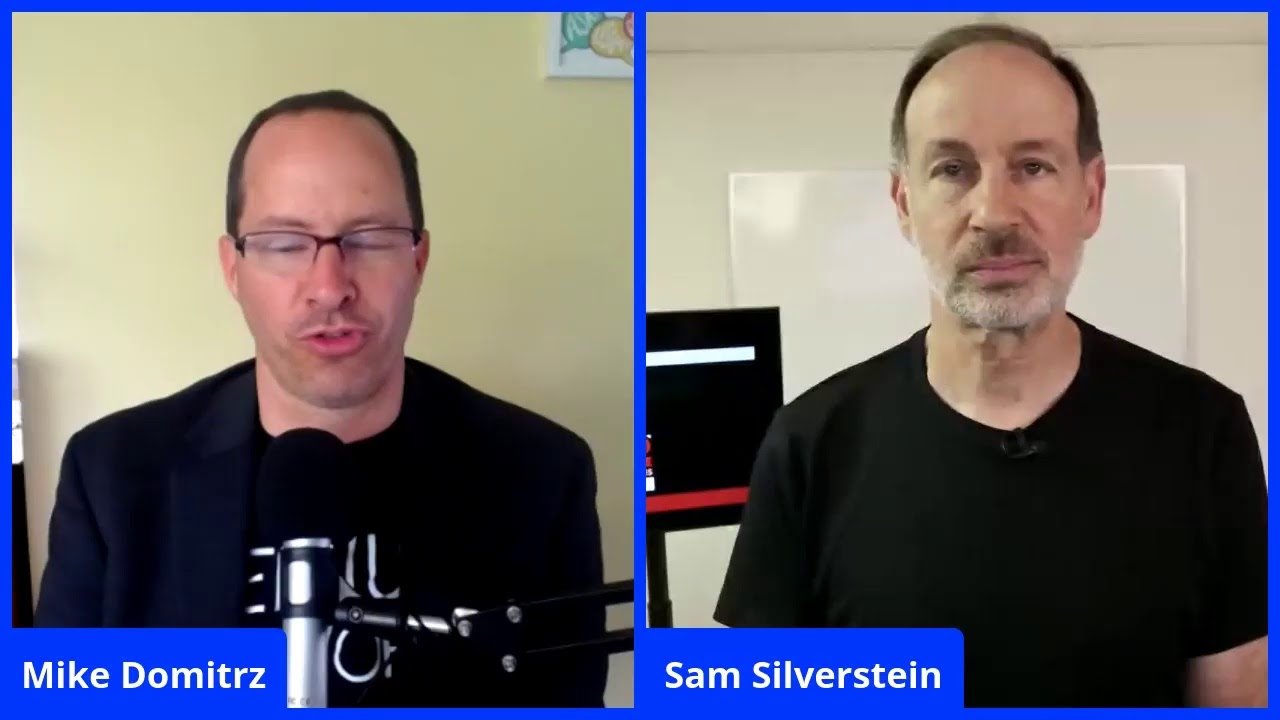
Mike Domitrz and Sam Silverstein discuss what it means to be truly present: listening without judgment, setting aside distractions, and serving the other person. Judgment is the main barrier to presence. They share how intentional pause and asking clarifying questions change friendships, marriages, and workplace meetings.
Chapters
Welcome to Mike and Sam. We are thrilled to be here. Hey, Sam, how you doing?
Oh, I'm sorry. Yeah, what's up, Mike? What are we doing?
So how are you doing today, Sam?
I'm, I'm, I'm fine. I'm fine. Everything's good.
Were you not present in the moment?
What are we, what are we talking, Mike? What are we talking about today? I need to know.
I believe we are talking about being present. I appreciate that already.
Did you tell me that already?
I did.
How come I didn't hear you?
I'm sure you might have had other things on your mind, Sam.
I don't think you told me that because if you'd have told me that, I would have heard you. I would know that's what we're talking about.
Well, we know I did tell you because we even texted about it.
Okay. Okay. So, what's the whole big deal about being present? What's the problem here?
So, good question, because when we're not present, what just happened— good acting, Sam— what just happened— Acting?
This is my life. What are you talking about?
Could be very frustrating for the person who's not being heard. And you don't need to be in a business office for that to happen, right? Marriages, relationships, parenting— this shows up everywhere, being present. And I'm going to start it off a different way than maybe we thought it was going to go, Sam, because I think sometimes being present Is just hearing what the other person needs. That's it. That, that's all you need in that moment. You and I had that happen today, and it wasn't intentional. It's just the nature of our friendship, and that you called me to check in, and within a couple minutes we are diving really deep on a messaging that you're putting out, and we're diving hardcore into it with no plan of doing that. But it's what was— it just fit the moment. It's what you were— what was on your mind. I enjoyed being able to be present for that. And it was fun and it was fulfilling. And it was just by being present in the moment.
Well, you picked up, you picked up that I was having some angst or frustration or, you know, feeling bogged down and you jumped in and you were there to help me through the wording and to talk about it all. And so, it was about you being present in that moment and seeing where my needs are. And it's interesting because I called you and And what was the first— what's the first thing I said after good morning? Good.
See, I got so into our conversation, I can't remember.
I know that I said, what can I do to serve you today?
That's right, you did. Yes.
And that's why I called. I just, you know, we hadn't talked. We hadn't been on the phone in a couple of days. We just had this holiday weekend. We've been really busy doing some things, both of us. Not that we aren't in touch, not that we hadn't texted or anything. We just hadn't talked. And so, I just felt this need to call and see how I could be of service. But things immediately changed. And then you detected that there was a need and then you went about serving my need, which attributes to your presence in the situation. I think sometimes we get into a conversation and it's easy to be sidetracked. It's easy to have that shining light pull us away. But the reality is, out of respect for the person that we're having the conversation with, we need to be there for them. We need to listen with intent of understanding what they're saying, what they're going through, what emotions that they're feeling, because when we do that, then we can best serve them. And that's what you did for me this morning.
Well, I appreciate that. You've done it for me a million times. You know, and one of the things that I think we can feel guilty about— hey, Rachel, thanks for joining us. Love that you're here with us today. And we want everybody to comment about how being present in your life plays into your life or not being present. And it can really vary on relationship, right? I mean, Sam, you just hinted at it, but you and I frequently will talk every day, or we definitely almost text every day. I think sometimes people see a show like this, and I've had people ask, who is this Sam person, or who is— and they don't recognize how much we are in touch. And so to be present, I think, is easier in our relationship because it's built on so much communication and so much honesty. And challenging each other. I think sometimes it's harder to be present for those relationships that there's a little barrier to, or that we're not there as commonly or as frequently. And, and so it's about focusing and being there for that person who we don't have that same connection with.
Well, and that's where, that's really where being present comes in. Have you developed a mindset, a lifestyle, a habit Is this an attribute of yours that you're present for people? Because it's like you said, you need to be present for all people. It's just not your close friends. It's not just your spouse or your kids. Certainly, we need to be present for them. But we need to be present for every interaction that we have with people because that goes towards respect. It goes towards honoring them. If I'm present for you but I'm not present for someone else, then I'm saying that I don't value that person. That there might be bias or discrimination coming into that situation. And that's certainly something that I don't want. So it's about developing this mindset and this skill set of being present, of listening to what they're saying, of asking questions. Why are they saying this? What's going on in their life? What can I do to be of service to them? It's literally about making conversations about the other individual rather than trying to just internalize and make it and apply it to us.
Yeah, and I love— by the way, hi Quentin, appreciate, uh, seeing you on here. And Rachel, a great point here that it's outside the circle that we have to really be, really be conscious of. Are we doing what we need to do to be fully present for that person outside the circle in those moments? And that seems to be the challenge, right? And it's, and it's— I think what the difficulty is for a lot of us is Judgment interferes with us being fully present. Like, we have some mindset about that person outside the circle that's— it can be very subtle, it can be very small. This can be a close family member, this could be a more remote friend, but we have a little judgment there that disconnects us. You and I have like zero disconnects. Like, we have differences of opinion, but like zero disconnects. So there's a difference.
Well, and as soon as we judge somebody, we're going down a slippery slope. As soon as we judge somebody, then what happens is we're then taking what they say and we're trying to interpret that. We're putting value on that. And we might actually be shutting them out. We probably are. We're tuning them out. And we're not paying attention because we're saying what they say doesn't have the same value, the same worth as what someone else says. And so, this always in this situation is going to come back to seeing people, valuing people, seeing people through an equal lens, and then honoring them by giving everyone that same sense of importance by being present for them. And let me tell you, when you come out of a meeting, this could be a personal relationship. But this could be a meeting at work. It could be a meeting of peers. It could be a meeting of someone that's reporting to you. When people leave a meeting and feel like they were heard, they feel like they were valued. They feel important in the situation. They feel like they're an important part of the process. And that's going to come from being present. That doesn't mean you have to agree with them. That doesn't mean you have to buy into their logic. We can have differences. You and I have differences of opinion all the time.
Yes.
But we hear each other out and we're present and we acknowledge that we've heard the other person.
Yeah, and that's just it. It's okay to push back. What's that?
You're laughing.
Well, I'm laughing because right before we get on here, for anybody watching or listening, we're like, we will continue this conversation after the show today.
You were wrong. I just didn't have the opportunity to finish proving that you were wrong, but that's a separate issue. Exactly. I mean, that's just it.
You can have fun with the difference, and that is the The big, big difference there. Uh, and look, we all know that when somebody's talking to us and is not fully present, it feels horrible. It does not feel good. Now, the mistake we can make sometimes is thinking that it's about us. Like, sometimes they're not present because they need us to be even more present. Like, something's happening in their life. I know that when I'm overwhelmed, when I'm trying to build all these new things and somebody's asking me, how are you doing? How this— I might be more disconnected. I probably need them to dig deeper, to be even more present for me in that moment. Instead of thinking, Mike's not totally here, I'm zoning him out. I want to do the opposite for my friends in that moment. I want to be like, hey, and you and I do this every now and then, Sam, something seems up, something seems wrong. Or you'd be like, Mike, your energy doesn't feel—
Right.
That's when you push farther to help that person instead of disconnecting, which is, I think, we naturally want to do. Like, whoa, they're not really here for me. I'm just going to move on. Versus, hmm, how can I dig deeper to help this person? They might be needing a little love right now, a little support.
Well, and you know what? We all have things going on in our life. And so, that's the key is we need to stop and say, hey, I know I have things going on in my life. I have to find a way to set it aside for 15 seconds, for 30 seconds, for 30 minutes, and be here for the other person, be present for them, serve them. It's about honoring people. And when we do that, Then, we build a relationship. We build a relationship with accountability. We build it with respect. And then, we build a relationship that is serving people.
I love— that's an awesome place to wrap right there, Sam. That is perfect. So, thank you for that. That's an awesome gem there. We want to make sure everybody can find us. Of course, you can find us on iTunes, Mike and Sam. You can find us on YouTube, youtube.com/SamSilverstein or /CenterForRespect. There's a little bell there. If you click that, it'll notify you, uh, when we go live, which is awesome. You can subscribe and like. All 3 of those make a big difference. Same with iTunes, by the way. They all make a huge difference. We want to thank you for joining us this week. Hope to see you next week.
Take care.








