#7 - "Mike and Sam" discuss BURNOUT in our work
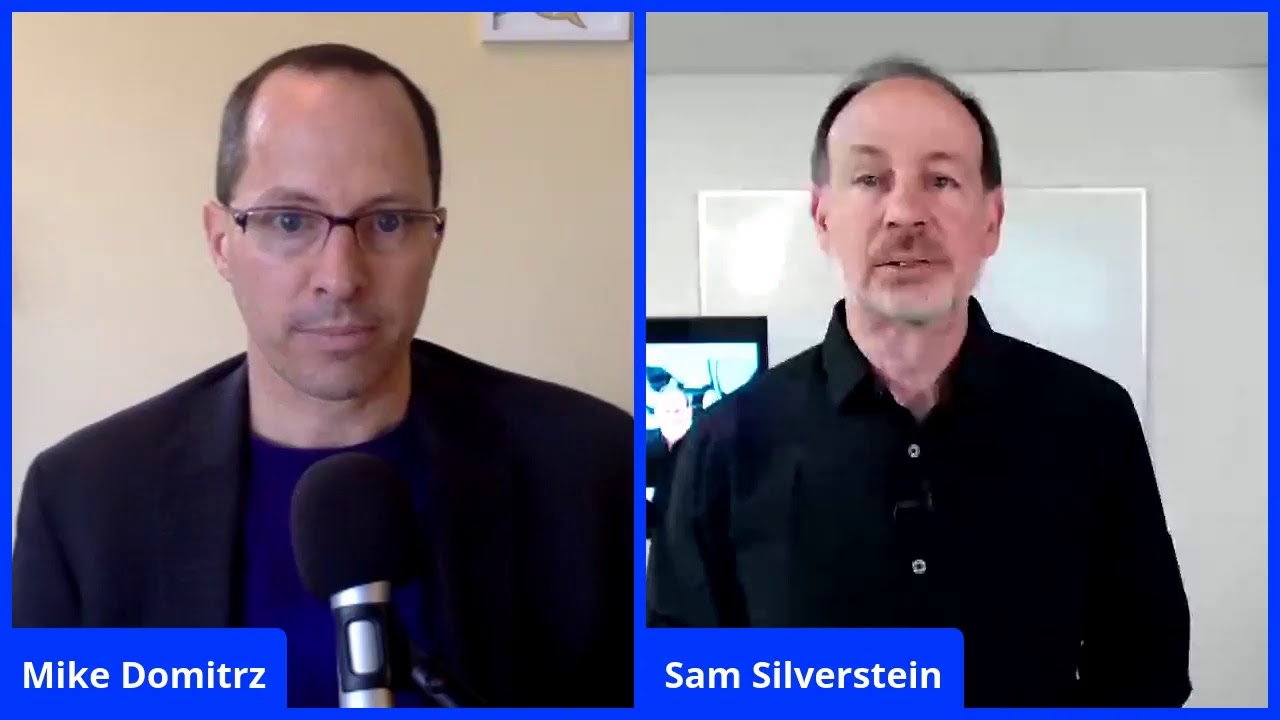
Mike Domitrz and Sam Silverstein argue that COVID-era burnout isn't long hours on one task anymore, but home and work pressures colliding, especially for parents in virtual meetings. Sam skipped a Sunday show after a week of nonstop work and felt restored. Leaders need shorter hours, real breaks, and visible care to keep people from burning out.
Chapters
And on the other side is Mike. So, welcome to Mike and Sam. Great to have you here. I got a text message from Mike this morning. Mike, you had this article that really caught your attention, and I loved what it's about. Share it with us, please.
Yeah. So, it was a link. It was a discussion of an article on Forbes about burnout. And I'm not even worried about what the article said because I think just talking about burnout right now is really important, Sam, because I think people are feeling burnout in a very different way than in the past. And that burnout in the past was working a 60-hour week or doing something you hate, and it just weighed on you, and you're just doing the same thing. It was methodic. I think burnout in the workplace now is what, what this experience is, working virtually and the stresses of home and the stresses of work and all the added is creating a burnout. Like, people I think if you talk to most people, how many hours can you effectively work with children at home? It's not 8 hours. It's not 6 hours. It's not. And so there's a very different level of burnout happening.
Well, that's exactly it. It used to be that our life was broken into pieces and parts, and you had your home life, you had your office life. You also had your commute to the office and the commute home. Which for some people could be as much as an hour, which that time was decompression time. Now, everything is taken and thrown into one tight package. Your family, your spouse, significant other, your kids, your work, everything is all compressed down and the pressure just builds and builds. One of my clients told his team that went home, he says, well, it's just business as usual. We'll just work from home. And it's like, no, it's not business as usual. All these other things are going on. And so, it's critical as leaders today in an organization, you wanna protect your organization, you wanna protect your culture, protect your people. And you protect them by trying to identify these, these elements of burnout and then eliminate them.
Yeah. And I think that's really important there. What eliminates them? And so, I think what a lot of companies have to realize is, if you're in this for the long game, You have to pause for a moment and say, what are we asking and what is fair and what is going to create long-term results where we want it to go? If we are trying to get people to max themselves out right now under high stress, there is going to be significant long-term damage to the organization, the culture, retention. It's going to be horrific, right? Versus if we go, hmm, what if we went down to this many hours? And they were way more productive in those many hours, understanding we'll go back when the time is right. But for right now, we're going to shorten this up a little bit so we can maximize efficiency, productivity, well-being of our people.
Well, yeah, exactly. And there's going to be several benefits of that, Mike. And that is that, first of all, as you mentioned, those hours should be more productive. Fewer hours, people are more refreshed. That time will be more productive. They'll get good quality work out of it. The second thing is that the people see that their leaders care about them. That the leaders aren't just slamming on the bottom line, trying to make as much money as possible, but actually care about you as an individual. That builds relationship. Relationship is the foundation for accountability. And you're protecting your people. And we need a break. I know myself, I, for about 3 and a half weeks, almost 4 weeks, Was working 7 days a week with everything that was changing. And then, all of a sudden, I realized, oh my gosh, I've really backed myself into a corner fatigue-wise. I'm exhausted.
Yeah.
And so, it was Saturday, just this past Saturday afternoon at 2 o'clock. I said, I'm done. And then, not only was I done for Saturday, you and I had talked about doing a show on Sunday. And I'd said, let's just not do the show on Sunday. And I didn't step into the office on Sunday. And I can't begin to tell you how much better I felt yesterday and the amount of energy and productivity that came back.
Yeah, it's huge. And I think so what we all have to be aware of is a lot of times we are our worst, we are our worst coaches. So we do not catch when we are burning out until we're burned out. And that's why, like, trainers, personal coaches can be helpful because they catch these little signs we're not able to see from the outside. I know for me, Sam, if, if I've been going on bike rides when the weather has allowed, uh, during this time, because you can do that, there's distancing, it's safe. But I was noticing how much higher my heart rate was, and that's a clear sign of fatigue.
Mm-hmm.
And so we gotta watch for those little things that say, wait, that's not normal of me, that's not— or maybe you are snapping at your kids, you're snapping at your spouse Just a little bit more than you normally do, maybe a lot more, and catching yourself and going, that's not me at my best self. There is some fatigue happening here. There is some burnout happening here.
Exactly. And, and the other thing that's causing a lot of stress that people don't realize is that there's a lot of unknown issues and challenges that people are facing. For instance, the dairy industry, The dairy industry is really hurting. And you go, oh my gosh, by the way, that's my state.
I'm Wisconsin.
That's right, Wisconsin. So, but here's the thing. If you're in the dairy industry and you're set up to sell your product retail, meaning your milk goes to the grocery store and someone's coming in and buy it off the grocery store, well, that's fine. What happens to all those dairy farmers that are selling their products wholesale in quantity that's going into the restaurant industry, that's going into into hotels. It's going into— it's a bulk sale. They don't even have the equipment and the ability to repackage and sell retail. Now, the reason I bring that up is because—
I'm gonna pause you there, actually, because I have family that are farmers. So, there are farmers dumping milk. Dumping milk.
Right, because exactly, because they have nothing to do with it. And so, there is in their life, they have a situation where You would think that their product has this universal appeal. And while it does, they don't have the ability to distribute it. And so, they're sitting trying to reinvent themselves, come up with new techniques, solve these problems. And in doing that, there's just tremendous stress that's building up. And that's going to lead to burnout. And so, it's critical to not only recognize this, but to take steps and to be there for those people. And so, if If you and I maybe have a handle on our situation at this point, my question would be to the people that are watching this and that share this every day with us is, what can you do to help burnout of other people? What can you do to maybe take a little slack off of someone else? How can an act of kindness, an act of consideration, an act of care make a difference for someone else?
Because I guarantee you, even the smallest of action that we take can have a Yeah, I want to give somebody, everybody out there, especially if you're a leader, a manager, you manage other people, I want to give you a possibility of what you could do. And that is tell your per— let's say you're managing somebody, you're doing a Zoom meeting, you're doing it virtually, and tell them to all go home for the day. And when you say it, say, no, no, no, don't go home right now. I'm letting you leave early. I'm letting you leave the job. Go do something without anybody having to know because they think you're working virtually for the next 2 hours. That's a great idea. that takes care of you, whatever that is. So when I let you go here, I want you to take care of you and the amount of time you were going to set aside for work. And that's very intentional. And when you do that as a leader, people see you are going way above and beyond just, oh, take a day off. No, no, no. Take care of you. What do you need to do right now to be your best you? Because that's what we want for all of you. We care about you. I've been with CEOs and I've never met CEOs— well, I shouldn't say never. It is incredibly rare that I've met CEOs who didn't care deeply about their people in their hearts. As a CEO, they did care deeply. We just have to show it. We have to show that by giving exact steps people can take.
Well, and so, so here's the challenge. Go find out what you need to recharge. And then those people around you that you're looking out for, that you care about, Find one thing that maybe they need to recharge and then help them do that. And I will tell you this, some of us sometimes we think, oh, I'm so busy, I don't even have time to help so-and-so. The reality is that if I'm doing something to help my wife, when I'm helping Renee, I feel good and I get a certain satisfaction from that. And I guarantee you that our listeners can step up and help the people around us Make a difference, help them avoid burnout. And this is going to be a win-win situation.
I love that. Speaking of win-win, we want to let everybody watching know a couple updates, news that we have out there. And that is we're a podcast now. So while you get to join us live, if you ever miss an episode and you're not on YouTube or you're driving and you just want to listen, look us up. It's Mike and Sam. We're on iTunes, we're on Spotify, we're everywhere. Every day I upload the newest episode so you can catch it just like this. It's the exact recording of what you're watching. It's 10 minutes. So please look that up, subscribe, like— that makes a huge difference. Of course, you always find us on youtube.com/CenterForRespect and Sam Silverstein. That's today. We'll see you tomorrow. I'm Mike.
I'm Sam. Stay well, take care, don't burn out.








