Creating a SAFE space for your workplace with "Mike and Sam"
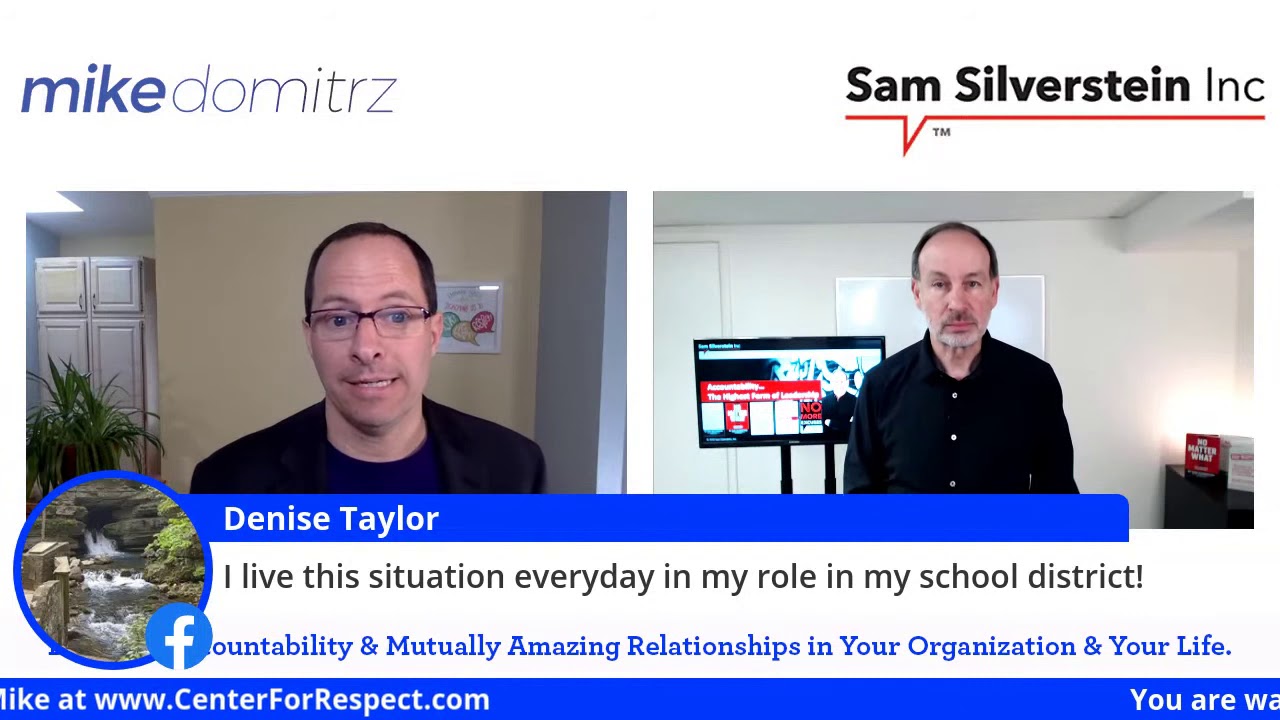
Sam Silverstein and Mike Domitrz discuss building psychologically safe workplaces where people can voice disagreement without fear. They cite the Florida Surgeon General removed from a COVID briefing for contradicting the governor, arguing that silencing dissent damages trust. Leaders need diverse perspectives, not yes-people, and should align decisions with stated values even in conflict.
Chapters
We're live. Well, welcome everybody. This is episode 1. 20 years from now, maybe this will be famous. You never know. I'm Sam Silverstein.
I'm Mike Domitrz. Welcome to the Mike and Sam Show.
And we just want to share a little bit of your day today as we talk about accountability and respect in mutually amazing relationships. Because what we know to be true is simply this: that's what it takes to, to have a great life and to build a great organization.
Absolutely. And Sam, we're going to dive into a specific case today concerning the Florida Surgeon General who was declaring what he was supposed to declare as what he believed to be what was coming in the future. And after he gave the answer, he was removed from the meeting. And, and we're going to dive into this because it's not about politics. This is about workplace where people can say, hey, we want to hear your opinion. But then when they do voice their opinion, they don't feel safe. It's not really welcomed. It's not really wanted. So you shared this with me. What triggered you with this, Sam?
Well, the real question that came out of this article is simply this: What happens when someone in an organization disagrees? What happens when someone disagrees? What happens from the leadership standpoint? What happens from the rest of the people standpoint? And what this flows from is that article, yes, that I shared about the Surgeon General for the state of Florida was at a coronavirus meeting just yesterday, and they were talking. He felt that social distancing needed to be continued until a a cure for the virus had been found, a vaccine. And then someone came over and whispered something in his ear. And then someone in the news media asked him, well, when do you think that's going to happen? He says, well, everything I'm hearing, it could be, you know, 12 to 18 months. And at that point, the same person came back over, whispered in his ear. He stood up and was escorted out of the room. And so here's a situation where an individual An expert is being asked a question and his opinion differed obviously from the leader, which is the governor in this situation. And so, what's happened? That individual is banished. And I just don't believe that in an organization, whether it's a political situation in politics or whether it's in a business, that when we treat people like that, that we're ever going to get the participation in the future that we would have gotten because we've shut them down. And so now everyone on the team has been told, you cannot speak your truth. You cannot share what you truly believe because if it disagrees with me, the leader, I'm shutting you down. I'm taking you out of the conversation. How's that for respect?
Yeah, exactly. There's none whatsoever. And one of the biggest components of feeling respected is feeling seen and and valued for your knowledge, for your gifts, for your talents. So it's one thing if you say, I'm gonna let you be seen, but then I don't value you at the same time. Both are really, really essential to that. We also wanna make sure if you're watching this right now live with us, if you comment, we can see your comments. If you wanna ask a question, do so in the comments because we would love to take your questions and your comments throughout the Sam and Mike Show. It's really important, or Mike and Sam Show. So it's all new. We're having fun with it today. Sam, this is such an important discussion because how are ways that you think that we all can fall into this trap at times?
Well, I think it, it's really easy to fall into the trap of if we think it, it must be true. And just because we think something doesn't mean it's true and doesn't mean that it's, that it's right. And so I think it starts from a sense of humbleness and transparency. That none of us are perfect, that we make mistakes, and none of us have all the answers. And the leader that thinks they have all the answers is usually dead wrong. And so, the effective organizations are those organizations where the leadership has surrounded themselves with people who have important conversation to add to the discussion. And then, we listen to them. And ultimately, a leader in any environment is going to have to make a decision.
Yeah.
But you don't make that decision after shutting someone down. You make the decision after respecting everyone, allowing them to share their point of view, and then making a decision that's in the best value of everyone.
Absolutely. And we have Denise Taylor saying, hey, I live this situation. And Denise is somebody who's been a school administrator, and Denise has been— is director of curriculum. I know Denise. So yeah, how Denise Handles, right? Those moments where you let somebody be seen makes a huge difference, because the other side of this is making sure we're doing a good job of letting voices be heard, of letting contradiction be heard, of not just surrounding ourselves with yes people, which is what leads to a lot of these problems in the first place.
Exactly. And so what we have is a situation here, and this situation in Florida, in my opinion, whether it would be in Florida or an XYZ corporation, If there are truly a set of values that are in place, any decision that has been made has already been made. It just has to be stepped out when the situation presents itself. And so, the question is, at this moment when we're sitting around the table and we're discussing, and it might be a heated discussion on what we should do. If we go back to our values and we look at our values and say, okay, this is what we say we believe. These are our values. which choice best aligns with those values. If we make decisions that way, then chances are we're going to make a better decision. And in that process, we're also honoring everyone that has shared their opinion because they see how their opinion of that situation either does connect to those values or doesn't connect to those values.
And I could see some people watching saying, but what does that lead— what if a leader drastically disagrees? And I want to respond to that. We're not saying that the people had to agree, that the leadership had to agree with anything that was being said. What we're saying, in fact, you could actually come out and say, I really appreciate what they said because I come from a very different viewpoint. And so I have a different understanding of the situation. So we may totally disagree. And I love that he felt safe to still say what he wanted to say or she wanted to say, because it's that combination of I welcome counterthought.
Well, you know, you and I have worked on many projects together. We collaborate all the time. And through conversation and discussion, we, as good of friends as we are, we do not agree on everything. But we listen to each other and we know where the opinion is coming from. That it's, no one's trying to better themselves through sharing an opinion. We're trying to better each other. And hopefully, in an organization, it's that same environment. That the people sitting around the table having this conversation are not sharing their opinion because they're trying to better themselves. They should be trying to better the organization or certainly better the people that that organization is trying to serve. And again, that will flow through the values. When everyone at the table is coming from that place, then that's a real positive situation, even when people disagree.
Absolutely. Sam, if there was one skill or mindset you wanted people to leave with today on this discussion, what would it be?
When you make a decision to interact with someone or to react to someone's opinion that disagrees from you, stop and think about what the long-term effect of your comment will be. Are you shutting them down so they will no longer feel like sharing their intellect, their brilliance, their knowledge? Or are you respecting them in that moment Even when you disagree.
I love that. A mindset that I'll share with everybody is to ask yourself in that moment, what I'm about to choose, what I'm about to say in this moment, am I leading with respect? And if you go, well, gee, that's a tough word. All right, then I'll make it easier. Am I leading with love? If this was somebody that I was going to treat from the spirit of love, which is where respect is, value, being seen, I don't have to like you to treat you with love. I don't have to like you to treat you with respect. But am I leading with it? And so I think it's been great. Thank you so much, Sam. For everybody watching right now, you are watching The Mike and Sam Show. It's a 5- to 10-minute episode. We're right at the end of today's show. We want you to know that our plan right now is 1:00 p.m. Central Time. You can join us and leave comments like Denise did earlier. We can put them on the screen and discuss them, which is really, really awesome. Sam can be found at samserviceteam.com. I can be found at centerforrespect.com. Thank you for joining this episode. Thank you.
We'll see you tomorrow, 1 o'clock.
See, the buzzer went off.








