Discussing “Why dont survivors come forward sooner?” with Mike Domitrz, speaker and author
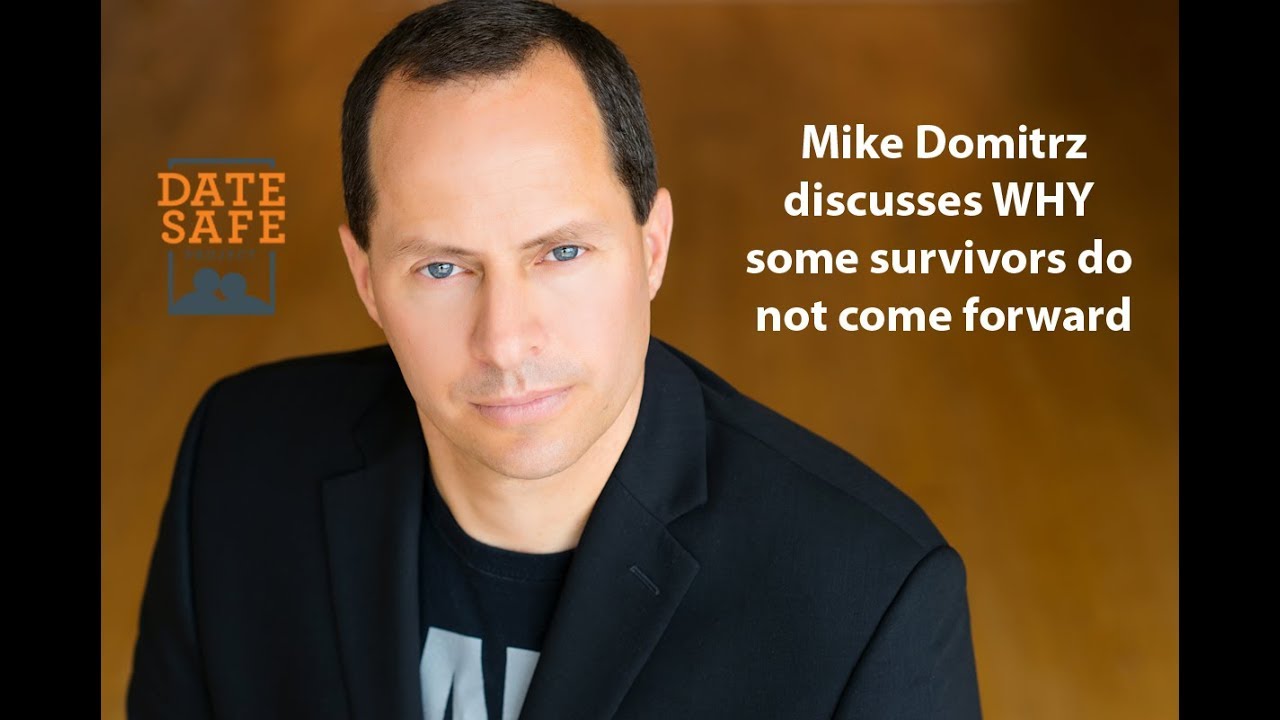
Mike Domitrz explains why survivors delay reporting sexual assault: disbelief, victim-blaming, self-blame, fear of law enforcement, media backlash, and worry about disappointing parents. He argues that when someone comes forward matters less than whether it happened, and asks listeners to stop using timing as a reason to doubt victims.
Chapters
All right, so we are here to discuss why survivors might not come forward, and why they might not come forward might be from something that happened last night, could be from something that happened 40 years ago, 50 years ago. This question that is getting asked a lot right now, we're hearing a lot because of a case in the news and in the media. People say, why didn't the person come forward? Why didn't they come forward before now? We really need to discuss the importance of this discussion and that question. That question has no relevance on whether you believe it happened or not. None. This could have happened whether the person came forward or didn't come forward. So people using this as an excuse to try to defend one person in this case or defend what they believe is the truth in their mind in this case doesn't make sense because There's a history of, when you look back at the history of this crime, of people not being supported, people not being believed, and therefore survivors not coming forward. And many of us, including people who are out there saying, why didn't this person come forward? Know people who without a doubt they know were sexually assaulted as a child, were molested as a child, and did not come forward Until decades later. And many of us know those individuals. And some of those people who know those individuals who are survivors are the same ones now going, why didn't this person come forward? Because it's not just that simple to come forward on a crime that people constantly question you about what you did or did not do when it was the criminal in the case that we should always be focusing on, not the one the crime was done to. I'm not— let me be clear. I'm not talking specifically to the case that's in the news that everyone wants to talk about right now. I'm talking about the fact how we're responding to that case, and that's incredibly important. So if you're sitting here going right now, well, I don't believe in this case that this crime happened, that might be something you believe. It might be. Whether you, whether you believe it happened or didn't, Is a completely different conversation than why didn't the survivor come forward? We need to discuss this question, why didn't the survivor come forward? Because people are using it as a ploy to either in their mind, publicly, or to get others to believe this might not have happened, or that this case, it didn't happen in this case. But it has literally nothing to do with whether you can prove it happened or didn't happen as far as— Whether it happened 2 months ago or 36 years ago. And some of you argue, well, it'll impact the memories that are there. That's true. But let me put it this way. If this did happen 36 years ago, okay, if it did, and you're saying, why didn't they come forward? It doesn't change whether it happened 36 years ago or not. If it somehow did not happen 36 years ago, somehow you want to believe that, that somehow 36 years ago this did not happen. It does not change anything by asking the question, why didn't they come forward? It doesn't change anything. So we need to discuss why survivors don't come forward. So hopefully for those of you who are genuinely wondering why survivors don't come forward can have an understanding and stop asking the question. And you might be thinking, Mike, why do you want people to stop asking the question, why didn't this person come forward 36 years before? I'm going to talk about why many survivors don't come forward. I have no right to talk about a specific survivor And guess what their answer is. If anything, that's rude to all survivors. I will tell you why many survivors do not come forward, and then you can use that information to have better knowledge before jumping to implying that because someone doesn't come forward, crime didn't happen. There's— that correlation is false, and it's been false in sexual cases, sexual assault, for since the beginning of time, actually. It's been a false narrative. So we want to be able to talk about why survivors don't come forward, because There's so many legitimate reasons, real fears and concerns that survivors can have. One, the fact that you're not sure who's going to believe you, and that's a legitimate concern based on what you've seen in past media coverage of this case. You might not be sure who's going to believe you, who's going to listen to you, and so now you think, I'm going to come forward. Now keep in mind, this is crime that violates the most personal of boundaries. The most personal violation there is of crimes is sexual assault and sexual molestation. It's the most personal. So the idea that it's comfortable or easy for someone to come forward and share the most personal violation, right there alone, we should have a pause, a moment of compassion, understand, wow, for every survivor that comes forward, that must take tremendous courage. Tremendous strength to share the most personal violations. That's the starting point, to understand even to come forward requires that. That, that's going to take courage. That took strength. And every survivor may have that courage and strength in them, but they might not be sure how they're going to handle it when that comes forward, where— if they're going to be strong enough. That's a genuine fear that humans have. Am I strong enough to handle this? All right. That what's going to happen to me? So that's one fear. Another fear is, will the people I love believe me? The people that I should feel safest with coming forward believe me? And you might think, well, of course I'm going to believe the ones that I love. If they come forward to me, I'm going to believe them. But history has shown here again that many survivors, when they came forward to their loved ones, were not supported. We're dismissed. Just today, I was quoted in a Yahoo News article about survivors coming forward. And when I posted that article, within minutes, and I mean minutes, someone I know posted that when I came forward as a survivor, my own family dismissed me. And that's not uncommon. Keep in mind that if you're an adult in this world, you've had enough time to hear these stories from other family and friends who have come forward, and that impacts you. That's in your head, that's in your emotions, that you know people who have come forward and their own family didn't believe. That's another barrier. That's another brick on that wall that potentially stops survivors from coming forward. Another one is the fact that our society forever has said to survivors questions like, what were you wearing? What were you doing? What were you thinking? Why didn't you fight back? How much were you drinking? Asking all these kind of questions. And we've seen this exist in society forever. It puts another brick on the wall of the survivor might be blaming themselves for not stopping the criminal, even though it's no survivor's responsibility or fault that a criminal did something to them, that the predator did this to them. But because of how society has talked back down on that survivor, they might be questioning their own selves. They might not be coming forward because they feel bad they didn't stop Stop it somehow. Or they may have been saying, did I do something to ask for this? Which they didn't. There's no way to ask to be sexually assaulted. In fact, it's a complete oxymoron. Because if I were asking for that sexual intimacy and I was able to give that consent, I'm at an age where I'm able to, I'm of sound mind, I'm able to, we wouldn't be talking about sexual violence or sexual assault. We'd be talking about consent. So there's no way to ask for this. But the survivor might be thinking, did I somehow do something to ask for this? Even though they didn't, our society has taught them to question themselves that way. Another brick on the wall that stops the survivor from potentially coming forward. You notice these bricks are getting taller and taller. They create a wall from survivors coming forward. Another one is, if I do come forward, let's say I come forward and I go to the authorities. How do I know they're going to believe me? How do I know I'm going to be treated by the authorities? Now, you might be thinking, Mike, hey, you're someone who works with the authorities. You're pro-working with sensitive crime unit detectives. And you're right. I do have friends who are very in that field. I have one of my closest friends retired in that field. I am a supporter of the authorities who are trained to do this right and are there for supporters. Absolutely. Unfortunately, we have a history Of people in those positions of authority, being in the legal authority system, who did not treat survivors properly, who did not follow the proper training, and therefore made it worse for a survivor who came forward. Keep in mind that legal professionals, as far as the authorities, whether it's police, whether it's sheriff, whether it's county, federal, learning how to properly handle sexual assault cases is still just being refined and taught in some areas and is relatively new to the past couple of decades. And for some, the past decade, some police departments. So it didn't exist before then. So there's a history once again of people in society hearing horrible stories, real stories of what happened when they came forward to the authorities. Another brick on the wall, right? Now it's almost above our heads. Now we can't see past the wall because there's so many bricks on this wall of why survivors might not be coming forward. And these are just a few of the reasons. Now, you add another brick on the wall that every time a case comes forward in the media, what happens is what's happening currently. For the first few days, it seems to be people who you might expect to counter the argument don't immediately do that. And those of us in this field know that and we're aware of it. And people will go, oh, that's interesting. They're handling this way better than I thought they would handle this. Typically, there's someone who would fight back right away, but they don't seem to be here at the start of this. That's normal for the first few to several days because a lot of people are aware that they consciously are choosing not to verbally or emotionally attack the survivor afterwards because they know it would look bad. So they intentionally let a few days go by before they start to bring up, well, What about this? Well, what about this? Very passive-aggressive, subtle ways of attacking survivors. It's very common. It's been done forever. I can look at almost every case that's ever happened in the media, and if you look at the second week— in other words, a week has passed once the case came out— you see a totally different reaction going on in the world to the very first week it came out. And that is not uncommon. So we have to understand that because of that, there's another brick on the wall here. And there's— this is a massive wall of barriers that have been put up in front of survivors because of the history of this topic. Here's what I'm going to really encourage you and invite you to do with this topic. No matter what you think about this current case that is taking place, please don't start, don't roll off with, Questions like, why didn't the survivor come forward sooner? That has nothing to do with whether the crime happened or not. So if you're trying to say you believe it didn't happen, that statement has nothing to do with whether it happened or not. Because we— in fact, almost everybody watching this video probably has somebody in their personal life who experienced some form of sexual violence, either as a child or as an adult, who did not come forward for Years, weeks, months, years, and decades. Most of us know someone who's experienced that. And you might not even be aware, but a lot of us are aware. And if we're aware that we know that happens to a lot of people, then let's not suddenly forget that when we disagree with a specific case. Because what we have to remember is all these survivors are watching us right now, not just the one you're talking about in the news. Survivors from around the world are watching. That means millions and millions of survivors are watching our comments right now about this one case. Please don't let your opinions on this one case do harm to the millions of survivors who are watching. That means we don't say, well, why didn't they come forward 36 years later? I just gave you, what, at least 8 reasons? At least. And there's many more reasons, by the way. I gave a few. That also means we don't say things like, well, what were they doing drinking as teenagers? Excuse me, but I know a lot of teenagers who drank alcohol, and I bet anybody watching this video knew a lot of teenagers who drank alcohol. That did not mean that any of them deserved to be sexually assaulted, ever, ever. And they might be saying things, well, why didn't they tell their parents right away? I know many, many adults that as teenagers would have been deathly afraid to tell their parents anything that happened wrong, even the most horrible of things, if they were drinking at the time, because they were so fearful of the repercussions of their parents disciplining them for being somewhere they weren't supposed to be. And by the way, if you talk to survivors around the world where sexual assault happened in high school, at a party, or somewhere you weren't supposed to be, Many survivors will share, there's no way I was telling my mom or dad. I was so afraid of how my parents would react, or I was so afraid of disappointing them. By the way, that's another barrier on this wall. Some survivors will feel, by this happening to me, I'm going to have disappointed my parents or my family, which is so unfair because once again, it was the perpetrator who did this when sexual assault happens, not the survivor. But we've created a society where survivors say, You know what? Maybe I did something to disappoint my parents in the situation. Therefore, this whole thing wouldn't have happened if I didn't make this one choice. And so it's the disappointment of my parents, the hurt, the pain my parents could feel, that's on me. And survivors can feel that, and that can feel very real. Now, here's what we all have to understand and help survivors, support survivors, is letting survivors know no matter what you did, if somebody sexually violated you after that choice, They don't have a valid reason to do that. If you get drunk, that's not an okay for people to do horrible things to you. If you go to a party you weren't supposed to go to, that's not a clearance for people to do whatever they want to you. You still had rights in that moment. But what happens is, as a teenager, you become afraid of all the other things that could come into play if you come forward. And that's not even with sexual assault. I mentioned it before. I know, and we all know, People who drank or were at parties, were wearing things they weren't supposed to wear according to their parents' or family's standards. We all know people who experienced that. I'm not even talking about sexual violence. That. And were afraid of what their parents were going to find or do or how they were going to react. Now you add in that maybe you went to a party and you were wearing something your parents wouldn't be happy with, you were drinking, you thought your parents were going to judge you. And then this horrible thing happened to you and you start to think, oh no, they're going to blame me for also making that choice. even though you didn't make that choice. The predator made that choice, right? This is all the factors that go in. This is why we have to be incredibly, incredibly careful with these public cases about how we talk and how we react because survivors are watching. Somebody said yesterday, recently on a post, somebody that I really respect and like, it's a wonderful parent, said, hey, men are getting beat up right now. So I'm standing for men at this moment. There's enough. We need to stop the bashing of men. And I said at that moment, I want to be careful there because to survivors it looks like we're saying that if you come forward, you're bashing men. And what I pointed out there was I don't see people bashing men as a whole. I see people wanting predators to be held accountable. People they believe to be predators. Not all men, but the men who are predators, they want to be held accountable. And that's fair. No matter what your gender is, if you committed sexual violence on someone, you should be held accountable. So let's be careful once again of the general statements we're throwing out that could do harm and trauma to survivors. They've gone through enough already. They don't need to go through more from us right now. Keep in mind, this could happen to them 40 years ago, 20 years ago, 10 years ago, or 2 nights ago. We don't need to make it worse now. So, so important. Once again, why I want to stress that That when we talk about this, it could be anyone that commits this crime. It can be anyone who experiences this crime. Any gender, any sexual orientation, any identity can commit sexual violence and can experience sexual violence. It means it can be committed against them. The crime can be done against them. Anyone. For that reason, let's please make sure we create a culture of respect when we talk about this case that's happening publicly and anytime a case comes forward in the future. Thank you. Thank you.








