Lets talk superpowers with "Mike and Sam"
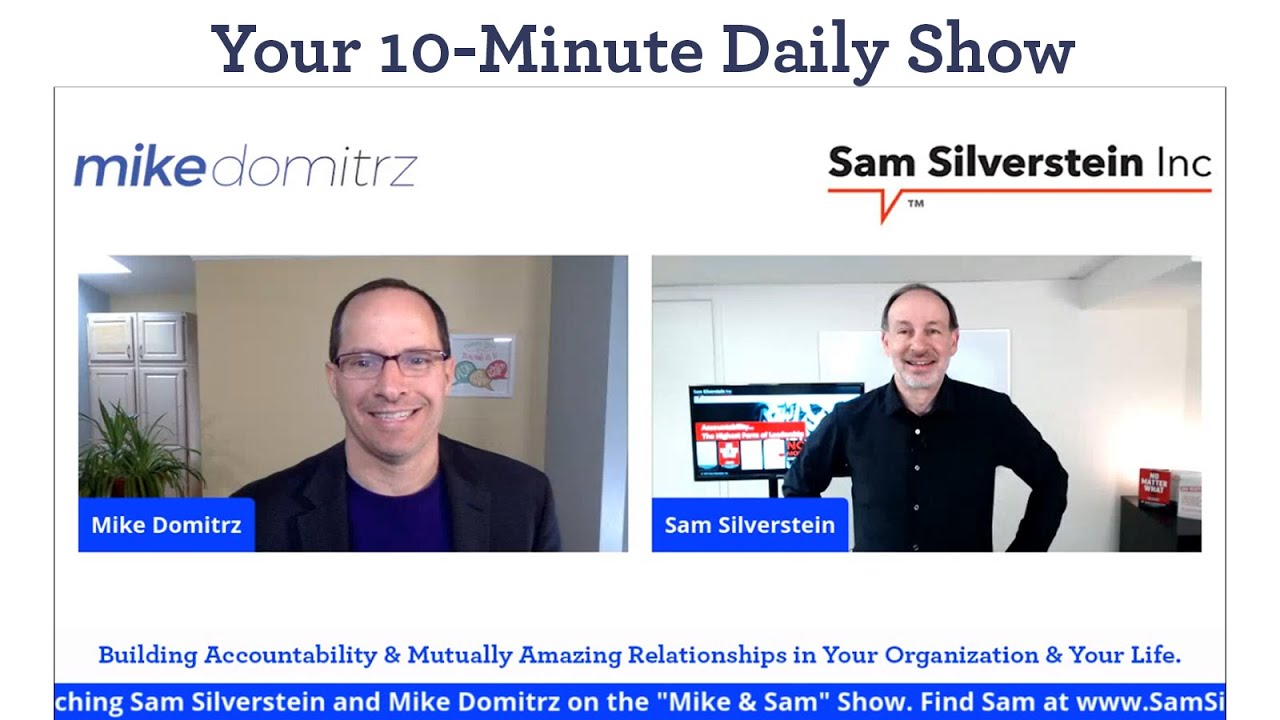
Mike Domitrz and Sam Silverstein discuss how identifying personal and team superpowers builds stronger relationships, which boost productivity and creativity. Sam shares an exercise where team members name their own strengths and those they see in colleagues. They argue that respect is profitable: when employees feel respected, they work harder, solve problems better, and miss fewer days.
Chapters
Welcome to Mike and Sam. Today we're going to talk about superpowers and one's superpowers, the people we work with's superpowers. So Sam, I'm gonna let you drive this because you had a specific conversation that led us here today.
Yeah, it flows through the concept of superpowers, but the reality is that it involves something even more powerful than that. I was working with a client this morning. I was working with their team And I asked them, what's, in this situation, in the world situation that we're faced today, what's the superpower that you bring to the table? And they all shared something. And it was really awesome to see that they saw positiveness in themselves. And then I said, I changed the question. I said, so what's the superpower? What's the strength that the people you work with bring to the table? And they started talking about each other. And they started sharing how they felt others in their organization worked with them, treated them, helped them, communicated with them. And it was amazing to watch how everyone believed in each other, trusted each other, and in this environment, were there for each other. And this is relationship. And what I realized is that in the past year, they have been working so hard on their organizational values and their culture that they've actually grown to the point that through their values and their culture, They built these amazing relationships and now it's starting to show up internally in their productivity and their work. But it's also showing up in their relationships with their customers.
Well, I love it. And there's so much to unpack and take out there, right? Because one of the big lessons there that a lot of organizations really struggle with is this idea that relationships are soft skills and that there's— it takes too long to develop. And what they don't realize is, You're building a foundation. If you don't build it, things can crash and it'll affect every other element of your business. But once you build it, you don't have to keep building it from scratch. It builds itself stronger and stronger. And you said, you know, now after a year, look at what's happening, right? And where is it gonna be in 2 and 3 years? It takes really leaders with foresight To understand we're about to embark on a journey, not an overnight solution when we have these conversations.
Exactly. Which, you know, it debunks the entire comment that we hear so many leaders say that this is business, this is not personal. And there could be nothing more distant from the truth. The reality is every interaction between 2 people is very personal. And when an organization can really get relationships right, then what happens is They get everything else right. Communication is improved. Teamwork is improved. The ability to be creative is improved. Engagement improves. Productivity improves. The bottom line improves all because of relationships. So, it's critical that leaders spend as much time working on the relational side of their business as they do the tactical side.
Yeah, it's critical. You know, we had a title that said, The profitability of respect, and some people are like, "What? That that's relationship. That's soft skill." But they don't realize when somebody feels respected, they work harder. They're better problem solvers. They're way more productive. They're not missing work. Your company is making way more money because of respectful culture, because people are being seen for their superpowers. I love Tamara's comment here.
Absolutely.
Yeah, right. Yes, they take time, but they are essential. Essential, essential. And what I love about Tamara's comment is you enjoy going to work when that's the case. You look forward to being there.
Tamara, it's great to see you and thanks for sharing that. Here's the thing, any investment that is a good investment is hopefully going to provide a return over time. There's no investment, there's no financial investment that we can make today, that we can make right now, that by dinnertime tonight we're gonna have this tremendous return.
No.
It's going to take time. And as you've pointed out so accurately, it's an investment in relationships that yields a result over time. Tomorrow, next week, next month. It accumulates. And as it grows, the benefit that comes back to us individually and to us as an organization is just incredible.
Well, yeah. And the part you just brought up there that I think is so wonderful and beautiful is As it grows, you see steps. Like, people want to believe, oh, I'm gonna— it's gonna take a year before I see the results. No, you'll see a result in 1 hour when somebody catches themselves, when somebody treats somebody differently over here than they did before. It's in 10 seconds from now. It— and the big picture looks completely different in a year, but the little steps start showing. And if you're not If you're not seeing them start showing, that means you haven't done the right job or sufficient enough to help it grow. You need to do more, not less. Yeah.
Mike, you live on a lake. So, you know, you walk down to the water's edge, you pick up a stone, you throw it in the water. How soon do you see a ripple?
Yeah, right, exactly.
Instantly.
Yeah, you see the ripple instantly, but how long before it gets back to the shore?
Well, but it just keeps going and going.
That's right.
What you do to invest in a relationship Not only does it grow that relationship between you and that individual, but you're setting an example. They return that kindness. They return that relationship. But then also, we are inspiring them to build relationships with those around them. The ripple effect is just enormous.
Yeah, it is. And what's amazing about a ripple effect is being on the lake is that once there's one ripple, let's say that a canoe goes by or a boat goes by, you get one set of ripples. But when another ripple comes from another place and another ripple comes, you get huge waves. And you know what happens? The people out there that love to water ski, they love to get behind all those boats that are moving everywhere because they want to jump. They want the big waves to live off. And we're talking about building big waves of relationships that are, that are fun to ride.
Exactly. That's what it's about. You know, in the organizations I've worked with where we've actually gone in and used our assessment and looked at their culture and looked at and measured accountability, what we've always found is organizations that struggle with accountability are struggling with relationships. Organizations that have nailed relationships nail accountability. Accountability does not necess— it's nailing the relationship first. Accountability flows from there. We have to have the relationship in place. When you nail the relationship, you also nail that productivity. You nail that teamwork. You nail that communication. It, it's always going to start with that relationship.
What Tamara just shared is so beautiful and so wonderful because, Tamara, thank you, because that's leadership even that you shared that. Because how many of us do that, right? We get caught in the tactical because that's what we're taught to do. Do the next thing, the next, the next benchmark, the next. And then we recognize, whoa, what did suffer? What people did I, did I miss their feelings or that in that day? And that's not what Tamara's saying she did, but I've done that. Right. And so being aware of recentering, refocusing so we can be both tactical and caring. So, so important. Here's Greg, right, talking about, oh, different things. So Greg's saying that they're liking the show. So that's very cool.
Awesome.
Yeah, we love that. But don't you agree that that is the tough part is getting caught in those benchmarks that Tamara is talking about?
Well, exactly. Because what happens is we are trained that we need to take care of the tactical events. We need to get Stuff done. And we do need to get stuff done in our businesses. Productivity is important. But when you master the tactical, you only get so far. Give me any business. You and I could go read some books. We could learn the tactics to be pretty good in that business in a short period of time. But when you master the relationships, then what happens is the people take the tactics to a new level. They love to work together. They love to be together. They get creative. It's very natural. Communication goes up. When communication goes up, they're coming in with ideas. And now you're maximizing the tactical. If you want to be the best tactical organization you can be, you have to first be the best relationship organization possible.
Agree 100%. And, you know, Greg makes a good point. And part of that's avoiding getting caught in the yes/no battle, right? And that's what happens when you're not building relationships and you're trying to win. Relationships are not about me being right or you being wrong. It's about learning about each other, understanding what you're trying to contribute, where you're coming from, and having compassion for that, which puts us back to where we started today. You know, we said today was going to be about superpowers. I think that's going to be a future show because we knew that superpowers was going to lead us to relationships.
Mm-hmm.
But in the end, this is about what relationships get us is what we talked about today. And then vitally being able to see what we do now, what it can get us a year from now, 10 years from now.
Exactly. Hey, listen, I want to make sure that everyone that has a chance to see this, that we want to stay connected. And please subscribe and click the bell so you get updates on YouTube. But for Mike, it's Center for Respect. And for me, it's under Sam Silverstein. Or link up with us on LinkedIn, Facebook. We want to stay connected. We appreciate you being here. And we'll see you tomorrow at 1 o'clock.
That's right. And it's 10 minutes every day. 10 minutes or less is what we promise, which means We're done. See ya.
Bye.








