The RESPECT Podcast with Mike Domitrz: Ep 001 featuring Rick Clemons
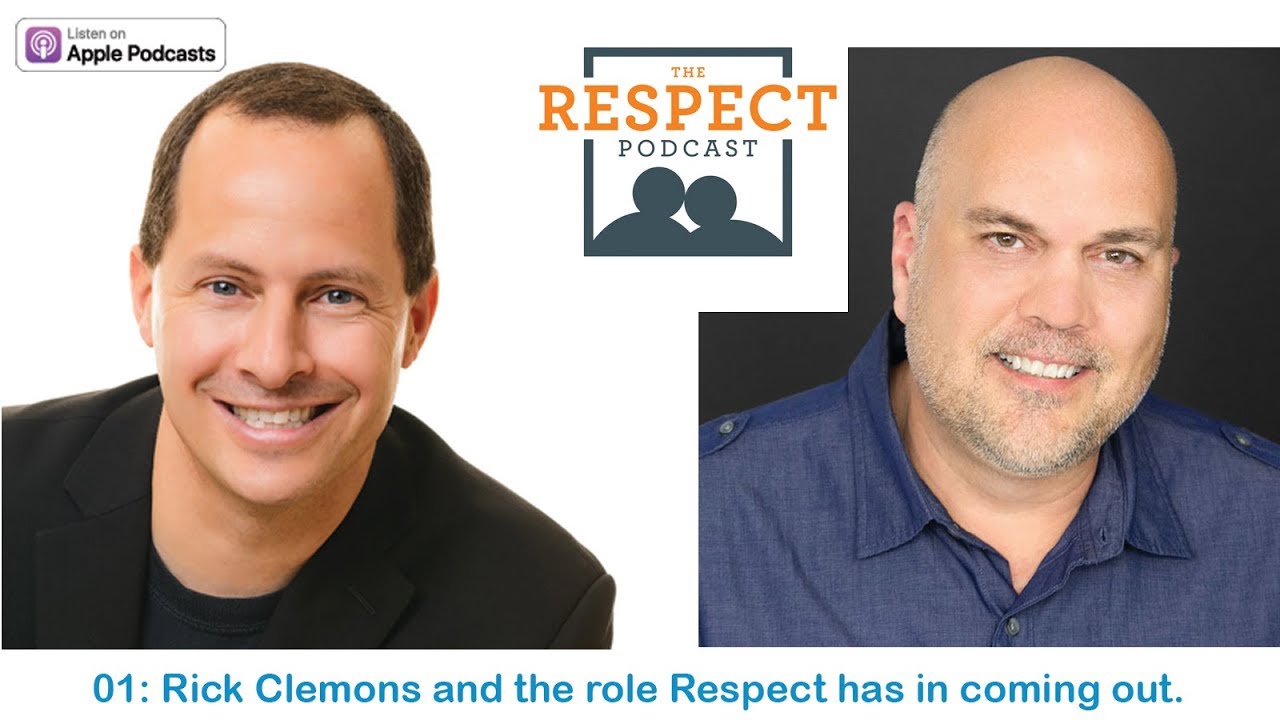
In the inaugural episode of the RESPECT Podcast, host Mike Domitrz interviews life‑coach, author, and LGBTQ+ advocate Rick Clemons. The conversation opens with a candid introduction that honors Rick’s unapologetic voice, including his use of profanity when it serves a point. Rick shares his personal coming‑out story, describing how he first disclosed his sexuality to his parents at 19, faced rejection, and later re‑entered the closet for years while living a heterosexual marriage with two young daughters. He explains that returning to the closet was a protective decision during the early AIDS crisis, and that later, at 36, he finally left the marriage after a transformative connection with another man, prompting him to confront his own self‑respect and the respect owed to his family. Rick discusses the broader concept of respect as a four‑pillar framework for personal transformation: respecting oneself, respecting the process, respecting the journey, and respecting others. He emphasizes that a coach’s role is not to dictate actions but to help clients gain permission to live authentically. He shares specific coaching tools, such as asking clients whether they want to feel the same in 20 years, the “10‑10‑10” decision‑making exercise (considering feelings in 10 hours, 10 days, 10 months, 10 years), and a “10‑level” visualization where clients map emotional states across progressive levels of action. The dialogue also tackles controversy: Rick acknowledges criticism for having lived a “lie” before coming out, but argues that lived experience provides credibility and empathy for those he coaches. He notes common fears—especially judgment from family and authority figures—and challenges listeners to question why they let others dictate their lives. Books that have shaped Rick’s philosophy are highlighted: his own memoir “Frankly, My Dear, I’m Gay” and Mark Manson’s “The Subtle Art of Not Giving a Fck,” which he cites for its lessons on self‑respect and authenticity. Throughout, the conversation maintains a conversational, candid tone, blending personal storytelling with practical coaching advice, and concludes with resources for listeners to connect with Rick.
Chapters
This week's guest is Rick Clemens, a close friend of mine. I want to let you know about Rick right away. He is the author of Frankly, My Dear, I'm Gay, host of Life Uncloseted podcast, certified life coach, TEDx speaker, world record holder, and a guy who's helped Thousands of people in over 50 countries across the globe come out of the closets of their lives to escape their BS, explore their fears, and elevate their effing self-expression. Now, a few of you are listening going, whoa, Mike, I've seen you speak on stage around the world. You don't, you don't drop the F-bomb. You don't swear. But this is Rick's bio, and I honor the voice of the people we have on the show. So that's why you're going to hear me speak that, and you're going to hear people such as Rick speak in their language. I'm not going to censor people. Even in my own work, some people will be like, hey, but you call people out when they use inappropriate language. The key is inappropriate, where the context of the language is. It's not just always about the words. And so that's important here, but the context of what Rick is saying is so important. So Rick, let's get right into it. Thank you so much for joining me.
Oh, thanks for having me, Mike. And I love that you started with that because this is part of respect, is respecting people's voice. And truly letting people step into who they are. And I don't always drop F-bombs on stage. There, there are moments I do, and if I do, it's because there's a point being made by either the story I'm telling or the thing I want someone to learn. And I've learned for myself, having been a guy who disrespected himself over and over again by not being who I was, that sometimes you just gotta let yourself be who you are. And by doing that, you teach other people how to do the same. So thank you for Having this awesome platform, man, and I'm just so honored to be here on the show with you.
Well, I'm thrilled to have you here. Let's get right into that because your life history talks a lot about one's voice and gaining that voice back and that journey. And let's talk about how respect plays a role there because I think a lot of people don't think about respect on the self-journey of coming out from whatever that coming out means. So to give all of our listeners and viewers a little background, when people hear, you know, Life Uncloset, Frankly, My Dear, I'm Gay, they're probably thinking, what's— there's got to be a story there. There's some ties there. So Rick, can you share your personal story?
There's no story. It's just something I picked up and said, hey, let's go do this, right? Of course there's a story. And, you know, I kind of already alluded to it, but there was so much in my life that I disrespected myself. Because I was trying to live by other people's standards. And I'm so blessed that I did because I wouldn't be here today if I hadn't, like, disrespected myself. I came out to my parents when I was 19 years old, and they pretty much said, no, you can't be that. There was a little bit of faith-based stuff going on there, and I'm glad they did because that was right at the beginning of the AIDS epidemic. And I know myself now that I can— you know, the wise one, as you lose more hair, you become wiser and wiser and wiser. And I realized that had I come out back in 1982 when I told my parents, fully come out, you and I wouldn't be having this conversation. I just know it. I know it in my heart. I know it in my soul because I was naive. I was immature. I hadn't had any kinds of sexual experiences, so to speak, at that point in time. And I honestly believe that I would have become a little rebel and probably would have contracted the virus and wouldn't be having this conversation. So then we roll Almost double that amount of time forward. I was 36.
Is it okay to pause there, Rick?
Yeah.
There's a lot of powerful stuff there. One, when you came out and your parents said no, you went back in.
Yes, I did. Okay. Which a lot of people don't realize happens.
I think everybody thinks, oh, once somebody's out, they're out. But you're well aware that's not the case.
Oh no. And that's why I do the work I do today is because so many of my clients are Older, and I'm going to kind of—
That's for pointing at me, by the way, Rick. For anybody who can't see, Rick went older with his hands right at me.
Yeah, exactly. We're all—
but it's interesting. And no, somebody might be asking, am I a client? No, Rick and I are friends. Not that being a client of Rick's would be anything but wonderful. But yes, so continue, Rick.
Well, so, it's so interesting. So, I say older in general, but what's so fascinating is my work started with people like myself, 35+. All the way up. I mean, my oldest client was 72 when he came out of the closet. And what I've found is many people go back in the closet. Now here's the interesting thing, Mike, is in the last couple of years, I have still had young people come to me and go, oh, you know, I'm about to get married. I think I shouldn't, you know, da da da da da. The stories unfold. And in 2 cases, they actually went back in the closet. And I was fully supportive of their decision because my role as a coach is not to say, go do this. My role is to help you become comfortable and respectful in your own right of who you are. And so it's been really an interesting journey. In fact, when my book came out, what I was shocked the most by is the younger people who came to me and said— I'm talking in their 20s, okay? So that's what I mean when I'm young. I'm like almost 55 myself here. That the young people who came to me and said, I'm so glad you wrote this book because, you know, I'm way behind the 8-ball. And I'm sitting there going, uh, 22 and you're behind the 8-ball? But you have to put it in perspective of where we are today. Kids are coming out at 8, 9, 10, and it's amazing to hear those stories. So yeah, that respecting of yourself and realizing, hmm, I might have to respect myself and go back in the closet is so that you can, as I love to say, percolate. And let the yeast rise in your life and finally go, okay, either this is where I'm supposed to be, which is a path, or wow, I'm going to do this and it's going to happen much later in life.
Well, very powerful. So, Rick, right there, you talked about the fact that, you know, people choose to go back in and that you support this because this is their journey. You said, I'm glad I went back in when I did because I think I would have been By what you were saying, I don't want to use your— change your words, but exploratory in that rebellion stage and therefore not as safe in decision-making. Is that considered controversial?
Of course it is because people then can come back at you and say, well, then you knew what you were doing. You were consciously doing this even though you know. And I'm going to argue that yes, in some cases, that is true. In my case, that was 50% true, but I was still trying to figure out, okay, but am I really gay, or is this just something part of my sexual awakening? Am I trying to figure it out? Other people, they will actually go back in and they push that way, way, way, way down. And there is no acting, there is no, you know, going forward and exploring. It's like, nope, this is where I'm supposed to be. And then something happens and that comes rushing back forward. So there— and that's only 2 examples. I mean, there's lots of different ways that people will go do this. And it's not just in sexuality. I have kids that I talk to at university that literally have shown up. In fact, here, you'll love this, Mike, because I know you do this too. I was in a classroom one day and just in, in the moment, you know, I had this brilliant question of like, okay, I'd like everybody to close your eyes. And nobody peek. And I'm going to ask you a question. How many of you in this classroom are here at college pursuing a major or a path that is because someone else told you this is what you're supposed to do? 50% of the room raised their hands because they were in college pursuing a major or a direction because mom and dad Someone else said, this is what you're meant to do. And that was so impactful and so powerful because it drove home that same exact story that I just told them about myself going back in the closet.
Yeah, absolutely. And, and I could see, are there people that would say that, as Rick, since you're out, how can you be telling others it's okay to go back in?
Because it's their life. No, no, I'm not.
And I'm not saying that that's what I'm preaching, but I can see that pushback.
Oh, it happens all the time. And that's where I say my job as a coach is not to say, this is what you should do. My job as a coach is to help people find their path to their truest essence for themselves. And if that's what's their truest essence, then they need to go do that. I have a client that I just finished working with who did exactly that. He went on an exploratory path for about 3 months, his wife totally knowing what he was doing. And he came back and he said, I believe my path is not this path. And I said, then you need to follow your values, your belief, your heart, and you need to live life your way, which is always what I say. I want my clients to live life their way. I want the audiences that I have the privilege to speak in front of— that is my message. You know this, Mike. It's about make the bold move, live your life uncloset, live life your way. And if that's what we gave each other as human beings, man, I don't know. I think the planet would be so much different.
No, absolutely. To really honor each person's choices is the key to what we're discussing. And for anyone listening, some of the things we're discussing, the aspects of it are not choice. They're born. But what you're saying is the choice is what, what to, how to live with that choice. Oh, I'm sorry. With these natural, what would be the right word for here? Right. So we know it's oriented sexual orientation. Obviously it was one. But you were mentioning others, but these are innately who we are, right? So, then the choice is, how do I live with innately who I am?
How do you give yourself permission? There's the choice. How do you give yourself permission to accept this is innately who I am? This is how I'm supposed to show up in the world. That's the choice. When we know who we are, I have so many entrepreneurs that I've worked with that they knew, they knew for so many years they were not supposed to be sitting in a corporate cubicle. They weren't supposed to be following those kind of rules that they were supposed to be doing their thing. They knew it innately, as much as I know innately I am a gay man, but they had to give themselves permission to say, I'm going to go stand in my truth. I'm going to go run my thing.
Because we jumped in early on your story. We didn't let you get to— you didn't get to finish that. And so, obviously, honoring respect and voice, let's go ahead. You were jumping to being in your 30s. So, that was like 19. Now, you're in your 30s.
30s. I'd been married for 13 years.
And married as in a heterosexual relationship?
In a heterosexual relationship with a wife. I had 2 daughters, very young daughters, 4 and a half and 9 months old. And there was a moment, there was a moment that I realized this could no longer be the way I live. I could no longer live a dual life. I could no longer pretend that this was the way life was meant to be. And I made the conscious decision to say, I gotta do this. And that's when I came out of the closet. And it was a very specific reason that I came out of the closet. Some people say, oh, you met a guy. Yes, I did. But this guy made everything completely different for me because I was used to hooking up. That was my outlet to, okay, I know this is what I am, but I'll go hook up and then I'll pretend like nothing happened. Not proud of that. You know, I'm not— I will never say, oh yeah, that's the way to do this. It is a way, but it's not the way. And when I met this guy—
So for listeners, you're referring to during the years of being in a heterosexual relationship?
Yeah.
You would still— you would still explore the sexuality side, right? Who you innately are during the marriage. Gotcha. Right.
So there was a weird twist of respect there that I was respecting some of my truth, but I was disrespecting the honest truth. I would take it only to the sexual realm. I couldn't at that point in time take it to the innate emotional and, you know, just connected being with someone realm, because I was like, oh well, no, gay people can't do that. We just, we just have, quote, sex, because of so many things that I had been raised in, societal views on that. And then I met this guy And started down the same path, and I ended up in his hotel room. But that night was the night that there was no sex. I literally fell in love, and I fell apart because there was a connection. It was all about the connection. And I saw something in that moment that I hadn't seen. And in that moment, even though I knew I was about to embark on a journey— and I knew it, I knew I was going to embark on a journey— That this is where I had to step into my self-respect. This is where I had to respect the process. This is where I had to respect the journey. And eventually I figured out this is where I also have to respect others. In fact, at that moment I realized I had to respect my wife because this could no longer be the way I did life.
And so you now go to your wife.
Yeah, yeah.
How— yeah, talk about— I mean, talk about one's voice.
Not an easy thing to do, um, except And now, you know, we've talked about my book being Frankly, My Dear, I'm Gay. That's pretty much how it went down. I didn't use those exact words, but it was— I walked in the door from that trip. I'd been in London, landed at LAX Airport because I'm from Southern California at the time, and I had about a 2-hour drive home. I called her from the airport and said, I'm home. And she goes, great, I can't wait to see you. And I said, yeah, I can't wait to see you too. And then I dropped a bomb and said, yeah, we've got some stuff we need to talk about. And I hung up the phone and I felt like a real shit, to be honest. And, um, the whole way home I was like, this could be so much easier. And I remember 4 times, Mike, on that trip, 4 times looking over my shoulder right in front of semis and going, I could just turn the wheel, just turn the wheel, and this— nobody would ever know. Nobody would ever have to know this dirty little secret that I held. And when I think about the respect piece that you talk about, that's where I really started respecting myself, respecting my wife, and respecting my children, because I needed to man up. I needed to be who I was meant to be. I needed to man up and be the father I was meant to be. And I actually needed to be the husband I was meant to be, to say, I've created this nasty space and I need to clean it up. And I walked in and I literally said to her, I love you and I care about you, but I'm gay and this isn't going to work. And of course, not pretty stuff happened. I was literally out of the house that night, justifiably so. I mean, justifiably so for her. She was upset. And through a lot of work and everything, we made it. We made it through. We've We've continued to raise our children and kind of back to what I said just a minute ago, I had to respect myself. I learned to respect the process because it is a process coming out. No matter what that coming out is, there's a process. I mean, even becoming speakers like you and I have, there's a process to respecting the process of being a speaker and to respecting the journey of being a speaker and respecting Others as you go through that journey. Those are 4 huge pillars that I think a lot of people will miss as they come out of the closet, whatever it is. I've seen people come out to be an entrepreneur and they respect themselves, but they don't respect the process. They don't respect the journey, and then they sure don't respect others. They want everybody else to tell them exactly how to do it, what they need, and like, thanks, good, got it. There's not really a genuine thanks. There's not a thing. Then they think, okay, now here I am. I'm supposed to do this. But they haven't respected the process and they haven't respected that there's a journey. And this is what I love about doing what I do because I can take this and really overlay it into, you want to do this? Great. What is it you need to do first? Well, you got to respect yourself.
Absolutely.
Now, some people will miss that piece altogether. They'll, they'll do this because they think, okay, well, this is what I need to do. And people are like, yeah, this is what you need to do. But guess what? As soon as they keep listening to what somebody else says they need to do— I have a really good friend who so badly wants to run his own business. And you can— I'm sure you can relate to this, Mike. He keeps going to people, going to people, going to people, and then he'll adopt what that person says, and then he'll adopt what the next person says, and then he'll adopt what the next person says. And at the end of the day, he doesn't respect himself because he won't allow himself to say, here's what I want to do to run my own business.
Right. He won't listen to his voice, the voice inside himself. So Rick, how do you respond to the person who says, wait a second, Why am I listening to this expert, Rick Clemens, who disrespected his relationship for all these years by living a lie? And I'm not saying that you and I both know that that statement, living a lie, is overused. It can be harmful. But why am I listening to this person who cheated, who wasn't himself? Why is this the person I'm gonna listen to when it comes to respect?
Because I think I bring forward the insights of, wow, when you can see that, Then you're able to help other people see it. If you haven't lived it, if you haven't done it, you can't teach other people, and you can't keep learning yourself. That's the place where I think it starts. You keep learning yourself. And I don't do this because I want to teach people. I don't do this because I think I'm a guru or an expert. I do this because I want to help people avoid The pain. None of us wants to live in pain. And this was not easy. This was not pain-free. This was not stress-free. In fact, I was so stressed out that first year coming out of the closet that I literally lost 120 pounds. And when people saw me, here is where it was really interesting. So let us roll back to when I was 19 and did not know anything about HIV and all this stuff. So now we are 1996. Things are still being figured out, right? I lost so much weight that people thought, oh my God, he came out of the closet and he's positive, because I looked skin and bones. Now, those of you who can see me now, you can see I'm a fluffy guy now, so no, I'm not skin and bones. But it was that thing where I had to learn this, and now I do this because I don't want anybody to not live their truth. That's why I go speak at colleges and universities, because I want kids to respect themselves enough In this moment, in this time, as they start college and university, to go, this is my life and this is how I want to live. Because you don't want to wake up at 30, 35, 40, 45, 50, 55, and go, oh, I could have done this differently. No, I love that.
Doesn't mean none of us are going to. You're open and you're vulnerable along the journey. I mean, you're the definition of someone speaking their voice, respecting their voice, because you don't hold anything back. Uh, when you're talking with people, and I love that about you. What are strategies you would give people, maybe questions, thoughts, skills they can use to help them find that respect for themselves? Because there's an interesting dichotomy in this conversation, right? Because you said at 19, I'm sort of glad my parents pushed me back in because of the danger I could have been in. But at the same time, that means we're talking almost 15 to 20 years of some form of not being able to Live with that respect of yourself.
Right. All right. Well, the first thing that I like to ask clients is, do you want to end up here 20 years from now and still feel the same way you do? If you don't do this now, what's going to be different and what's going to be the same? Because it's all about getting to that emotional space, Mike. It's about figuring out anybody who's in pain, they don't want to feel it. So, if they make this change now, what will be different?
Let's pause there. This is so powerful, Rick, because this applies to so many things in people's lives. So, can we go back and just say that question one more time? So, if it was 20 years from now— Yeah.
What would be different and what won't be different?
Right. If you stay on this track—
If you do this today—
The keywording you used right there was, right, if you stay on this track, right, are you going to want— is this where you're going to want to still be? Is that what— if I remember right? Right.
Yeah, yeah. It's really, is this where you want to be? And if you don't stay on this track, what might be different? be different. It's not about having people predict their future. It's about inviting them to go explore that future. It's about giving themselves permission to even ask the question. So many people don't give themselves permission to ask the questions.
And does it—
One of the best ways to do this, Mike, I think this will help your audience so well. If you're struggling with this thing, whatever it is, it doesn't matter what it is, but if you're struggling with this thing and tomorrow morning you woke up and you had made the decision that that thing was it was time to give yourself permission to fix it. How much different might you feel just tomorrow morning if you went to bed knowing, I'm going to fix this, and you woke up tomorrow morning and you knew you were fixing it? I can guarantee you that one night's sleep will be completely different than all the nights' sleep you've been having until this decision was made.
It's— and it's very much where the 10-10-10 principle comes in. And that's this idea that in 10 hours from now, 10 days from now, 10 months from now, sometimes you'll take it to 10 years from now. How will I feel if I make this decision? Well, in 10 hours, I might be scared out of my mind. In 10 days, I might be dealing with some really difficult consequences of this. In 10 months, I could start to be feeling freedom. And in 10 years, I'm going to look back and go, why didn't I do this sooner?
Yeah. It's interesting you brought that up.
Is the Bible very much in line with that?
Yes, because here's one of the exercises I have my clients do, and it is the 10 levels. At a level 1, if you do— don't do this, or you do do this, what are you gonna feel? And then at a level 2 and a 3 and a 4 and a 5, by the time you get to a level 10, if you do this, what will you be experiencing? The whole point is I'm gonna be scared to death at level 1, but by the time I'm living at a level 10 and I'm doing the thing I want to be doing, wow, I'm— I may be changing careers because I came out of the closet, because now I know I don't have to settle for anything. I may be going on that trip around the world. I may be deciding to have a child with someone new because my other spouse is like, I'm never doing this. And I was able to do the coming out journey. But I love the exercise because I have clients take it each level. What will you be doing that will then make things different?
Is the number one fear the judgment of each other? either family or colleagues that have that sort of a leadership role in our life, those that, you know, we look to like parents. Is that often the number one fear with somebody coming out with whatever they're coming out with?
Yeah, it's always the number one fear. What are other people going to think?
Yeah. And so then the question I would imagine becomes, if I'm so afraid they won't accept me, and I don't know, but if from a coaching perspective, as a response to that, Then why do you want that person dictating your life? Someone who doesn't want to support you and give you true love and let you be who you are. Why do you want them to dictate your life? Is that a question?
That's definitely a question. It's like if that person were no longer playing that role in your life, what would be different? If they weren't telling you you couldn't be this, if they weren't disrespecting you and your dreams, what would be different? The dream one is a huge one. It's like, okay, so if you're living by that person's dream and you quit living their dream for your life, then what's going to happen for you? If you just basically ejected them out of the picture, what would you be able to do? If you didn't carry the burden of them on your shoulders all the time, how much taller and prouder and powerful would you stand in your life?
Really.
This isn't about disrespecting others. I don't want people to get— it's about Finding the space of respect to put someone in where it enables you to live your life the way you're meant to live it.
And we forget that you're going to gain new people in your life because when you're in that, that, that realm arena of respect, you draw people in, you draw like energy, like values, and you're going to be in a supportive environment, not instantly right away. But over time, you're gonna have connections that are gonna be powerful and wonderful if you're open to that, if you're truly respecting yourself for being open to the world.
Well, Mike, I have, you know, as you were saying that, the first thing that went through my mind is that's exactly why you and I are even having this conversation. That is why you and I are friends, because yes, Jess introduced us, but Jess would not have introduced us if she didn't feel like, hey, these 2 guys, they belong in the same circle. And as we've gotten to know each other, it's because we do get each other. We get each other. We're totally different. Yes, you're a straight guy with kids. I'm a, you know, gay guy with kids. We have fun. We both have this quick wit. We know how to— but it's because we know we can operate in this space. And I drew you, you drew me because of how we show up in the world.
Love it. I think that's awesome for listeners to think of. Who could I draw into my life if I could truly be me? If I could respect every element of me? That's so powerful. Rick, obviously your book's Frankly, My Dear, I'm Gay. What is another book that has impacted you along the journey?
Well, it would be the one that I sent you, Mike, and you know which one I'm talking about. Yes, this is where I am going to drop the F-bomb. It is The Subtle Art of Not Giving a Fuck. And when I read that book, I was like, oh my gosh, this is— if I could have written any book, that would have been the book. But I'm so glad that Mark Manson did. And read it. There's things in it that I don't 100% agree with, but for the most part, it's like spot on, spot on about how to truly live your life and live it in the right way with respect for yourself, with respect for others, and truly step up to that space you're meant to live in.
The book is so powerful, and like you, there are some examples he chose that I wasn't a fan of. I thought did some harm to our work, but that doesn't mean there's not some incredible lessons In that book and powerful lessons in that book. So, I want to thank you so much for joining us, Rick.
Oh, thank you, man. It's always a pleasure to get to do anything with you and to be a part of your journey and supporting the work you do.
Well, thanks. For everyone listening, you can find Rick at rickclemons.com. We're going to have all of the links to his social media, his book, everything in the show notes of the Respect Podcast.








