Transparency
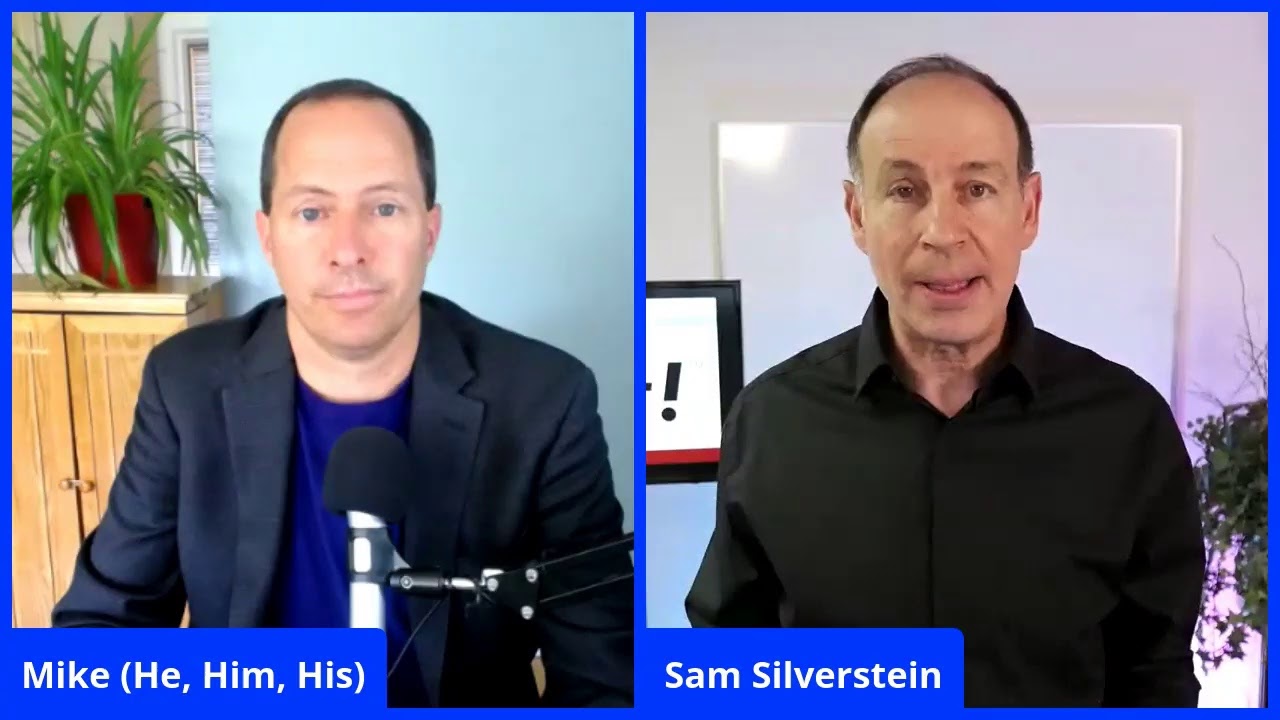
Mike Domitrz and Sam Silverstein argue that leaders confuse transparency with privacy and fear it will create unrealistic expectations. Real transparency means sharing motivations and values, disclosing challenges immediately, and staying vulnerable. Brands that took public stands during social unrest showed how alignment with core values builds trust, even when it costs customers.
Chapters
Hello, welcome to Mike and Sam. It's Wednesday, which means it's time to talk. And today I can see you really nicely, Sam.
You—
it's almost like there's a transparency. It's just perfectly clear between us. That might be the worst transition yet on the show, but had to have one. How you doing, Sam?
I am great. Um, I don't even think that transition works, but just because I love you, we're gonna let you get away with it. Um, And so, it's good to be here. And it's always good to be able to share with people ideas around how to build organizational cultures that really prioritize respect and accountability. And because of that, they do well. We just, you and I see that with our clients. They do well when they take the time to work on their culture, to build in characteristics into the culture that are important, and realize that culture is as important, if not more important, than to work on the products and services that Yeah, and transparency is a huge issue, especially in the boardrooms.
There are so many organizations and leaders that are afraid to be transparent because they think if we give away too much information, then people are going to have expectations of us. And if that doesn't happen, and they're, they're focused on the negative of transparency. So Sam, how do you address that? And I've had to address this in, in a boardroom setting with the company about transparency. How do you address that when that comes up?
Well, and this is what I wanted to start out is to talk about transparency and talk about what are the challenges that get in the way and how do we overcome them and how do we effectively act in a way that is transparent. Because there are specific benefits that come from that. The challenge I see between individuals many times is that they're worried about positioning. And so, what happens is individuals are worried about how they look. And they're more worried about how they look than how the organization operates. They're more worried about how they look than how the people they are supposedly leading are doing. And so, when these type— this way of thinking is wrong and it's totally contrary to building an organizational culture that people want to be a part of. Actually, it goes toward towards building an organizational culture that people do not want to be a part of. So, not only are you not going to retain your best people, you're not going to attract new great people. And so, this, the whole idea of, of I have to position myself. If the culture is such that positioning yourself to look good is important to succeed in the culture, then you've got a terrible culture to begin with. What happens is transparency is one of those Characteristics, a human characteristic that enables other people to bond with you. Because if we put off this air that I am perfect, then they're going to think, well, how can I, how can I connect with this person? Because they know that no one's perfect. And, and when we put off an air of the, hey, I make mistakes, then they also know if I'm willing to say I make mistakes, I'm willing to recognize, you know what, they make mistakes. That's OK.
Yeah, absolutely. And I think one of the biggest mistakes I've seen leaders make is they confuse privacy with transparency. And they do it around details instead of motivation. When you talk about transparency, you should be very transparent about your motivations, about your core values. You do not need to be revealing of privacy. There's a huge difference. So transparent is this is what we are working on making happen. This is our goals and organization. Details of privacy are we are working with Company ABC over here to do a deal that no one knows about. And if it leaks, it's going to hurt both companies. That's private because it can do harm. It doesn't need to be transparent. That's private. Just like employees don't want their private personal information out for everybody in the company. That doesn't belong in a transparency situation.
Right.
Because it's private. So what we have to just simply understand is what's not private, we can be transparent about. And motivation should never have to be private. Motivations, different than details and facts.
Well, and a lot of times what happens is authenticity is connected to transparency. And so, there's transparency about yourself and being authentic and real about shortcomings that we have. And then there's transparency about what's going on within the organization. What external elements are impacting us? How are we performing? Many times, leaders, I've had leaders ask me, well, when should I tell my people if something's not going well or if we're struggling or if we— I said, now! Actually, the best time to tell them was yesterday. But if you can't do it yesterday, do it today. Because then what happens is if you don't tell people that and they start to suspect, then they start thinking, well, She's holding out on me. And if they think that you're holding out, then they don't trust you. And if they don't trust you, you have this spiraling down in your relationship. But when you tell someone, hey, we're struggling with this, and then you empower them and you listen to them and you allow them to speak and be heard, then what happens is you bring everyone on board. You have the opportunity to solve the challenge. So many leaders think they have to solve these problems on their own in isolation and not tell anyone. about it because they're worried, oh, everyone's gonna leave. No one, no one's gonna jump ship if you've created this amazing culture. It's the exact opposite. They want to do everything they can to make it work because they want to preserve the culture and they want to preserve the organization.
Yeah, I mean, honestly, if everybody's gonna jump ship the moment you present challenges, let them jump and start over. You need a new group of people around you who want to struggle with you, who look forward to overcoming those challenges. That's what you actually need. And that becomes pivotally important. And, you know, you talked about that of being vulnerable. I think that's a key word here. When we're talking about being transparent, we have to be willing to be vulnerable as an organization. Right? And so we sometimes forget that. We're like, well, I'm willing to be vulnerable as a person. But you need to be one as an organization.
Right.
When we look at brands that in times of social unrest have made an impact, they took risk. And they revealed their core values in that moment. They were transparent and they were vulnerable and they might've even lost customers. And their mindset was, that's okay because that customer doesn't believe in our core values and we stand for our core values. That customer doesn't believe in respecting this or respecting that. And that's okay. And that is okay. So we have to stop operating in a place of fear when it comes to transparency.
People want to be associated with other people who deal in truth, who deal in authenticity, who deal in transparency, who are vulnerable, who share their realness. And that's very attractive. And so, employees want to work for a leader that shows those characteristics. They want to be involved with that. People want to build friendships with people like this. And so, the leader that has to always be the hero of the story, the leader that always wants to be out front when they're winning and disappear when they're losing. Nobody really wants to be associated with that leader. The only reason someone stays associated with that leader is because they feel like maybe there's a path to money or power. And the reality is in an organization, the most powerful leaders are the leaders who are willing to be transparent, tell the truth, and then bring everyone on board in a unified fashion to find solutions to challenges That inevitably are gonna present themselves. I guarantee you later this week, Mike, you and I independently or collectively, we're gonna face a new challenge. That's life. We have a choice. We can either be transparent and let the people around us help us, at which point we're going to probably solve that challenge quicker and better, or we can just try and close ourselves off and do it ourselves, at which point there's a greater likelihood we'll fail.
Well, yeah, you brought up earlier being able to look for the people around you to help solve the problem. What I'm about to say is true of corporate leaders, it's true of parents, it's true of anybody in a relationship. The question you most fear asking those around you is the one that almost always needs to be asked. Almost always. If you're afraid to ask it, it's because you're afraid of the answer. That's usually the situation, which means something could be brewing that you need to know about, but you're, you're thinking, I'll keep my head in the mud Instead of being willing to open the door to that conversation. Now, let me be clear. I am not talking about unsolicited advice where you're going to come in and you're going to try to fix people, say, do you know this? Have you thought? No, I'm talking about, hey, is it possible this is going on? Is it possible we need to address this? And you're afraid they're going to go, yeah, it's going on. And I am— my parents are afraid my kid is doing that. My kid is doing— yeah. So let's talk about it. Right. Let's give them the skills and the tools to make the best choices. We need to do that as corporate leaders too.
Absolutely. And you know, you and I do that in our lives and in our businesses because it's very common, very common for you and I to just pick up the phone and call and say, I'm struggling with this. What's your opinion? Or what do you think of this? And even, I'm failing at this. How do I turn things around? Or should I be trying to turn things around? And It's through that willingness to open up that we've been able to be there and help each other. That's a powerful place to be. But you know what? It takes someone who is secure in themselves. It takes someone that realizes that Mike's not going to judge me because of the fact that I'm failing in this venture. It's the exact opposite. Mike, hopefully in this situation, has respect for me. Wow, Sam's willing to stop and ask and get input. He's willing to bare his soul. share what's not working. That's powerful. That builds relationships. And the stronger the relationships in any organization, the better the culture. And the better the culture, the more likelihood that that organization is going to be able to thrive and survive over the long haul.
Love it. That's an awesome place for us to end on. Sam, thank you for so much great insight today. We want to make sure you're watching. Remember, we're on YouTube, youtube.com/ Center for Respect, youtube.com/samsilverstein. And of course, we're always here on Facebook Wednesdays. That is, just so everybody remembers, 12:30 Central, 1:30 New York, and that is 10:30 AM Los Angeles. If you're on YouTube, hit that button to get notifications. And podcasts on iTunes. So thank you all for joining us. Uh, we don't normally do this, but you know what, it's a holiday and I want to acknowledge it. I hope everybody has a safe and healthy 4th of July.
Absolutely. Enjoy, celebrate, and we'll see you next week.








