Bitcoin Live with the Power Law & Minotaur Team, #12, 6/19/2025
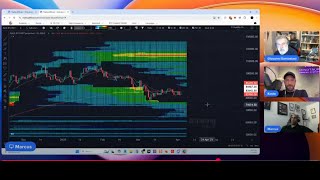
Recording of a June 19, 2025 live discussion (YouTube) led by Giovanni with the Minotaur team (Marcus, Costa) about Bitcoin market analysis. The group reviews power-law based indicators (quantile regression, power‑law core, periodicity model), discusses global/local liquidity and futures-derived liquidity profiles, and explains bot trading strategies (DCA/mean‑reversion on futures) and expected returns (target 3–5%/month).
Chapters
Hi everybody, this is giovanni. Today is June 19, 2025. I am here with the Manotur team. This show, it's about looking at different indicators that we have developed. Both the power law indicators that I have created. By way, if you are interested, you can read how to get involved. You can also join our Discord community. So the link is below and you know, in a moment I will show you one of these indicators and how to interpret the data. But we're also very interested in both the global liquidity and the local liquidity of Bitcoin. We are trying to focus on indicators and parameters that are more scientific versus what other people do. Looking at these TA indicators that I think they are very arbitrary most of the time. And also we discuss often the actions of our bots. My, my bots are waiting for now. They. They did a very good buying at key levels, you know, when we retraced. But you know, right now bitcoin is not doing much. So that is the main thing we want. We did a. We decided to do these episodes anyway to just keep a regular pace of these episodes because I think that is important for the people that follow us. But not much is happening with bitcoin right now. Everybody's aware of it. That is actually a pretty good thing. And you know, given the situation around the world. Right. It's pretty unstable with the war between Israel and Iran. So I think actually it's a pretty good sign. Maybe Coin retains his store of value that has not been affected much by these events. So it could be much worse. What, what do you guys think, Costa?
Definitely it could be worse under these climate, under this news cycle. Yes, it could be worse. It's actually bullish that it's holding up pretty good.
Yeah, I, I agree.
I see what, you know, the, the drop that happened when we, when we went down to what was a 71, 72K based on the tariff news. Yeah, it just, you know, I think it just reinforces the work that we're doing on these live calls is that if there's no, if there's no huge amounts of liquidity there, the market's not going to have. There's nothing, you know, what do you call it, Marcus, that needs. There needs to be supplies to go in. There needs to be fuel and the fuel was already wiped out. So I think that's an interesting. And we can kind of look at that and maybe have a look at why through the liquidity we're consolidating where we are. Yeah, kind of staying level.
Exactly, exactly. Reconciles Anyway, so this is one of the indicators is the quantile regression. I explained this indicator many times. If I touch these two indicators together, let me turn off one of them so we can separate them. So I'm going to show you how they look independently from each other. So this is a pure quantile model. Quantile means basically we organize the deviations from the power law. So we. It's all based on the power law. So there are the people that use this model and they kind of claim that this something different is not. It's absolutely based on the power law. And the idea is that you organize the deviation from the power law in terms of right of a. So you sort them from the smallest deviation to the strongest deviations. When you take chunks, right, you say, okay, let me take only the 10% of this deviation up to 10% of the total data, up to 20%, up to 30%. This what we mean for quantize, right? And then you fit this data. It's a little bit more complicated because you basically take all the data but you give a lot of weight to the quantile that you are looking at. So there is a particular formula that I'm not going to explain right now, but you give a lot of weight. Let's say you're looking at the 5% percentile, right? It is, it's going to be the data at the bottom, basically. So actually you can use that to calculate the bottom. And this is what I'm doing here. So you see for example the black line, it's the lowest data. So I'm taking only the 5 percentile with, with this weighting system. So I give a lot of weight to this 5% but I add a lot of. In doing the fitting, I'm also add a little bit of rest of the data but with a smaller weight. So I don't give a lot of emphasis to the rest of the data. So this is pretty good because it gives us quite closely, not perfectly, the basically the support line using this method. And now it turns out that anything between, you know, the lowest quantiles, the problem with going too low is that you don't have a lot of data, right? So you're trying to fit and giving a lot of emphasis to these very, very lowest levels. And these are not many data points, right? So it becomes a little bit unreliable. But from the slowest, from the smallest quantiles up to about 50%, they are very, very consistent. So right now you don't see from this graph because it's not super Easy. It's not natural for trading view. These are indicators that are on 3D view to see if this, this is what happened. If I take off the logarithm and this is how they look like with the logarithm. It looks like this, but we don't have a way of calculating the logarithm at least to show the logarithm of time. Right. To show the true nature of these lines. They will look like straight lines if we did that because they are power loss. And as explained many times, power loss in a log log graph look like straight lines. So we look curve here. But they're all power laws up to these 50%. They're all parallel lines. Right. So we call this region the power law core. And then if you go above, you will still get power laws but they are not parallel anymore because they are influenced by the presence of these peaks. It is one of my criticism towards this particular method of doing regression. It's one of the tools. Anybody that claims oh, this is the ultimate tool doesn't know what they are talking about. It's just one of the many tools to look at the economy. The usefulness is that you have these normalization from 0 to 1. And that is nice, right. Because now you can describe all the deviations as one single number. You know, basically a number between 0 and 1 where the largest deviations are closer to 1 and they color coded here. So where we are right now we are at 0.65. We have been around this value for quite a bit. Right now we are expecting to have a real bull run to go in the 70, in the 80, 90. I don't think we are going to reach 95 or even 100. But if we are, if we were in a, in a very strong bull run, we will start to cross 0.7, 0.8 and so on. And right now it's not the case. Yeah. So we are kind of hovering in this direction. The power law is strong as ever. In fact, if anything, stronger. Because usually during buran we deviate from the power law and that makes actually the power law weaker, at least temporarily. And then it becomes, you know, you have a correction that restores how good the power law is. As a, you know, general trend is why we have a power law overall, even with the bubble, because they basically cancel each other. If you don't have bubbles, then you can see right. Right now we are simply oscillating around the power law. Like we have done this since March of the last year. That is kind of crazy. And we are still waiting for this bubble. Now this way, every other indicator comes in where I'm adding, you know, a clear. So in this case, the reason this green area is a little bit above a blue, the blue is actually the 50 percentile is because this where you will find. So this is kind of a median and this line, this green line here is actually the average. So it's two different methods to do the regression. One is called the least square regression and the other one is called the quantile. The quantile gives us the median. The median is more like think about where you take the small smallest values, ice values of this deviation and then you find the kind of the needle the average gives way to how many data points there are close to, you know, these values, right. If you have a lot of value here, it will give more weight to this value. Sorry. This is why the average is a little bit shifted towards it's higher than the median because these peaks give a lot of weight to the average. Right. They push the average up anyway. So we, we kind of color coded these regions where we call it the turbulent flow. That is another terminology that we use. And the core power law, that is a green. So right now we are kind of, if you look at this region, we are kind of just slightly above the core power law. And for something what I'm trying to do here with this blue line, I'm also trying to model the periodicities that we observe in the past. So these are bubbles have been remarkable, remarkably predictable and regular. Where we go usually up for one year, we reach a peak and we decay for one year. Right. It doesn't necessarily follow perfectly this sine curve, but it's a good approximation of what to expect, at least in terms of time, when, when the bull run starts, when it ends, and so on. And also it has some kind of a decay and exponential decay to account for the decay of the peaks. So over time these peaks are becoming smaller and you can calculate them because even these, at least if you use a past data, it's predict, you know, it's not predictable, but measurable and you can make a model out of it. Now we are going, the question is, is this something that can be used to make a prediction where we are going? Well, yes, because the game that we play here and say, listen, if everything repeats exactly like before, then this is what to expect. Even if that doesn't happen, you give us a frame of reference, right? It's telling us, look at, you know, what, what should we have expected if this decay, because the decay is there, cannot expect we're going to see the deviation that we observed before because in the past we observed deviations from the, from the power law. They were like 10 pair and we have seen this deviation became smaller and smaller. So if these are decay of the deviations became smaller and smaller, what do we expect? We expect 200k. Now the question is and, and look at this. For some time we actually follow this model, the blue line very, very closely, almost basically on top. And now we are deviating from it. We are even deviating from this model because it's basically the price has been flat. It doesn't mean that we are not going back to it. Right. If we continue to go flat. And it's not really flat because if you pay attention, it's more like parallel to the power law. It looks flat because you know, the power laws are more like long term trend and over small period of time it looks flat.
Right.
But you know, it could be that this would happen in the future. We don't know yet. Right. It's still, we are still trying to understand it all. What we can do is to monitor closely and check, you know, if we are still on track. I'm not ready to give up on this idea that we're going to have a cycle of some kind. As more and more time passes by, it became more difficult to reach this 200k. Now some people say, well could. Is it possible that we have a peak after the end of year? Right. Because usually the end of year marks kind of where this peak here is. Right? Can most of the time actually, in fact all the time it happened before the end of here sometime in November, sometime in October, but around that time, around the end of the year. Now some people use this idea of a super cycle saying oh, it's very possible that we still have a cycle, but instead of happening in January, it happens in February, March. Everything is possible. The pro. The fat is if that happens, it will be something that is very difficult, different from what we had before. And you cannot make predictions unless something repeats. Right. A prediction is always based on patterns that have been the same. And say, okay, if this pattern continues to be, then this is what will happen like the seasons, right? The seasons will not be called seasonal without have the relevance that we have if summer happens three months, five months later. You know, it's a nonsense with people that mention the super cycle, but it's not a cycle. It's going to be okay. We have peaks and bottoms. You know, if a cycle is not regular. There is no cycle as cycle needs to be regulated. Anybody says otherwise, they don't know what they're talking about. So we are going to monitor, we're going to understand, you know, where that is main thing to do. Having models is also good for that. So the power law, it's a different type of model. It's kind of a backbone. Right. The idea of a cycle has been always something that we add to understand other property of econ. It's not fundamental property property, it's a secondary property. So this is what I have to say about this. Otherwise, basically kind of similar to what we said before, I think.
What? Yeah, just something about the bubbles. I think it's interesting that you know, at the end of the day I, I think bubbles though, you know, I'm here because of a bubble, right? I don't know if you are, but, but everyone I think starts during a bubble. And then at the end of the bubble it's how many of those people that started then stick around for the next bubble. Right. That's always so. So the cycles do play a really important role. I think that they're secondary. But at the same time, like if we don't have these, these moments in bitcoin's history, that gets a lot of attention. It doesn't give us that scaling variance.
Right.
For the next cycle to happen because it's that crazy euphoria that brings more eyeballs to it. Right. And then that, that's what.
Yeah, you can make that argument. You could make one of my favorite.
It's a paper, that paper, the bubbles one. That's why that's what you're gonna say.
I mentioned all the time this physicist, Diderate Sornet, wrote three different articles on bitcoin and he's a bubble expert. And one of these articles was all about why bubbles are important, you know, because you could almost consider them a negative thing.
Right?
Because if the price reaches I20 crashes and, and you know, of course if you bought at the top and you sell at the bottom, you will have a bad experience of a bubble. But in general there are moments of excitement, innovation, people get in. Even if it is based on fomo, it still has a role. Right. So, but, and the other argument that one could make is that we don't, I don't think they, they're going to disappear completely, you know, because there are these macroeconomic type of cycles that are kind of aligned with bitcoin. So, you know, bitcoin will still be affected by this cycle in a way or another. So it's something that we need more data. We have been very regular so far. This one seems less regular. There have been so many things. The COIN has been tested with the tariffs, with the wars, you know, and it's still going and it's moving along the power law, you know. So I think, you know, we will love to see.
Yeah, I think if you zoom, if you zoom out, like, if you zoom out and I don't mean literally, I mean, I mean figure like in your mind.
Yeah.
There's nothing really. There's, there's. And literally there is nothing wrong with this chart right now.
No, it was just.
We're stuck in the moment.
Right.
You know, if you fast forward five years and this thing gets to 200k, you look at this chart go nothing, nothing out of the ordinary happened in the moment. It's just frustrating. But look at, you know, look at, look at where it's gone from, you know, like not even 18 months ago. It's insane.
It's absolutely crazy.
Yeah, exactly.
And we are still following the power law. The power loss says 45 a year right now. And that number will going down a little bit right. Over time is because it has diminishing returns. But you know, 45 bits on basically anything on Wall street. Right. So it's still an amazing investment. And, and 40, you know, the power lot says 10 pair in eight years. Know there, there are not many investment that can give us 8 pair, 10 pair in 8 years and 100 pair in 20 years, you know, and having. And it's not like a, a casino bet, right. It's a, it's not a meme coin. It's a. Basically the most secure asset on earth right now. The most. Most secure investment on earth anyway. So this, this is kind of a review and update where we are. The table, it's. You can look at the table. If you use this indicator, you can actually look at the table too because it makes projections for the next months. The way to read the table is, you know, if you think we are going up and we are going from say 0.6 quantile to 0.7, you know, maybe in six months it is kind of end of a year will tell you where we are going. Right. So even 0.7 will give us 128. So if you stay along the power law, we should be 117, 120 if we are slightly higher, 128. If you go all the way to 90, it should be the 200k. 200k basically. Responds to some of the highest quantiles. Now after this you probably want to go lower if we have a correction. Right, right. And the correction again. Are we going to have a correction? Are we staying on the power law? Maybe there is no the engine to push us down if we stay along with power law. Or maybe we do because we need actually to get that fuel like Marcus says all the time. But you know, I will take it as a positive event in particular if you go get back to the power law eventually. That is a main thesis because it will allow us to buy cheap bitcoin, you know. So yeah, things are changing and bitcoin is evolving but nothing is wrong with it. Yeah, that is the main message.
Yeah.
Anyway, so this is what I wanted to describe and maybe Marcus now can go on.
All right, let's do it. All right, I'll be brief today. Okay. What we're looking at here is we're looking at the, the futures here. Derivatives market on bitcoin daily chart by bit. We like to use the futures, as we always say as a price discovery engine. Sniffs out the bubbles. We're talking about bubbles. What we're looking at here is the last 20, 20, 24 and we're in the same kind of event right now. We're just waiting on to play out. We have been consolidating here which is building the liquidity above and below. So let's just kind of zoom in on that real quick. See what we have here. It's kind of interesting. Once you kind of zoom in here you can see that we're forming this range and we are building liquidity on both sides. However, there is a magnetic effect here with this bottom liquidity. The market kind of likes to go in one direction before it goes in the other direction. So this is kind of building this narrative. So let's take a look here. I'm going to add a volume profile just to give us some basis here so we can see it a little bit better. And what I notice here is interesting here in this profile, when you back out the liquidity we have this high volume. No, it's running right here. Bitcoin really likes this, this price right there. Then we have another high volume node. The biggest one of all is here at the. That's at the 96. So what tends to happen is when we, when you lose these high volume nodes, there's not much in here to support the price. So you can get a quick drop. However, if we get that quick drop down, there's a tremendous amount of support here at the point of control. And then let's see if we get some liquidity to back that up. And we can see that we do have liquidity not only to take us there, but we have liquidity to support us there as well. So we get to this high volume though, we, that's, that's a great spot to launch from and we might, we might cancel this out in the bear market. So me, myself, I'd be looking to add to my position here and add to my position at that point of control level.
I, I, I have to agree with you. 100. I think, I think, I think with what's going on right now in the news, it won't take much to push it down to those levels. I think the, the last great buying opportunity in will be that 93k, 92k if it gets there for the next 12 months before it gets down lower.
Yep. Somewhere in this area is a great entry. That's a great area to get going.
I think the more time that we consolidate here, the, the more likely it is that we'll bounce off 92. And, and I think it's just, it's just such a good story if that happens because everyone is going to be so bearish if the price gets down to 92K. And then when it, when it, when it goes up, it's going to go up like a rocket. And who knows, there could be enough momentum to get us that 20, 30 over that liquidity there at 130 could get us as high as 170, 160, 170 just from that push, right?
Yep. Because just remember, just like we, you know, when we break this 100, 100 is right here. That's a big psychological barrier. You're right. People are going to be really kind of negative on it. And that's exactly what bitcoin likes to do. It likes to wreck people and give you a bunch of Mr. Misdirections. But remember, anytime you got high levels of concentrated liquidity, you need to get a momentum to come back. Right. So this is not going to be easy to liquidate. So it needs that momentum that, that, that, that fuel to, to rock it back into this area here. So it's just part of the natural ebbs and flows of the market. Here's something interesting that I wanted to show everybody is when you look at liquidity right here, this is a big area because this is, this, this zone here is about six months. So this is a big area. But when you look at it in the context of the power law. I'm going to put this overlay in here. It's a. It's only a small part of a much bigger picture. Right. So you look at the power law, we're in the bull phase of the power law. But that whole. This is one year of liquidity and it just fits as a. As a. As a relatively small section of the bigger picture. So there's really nothing to panic about. These little pullbacks are just tiny ebbs and flows of the greater power law move the bull market. So we're right on schedule. The liquidity is putting you in the upper band. We're just.
We're fine.
So it's a pace, it's a patience game. That's how. How this works. So I thought that would be cool to give some context. So what do you. What do you think about that, Giovanni? You like that?
I like that. That makes sense.
Yeah.
I like when they use. Actually I love it that you're superimposed on it. It looks fantastic.
Showing the liquidity ins power law regime. So see how it fits? Yep.
How do you do this? How did it do through trading View.
Yeah, just. Just fitted it on. Take the price bars and fit it on there and then you know, back out the. Yeah. The colors that don't.
It looks nice. It looks nice.
It gives you context to it because now it has more meaning and you know that this is a long game. You know, it's.
This is. Look at. Look how actually they different liquidity levels are like parallel to the power law.
Yeah, right. Yeah.
It's really cool.
Part of the. Part of the greater cycle. We don't have enough data to see all this back here. But it was the same thing in these areas here. It was the same. Absolutely. Yep. So anyway, that's what I got for you today. So just hang tight. That's all you can do. Smoke them if you got them.
And to me, you know, actually all these signs are showing health for Bitcoin.
Right.
Became a more mature asset and so on.
So people get. People get impatient. You know, the game is all about being patient. The impatient give the money to the patient. Yeah.
And the volatility is there. And you can still use it. Right. Is what our bots are doing. By the way, Costa, do you have a. Any graph about the latest activity of a bot? Mine is set where I going to wait for a big changes. I don't know if we have a more. A faster version of this boat that is using. You know, it's doing smaller moves. Yeah.
Not really? Not really. So if we can just have a look now, I'll show you, I'll show you a high freak, a smaller coverage set up and a wider coverage set up. But if you could share my screen.
Sure.
It's just a good example actually of, of, you know, you can't crank. Bitcoin's got to give you something as well. Right.
Can you, can you walk us through the different lines, what the different lines represent? Like the orange line, the yellow line.
Yeah. So we have a look here. We've got the, these purple lines here with the last time we took profit. Profits, you can see there, that was around the 10th of June, so around 10 days ago.
Yeah.
The blue CR entries, our initial order, where we create the average price is the orange and the green is the take profit. So on this setup, this is a 5% take profit.
So this is so basically showing how as you buy lower and lower, Right. This year your average entry price is smaller and smaller. It's not quite the bottom, but they start to approximate the bottom.
Right. That 5% take profit. You're trying to close up early, huh? That's your rent. Rent payment bot.
Yeah. So you will need to go to 112 right now. Right. To close. Unless.
Yeah.
We have some more buying opportunities or something.
Yeah, yeah, yeah, correct. But Geo, he has that bot set to. That's a home run bot there, that 5%.
That's. Yeah, that's for the next wings.
It looks very similar to mine last time we closed. Just to give a reference I made with. And I had a 1.5 Bitcoin on that. Not even. I made like $3,000. Right. In one single.
Yeah, yeah. These ones are really good. Yeah. And then we, and then we can offset it with, with more of a, you know, shorter time frame, shorter take profit. But as you can see here in this situation, it really hasn't done much different. So it entered a day earlier, as you can see here, nearly got, nearly took profit here. This is only 2%. You can see it got very, very close.
I was, I was waiting for that. I was disappointed a little bit. A little bit, yeah.
And as you can see here, the market went against it. But you know, we've. This one here though, it's, it's pulled down the average price a lot more aggressively. So the take profit here is 109. So that's moved down from 111 to 109. And you can actually see here that the entry was at 109, but our average price now is 107 so we're able to walk the price down and that take profit now is pretty much exactly where we entered, which allows us to get out as the price declines. Another thing you have to understand, you know, we make the bots perform best when the market's actually doing these dumps. It's. That's just the way it is. So, so right now we're in a, you know, decisive. You know, this is not really a stressful position to be in. You know, we've only executed two safety orders. We've got another eight. That takes us all the way to the bottom of the powerless support. One of two things is going to happen. You know, we could go this way forever, which won't. That's the least likely scenario. What will happen is we're either going to dump down again and make a new order which will then bring down our average price even further. Look, something like this.
Yeah.
If that doesn't happen, the only other thing that can happen is the price goes up. And when the price goes up, we take.
Yeah.
Which is a win win situation.
No matter what happens, it's never boring. You know, when you have a bot like this and, and, and again, maybe for the people that didn't follow us in the previous episodes, this is a bot that uses futures. So basically using your. You can use both USDT or Bitcoin. So if you like to keep everything in Bitcoin, you all the Bitcoin as a collateral, it buys futures based on this collateral. And then it has a very, very small leverage because we don't want to do anything. Be gentle. It's actually all set up where it's not impossible because nothing is impossible or very unlikely that you get liquidated with this approach and is waiting for opportunity like this because. And you can make money when it goes up. Because you see, for example, just after we close we bought long, right. If we went up, we will have sold that long at a certain point and made money. So that is a momentum type of trade. So I can do both momentum but also dca. So when the price corrects it starts to buy average down the price. Actually I like better when we have these corrections because when, when we finally close the trades and take profit, usually that is a bigger gain in in general than the momentum ones. But you know, we had color both when we go up and when we go down. I don't know if you want to add anything else cost.
Well, it's as close as you get to a win win situation.
Right? Yeah, we, we never close a trade Unless it's a win. Because that is, you can do that only with bitcoin. Right. Because the entire proposition is we know that bitcoin follows the power loss, or over a long period of time, you win. So it's just a question of waiting. You know, you're waiting.
Your biggest risk is basically tied to time. It's just, how long will it take? It's just a time. More of a time.
Yeah. And nothing to add is, as you can see, as the. As the orders happen, we increase the volume, right. So. So it's these moves which actually make it more profitable. If the market just simply goes up, what happens is you only enter this position here, market goes up, you take profit, you enter one more of those, position goes up, take profit. So technically, you're only ever making your take. Profit margin on this amount. But, you know, when we have the safety orders, we're increasing the volume size, right. So it's giving us a bigger position. And this is why then when we take profit down here, this is going to be, you know, a greater percent than if we just took profit here. So what happens is you start to develop this new kind of mindset like Giovanni is talking about, is you want the market to dump down because you want to build these positions, because you know, the bot will do its business. That's what's really cool about it. And what's really cool is, like, none of us are sweating that the cycle's not happening because we can generate returns. If it does or it doesn't, the cycle is great. Right, because we've all got spot bags. We're using Bitcoin as collateral maybe to trade with, but it doesn't really matter.
Yeah, consolidation is our friend. We love consolidation. Yeah, it's our best money maker.
Okay, we want to keep this episode relatively short.
So questions.
Let's go to the questions.
One directly at me here.
Yeah, so first. Okay, let's do that first. Marcus. Which one is it? A Marcus. This one. You can read it and answer if you like. Marcus.
All right, let's see. It says, hey, Marcus, what is the possibility of clearing the liquidation of 110, 113 range. I assume he's talking about the red area, just like I said last week. That's fried chicken. That's. You can. You can pretty much call that a share, an assured certainty. Yeah, that's going to go. It's just a matter of when and how far the market needs to go in the opposite direction to come back for that. But that's. You can you, can, you can lick a stamp on that, you can mail that. That's, that's, that check's going cash.
Okay, let's look at this one. We go backwards. How different will be the market be today? Bitcoin had died after its first bubble. You know, the point is it didn't. Right. My first article that, the first, the article that orange peel me, I mentioned this all the time was a 2012 article. And Bitcoin was $9 at the time. And at the end of that article there was this chart. There was not much data. It was dominated by the first bubble that we had. Right. We won in 2010 where we went around $20, something like that. And the article was saying, listen, it's not tulips. Because that is one of the things that people were saying all the time about bitcoin was tulips and tulips was this phenomena, right. Where the price of these tulips reach an extreme and then it collapsed and it never recovered. And so the guy was saying we are not dealing with that because actually the fact that we did have a bubble and we continue to crash and then we continue to go up, it shows that this is a local bubble. The entire phenomena of bitcoin is not a bubble. It's just that it's going to have periods like this where for whatever reason there is a lot of excitement when the price corrects itself.
Right.
So we don't know, I mean, if it was a bubble, it will have died and will have been another of these things that people, you know, a.
Footnote, like a penny stock or something comes and goes.
It will have been a footnote of history and nobody will be talk about bitcoin. It didn't. The history is that he survived. He survived that bubble and he survived other three. Right. And every time bitcoin continue in fact, actually the bubble cancel in a certain sense and believe a power law. If you take a Moving average of 4 years, moving average of a power law and bitcoin are on top of each other. Basically the moving average reveals the true nature of bitcoin. That is the power law. It's not the other way around. Right. Because we are moving average is just a calculation that you do afterwards. Right. It doesn't have any predictive power without. The idea is that there is some phenomena that describes the long term process of bitcoin that is the power law. And the moving average shows that. So yeah, I would say it's an interesting question, but we should move it around saying the fact that it survived the first, the second, the third and fourth bubble. It's the history is what the bitcoin did.
I love the equation that you did showing the equation of a Ponzi scheme. Yes.
A Ponzi schemes are exponential and then they collapse and we never recover. Bitcoin is the opposite. What, okay, what indicator are you using? It's a set of 15 indicators that I had developed for trading view. You can join my Patreon and my community if you want to have a access to that. This is how you get the indicator patreon.com scaling variant. This is my name there. And it's. You get, you get 15 indicators. That is one of them. You know, for a very reasonable amount of subscription. Yep.
That's where I started with the, with the pay subscription. That's how I found Giovanny.
Yeah. And the bot, you can access the bot here, you can make a call. You can do. You can watch this same webinar because that will give you the we, you know the. You can copy these Power law webinar.
Right.
And the webinar we are going deeper. It's all of us plus a couple of more of of our team where we go and discuss in depth of a how the bot works. What it does is basically it's trying to integrate a very solid, very robust approach in trading. We are not saying, oh, we are using this fun cai because if you hear AI and trading is probably because AI is not. Is nowhere yet in it's overfitting usually. So these approaches are super robust. We are vetted. You know, Marcus for example, went through all of them. He has a long time Wall street experience. And so it's a season trader and we tested everything. Right. So these are few but very robust, very strong indicator. They tell us, you can see from the chart we just show you, it's almost surgical in finding these local bottles.
Let me speak to that real quick, Giovanni. Yeah, absolutely, yeah. AI is basically a marketing term. That's what they're using because that's the new hot catchphrase. I'm not saying that they're not sophisticated AIs that can be agentic and make trades and all that, but I guarantee you, you don't have access to it and we don't have access to it. So it's not here yet for everybody else like us. So what the algorithm does essentially it does something that's not overly complicated. It's not magic. It does very principle mean reversion trend following dca. These are tried and true principles, foundations of trading. However, it does it exceedingly efficiently and accurately. And it doesn't sleep, it doesn't eat, it doesn't have emotion, it just executes it flawless. It does a very simple task flawlessly. And that's the secret, that's the magic.
And in addition and this way, why I am part of a team they integrated the power block. You know, it's. This trading system is only focused on because coin. Because Bitcoin has very precise properties. And one of these is that it follows this power law. So we are integrating the power law in particular idea of a support line. Basically, one of the main problem with this DCA methods is that you don't know where to stop, right? You're saying, okay, I want to reserve enough capital where if a price retraces all the way down to some bottom, I will have enough cash to actually buy this bottom, right. If I make all my trades and I run out of money and the price continue to correct, I will miss that bottom, right. And I will have to wait for a long time before I can close my position. We know where the bottom is because of a power law and we use that information. That is, there is no other method that I know that does this, you know, and, and it does it like we do it because, you know, we are experts in how to do it right. And this is why the team wanted me. Basically they told me when they proposed this collaboration, when they discovered the power law, it was like discovering, you know, you're flying an airplane and you have flown the airplane without a radar and all of a sudden like this, and you have a radar, right? This is what the power law give us. So this water makes this systems so unique, so unpredictable and reliable, you know, and it's a very unique and. And it works. It really works. So watch the seminar and then you guys can always, if you follow me on X, you can always contact me, ask me questions. I am available for everybody. You know, it's basically a community that we are creating, you know, where you learn a lot of things, you know, we interact with you. So you can contact me and ask me all kind of questions and we will help you.
Yeah.
Costa, do you want to add anything to this?
No. Yeah, that's. I agree completely.
Yeah. Okay.
People can. And if people want to learn more, we do the 45 minute demos with people and they can get a full, full description of how it all works. And everything we do is fully customized for our clients as well. Well, including portfolio sizing and where they want their risk levels to Be. So it's a really, really hands on, one on one approach that you get.
Yeah. And this is, you know, basically the questions that all of us are trying to understand as we come closer and closer to the end of the year. I will tell you how unlikely that we don't reach with 200k is becoming more difficult, of course. Right. Because right now I will say, you know, I would like to see bitcoin in about 110. Right. If we were above 110, 115, I would say we will, we will be on the right path. But it's not so far away that you know, with a burst because many times the coin does like that, Right. It follows the power law and it looks a lot because over short amount of time the power law looks flat. But it's going up, right? Slowly by going up and then all of a sudden there is a burst. Right. So we could have this burst. It's not impossible, you know, in 2024.
In 2024 it moved 50 in 17 days.
Yeah, exactly. We don't need a, we don't need a gold candle or anything like that. Just a very fast moving activity and that, you know, could bring us to the 30, 40, 50 and maybe even 200k. So I'm not ready yet to say no, we're not going to see that. I'm just saying it. This starts to be more unlikely as more time passes by. But we are not there yet. I will say by maybe end of August if we are still in this area of 1 4, 1 5, but I don't know. You know Marcus, just show that there is a red hot regions around 113, 110 to 113. And I don't think we will need two or three months to revisit that region. What do you think, Marcus? It's going to happen probably before that?
Yeah, probably, yeah. Within the next month or so. Yeah, definitely.
Yeah, exactly. We are going to be here so, you know, stay with us, watch our show. You know, we're going to update. It's all what we can do, right. Compare the present with the past. Checking everything, looking at all these tools that we have is basically like you're going to the doctor and the doctor is giving you a complete exam that I included. Rectal exam. You need it, right? Once in a while you need it. But you know, we are using X rays, we are using everything, right. We're doing everything and compare before and after, before, before and after.
Doing an mri.
Mri.
We've got another good Question. Actually, that, just the last one. I'll, I'll go to that. Yeah, it's a good question. I was speaking this the other day, so. So a lot of people that are coming through. Well, a lot of people want to use our system to earn from their Bitcoin.
Right.
Because it means you don't have to add any extra capital. You've already got Bitcoin, we can use it to trade with. So how much yield you can expect. So, so always, always just, just think broadly of the trading return. So our system's like a Swiss army knife. Like, you know, Marcus runs it in a certain way, he can get a high performance. But the target that we have with just the, the entry level of what we do is 3 to 5% per month. That's what Giovanni's been getting. And the results that he's been posting 3 to 5% a month using Bitcoin's volatility. Now, if you're using Bitcoin as collateral, you have to understand it's still 3 to 5% a month. The only difference is that the wallet size when you're using Bitcoin as collateral has to be reduced. Now, to add a certain thing, it depends where we are in the market cycle. So, so our risk management position is that in order to trade safely, you always have to imagine the price can drop to Power Law support. So right now the price is 42k. Sorry, power supports around 40k. 42k, 45k price is 100. Well, if you have one Bitcoin, you really need to price it to be as safe as possible to around 42, 45K. Right.
So.
So you would be earning 3 to 5% on 45K. Now, if you were to be a bit more aggressive, like I am sometimes is, I say to myself, well, Bitcoin's, I don't think it's going to go to 42k till we have the rest of the bull run. I think it's going to come back to around 65 next year. So I might price my collateral at 65k, which will give me 5% on 65k. So you can see it's a little bit of an art and a science. Right, right. Because you need to. We'll guide you this. Obviously the safest decision is to use power support in the present moment because we could drop down there. But you could also project into the future and go, well, where do I think it's going to be in the future? So again, I'm taking on additional risk, but it's going to allow me to trade with a larger wallet size. Now, having said that, if you just use straight up USDT of one bitcoin right now, 105,000, you'd be earning that 5%.3 to 5% on the full 105,000. So to cut a long story short, it really comes down to the wallet size and the risk management. It's not a bug in the system if you earn less because you're using bitcoin. It's actually what we're doing is being as safe as possible, as conservative as possible, and protecting your capital. Right. Because we could just put you on a, on a, on an algorithm trading the full size of the bitcoin and not care what happens to you in the future. And this is why Giovanni works with us, because everything that we do is backed by the math and the, and the logic and the reasoning behind the power law. And then we pass that on to our clients and we educate them in what we're doing. So, yeah, it's very important. The 3 to 5% is, is what we do. But it really depends on how we distribute the capital that you have.
Just want to add to that.
Is that a good explanation? I think I've had that a few times lately.
Very good. And then, you know, they also get to enjoy the appreciation of the bitcoin because they're not.
Yeah, correct. So, so some people are like, you know, I'm, I'm only getting 3 to 5%. But you've, the, the bitcoin size is smaller. Yeah, but you're still getting 100 of the appreciation of the bitcoin. Right. So, so you take from Peter to pay Paul, you know, you've got to look at it like that.
So, you know, if you compound, these are 5% by way, we are talking about 80% a year. But it's ridiculous.
Right?
So, so, and you add then the 40%. Because again, whenever I look at. Because I review a lot of bot based on bitcoin, many times people say, oh, this bot is doing this and this other. And I always try to understand, do they mean above bitcoin?
Right.
Above whatever bitcoin does. Because if it doesn't beat bitcoin, you should not use it. Right. It's ridiculous. And it's independent of bitcoin all the gains. So this means that actually you can use the gains to buy more bitcoin.
Right.
And that is amazing. So, and that's also, this is why I love this team because you know, when they are telling you 3%, we are trying to be reasonable and realistic, you know, because actually, yes, we could do even more. And, but that is not what we are focused on. We rather have consistent gains that are reproducible than pushing the system and then putting your collateral in danger. And so this why, you know, the, you know, the, the level of integrity of this team is what made me want to join this team because I care about the community. Right. And, and myself, you know, I, I am in a sense a client, you know, and also Marcus was a client and this amazing GR.
Ex.
Clients of customers of a product actually join the team. Right. You should tell yourself.
Yeah, I mean, look at it. I mean, we're, we're outpacing the S P 500, 401Ks. You know, Ross, all these RAs. So what's the problem here? Why is everybody disconnected from their thinking? You know, hey, it's, it's like 53amonth or 5% a month is a significant gain. That's incredible. What are you going to get that from real estate? Are you going to get that from your S and P and nasdaq? Where are you getting those returns?
If you have a business that makes 10% a year, that is an amazing.
Business, if you're lucky. And don't forget the PITA factor metric. Pain in the ass, you know. Come on. What, what?
Yeah.
And the other way you look at it as well is like you could literally not own bitcoin and just trade it using our system. And you're basically realizing the returns of bitcoin daily, weekly and monthly, right? Because if you, if you are holding bitcoin, at some point you've got to sell it, right? And then you've got to pick the cycle. You're going to sell at the top or you're going to sell at the bottom, right? When you sell, makes a massive difference because sometimes you can be in a 50, 60 drawdown. Well, using our system, you could, you could just be realizing those gains because 5, 3 to 5% a month for 4, 40, 45 a year, it's pretty much similar. What the KGAR is a bitcoin right now, right? So it's almost the same thing. But you actually, you're realizing that every single day. It's important distinction. I set up bots doing both. You know, I am using bitcoin on some, but I'm also realizing gains from the volatility and I'm pulling out that money into the real world. So I think that's the most practical approach, right? When you have a tool, it's Utility. Right. You want to use that to do something. So. So I use the algorithms and Bitcoin to actually generate money in my real life because I'm a real person. I have bills to pay. I got. I got. I got things I need to buy.
You know, can't get those groceries. Can't buy that milk. Just showing them how my Huddle. Yeah, Huddle account, they don't want to see that.
Correct. So I don't know. This is the way we look at it. Everyone looks at things differently.
But.
But, you know, we had a big talk about this in Vegas, and it's like, you know, you got. You know, bitcoin is a string of code.
You can do both. I. I love it because for me, it's a way of increasing my bitcoins. You know, I don't have to worry about it. I forget about, you know, check it, of course. But over time, my bitcoins are growing, you know, that's right. By holding bitcoin. So it's a. Is it real?
So it's.
It's like staking bitcoin, but now, you know, usually you always ask where are. Where in the hacker the profits. Right. Are coming from. You know, if you're sticking with where that comes from. Has to be a scam. This is not a scam because we're using the volatility of Bitcoin, right, in a clever way. And. And you can see what it does, right? It's. It's not somebody sending you some coins. It's happening inside your account. Because, by the way, nobody sends us any money. It's all happening in your account. It's a. It's a trading system. It is operating through your account. You never are disconnected from it.
Yeah, that's a really important point as well, that you have full custody at all times.
Yeah.
Yeah.
All right, guys, thank you for all your questions. We will be here next week. So thank you to. To watch and ask questions. You've got. You guys, you have any concluding remark or anything?
No, sounds good.
So let's see what happens next week.
Yeah, and again, DM me, you know, to. If you want more information or if you want to discuss any of these in private, I will be there for you guys. All right? Compare before and after. Before and after.
Mri.
Mri.
We got another good question, actually. That. Just the last one. I'll. I'll go to that. Yeah, it's a good question. I was speaking this the other day, so. So a lot of people that are coming through. Well, a lot of people want to use our system to earn from their bitcoin, right. Because it means you don't have to add any extra capital. You've already got Bitcoin, we can use it to trade with, so how much yield you can expect. So, so always, always just, just think broadly of the trading return. So our system's like a Swiss army knife. Like, you know, Marcus runs it in a certain way, he can get a high performance. But the target that we have with just the entry level of what we do is 3 to 5% per month. That's what Giovani's been getting. And the results that he's been posting 3 to 5% a month using Bitcoin's volatility. Now, if you're using Bitcoin as collateral, you have to understand it's still 3 to 5% a month. The only difference is that the wallet size when you're using Bitcoin as collateral has to be reduced. Now to add a certain thing, it depends where we are in the market cycle. So, so our risk management position is that in order to trade safely, you always have to imagine the price can drop to power law support. So right now the price is 42k. Sorry, Powerless supports around 40k. 42k. 45k price is 100. Well if you have one bitcoin, you really need to price it to be as safe as possible to around 42, 45K. Right. So you would be earning 3 to 5% on 45K. Now if you were to be a bit more aggressive, like I am sometimes is, I say to myself, well, bitcoins, I don't think it's going to go to 42k till we we have the rest of the bull run. I think it's going to come back to around 65 next year. So I might price my collateral at 65k, which will give me 5% on 65k. So you can see it's a little bit of an art and a science. Right, because you need to will guide you. Obviously the safest decision is to use power support in the present moment because we could drop down there. But you could also project into the future and go, well, where do I think it's going to be in the future? So again, I'm taking on additional risk, but it's going to allow me to trade with a larger wallet size. Now having said that, if you just use straight up USDT of one bitcoin right now, 105,000, you'd be earning that 5%, 3 to 5% on the full 105,000. So to cut a long story short, it really comes down to the wallet size and the risk management. It's not a bug in the system if you earn less because you're using Bitcoin. It's actually what we're doing is being as safe as possible, as conservative as possible, and protecting your capital. Right. Because we could just put you on an algorithm trading the full size of the bitcoin and not care what happens to you in the future. And this is why Giovanni works with us. Us, because everything that we do is backed by the math and the, and the logic and the reasoning behind the power law. And then we pass that on to our clients and we educate them in what we're doing. So, yeah, it's very important. The 3 to 5% is what we do, but it really depends on how we distribute the capital that you have.
Do you want to add to that?
Is that a good explanation? I think I've had that a few times lately.
Very good. And then they also get to enjoy the appreciation of the bitcoin because they're not.
Yeah, correct. So, so some people are like, you know, I'm, I'm only getting 3 to 5%. But you've. The, the bitcoin size is smaller. Yeah, but you're still getting 100 of the appreciation of the bitcoin. Right. So, so you take from Peter to pay Paul, you know, you gotta look at it like that.
So, you know, if you compound, these are 5%, by the way, we are talking about 80% a year. But it's ridiculous.
Right?
So, so, and you add then the 40%. Because again, whenever I look at. Because I review a lot of bot based on bitcoin, many times people say, oh, this bot is doing this in this order. And I always try to understand, do they mean above bitcoin?
Right.
Above whatever bitcoin does. Because if it doesn't beat bitcoin, you should not use it. Right. It's ridiculous. And it's independent of bitcoin. So this means that actually you can use the gains to buy more bitcoin.
Right.
And that is amazing. So, and that's also. This is why I love this team. Because, you know, when they are telling you 3%, we are trying to be reasonable and realistic, you know, because actually, yes, we could do even more. And, but that is not what we are focused on. We rather have consistent gains that are reproducible than pushing the system and then putting your collateral in danger. And so this why, you know, the, you know, the, the level of integrity of this team is what made me want to join this team. Because I care about the community. Right. And. And myself, you know, I. I am, in a sense, a client, you know? And also, Marcus was a client. And this amazing re.
Ex.
Clients of customers of a product actually join the team. Right. You should tell yourself.
Yeah. I mean, look at it. I mean, we're. We're outpacing the S P 500, 401Ks, you know, Ross, all these RAs. So what's the problem here? Why is everybody disconnected from their thinking? You know, hey, It's. It's like 53 of.










