Jake Woodhouse Podcast (Ep35): How to Trade the Bitcoin Power Law w/ Kosta Ouzas
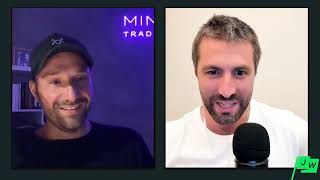
Episode interview (Jake Woodhouse with Kosta Ouzas) about Minotaur, an algorithmic trading system built on Bitcoin. Kosta explains the company's goal to generate cash flow from Bitcoin without custodial transfers, how their TradingView-based algorithm signals trades to clients' exchange accounts, risk-focused design (capital preservation, position sizing, stress-testing) and the Bitcoin "power law" thesis that underpins their strategy. Practical details discussed include licensing + subscription access, use of exchanges’ collateralized futures/perpetuals (so clients retain custody and stop bots anytime), tax treatment of futures in Australia, target client profile (five-figure+ with patient expectations), and claimed empirical performance metrics.
Questions this video answers
About 45 minutes to an hour.
Approximately 2–3–5% per month (conservative band).
Around 40–45% compounded annual growth over roughly 11 years (as claimed).
Around $35–$38k (power support cited).
Chapters
Welcome on the podcast. I'm very well, mate, thank you. So I, I was doing a bit of research before our call. We've obviously met in person before, which is fun. It's not always the case in those of us working in and around Bitcoin, often kind of sidelined to the edges of the Internet, like chatting away. So it's cool to have met in person first and then do a pod. I, I, I would just love to learn more about what your business is and how you're building it.
Yeah.
And I've got a ton of questions as to like probably anyone would ask on the way through your onboarding process. But to start off from the very top, then, Minotaur is a trading system built on top of Bitcoin. Why is that helpful?
So for a few reasons. Trading. The markets are there to be traded. Right. That's what they are. Bitcoin is a highly liquid asset that can be traded 24 7, which already makes it more unique than most markets. It also is in its infancy. It has high volatility, which is great because volatility creates opportunity. And then on the other side of that is, you know, as a, as a bitcoiner or as a, as a getting to a, I would say I'm almost a maxi now. Probably am fully a maxi. You do realize that this is potentially a civilization changing invention or at least one of the biggest technological advancements or breakthroughs probably since the Industrial Revolution. And, and, but that aside, what my company does, and I think it solves a really big problem and that's for people to actually generate cash flow either from their Bitcoin or create cash flow from trading bitcoin. Right. And I think that that's something that most people aren't able to do. Right. They either buy and hold and at some point they have to sell or if they don't ever need to sell, they hold it. But if you're just holding it forever, you're never able to do anything with it. You are building wealth, but it is just paper wealth. Why not put that to work? And that's what my company does. We focus on doing that.
Awesome. And I think it's fun to start here in a sense as well, which is the kind of wider picture. I went through the video that you shared with me, that's part of your kind of customer onboarding and had a listen to what you were running through there and you talked about the investor's dilemma. So what is the investor's dilemma?
The investor's dilemma is basically where are you going to put your money right? What are you going to do? Whether you're working in a job and you got savings or you own a company and you're saving money or, you know, inherited money or whatever your background is, you need to make a choice about where you're going to put your money and what you're going to do with it. And there's also things like what do you need from that savings or what do you need from that investment? Like, it's great to squirrel away things for the future, but what happens if you need to pay the rent today? What happens if you need to pay the grocery bills? What happens if you just need extra money because inflation's high and you can't afford, you know, the cost of living, you need an extra 10, 20, 30% a week. Well, you need to look at all the opportunities that are available to you. And there are lots of opportunities available to institutional level investors or sophisticated investors. Usually a sophisticated investor in Australia has to have a net worth of a million dollars or more or less a $250,000 annual income, which basically prices most people out of that. So most of the double digit returns that you're able to get anywhere in the world unavailable to the average person enter Bitcoin, right? We all know that the CAGR of Bitcoin is around 40 to 45%, right? That's the compounded annual growth over the last around 11 years. Absolutely fantastic. But you still need to sell it, right, at some point if you want to realize those gains. And then we have the other problem of the cycles, right? Bitcoin has extremely volatile cycles, big booms and big buffs. Problem is most retail investors are going to buy at the top and sell at the bottom, right? Huge problem. Most people are losing money. Again, it's always working in the favor of the institutions or the people who are highly sophisticated. This is where we step in, where we've built a system that enables us to extract that value on a daily, weekly, monthly basis basis. So we're kind of price agnostic. We're also kind of cycle agnostic. No matter what the market's doing, we're able to generate returns. And you know, we do that in two ways. Like I said, we're able to either use the Bitcoin that we have as collateral to trade with, which is almost like earning a yield on that bitcoin, which is pretty amazing because then you can use the profits that you're generating and you can use them in the real world. It's like getting rent on your bitcoin or simply go, you know, I just want to put, I just want to use bitcoin and its volatility to generate income like a business would, right? And then you've got a side hustle going or a separate business going. So these are two kind of things that, that, that we've seen a huge problems that need fixing, right? And that's like, it's great the bitcoins out there and it's great that it's going in a certain way. People need to be able to at some point do something with that money, with that paper wealth without having to sell down that asset. Right? You don't mortgage your house in order to pay the bills. So we need to be able to generate rent, right? That's basically what we're talking about here.
Yeah, it's really cool. And obvious examples being if you own an equity and that equity pays a dividend, then you have a yield on your equity equally. You know, you own a piece of real estate and you rent it to someone, the rent equals some yield on the asset that you own underneath that. When you own bitcoin in self custody, it's digital gold and it doesn't have a yield. People always complain like why, why do people buy gold? You know, it doesn't, doesn't yield anything. Why would you even do that? And I'm personally very comfortable with owning as much bitcoin as possible in self custody. And the multiples that it can potentially return completely outweigh any other area that you might want to deploy capital in my opinion, especially from a risk reward perspective. And so I feel like what this might be is an additional tool in the toolbox for a percentage of your portfolio to generate some yield. I'd love to understand how you think about the like. Let's say you are complete bitcoin maxi balls to the wall, 100% all in. Like what percentage of that 100% might you put towards a trading system?
It's a great question. And we get a lot of these questions from people and they're like, you know, I just want to buy and hold it. And it's like it's just a tool, right? What we have is a tool. It doesn't replace what you're doing. The fact that we're trading bitcoin doesn't mean that you should sell your blue chip stocks. Right? You don't need to do that. That's fine. You can keep them and also trade bitcoin. Right. Doesn't mean you need to sell your company and use all the money to trade Bitcoin? No, no, no, that's just, it's just a tool. And that's really important to understand, right? It's just a tool and that's what you use. So one of the things that we do when we work with our clients, and look, I'm also talking to, trying to really make the distinction between a trading system and a trading bot. We use trading bots to execute what we're doing, because what we've actually got is an automated trading strategy. But this trading system and the strategy itself is more like what you're talking about. It's about portfolio allocation, position sizing, when do we deploy the capital? Where are we in the cycle? And we do help with those things as well. So to answer your question, I always ask another question. It's like, well, you tell me, how much money do you need extra in the year? Right? We can reverse engineer it, we know, and it's quite predictable what percent returns that various strategies that we have will return. Right, well, then we simply go, okay, well, this is how much capital is required to generate what you need. But that's how much we suggest you should deploy. Keep the rest in cold storage, right? Just deploy what you need based on what your goals are. Don't listen to other people. Don't worry about what they're doing. Just worry about what you need. And that's, that's basically what we do. Just reverse engineer.
Great. And that's a good reframe because at the end of the day, all these decisions that you make, only you are accountable to them. And in some ways, that's the beauty of capitalism. If your money's gone, mate, it's gone. Now, ironically, we live in a system in which actually there's a lot of actors out there that know that they can get it very wrong and they will get bailed out. And that's the wild nature of how the financial systems actually built. I don't want to go on a big rant about, like the macro case for Bitcoin necessarily. I'm more really interested in what you've actually built because it. Yeah, it's fair to say that since we spoke about it in person, I haven't looked closely at it until the research I did for this, this call. And I'm really impressed, in particular when I saw some YouTube footage of you pulling apart your trading view and how you've got this kind of preset allocation sizes that are very small, but you've got like 97 of them. And then the strikes that were being made, you were confident of being right like 96% of the time or something. So if you could just teach me a bit more about, let's say I was signing up as a customer, what do I actually get? And the wider picture being I'm extremely dubious of people selling yield in particular when it's like, oh, if you just give me your Bitcoin, you can trust me and I'll give you back 3% or 10% or 5% or whatever and the likes of Blockfi and Celsius and all this kind of stuff that went very, very wrong in the not too distant past. How does Minotaur kind of differentiate to that?
Yeah, so firstly, the biggest thing is that you never give us your money. That's just the biggest. Yeah, never send us a scent. Right. The whole way that we set it up is we share our algorithm with you. So we've written very complex algorithm and that we're able to share that with our clients through TradingView, which is trading Views are, you know, charting websites in the world. So we're able to just share that with you. And then what we're also able to do is using our software is connect that algorithm, which is essentially the signals, the buy and sell signals that we're generating. We're able to connect that to your exchange of choice. So we actually connect to pretty much all the major centralized exchanges in the world, whether it's Bybit or Binance or Coinbase in the States, Kraken, you name it, we can do it. And we're also working on a decentralized solution using Hyper Liquid on Arbitrum. So that's going to be an exciting thing that we're going to be deploying later in the year. So yeah, the first thing is that I agree with you. If anyone asks you to send your money to generate yield, never do it. Right. We've seen that happen last cycle it completely destroyed people. Now all that we're doing when we're saying using your Bitcoin as collateral is we're just taking advantage of a specific functionality of the exchanges themselves. So to use two examples, by BIT has what's called a unified trading account, Binance has a multi commodities account. What that means is that you're able to trade futures, perpetual contracts and derivatives and you're able to do it instead of depositing USDT like a normal bank account and you go to your broke up, here's $1,000, I want to start trading these, these platforms later, deposit Bitcoin or Ethereum or Ripple or whatever it is, xrp. And you can use the value of that token in order to then trade with. Right. So we're just taking advantage of a functionality that's built into the centralized exchanges or showing you how to do it. And then effectively what you're doing is you're borrowing against that asset in order to place the trades. Now that particular setup using the collateral to trade with is a little bit more advanced. The average person we always suggest is just use the dollar amount, right, Bring in USDT and trade Bitcoin with it for usdt. That's the simple way to do it. But obviously if you do it with Bitcoin as collateral, you get a double upside. You get the upside of Bitcoin if your timing is right, which this cycle was around 6.6x from 16k to where we are now 110. Wherever it's going to go again, I think there will be diminishing returns and we can come to that at the end of the call. My long term outlook. But what we're able to do is just use that Bitcoin as collateral and trade with it. Now, are you earning a yield? No, you're actually trading with it and you're earning usdt. Would you call it a yield? Maybe. Right.
But it's always their short term trading profits essentially.
Correct. So it's not a yield, but it technically you are earning a percentage because you're using that collateral and you're getting a return against it. So call it what you will. We never touch the accounts. You always have complete access. You can stop the bots at any time, you can draw all your cash at any time. So this is one of the biggest, I guess, the differentiality. We're not some kind of Web3 application where you're staking your funds in. We're doing this simply through the centralized exchanges and we're just taking advantage of the functionality available. Available to anyone.
Awesome. Well, shout out to my friend Jigs. Years ago he was working on a trading system of his own and he contacted someone in Eastern Europe who wrote some code for him that he plugged in the back of TradingView. And I've had automated signals to buy and sell and you know, we've been very much playing around with that. And for us, I say for us, Jigs has developed the system himself. He's become almost like a hybrid long term investor where he's really working over like multiple year hold frames. And so the need for an AI bot in that scenario just, it doesn't you know, because it's not high frequency at all. It's literally like, yeah, okay, I'm going to ride this for however many months, years. And the position is then sold out. And then it works differently. What you're explaining here is the same thing. It's like you're the person logging into Trading View. Here is our IP with our, you know, algorithm that goes in the back of Trading View that you purchase. Is it a one time purchase or do you pay like a recurring month?
Yeah, so we have a licensing fee for the algorithm and then we're going to have, we've got our software where there's a small recurring subscription for the software.
So there's no like carries. It's not like yet. We'll make some of your profits. You're not taking people's money in that sense. You're not a discretionary manager of their funds. Like I, I had an old podcast and I, I literally, I had, I interviewed a guy who was a community manager for Celsius who said, all you've got to do is trust us with your digital assets, quote unquote on the pod. And it's like, cool. That went really spectacularly badly. And so here I'm reminded of that phrase of like, feed a man a fish, he eats for a day. Teach a man to fish and you feed him for life. And in this case, instead of teaching.
Him to fish, you're like, electric fishing rod. Yeah, yeah. Here's the Super Trawler. He's got the Super Trawler. Yeah, nice. He's got the Super Trawler. He's got the Super Trawler controlled by a drone that's running on a code.
Yeah, but what I liked about your presentation was you made the great point. It's like people are already taking advantage of the shift in technology around us. As investors, I strongly believe in this idea of seeking your edge. What can you do better than anyone else? And if you can find tools that help you gain an edge, use them. In some ways it doesn't really matter how it works. Does that resonate in terms of the type of customers that are coming to you, like, who really affiliates with this?
So one of the things that we really focus on is firstly that our system doesn't try to predict the price, which is a really important thing. We found that anything that tries to predict the price can look really good in back testing. It tends to fail in real life environments. So we developed a system that it doesn't really matter what the price does. We're able to generate a return from it. And what we really focus on the most is capital preservation is not losing. Right. The fact is, in this, in, in the crypto sphere, especially with bitcoin, if you can protect the downside, the upside will take care of itself. Right? The trick is to not lose. So we did the opposite of what most people do when they're working on algorithms instead of trying to figure out how much money they can make as fast as possible. What we said to ourselves, how do we stop ourselves from losing money? And let's just see how much money we can make. Right? The returns that we're able to see on our conservative bond is around 2 to 3 to 5% a month right now. If you've got $1,000, it's not going to change your life. It's absolutely not. It's too slow. Those kind of people are going to end up jumping into meme coins and losing their money. But unfortunately, you know, you can put an algorithm on steroids and it might work for a little bit, but the wheels will come off. That's the problem. What we've developed is something that is like an all weather kind of system and it's going to work particularly well for people that have five figures or more. So we're looking for people, we don't need high net worth, sophisticated individuals, but what we do need is people that have realistic expectations and a patient. Right. Because like you said, it can if you're playing the long game. The tortoise and the hare field. The tortoise, the compounding gains over time really make the difference.
Yeah, I mean, yeah.
And yeah, like I said, so this is the important things, is that the algorithm that we have is extremely good at entries and it does this by using a confluence of indicators. So we've laid in around 10 to 15 different types of indicators and we're extremely good at entering the market at a really good opportunity. The next most important thing is position sizing. Right. You need to engineer a position size that reflects the capital that you have to deploy and that will also survive massive black swan events. Right. You can't be trading in a range where if the unexpected happens, like the tariffs which just happened, you know, we're down almost two black swan events, right. We were at 108k and then what was the news before the tariffs? I can't remember. There was something to do with, with what's going on in politics. And then we have the tariffs and we're down to like 78k. Our system's not Even stressed at this point because these kind of scenarios are already built into our thinking. Right. So we're able to really ride these out without any kind of stress. So again, what we're focusing on is just protecting that capital, protecting that downside, the upside just simply take care of itself.
Cool. And again, this idea of like, okay, if I'm going to part ways with my bitcoin, where is it going to go? Okay, well, I'm going to take more risk. Fact, like there's no web.
Yeah.
It's risky than bitcoin. So okay, in order to, in order to get more bitcoin, I have to take some risk with it. And this is one potential avenue to do that, which, you know. Yes, it involves some kind of exchange because like, you know, the shitcoin casinos are not my favorite by any means. But at the same time, if that's where you can go and get the liquidity you need and it's all automated, then you can basically just kick back and watch the whole thing function. Or you've got to supply as the liquidity in the first place. That is the capital. And I'm absolutely sure of the fact that just bitcoin specifically.
Right.
Is bitcoin going to be around in 10 years time to trade 150%? Yes. And so if you are able to develop strategies now, that's surely a good bet. And I've looked at so many markets over the years, right. Where it's like, what if this company's not around in five years time or whatever the case might be. And so I think that's a really fun way to be. Like great place to be building a business. What I'd love to do, actually Costa is kind of wind back a bit. Like how did you even get into trading? Like, why is investing interesting to you? And you told me a great story in person as to basically how you got to this point. But it'd be fun to explain to others.
Yeah. So when I finished school, I went to university for under a year because I failed, I think think 70% of the subject because I did something I wasn't interested in. And I traveled for a few years and I, I got it really started reading a lot and I came across the four hour work Week. Right. I think everyone's heard of that book. And I built my first, I built a couple or started building a couple of Internet businesses. One of them I needed, it was a publishing company. I had an idea for a couple of failed and then the next one that I had was an idea for a publishing company. And my friend, my best friend, who's a stockbroker at the time, put up the capital that I needed in order to get going. And we did extremely well for that business. And we ran it for around seven years. And because we were doing so well, I had a lot of capital that I had to deploy. And he was a stockbroker and he was incredibly good at picking stocks. So we did incredibly well buying stocks mostly on the. On the. On the asx, right, The Australian stock market. And then what happened is I sold the business because it kind of hit a plateau. Market was quite saturated. Saturated. We didn't really have an edge any longer, and it was just time to say goodbye. And so we sold the company and then Covid hit. So Covid hit. And in the meantime, my stockbroker business partner has started a fund probably about a year and a half before. It's a value fund based out of Melbourne. They manage around 400, 450 million. So it's quite a substantial size fund. And they needed some. Or I actually offered to do some digital marketing for them in order to help them raise capital during COVID because they actually couldn't go and have any more meetings, right? So they were very old school, meeting people in person. And I was like, let's just try this digital thing. And he trusted me because we'd done well with our business, and I knew his investing style because I'd been trading with him for like, seven years. So I could talk about the companies because I own them, and I could talk about the strategy because I understood it. And that went really well for a few years. But then at the same time, because of what I've been doing with my digital marketing, I met another person who asked me to help develop a. A product or help with the strategy of a product that was in cryptocurrencies. So I decided to help out with that. And it was. I was kind of in the background, so that was more helping put everything together. And that went incredibly well until the market crashed really badly with FTX and Celsius. And it was at that point that I realized that there was tremendous potential in this industry. And it was really, you know, when they do that circle where you've got, like, your strengths and then you've got the intersecting point. Well, there was traditional investing and there was digital marketing and the crossover that is bitcoin, right? Because bitcoin is the digital version of, you know, a traditional financial instrument. Essentially. It's just. It's just a digital version of it, it's 24 7, it's highly liquid. And the idea that I could put the skills that I developed through the digital marketing and apply them to a financial asset, Bitcoin became that. And then here we are.
Really. So cool.
Yeah. A lot of the lessons we learned though, from the last cycle in the crash is that it doesn't matter how much money you make when it's going up, it's how much you keep when it's going down. Right.
And.
And the system that we created now is the kind of system that can survive that kind of crash and still generate returns. Right. That's what's most important. And really our system only focuses on that. We're always looking at the worst case scenario, what's going to happen if the worst thing happens at this moment and will we survive it? And it's a very, I think it's a very contrarian way to look at it, but in reality it seems like the reasonable and logical position to take. Right. But it is quite contrarian in this world of everyone chasing the fast gains or everyone chasing the new thing. I'll give you a piece of data that we brought up in our, in our testing. If you use bitcoin as collateral and apply our trading system to that collateral, the gains that we're getting are the equivalent to Bitcoin in 2017. Right. Now, in 2025.
Unpack what that means.
So basically, if you look at the returns of the growth of Bitcoin in 2017, that's what we're able to generate now, our returns. It's the equivalent of what bitcoin was doing in 2017. Right. Nice. So what we're able to do is, is, is really put the returns, the buy and hold returns that you'd be getting right now. We can amplify that through what we're doing. Right? Because really what we're doing is we're creating a flywheel where we use the bitcoin as collateral. If we choose to take on that strategy, we earn usdt and then we're buying more bitcoin.
Right.
And then we're putting that bitcoin back into the collateral and we're increasing the position size. So what we've created is, is even if you've only got X amount of bitcoin, we can increase the amount of bitcoin you have without you having to buy any more bitcoin. That's what's really special about what we can do. You do that for three, four years, you might be able to double Triple the amount of bitcoin that you're holding.
Awesome. And therefore, investing in the system that you've built makes a lot of sense. Why would you buy this thing? It's like, okay, well, we can help you figure out a way to create additional returns. And the cost of purchasing that insight is a fraction of what you might make, and that's the sell. Okay, cool. And I always love understanding how people pull the dots together to get to bitcoin, because it's not. It's still rare. Right. There's not many people building a business or running a podcast on top of bitcoin, and that's what's going to be great fun in the years to come. We'll look back and I call that's a wild time to be getting involved. This system that you're describing to me is basically you're taking that. You're taking skills that were acquired in the traditional finance sector and reapplying it to this new thing. And that just hasn't been done all that well and certainly not productized for retail investors to get involved. And I love that kind of thing. So can you help to explain to me then, like, how did you actually build this? What even is an algorithm? And I don't want to, obviously.
No, you don't want, don't share any.
IP that you're not willing to share. But, like, what is this? Like some shadowy supercoders in the background somewhere? Like. Yeah, you actually do.
This actually is some shadowy supercoders in the background.
Cool. You know, is that you doing that or you as the entrepreneur? Okay. Yeah. How did you kind of pull it all together?
It's an. Yeah, that's. That's really what the last couple of years has been about. And it's a. It's a really good question. And it's. I guess it's one of those things that, like, when you look back on it, you're like, oh, my God, like, there was so much chance and luck. Yeah, like wild, Wild west stuff. But we've worked with a lot. This is another thing. Right. I'm a true believer that there are a lot of super, super talented people that are very, very good at executing a particular skill. I think there's less people that are able to take that knowledge and either, like you said, productize it or even apply it in a way that kind of makes sense. There are a lot of good coders. They just don't know what to do with the code. Right. So to cut a long story short is that we had an idea of a strategy. And then we worked with a lot of different people to help us. Well, initially it was about the entry, right? It was all about the entry. How do we come up with this? With this, this. When we're running, for example, we can run an algorithm on 1 minute, 5 minute, 15 minute. But we're testing most of the 15 minute. Right, the 15 minute candle. It just gave us enough, enough breathing room to make really smart entries. We had an idea of where we wanted to be, and then we'd have to work with lots of different developers until we found the one who was delivering the results that we wanted. Right. And then when we got to that place, we were happy with the dev. We're happy. And we've got our own CTO who's quite skilled with coding as well. When we were really happy with that, then we would start running it and we go, okay, it's missing this piece. Can you build that? It's missing this piece. Can you build that? So what's interesting is like a lot of these coders, like a lot of people from the outside might think like, oh, if you can code, you can come up with the blueprint. No, no, no, those guys can code. They're coming up with the little snapshots of every piece. You need to have an idea as a CEO or as an engineer or whatever, as like, this is what I want and I need you to help me execute that strategy. So once that happened, we kept finding holes in the system and, and we kept working on version one, version two, different iterations, different testing, and at the same time, we're running the algorithm through backtesting, but we're also running Monte Carlo simulations of the Bitcoin price, which effectively means that you don't use just the price history of the real price history, you create a fake price history and you create a Monte Carlo simulation, creates simulations of multiple fake price histories. So it's like parallel universes where Bitcoin existed but traded in different prices. And then we run our algorithms that we come up with and we test it against these simulations as well, until we came up with the retail product that we have now, which survived everything. It survived not only Bitcoin's price history, it also survived the fake versions of Bitcoin's price history that the Monte Carlo simulation created. That's why we're so confident about our approach. It's not just back tested on trading, it's extremely, extremely well stressed, tested through multiple environments.
And then that's also. Then the key though is when if you're not betting everything and it does go to zero, well, that was still a calculated bet. Right. I'm still trying to make a margin here where you're using better information and better tools and hence you can actually take value from somewhere, essentially. Well, first of all, the more you get into Bitcoin, the more it's like for me, personally speaking, that's all I really want to work on. And I become less interested in spending time that props up the old system. And to some degree you just have to just get over that fact. You need to use tools in other areas, whether that be USDT or some kind of shitcoin exchange. That's okay. It is what it is. It's a means to an end. But this trading system, can you use it on other assets to Bitcoin or have you built it very specifically to Bitcoin?
Yeah, so we can actually use it on any asset. It actually can trade any digital currency. So the reality is you don't really want to. Bitcoin has specific characteristics that all the other digital currencies don't. Right. We're working with which.
Which are.
Well, yeah, which are. So firstly, we're working very closely with Giovanni Santa Stasi, who basically discovered the power law theory behind Bitcoin's growth, which basically means that Bitcoin is growing via a power law trend. Now, a power law is a very, very unique characteristic that is not typical of a financial asset. It's more typical of, for example, the growth rate of a city. The growth rate of a city like New York or Tokyo follows a power law. Now, why would this happen to a financial asset? Well, Bitcoin is not only a commodity, it's also a social network. Right. When you start to understand that, you start to understand why or how Bitcoin can also be growing not only as a financial asset like gold, but also as a social network like Facebook. Right. Now that gives one confidence. If you have Ethereum or xrp, it doesn't have that right. What we look what we start to understand when we were deployed because we could put our algorithm on Ethereum and it would, it would do like 4 or 5x what bitcoin would do, but not safely. Right. It wouldn't survive all the stress testing that we would do. The thing about Bitcoin is the ironic thing that it almost has a predictable growth. If you take away the boom and bust cycles, it is actually growing at a very, very steady rate. It's a scale invariant rate. In other words, that at every scale of it, it's increasing, but it's also diminishing returns, which we believe is one of its strong strengths. So this is also like a contrarian idea. People think that the adoption is going to take off and it's going to explode. Whereas our position is that the explosive growth has already happened. What's going to happen now is we're going to have diminishing, diminishing bubbles, diminishing returns, but a steady rate of growth, potentially forever. As long as it exists in a fiat system. Bitcoin's value will increase over time, right? But it should increase at this power law rate for at least the next 10, perhaps 20 years after that, who knows? Right now, as traders, it gives us a few things. It gives us what's called like a mean where the price is kind of oscillating around, which does give us a lot of information. Another really important thing, it gives us this power loss and we don't have a chart in front of us, but the power support, we believe, has something to do with the physics of the mining. So in other words, that if the price drops to a certain point, Bitcoin becomes unprofitable to mine and it would actually be cheaper for the miners to buy bitcoin instead of actually mining it. So it actually makes no sense to mine anymore, which would mean that there's incredible buying pressure at that point, which kind of makes the price stay above this level. As a trader, if you're not having to deal with the range between 0 to infinity, the power support right now tells us around 35 to 38k. That really narrows our trading range, which enables us to generate really, really good returns because we're able to focus on a range that's, that's actually quite specific. But if I told you right now, I asked you right now, what do you think the chances of Bitcoin going to 35k today? What would you say?
35,1%. Okay.
Correct. So everyone knows that there's a certain price with Bitcoin that is probably not going to go back to again. If you look at that, that's where the power support lines, what we've done, and that was kind of the missing piece. It's actually. You would be surprised how easy it is to create a trading system that can make you money in the short term. It's not that hard. You could probably use ChatGPT. What's actually really hard is creating something that will work all the time, no matter what happens. And that's what we've been able to create. Here. But the missing piece was the actual DNA of Bitcoin itself. Without the DNA of Bitcoin itself, we're a little bit like we're flying. Without Bitcoin gives us a clear roadmap. So to answer your question, if we put our algorithm on our other asset, it's like we've got. We can only see 10 meters in front of us. Yeah, Bitcoin we can see forever.
Because I'm thinking of, like, I don't even know what the most highly traded asset is. Take an example of, like, let's say you're trading an Apple stock. There could be. That's a small chance, but there could be some outrageous internal error. And they've been cooking the books for, like, decades. And a huge corruption comes up. And actually the price tanks so hard that the ability to repay debt disappears. And actually, you know, the company's bankrupt and it's gone.
Never going to go back up.
It's completely gone in a matter of days. Now, that's an equity position that you might be trading specifically. I then thought about more of a commodity style, like an oil. Okay, let's take West Texas Intermediate crude oil. Like, could it completely go negative? Well, yes. Like, they have. People have to sometimes pay to get rid of the oil that they bought. That's the physical traders doing that. Of course, the derivatives market is different, but the point being is it's a big moment when you suddenly think this.
Thing is so different.
Like, could it actually go to zero? And now a lot of people out there will be like, it's, it's, it's vaporware. Why even touching it. But that's the contrarian insight, right, Is it's actually extraordinarily valuable. And the price floor, as you've just pointed out, is much more predictable than what people realize.
That's. That's right. That's right. And really cool. That's perfectly said. But, you know, is it. Am I 100% sure? I'm probably 99%.
No, but you don't need to be as a trader because you're taking hedged bets.
Correct. And what we have to. Correct. But what we have to understand is that if there was no risk, there would be no money to be made. Zero. There would be zero. Right. There has to be risk. If there's no risk, there's no opportunity. Right. The opportunity is what creates the wealth. So you have to take on some element of risk. You have to make a choice. Now, I wanted to, like, go back to what you said. This was one thing That I got stuck on for so long because I was kind of anti bitcoin for a while because of the whole fact that it didn't generate any cash flows, didn't pay any dividends. Why would you own something like.
Yeah, the classic value investing land is like, well, I can't calculate the value.
So that's where I came from. Right. So I had that. The penny dropped. When you realize that that is a feature, not a bug.
Right.
Because the fact is that if it's more like a commodity and I think you can only really compare it to gold, then it is going to keep going up simply because of the debasement of the currency. Right. And it's a scarce asset. As long as they're printing money, it will go up in value just like the housing market in Australia. Right. It's exactly the same thing. Everyone thinks that they're a smart investor because they bought a house in Australia 10 years ago and it's worth triple.
Drives me mad.
Got nothing to do with your skill as an investor. Right? Right. It's got to do with the leverage in the system and the fact that they're printing money. Right. That's all it is. So when you start to realize these things about bitcoin and the penny dropping, look, no one can, you know, the satoshi thing that is disappeared is the. Is is the best thing as well because it does give it the immaculate conception that it needed. Right. It would be a much more flawed asset if everyone knew who created it. So I think that is definitely one of its strongest things as well. Because, you know, you could argue that. Let's just say find out this, you know, if Harvey Weinstein was the creator of bitcoin, probably would crash to 99%. But that's not the case. And to be honest, I don't. You know, I think that the person who's created bitcoin, I don't think they're around anymore. I think that's probably what's actually happened and I don't think that anyone's ever going to find out whoever did it. So again, feature, not a bug. Right. The fact that, like what you said, we can't have any kind of scandals, we can't have any of this stuff. This is all. It all gives me more confidence that this will continue on its growth, at least for the next 10 to 20 years. I don't think it will last forever. You know, people talk about the bitcoin standard. If the world goes to a bitcoin standard, the price it like it's kind of the price is irrelevant, right? Because if we stop using dollars because they become worthless and everyone's using Bitcoin, then we can't price it in dollars either. So the Bitcoin standard, everything, everything ends then this, this whole party right now, like, and don't get me wrong, if we're on the bitcoin standard, it's going to be great for civilization. But we might not be trading in the ways that we're trading it now. We might not be doing things that we're doing now. We're in a kind of like a crossroads here, right? There's a tremendous amount of opportunity with an asset that is incredibly unique. And we're still, you could argue that we're probably not in, we're not in its infancy, we're probably not even in it. We're probably getting out of its middle age, really, which is kind of, I.
Mean, that in itself is a big question. Do you think that it's. What would lend that as a.
The diminishing returns. Right. So all we have to look at is the rate of return. So, so this, this cycle will return around 12x from bottom to top. Let's just say the cycles we're seeing continue. The next cycle will only do 6. The cycle after that will only do 3. Tell me what that is. That's something that's growing old. That's something that's, that's, that's, you know, if you go back to 20 years ago, like this thing was doing a hundred off or fifty or whatever, now we're down to twelve, we're down to six, we're down to three. That's going to then drop to 1.5. So again, it's just a contrarian look. Of course it's still young and especially if it's going to be around forever. It's only been 15 years, but it's already had its explosive growth. Like it's already an adult. It's going to live forever, but it's already an adult, if that makes sense. It's past its baby stage. It's walking, it's past its teenage stage. It's probably into its 30s and 40s right now. It's just going to look forever, right? So it's already a quite a mature asset.
I think my pushback to that is like if I think about 100 people and I chatted to them on the street, you actually might find that, you know, 90% of them have, they've heard of Bitcoin. But if you said to them how much of your net worth have you got in self custody, they'd look at you like you're complete alien. And so I think the percentage of meaningful adoption is quite small. And given that this is the first cycle in which we've got active nation state participation from a regulatory perspective and they're about to start stacking the balance sheet. Right. The strategic bitcoin reserve, all this kind of stuff that's happening. If this market top, whenever it might be set, my initial timeline was for about August of this year. Who knows what might happen? If it does do a higher high, higher than the range that diminishing returns suggests from the previous cycles, then that particular trend you're describing is broken. And that's where that whole phrase of like all your models are broken. And that's not to say that you're wrong. I don't know. I definitely buy into this concept that as this preferred form of money takes hold across its three key functions of store of value, medium of exchange, exchange unit of account, by definition it will be less volatile and there won't be the same kind of price action. But I just, I don't know when that is.
Yeah.
So it's, it's, it's a good. One final point being the concept of a Veblen Good is key in that the easiest example being is, you know, when you're batting in the like elite watch realm or some kind of car or other luxury, good people pay more for it because it's more expensive.
Yes.
And so bitcoin is the first product that's a commodity that when the price goes up, you don't just mine more gold or dig for more coal or pump more oil. You can't because there's a fixed supply schedule. And so that price inelasticity on the downside, that's fucking an unknown. I don't think has been properly stress tested yet and could see, we could see outrageous kind of fiat pricing of a bitcoin.
Yeah. And to come back to that, you're absolutely right. But the thing is the model, the model is broken. The model doesn't break to the upside. Right. The upside can be narrative driven. And the real breaking of the model would be the support. Right.
That 38k power law. Yes. Okay, interesting.
It would have to be sustained break of that Covid whipped through right. In a for a very brief moment and then kind of snapped back up. So to break the power law model, we would actually have to have a sustained trend underneath the support. That would break that whole idea that it's Following a power trend, the bubbles that they're. They're oscillations from these trends. And the oscillations are driven by narrative, they're driven by the money printers, they're.
Driven by human psychology, they're driven by.
Elon Musk, Twitter, Right? So they don't matter so much. So, yeah, like, I agree with you on that. But yeah, it's like it's flipping it the other way around.
Interesting. And hence your whole process has been about like, what's the worst case scenario and how do we cater for that and therefore build something that's robust over the long term? Which is, I think, such. It's a much, much more interesting engineering problem problem to have solved this concept of diminishing returns just to kind of really make sure we've hammered it out properly. So the point is that as a technology hits a marketplace, as a money is adopted, the idea that the cost to purchase that coin is reducing over time in terms of the value growth.
The value growth.
And what I am intrigued by is it's such an interesting thing where bitcoin is complete opposite of the status quo, right, where you've got eight blokes, 70 to 80 years old that get together every six weeks and go, yeah, I think the interest rate that is the cost of money should be 4% or whatever they say. In some ways, bitcoin is a fairer reflection on the irrationality of humans and the volatility that you guys are able to capture value from is going nowhere. So do you think there might be a scenario in which, yes, the diminishing returns plays out over time as more capital is drawn into bitcoin, but do you think that there's still going to be. Humans are emotional, right? There'll still be a bitcoin price to trade, surely?
Absolutely. There's always going to be a bitcoin price to trade. Mostly because this is a highly liquid asset that trades 24,7. In other words, it is the best thing to trade. Right. This is another thing when, you know, I guess it seems kind of intuitive, but it's not really a scarce asset in the sense of what scarce is. Right. To me, scarce is like, you know, there's a diamond on the top of the mountain, right? And there's 10 people running up to get it and the one person's going to get it, therefore the other nine people don't. @ the end of the day, bitcoin can be bought and sold on any given day of the week, at any time of the day, on any Exchange throughout the world. It's not a scarce asset. Right. But it is asset that has a capped supply that cannot be tampered with. These are different ideas. So the supply shock narrative I don't really agree with because I don't think they can be a supply shock in a market that's so liquid. The other thing is that the price is discovered in the futures and derivatives market. Right. If we only had a spot market to trade, we wouldn't see the prices and we wouldn't see the bubbles that we get. Right. The fact that people are trading derivatives and futures with leverage creates the volatility that you're referring to. That's what gives us the opportunity to capture value from. Right. That's how I look at it at least.
Okay. Here in Australia at least just to give an example, if you make a capital gain within 12 months, it's 20/something% tax for the government. If you hold your position for over 12 months it's a 50% reduction of that. So 12% or something. When you're using the trading system that you have built, how does it account for taxation?
Well, what's really good is that when you trade futures is you're not actually buying and selling the commodity itself, you're trading futures contracts, which means that you're only taxed on the pin out. There's no capital gains tax to futures trading. Futures trading is business activity. So you're simply on your profit and loss which is just like a regular business activity. Another reason why what we do is really cool because if you are using and it's particularly good in Australia because we don't have, we've actually got access to most international exchanges. So that Bitcoin you can, let's just say you bought at 16k, you can hold it till the top, you hold forever. And we can trade futures and we simply paying a regular tax on the business activity of that trading. No capital gains tax at all on the futures trading activity because that's what futures trading is defined as.
Interesting. I didn't know that because I was thinking like God, if you're doing hundreds of trades with some kind of bottom, if you, how, how you account for that would be.
Yeah, it's a lot of people don't expect that.
But it's like I had no idea. And this is where accounting rules are so weird because I was learning about the FASB updates in accounting in the states and this is one of the reasons people are so bullish on microstrategy is that the Bitcoin price Movement can now be actually accounted for as revenue. And so if Bitcoin goes up by 10% and you own a whole ton of Bitcoin, that increase in dollar value of Bitcoin is now considered revenue for the company. So the price to earnings valuations of these equities, in theory, could be completely wild. And what you've just described as, like, when you're exchanging futures contracts, it's not a capital gain. No, it's kind of similar. Yeah, that's kind of. Anyway, maybe I don't know enough about futures to judge that, but anyway, look, any. Any accounting loophole that can be used is. Again, it's like play the game that you see in front of you. And of course, don't cut corners. Like, I'm not suggesting anyone should end up in jail doing financial fraud, but, like, use the rules for what they are.
That's right.
Had one last question, if I may. Are you able to mention anything in terms of pricing for your product?
So our pricing is dynamic based on the algorithms that we have to offer and also the subscription level. So what we do instead is we offer anyone who wants to speak with us a free consulting call.
Cool.
That's around 45 minutes to an hour. We'll discuss everything with you on the call, go through the trades with you. We'll go through all the tiers that we have in terms of strategies, and then we'll find what's the best fit for you. So, you know, the best thing to do is just, you know, you'll get in touch somewhere or they can get in touch.
So if people want to reach out and learn more, where can they get in touch with you?
So just Google Minotaur Trading Systems, Check out our X account, YouTube. You can DM me. You can just click a few buttons. You'll end up on a book, a whole page. It's all pretty well structured. So I'll be able to talk to someone within 24 hours. Like I said, we'll put aside 45 minutes to an hour of our time to speak with anyone who's interested in working with us. I have to say, though, it's kind of like a. You know, a lot of people when they're looking into these sort of things, they're, you know, vetting the companies and doing their due diligence. And we kind of do the same thing as well. Like, we want to be working with, like, realistic people with realistic expectations, people who understand the risks involved and what they're getting into. And then if, if we kind of. If that makes sense for us to work together, then we take them on as clients. So, you know, that's why we have that process of the call. We're not selling a bot out of the box. We're giving access to rip our strategy, our system. And this is what we trade our own Bitcoin with our own money with. Like, this is our personal algorithmic strategy that we're sharing with the clients that get on board it. So, again, it's not a mass market product. It is more for, you know, the select few that they get in early and we'd like to work with.
Awesome. Well, thank you so much for your time today. Really appreciate it.
Thanks, Jake.










