Live with Minotaur Trading Systems, October 24 2025
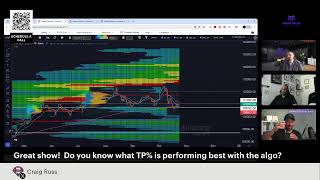
A weekly livestream (Oct 24, 2025) hosted by Kosta Ouzas with Marcus Holloman and Sebastian (CTO) discussing Bitcoin trading, algorithm performance, liquidity events, and market structure. They review a recent large liquidation event (~$19B), replay algorithm trades (entry/TP behavior, safety orders), and interpret liquidity heat maps and volume profiles to argue the market remains structurally bullish but vulnerable to violent, leverage-driven moves. The hosts explain configurable bot settings (TP ~2–5%), risk management, and behavioral lessons for traders.
Chapters
We're going to do this every. Every week at this time. This is our time for this.
Yeah. So 5:30pm Pacific Time. We're trying to welcome to the show Pacific time. I just want to double check we're correct. Are we 5:30 Pacific time right now? Yes, we are.
Yeah. Yeah, it's five.
Great. So. So the Minnesota team, we're going to be doing the show today without Giovanni because he's still in Italy and the. The time frames are a little bit all over the place. So I've got Sebastian here, our cto, and Marcus Holloman, our chief strategist. And we're going to discuss how the algorithm's been performing on some different settings over the last October. We obviously had the. The crash earlier this month. That's something we can probably dive into as well. Guys, I want to get your thoughts on. On what exactly happened, and then we'll dive into the liquidity charts and the heat maps that Marcus is going to be covering. So did you guys want to discuss anything to begin with about sort of, you know, everyone was October, October. It was going to be a. You know, I think that. I think the mean is 35 within 85% of the time in October that we've gone up, and we're kind of still stuck around108,110. What are your thoughts on what's going on so far?
Well, I can give you some insight, but I think the key is that, you know, although historically it's respected that I think people still follow it blindly, just assuming that because it's happened in the past, it's going to happen again, which, once again, you know, with bitcoin is just not true. So, you know, you just need to be careful following narratives, and we can get a clear idea based on past performance. But, you know, the reality is, like, the landscape of bitcoin is changing every year. So to look at, you know, know, data that happened a couple years ago and then just expect an exact repeat because it played out like that, I think is like, personally a little bit foolish. And you can blind yourself very easily. And look, this is what the market makers do. They lull you into a false sense of security. And then what they do, they're very good at making everyone feel like bitcoin is bullish and then dumping the market, and then they're very good at making everyone think that bitcoin is bearish and then pumping the market. So you just need to be aware that, you know, you need to be looking at much, much more than just what Bitcoin did in October last year to get a clear understanding of how it could play out. And that's my opinion of it.
Okay, what are your thoughts, Marcus?
Yeah, just to add to what Seb was saying, markets have to find innovative ways. A market is going to go against the, the trend, right? So where the majority of the people are on one side of the market, the market is going to take them out. And it just, it, it's efficient like that. It's constantly going to go against the consensus. That's what it does. It gets a lot of people on one side and imbalance and it takes that imbalance out. That's how it re. Establishes its, its equilibrium. It's constantly trying to find efficiencies, but then in the same, at the same time it's creating the price action that feeds that efficiency so it can be harvested later. So that's just market, that's market price action, market operations. That's just how it works. It makes, it makes sense when you think about it. You know, even the Fed chairman's of the past, they said markets are zero sum game. Everybody just can't make money. It's got to come from somewhere, right?
Yeah, that's a good point.
Yeah. Casino, everybody can't win at the casino. It wouldn't be in business. Right.
I kind of like the analogy of the casino, right, because it seems like the casino is the only one winning right now because the bears are getting wrecked and then the bulls are getting wrecked. People seem to be wrecked are the people that are charging the fees.
Yeah, exactly, exactly.
And what Marcus is going to show soon and what he shows every week with the liquidity heat maps, if you actually pay attention, like it makes sense, right? Because when you, when you get a huge correction, right, or when price dumps, what happens during that price falling is that the short side liquidity does get larger as well because more people start piling in shorts, right? So it's, you can actually see it play out. The price dumps. Everyone piles on shorts and then they take all the shorts out. While all those shorts got taken out. All this long side liquidity gets built of everyone that was going long and then they send it the other way and they make like for anyone that wants to actually know, because funnily, some exchanges claim that they don't make any money off liquidations. But you can do deep research on this and they do, they make a lot of money off liquidations. So, you know, it is.
Well, that's how they make their money, right? They make their money from the fees and the liquidations. That's, that's pretty clear.
Exactly. Because if, if, if. And so I asked this question to anyone. Do you really think they would allow you to borrow at a hundred times your capacity if it didn't benefit them? Simple question, yeah. If that didn't benefit them, they wouldn't offer it. Plain and simple.
Exactly.
Yeah, I agree.
It's like a credit card company, right? They are not giving you, they're not giving you good money. They charge you 38 interest. It's not good money. You know, it's kind of like. It reminds me of those old mobster movies where you actually don't want the money from the Mob. Take this. $50,000.
Yeah, yeah, there's juice on it.
Take all the time you want. Just bring me back 150 in the next three days. I don't want the money. Please, I don't want it.
Yeah. And the mobsters and the exchange do one thing that is very, very good in common and they convince you that, yeah, take the money.
Take this good money. It's money. Take this money.
They're convincing you that they're doing you a favor. That's really what's happening when you're doing them a favor.
That's how it works, right?
It's bad, bad money.
All right, let's take a look at how the algorithm perform. Maybe you can talk us through this, Sebastian. I'm going to run it from 28th September. I'm using the 10 minute settings on a 15 minute just to give us a little bit of a wider frame. So the entry is quite good on this one as well. Let's, let's watch this replay and maybe discuss, like, talk through it as it's going over. Sebastian.
Yeah, sure. So obviously what we're getting here is a candlestick replay on trading view. So what's actually happening here is this is all live data that's just been replayed out. So this has already happened, which is really cool. And this is a cool feature. So we want to kind of pay attention to obviously what the price is doing. And obviously market's moving up right now and we've just taken profit on our position. So if you can see that orange and that green line, those are two things called the weighted average price and the take profit. The way our system trades is it always takes profit based on the weighted average price. This is the cumulative cost of all the positions combined and what they have is an average price. And then we look to take profit based on that. So as you can see, the algorithm is doing what it's been designed to do, and that's when we're in an uptrend, is to still take trades and profit. Right. But we do something very, very unique with our algorithm because in trading strategy, you can't have it all. Right. You can't have something that is extremely safe going up and extremely safe going down unless you create it like this. And the key about what we're doing here is that we're not overlaying, layering our capital when the market's going up. Because that's actually a very, very dangerous thing to do. And that's why most people lose, is that they place.
This is the point. Right. We're about to see a 19 billion dollar liquidation event right now. And this is your point.
Right. And most exactly, most, most investors or traders, they add to their position and they buy on the way up. That's like Sebastian's saying, that is where you get wrecked on the way up, not the way down. You just.
Exactly. And that's right. And people think that the, that the play is to, you know, technically add to their winners. So what they'll actually do is they'll have a really good long position that's profitable, but then they'll add more at a bad time and it will actually make that trade bad.
Right.
Because they're not understanding when to layer in the capital.
Yeah. So what they, what they'd be doing now is they'd be seeing this bullish moves and then they'd be basically tripling their position and then bang, this happens.
Yeah. So just so everyone knows, in that instant there's 19 billion in liquidation, this happens because the order book, the order book was heavily one sided. So there's reasons this happened. Right?
Yeah, that's what we call it.
And, and you know, people can say yes, like, definitely the news always plays a part in it. But something, you know, that really resonates with me and it was Costa who kind of got me onto this kind of thinking and now I can't get it out of my head, is that in a lot of ways, the chart actually often shows you signs that something's happening before the news or before that happens. And there was a lot of different information out there, like funding rates becoming heavily one sided and a lot of different things that actually played out before the announcement even happened. So, you know, the reason we were able to avoid being liquidated on that candle. I want to make a really important point because if we were using purely math based calculations, we would have probably been liquidated there because math based calculations, they work on the basis that, let's say every time Bitcoin sells off by 2%, we're going to buy more shares. But the problem with that is because there's no intelligence and there's no logic. What happens is your portfolio will be invested into a wicked candle and you'll be liquidated. Versus what's happening here is we've got a signal. And the signal is very, very important because the signal has to pass a set of rules before it makes a buying decision, which is why it was able to not disperse all of our portfolio into that one wick or one candle. And a lot of bots that were live in the market, because we do trade in a bot driven market now, they would have been liquidated. And as you can see, not long after that liquidation event, we actually took profit. So this kind of psychology of turning mass liquidation events into profitable trading events is amazing. And it's very difficult to be able to do that.
Yeah, absolutely. So there we go. So that, that kind of ended there. The month, that's, that's pretty good outcome. What we have here is we have big amounts of volume playing out here. This is going to give you a really nice payday, especially if you don't get liquidated like $19 billion worth of other people did. I think some of our accounts had between a 9 to 15% margin being used at this point. With some of our conservative settings, this kind of, this kind of volume is going to have the bigger payday. Look, when this is happening, it's kind of counterintuitive. We're going to enter, take profit. Enter, take profit. Enter, take profit.
But the key, the key to that is it's entering in a very conservative way. It's not betting the farm on the way up, Sebastian's saying, it's, it's being very conservative.
Saving it for this.
Right?
For this to happen. Yeah.
And, and you know, let me explain something really cool to you guys.
And the biggest. Sorry, I was just going to add, finally, the bigger, the bigger point is this, is that with 1, 2, 3, 4 safety orders, this could have actually happened. The price could have gone all the way down to here. Right. And we would have just executed more. Executed more, executed more. And what would have happened is RTP levels would have come down eventually. The price would wick back up. Maybe that was going to happen at 83k, maybe even further down. But the point is, is that we're going to act defensively and if we reset, we enter again and we can keep walking the price down. As sloppy as this picture looks, that's basically how the strategy works. It's mostly defensive. You know, when we are offensive, we're actually making the least amount of money.
You can identify cost of where the reset is. Right now it just reset right now. Yeah, we're already lower. What, what price are we at now?
Yeah, that's a really good point. So if we get rid of this mess so we can see a little bit better, we entered here at 122 and we've taken profit here at 113. We've reset now at 105. That's going to give us much more latitude to go all the way further down. Right. And at some point we're going to have that week off cycle, we're going to end, we're going to take that profit and we're going to start again and go all the way down. If the price was to CR. Crash, right. If the price continues going up, well, we make money in this way, right? With this smaller, with these smaller trades. Sometimes two or three of them add up. Like here, 1, 2, 3. This is a very low stress position with some good volume. A lot of us, or what we do is we, we're also balanced in our portfolio. You know, some of us have 50 Bitcoin, 50 USDT or maybe 100 Bitcoin USDT at this point in the market, which means that we're still getting the full appreciation of bitcoin. So even if our returns are less that month because we haven't had much volume or it's been low volatility and we've been stuck in trades, we've still got the appreciation of our bitcoin when that happens as well. So there's lots of ways for us to be generating returns with this. We just have to wait sometimes for the market to present us with the best opportunities in order to make those big paydays. But that's like, that's how investing is, right? It's not clockwork.
Yeah.
It is a psychology. And you know, the thing is, I think people get really caught up on the idea of being stuck in trades, which is, which is nothing more than just being in an open position that's eventually going to turn profitable. And the beautiful thing is at the end of the day, you know, I've held trades for three to six months before where in essence, even though I was collecting a funding rate fee and I was paying that when the trade closed in profit, it paid for all of that anyway.
Right.
So you can't. There's things you can't escape in the market, like funding rates. But the reality is when you have the ability to pay for them on the take profit, it just becomes a natural part of the cycle. I think Costa might have dropped out of your Marcus might just be me and you. Okay, there he is.
Kick myself out somehow.
Yeah, that's all right. That's right. Are we still live?
Yeah, we're still live. Yeah, luckily. I wanted to just actually bring up what it looks like on more of a swing. Maybe you can talk through this. And. And it also illustrates the point how our algorithm is. Is highly configurable. It means that you can change settings, it means that you can make adjustments. Now this particular one is basically set for a much larger take profit. So this one you can say is around 5% take profit. Better on we found works better if you've got bigger accounts. It's. It's a bit slower. Maybe Sebastian can talk you through here. Like this period here. You could because you. Some people, you know, you could argue it's a. It's stuck, but it's not actually stuck. It's just waiting for the point to kiss that TP and eventually the market will present that opportunity.
Yeah.
And as you can see right here.
The point I was making, like to me, I really feel like being stuck is just a psychology because you know.
It is real investors don't care.
People stuck.
It's not a.
If you don't, if you don't actually sit there watching the chart all day and you, you're able to set something like this up with size and go about your life, it works incredibly well. It's often our mentality, our emotion, our psychology that really kills us at the end of the day. Because here's the other thing. You know, we sacrifice making money on the way up to ensure that we're safe and can always make money on the way down. And that's the most important thing. And when you trade and you have a strategy, you have to be willing to sacrifice certain aspects. And for us, we're happy to give away some of the profit going up because we know every strategy is good going up. But when the market dumps, most strategies fail. So we're happy to layer in capital going down because for us that's the key. And, and I, I'll argue the point still doesn't matter if you're taking a thousand, two thousand trades a day. You know, always in and out of the market. If if your algorithm cannot handle massive drops in price, and if all of your wins can be undone on a single candle, what you're doing means nothing. Right? So there needs to be kind of a focus on stop thinking so much about how many trades you're taking, the speed of which the trades are closing. All you really should be thinking about is the quality of the trades being taken and am I profitable? That's it. When you remove everything else, the market becomes much easier to trade. But it is a difficult mindset to get into and it doesn't happen overnight. Right. Even with our system, you know, we've worked with a lot of clients who through time really calmed down and eased into this style of trading because, you know, all the stuff and all the gurus online, what they're telling you is crap. So when you come into the market, you expect it to behave a certain way, and when it doesn't behave the way you want it to, you get emotional. But all you're doing is, is killing your own profits. Right? This market requires patience. If you don't have patience, you shouldn't be in this market. Period.
Yeah, 100%. And yeah, this, this, this chart here just illustrates what, you know, what we look at when, what we see when we look at this is, is really just per. And we're just waiting for the next step, right? We're waiting for either a take profit to be hit or the market to, to react to the negative. And then we're going to execute another safety order. You know, this gun is, is fully cocked. Well, it's not even fully cocked. This is half cocked. Right? We've still got, we've still got lots of bullets left. We've still got lots of safety orders that could defensively be applied to this. So, you know, to look at this and say it's stuck, is, is simply the wrong attitude. What it is.
Yeah, that's right.
Waiting to take the next position. Right. So you don't want to force, no one can force the price to move in a certain way. So, so it's, it's just about the mindset.
Well, I mean, it, it's executing perfectly. It's, it's accumulating just like the institutions, they're accumulating. You know, it takes a long time or it takes time for them to finish accumulating the type of inventory that they need. And this algorithm is doing the same exact thing. It's accumulating on price declines as liquidity is being taken out of the market on the long side. And once that accumulation is complete. It will sell that inventory off on the, on the short side when it takes the other side. So it's doing its job perfectly.
Yeah, that's right. And it's a simple question of do you want to pay a premium to buy bitcoin or do you want to buy the value? That's what we're doing here. Right. And people forget that principle, trading like this, although obviously we're all bullish on bitcoin at the end of the day. Like no one actually, like bitcoin can do anything. Right. It can dump, it can pump. So like trading like this is actually a non bias approach to the market because if it goes up, we can make money. Great. If it moves against us and dumps and crashes, that's great as well because we can buy more value. So it's a non bias, two directional way to trade the market, which is very rare because I can assure you, people who are only bulls and people who are only bears, they don't win in this market either. You can't be biased because it can do whatever it wants.
Yeah, I agree. And let's, let's take a look at Marcus, what you've been doing and look at your. Because I know people join because they want to get an idea of where we're at, what's going on. Maybe we can interpret what happened in October a few a week or so ago and what we're looking at seeing now. The market's having a good bounce right now. 110, 110.7. It's looking to hit 111, 112 again soon. So that's good that we're kind of, you know, I feel, not that it really matters, but I don't like being close to 100k. Yeah, it's just something, I really don't want to see it dropping below that at this point in the cycle. Right. I, I, you know, we still think that it might or probably will if we enter a bear market, but I just don't think the timing for that is right right now.
Yeah. Great.
Can you share your screen with this new.
I, I did, I'm sharing now. You don't see it? I'm sharing. Oh, yep. Okay. Yep. So currently we are at the, the, we just had this massive correction here. So from a liquidity standpoint, we are still in a bullish, a bullish state. Right. So we haven't, we haven't stopped, we haven't stopped mitigating this short side. It just takes time to do that. We're looking at the daily right now. So you know we've been hitting these high concentration areas and we've getting some very violent reactions volatility wise. And what that's creating these, these reactions is continuing to build this exit liquidity. That's what we're getting here. When we go, when we go hard one way, we're building this exit the other way. So we're getting exit liquidity from these moves which you know that continues to raise the price. We're at you know, about 155, 156 now at the 3X. So that's just part of it. Another thing that you could probably that caused this crash here. Let's zoom in on that a little bit. The, the book, the order, the, the. That was Friday evening on the US on this side of the world and you had a lot of traders were already gone for the weekend coming into a long weekend holiday for us and Europe. So you had institutional opportunity to. Once we got out of this area here, this, this, this area here was just kind of our normal liquidity around this area here for a decent pullback and continue it higher. But under such thin market conditions it just created a cascade. Once it got past this point here. This was all liquidation driven and there were institutions that got tremendous feels in this area right here. So they had been eyeing this location. If you notice here on some previous points they weren't able to push down in here because this was these, these lows were during the week. They were during the week. So there were lots of traders and institutions on the other side buying that up and they couldn't get past this level. But during thin trading volume they were able to push down in here and get some really good feels. And that's what they did. You know, it's just institutions doing what they do. They got tremendous inventory here on this week through all these, this liquidity here that had been building up. Typically we weren't going to take that liquidity but this is a one off event and you notice the price is right above the level. This liquidity is return liquidity. But that wick was able to just knock out that level which typically doesn't happen. The price, price is now stabilizing back in the zone, the range. So we have a range right here, have a volume profile, value area high, POC value area low. So now that we're back in the range and we're stabilizing in this range, our next target is going to be this point of control here at about 1:17,118. And then we'll be looking for some type of exit liquidity to start forming like it's doing here and like it did here previously. Once we get that internal liquidity, that gives us the fuel to get out of here. Right now, as you can see, there is a void of liquidity here. There's also a void here, which is good. That means there's no feel to go lower. But we need liquidity to start to form in here and here so we can work our way up and out of here. As we had we, we had that internal liquidity form here. You go down, you, you, you have a pretty steep move off the point of control here. Exit liquidity is internally trapped here and that gives us a way out. So we expect some kind of price action like that to generate some extra liquidity so we can move on out of the range at some point. At some point we're going to have to displace, you know, the market. The market rhymes very well. So what I mean by that is we had this move where we deviated outside of range and then we hit an all time high. Then we reversed like a false breakout. But look right here, we deviated the same amount outside a range. To the downside, deviate above DVA below. The market does the same thing differently. But here's what's also interesting. These, this took the stairs up, elevator down. So, you know, stairs up, elevator down, but it's the same move. You know, this, this, this liquidation actually is just, it's just the offset of what we did on the bullish side.
So is it going to flip to an elevator up though, is that what you're saying? At some point to display.
Yeah, that elevator up is probably going to. Once we, once we reclaim this level, then I'd look for the elevator move. So let's, let's identify what that displacement or discovery needs to look like. Right, so we've already. How many times that we've hit it? We've hit it. One, two.
And how many times have we thought this was gonna happen so far? You know, we kind of thought that this last thought this was, we thought.
This was going to be the one because the market loves threes. Right. So right here, one tap, one, two, three, go. Right, so let's go look at another one.
So technically there's only two there though, if you don't count.
You could. Yeah, you could. We had some taps over here. One, two, three, go.
Yeah, there's definitely a little bit of also bitcoin and I know Marcus You've told me this before as well. But sometimes there is no rhyme or reason to what it's doing either. Right. Like, there's. There's manipulation going in the background, and even the clearest painted picture of what could happen does the opposite. That's what's interesting about it.
Yeah.
Plus, another good thing is we had such a violent move down and we cleaned out so much liquidity that this is probably going to be going to result in a violent move up. Remember, you know, we've already noticed that to break a lot of liquidity, a big chunk of liquidity, the price tends to get a lot of momentum first before it goes. Kind of like what it did here had tremendous momentum, and then boom, it hits like a hammer. So we've already getting in position to get the momentum. We need to. To rip into this block of liquidity up here, just like we did here. You know, we have to. We have to move substantially lower first before we go higher. So it's about time to take this, because we can't keep tapping on both sides forever.
Yeah, we kind of see that. That. You know, that. That liquidity pool that got taken out there all the way down to 101 or whatever it is, that seems to be like getting rid of that has. It's almost like we're tapping that as well on the. On like you say that we were tapping, but. But what we've really done is we've tapped twice on the upside, and we tapped twice on the downside. And then that third one actually took it out completely.
This is. Right, I see what you're saying. You're counting this one. One.
Yeah. One, two.
So when we come up, this is.
And have a look at the taps on the down, though. Have a look at the. How many taps on the down. One, two, three.
Three. Yep. Yeah. It's in threes. It likes threes. The market moves in threes.
So maybe what we did is we can't be the first. We shouldn't accounted that first one originally.
This is displacement right here. So 1, 2, 3.
Yeah.
And this. Then from here, we went into discovery. This is actually a new discovery we discovered. Created a new zone up here because the old one was down here. Broke out. We didn't go very far. But this is a new zone. Is your levels right here? This is a new zone right here.
Yeah.
So 1. 1, 2. 2. And then 3. 3. I think I was playing a little game. I remember what Giovanni. Let me see if I can do it. I drew like a. I think I did something like this, right. It's like, I think I moved it over here like this. It was some, somewhere in here. It's like X's and O's, right? X. Then you have to put another line here right in there somewhere. X, O. And then we have another. Well, anyway, you get the point. Right, so.
Yeah, exactly.
Tic tac toe. But yeah, this should be the one because this one has all the elements we need. Violent move down, you know, violent move up. This was the third tap on the bottom. So this is, this is probably it. You know, we got to discover. We can't, we could stay in this range forever, but it's not, not very probable.
Yeah.
And since we're in a bull market, we're not going this way right now. So. And you took out all this long liquidity anyway. So this, this is sitting here. Yep, that's it.
It is.
The classic pattern I was talking about is that, you know, it is, you know, once they take out all that liquidity and they've done this many times, all the long buyers start thinking bitcoin is bearish and everyone starts going short.
And that's when they said, right, there's a lot of logic you can apply here as well. Things like simply because we need it.
Also we're gonna have to discover a new range. So.
Yeah, and, and crashes happen when there's huge profits being taken as well. That's one of the reasons why the collapse happens at the beginning. Right. And, and right now the, the average price of the, the average profit of people is quite low still. Because we've been in this range that a lot of new buyers at 95k and above. This is not in, in profit wise and overextended market. The reason for it to crash down, you would have so many people realizing losses at this point and we haven't had a euphoric stage of the new money coming in and really the ones that bear the brunt of most of those losses, and that's what's happened in previous cycles.
Right.
So we've actually, in our mastermind, we've got, you know, a bunch of indicators that we use and without diving deep into them is that we're getting a higher bottom score indication right now than a top score indication, which is really interesting. Yeah. You know, this is telling us that, that this is a, is a bottom here, a local bottom at least, and there's a long way to go.
You bring up a good point how most people, since, I mean, we're talking about last year, last November 24, 2024. That's a year ago. Right. Most people have bought in this little tight range. This is only 10%. Most people are in here and they haven't made any money yet.
Not many money.
Yeah, yeah. Another interesting.
There's money to be made. So the money hasn't been made yet.
Yeah, exactly.
Also, you see those candles tapping into the upper. This is interesting as well because I keep making this point that like, you know, the, the charts will always kind of tell you, but that dump that happened the other day, it also happened after bitcoin hit all time high. Right. So we need to factor that in as well. Even though the all time high may have only been 4%, it still made all time high. That's the bitcoin all time high. And typically when bitcoin posts all time high, you can expect some, some selling pressure. So, you know. Yeah, people, what's insane to me is that that was the biggest liquidation event in the history of crypto and bitcoin only moved down 18%. That says a lot. That says a lot because I've seen candles do 40%. But now the market's matured, there's so much more money in it and there's so much more leverage. That an. Only an 18% move was the biggest event in history. I mean, that's crazy to me.
And half of it, half of it was propelled by liquidations. So, you know.
Yes. So what, what we're actually saying is that more, there's more leverage than ever before.
Yeah.
And. Yeah, so, so this idea, so then, you know, discussing cycle theory is that cycles and bubbles are motivated and driven by leverage. Right. The spot market's not going to have bubbles like a highly leveraged market would talks about this.
Right. The futures drive.
Yeah, Discovery.
It drives discovery. Yeah.
And this is one of the reasons I'm, I'm a big proponent of. You don't have to call it cycle theory, I'll call it bubble theory, is that all these markets are always going to have bubbles because they are highly, highly, highly leveraged and it allows extreme amounts of speculation. That extreme amount of speculation is going to drive price action. Right. So, so if we don't want to call it cycles, we'll call them bubbles. Because I know even, even saying cycles is a sensitive word right now in this space. But, but I'm a big believer in bubbles and I think there is going to be another bubble and that bubble.
And coming back to what, you know, we were talking about at the start of the show, so we clearly Know that exchanges give leverage for a reason. Right. That's a clear indicator. So you know, to say that there'll never be another bubble. The only way for that to happen in my opinion would be the exchanges to stop offering leverage completely. Because if exchanges continue to offer 50 to 100.
Yeah.
To say there's not a bubble anymore is insanity because if they're offering that, that means price is going to crash. Simple really.
Every, every market I can think of, legacy markets, they all have derivatives, futures. So that's nothing new. They've been around forever. It's not going anyway.
Exactly, exactly.
Not going away. Yeah. It's, it's just a. But that's what creates these money making opportunities for our algorithm is we need that volatility. That volatility.
It's actually great for U.S. money.
Yeah.
It's good because for us it's you know, been a bit of a slog because price has just been pumping. So now that we're getting this up and down action man, I algos love this. Right. And, and, and this is what we want even more. So yeah, you know I want us to go up as well but I wouldn't mind a couple more pump and dumps either because it's good for our algo.
It is good.
It is great. I mean me personally, it could stay in this range forever.
Please.
Yeah, yeah, yeah, yeah. So I guess the one thing that is coming to, to close to its end is the, is the cycle timed top?
Yeah.
So yeah, that is an interesting one because it's been very, very specific the last cycles. So I guess time is, is, is something that, that can extend and the business cycles change and timing doesn't align like a clock as well. So what are you guys thoughts on that extending?
Let me, let me, let me have, let me add one point here. This is another observation I haven't talked about too much and it's a, it's kind of a necessary evil or necessary function of the market. When the market is channeling like this or consolidating like this, it builds this never ending liquidity. Right. If the market continues to go up and ch. And consolidate and go up, it just keeps this liquidity will just keep building. So somebody had asked a really good question about this in our trading desk about well if that, what, what, what puts an end to it. Right. How does it ever end? The market is kind of like a bronco or a wild horse, right. It's either going to buck you off or you're going to ride it. Right. It's not. There's. So the market at some point has to shake off all this liquidity or it'll just keep going indefinitely. And we know that's not going to happen, right? So here's how it does that. We'll go back to a previous time. We can see it, identify it really clearly here. Get in a little bit more. So when the market was consolidating, you had liquidity growing coming in, Right. But then what it does, that's where that third kick comes in. It'll make that violent move. And when you have a violent move, there's no time for liquidity to accumulate. It shakes everybody out of the game. So when it creates. When it makes this strong move, there's a void that gets created and then it has to reset itself and create new liquidity and it can go down. That's how you get into the bear phase. Right? So let's go look over here. At some point, we will need to. We will need to have a violent move so that we can cut off the liquidity. Liquidity will just end and there won't be any continued growth or accumulation or composite composition over here. It won't be anymore. So then when that happens, then the market can discover what it wants to do next. And remember, we already have this. Liquidity will be over here. So it'll already be in position to come down. It's already here, there. This is the liquidity right here. So it'll have to make a violent move to stop this continued growth here. As a matter of fact, if we would have just went violent right here, then we wouldn't have gotten all this. This is here. We'd have cut it off over here. That makes sense. Cost. Yeah.
Yeah, that makes sense.
Yeah. So that's why that violent move is necessary. Like, for example, right here, the market doesn't need any more shorts. There's tons of shorts already in the market. If it would have came down really slow like this, then you'd have built a lot more shorts in here. It doesn't need that. So what it does is it comes down violently. There's no opportunity for shorts to come in there. There aren't any. It moves so fast. So the market, for some reason, that's where Wyckoff calls the composite operator. The market does what it needs to do to get where it needs to go. It's just amazing how that happens like that.
So.
So you're saying this, this happened faster because the. With the. The accumulation of shorts is already so heavy.
It's heavy. It doesn't need any more shorts. And the only way to keep from accumulating more shorts is to go violently in the direction before those positions can build in. In other words, this, this move was so violent and so quick, no one had a chance to take a lot of positions in here. So the market, the market does, the market does what it needs to do. Like this here. All this organic growth is because the market is consolidating for so long. At some point.
It's a really good point.
At some point this needs to end. If we keep doing this, if we keep breaking out a little bit, consolidating, breaking out a little bit, this will just keep going forever. And we know that that's not the, that can't happen. The market needs to, needs to cut that off so we can get a clean, clean void of long side.
It needs to balance the books. Right?
Exactly. It's. It needs to balance. Exactly.
Because when you look at it right here, how will we ever tap into this liquidity over here if we don't get back to it? This liquidity is going this way. It's going to be here later. So we got to cut this off clean so we can get back over here.
Yeah. This is such a good point, Marcus. Because the balancing even comes down to how funding rates work. This is why the exchange will actually pay you. People don't understand how funding rates work. Pay you to hold a position. And they're incentivizing book balancing. That's what funding rights actually do. It incentivize book balancing.
In other, in other words, we miss. Right here, you see this. We got to create a new start, a new beginning. And the only way we're going to create a new beginning is we got to finish the old one clean. There's nothing else over here. It takes a violent move to do that. And then once we get a new to beginning, the market can determine which way it wants to go. Typically it goes down. That's where your bear phase kicks in. How, how much is going to do? We'll see. But we go through a bear phase, but we gotta, we gotta shake off this consistent growth. And the market is going to do that. It's going to do that. So that's a. Something I haven't mentioned before.
So you think we've had Max Payne on the downside right now?
Yeah, yeah. I mean, there's nothing else. Yeah, yeah.
What I think is really cool, I want to, I know you gotta, you.
Gotta ask yourself, is this thing done? Are we done? Are we done? Yet up here.
No, no, we're not, we're not done yet.
Not done.
This is what's really interesting. I know this is one of the kind of old school Giovanni indicators. I don't think he shows it that much, but it just shows that we've still got. So this is the transition from full bull. So we've still got more than half the time until from the bull all the way to the bear. But what's interesting here is that we're looking at a peak. And again, this isn't this, this white line is, can be below it, could be above it. But what I find so interesting, right, is that if this happens and we come back down to here, right, which is what this indicator shown for a long time, this price is around 79.78. Now I just want to bring back yours, Marcus. I'm going to just get out of this because I don't know how to put yours. But show us those liquidity pools down the bottom where they take us to 70. 60 is the full bottom, but it always does. Yeah. So the ones that are, the ones that I like looking at is these three that have the tips on them.
Right.
You can see those three.
70 is right here.
Yeah.
So the new move from the last bear phase, that's 70.5.
Correct. So that's really interesting because we're, we're seeing the M. Sorry, Sebastian. Typing is like a. Oh, sorry guys.
Jesus.
What we're seeing here is the evidence of the liquidity building for the return. The return. And that's lining up with the power law support, which the power law support. I know Giovanni lately has been talking about the power law mean a lot. We could oscillate around the mean and of course that's possible. But I'm as a, as a, as a bubble theorist, I think we're going to have a, a blow off top with, with a, a crash back down to support. Because I, I kind of always price bitcoin in my mind at the support I feel, you know, and that's part of our risk management as well. We always imagine that bitcoin is at, you know, 45 or 50 because when we're building our algorithms we need to be conservative with our pricing because we can't build an algorithm based on 110k if eventually the price is going to be back down to 65. So we've got to think that one day that could go to 65. We've got to put price of the 65. So my mind is always looking at the power law support, because I'm always focused on risk management. Right. And what we're seeing here is the potential return to those prices, which in a way is, you know, I look at the support as like where the fair value is. Like if you're a value investor, that's where I would be looking to accumulate most of my positions.
Yeah. You know, something else that's very interesting too, and it kind of ties into Giovanni's. Remember, there's time and then there's price points, there's levels and. Right. So what tends to happen is the more this market matures and like Giovanni's argument, Giovanni's case, where we're doing so much consolidation around the mean and, and we're not as volatile any as we used to be. What tends to happen is, remember, vault liquidity accumulates, but then it just, it disperses, it liquidates itself naturally. Right. So right in this area here, we had higher concentrations of people entering the market, 3x players coming in. But since the market has been at this level for so long and so many of these guys that got in here are in profit, deeply in profit, these positions are being closed out and it's getting less and less and less and less. That's right. This won't be here anymore and soon. So the liquidity is going up or the, the vacuum is going up, which puts you right in, in direct. Could crash course for what you were saying around that 70ish. This, this won't be here soon or later, months down the road, all this will be gone. They're closing.
And this is what's interesting because I'm on, I'm on X this morning and people are saying, you know, it's going much lower. It's going much lower. And. And I'm like, maybe just not yet. Just not yet. It's not for me.
Like, for an example, in the future this might all be gone. And the liquidity only goes down to here. This is the bottom.
That's right.
These are closing out over time.
Yeah. You can see it emptying up there.
Right? Yeah, it's emptying. Yes. It's emptying. Yes. Over time. Yep. So all this, that's the key is to. Yeah. It has a way of being, being in confluence. It's just crazy.
That's right. And you know, X is. X has always been the same as the general broader crypto spectrum. And X is when Bitcoin's had a couple, correction, everyone's bearish. And when Bitcoin's pumping, everyone's bullish. So you can't pay a lot of attention to it.
Yeah.
You know, because that's the mentality that's getting lulled into these liquidation events because they're all thinking the same way.
But what's funny is, like we said at the start, it's like a casino, right? And the bulls and the bears are both getting wrecked. And in a way, if. If you're bullish right now or you're bearish, in a way, they're both right, because they're both going to get the outcome that they're predicting. That just.
Such a good point. That's 100. Right. They will get almost everyone. Right.
It's crazy. We even have a cheat code, right? We see where it's going, but we don't know how it's going to get there. And, man, this still scares us. Even though we. We have a target, we know the destination, but, man, look how it just. It just test your resolve. This is scaring everybody right here. You know, if you were bullish, you were thinking bullish and all that, that shakes everybody else right there. Even though the destination is up, it has to just mess with everybody's psychology first. It has to get rid of all the weak hands, make people dump their positions, get them all scared. Then it can go. I mean, we know where it's going and we're scared.
Yeah.
It makes us doubt, you know, and.
We just use that. And we just use that algorithm. Right, to get us from, you know, in. In between all this. The algorithm's just doing.
The algorithm. The algorithm where we don't know what it's going to do next. If anybody tells you, they're going to know which. What it's going to do from one minute to the next, one day to the next. They are. They're either ignorant or they're lying because no one can predict what it's going to do next. All we can do, the algorithm will handle all the business in the middle. The algorithm has that, and we know the destination. We just don't know how, when it's going to get there. There. That's it. Let the algorithm set. Let the algorithm work out the details. That's the way it goes.
Yeah, I think that cu. Most of it. Did you guys want to add any points to that? I know Marcus is gonna have to leave in. In a few minutes, so we can cut it a little bit earlier. I think. If anyone's got any questions, post them now in the chat. We can answer them quickly. Yes. Sorry, sir. Do you want to add anything?
No, No, I was just saying it was a, it was a great show, it was good to cover, you know, where we're kind of at. And you know, I'll remind everyone, earlier in the year when bitcoin dumped to 70k, everyone was saying it was going to 30 and then it went to 110. So, you know, just zoom out and look at what's actually happening before making decisions and definitely don't, you know, become bearish because someone on Twitter is telling you you need to really make your own decisions based on research and you need to be informed because if you're just following what other people say, I can tell you now, you're not going to win in this market doing that.
I think like the position that the three of us kind of have is that we have a, we have a bullish bias right now, but we're kind of prepared for anything. Right. And the algorithm allows us to be prepared for anything because the algorithm is both offensive and defensive. Exactly right. And then we have a bullish bias because we're watching the power law, right? We're power law. That's know we believe in the power law trajectory. So, so we, we have an overall bullish bias, especially right now if that bubble becomes overextended. Because also we're futures traders and we understand leverage. But if a market is, yeah, if a market is over leveraged and, and, and highly overextended, we will then flip bearish on our bias. But we're still neutral with our algorithm. Right? It's, it's going to be able to be efficient, offensive and defensive. So I feel like we're in a good position to handle what Bitcoin froze with us if we can survive the biggest liquidation event in history. And I think I woke up that morning and I checked my margin balance and I think I deployed 9% on a six figure bot, which was just insane. Look, it didn't go as deep that wick was so quick. I think the entry was like 110 or something. It didn't pick the bottom, it didn't get the bottom on the buy, which I was at 150 before because it was just so fast. So I guess that's one of the reasons why it didn't go a little bit deeper. Probably would have been around 18 margin if it is, say, caught the bottom of that. But there was still so much left if things had gone really badly. And we always have to be prepared for a black swan, right? Is that all this stuff? Doesn't matter if a black swan comes Along. If you don't know what black swans are, read the book by nascent Nicholas Celeb. All this stuff, it can get, can get completely destroyed by a black swan. Now just looking at this, this data right now, a black swan could take us anywhere. But I still think overall we would have a bullish recovery because this liquidity is still going to be sitting there. We're going to go back to the story.
Right.
But the news can affect the short term. This, this liquidation event. I wouldn't have even called a black.
Swan to be honest. It definitely wasn't a black swan. Absolutely. That was not a black swan. Because the price is still $110,000. Guys. That's not a black swan. Sorry. A black swan typically after it happens, puts us into extended bearish conditions. That, that's what a black swan actually looks like. This was just, this was just literally too much leverage sitting on the book.
I, I think Stephen Paranoid said it really good. He does that show with Giovanni said if we went down to power law support right now, the recovery would be extremely fast. Like within seven months it would be almost back to where it was. So, so that's what is potentially one scenario. If there was a black swan. The liquidity isn't just not going to take us there right now. What we're seeing right now is, is, is this right? Is that. How long is it going to take? Perhaps by the end of the year. I still think it's probably going to happen by the end of the year. We still have plenty of time. October, now's November. Two good months. I remember last year. I don't know if you guys remember, but I think it was last year when we broke through and started taking that top side liquidity. And I remember checking my phone the bitcoin price every few minutes or every few hours. It went from 69 to 90 within the space of. I really remember it because I remember waking up every day and I had a big smile on my face and it just was just going up like every day like 2K. 2K 2K. And I think people have forgotten what that feels like. And it happened so damn quick.
That's what we call a white swan.
Yeah, that's a white swan. And just to add another point, what's really interesting is that in the last 45 days, Gold added twice the market cap of bitcoin in just a few days.
That's crazy.
Which, you know, that's another discussion for another day. But hey, I'll tell everyone on here now, Gold's not prone to being in a bubble either. I can tell you guys that right now.
So.
And bitcoin usually follows gold with a vengeance. Gold start. It starts with gold and bitcoin catches up quickly.
And just gold scaring me a little bit, to be honest with you guys. It's. It's moving too fast in my opinion. But anyway, that's another conversation. Yeah.
We can. With those clips of people standing outside.
Yeah.
In Australia and Sydney. But what's funny is that. What's funny is that people are now standing in line to buy gold, whereas about two months ago people were standing in line to sell their dogs. That's interesting, isn't it?
And this is the worst time to be buying gold. What kind of. You'd have to.
Worst time to be buying gold.
Yeah. Right now.
Exactly. Exactly.
So.
But you know, that is.
So this is what hasn't happened yet, I guess with bitcoin is. Is this situation. This is the euphoria situation. Right. When you've got. When you've got people.
You know, that's the wrong time. That is the wrong time.
That's.
That is not the time.
You know, here we go.
You're. That is the wrong time.
Hundreds of lining up.
You'd be on the other side of that. You need to be selling to those people. Yeah. Those are the rest. The wrong time. That's how. That's how it gets people in trouble. It does that.
Thanks. Thanks, Fipsy. That's great. It makes us feel good when someone posts those comments so we can keep them up. Thanks, Craig. Do you know what TP is pulling best with the algo? Great, Sebastian, that's a good question for you. And also I just want to explain something before Sebastian takes over is that all the simulations that we do are based on the historical data. Right. So what does that mean? It means that right now this bull run has. Has performed differently to other bull runs. If you go back look at the charts, they were pretty much a straight line up. So the optimized settings that we had for this period of time obviously were much more. They were much more focused on a strong base order with a larger tp. Right now, if the market goes into a sideways crab crawl, that is not an optimal setting. Right. Because what you want is you want a base order, take profit. Base order, take profit. Base order, take profit. So what we're actually getting right now is much more of a neutral setup is going to be much better and with a tighter tp because then we're going to be able to DCA Harder and we're going to be able to sort of absorb this chop and get out faster and start new deals. So, you know, because we have, we have had people question the setups recently and the answer is simply just change your settings. Right. Sebastian does a weekly call and we also do daily calls. If the conditions change, that's not our fault. If Bitcoin starts to perform differently and we are constantly optimizing settings to get the best results, what your focus should be on is anyone getting liquidated? Firstly, the answer to that is no. Not one of our clients has been liquidated, especially in the biggest event in the history of Bitcoin. So that's the first question you ask then the question is about finding the best settings for the current market conditions. Sebastian will talk you through that right now. Sometimes though, it means creating two or three bots with some different settings and some different variables. So if one of them is not, is, is, you know, in a trade still and maybe another one has reset. So you're getting a little bit of diversification with your setups as well. But that also comes with understanding the algorithm and educating yourself. You know, this is not, you know, the algorithm is 100% hands off when it's running. But you do want to educate yourself on to how, on how to optimize it depending on, on, you know, the market. So Sebastian, maybe you can dive into that.
Yeah, well, I just argue also you know, what you're really looking to do because you know, we've got new 10 minute settings that work very well. You can have your TP anywhere from 2 to 3% and that's going to work well, optimized to trade in this range. But really at the end of the day, you know, you can get the most out of actively optimizing the algo, of course because you're adapting it to market conditions. But at the same time, you know, I still really truly believe that the larger coverage algo with a large take profit if you just simply don't sit there watching an all day, it's gonna perform, it's gonna perform. So, you know, it's really easy to get caught up in that. And the question you have to ask yourself is, you know, are you actually willing to be actively optimizing the algorithm as the market, market conditions change or would you rather do something that puts you in autopilot and allows you to sit back? The trade off of that is that sometimes it's not always taking profit and sometimes it's boring and sometimes you're sitting underwater. But if the net result is always profit, you really need to ask yourself, am I just watching this too much? Am I giving it enough time to get a clear idea of what it's averaging? Because most people aren't. If you want to get a clear idea of how it averages out, let it run for six months and then have a look. Right? But, you know, yeah, that's the main question I would ask. And if you do want to get proactive with the algorithm and actively manage it, you can do amazing things with that. But they are two different things. One is designed to run an autopilot and you not have to worry about it, and the other one is designed for you to actively manage, and you just have to ask yourself what you prefer. At the end of the day, I can assure you guys, you know, actively managing it, of course, you can probably juice more returns. But at the end of a calendar year, I promise you that, you know, the 7% will have done very, very well for doing 90% less of the work. So it's just a question you have to ask yourself.
That's exactly right. I know we've got a few seven high seven figure clients, and. And they run the most boring settings. And these guys, you know, it takes profit maybe once a month, maybe twice.
A month, maybe once every two months.
But these guys barely even hundreds of.
Thousands of dollars a month. And that's wild.
And they don't look at it. It's always the people with smaller accounts that want more activity. But more activity doesn't mean more profitability. It's just a time thing. So I hope that explains that, answers that question, Craig, because I know a lot of people in the telegram group, because I'm in there and I. And I see you in there, and I see, like, a lot of our stuff, so you kind of get what we're doing. But. But the solution is not always to play with the settings.
More activity in a casino equals what?
Yeah, that's exactly right.
Yeah, yeah. And it's a really good point. So just figure out what you actually want to do. You know, do you have the time to sit there and monitor and adjust? And if you do, then, yeah, I mean, you can learn a lot more about the system doing that. But, you know, the tortoise always wins the race.
That's the turtles.
Turtles, exactly.
Exactly.
Yeah. And if you want. And a number right now, Marcus, you're pretty good on. On this right now because, you know, maybe he's looking for an exact number. What do you think is ideal TP right Now, in these conditions, if someone was to ask. I think we've discussed around 2% before.
Yeah, 2% is the magic number if you. If you want activity active to 2%.
Yeah, yeah, there you go.
Like going back to what Sebastian was saying, if you lean on the side of patience, the bigger the tp, the better. More money you're gonna make.
Yeah. And you will be rewarded. This is one thing I love about Bitcoin, is it rewards patience. Right. So that's why I'm. I like to run things boring. But, you know, that's what's cool about this tool. You can do whatever you want. The question is, how involved do you want to get?
Yeah, that's right. And we can do it.
That.
All right, guys, Marcus needs to go. We're gonna. We're gonna be doing this. Rain, halo, shine. If Giovani's here or not. We might be doing it on the Continent Channel if Giovanni is around. Otherwise, we might find a time to do our own show as well. Once a week. I think it's. It could be good just to have a kind of minute or team one, so we might work that out. But if you're watching the show for the first time we've. Or you're thinking about speaking to us, there's a QR code at the top of the screen there. You can book a call with us and discuss how the algorithm works and if it will be a good fit for yourself. So, you know, use that QR code at the top of the screen there. And, yeah, I look forward to meeting with everyone next week, and hopefully we've. We've had, you know, some kind of breakout, because I think it's about time.
Yeah, it is.
Yeah. All right, everyone, if it doesn't happen.
We'Re fine either way, so.
Yeah, we're fine. Of course. All right, guys, thanks for tuning into the stream, and we'll see you next week.










