Live with Minotaur Trading Systems, October 13 2025
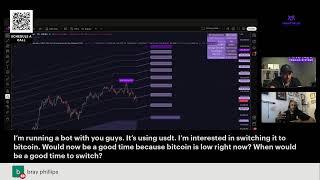
Costa and Marcus break down how institutions move markets through predictable composite flows, and why algorithms beat emotion for timing. They map liquidity across timeframes and answer a question on rebalancing Bitcoin and stablecoins.
Chapters
It. It's. It. All right, we're live. Hey, Marcus.
Hey. What's going on, Costa?
Good, good, good. I'm very well. I want to play this video quickly, if I could. I don't know if you can. If we can share my screen. I thought this was really nice one to share today. You've seen this one?
Yeah. No. Let's see what you got.
Give me the thumbs up if you can hear it.
The best trades occur after the masses have been stopped out. Okay. And markets tend to move, and that's because the big fellas up there, they can't press the we button and get in because there's just not enough liquidity there for them to get in size. So they have to, in fact, engineer 100,000 guys like you, sir, pull you one way, your stop loss gets hit. That in fact sets off a sea of liquidity for them to get. So even if you don't have the strength, or what I refer to jokingly as the testicular fortitude to buy at the level, if you can get in and you can see using your copier, you can see that lots and lots of people have been stopped out before you get in, then you're probably on the right side of the trade. The good trade is always the hard trade, always emotionally difficult. When it's time to buy, you won't want to. Okay. When it's time to buy, you won't want to. The bank.
Yeah, I thought that was appropriate.
What. What's that gentleman's name? I've seen his material before.
I don't know. I'm not sure actually what his name was. I sweared on it was a. Yeah.
I'll get you his name. I've done some. He's done some seminars. He's pretty famous in Europe.
Is he still around? Is he. Is he old?
I think some of the latest material was about 10 years ago. He's been kind of quiet lately.
Yeah, it could be. So, yeah, we'll have a. Have a look. We'll see if we can. It's. It's good stuff, right? Let's have a look at this. So, yeah, so to follow into that point, let's just have a look at what the Algos do. So, yeah, here we go. Really perfect buy. Look at that there. And talk about that one, Marcus.
Yeah.
So just watching that video, you know, if you don't have the testicular fortitude to do it, the best thing to do is to outsource to an algorithm and let it do it, because it doesn't need it.
Right.
You know, this, this algo is, is programmed using the, the minotaur strategy and also using the power law as risk management. And you can see, well, it's engineered to take advantage of this price action. So you know, for me, this trade would have been around now. This is a US, you know, 7:30 at night probably right when you're having dinner with your family if you're in Australia. I think that was about 6 so earlier it was probably 5:30 in the morning. So good luck catching that. You can see that the window for that was absolutely tiny and just what a, what a beautiful buy there. And again, you know, this is engineered to go a long way down if we need to. But look at this, look at this average price now. So this is just such a good example of what the algorithm can do because we entered here 115, initial take profit was 117 and now I get out to 106. That's a, that's a really nice, nice price to be getting out there.
Right. So yeah, it's a combination of, it's a combination of having the fortitude to take that trade when the market is going down pretty aggressively right there. And then the other part of the equation is being available to take the trade. So you got to have the guts and availability. That's hard to do manually. It's almost impossible. You can't do it. That's why these things are so effective.
Yeah, absolutely.
I can't do it.
I'm gonna do this little post X. I think we're going to be jumping into the liquidity maps to see what's going on here. Do you want to share your screen markers?
Yeah. What it just show the liquidity.
Yeah.
Okay, let's do a deep dive. All right. I'm preparing to share my screen now.
Let's take a look. Awesome.
It was just like that gentleman said on the video. The we have to be aware of a market is an auction, right? As auction market theory, where the market is constantly seeking balance and it goes from a, from a, from a, it goes from a, a period of balance where everything's in agreement to imbalance. Then it seeks out new balance again. And this is where we are currently. And then it just oscillates inside of there. So that's what, how markets work.
Actually, that was really beautiful how you just did that. That line just through that center there. It really shows the true range that we've been. That we're kind of looking at right when, when you did it like the way you Just did.
It came out of this range here. This was a balance zone. These are very long periods of time. This is a day. Day chart here. We were in this one for 240 days, you know, nine months or more. Then we. Price went to. It was balanced and it broke out and then it sought new balance and it found it here. And we're in this one currently.
But I love how this line you just draw, it's like. It's right on that. That line.
Yeah, that's the. These lines are the fair value. There's a fair value line running here, like right here. There's a fair value there.
Yeah.
So that's what an auction is. It's a marketplace. Right. So really, this business that that gentleman was talking about, it's the institutions that drive the market. They're the ones that move the market. We don't move the market. Now in mass retail, traders can spark it, but they're being manipulated into. Into doing that. Right. It's me. They're being herded. So is what he was referring to here, these pockets of liquidity is where. These are already contractually obligated buyers. So really what they're doing is the market. You're supposed to be buying low and selling high. But what they're doing is they force these. These positions here to sell low and these positions to buy high. And what they do is this particular price action is what's generating this liquidity. And they don't. The market doesn't move until there's a substantial amount of liquidity in place to feel the next move. That's how it works. And Wyckoff made an interesting observation. He said there's something called the composite operator. And what it is, this action that's happening here in this process is. Is many, many institutions that are doing their own business, conducting their own business, but what they typically tend to do is they have same similar business models. It. They tend to act as one composite trader or operator. So that way that. That's how it becomes somewhat predictable. There are commercial. There's like three major types of traders or operators. From an institutional standpoint. You have institutions like banks that are hedging. They're long in one, short in another. So they're constantly hedging their. Their portfolios. So they're buying and selling for those reasons, rebalancing all that type of stuff. Then you have institutions who actually speculate. They'll accumulate and then they'll move to higher prices. Accumulate, move to higher prices. You have the speculators that are doing the same thing in a different way. And then you have the commercial traders who need to buy the futures contracts. In this case, they need the futures to hedge price imbalance. You know, if you were a, you know, manufacturer of plastic products, then oil and, and petroleum is important. You don't want petroleum prices to go up or you don't want sugar. If you're making cakes or sweets or even certain dyes and chemicals. You need to hedge these commodities. So you're buying these contracts for a different reason. And this being bitcoin is a commodity of two. So you have institutions that are buying this to hedge against future prices. So you have those three, three operators in here together, which is moving price. So let's talk about where we are currently here and let's just have a.
Look at like you showed me yesterday with just the 3x showing, it tells a little bit of a different story.
Yeah. One, one caveat is the market is taking all the liquidity at all times. It's just when you're talking about 25x, you're talking in a very small range. And when you talk about 10x, it gets bigger then, you know, 5x gets bigger and then 3x gets bigger than that. So it's taking all the liquidity all the time. It just takes the big, the, the less leverage, the longer it takes to purge it out of the system. So let's look at the 3x then, as you said.
Yeah. And then we'll dive into the 15 minute and see what's happened today because it's quite interesting as well.
Yeah. Like this is the 3x which this is a low leverage positions that are almost like spot trading. So when you back out to this level, you know, we're in this current market right here. This is the current market that we're trading in right now. And this is your high level, this is the low level of the range. So when you look at the current market conditions, you can see some telltale signs that in typical bull markets, like we had a bull or bull consolidations of a bull market right during this leg, we didn't take any 3x either. We just barely swept it just a little bit. But we didn't take any 3x. Yeah. Then right, right here again, we're not taking any 3x, maybe just slightly sweeping it, but we're avoiding the market is avoiding the 3x positions because it's not time for that liquidity to be taken yet. And the market, another sign that market does is typically when it's taking one particular side of the market. It completes that process and then reverses to take the other side. It doesn't take simultaneous.
Yeah. So to jump in there. Let's talk about what you just said. What it looks like right here is that it's preparing to finish that last leg up because when you look at it on just a 3X, you see it's actually, it hasn't come for the bottom 3x yet. It's actually chipping away at the top 3x. And like you said, right, you can't do two things at once. And what it's actually been doing since that 70k rally is being chipping away at that top liquidity.
So we have these two gigantic pools of 3x liquidity that has been building and the market, once it clears this out, then it'll come for that.
Yeah. Which also lines up with the power law support at the end of 2026, which we can maybe have a look at that. So I think my, my view is that this is the story, that, that this is the most likely play out the, the alternative. If we want to reverse this, Marcus, and draw it. And we can talk about how it doesn bit with the logic. So if you were to say let's just. Let's just go down and sweep Hypothetically, the bottom 3x right now to just draw your line how you did it, just do an inverse. Let's just imagine it doesn't go for the top. Let's imagine. Yeah, correct. And they're all the way out.
Yeah.
So this is what a lot of people are saying is happening. But the issue with this is that then, then we're going to take out that top liquidity. Right. You would essentially go, you'd be sweeping up.
Yeah, yeah, but that's, that's backwards. But.
Yeah, yeah, yeah, we're doing it. We're having a look at it backwards to see. So this is what a lot of people are saying is about to happen. Kind of see. Now, do you want to explain why this is the least likely of the two or more unlikely of the two scenarios so we can discuss what a lot of people are screaming that we're about to go into a bear market.
Well, there's coming back to the composite operator. Right. Let's add some more liquidity in here. You know, not only do we have history on our side, right. So typically, you know, 3.3x is taken in bull and 3x is taken in bear. Right. So it's actually the 3x liquidity, the low leverage positions that set the bear trend. Right. So when the market eventually comes for this 3x later, that's what sets the bear trend. Because the move has to be so deep and so long, you know. So, for example, when the market finally comes for this, right. And starts coming for this, this is going to take a long time.
Correct.
And the move, the move will be very, very deep when it does. So people just say bear market, bull bulls, markets. They're just cycles of institutional cycles that are just big. All right, so back to this scenario here where there's one other thing you have to understand. So I'm going to put in the rest of the liquidity here so we can get a full picture here of what's actually happening is similar to what happened here. You just have institutions that are accumulating smaller or higher leverage positions. Because if you think about it, you have a lot of liquidity in this area here. So if the market was to like come from here and go right for that liquidity, you could have a very imbalanced situation in a hurry. That's why every time we're hitting this area, this high concentration of liquidity that has been building up for a long time, it reacts in the other direction because it needs to balance. Institutions are constantly balancing. They don't want. If they were to go for this now, you'd have a tremendous imbalance of short positions that you. So this move right here is just like a force. They forced it down here. This was a very easy, easy to see that. And they're just accumulating some, some extra positions before we go up again. That's what it looks like. And it makes sense from an operational standpoint that you need to offset that liquidity. If we can see it, I guarantee you they can see it. They know what's up. You know, they need more liquidity before they go for that. It's kind of like, it's very simple, you know, if I'm accumulating inventory here, these are, these are sellers. I'm buying below. Here's the market price, market value. I'm buying below market. And I accumulate massive positions. I have to offload those somewhere. So I'm going to start offloading them here and here. And then once I get enough, I got to come back and refill again before I can go higher.
And then, and then we, and then we are. And then the argument is that the reason we want to come up is we want to then sell those short positions to that bottom pool, down the bottom. If we did it the other way, the shorts have nowhere to go. There's no liquidity left once you take those shorts to drop anyway. So it makes more sense to go up and down, then down, then up, right?
Yes. Here's another one. Remember I told you there's two types of operators. Of the three, we're going to exclude the commercial operators that are buying it for hedging the cost, the future prices of commodities. We're going to talk about the speculators, speculating institutions and the, the basis trading institutions. And you're going to see, I'm going to show you how they do exactly the same thing. It's kind of, that's why it's a composite. So if you are a basis trading institution, then you're making money on funding, fees, fees, interest, all that you're not interested in direction you want to stay neutral. So let's, let's deal with that one first. If the, if the market breaks out here and then you wind up with these positions, the, the neutral way to offset that is don't take any more here and just move that same pool over that, just even out your basis. Then let's talk about the speculators, the speculating institutions. Speculating institutions, you accumulate low because these, these are forced sellers and these are forced buyers. So that's perfect. You bought low, you sold high. Now your book is even, you're even. You need more inventory. You wouldn't want to go buy, get more short side, that would be incorrect. That would imbalance your portfolio. So what do you do? You come right back over here, pick up new inventory and then you move that inventory higher. So these two types of institutional operations, actually they're doing two different things, but it syncs up just the same. And the market is the composite of all those operations at one time.
Yeah. Yeah.
So I find that very interesting how the tale of two types of operations end up in the same destination. So coming over here, if we talk about the speculators, speculators picked up inventory here, they offset that inventory here, I mean here. So they need to pick up more inventory here to offset it here. Speculators, the hedgers are the basis traders. They want to keep the market steady. So if they pick this inventory up here, they're going to offset it over here.
Yeah.
Or somewhere over here, almost parallel like we did here. Pick it up here, you take it out, you offset it here. Because the market is not going to double this a simple scenario is you're not going to double, take two short positions in a row. I won't make, doesn't make any sense from A portfolio or an inventory standpoint. So if you take this, you're going to offset it over here, same place, not take more short or vice versa on longs. Yeah.
And what's it look like now if we cut in and get rid of some of the bigger. Like on this. Let's look at the 25X and see what the story is telling us about this move right now.
Yeah, the highest. The higher the leverage, the faster it's taken. So currently we don't have a lot of 20x5x because it's been wiped out. And it's been wiped out faster than it can repopulate. Right. So we had a decent amount of 25x before the October 10th crash. When the October 10th crash came, we just basically wiped the board of everything. Yeah, it's all gone. So there's. There's some new 25x starting to repopulate, but the market just took that out too. So there's a void of 25. There's none. There's a little bit up here, a little bit that survived, but there's not much.
Which is a good sign. That stuff up the top, though. Right. If anyone who's worried about.
Yeah, that's a good sign because that's return liquidity that we need to get to this big, big chunk that's sitting up there.
Yeah. And what's this looking like on the 15 minute?
All right.
And jumping on. Actually, we can have a look at the 10x and say just before we do how far you think this move could go.
All right. That being said, remember I said earlier that liquidity, all liquidity is being taken at all time frames, all the time. At all time frames, all scales. It just takes longer. The higher the leverage, the faster the rotation. Right. So as you can see 10x, we've already wiped the 25x out and we're coming. The market's coming for the 10, so it hasn't taken out all the 10 yet. The 10 kind of goes here to 91 and it tops out around 130. So it's working on the 10 right now. On to 91. So do we reminisce? But not very much.
So do we think that it's likely that we get to that? So the only, the only thing that I'm, I'm, you know, the position I have is that there needs to be return liquidity to get the price to that 70 case of support, which is in November 2026. So the question is how much do. Yeah, so correct. So the question is Are we going to leave this little band, this little bubble below? Because, because, because the move. Okay. My thesis is we're going to go below 100k again. It's going to happen after we take stuff at the top. So if we get rid of the 99 to 91, then that's a huge amount of liquidity that's gone. That would be fuel later on to get us below 100k. We're where, according to the power law curve, a power support is where it is. Right. The power law support doesn't get above 100k for a very, very long time, almost two and a half years from now. So. So you know, the logical, you know, I think the price is attracted to the support more than anywhere. That seems to be where it always falls. So we have to assume it's going to touch the support again. And that's, that's where we, you know, where we lay our risk management. Right. As our cooperators. So what are your thoughts before with it leaving, let's say that pool between 90 and 97, let's call it, versus it going all the way down to this 1991.
I think there's a. Right here is the point of control of the, of the range, the high volume node. So we're definitely have a high probability of tapping that first. If we lose that, then we're looking at the value area low on the range from an institutional standpoint. And this is important for retail traders to be aware of. If you're thinking about buying Bitcoin, if you're an institution, you've only made a couple of trades all year. You haven't really done much, but you've done billions of dollars. That's billions of dollars moved. And it takes a long time to accumulate and distribute that inventory. But there hasn't a lot been going on as far as just those two big trades. So from an institutional perspective, you know, they become interested in this spot down here because this is fair. Fair value is below 96. So if you're looking to buy bitcoin, you want to be buying it below 96 or no worse than 96. So that's just my point is that's just them going through their cycle.
Yeah. So possible. It's still possible. Now the other question I have to ask with all the high leverage gone, is that would it be a slow grind down to like you don't think we would be able to. We wouldn't see a wick as fast as we did, let's say between that 125 that October crash, it seems to be that it would happen a little bit more of a slow grind down if it was going to happen.
The thing to me, I'm thinking worst case, you know, you got this area here where we take out the 10, that will probably be kind of the end of it because we have a fair value gap here that's never been closed right in confluence with the bottom of the 10. So we have the 10, we have the 10 liquidity, we have the value area low, we have a fair value gap that was inefficiency in the market from way back when. So that just makes sense for institutions to come back and close that. And then if you look at it from a zoomed out perspective, as long as we don't break this structure here, that's still very, very bullish. That's extremely bullish.
Yeah.
You know, lows, highs, lows, highs, lows and then highs. I mean, I, I just. That's very, very, very healthy, you know. So I would say somewhere right around in this area between where we are now and the bottom of the range here, the bottom of the ten should be sufficient.
Yeah, yeah. Interesting.
Yeah.
And then still potentially coming back down to those levels in a year's time.
Oh, yeah. Once, once we clear this, then you have the gateway for the, for the cycle of end. This move is very, very necessary. There's so many movements, operations, calculations, algorithms, all making a composite perfection. Right. This move, what it does is it brings in the return liquidity that's needed to get back here and it cuts off the organic growth of the liquidity. As long as the market was doing this consolidation near the top, you can, you keep continuing to have indefinite liquidity. So at some point it has to cut off. We just can't keep building more liquidity and forever it won't do that. Right. So this, by this violent move down shocked this new liquidity from continuing to organically grow. Right. So that starts to give me the clue that we may have this type of move right here. Right. At some point the market has to shake everything off because it just can't keep having liquidity just organically. Growing. Once it squares it off, then that's perfect for it to cut it off.
Yeah.
Then we, then we can create a brand new liquidity cycle because if we just, jack, if we just keep ranging, then it just keeps growing and growing and growing with no cutoff.
Yeah.
So I, I like that. That move down, that violent move down ended some of that organic growth up there. So now you're in A perfect position to come back violently and kill that. So we don't have to have that continually going forever.
Yeah, yeah. Gonna have a little. Don't have a look on the 15 and just see what taken today.
Yeah, let's look at the 15 here. So what I like to do is I like to keep the same structure even when I drill down to lower time frames so I don't lose it. So what we're looking at here, just to. Just for Context on the 15, we're actually looking at this small area right here. Yeah. All right, so let's go there. So this is that area on the 15. Pull the same market profile here, and we can see that we have the same rules apply here. We have our market is set, our fair value. We have our range high and our range low. And we're going for that 96 range with that 96 level. Let me put in some where you can see it very clearly now, right? Yeah, yeah. And I got some orders positioned in here because, you know, there's a high. There's almost a 90% probability we're going to take that, you know. Yeah.
And where's that go? Down to around 96. That'll scare the pants off most people.
Yes. And this pool, because, remember, we can look at the 20. So right now the hundred obviously is extremely tight. So we go to 50x, you can start to see it. Here's a 25x pool, goes to 90, 95. And then once we put the 10x, remember, the 10x is what we were looking at over here. Right. Let's go to daily. Let's just go back to 10. A lot of this is being able to read the music from one time frame to the other. So there's this 10 pool right here. So we know that we're looking at this area right here. Let's go back. So now zoomed in, that's this area here. That's all this. If we take that, we don't necessarily have to. We could just. We could sweep this level right here.
There's a good chance we're gonna get through to the next green, maybe even just below 94. Even.
Right. We can just sweep 25. We could just sweep to 25 and go. But then there's another 25 here. So you know that that brings us to the bottom of the range, which is the 10. The full 10.
Yeah, yeah.
So there's a probability that we take this out completely. Not all at one time. Unless there's a major capitulation, it's probably Going to take chunks of it like it did here. You know, it's probably chunk it where it'll take a chunk and then it'll trade for a little while and consolidate that. Then it'll take another, another chunk of it and then consolidate and chunk until it's done. But it's a, it's an interesting how this, this process works out on all time frames.
Yeah.
Yeah. Interesting. Yes sir.
So it's going to be a very interesting at least couple of weeks. And then December, January, what's it. Likelihood of the. The time frame still playing out within I guess, I guess end of Jan. Is. Is really where we're talking.
What is the power law say on time? What did the power law say?
Yeah, call it December, January.
Oh, that's. Let's just give it here. This, you know, that's just give it.
The end of January. Yeah.
So let's hear. So that means we gotta get through here and then, you know, take this out before we get over there and then we're okay. Yeah, it's possible. It's very possible. Because here's the thing. When the market makes its move, it covers a lot of ground very quickly, right?
Yeah.
You know, this, this move, when it decided to displace that liquidity, the move started here and it was done in about 20 days.
Well, one thing I want to point, I want to make is a lot of people are looking at the, the macro that's going on outside of Bitcoin. But what we're looking at is, is open interest, right. So there's a high likelihood that no matter what happens in the outside world that what we're talking about is still going to play out. Because this is open interest, this is live positions. Right. So it doesn't matter what happens to S P, what happens to gold, what happens to liquidity.
It is.
This stuff needs to get taken out regardless because this is opening. What I'm trying to say is if not a dollar entered the market, this would still play out the price action in this way. It's not relying on new money to come in. Right. This is open interest. Is playing the open interest.
It's playing that and it's playing. It's just funny how all of these things are correlate. You know, there is a part of the macro that influences this, of course, because these are futures and there's a lot of players that are buying futures for macroeconomic reasons that factor into this. That factor into this too. It's people that look at the moon cycles and it factors into this you can look at whatever you want. And like you said, it's still going to happen. Yeah, still winds up happening. So, yeah, it's just part of how it works. It's gonna happen. Yeah, it is.
Interesting.
So it kind of comes down to what you choose to look at. You know, I choose to look at it from institutional operations, business operations. They're going to conduct business, they're here to do business and this is how they do it. But then there's other people that might be using, you know, stars and quasars and, you know, moon cycles and different types of things that analyze the after effect of the evidence. You know, the absence of evidence is not the evidence of absence. So it just depends on what you sort of do, however you want to look at it. Still come to the same place.
Yeah. 100.
Yeah.
All right, cool. We've got a question here and I wanted to just go over, but here we go. Read balancing calculator. Let's bring up this question. This is from Bray.
All right.
So he says he's running a bot with us and he's wondering, should be in BTC USD. So firstly, I think that making the point of that if you're currently in USD USDT means you're able to fully deploy the whole wallet size, which is good. If you do rotate into some Bitcoin or Bitcoin, that wallet size is going to have to reduce, so the trading profits will reduce as well. So that's the first point that you need to understand. Understand, because whatever the Bitcoin, however much you have in Bitcoin, you are going to have to discount to a level that you feel comfortable with. Whether that's 60, 70, 40, wherever the total support is. That's a decision that you need to make. Secondly is that you can also, you know, you don't necessarily have to do it all. We've got this rebalancing calculator we can, I can show you, I've got on my screen. This is one that we use sometimes ourselves. So it kind of looks at. Have you seen this one before, Marcus?
Yeah, yeah, we have a mastermind.
Yeah, yeah, we've got in the mastermind. So according to this one right now where the prices are an allocation as high as 70%. So BTC USD 30. USD BTC 70. That's a sort of. You wouldn't want to be going more than 70 at this point. And this is a way that you can kind of convert down as you go. It's not a bad way if you're, if you're actually using a mixture of BTC and usdt, which is actually the best way to do it, to somehow do it like this. Because you would also, if you're rebalancing in this way, you would actually be making decent money because you'd be, you'd be like, when you get to this point here, once you get to here, you'd actually be buying more Bitcoin and once you get to here, you'd be selling bitcoin. Right. And if the market does oscillate enough, you will make profit from those buy and sells as well. This is something that's, that's cool to look at. Any thoughts on this, Marcus?
Yeah, I think that you should be rebalancing and running a basis between two. Each asset, each asset has a place. And if you're just exclusively in one, then you're not, you're not taking advantage of what the full market potential is. So yeah, you should have both assets definitely. And you can run if you do it according to the rebalancer or some version like that, then you have Bitcoin that you can leverage. Like you're saying here.
Yeah, yeah, correct. You've always got some kind of dry powder and you're. And then you're also de risking as you go up.
Yeah.
You know, having the part. Right. Yeah. Sorry.
And one other thing in your sub account, if you think about it, even if you're trading usdt, you're trading. One thing I always try to tell people in a trading desk is they have to always understand what business that we are in. Right. We're, we are dealing in the asset. The asset is the foundation of our business or our portfolio, but our business day to day operations. We're buying and selling futures contracts. That's our inventories. Like if we were buying, you know, anything, we were buying automobiles or reselling clothes, you know, our inventory, our futures contracts, they are not the asset themselves, they are derivatives. So we're buying, selling derivatives. So that being said, we buy our contracts low and we sell them high or we sell them high and we buy them low. Right. So when we're profiting off of that business, business operation, we're taking USDT in most cases, right. So in your account it's going to be full of usdt. There's nothing wrong with. You can simultaneously run a rebalancer in the account. You can take some of that USDT and go to your spot terminal and just buy 30% bitcoin or vice versa as you, as you operate. So you can Always have a little bit in every account. Just doing this.
Yeah, it's really cool.
In addition to the bots.
Yeah, yeah. So again, it's a personal decision, but if that's something you're interested in doing, this is kind of the approach that we would have.
Yeah.
Anything else you want to cover, Marcus.
That we covered? We covered quite a bit of territory today. It's just when in doubt, zoom out. And, you know, have one thing for retailers, we have to be patient. This is as long as we don't give the money back to the markets, we're patient and we don't chase the up moves. We don't buy when it's going up and we don't sell when it's going down. We have a sound strategy which the. What's the algorithm is going to do. It's going to save you from yourself. If you just run your algorithm and manage your risk, you know, you're going to be fine over the long term.
Yeah, I like what you said there. So we don't buy when it goes up and, you know, we can have a look at the algo and we.
Don'T sell when it goes down. Yeah.
Which is this point here. We make it, you know, when the market's going up, we take profit very quickly. Enter, take profit, enter, take profit.
We don't want to.
We don't want to be layering into a trade in the reverse way that we do. We want to be buying as it goes down. It's the much better way to do it. And as you can see, we're doing it perfectly here. Right. So, yeah, if you're using the algorithm, you should be sitting pretty right now, entering some nice trades. And when we have that rally again, you're going to be able to take advantage of this kind of movement. And also if you're holding a percentage of your portfolio in. In Bitcoin, that's going to appreciate too. So there's ways to make money no matter what's going on. That's kind of like one of the points that we try to get across with this algo is generally is trading. There's nothing better than making money in any direction. And that's what this algorithm's able to give you when. When you're using it.
Right. Yeah. I like to think of the algorithm as a trading whisperer. We're like trading whisperers. We tend to sell, we tend to save broken retail traders from themselves, manual traders, because for the very same reason that you started this, this podcast on this stream on was two problems, emotional and timing. Right. And the algorithm solves both of those problems, so it's the best tool ever, saving you from yourself.
Yeah. 100. All right, cool. Well, it's. Unless we don't have any more questions, and it's been about 40 minutes. I think we can. We can call it a day.
Yeah. Awesome.
All right, we'll see what happens over the weekend. And again, we'll be back on next week if Giovanni. It will either be on Giovanni show or this. This show at this time.
Sounds good.
Cool.
All right, my brother. See y' all next week. All right. Bye. Bye.










