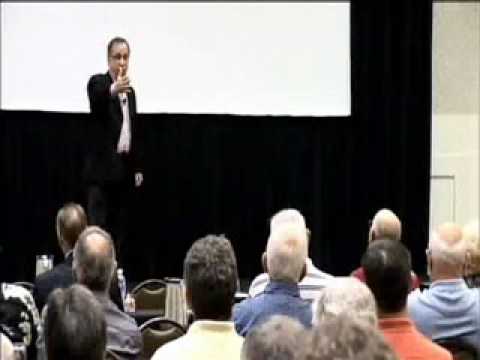
Chuck Luckman sold more newspapers than his competitors as a nine-year-old because he said thank you to customers. Later, as an architect, he aligned his fees with cost savings, earning profit only when clients benefited. The lesson: ask customers what they actually value instead of assuming what you're selling.
Chapters
No. They don't. It's about what the customer is buying, not about what you're selling. And I want to leave you with a story to drive that point home because it's the best story I know about focusing on what the customers buy instead of what you're selling. And it involves a hero of mine named Charles Leckman. Charles Leckman was the president of Lever Brothers. when there was a Lever Brothers. It's Unilever now, but when he was the president, it was called Lever Brothers. Big consumer products company. He became the president of the company, did a great job, ended up leaving the company— he quit— because he got in a disagreement with the board of directors over strategic direction. And I kind of like the part that he had an idea in mind, the board wouldn't support it, so he left. So, he was in his 40s at the time and he wasn't ready to retire yet. You guys know how that works. You know, you're not ready to retire yet. Whatever age you are, you're not ready to retire yet, right? So, okay. So, he needed to find something else to do. Well, it turns out that when Chuck graduated from college, he graduated with a degree in architecture. He had an architectural degree. And his first love had always been architecture. But he'd never actually worked as an architect. Apparently, upon graduation, he came to what we call a fork in the road, right? He had to make a choice. One of his choices was to eat. The other choice was to be an architect. So the eating part won out and he ended up in industry and he ended up with Lever Brothers and he did a great job for them. However, now— He's a great architect. He's got plenty of money. So eating is not an issue. He can do what he wants. And what he wants is to become an architect. So he teams up with a guy named Pereira up in Los Angeles and they open an architectural firm called Luckman Pereira. Luckman Pereira designed a number of things that people from California will recognize. They also did the Houston Manned Spacecraft Center. They did the Back Bay renovation in Boston and a whole bunch of other very famous projects. They were a very, very well-known architectural firm in their day. And that's cool. I like that. But I like something else even more important about what he did as an architect. When Chuck became an architect, what he discovered was that architects were paid a percentage of the actual construction cost of the project. In other words, if you had a project that had a $50 million budget, And if the architects designed it and then you put it out to bid and the bid you accepted for construction was $55 million, 10% over budget, the first thing you had to do was pay the architect a 10% increase in their fee. In other words, the more your project went over budget, the more money the architect made. Well, Chuck looked at that and he said, that doesn't make any sense at all. So, thinking about value, he said to his customers, here's the deal. You bring us a project and you bring us a budget. If the project and the budget seem to go together and it's something we are capable of adding expertise to do, we will design it for you. You then go get it built from whomever you want. If the as-built cost— Cost. Is less than the budget you gave us, you save money and we get a piece of the savings. His clients loved that and his firm made a fortune. Now, I'm telling you this stuff about Chuck as an adult because it sort of helps you understand a little bit about him because the story I want to tell you has to do with Chuck's first job. Oh, boy. At least I believe it was his first job because he was only 9 years old. And it's hard to believe that he had much of a career or a resume prior to the age of 9, other than working for mom and dad, which doesn't count. But at the age of 9, Chuck had a real job. And his job involved standing on a street corner in downtown Kansas City selling newspapers. He stood at a busy intersection downtown. He stood on his corner. On the other 3 corners, there were 3 other boys. They happened to be teenagers. All 4 boys sold newspapers. The only thing those boys sold was that newspaper. They sold nothing else except the newspaper. That's right. They had the same edition of the newspaper and they sold it for the same price. Does that seem like a commodity business to most of us? Yeah. Yeah. Pretty tough? Pretty tough. There is a possibility that one of the corners might have had better foot traffic than the other corners. If that were true, Do you think the 9-year-old new kid's going to get that corner? No. I don't think so, right? When you hire new reps in your firm, do they get the good accounts? No. They get to go open new accounts, right? So Chuck's on his corner and every single day Chuck sells more newspapers than each of the other 3 boys. He outsells all the other 3 boys every single day. Same newspaper, same price, same edition, and he doesn't sell anything but the newspaper and neither do the other boys. How does this happen? It's really very simple. You can observe it because he did. People walk across the street, buy the newspaper from Chuck, turn around and walk back to the other side of the street Bypassing one or more of the other 3 boys. Hmm. No, they're not doing it with better promotion either, sorry. This is really happening. People are literally going out of their way to buy the newspaper from Chuck. It is the same newspaper. He is selling it for the same price and it is the same edition of the newspaper. And he doesn't sell anything else but the newspaper. And this entire conversation so far has been about what is Chuck selling. He's selling the same thing everybody else is selling, but he's selling more because people will go out of their way to buy from him. Why are they doing that? We don't know. You don't. I do. I'm going to tell you. We wouldn't know if Chuck hadn't asked. Chuck asked one very important question one day that helped him understand what value he was adding. And once you know what value you're adding for your customers, you can keep adding that value for that customer by asking the right questions. Chuck, observed that people were doing this weird behavior and he decided he needed to ask customers what was going on. He's 9. They're adults. It'd taken him a while to build up his courage. He builds up his courage. A woman walks across the street. She does this 3 or 4 times a week. She buys his newspaper. This time, Chuck looks up at her and he says, pardon me. Pardon me. But you cross the street each day to buy my paper. How come you do that? And she looked down at him and she smiled. She said, because you always say thank you. You see, you have no idea what value you provide if you don't ask. You might think it's your expertise. You might think it's your sterling personality. You might think it's the great lines on your line card. It might be all of those things. Or it might be something else. If you want to know what value you add, stop telling customers how great you are and ask them what matters to them. Thanks for listening. Thank you, Mitch.