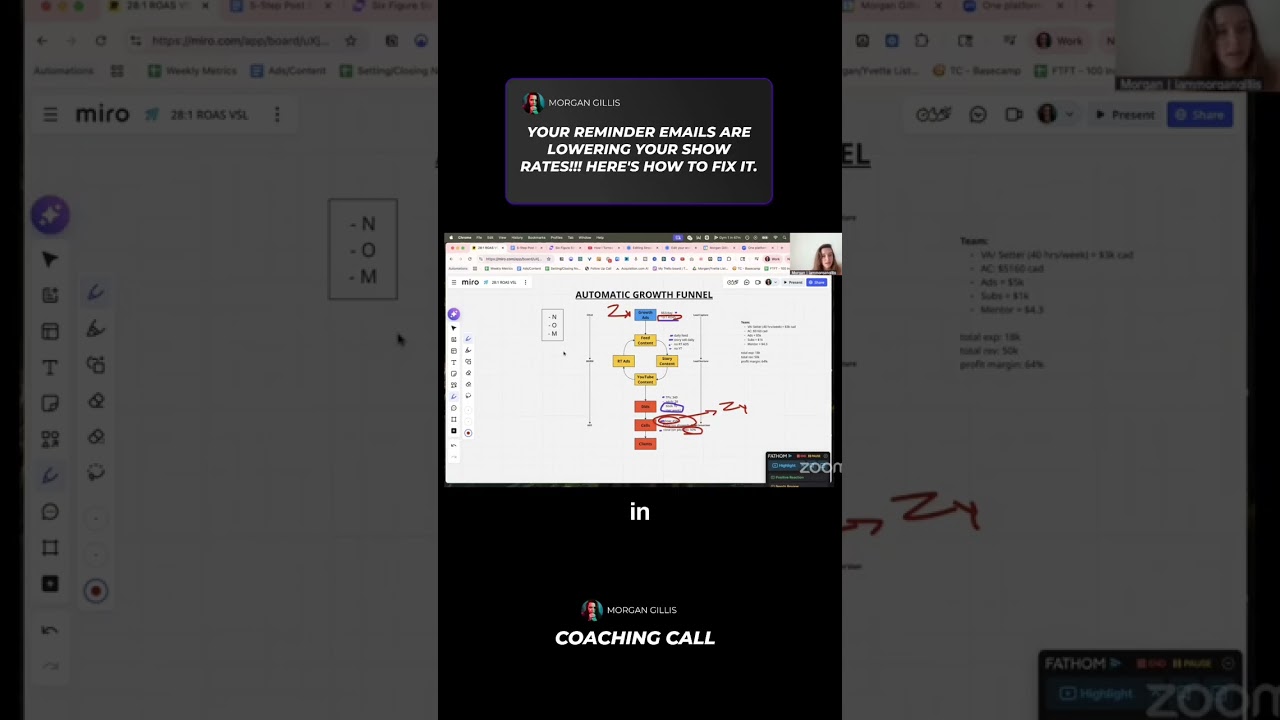
7 Lessons From A $10,000 Mastermind

Morgan leads coaches through the mechanics of a high-performing coaching business: how ads generate leads, DMs move prospects to sales calls, and calls close clients. One setter hit 100+ daily touches. A $20K mastermind investment returned $180K profit. ROAS reached 31:1.
Chapters
Shaun is a stand-up dude. Like, I was thinking about this in the shower this morning. I'm like, like, like this morning, like, introducing you, I was like, he is like legit a stand-up dude. And like, he messaged me last night being like, yeah, my train got canceled. And then I got it this morning and I was like, so... like, are you coming or not? He's like, yeah, I made a commitment to you. I got up at 4 in the morning, you know? So like, yeah, really, really great human. So I'm glad that you're here. Yeah, yeah. Anyone else want to share? Lumi, hit us. Connection, community. Yeah, the same one.
Clarity, just more clarity, and action steps.
Action steps. Cool. Landon?
Same way I put community. Break some beliefs.
Break some beliefs.
Yeah, learn from others.
Cool. Kira?
Um, I first receive or learn new ideas and make— we make a decision by the end of the day about something.
Oh, okay. Yeah. Is it a business decision or is it a different decision? Yeah, business. Okay, cool.
I'm wondering, like, just being here, if it's actually— if I'm just procrastinating and actually it's the same thing what I'm offering.
Maybe Sean's self-sabotage presentation can be helpful for this. Yeah. Emma?
I wrote to absorb core teachings from Morgan. She's been at rooms and at tables with people I want to be with, and energy transforms. So I want to hear and learn and embody her mindset and transform.
Cool. Damn.
All right.
Do you have an intention? Is your name— what is your name? Is it Matt?
It's Mark.
Mark. Okay, Mark.
Sorry. I just put, um, investing, creating new friendships and just assisting and being there for Becky. So that's it.
Love it. Love it. So glad you're here, by the way. Thank you.
Yeah.
Thanks for the invite. Yeah.
Thanks for having me. Yeah.
Becky? Um, mine is to connect with people who inspire me because I feel like the value of these groups is to be in rooms with people that you want to be like.
Mm-hmm.
And there's just so much value in that. I always want to be in that room. So yeah, thank you everyone for the inspiration and I look forward to meeting everyone.
Cool. Good job on making the train ride down here. I know you were like, I hate this train ride. Couldn't find him.
Yeah, I'll take my phone.
Yeah. Okay. Okay.
Emma? Yes, same, same. Just be super open, soak up all the good vibes and make sure I come away with like a practical, tangible thing that I'm actually going to do from this.
Cool. Trine?
Yeah, mine is quite similar. So also like networking, building relationships, I think it's super special to like be in person with everyone. I never imagined I'm gonna meet my Canadian mentor in person.
Yeah.
Um, but also just like getting some action steps like to move forward in the business and yeah, maybe some getting some feedback on my business even from my conversation.
So yeah, perfect. And I would say too, like as an attention from me to you guys, like if there's something that you wanna improve, and this'll be kinda good when we write it out, like what are the different pieces of the funnel and like what things you need to work on, but I'm kinda probably gonna write people's names on the board, but if there's something that you need and there's something that someone else is like really good at, connect with that person. Or like if you need me for anything, like please, please like ask for help, but. Yeah, that's great, that's great. Megan?
Mine is also make a decision.
Business decision. Ooh, okay.
Around, you already know, setter situation.
Yeah, we should talk about that. Yeah. 'Cause we've probably, I mean, we witnessed what really good setter looks like in Marbella. And this is the first thing I'm gonna talk about. That really shifted some beliefs for me on like setting stuff, so.
That's what I'm here for.
Yeah, cool. Bring that, Rihanna song. This is what you came for. Andy.
Have some good chats, some interesting, thought-provoking chats, and come away with some practical to-do or change my business.
Okay.
Have a fun day.
Cool, yeah. Okay, so when I went through the Google Forms stuff with you guys, it was really cool to go through that form and ask like, what are your intentions, or like, what do you wanna learn? Almost every single person pretty much wrote exactly what I would've written, right? But it was like connection, like learning and growth. And those are like my highest values. And if anything, I was just like, damn, you are doing— like, does it feel like you're with your people?
Yeah.
Like, I just read that form and I was like, I wouldn't rather do anything other than this. And like, everyone has that same mindset of like learning and growth and whatever. And we did that exercise with Tom at the beginning. You know, I'm going to butcher this. How do you say this? But he's like, ikigai. How do you say that word? Ikigai. Okay. 'Cause it's like, what do you love? What are you good at? What does the world need? What was the other thing? What can you get paid for? And it was like this weird full circle moment to where I, like when I was writing this stuff down, it's like I actually just love learning and teaching and growth. And the thing that I know the most about and the most passionate about is marketing and sales. It's like the intersection of all those things, like there's nothing I could think about to possibly do on the planet that would be anything different than this that I'd want to do. And it's cool that you guys all have the same values, if that makes sense. So super cool. Anything else that I want to say? Not really. You guys ready to get into some of the takeaways from Spain?
Yeah.
Cool. Okay. I need to find a marker, actually. Let me hope.
Behind you.
Oh, great. Okay. So, and Megan, this perfectly is going to hit on like what you want to talk about. And I'm interested to see Sean's takeaways on this too. A lot of this is gonna be very story-based, by the way. Like it's gonna be probably story-based, if that makes sense. Let me click on here. So kind of the first thing that I took away, wow, this marker's trash. Let's hope the other ones do better. One second. Oh, also the one other thing I wanted to say too is based on what everyone just said, Like yeah, you guys wanna take something away, but ultimately you've just confirmed what I thought, which is like, this doesn't matter that much. And like, this is actually the whole plot. So this is just like, okay, let's do some learning, but also I'm more excited to just hang out and connect, if that makes sense. Okay, there we go. So the first thing was around setting. So do you guys remember like, if we're gonna draw out like different pieces of this funnel, right? So let's say there's, you know, people are coming into your world through this. There's like, if I was to draw out this funnel, I would almost draw it like this. Do you guys know what this one would be? I'm drawing it way different than I would usually draw this. Like what's the top of the funnel?
Messaging.
Ads.
Yeah, yeah, yeah. Messaging going into the ads, but like ads, right? And like the way I think about like, like top of funnel is like the point of ads is literally to get like leads, right? So if your ads are working, you get leads. But then what's the— what do you do? What do you want? What do you want to do with leads?
Convert them.
Convert them in what way? Like, what are you trying— where are you trying to get them to? A call, right? So we had like a— we had like a debate. On this a little bit at the Mastermind of does DMs and setting go in the middle of funnel or top of funnel? But this is my thought process on it is like middle of funnel. To me, the purpose of the middle of funnel is to take the leads and get them to book a call, right? So what are the two things that are going into getting people to book a call? Don't be shy. Come on now. How are you getting people to a call? Content and DMs, right? So content, like online coaching, Instagram Business Simplified, basically, right? Okay. And then you get them to book a call. And what do you want to happen from this call? Become a client, right? Sign client, which is like, we'll call this sales. And then what do you want to do after you sign a client?
Give them the love of your life.
Resign them.
OK. OK, OK. Test the results.
Test the results.
Get them results, right? So I could even say— I could say results, or like, we'll just— I'll use coach language. I'll say make an impact. Right? So middle of funnel, bottom of funnel, and then I mean, I'll just call this delivery. And like program. Can anyone guess? So I mean, this looks something like this. That's supposed to be an arrow. I can draw better on friggin' Zoom than I can on this.
But— Like third one down, right?
This?
A little bit further down on the right. And to the right.
Sign client. Sorry, I could have written this a little nicer.
Can I ask for this blue marker? I don't know if that one's running out.
Yeah, I could just probably do better with my writing.
I'm not sure if you don't mind with that.
No, I don't think it's a penmanship issue.
I think it's just greasy, so you just gotta erase.
Oh yeah, it is super greasy. Yeah. I'll try to write clearer. I'll try to write clearer. So ads, content, DMs, sales. In your program, right? So the point of an ad is to get leads, the point of content and DMs is to get people to book a call, the point of a sales call is to sign a client, and the point of your program is to deliver results or make an impact, right? Can anyone guess, like, what do you think is the most, and this is like subjective, obviously everything's important, right? Like if you just don't have sales, then it's not gonna make sense. But what do you think, I just had a little bit of a belief shift in a sense at this mastermind, What do you guys think is the most important one? Delivery. Okay. You could make an argument for any of these. So yes. Okay. Delivery. Content.
Content.
Setting. Setting. Okay. Honestly, you could probably make an argument for, I will say, any of these because if you don't have leads, how's this going to work? But one big shift that I had is, was with setting and like how important that is because there was someone I was speaking with and I don't know 100% where his business is at, but probably between like, I think it's over $100K a month, maybe $150K, maybe $200K, but making a decent chunk of change every month essentially. And I asked him, I was like, well, 'cause in his DMs or his setting, I was like, well, how many touchpoints are you doing every single day? Like, how many conversations are you starting a day? And he said 100. And I was like, okay, that makes sense. Well, how many people are new conversation, like new follower chat starts, if that makes sense? And he said 5. Like, he was getting 25 followers a day and only 5 of them were ideal. And so I was like, So 95% of the touchpoints you're doing are from follow-ups? And he was like, yeah. So that kind of broke my brain a little bit because there's definitely, like, I fall under this camp sometimes. I'm like, well, maybe we need more leads. But I actually think like, oh, I'm going to knock this off the marker. But like, I really think that this is way more important than like we think it is. And there's a really big difference between like good and really good when it comes to setting. And when we were at this mastermind, so the mentor that I've been learning from, Jeremy, we got to see his setter and he's 19. He's from Serbia.
Serbia, yeah.
They called him like the Serbian Prince or something like that. And he's 19 and you see him and he's like, he's, what is he popping those zins things with like nicotine? And he's got the caffeine, he's got the deep house music and he's like 10 hours a day, he's like setting on the computer. And I was like, damn, this is what good looks like. You know, like focused, like really setting hard. And so I just think that was a big shift for me, and it made me think like, ah, you really need to find the right person for this. And we can go through when we talk about the funnel stuff of like what are like different KPIs for that. But a good rule of thumb, I did the math on him, and he's in the business niche, so it's a little bit of a different, I would say it's a little bit of a different, like it's a little more nuanced. Like you sometimes have to spend more time in the DMs with people when you're in the business niche, 'cause it's like, buyers are a little more sophisticated and the follow-up needs to be like more specific or whatever. But it just made me think like, wow, this is like really, really, really important. So I don't know, is that helpful for anyone? Does that— for me, it's like, wait, only 5 new people a day are coming in from this? This was doing so much of the heavy lifting. Yeah, Megan, go for it.
So when he's saying, yeah, he's following up with all these people, did he say roughly for how long that conversation's going?
For how long the conversations take?
Yeah, because he's saying he's doing 100 chats and 25 new ones, but is it like he's Are you taking a week usually with those people or a month?
So it's less about how long it takes and it's very similar to what we teach where it's like you don't necessarily need some perfectly scripted out thing, but some sort of a flow, right? 7 questions you're hitting to check the boxes and make sure that this person's ideal. So it's not how long you're talking to them, if that makes sense, but it's more like, did you hit these questions?
Yeah, but I guess I was just wondering if he did have a sort of range.
Go for it.
So I spent some time with him and he said to me that some of the conversations he was speaking with for like 6 to 8 weeks. Okay. So consistently checking them and going, yeah, sure enough, like, yeah, they might follow now, but they won't buy until 2 months' time and they've maybe watched 12 long-form YouTube videos and seen a few short stories. So that was a conversation I had with them because we get a lot of followers, but I have kind of a lot of the time we'll have a new follower come on board and they'll sign and pay in full within 48 hours, and then it's the whole opposite where they had a guy follow the account back in April and he signed up last week. So it's totally different there. So hope that kind of answers your question.
So a couple things I want to say on that too, like how, how long Who's someone I wanna like just pick on? Becky, how long were you in my world before we became coach-client?
A year.
A year, right? Emma? Not that long. You were quick.
I was like 3 days.
But you know what though? But here's the nuance. How did you find me? Podcast. A podcast. A long-form piece of content, which we're gonna talk about. I need to probably start going faster on this because I'm gonna make this way too long, not realizing that these bullet points expand. Like that's like Jeremy stuff though too. We start and we think we have this like thing that's gonna end at 9 or 10, 10 and then where it's like 3 o'clock and we're still talking about stuff. But like, this is actually something I wanna do like way better is like almost like if it's like me and you, Becky, right? Like get on the phone together and see what you're doing in your like your DM chats and like learn what you're doing and then do this with somebody else and learn what you're doing and take all the best things from what people are doing in the DMs and like combine it to like upgrade the training if that makes sense. But Sean, to your point, there's this thing I learned from, I think it was Dean Jackson or something. And so he kind of draws this like, this rectangle and he's like, out of the people that come into your audience, 50% of them are like never gonna buy, right? The other 50% will buy at some point, but then out of this 50%, only 15% are gonna buy in the next 30, 60, 90 days. And the other 85% is gonna be more than 3 months, which is the whole point of the follow-up bit, right? So that, like, the new follower chat starts is one thing, but then it's like, who's watching your stories again, right? Like, who's watching your stories, who's engaging, who's just liked your post again for the first time in 3 months, or left a comment, or whatever. Or even that follower export thing that we did, I don't know if you know about that. Do we ever talk about follower export stuff? No. This could be a game changer for your setter. And if it is, let me know. But if you go on Google and you go, you type in like follower export, the second one from the top, it's actually a tool that will export all of your followers into an Excel spreadsheet.
Okay.
And you can go through the people and you'll find people like 4,000 people down in your followers list that you totally forgot about, that the algorithm just wasn't syncing you up with, and you're like, "Damn, we did a sales call with them however long ago," or they were gonna sign up. Like, I would go through the people that are engaging first, and if you have no one else left, I'd get your setter to just consistently do touchpoints with those people. But my point is with this is like, they say the fortune's in the follow-up. Like, it literally is, you know? Like, setting too. So is that helpful kind of?
Yeah. What's the third under testing right now?
Oh yeah, yeah, yeah. So basically just a couple things to think about in setting is like if you can send them to long-form content, you can send them to a podcast or send them to YouTube videos or whatever, super, super helpful. If like, who said that like your program was the most important? Was that? Yeah, right? So case studies, the more that you can film these case studies and do like what Emma did and put them on a YouTube, like a testimonial playlist on YouTube or whatever, and then like take those things and send those case studies in the DMs, like use them for social proof when you're setting. It's just like the more time people spend with you and the more proof that they have, you know, or maybe you can send them long-form stuff that breaks beliefs as well. Like, okay, I don't want to go on a big tangent here, but I'm going to do it anyways. But like, Yesterday, I was literally on a call with somebody, or well, we did the call in the Uber boat. Anyways, and he was like, I'm bitching out at the price, it's too expensive, right? And then I had this testimonial snippet filmed from Emma Swain, and the first thing that came out of her mouth was like, can I afford this? And then she goes on and talks about like, you just gotta grow up at some point, guys, and get your investment mindset, right? So it's like, Those belief-breaking things, it could be in the form of you film a random YouTube video and you break a belief, or it could be someone else you interview and they break the belief for you. But it's like, that's the stuff you need to do. You need to give value, you need to like break beliefs, and just nurture people in the DMs. The 1 to 3 though, Lumi, for your comment, and I've heard this from Ben, I've heard this from Ben, who has literally run sales and setting teams in like 7 and 8-figure businesses and stuff, right? He's like, you should be able to book a call every 1 to 3 hours in your DMs. And the guy that I was talking about in the business niche, you know, on the zins and all this stuff, right? He works 10 hours a day, 'cause he's crazy, which he's amazing, but he works 10 hours a day and he probably books, I think he said maybe 5 to 7 calls a day or something like that. So he's booking a call one every 2 hours or whatever. And that's in the business niche and that's, probably takes you longer, I would say, than most B2C niches. So if you're looking for a rough rule of thumb, like if you spend, you should be able to book a call like every 1 to 3 hours, if that makes sense. So just to give some like rough KPIs, 'cause like an action, like a volume KPI is doing 100 touchpoints a day. A skill KPI is like how long does it take you to book a call like in the DMs? Anyway, probably went super, super long on that. Anyone else have any questions on this?
Yes. I sometimes get a bit confused because I maybe get to, I've gone through like 6 of my questions and they ghost me and then I wanna follow up and it's like, well, I've already asked all the questions I planned and then we just end up in like a normal conversation, not about what I want to actually ask them about. And it's like I don't have a flow for follow-up basically. I don't know what always to say when I've already asked all the questions.
So if you've asked questions and they were struggling with something, could you not just follow up and say, hey, actually— Sean had a great one. Is like, hey, I actually just created this training. I thought it would be— like, I actually haven't put it out publicly yet. I thought it'd be super useful. Do you want me to send it? Right? Like, you could just come back in with value. Does anyone else have any good follow-up stuff that really works for them? Yeah, go.
I just message them, like, hey, I just wanted to check in, I'm still like working through this problem that they mentioned. And if they're like, yeah, yeah, I'm like, oh, are you looking for some support? And they're usually like, yeah.
And I'm like, well, would you like to drop in a call?
And then they're like, yeah, I don't mind dropping in.
And then once we're on the call, going through the sales script, often they want to buy either the down sale or the group. Or afterwards they'll be like, I need to think about it, finances, whatever. And then I just like a testimonial or a podcast and keep chatting. But really just ask them if they're still struggling, if they're looking for help, and then they're like, I'd love to get on a call.
Yeah, I second that as well. Um, I remember watching a video by Taki Moore years ago, Taki, Sell by Chat. Yeah, this is before I had a setter, and I literally just did what you said, qualifying them. They say they're struggling with this, and I literally remember saying to one of my first clients that I sold in the DMs. I was like, do you want some help with that? And she was like, yeah, cool. I was like, should we get on a call? I was like, oh, that was really easy. And I do think sometimes, like, we overcomplicate it. Like, there's an SOP for this, there's an SOP for that. Sometimes it's like, hey, sure, do you want some help with that? Yeah, okay, yeah, should we jump on a call?
Another thing you can do is, hey, I was just thinking about a conversation the other day and you popped up in my mind, and just restart the conversation.
Mm-hmm. I think it works the same way with like if you're giving them a free thing, right? Like when someone raises their hand and they're like, I want this resource, they've basically just self-identified that they have this problem. So you give them the thing, but then you start the chat. It's literally the same thing just over again, right? Like you could say, hey, I filmed this thing about this problem that you just told me that you had like 2 weeks ago. Would you want me to send it? They say yes. They've just revalidated that they have this problem, right? And then you start the chat again, or maybe you just check in in 24 hours and say, how did you— did you go through the thing? If you didn't, it's like, okay, well, I mean, like, do you still want me— like, are you looking for any support? Like, it's easy, you know? It's not that crazy. We just overcomplicate it.
Yeah. Do none of these markers work?
What?
Do none of the markers work?
I can grab one. No, they work. They work. Oh, okay. They're not amazing, but whatever. Okay, the second thing This could have— I actually was gonna plan on this being like a whole talk in and of itself, but also, um, maybe we don't need to do that. So let me ask you guys this: why did you get into coaching?
Freedom.
Yeah. Okay, anyone else?
I just loved it so much and people kept asking me, and I did it for free for a while, and then I was like, I should probably Why did you love it so much?
What did you love about it?
Uh, I mean, spiritual terms, it's my dharma, you know. It's like an extension of your soul, and then it comes into a business, and then you receive energy back from it, in a sense. And then I realized that, wow, entrepreneurship's like really that whole situation here. Yeah, but it's your dharma. It's like it flows from you naturally, and if you see other people healing in a faster form of time than what you did. And it's like, great, this is so much more impactful. And I kind of like the word impact.
You just said it. Yeah. Impact. And you love it. So freedom and impact, if you can't see what this says. Anything else? Megan, Andy, Emma?
—I was saying, I just loved it. Found it fun and fulfilling and very, very similar. Just so fulfilling to work with people, to see them improve.
Got it. Okay, so freedom, impact, and I'm gonna make a guesstimation. Would you— would it be fair to say that part of freedom is finances? Like, do you feel like you need that to have some degree of— like, usually? At least this is how I view it, but it's like usually it's like income, impact, and freedom. You know, it's like those are typically the 3 things that coaches want. Do you think that you can have the freedom that you want if you have no money left in your bank account? No. Do you think you can have the impact that you want? No. Probably not, right? So this is something that we talked about, and I've almost been meaning to create something along these lines for a while, But we talked about, actually let me just write it here. I'll just write it in big letters, but I'll just write it my way versus his way, but E-K-M, right? So in terms of like finances, like I actually was, I was at a workshop a while ago. Anyone know Perry Belcher? Anyone know him? Okay, he's like an OG internet marketer. I went to some conference with him in Vegas and he was asking me like, but what business are you really in? And I was like, I actually don't think I'm in the coaching business. I actually think I'm in the freedom business. That's actually what I think I sell, right? But that goes back to having some degree of financial resources, right? And so at this event, we talked about, he said make, I'll say earn, like money. So earning money, keeping money, and then multiplying money. So a couple quick stories about this. These were beliefs that took me way too long to break. So the thing that I was really good at in the beginning, like before I was in coaching, when I was waiting tables, whatever, was keeping money. And if you know me now, you know I'm still good at this. Like I have housemates still, like I don't even have a proper mattress in my house. It's hilarious. Like I only got these shoes 'cause my friend Brit forced me to. I was at the gym one day and there was like, the laces had come out the bottom of the shoes. I was like, what am I stepping on? I was like, oh shit. Shit. Anyways, so was very, very good at this, right? So thank you, Mom and Dad, for giving me like good habits with money and saving. So when I was waiting tables, I think I was 25. Can anyone guess how much I had? I'd never made more than $35K like in a year in my life. Can anyone guess how much I had saved up when I was like 25? Like just chilling in my bank account from waiting tables? A decent chunk of change. Take a guess. $60K? Freaking had $100K making less than $35K a year, like, from just being overly frugal, right? But the problem with that, guess what? I was a broke coach. Like, I wasn't making any money, right? Why was that? Because I didn't know what the frick to do. Can anyone guess what mental mind mistake I was making here? Someone say something. S and me. Yes. I didn't understand. Does anyone ever hear Alex Hormozi talk about the S and me 500? You hear him talk about that? Like, he's a little aggressive with it, but he's like, you take all of your excess cash, anything above like living off Mr. Noodles, and you put it into your education, right? I didn't understand that. I literally had $100K like just chilling in my bank account while I was waiting tables on like struggle street. And this was just losing money to inflation. Like, it just didn't make any sense. So anyways, where my beliefs got broken with this was actually when I started working with Demi, because I had built the business to get to like $60K, like per year. And I remember I invested $20K in a mastermind with Demi, which freaked me out. Like that was like the most I'd ever spent on anything in my life. Like for context, my car is like worth $2,000. Like I was like, this is insane. But that year I put $20K into that mastermind and my business went from $60K to $240K. And I was like, oh, like, would you rather, like, I basically put in $20K and got an extra $180K. And it's like what we talk about all the time, which is why I'm so proud of you because it's like buying the skills, right? Like with sales or like whatever it is. And so it's like, that was like the next little shift I had to make. It's like, okay, You have to be able to, you have to be a good steward of your money. But then if you can get strategic, like the next best lever that we have is probably just increasing our earning potential. It's hard to save your way to something when you, I mean, I still was doing a reasonable job, but it's like, it's hard to save your way to something when you make $30K a year, whatever, right? And then the next thing was like multiplying money. What do you guys think are the ways to multiply money? I'm thinking of Megan here. Okay. Okay. Okay. We're getting, we're getting into the weeds, but yeah, team. Okay. What else? Stock market. Yes. The real S&P 500, right? The what?
Is that what you're thinking?
Yeah, I was thinking of you. 'Cause we got our, we got our index funds on the go, you know? But like S&P, what's another way? Multiple streams. Okay. Oh no, no, no. Like what? Less income. Like what? Just like, like passive income. Okay. Like what? My brain is not working.
Getting paid from YouTube for the content you make.
I mean, we're going to— there's probably a lot of stuff we could list.
Investing in assets.
Yeah, yeah. Savings. Yeah. Like what would, what would Grant Cardone be known for? Is it Grant Cardone? I think it's Grant, isn't it? Yeah. Real estate. Real estate, yeah. Yeah, so we'll say real estate. S&P 500, if you put in $1,000, does anyone know the return you get? In terms of multiplying money, what do you get in a year? Like 8%?
The average is 8%, but this year it's like 17%. I don't know if it's because the market's crazy this year.
Right, 8%. Does anyone know what— I might butcher this a little bit, but does anyone know what it is in real estate?
I don't know the typical average, but I know it can vary depending on the yield.
It does vary. There was a book I was reading, the same guy I think who wrote The One Thing, Gary Keller. This is when I was like just trying to figure stuff out in 2018. Anyways, I think it's around like you can— let's just do that. It's typically higher than this. But the thing is like it takes a lot of your mental energy. You can't just like put dollars into the index fund and like go whatever. You need to think about it. And crypto. Yeah, yeah. What's a way that we have though? These are like the most common ways, like the S&P or real estate for normal people. Not that we're not normal people, but then again, maybe we're not. But like, what's a way that we have that nobody else has? We invest in ourselves. Who said ads? Yes! Frickin' ads! And like, to put this into context, like in July and August, I think we spent $1 and we made $31 back. Like our ROAS was $31, which is crazy. But that literally is like, if you put in like a dollar in the S&P, or no, if you put in $1,000, 12 months later, you would have $1,100. You'd be plus like $100, but you have to wait 12 months., right? If you did this in real estate, I'm assuming that this is on a 12-month timeline, but like you'd have to wait. You make like $200, you make like 20%. So I guess actually this is technically 80%. I'll just, I'll make it, this is technically 80%. But with ads, like if you put in $1,000, literally this is what happened in July. Like we put in $1,000 and we got back $31,000, but we only had to wait 1 month to get it. So the belief-breaking thing for me was like, I was over here trying to pile money into this and like wasn't realizing about this. And then even now it's like, I think having this as like maybe a base is good because no, probably not a lot of us here are like going to get a pension from a job, right? Like we've got a little bit of a foundation there. But ultimately, if you can put in a dollar and even make two here, You've turned $1,000, like you're up $1,000 on this and you can get it the same month. So does this like— is this as crazy to you as it is to me? Like most people don't have that vehicle, but we do have that vehicle. But the reason we don't think it's as crazy as it is is because most common investing advice is for people who don't have this ad situation. So if you have a good ROAS and you can put more dollars into the ads, I 11 out of 10 recommend. Does that make sense? Mm-hmm. Yes.
How much would you recommend putting into ads? 'Cause right now I pay, I think it's £5 a day, which is crazy because I think I've only spent like a couple hundred maximum and I've made, you know, $17.5K return.
So I just have— It's sickening with her. We calculated her ROAS. Mika goes, yeah, I just wanna congratulate you on the 111 to 1 return on your ad spend. Right? Spend more?
I was thinking like, would you— because I mean, some of the people I'm getting from the ads, they're not that quality. But I'm kind of fussy. Like, I go through and pick who I want to talk to. I cannot talk to everyone. I'm like, no, that does not work. But if you spend more, you get better quality leads? Is that kind of how it works? Or what is the benefit of spending more on ads?
The benefit of spending more is that you put in a dollar, and you make, let's just use you right now, I don't know what you're at, but let's just say $30. You spend $1 and you make $30, you profited $29. So if you spend $2 and you make $60, you've profited $58. So it's just, it's not like it makes the ads better. If anything, if you start to scale at some point, the ads sometimes can break or it doesn't hold that return as you scale it up typically. But the benefit is like, Instead of making €17,000 and you doubled it, you made €34,000, right? Yeah. Yeah. Good question. So my real whole big thing with this is like, guys, I really feel like for the most part in like marketing stuff, things will be working really well. Like back in like 2020, webinar funnels worked really, really well. And there's always a period where it works super well, kicked it. There's always a period where it works super well and it doesn't work as well at some point. And like, I feel like we're in the right place at the right time with like these kind of ads, if that makes sense. So like capitalize on that thing because it may not always work that good. So one more question I have on this is, would you guys think there's a girl, Megan, that we could maybe bring in to the program that could do some sort of a presentation workshop on this? Would anyone be interested in knowing how to invest in index funds, that type of stuff?
To an extent. I mean, I have a diversified portfolio offshore and things specifically in the States. But I would like to learn more because I'm currently saving to invest in a new portfolio. So it would be great.
Okay, cool, cool, cool, cool. Side quest, is like Hannah here? Have we checked on like— Okay, hopefully she's— Yeah, maybe check on them. But I think this, I still think that this is a helpful thing as a base. Like I've got like in Canada we have like a tax-free savings account and like I have that maxed out. So it's like if I don't do anything, they'll probably be, you know how it is, like it'll turn into a million and something by the time I'm 60 or whatever. I'm not getting a pension, you know, so there's something in this. But like, would you guys be interested if we brought someone in to like speak on that, or no? No, Andy?
No, I feel like unless it was UK-based, it would be too over my head. Like, I would need someone to tell me exactly. This isn't my platform.
I have a guy who's from the UK. Wants to put him in Switzerland. Morgan, he did the exact same in my program as well. He's in Scotland though, so he'll have to bear with his accent. But yeah, he's a financial health coach. So that's what Morgan and such would do.
So what I'm gathering is you guys would rather, like, you're maybe kind of open to it, but it sounds like you'd rather just put money into ads. There you go. All right, settled. Well, if you do want that person, reach out to me and we can get him from Sean. Or if you're in the States, we can get them from Megan. What am I writing here? Oh yeah, earn, keep, multiply. Okay, I'm gonna start going a little bit faster through this because Sean needs to come up here. The third thing, who's posting long-form content?
Okay, on YouTube. Yeah, I also want to share, it's working extremely well. Yeah, really cool. So I only have 2,600 subscribers, but the last 5 people who signed, 3 of them came from YouTube, which, yeah, I've been really pleasantly surprised. And then, and they're like super just ready to buy. They get on the call with my closer and they're just like, yeah, I saw your YouTube videos, transformation's like amazing. Boom, they're in. So it works.
Yeah. How do they come to you?
Do they go from YouTube to Instagram and then message you?
No, they literally just saw YouTube.
So how do they see my TikTok?
Because we have it, like I say, oh, if you're interested in our coaching, click on the link in the description box. They click on the link, they book a call right there. You have control. Yeah. And so it goes right to our Calendly with my closer, and then they do the call and then boom.
Question on that. How often do you post on YouTube?
So that's one of my big goals right now is like getting that super consistent, and I have the right systems and team in place to help me with that now. Um, but it still hasn't been that consistent just because I've been like traveling so much, but I'm gonna be doing it every single week. But it's been more like every month, maybe every 2 weeks, and it's still bringing in people. Okay. I will say I've been posting relatively consistently, like I'd say minimum once a month. I had a phase where I was every week for coming up on 2 years. So it did take a little bit, but it might have worked sooner because I only put in this whole funnel of like go straight to booking a call with my closer really recently, like in the last 2 months.
And it's working extremely well. Good tip on this that we picked up from the Spain Mastermind. What's in like, so underneath the YouTube video, is it straight to a Calendly link?
No, to the page for coaching. So like the landing page for coaching and then the CTA button there goes to Calendly.
Is it Calendly or Typeform? Calendly. Okay, so one thing that got brought up at this mastermind, because in my YouTube description it's a Calendly link, but they were like, no, don't put the Calendly link, put a Typeform link, because then no matter what, you capture the information. Whereas if they don't finish the Calendly booking, you lose everything and you have no idea. You can't reach back to them.
Yeah, so my closer, her— we just had a call talking about this because she was saying she thinks she wants to do a Typeform. Typeform. My only hesitation with that is because I used to have Typeforms, and like, I'll just say, like, this is also why I built up a team, because I literally— all I want to be doing is making YouTube videos and then obviously overseeing the coaching. I just have a colorist. I want all my to there. That's my zone of genius.
And now we're gonna talk about this next.
I love it. Um, so when it was Typeforms, like, I personally would just get— there'd be other people filling out a Typeform, but then I'm like, this is annoying because now I have to go in the DMs and like do the whole thing with them. And I get it, I should probably just put the effort or have setters do it. But what I like about the Calendly, man, I just love how streamlined this is. Like, they book themselves in, I don't have to do anything. All I need to do is make the video, the book, the call, talk to my closer, run the program. So personally, I like that. But it's true that potentially we'd be capturing more people if we did a Typeform, but there'd just be more work on the back end that I personally just can't be bothered.
Right. So as who said this, it was Jeremy talking about the sales calls when people would have objections at some point. He was like, I just can't be fucked with this. He was just like, I just, you know, so obviously you don't like doing that. Cool, put someone else there. It's probably a very high leverage task for somebody to be doing is the Typeform thing.
Right, yeah. And it probably is a good step. I'll have to test it really, 'cause I'm just like, oh, I'm so happy with how streamlined this is. But I can acknowledge that there'll probably be more people filling out the Typeform, but then it's just setting work again.
Right, which you can get help with, right? 'Cause you have a setter doing Instagram stuff, or you will, right?
I do, yeah, that's, as you know, this is my biggest bottleneck is like getting that totally dialed in. Right. Trying to decide how I'm doing that.
I would say setting in a YouTube Typeform thing is gonna be a lot higher leverage than the setting that she's doing in Instagram. Do you know what I mean? Like if someone's already filled out an application and they came from YouTube, like I think it would be worth it to give that person that task too, you know? Did you have something you wanted to add about YouTube? It looked like you did, or am I crazy?
I was just interested in how she shared that. Is it Megan? Yeah. How Megan shared exactly what Connor was telling us today.
And that's what I want to talk about is like, okay, so here's what I want to say. So you said you had 2,600 subscribers. So this is just, I don't want to say it broke a belief because I already had the belief and like we're rolling this out right now. We've got a ton of content lined up to go out on YouTube. But we're trying to, like I joke, we're getting systems trained. We're getting systems tattooed on my wrist this month. But like we're rolling out content systems for that, so we have a bunch coming. But it was crazy because this guy Connor, how old's Connor, 23? 24. Yeah, 24. He's 24. He basically posts, this is his system. He calls them yap videos. He doesn't even do crazy, he just calls them yap videos. He just talks, right? So he's 23. He posts 3 pieces of long-form YouTube content per week, Yap videos. But I'll come back to the system on this because it's not what you think it is. 3 videos a week. He makes $75,000 US per month and he works 10 to 15 hours a week. And it's— Low sums. What? Low sums. Low sums? Subs? Oh yeah, yes, 2,000 subscribers. He like, it's what, he has no team, just him, just YouTube, 3 videos a week, 75K a month from long-form content. What's he yapping about? What's he yapping about? He helps people get commission-based. He has like a biz op. I think it's like a biz op offer. He helps like basically like regular people learn to get sales gigs like, like Lucia would have. Yeah. You better not be thinking that's an excuse that he's like going to make more money because he's a business person. No, no, no.
But he's making that much money with no team is really cool.
For sure.
But then does that mean he's doing his sales calls?
He is. Yeah. So I don't want to do that. Right. Which is fine. But You can plug in your own different thing, but my point is of how much of the needle that is moving for him, you know? So that really just made me think like, yeah, Morgan, keep rolling out the YouTube process that you're rolling out. Like, we wanna do 3 a week. Someone else who's really good, actually, let me give you these 2 guys' YouTube. Connor Healy, is it C-O-N-N? C-O-N-N-O-R-H-E-A-L-Y. L-Y? L-E-Y? One of the two, you'll find him. Yeah, you'll find him. Sales guy. Just go watch a couple videos and you'll get the idea, and you'll just be like, "Oh, okay, I see what I could do," and you could go do that. Another guy, I'm just saying this for you 'cause you're in the fitness niche, Adam Bunnell crushes it with content. I was like reverse engineering his YouTube channel one day. I was like, "Let me see what his structure is for these posts." It's kind of like, it's just like connection, proof, and value. Like one part of the week he was documenting like a cut that he was doing for like 25 weeks or something. And then another part was like proof where he'd post a case study every week. And then the third part is he would give some sort of value. So he would talk about metabolic priming or something like that. But I think Adam does it much more structured and much more done up. And I mean, I think, I don't know, I think he did maybe like $60K last month or close to $60K, fitness coaching offer. He is crazy with the— I think he's doing 5 times a week now. He's an animal. I'm like, how do you post this much content? What's his name? Adam Bunnell, fitness offer. On Instagram. Yeah.
I was going to say for my videos, if anyone's curious, because I've tried different kinds. I was like, okay, I'm going to show my full workout and I'm going to show everything when I eat. And then I found definitely the best videos, and then I get the feedback from the people who sign up, is me literally just talking to the camera, being like, this is what you need to know, like, this is how it works. Like, okay, you reverse diet, then you cut, then you build, and this is how you calculate your macros, this is how many times a week you should be working out. So literally just, I, I give them the information that, like, they could actually get the results step by step if they were disciplined enough to, to do it. And then I just show like, oh, here's this client. She lost this much weight and it's that. And then that is what those videos do the best is just talking to the camera, explaining the methodology, showing client results.
And that's what we talked about with like with Connor. We were like, well, how do you present these videos? And the way that I'm like, I'm like a low production value type of person. Like I don't want to have, I need to get my DSLR out in order to film this thing. And he was like, yeah, I know this sounds weird, but just Loom videos. Like Loom videos with full camera on you, right? Or for me, I might, if I'm drawing diagrams or something, I'd probably use Miro and do what I usually do for you guys' trainings. But it doesn't have to be tough. And I asked him what the system is. Here's one thing to take away. I was like, well, what's your system for like creating these videos? He's like, on Sunday, I come up with 3 ideas. On Monday, I film the 3 ideas and then I post them. That's it. I don't think he edits it.
If you spend some time on his channel, you'll see. So the day we were flying, he'd just woken up and he was— shared his crease and everything. He was just walking around the villa recording a little video to post. Like, it's— he's so authentic, and I think that's why he does so well. Like you mentioned before, just yapping. This is, um, yeah, he, he's literally just rolls out of bed sometimes and records one. And it says a lot of people say, you know, there's everyone online kind of selling you the dream. He's like, well, I don't get that with you. Just being real, just authentic. And he says he thinks that's what, you know, brings the, uh, yeah, it's good to hear.
To be honest, I feel like if I did just like record and talk, they would work well, and then I would end up actually posting more content. 'Cause I think that slows me down is kind of the like, okay, now we gotta edit this a bit. But yeah, so I think I'm overthinking it. So I just need to get—
100%. And what I said to them at the thing was like, the reason that I didn't roll out the YouTube videos faster is because I was trying to make sure we had the perfect SEO title and, you know, the thumbnails were good. I mean, the thumbnails are still important, don't get me wrong. But like the perfect SEO title and we had all the right tags and the description was whatever and we had the YouTube end screens. That's why I didn't do it, because it was, the barrier was too high and I had too many other things on my plate. So now Connor, I was like, Connor, do you use like TubeBuddy or anything like that to like figure out what the title of your thing should be for search engine stuff? And he was like, honestly, no. He has one, he has one video, I just looked at it. It's all lowercase and it just says, you need to lock in, bro. Like, that's what it is. So it just doesn't need to be complex. Like just write a fricking title. The thumbnail, thumbnail though, you should do the thumbnail up, but just write— you guys know how to write hooks and headlines— just write a reasonably compelling hook and headline. Probably worth it to get a YouTube video thumbnail person. If you guys need a training on that, I can send you a training on how to find someone for that. Um, you can probably just use my guy on Fiverr or whatever, and then just film the video and don't edit it.
Yeah, cool thing about YouTube is you can change all those things afterwards.
Exactly. Yeah. Yeah. So is that helpful, this piece? That was really helpful for me. I was just like, man, there's probably not much better place to spend my time than just doing that. So, okay, I'm gonna be quiet here soon. What's up? Oh yeah, sorry. Yeah, long-form content. Okay.
To touch on what you said about the thumbnails and titles, whatever. Like, I used to think too, like, oh, am I doing it right? And it's not that big of a deal. Like, I think just as it is with your Instagram content, like, you're just saying the same thing again and again and again. I'm in fitness, like, all my thumbnails say like, eat, eat like this to lose fat. And it's just literally, I just take pictures of selfie, bikini, whatever. My editor does the thumbnails all on on Canva, just put the little like outline, put some pictures of food, whatever. And then the titles too, like, this is how to get toned, this is how to lose fat, eat like this. And it's just like the basic keywords of basic keywords. Problem you solve is what people are looking for. Don't overthink it. Yeah.
And something that can be really helpful, because Connor was talking about his most viral video. He's like, I had one viral— he was basically He's kind of— who knows Maddie Cosen? Anyone know Maddie? Maddie? Yeah, yeah, yeah. Demi's World, Maddie, you know, it's like kind of the same. But she used to— I did some coaching with her, some one-to-one with her, and she's like, it just takes one. Like, it just takes one video. And for Connor, he was like, I had one video that went viral and got a bunch of views or whatever. But what he said— I just look for patterns, right? I'm like, well, what's the pattern between this thing and this thing and whatever? And what he said about that long-form video that went viral was he just went and looked at other people's content that did well. How did, exactly how they did the thumbnail, exactly how they did the title. And Adam Bunnell said the same thing. And he's like, just go find something that's already proven that works and take that. Like we did with the viral content stuff when we did that and like, that did really well. So it's like, the answer's like literally already there in your niche. Like find a channel, look at the video that does really well. What's the title? What's the thumbnail? Don't copy their video, but okay, great, recreate the title and the thumbnail, you know? And then make it your video.
Yeah, yeah, I did that too, just looking at it, okay, what are all the other gym girls doing? But yeah, I just found like, it's really just summing up the problem and using those keywords and just putting that, put that in the thumbnail, put that in the title. And then yeah, more than anything, same as it is on Instagram, it's like just be really consistent just, it's more about making lots of content on the same topic. Yeah, just the volume of it, like, rather than the perfect videos. I know, just make lots of videos, talk about the same thing.
Yeah, yeah, also true. If you look on Adam's channel, it's like a ton of metabolic priming stuff, you know, over and over again. It's like he's got his framework he's teaching off of. So it's like you need to be repetitive because you want to be known for that thing.
Like, my whole thing is just like, because It's for women, right? I know that they're saying get toned. So I'm just like, "Do we just do that?" And then in my head, it's being like, "You know get toned means build muscle?
Okay, so this is how you do it." Right, right. Yeah. Okay, so that covers long-form content. Who asked about scaling? I feel like there was someone who asked about scaling. Is it you? Who else was it though? I feel like you said scaling. I think you said scaling, but I think this is really good for everyone because is there anything that you guys are doing right now that's starting to feel boring that you're like, "I can't be bothered with this." for this. Like, is there anything? Sales calls for me. Sales calls. Is there anyone who's starting to develop an aversion to being in their DMs for hours a day? Yeah, for sure. And that you earn the right to get out, if that makes sense. But one thing that's been helpful for me, um, has anyone ever heard Alex Hormozi say, do the boring work? Has anyone ever heard him say that? Basically, like, this was really helpful for me because kind of, and Megan, we had this chat in Mexico, right? It's like you get to a point in your business where everything's actually just working, and then it starts to become the same, and because we're entrepreneurs, we don't usually really like that, and so we wanna do something different, and then we get this shiny object thing, and then we go into this next thing, and we had this business that was working, and we basically blew it up because we were like, "Oh, this is too simple," right? So for me, a framework or a mindset shift that's been really helpful is like, cool, when you get this thing to work and you systemize this thing and it starts to feel really monotonous and whatever, that's when you give that to somebody else and then you can go learn a new thing and you have excitement again, but you're not breaking the business. The business is still working. So on the conversation of scaling, Who's read The Big— is it The Big Leap by Gay Hendricks? Yeah, yeah. So you guys remember the quadrants of this? Like, do you remember the 4 quadrants? Like, what's on the— what's here? Is it zone of incompetence, competence, excellence, and genius? So incompetence, competence, I don't know how to spell this. Is it T-A? Competence? It's E? God dang. Don't put this on camera.
Good job you teach people to make money. That's good. Same with me. Does not English teacher.
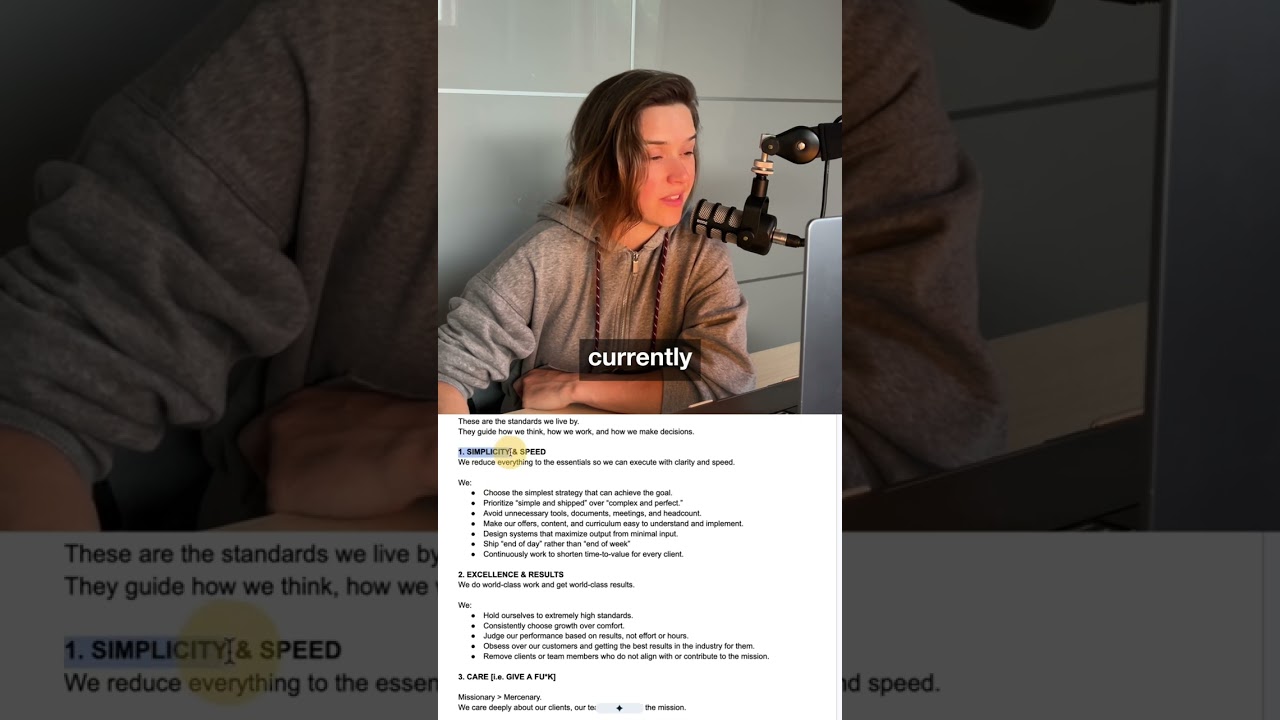
What's that? Does not English teacher. Oh God. Someone help me spell genius too. Is it like this? Yes. Thank God. Okay. So it's like, it's basically like you're here and then you want to jump into this and then you want to, you know, get rid of these things and jump in here and then you want this one. Excellence. So incompetence, like things you suck at. Competence, you're okay at them, but you don't love them. Excellence, you're pretty good at these. And then genius is like where you want to spend all your time, right? So I'll give you a couple examples for me. And then you guys can, I would love for you to fill out at least one box of your own so you can kind of see it. Like for me, okay, I'm gonna actually ask Mika, what's my biggest zone of incompetence? If you just, do you have any examples? Wait, what? Something I'm just like not good at. I can think of one thing right now and I'm like, oh God. You're good at everything. Okay, well I'm gonna put, Checking email. I'm like, there's like 1,100 things. My accountant needs me in there. Like, this person needs me, and I have no idea what's happening. So email is just like, I can't be bothered. Something that I'm competent at, but I don't think is my zone of genius, and this is part of why I sent you guys the message on— God, it took me 3 hours of people trying to break my beliefs on that to send that message I posted in Slack. But me being in Slack for 3 hours a day, I can do that, but I don't think that's the best place to spend my time. Like, I'm gonna try to shift that a little bit. I'm good at it, like I'm competent at it, but I feel like there's, like I view all of us as we're on the same team. 'Cause like the better I make the trainings, the farther along we get, the more I can advise you on like how to do the things, right? So that to me, like maybe Slack. What else? I mean, like another example for me could be like, I like numbers. I could do bookkeeping. I mean, this is— I'm probably— this is, this is somewhere between here and here, if that makes sense. But anyways, I could do bookkeeping, but I shouldn't be doing my bookkeeping, you know? So these are maybe some examples. Excellence. I would say I'll call this OBC. So like onboarding calls. I fucking love onboarding calls. It's like my favorite thing. I love it. And then like sales calls, like I'm good at sales calls. My close rate's really good, but I would way rather like coach you guys than get on a gazillion sales calls, you know? But then genius, what I think for me is I would say content, like you talked about Megan, and then course, like creating trainings for you guys, like making the program materials as good as we can like possibly make it, I feel like these are the seat that I actually should be in, right? And so it's like, basically it's this constant process of buying back your time and spending it on the highest leverage thing you can possibly spend it on for you, your team members, and your clients, right? Does anyone know who Dan Martell is? Buy back your time? Yeah. So he has this thing. This was super helpful for me. He calls it like the buyback loop. This is— this marker is really not that great. Okay, hold on. I killed it. Okay, this is not that much better, but whatever. Yeah, let's try it. Let's see. Try red. Try red. All right, let's see. Oh, damn, Gina. Okay, so this, he calls it like, I'll put this here. Well, I'll just, I'll just write it out. So pain, basically you're going along and you hit like a pain line, if that makes sense. And then there'd be audit. And I'll explain this in a second. And then transfer, and then fill. So basically, I'll explain this with Slack, if that makes sense. So basically, you're going along, and you're scaling, and you're signing more clients, and you're doing more things, and then you hit a pain line, right? So for me, this started to be when I was spending 3 hours a day outside with my phone in the woods walking, slacking, you guys, for like 3 hours a day. And I was like, shit, we cannot double because I am not going to be outside for 6 hours a day, like slacking. And so then I started to hit this, right? And then I was like, OK, I did this audit. So he talks about in his book, in Buy Back Your Time, like just setting a timer for every 15 minutes or 30 minutes or whatever. And it's like, well, where's your time going, right? Like, why are you hitting this? And it was very clear that I was spending probably like 40% or 50% of my time. In Slack. So I was like, okay, I see where it's going. And then it's like transfer, it's like, well, how could I make this time a little bit lower, if that makes sense? And so you started helping me with client success. I was like, I need someone to help me with this. So that's like an example of like Mika, I helped, like you helped me transfer that, if that makes sense. And then fill, okay, what am I filling my time with? Well, like, I mean, maybe onboarding calls or sales, but like this type of stuff. Like basically the post I made in Slack was, there's like 527 trainings that I'd like to create for you guys, like maybe a different upgraded sales thing for you or whatever, and I can't because I feel like I'm handcuffed. Like I'm like, I can't get to this. And so that's like pretty much the process, right? It's just like, where do you think you're the, where do you want to spend your time? Like where's the highest leverage place to spend your time? And it's just this constant thing of like, okay, what's causing the pain? Let me figure this out. Who can I possibly delegate this to? But then you don't just fill your time with nothing, right? Like you gotta fill it with something else. Like Alex Hormozi talks about this. He's like, people make this mistake and they think that they shouldn't be doing anything and they transfer all the stuff and then they're like chilling. And it's like, no, that's not the point. So is this making sense?
Mm-hmm. What's the axis here?
Good question, actually. So this is like what you're good at or no, this is— is this what you love? Actually, what is the axis on this? How much you like it and why? It's probably like how much you like it and like what you're good at. But let me just see. Yeah, yeah, yeah. Time, talent. There you go. I was just, how long do you think? I, you know what? I actually like, I haven't like, I actually don't know 100%. Best use of, I mean, it's best use of time. Yeah, best use of time. And then what you're kind of like what you're good at, but like what the best use is. So yeah. Is this helpful for anyone? Yeah. Like, what's an example of something you guys have in here? Why are you laughing? For me, it's like everything that I need to learn, like selling in the DMs and sales calls.
Yeah, yeah.
All that kind of stuff. Well, that makes sense, right? Like, you're probably not going to get to getting rid of sales calls maybe until you're at like $50K per month or something, right? Yeah. Can anyone think of like— who wants to give an example? Someone give an example of what yours are. And it doesn't have to be right now, but it can be— yeah, go for it. It can be in the future. Um, so excellence—
or sorry, genius for me is definitely especially video making, but kind of just like marketing in general. Yeah. Excellence would be— I honestly think excellence is more coaching. Okay. So it's like my marketing and content creation better than my coaching. Yeah. Competence would be, I don't know, I'd say I'm competent slash incompetent at sales calls, but maybe competent. Yeah. DMs, writing emails. Incompetence would be, uh, anything tech, like designing landing pages, viewing data from ads.
Well, yeah, yeah, got it. Cool, cool, cool, cool. Yeah, so I mean, if you start to hit this, the way I view this is like the pain is a signal. It's like, oh, something's wrong here. It's like, okay, well, what's wrong? Now you diagnose the thing and then you get strategic about like who can you give this thing to and like what can you replace it with, if that makes sense. Let's see, I'm gonna probably be done here after this.
I have is like, how long should you take before you hit that pain point? For instance, like, I might be fairly incompetent at my adventuring tracking because I've only done it like 2 or 3 times and it's new. And God knows I didn't do maths in high school, but that was a long time ago. Um, but I mean, I could obviously just like have like doing the boring stuff, which I love, by the way. That was like the best thing you ever told me.
What stuff?
Do the boring stuff. Oh yeah. But how do you know when it's like, yeah, no, I'm really just semi on a retarded level and I should get someone to support me? Because it's a question mark. When would you say that point should come in business if you're sort of starting out or when you're doing whatever?
I mean, hopefully this is going to answer the question, but I would say there's certain things that are really high leverage activities. There's certain things that make you more money than others. The reason that this is so high is because this is very dramatically affecting our return on ad spend right now. If I closed 80, was it 84% or something last month of calls or whatever? Industry standard is 30% or something like that. If I gave this away to a closer, it would take our ROAS from 30:1 to maybe 10:1. Or something. So it's like, I'm going to probably hold onto this as long as I need to hold onto it. But for example, I mean, making decisions about your ad metrics sounds like a pretty high leverage thing to be spending your time on. Whereas, yeah. Does that make sense? Yeah. Were you going to add?
I was just going to say, often these things aren't a problem until they're a problem. That seems really good. Basically. Yeah, the whole point there is pain is— well, you could be doing 30K a month and be really happy with that. So it depends on, you know, what you're optimizing your business and your life for. Yeah, I mean, if you don't mind doing the ad tracking, you're making the money you want to make, then, you know, who's to say you should change? So yeah, I think it's my just take on it. It's not really a problem until it's a problem. If your goal is to scale $400K, yeah, that's a big problem.
Yeah, yeah. Like maybe you have no desire to get to, you know, like what's Jeremy's goal, like a million a month or something? Like maybe no one in this room has a desire to get to a million a month and maybe you don't need a sales team, you know? Yeah.
But I think looking at the framework in your example as well, like time is also an element of this. Yes. It takes you like a lot of time tracking the ads For example, then that would be something like, yeah, I mean, if it took you an hour in Slack, it wouldn't be like that's a pain point.
So that's a big element. And this is a good point because to give you an idea of this, like this is just like, I don't, somebody please help me with this, right? But like the thing with Slack, this honestly, I mean, it's part of coaching Slack and onboarding calls. Like I love that stuff, I'm good at that stuff, but the problem with this is it's taking me so much time, right? And so for me, like, if all these were held equal, like Slack and onboarding calls and sales calls, I feel like I would probably want to get rid of sales calls or whatever, but it's making me a lot of money and it doesn't take, I don't have that many sales calls on my calendar. Like, to replace this task, maybe I'm doing like, I'm probably doing like 4 sales calls a week. Like, I don't do a ton of volume on sales calls and like, that's 4 hours. But this ends up being like 12 or 15. And that's causing way more of like a problem for me, if that makes sense. So that's a really good point. Yeah. So it's like you're kind of weighing that. You're kind of weighing like, 'cause if you do it with something that you're only doing an hour a week on, well, you're not buying back much time by changing that. Like, it doesn't have a big impact on you. Yeah. Cool. Okay. Those are honestly the biggest things that I wanted to share from this. I'll just give you a couple more little things. The fifth thing was like, and this is really only again if you want to scale, but just like you have, I guess I don't have this diagram on top anymore, but ads, right? Just like you have ads bringing in leads for marketing, at some point, You need a way to bring in leads for your team, right? So your network could be really good, or we even talked about running— is anyone there when I talked about the— or anyone see my stories one day when I talked about running a new follower ad for dating? Like running a dating funnel? So we talked about this, about building a landing page, but for talent, like building an ad and a landing page for setters or stuff like that. So you need leads for sales, but you also kind of need leads for team too. And so like something that I'm starting to think about is like when people message us in the DMs and they're like, are you looking for a setter? Are you looking for this? Like, I kind of pay more attention now because I know like, hey, these are the things that I might be looking for. Like, for example, Ben is highly skilled in sales. If Ben decided tomorrow that he's not doing coaching anymore, I'd be like, hmm. Now I have more responsibilities again, right? So it's like looking for those people like that you might need, if that makes sense. Um, so tiny little one. What else? Um, so let's say that's the fifth one. I'll just say fifth one is like leads for team. By the way, if anyone is trying to Scale and starting to build a team. Leila Hormozi's podcast Build is really good. It's more about team and culture and talent, and it's like the other side of Hormozi's stuff, if that makes sense. Sixth thing is just like, wow, this marker. Mission, vision, and values is, I don't wanna say I thought that was foo-foo, but maybe a little bit. But as you have more than just yourself, you need to start thinking about that. 'Cause it's not a one-man show. People need to be on the same bus. So that's a really important thing. And then the last thing is just, is really just diagnosing your main constraint, but we're gonna talk about that after. So that's all I got. Constraint. Questions, comments, concerns? Cool. Thank you. John, take it away.