Becoming the Next Version of Yourself (and Building a $100K/Month Coaching Business)

Morgan Gillis went from waiting tables and working CrossFit gyms to building a $100K/month coaching business. She credits extreme self-ownership, joining a coworking space and Toastmasters, and viewing sales as service. Her framework: lead acquisition, booking calls via content and DMs, then closing.
Chapters
Welcome everyone. We all want growth, but what does it really take to become the next version of yourself? What does it really take to become the person you were meant to be? In this episode, we're gonna explore the ideas of becoming, not just improving, but truly transforming. It's about letting go what's holding you back, building that mindset, that habits, and that identity to pull you forward. So how does this actually happen? What's just have to happen? With your beliefs, your routines, your environment. That's what we're going to unpack today. We're going to really explore this and explore this through the lens of a special guest, Morgan Gillis. She's an entrepreneur who's been on a unique journey from motocross racing, CrossFit in Canada, um, to taking a solo road trip to find her mentors, uh, in the U.S. She's had her ups and downs she's figured out her life path and through, you know, and built a really successful entrepreneur— oh shoot, screw that up. We're going to explore this through the lens of a special guest, Morgan Gillis. She's an entrepreneur who's been on a unique journey from motocross racing and CrossFit in Canada to taking a solo trip through the US to meet mentors. She's had her ups and downs, figured out her life path, and today Today, she's a very successful entrepreneur, helping other entrepreneurs, especially coaches, go from literally $0 to earn $10K, $20K, and even $50K months. I also want to add this note. I've known Morgan for 10 years, and I've seen her unique journey. So the questions I'm going to ask today is meant to help unravel that journey for you, the listener, so you can walk away with some golden nuggets by the end of this episode. So with that said, welcome, Morgan. How you doing?
Great.
I'm excited. Nice. I want to start here. I want to, because to really give the listener context for your growth from, I think from this, they'll better understand how far you've come and what shaped your journey. I met you in 2015, rooftop party, San Diego, you know, out Out of the darkness, I saw you. And then we started chatting about Steve Jobs and that famous 2005 Stanford University commencement speech where he gave, where he talked about connecting the dots. 10 years later, we're still friends. When I met you, I want to ask so the listener could get context, what, was going on in your life then? Where were you mentally, emotionally, financially?
Yeah, I'm cracking up because you're like, yeah, we met at a party, and that is the least Morgan place to meet somebody. Like, if you know me, when do I ever go to a party? But yeah, what was going on in my life at that point? I think that probably about a year before that, I had been in engineering. I left, I took a bet on myself, I ended up going to work at this CrossFit gym in Memphis, Tennessee, and then dots clicked into place. Next thing you know, I came out to California. I was hanging around with this group of people, and the guy that I was working for was like, hey, do you want to come to this party? There's a bunch of entrepreneurs there. And I was like, well, duh, right? So I was basically on this path of trying to figure it out. Like, honestly, I was probably searching for my passion, if you will. But I was trying to figure it out, and I didn't really know what I was, I wasn't certain on the direction yet. I was trying to find the direction, and yeah, I was just kind of mucking around, you know? I didn't 100% know where it was leading, but I knew I didn't want to go back where I had come from, and so I was just trying to forge a path forward, basically. Yeah. Yeah.
Nice. Now let's fast forward a little bit. You're now 10 years later, successful business owner. You're helping others achieve, um, their own success. You recently hit $100K a month. Um, simple question, what's, what's life now?
Ah, that's a broad question. What do you mean by that?
I mean, where are you again? It comes— goes back to the same emotionally, mentally? Yeah, your growth, where are you right now?
I mean, in a much different place, I would say. I definitely feel like I found the thing that I was searching for, for sure. You know, you say successful business owner, I'm like, okay, yeah, sure. But also the farther you get along, you just change the goalposts. And so for me, I'm like, well, I'm not an Alex Hormozi yet, or I'm not like a, you know, whatever, right? Um, so I guess, you know, more successful, whatever. But yeah, in a very different place. I found the direction, I guess. Yeah.
You know? Gotcha.
Yeah.
Now, key moments in your life. Um, I wanna touch on this because this is where the growth happens.
Mm-hmm.
Um, I watch you change.
Mm-hmm.
You were working at a CrossFit. Company, fitness company. You got fired. You became a health coach, undervalued health coach, I would say, because you're charging $35 for your services back then. You gave that up, became a waitress, working long hours, feet is killing you. And then you finally launched your first, did your first launch. Walk us through some of those key moments in your life. I really want the listener to, to feel that journey that you undertook.
Like which moment?
Um, if you could start with like working for that CrossFit company and going through that, those phases of being fired, on being under, you know, just being that hell coach. What was some of that in that journey? What are some of those low points in your life?
Yeah, I mean, probably being you know, X amount of years into— like, it makes me think about 2018, makes me think about the lowest point of the lowest points, right?
What happened in 2018?
Um, just having left engineering and been not doing that for years, right? Like, leaving engineering 2014 and then basically getting to 2018. I think it was the fall of 2018. And realizing that I still didn't have anything figured out. And I'm like, okay, I mean, it's not like I haven't been applying myself. It's not like I've just been coasting. I've actually been trying, and I should sure as hell be smart enough to figure this out. Like, if I was smart enough to, you know, do engineering and figure that out, like, shouldn't I be farther along than this? You know? And I remember kind of getting home one day after waiting tables and walking through the door of the place that I was staying at. Backstory: I was living with my uncle at the time. He got a different job and basically had to leave, and he was selling the house. The house was empty, right? And I had to find a new place like a month after that. But I remember walking through the door. It's like pitch dark. It's like 1 in the morning. The whole house is empty. And in my mind, I'm just like, this situation actually feels Like, it is my life. Like, this empty dark apartment is like kinda how I feel.
You know what I mean?
I remember it just being like, okay, if you think of health, wealth, relationships, right? Like the main areas of life. It's like, well, how's your health right now, Morgz? It's like, well, I mean, I'm waiting tables all the time, I'm up to crazy hours, you know, I eat crap at the restaurant. You know, probably getting up super late, like, you know, everything's all mucked up. How's your wealth? Well, not going the way that I would like it to go. I mean, I definitely like to not be waiting tables to pay bills right now, you know, and no disrespect to anyone who does that. It's just, you know, I just knew that wasn't for me. And, and then, yeah, relationships. It's like, well, I've been trying to build this business on the side and I've been trying to Yeah, I've been like working two jobs basically. I'm working at the restaurant, I'm trying to build my own thing, and so I don't really, I'm never really not working, and so I'm not prioritizing that. So it's just like my life feels like a train wreck essentially. And that's what I would call like my moment of peak disappointment, I would say. Yeah.
Was that a catalyst for you to change?
100%. 100%.
That was, that was a catalyst because you were at— and I, and I figured this was one of your lowest points, or the lowest point in your life. Yeah. Where you've been as a— you've been the health coach, you've been now doing this, being a waitress, uh, working long hours, and you reach a point where, man, I want to achieve my goals and I have this, this potential and you feel it, but at the same time, did you feel like you were letting yourself down? 100%.
Yeah. It wasn't even just letting myself down. Like I was actually almost disgusted with myself. Yeah. And I think the best thing that I ever did was fully felt into how disgusted I was with myself.
Right.
And really, really felt that. And I remember sitting one night, I was like, staring into this fire in the backyard, in this moment. I was like, kind of staring into this fire, and just kind of thinking to myself, like feeling that emotion, like feeling that emotion of disgust. And then also somehow having this realization, like I was smart enough in that moment to not think that anything else was responsible for that, you know?
Right.
Like that was somehow 100% on me. Even with the best intentions, me feeling like I was taking the right actions, I'm like, no, somehow you created this and you're the only one who can uncreate this. Right. You know? Um, so yeah.
So I guess it, it's reached a point where you took full ownership and would that be a, a big idea you wanna drive home to the listener? That taking full ownership of where they are right now, full accountability.
Yeah, for sure, with everything. Mm-hmm. Like, not to kind of fast forward too much, but I mean, this is even a big thing with the team that we have now is like, I want everyone to take extreme ownership. Right. You know, for example, if we're not booking the amount of sales calls that we want to book, yeah, then I shouldn't be saying to my you know, appointment setter, hey, like, this is all on you. Yeah. I take responsibility. I'm like, well, guess who's running the ads? Guess who's creating the content or not, right?
Right.
So I take ownership of that. But also he takes ownership of that. So he shouldn't be saying, well, it's the lead quality. Well, it's the ads, right? Like, I want everyone to fully own it.
Yeah.
And when everyone fully owns it, then it's not like it's lost in the middle and nobody's taking control over this. It's everyone's trying to take their control over it, right?
Mm-hmm.
So yeah, I think that's a big idea for yourself, like personally, or for your business, for your team, whatever. Right. Because like, what's the point of— like, do you have control over giving that thing to somebody else? You just lose all your control. You just give all your power away, right? Exactly.
Yeah. The, the theme of this podcast is becoming. We've seen you at your point A. We've got a glimpse at you at point B. We, there's the catalyst, taking full ownership. What else do you think is that you could attribute to the change?
Well, something else that I would say, I would say that all of the shifts in terms of, you know, an upward trajectory started in that moment. It started with that feeling of disgust. It started with not trying to make that feeling go away or dull it or pretend it wasn't there, feeling the heck out of it. Taking full ownership for it. But I would say another thing that's just really relevant is emotions, whether they're good or they're bad, you use whatever you've got. Like Hormozy says this sometimes, right? But I 100% used that negative emotion to my advantage, right? And what it made me do is it made me really reflect. It's like, oh shit, how did I create this? And it was— you don't want to sit there because it feels painful to sit there, right? So you want to run away from it. And so I kind of used that to sit and reflect, reflect and think, well, if I created this, what am I doing that I shouldn't be doing? Or what am I not doing that I should be doing? And in that moment, this is where it started to shift. Now, there was a lag time between when I started making those shifts and when it actually started to play out. Got a good quote I wanna loop back to from Jim Rohn on that one. It's a really good one. It's helped me so much in my shit times. But in that moment, I was like, okay, well, what am I gonna do differently? First, it's like you gotta kinda identify the problem, and then you have to think about the solution, right? So for me, I was like, well, what is the problem here? And I had it self-identified, whether this was right or not at the time, that it was like, okay, The issue right now is that you're not hanging around the right people. You constantly feel like you're swimming upstream. Right. Everyone around you is going the other way. And so you feel like the odd one out. You feel lonely and you have all these influences where you're trying to go left and they're trying to take you right. And so I was like, okay, well, how do I get around the right people? And the best— too bad I didn't have ChatGPT then. ChatGPT could have brainstormed with me.
Give you all the answers.
Yeah, it would have given me better answers than I friggin came up with. Anyways, I was like, okay, I said, let me join Toastmasters, 'cause I figured at least these people are into personal development, right? And then I said, okay, let me also join this coworking space, because at least these people have frickin' business. 'Cause I think part of the issue right now is like, you feel like you're the only entrepreneur on the planet, right? You gotta surround yourself with people who are at least trying to go in the same direction. And then the third thing I joined is I joined a CrossFit gym again, 'cause my health habits were just slipping in, from the waiting tables scene, if you will. And so I was like, okay, these 3 things will probably point me in the right direction. Don't get me wrong, CrossFit was helpful from a health perspective. Didn't really push my business where I wanted to go, but it got me into a better mental headspace and whatever. The Toastmasters thing was okay. It didn't really stick, and I don't mean this in a weird way, but it was just a very older crowd, and I just didn't really emotionally connect with a lot of people, but my intentions were in the right place.
You tested it out.
I tested it out, but the thing that actually stuck was the coworking space, and that actually unlocked a lot for me. So, uh, getting around the right people, um, like, when I really think about the 3 main things, and maybe we should back up for a second, go back into these main things. When I think about the 3 catalysts that I actually found, one was the lead generation job at the startup, at Trellis. One was the mindset and business coach, and the other one was the course I bought. All 3 of those came from the coworking space.
—So when you came— when you encountered those 3 things, was it after that low point you had? Just to get context, a timeline. —Yeah.
So basically what happened, 2018, October, and I know what month it was because that's my birthday month, and I get super reflective, and it's also fall, and it just makes me go inward. So that was when I started doing the coworking space stuff. That was 2018. It was about the same time, 1 year later, when the pieces truly started to click. Yeah. So there was a lag time. Like, I had to make a decision, and I'm imagining that when I made that decision, my trajectory may have been like this, but my trajectory shifted in that moment, right? So it was going like this, it shifted like this, but over time, that's a very different place you end up at, right? There's a very big delta between those 2 things.
Interesting. Yeah. You talk about, in a previous conversation we had, you talk about traits and traits are not fixed. Mm-hmm. Could you expand on that a little bit? Um, yeah, because you, you realize that your identity had to shift.
Mm-hmm. Yeah. I mean, I think that your identity's a lot less fixed than you think it is, right? Like, uh, who said this? Joe Dispenza said this in his book Breaking the Habit of Being Yourself, whether you like that book or him or not, right? Um, throwing rocks at you. But anyways, uh, he had this concept in the book and he basically said that identities, they're just jackets, just jackets you try on, and if you don't like that identity, you can just take it off. And that was like very, very powerful for me. Um, because your identity is a lot less fixed than you think it is. Yeah. And you can change things about yourself, which I find super empowering. And it's amazing when you do. Right. Yeah.
What, what was, uh, what was you think the biggest shift from old Morgan to new Morgan today?
Um, I mean, there wasn't one. There's just, it was just many, many shifts over time. Gotcha.
Yeah. Gotcha. I wanna, I wanna ask you something. You talked about going to the, uh, finding the community. Mm-hmm. Uh, the coworking space. Mm-hmm. Um, let's talk about mentorship and coaching, mentors and coaching. Um, I've seen, and this is, this is, I wanna Because I have this, this, um, I knew you back then and you were a bit frugal, uh, you know, you had a scarcity mindset back, back then. Now you invest in a lot of coaching and mentoring, um, you know, why, why, why invest so much in people now?
Um, I mean, I think this has a lot of Hormozy influence in his way of thinking. And in terms of my evolution, learning how to think differently and have a different perspective about stuff is very helpful. One thing that he would say is like, you know, humans want to do stuff that they've been rewarded for in the past, right? And so some of the biggest shifts that I made were after investing in that online course, investing in that, you know, mindset coach. Yeah. Yeah. Like, oh, like, I mean, that's how I went from making $1,000 a month to my first $20,000 a month, right? Yeah. That's how I went from like, I can, I can think of the mentor who helped me make that happen. I can think of the mentor who I invested into and I went from from $60,000 a year to a quarter million a year, right? And I think that something that really, really sticks with me now is that, and yeah, is basically like, if you wanna make a million dollars and right now you're making $200,000 a year, every year that you don't figure out how to make a million, you lose $800,000, right? And that's a, I mean, I forget who Hormozi got that from, some presentation, and it was a close the guy was using, It's like sometimes you got to close your frickin' self on the thing that you know you need to do, right? And so for me, it's just like, you know, ignorance tax is what he calls it, right? Like, you not knowing how to do this thing is costing you so much money. And so, yeah, that's, that's why I'm big on it, because it's like, I see it, I see it as an investment. If I put $10,000 into a coaching program,— you know, if I put $10,000 in the stock market, let's put it this way. Cool. 12 months later, I now have $11,000, maybe, if it makes 10%. If I put $10,000 into myself and I bet on me, do I think I can make at least an extra $1,000 that year? Um, yeah. Right? So that's kind of what shifted. Just looking at things different. Just a different perspective.
Hmm, interesting. When people come to you as a potential client, what is their, what is their hesitation? Um, do you think they're, they're burned a lot, uh, from, and they have a lot of skepticism?
Uh, for sure. Not all of them, but some, some understand that that's just part of the process and that in the process of trying to find the thing that gets you where you need you need to go. There will be some failures along the way, and I think that's a good mindset to have, right? Um, but some people have been burned by a lot of people, and they're very hesitant.
Yeah. Have you ever, um, done— have you ever invested a lot in a coach or a program or something that it didn't turn out the way you were, but maybe you got something, and it was probably worth investment from that? Yeah, 100%.
I wouldn't say— I don't really like thinking that like I ever got burned by something. Yeah. And this goes back to the extreme ownership thing, is, well, who made that decision, right? Who didn't do their due diligence on that? Yeah. Move, right? Yeah. Oh, that's a you problem, right? Right. Um, there was one program I can think of in particular that just— it was a lot of money. Um, it was the biggest investment I had made at the time, and It definitely didn't— there were so many things wrong with it. Number one, I don't think I ever should have been sold into that program to begin with because like I was not their avatar whatsoever. Like I wasn't even the type of coach that they serve. So like that was a whole thing. And what I went to them for, the skills that I went to them for, the trainings on that was like just not at all what I had expected. So I would say in that sense that wasn't the greatest move. However, there were some tiny things they made, like, probably the biggest thing I got from that experience was doubling my prices. Now that was a really hard pill to swallow, and it probably cost me some money in the beginning more than it made me money, but now, massively helpful. And that one thing made me way more than what I paid for it. You know, even though the experience itself wasn't that great. So. Gotcha. It just takes time. Yeah. The biggest thing is it just takes time for your investments to shake out. I don't think there's ever been an investment that I made where I didn't make the money back. But it has to be on a long enough time horizon. Right? Right. Like the first coach I ever had, I finished up working with her and I still wasn't making the amount of money I wanted to make. Right? We did 3 months together and I wasn't there. And then I went on my own for 3 months and it was 6 months after that I had my first $20,000 month, right? But if I would have just been so short-sighted to think that, okay, I worked with this gal and it didn't happen, wow, she sucks. Right? I knew I was farther ahead even though it hadn't shown up in my bank account yet. But 3 months later I was like, oh, we're on a completely different planet. But it took 6 months for that to shake out.
And that's the thing, sometimes people just don't see the lag time. No. Yeah. Yeah. And just being patient and just put in the work and just understanding it'll take some time before you see results. Yeah.
Yeah. And it's just like that. And I wanna remember that Jim Rohn quote I was gonna mention. Something that really, really helped me in that season where I just, I was just feeling like, to be honest, I don't know if I can say this on this podcast, but I was just feeling like shit that I wasn't where I wanted to be. Yeah, right. And look at me not dropping any real bad swear words on here. It's like I'm in Dubai, I'm practicing for Dubai. Anyways, um, I remember there was at one point during that journey, like 2018 type thing, right? And I just wasn't happy with where I was. But Jim Rohn had a quote I remember biking around, I think I was listening to his audiobook. It was like Jim Rohn, Living an Inspired Life or whatever. And I remember listening to that audiobook and he had something in there and it just friggin' stuck with me. But it was like, you can't change destination immediately, but you can change direction. And direction is very important. And so in that moment I was like, cool, I don't have what I want, I feel like trash, I'm not that proud of myself. But the one thing that I do have and I can take comfort and peace in this moment knowing is that I am doing today things differently. And although my destination isn't different yet, my direction is, like my compass is pointed in the right direction. And that gave me a lot of peace just in that moment. 'Cause that's like, what else do you have control over? Right. Right? You can only control what you're doing right now. And when I think about, 2018 and making that, you know, making that decision to go do those 3 things. Yeah. 2018, get into that coworking space, took me a whole year to start realizing the benefits of that. Right. But that's where I got connected with the startup, the course, the coach, and then 6 months later, I had my first $20K month.
Right. Oh, amazing. Yeah. I want to touch on something that I think is important. Sure. When we talk about you investing investing a lot in coaches now. Yeah, there were times in your life, like going to that co-working space, where you did not have the money but you surrounded yourself with people. You also was in Canada, um, in the early days, and then you traveled to Tennessee to meet mentors. You didn't have money back then, uh, to spend $25K in coaching, but you surrounded yourself, you volunteered, you surrounded yourself, you find— you found mentors. I want the podcast listener to really take that into account that they can put themselves out there and find valuable people that can help them. I mean, yeah.
Yeah. For sure. I mean, I never paid you anything, but you've definitely mentored me in my life. Right. Right. But I will say this.
I'll send the bill afterwards. After this podcast.
No. If you want to get technical though, Yeah. Now here's what's interesting. I didn't realize it when I did that first, like when I left engineering and I moved to Memphis and I started coaching at that CrossFit gym for free for 6 months. Right. For these random 3 people that I had never met in my life, but I knew them from YouTube. Yeah. Which is a crazy story. I didn't realize it at the time, but that was, I paid like $20 grand for that. Because I had all this money saved up. I was working my tail off in the summer so that when I went back to school, because I was putting myself through university, right? When I went back to school, I'd have that money. And then I called up mom one day, middle of the summer, was like, yeah, so I'm dropping out of engineering, actually. I'm not going back. I'm moving to Memphis, Tennessee to go work for these 3 guys I found on YouTube for free. Right. And she's like, being my mom, she's like, she's like the best. She just is like, yeah, cool. I'm happy with whatever you're doing. Can I come for the drive? Right. So she comes with me, but Anyways, my point is I took that $20,000. I floated myself on that $20,000 for 6 months, right? And then I had no money left. So even though I was very unfamiliar with the concept of investing in myself and I probably didn't even see it that way at the time, I spent $20,000 on that experience. Wow. Right? Because I went back to zero and then I was like, "Guys, somebody needs to pay me because I now have no money. And then the California thing happened and whatever.
But yeah, yeah. If someone would come to you today and say like, hey, I have a coaching business, yeah, I make $1,000 a month, can you help me grow it? How would you guide them? What's your process?
How would I guide them? Yeah. Um, well, I would put them into our sales process. That's what I would do. Um, no, if they, if they wanted—
and let's say they bought your, your, your, uh, your coaching services. Yeah. What, what, what next?
Yeah. And I'm joking about that a little bit, but I'm also not joking because like, what is our sales process designed to do? It's designed to see where are you, where the heck you trying to go. Yeah. What do you need? If I think I can help you get there, I'll help you. If not, I'll be like, hey, I'm not the person for you. Right, right. Um, but sorry, say that question one more time.
So someone comes to you today, uh, they have, hey, I have a business, a coaching business, it's making $1,000 a month, I want to grow it to $10,000. Yeah, here's my money, take it, help me.
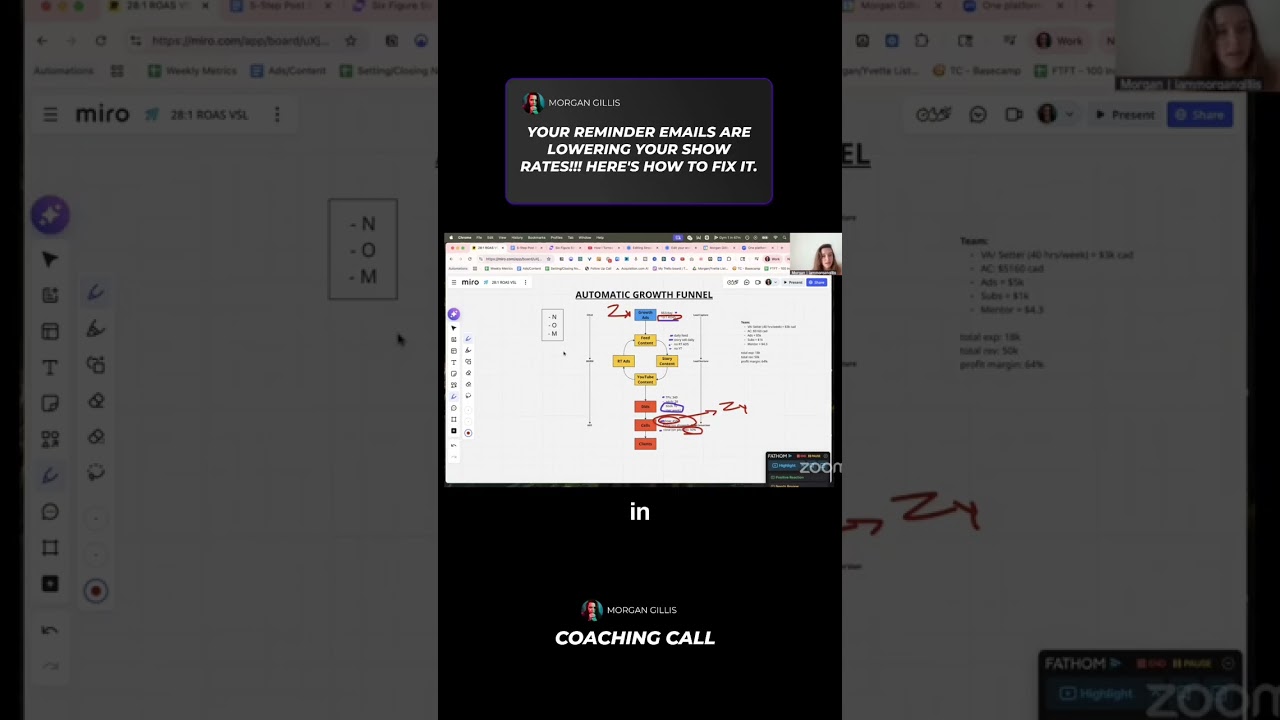
Yeah, I mean, it depends what they're starting with. Yeah, right. But in general, um, I mean, actually, maybe it doesn't depend as much what they're starting with because we don't really skip steps. But it's like, what do you need realistically to build a coaching business? At its most foundational, you need 3 things. You need leads, you need to get those leads to book a call with you, and you need to close those calls. And if you can do those 3 things, you'll have clients. Now, what goes into getting leads for us is cool, what's your niche? We got to make sure you got a profitable niche, right? Right. There's got to be a big enough pain point. I call it the 3P formula, right? There's gotta be enough— big enough pain point. They have to have the purchasing power to pay you. And hopefully you're passionate about that thing, because if you're building a coaching business, I mean, God, you got to be in it because you love it, right? Or else just go work— just go work in corporate or something, right? So anyways, you got to make sure that that makes sense and then that their offer makes sense. They got the right price point structure, all that stuff, the thing they're exchanging for money, make sure their messaging is dialed in, and we just kind of have those foundations, take that messaging and put it— at this point, the number one way we get leads is ads, right? There's three ways you can do it. You can do it by running ads, like paid traffic. You can do it organically through, you know, viral content, or you could do it through reachouts, right? We teach all three, but ads totally work the best. They're the fastest. Whatever, right? So we take those foundations, we get them to run ads, boom, you've solved problem number one, you have leads. And then from those leads, it's like, okay, cool, you have to get people to the phone with you. And that's really two main things. That's your content and it's your DMs, right? And people dramatically underestimate the DMs thing. Very, very big piece. And when I think about how I went from $1,000 a month to $20,000 a month, messages were such a big part of it. But anyways, Let me, let me go with that and we can, we can recap. Sure. In terms of your content, it's like, okay, we call it our content flywheel or a content flywheel, whatever. What are you posting on your Instagram feed? There's a specific purpose for that. Your Instagram stories, specific person purpose. Your YouTube channel, long-form content, and then maybe some retargeting ads. What's all that content designed to do? It's designed so that when people hit your page, they get warmed up enough for enough by that, they know, like, and trust you enough, they're even willing to entertain a conversation with you in the DMs, right? And if you've got a strategy for your DMs, you can turn followers into calls. And then number 2, you're— you've solved that problem, you're booking calls. The last thing is you just need to learn how to close those calls. You just need a process for sales, you need, um, you know, the skills for that, and you're signing clients. And other than that, in terms of scaling it to 10, 20, 30, 40, 50, 100K per month, It really just becomes about, uh, scaling with, with basically your team, team systems and ads, just spending more, getting more leads, right?
The, the DMs you mentioned, that's an important part of the, the process on Instagram. Yeah. Is that part of like you, you're nurturing the leads? Um, or is it you closing them at the, in the DMs?
No, you're not closing them. Yeah. There can be a little nurture that happens there. Yeah. Because think about it, you're speaking with, you know, if you don't speak to someone in the DMs. Yeah, cool. The only way that you're marketing to them is one-to-many. When they see your ad and you have one piece of content, cool. That one piece of content is going to many people. Yeah. When they see any organic content that you post or on your stories or whatever, I mean, you're creating one thing, you're talking to multiple people at once. Yeah. But when you actually message them in the DMs, they're talking to just you. This is a private room. There's two people in here. Right. It's me and it's this other person. Right. And so that feels very different. You're being talked with, not talked at. Right. And so, I mean, think about it. What are you— you know, who are you more likely to buy from? Someone that, you know, you've never had a conversation with or someone that's like been in a conversation with you one to one. Right. And has that connection. Probably someone who has that connection.
Sales. When you think about sales, what was the mindset shift that happened for you from becoming a poor salesperson to a great salesperson? And what's some— because a lot of people out there, a lot of coaches and stuff, they don't value sales as much. And it's probably one of the most, if not the most critical part of this business.
I mean, you know, and, and, and this is kind of why I do it, right? Like, why I do this stuff is because when I started, I really just wanted to help people. I wanted to coach. But then you eventually get slapped in the face by the reality that you can't just be a good coach. You have to learn how to market, and you have to learn how to sell. And if you don't want to learn those things, well, then this business isn't for you. So it just, it just was that if you want to do that thing, you had to learn it. And then in terms of getting good at it, I think probably the biggest thing for me is just knowing that sales is service as long as you have a good product, right? But truly, you're trying to help that person get a result. And if you believe in the thing that you're selling, then it makes sense that you're going to walk them through their fears, walk them through their hesitations, show them a different perspective, show them where they want one identity, but they're showing up as a different one, right? And you're not making them do anything. You're simply presenting an offer. Like, really, you're just getting them to confront reality. They see the facts. They see what it is. You present an opportunity to help them. And if within them sitting here, right, and them trying to get here, and you have this opportunity, there's some sort of bullshit beliefs or thought patterns that are clouding what's actually happening, then you tell them, right? You, you give them that insight. Yeah, but you can't make someone give you their credit card. You can't do it, you know what I mean?
Yeah, I love, I love what you said there. Sales is service, and we don't, we don't normally look at sales like that. It's almost like we're trying to close this person, and there's a lot of, uh, anxiety that comes with it, but When you think of it from the perspective of sales is service, it's, it's, it makes it all, it's a mindset shift right there. 100%. Yeah. Yeah. Gotcha. I want to, I want to talk about drive. Now I've seen you over the years locked in a room, tweaking courses, taking sales calls, getting up before sunrise, just working. What, motivates you to keep going?
What's a big driver there? Oh, I don't even know if I can answer this question. If I'm to take a guess at what it is, I think it's almost something that I'm not fully conscious of anymore. I'm making an assumption that when I was going through those harder parts of the journey, and that wasn't like a 1-year hard part, it was like 1, 2, 3, like a 4-year hard part, right? I think that experience was so painful for me that probably on— there's probably some trauma on some level or something. I need a trauma coach. No, I'm just kidding. Don't DM me. There's probably some sort of subconscious thing that I still feel that experience and I just don't want other people to go through that experience. I— maybe this is bullshit, maybe it's not, but I think that I have probably a lot more give a fuck, for lack of better words, or care than maybe a lot of other business coaches doing this thing. But I think it's somehow rooted in how painful that 4 years was for me. Like the, your mess is your message, some sort of dharma type thing. Like sometimes I think about this and I'm like, why do you work so much? Like you sacrifice so much for this thing, like why? Sometimes I feel like I don't have a choice, like it's just written already. Like I'm being guided along. Like this is just the mission I'm supposed to be on, you know?
Speaking of mission, your t-shirt, missionary over mercenary.
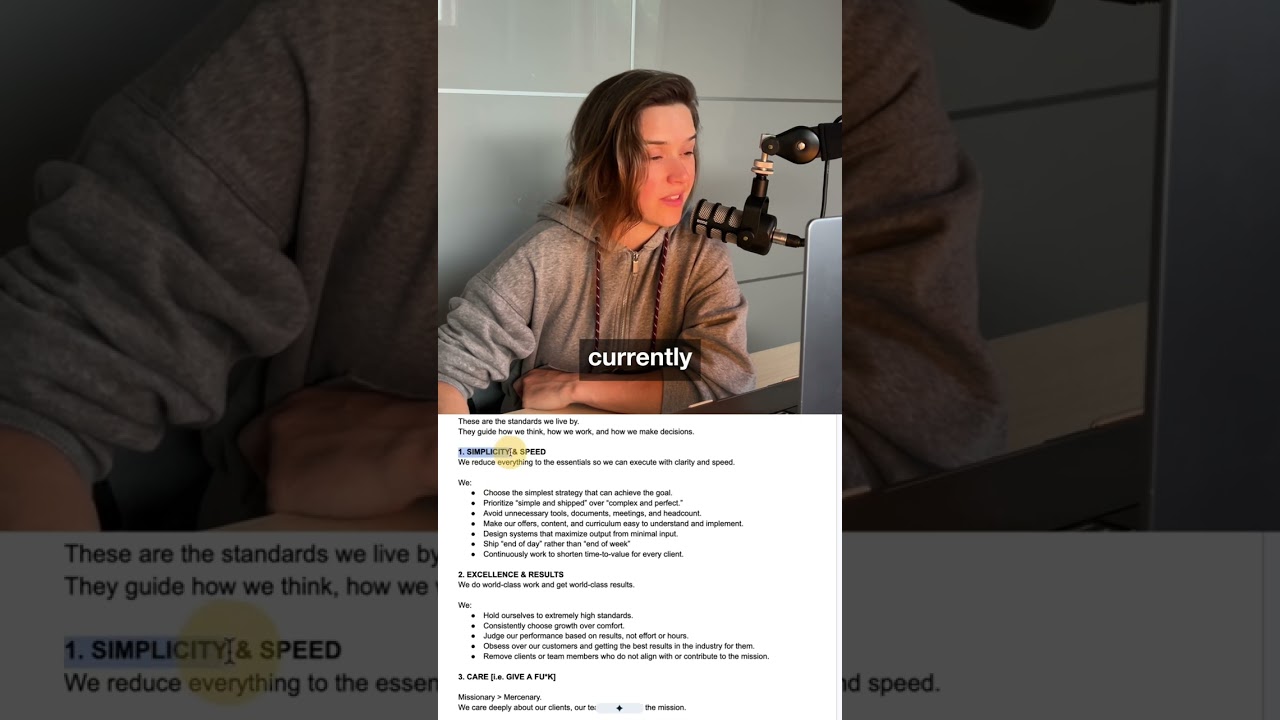
Yeah, this is, probably most people won't know what this is. Some of my friends razz me for it, they're like, oh, they're like, I didn't know there was a mercenary position. But basically, I pulled this from a Hormozy podcast that I was listening to a while ago. And he talked about the difference between missionaries and mercenaries. And a mercenary is someone for hire. Yeah. Right? There's someone that you hire when you want this job done and they're in it for the money. Yeah. A missionary, you know, if you were to think about it in the religious context, right? They're probably not even getting paid. They're there for the mission. And so, I don't know, that when he said that concept on one of his podcasts, that stuck with me enough that I really identified with that missionary. And I think that there's a lot of people in, especially in the business coaching space, that are totally mercenaries. They're totally there for the Stripe screenshots, you know, whatever. Sometimes people are just a number to them. And so I think for me, it was just, I don't know, I really identified with it and I really just, for whatever reason, I liked it enough that I literally made my own t-shirt with it to just remind me, like, this isn't a, I'm not for hire kind of thing. And I don't wanna lose that because I think ultimately, That give a fuck is the reason that we're going to win.
You know, you're in it for the services. You think that, you think that would raise, you want to raise a standard in business because of that, um, especially in the coaching business?
Yeah, I don't know where this comes from because if I think about it, I've never really, maybe this is what it is, maybe I'm having a little epiphany right here, but I've never really been burned. A lot of people have. I haven't. But I think beneath the surface of what I do, if, I don't know where this comes from 100%, but I do want to raise the standards in that industry. And that's why I will spend You know, multiple 5 figures investing into people to help me improve the client experience. And that's why we're not cranking marketing right now at the expense of client success, and we're really focused on that, and then we'll crank marketing, you know. Yeah, I'm not 100% sure where that wanting to raise the standard comes from, because like I haven't exactly been burned before. Yeah, but yeah, it's there. You mentioned Dharma.
You believe in Dharma?
Um, I don't know if I believe in Dharma. I mean, maybe I do. Uh, it felt like Dharma. Yeah, in, in 2020 when I had cracked a code for myself and I was like, oh shit, that 5 years of sorcery that I just went through, there was probably a reason for that. If you didn't have that experience, you wouldn't give as many dams as you give right now. Right. Like, that was for something. You were supposed to go through that. So do I really believe in it? I don't know. But at the same time, my actions say that I do. Right. So, yeah. Gotcha.
How does one— we talked about motivation. How does like the listener, the, the coaches listening, how would they cultivate that, that desire, that drive? For what? For, for, for their coaching business, for to, for whatever they undertake. Because I know, I know coaches, sometimes they just don't have that drive or they don't have that passion. Maybe it's not that they don't have the passion, but they don't have the drive to get up early and do the work and do the push-ups. How does— how, given that you have cultivated that through your motivation, motivating factor service. Yeah. How does one find that, I guess? Is it more internal thing they have to go through the journey and figure that out for themselves?
You know, I don't know if I have the greatest answer to this because what's coming to mind right now is that Jim Rohn quote of like, I forget what he said, but it was like, why are some people motivated and others aren't? He's like, I don't know, mysteries of the mind. It's just like, I don't know. Yeah. I don't know. But I think for me, in the beginning, I probably wasn't as motivated as I needed to be. Right. I think that in the beginning, maybe it was a little bit more of my motivation was a lot of, I mean, actually, I think this probably would tie into it. My motivation was a little bit more of a self-motivation in terms of I would like to have more freedom, I would like to make more money, I would like to do work that I love, things like that. Now I have those things, obviously. Um, the new motivation— what's the new motivation? I mean, I'm very motivated by growth. Yeah. So I like that. I think there's a degree of it that's just me as a human. I think that I used to be very competitive in like athletic stuff. And now I'm very competitive, a lot with myself in business stuff. Like, I just think I have that push athletic mindset. Yeah. So that's something I think that having something to serve bigger than you gives you a little bit of that motivation. Like the mission. Yeah, there's a cause, right? I think even thinking back to our first $100K month, I got more excited honestly about taking my team to acquisition.com and being able to pay certain people on my team $10,000 that month. Like, I think I got more excitement out of that than, you know, than, you know, what's a Stripe screenshot? Like, cool, right? But I think actually, like, to circle back to it too, I remember thinking this is around the 2020 time that, you know, a lot of people might have different and better, honestly, external motivation than I had because it's like, well, I don't have kids. I don't have a partner. Like, I don't have those external, I wanna, you know what I mean? Like, do it for these people type of thing. And so my motivation, I made it about the people that I was gonna help because I think actually this is my truest answer. Getting me to do it for me just wasn't a good enough reason to get off the sofa. Yeah. You know?
So it's basically finding something beyond yourself. It's gotta be something external.
Yeah. Yeah. Yeah. Unless it's like a— I do find the internal— like, I love being in the process and that growth process. That's an internal thing. Like, nobody else is getting that growth. That is something that motivates me. But I also think that external thing's really helpful. Gotcha. You know, it's really hard. It's really fun to labor over creating course materials. Like, right now I'm locked in this cave Yeah, for hours creating these outlines in this course material. And all I can think about, like, okay, this is gonna be so good when the clients get it. Yeah, right. So I don't know. Cool. Yeah.
You talked about that $100K month in revenue. Let's talk about goals. You have a process. You hit that $100K month in revenue. Um, did you write down that goal?
What was your, um, how did you manifest that? 100%. Oh, this is gonna get woo. We're gonna go down the woo path. Uh, you had a part in that, actually. I did. You did. Um, that $100K. So basically what happened, for whatever reason, is I started reading— remember when you gave me the book U Squared? Yeah. Price Pritchett. Yep. So for whatever reason, I started rereading that book. And then when I was reading that book, I found, uh, he talked about his other books, and one of them was The Quantum Leap Strategy. And I was like, yeah, I'm gonna get that book, The Quantum Leap Strategy. And then I started reading that book in my morning routine, or whatever you want to call it. Alex Hormozi would cringe as he hears that I have a morning routine. Um, I started reading that book And I remember one night, for some reason, I brought it downstairs and I just started reading it like crazy and just going through the whole thing. And I can't even remember what order happened what, but anyways, I just kept reading it and getting these downloads, these insights, as woo as that sounds. But I mean, everyone has to experience it. There's no way it's just us. Like, many people, many people experience this, whether you're you know, cognizant of it or not. But anyways, you start getting these downloads, and I just kept writing like, hire this person, hire this person. It just kept happening. I don't know if that's what gave me the idea of the $100K month or whatever it was, but I think it was the hire the person first. And then I got so sick of my intuition pinging me as I was reading this book to hire this person, I was like, fuck it. I just went upstairs and messaged him. I was like, send me the payment link. So he sent me this payment link for like $15 grand, and I ended up getting this this program. And then after that, there was a 12-minute manifesting routine inside the thing. I was like, you know what? It just occurred to me as I was reading, I was like, this is how I went the first time when I went from $100— or $1,000 a month to $20,000 a month. It was because I wrote $20,000 on a sticky note and I got obsessed with it. Yeah. And was like crazy about it until it was just like you couldn't unconvict me. Yeah, that this wasn't going to happen. And so I was like, you know what, how come I haven't done that in a while? And then I was like, well, let's set a goal of this $100K month. And I started writing it down every single day following the routine. I would, you know, I would draw the $100K in the middle and, you know, our NPS score for client success stuff. And I started at one point I got this idea. I was like, what if when we hit $100K per month, We went to the Acquisition Workshop. And then I started drawing the Acquisition Workshop. I would go on Google and I'd look up the workshop. Like, I'd write everything. I'd draw it out to scale. I'd write the exact number that it was. I think it was like 2960, like, on the building. I'd write me and my two other team members. I'd draw us on the steps of the Acquisition Workshop.
And, um, yeah, we hit that. You literally had a photo of that. You manifested that.
Yeah. And I— here's the thing. I knew when I was drawing it, and this is where they talk about, like, connecting the emotion. With things. I knew when I was drawing it, actually this is why I printed this shirt. 'Cause I was like, I'm gonna wear this shirt to the Acquisition Workshop, which I never did. Because it was supposed to be business casual. So I was like, okay, maybe I shouldn't wear this random t-shirt. But I knew, I was seeing it in my mind, I was like, I'm gonna take this photo. I'm gonna take the photo right here. And so when I got out of the taxi, when we actually got to the, Or the Uber, whatever. When we got there, I was like, oh guys, we gotta take this photo. I like, this was the photo in my mind, right? Like, we have to take this. I need this, right?
Yeah. So anyways, I, I love to, when I set goals, um, something I don't always do, but one thing I love that you kept it simple. You kept 100K, kept it super simple. But one thing I, I love to do but don't always do is just like visualize, like visualize, visualize. And I think like you drawing things out and you actually putting your, your mind to that, like how it will actually become, how you'll actually bring it into fruition. Um, I think that's a, that's a powerful process in, in manifestation.
I think that was a game changer. Like, I would draw— so one of the mentors that I had hired gives out trophies when you hit certain months. So I would draw the trophy. Yeah. I would write out the names of the mentors that I had that I was gonna send a thank you to in Slack, right? I would, you know what I mean? Like, I would, I see the acquisition thing. Yeah. And yeah, yeah, it was crazy. Um, I think the music helped too. Yeah, like putting music to it because then you emotionalize it. Rufus Soul on. Yeah, it's really good. Yeah, amazing.
In a past conversation, you talked about the goal was never the real goal, and when you hit that 100K, it was a great moment, you felt it, but that was not the real goal. Could you, could you expand on that?
I mean, it means nothing. Yeah, cool, we hit 100K. Cool, we have a Skype, right? Like, okay, great. Did my life change at all before that goal and now? No. Yeah, but I think, you know, this is super cliché, but you're foolish if you think that you're gonna hit this thing and then it's gonna like, it's gonna change your life, it's gonna mean something to you. Like, it doesn't mean anything. And what I hate about the idea of, you know, if I make a million dollars, my life's gonna change, is like, okay, you're gonna literally feel that for one second, and right after that, like, think about Olympic medalists or whatever. They get the gold, and the day after they're like depressed because they don't know, well, now what? You know? And what I like about setting the goal, it's just something to aim at. It's simply something to aim at. And then what I like about becoming obsessed with the process to getting there, like actually genuinely liking the journey to get there, if you're taking the right steps and along that journey to get to that goal you are becoming a different version of yourself, and you're becoming the type of person that you want to become, you get rewarded every day for that. You get rewarded the instant that you didn't feel like filming that video, taking that action, doing that thing, and you did it anyways, and you know that you're on the path. You get rewarded every day for that. Yeah. And, you know, what would you rather? Would you rather get reinforced and rewarded for something every single day at multiple moments along the journey, or you just get that one hit a dopamine that one time and then you get depressed the next day. You know, I'd rather the former person, right?
That's, and that's good right there. Yeah. Yeah. Yeah. Yeah. Um, I want to talk a little bit about your productivity. We touched on that. How do you stay productive? What's your, your routine like?
Good question. Um, I'm better at sometimes than others. But generally I'm reasonably productive for sure. I could be a little bit better at going to bed on time. Yeah. As Alex would say. So many problems can be solved by just simply going to bed on time. But in general I'll have a wake-up time. I do usually have some form of morning routine. It's not crazy. It's not complicated. I'm not doing breathwork and in the sauna for 3 hours, right? But, you know, getting up, drinking a little bit of water, going for a quick walk, making some food and having coffee. And then usually I'll sit in silence for 20 minutes, or I'll do one of those manifestation things for 20 minutes. But I find that to be— is it— is a good word— is the right word solace? Solace? Like your time to yourself, silence, whatever you want to call it. Solitude. I think there's a word Solace, but I could be crazy. Yeah, I'm a millennial, okay?
We don't— you're crazy, that's for sure.
Yeah, um, it's just like before the day gets crazy. Yeah, a little bit of, you know, time like that. Um, and usually my thing that I like to do in the morning is I try not to check Instagram or Slack or really anything that could get me distracted. Yeah. There's a concept in this book, what is it called, The Dopamine Detox, and he talks about like closed loops versus open loops. Instagram is an open loop. There's an endless sea of distractions and dopamine. YouTube, you go in there to find one thing and next thing you know you're lost and then 20 minutes later you're like, how did I get here? Slack, I go in to message a team member and next thing you know there's, I'm responding to 17 clients, right? So I try not to do any of that in the morning. I try to do the most important thing deep work, don't get distracted for as long as I can. But then eventually at some point in the day, a team member needs me, there's Slack stuff, there's Instagram, there's this thing, there's that thing. So I just try to do morning routine, like one thing deep work, like that book The One Thing. Yeah. Until I can't and I have a sales call or I have some sort of thing on the calendar that screws up my flow. And then it's like, okay, I'm on sales calls, I'm on client calls, I'm I'm in Slack, I'm going to the gym, I'm eating lunch, whatever. And then at the end of the day, there's some sort of wind-down routine.
Yeah. You mentioned, and this also, you expanded on this in a previous conversation, that part of your morning routine is that silent period. And in that silent period is where you get some great ideas. Could you talk a little bit about that? And the entrepreneur who, who is just like, go, go, go, but there's a place for silent time.
I think Sarah Blakely talks about this, but she actually, I don't know if it's that she doesn't have to drive to work or her drive to work was like super short. Let's say it was like, I don't know if it was like she didn't have to go to work or if getting to work was 5 minutes, but she would like, unless I'm totally making up this right now, which I don't think I am, I'm pretty sure that she used to go, or maybe she still does, go for 45-minute drives. 'Cause that allowed her brain space to just wander and accidentally think. Yeah. And I think that that's very helpful. Like, sometimes drives are that for me, or maybe listening to music, or a walk, or something like that. But that morning space can be that as well. And it's either like, if I have a goal, that I'm really pushing on, like the $100K month maybe, I might be using that time to really focus on it and like call that in and like manifest that thing. But other times it's less of like I'm aggressively pushing toward this thing or, you know, the manifesting people wouldn't call it pushing at all. They'd call it attracting, right? Yeah. But I'm either focused on that or sometimes I'm just actually like not focused on anything. I just sit there and in that silence, like things float to the surface, thoughts float to the surface, you know? And I find that to be very helpful. 'Cause a lot of times the goals come out of that time for things to float up, right?
Yeah. And I ask these questions because it sort of builds this framework of you becoming, you're becoming, you're— there's growth in there, and you're changing your identity, you're changing your, um, you're, you're becoming more focused into what you want to create and manifest in your life. Um, another thing I see that I know you've— you have— you pay a lot of attention to clients. Um, I've been— I've joined courses before where you never hear from them again, but you put in a lot of extra work into getting to know your clients, getting to know their problems, getting to know where they are in their business. Could you talk a little bit more about that process of how— of why you put in so much effort and focus into your clients?
I mean, the mentor that I was working with, well, that I'm still working with, with regards to client success is like, you kind of got to decide which kind of business you want to be. Like, do you want to be super high touch? Or do you want to be kind of more hands-off? And the price points will likely reflect what you choose. Yeah, right. I wanted to be way closer to the white glove service stuff. Why? I mean, I just don't think courses are all that helpful. Yeah, you know, I just don't want to just only give someone the course because the information is like, that is barely the battle. It's the implementation, right? Right. So I think for me, I just think about, well, what would I want? Well, I would want the information, sure. But I would also want the implementation, the coaching, the accountability, calling me out on stuff, like actually being able to access this person if I need some help, right?
So you think, you think AI might take, take that role one day? 100%. 100%. Yeah. Yeah. Yeah.
Uh, yeah. I mean, it, you know, you know my views on AI. My views on AI are that at some point the robots are going to be just plain better than us, and who knows if they decide to keep us around or not.
They might be better at client— client and customer care.
I don't think it's a might. I think it's 100% they will. And in the meantime, you know, what are we doing? Yeah, we're implementing as much of this into our business as we can and giving as much of this to our clients as we can. Yeah. Because the way I see it, in the long term, we might just destroy the whole place and no one will even be here and it won't matter. Right. But in the shorter term, you're going to get left behind if you're not paying attention. And we're paying attention. So—
and that leads me to my question. What's it— what's the next step for Morgan? Is it more of technology, embracing technology and AI? And where do you go from Um, I mean, what are we—
what are we focused on right now? We're focused on redoing the program materials and making them as good as we can possibly make them right now. We're pouring into the client experience and the coaches within the program and just the systems to hold people accountable and like all that kind of stuff. So we're really just pouring into client success. As we do that, we are constantly asking ourselves the question of like, do I need to be doing this? Could AI be doing this? We're trying to integrate that into the program, integrate that for our clients. And yeah, once we're— I say finished in quotation marks because I don't think we're ever going to truly be finished with this client success project. And I don't want us to ever be finished with it. Like, I think this is This is important to me as running new ad tests every week, right? But once we do that, then we're going to take our focus and, you know, once that's as dialed as we can make it, then we're going to take our focus and put it back towards acquisition, sales, marketing and reach more people. But right now we're focused on that. Yeah. And then we're going to focus on the marketing. Yeah. And not that we're not focused on marketing, not that we're not taking on clients, but we could be being very aggressive right now with it and we're choosing not to because I don't want to scale at the expense of client results. You know, if anything, when we scale, I want our client results to get better. I want our NPS scores to be higher, you know.
Amazing. Yeah, amazing. As we're coming down to the end, we spoke about the Steve Jobs in that story about him connecting the dots. He said, "You can only connect the dots when you look back." In that speech, he said that, and he emphasized the idea you can't connect the dots looking forward. You can only connect them looking backwards. It's really one of the most iconic lines from that speech he made and symbolizing faith and trust and following your curiosity. When the path isn't even clear. When you look back the last 10 years, what dots could you connect?
Um, what dots can I connect? I mean, I can certainly connect the dots that probably the best, the best single most life-changing decision I ever made was dropping out of engineering, for sure, because it completely changed the trajectory that I was on. Um, that made probably very little sense to most other people at the time. I questioned that, you know, all my friends were gonna graduate the next year and I was basically starting over. I basically lost my identity of being an A student and a good student. I was like, now I'm a dropout? Wait, like, my brother's finishing and I'm dropping out? The roles were supposed to be switched! So anyways, but that was a really big thing that connected everything together. The other thing for sure that I can connect is all of the struggles that I had with the coaching thing. Like, I would not— I probably— like, a lot of coaches don't— like, there's a lot of coaches that don't last that long in this industry, and they start and then they quit or they stop or whatever. I don't think I would still be doing this thing like 5 or 10 years later if I didn't have that experience. You know, the experience of, like I said, that coworking space where it's like, that's where I met the coach, the person who told me about the course. Like, just these little things that just gave me that 1-degree shift or 2-degree shift that over time has been crazy. Yeah, like even if I think about it, the guy that I'm working with right now, helping me with the client success project, who used to be the head of client success for one of Alex Hormozi's biggest portfolio companies. How would I— like, if I didn't make the decision to invest in that one mentor that I invested in, I never would have got access to that network and found this guy to help me with this thing, to do the thing that I care about the most. Like, you can't plan that, right? You know, right? Yeah. You just have to re— you just have to make the best choices you can in the moment and react to what you get from those choices.
Take the opportunities. Yeah. Yeah, when they show up. Amazing. What— we talked a lot about where you were, where you— the person you became. We talk about a catalyst in your life. We talk about some of the success rituals you have. You know, that led to your growth and your daily productivity. We talked about your client success and how you frame things in your business, the mental models you use in your business. What is, what is, what is you, what's one thing you want to leave the listener with for them to take away from this episode? In terms of mental models? In terms of anything that you think stands out from this conversation that, hey, this is the one thing I want you to really take away and go run with it.
Hmm, this is a tough one for me to answer. Yeah. Ask me this question in a different way. I'm not usually that— when people give me questions, they're like, tell me the one thing. I'm like, wow, that's a lot of pressure. Yeah. But yeah.
So think about this. Think about it from this perspective. There's a business owner that is a coach who's listening to this podcast. They've heard you talk about your own growth. They've heard you talk about the, the changes you made in your life, the, the, the identity shifts you made. Um, and they're sitting down there thinking, shoot, I wish I had that success.
I wish I could. What do you have to lose? Yeah. What do you have to lose? Yeah. That would be my thing. Like, ask yourself that question. Like, what do you really have to lose? Like, what are you so afraid of? I am way more afraid of not doing something and then getting 12 months down the line, a year, 2, 3, 5, 10 years down the line, and looking back, what if I did this thing? And having regret. You know? Like, I will stick with this quote. It's my favorite quote. The Man in the Arena quote. I was just about to say that. Right? It's like, I would so much rather be in the arena getting my face absolutely smashed in than I would be sitting on the sidelines just fucking watching. So get in the arena. Get your ass kicked. Like, I just, if I get, you know what I mean, like when I get to the end of my life, I would just rather, even if I got my ass handed to me, I would have at least rather tried than be like, well, what if? Yeah, regret, you know.
You don't want that what-if regret.
What do you have to lose? Like, I think you have way more to lose by not doing anything, right, than you do by doing something. Yeah, you know.
Yep, it's perfect. So bet on yourself. Bet on yourself. You heard it. Well, Morgan, I want to thank you for being in this podcast. Episode. And congratulations on all your success you've had in the last 10 years.
And I'm chuckling because I'm like, I do not accept that label of success.
Right. But going forward, wishing you all the best as well too. So again, thank you for sharing your wisdom with the listeners. And yeah, that's it. That's a wrap.