STOP GETTING DISTRACTED. Do these 9 things instead.
Getting distracted costs about 24 minutes of focus each time. Nine tactics to reclaim deep work: schedule morning blocks, use Brain.fm, try Pomodoro intervals, install Opal to block apps, keep your phone in another room, use a second minimal phone, replace your phone alarm, limit browser tabs to one, and turn off all push notifications.
Chapters
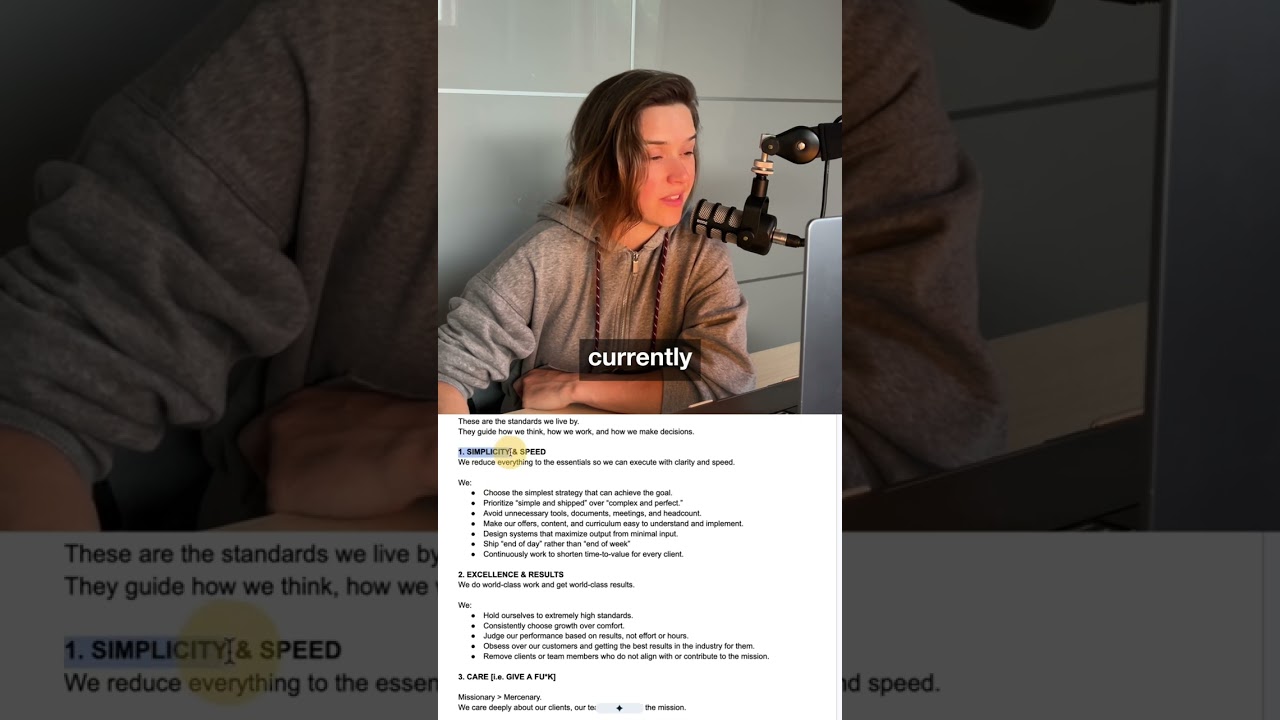
Okay. What's up guys? This could be the shittiest video ever. I'm literally in an airport in Spain. Um, but there's something I really want to share with you because if you watch this channel, you probably watch this channel because you want one of three things, either more income, more impact, or more freedom. And this video is going to affect all of those things. So really what it comes down to is, well, not what it comes down to, but a piece of this equation, if you will. I mean, where are you getting that, that income, that impact, that freedom from, right? You're getting it from, I mean, partially anyway, by the way, excuse me, I am so tired right now. We were up till way too late last night. So actually I should, I should back, I should go back for a second. So I'm in an airport in Spain. Like, my brain's not even working right now. But anyways, we just got done a 7-day in-person mastermind and it was awesome. Last night was the last night. So it was like a bunch of other, like, business owners, like coaches and stuff. And we spent a week, like, connecting and masterminding and all that jazz. Anyways, that wrapped up last night. I think I went to sleep at I don't know, 3:30. Got up way too early for this. My flight, my first flight got extremely delayed. It's a— I won't even bother to bore you with that. But anyways, I'm like run down and tired. So that's what it is. My brain is very slow. But anyways, something that I wanted to give you guys is like, in order to create those things, like those outputs, right? Like the income that you create by working with people, the impact, the freedom that you create for yourself, whether it's like financial or time or location or whatever. And sorry for the airport background, whatever. It's from the inputs that you put in, right? Like it's from, it's from the work that you do. And one thing that we got that got brought up at this mastermind was just like, The cost of distractions. And when we got on this topic, it's funny because I had an intention before I got to this mastermind that I wanted to know, like, how could I be more intentional, like with the work that I'm doing or with the platforms that I'm using, whether it's like social or whatever. Because even though I think I'm very disciplined, I sometimes like don't— I'm human, basically. And so I'm like, hmm, I wonder if I could be a little more intentional with this. I wonder if I could spend a little bit less time on IG every day. I wonder if I could get a little less distracted when I pick up my phone to look for something and then see 17 apps and then I forgot why I ended up there in the first place. And so anyways, we got on this topic and one of the guys there, he said, do you guys know like what it costs you like for every distraction? And it's, I think it, I don't know if it's 23 or 24, but it's like 24 minutes or like 23 minutes. Like every single time that you're doing something and then you get distracted, it takes you like 24 minutes to get back into that like same like deep focus state. And so it costs you a lot, right? Like if you have a 3-hour block of work, you know, and you get distracted a couple of times, like it just, it costs you a lot to get back into that like really, you know, those really productive like flow states. That's what we're talking about. So anyways, when this topic came up and he said that, I already had this intention of like, how could I be more intentional, like, of finding that out? And so I asked the question in the room, I was like, actually, can everyone here share, like, what is your— how do you deal with this? Like, do you have any tips that you think would be helpful? Like, let's just all hash this out, kind of go around the room. And what I have for you right now is 9 ways to stay more focused so that you can put more inputs into the system so that you can get more outputs out of the system, meaning like, you know, income, impact, freedom, those sorts of things. So anyways, number 1, this is something that I've done for a really long time. I learned it actually, I think, from the book The One Thing. I think it's by Gary Keller or something like that, but it's to have a deep work block in in the morning. So like for me, 6 to 10, there's nothing on my calendar, but it's because I'm actually doing stuff for the most part, not in the business, but like on the business. And so the idea, I think, in that book, like The One Thing, is you have at least 4 hours of uninterrupted work in the morning. Now, is that possible for everyone? Maybe not. But the point is to get into the proactive work before you get into the reactive work. Right. And I kind of wish I had my screen so I could share it right now, but I can't cause it's just a, there's no screen share right now on this Loom video. Um, but you'll see like for me right now, it's like 6 to 10 is there's nothing. And then at 10:00 AM I start getting into Slack and all that stuff. So that's one big thing is just make space for that. Like I would say at least 90 minutes a day for me, I'd much prefer way more time. If you'd ask Mr. Hormozy, he'd say like, at least 6 hours, I think, for him. He's a little crazier. He could do that now too. But anyways, that's number 1. Number 2, and you can take this with a grain of salt, I think I used this before. I haven't used it in a while, but one guy recommended something called Brain.fm. And for the record, this dude's doing like $80K or $100K a month, like, you know, he's doing well. And so, yeah, that's something that you can use too. It basically uses like music to to get you into a focus state. And I actually, I think I used to use this app. I don't know if it's the same one, but I think I used to use it, but it's, um, some sort of music and they put it with binaural beats. And so maybe that's something that can help you stay focused. Um, it's a little bit different. Like, I don't know, I, whenever I used to create like course material or course content, not that I don't do that now, but I just remember times when I was doing that and I used it. And so that could be number 2. Um, something else that, um, another gal brought up, uh, I think she's a career coach, she's doing like 40K a month or something like that. She's like, I set physical timer for 50 minutes and I just do that for 2 rounds. So she has 2 hours essentially as her work blocks. I've also done something similar. This is similar to like the Pomodoro timer. Like for me, if I'm doing something that I don't particularly enjoy or I find there's a lot of resistance, like taxes for example, I'll just set— I actually think I have it with me right here in my bag, but it's like I'll set a 25-minute timer and I'll say, you only have to do this for 25 minutes and then you get a 5-minute break. And then you only have to do this for 25 minutes, you get a 5-minute break. And you kind of do that for 1, 2, 3, 4 rounds and then you take like a— or sorry, you only have to do this for 25 minutes, you get a 5-minute break. I don't know if I just said that, my brain. And then after 4 rounds of that, you get like, you know, a longer like walk or break or something like that. So that can work. She does it like 2 rounds of 50. I was doing it like 4 rounds of 25, if that makes sense. Another thing that you can do is like take this phone and like— actually, wait, there's another thing before that. Okay, so that was, that was number 3 is the timer. Number 4, I actually have an app. It still brings me back to this. There's an app on this phone. I think it's called Opus. I think it's called— is it Opus or is it Opal? Let me find out. It's called Opal. Anyways, I don't know if you can see it. It's like this thing, the black one right here. Oh, Opal. Anyways, this can allow you to like make it so that only during certain times of the day you're allowed to have certain apps. So like, for example, something that I might toy around with is like only spending, you know, like 50, like only having it available for like 15 minutes a day for like Instagram. Or like 30 minutes or something. And that would be, allow me to post in my stories and maybe if it was 30 minutes, maybe post in my stories for 15 and surf around for 15 or whatever. But anyways, you can just like block certain things. So if they constantly get you distracted, you can just block them. Um, what else? Just turning this off and putting it in a different room. Um, I think Leila Hormozi used to talk, well, not used to, I think she still does talk about this quite a bit, but she would say like she would start work and she would literally physically like distance this thing from her and she would like put it across the room and it was like, you are not allowed to touch this until you have done whatever thing that you're trying to do today. So that's like another thing you could do. Actually, one guy at the, at the mastermind was like, I actually took it one level crazier and he lives in like a high-rise apartment and he was like, I actually sometimes take it downstairs and put it in my car. That's aggressive. But it's like making it— it's almost going back to Atomic Habits, right? It's like making it hard to do the thing that you don't want to do. It's like the same as like, if you want to lose weight, then don't buy chips and put them on the counter, right? Like, just don't bring them in your house. So it's kind of the same thing. Another thing that one guy did here is— so this is— that was number 1. So number 1 is the deep work block. Number 2 is Brain.fm. Number 3 is a physical timer. Number 4 is like you can get like an app blocker like Opal. Sorry, not Opus. Number 5 is you can like just put your phone in a different room or create some sort of physical distance so it's harder to pick it up. Number 6, there's actually some people that just get a second phone. So like, for example, if you don't want to be on it on the weekend and you really want to take that as recovery or something like that, then I know some people who get a second phone and they don't have any like social on it or stuff like that. They only have— because like the thing is you're still going to need like Google Maps or like you still want to text somebody or whatever. So you have only those things on there, but you don't have like the other work-distracting type Instagram, TikTok, whatever on there. So that's number 6 is get a second phone. Number 7, this one's from me, is like just get a real alarm clock so you don't need the phone because part of the reason that this is in my room is because I need it to wake me up, but it's like, just get a second, you know, alarm clock that's not your phone. Also, I guess this is— actually, no, this is someone else, but someone mentioned the one tab rule. So this is interesting. Only have one tab open at a time on your browser. Like, you're not allowed more because every, like, single tab that's actually open takes some degree of your mental energy. And so That's interesting. You can also check this thing out called OneTab. It actually, like, it's one of my favorite little Chrome extensions, but it allows you, if you have like 6 different windows open and they're all related to content creation and you need them all, you can just hit OneTab and it like shrinks them all down and you can label like content creation. And then later you can like want to pull all your content creation ones back up and you can just click like restore all and it pops them all back up. So that's kind of cool. And then the last one, the 9th one is, um, Apple phones and their DND mode, right? Their do not disturb mode. So those are the 9 things. I will say I put a bonus one, but this one is like blatantly obvious to me. And if you're doing this, I'm like, oh my God, how do you survive? Is literally like, do not turn your push notifications on. Seriously. Like, are you on crack? Right? Like, I could not imagine having this ding or vibrate or whatever every time I got an Instagram notification or like every time someone texted me or someone Slack'd me. Like, I, I think I may have said this, but I was like, I'd rather stick bicycle spokes in my eyeballs than do that. So that's kind of the 10th one. It's like a bonus one. But anyways, what's my point with all this? I hope this is valuable. And I, it's not like a business strategy thing. Thing, but it's like, hey, if there's a bunch of people, there's probably like 25 or 30 people like in this room all doing between 10 to more than 100K a month with their coaching business. And this is what we were talking about because it actually really matters. So anyways, hopefully this was helpful. I'm sorry that my brain is so slow at processing things today. But that's all I got. Lots of love. Bye, guys.