This investment mistake is costing you THOUSANDS. (Online Coach Edition)
In this unscripted vlog, Morgan, an online coach, explains why he prioritizes investing in mentorship and skill development over traditional financial assets like stocks or real estate. He shares personal anecdotes—including a conversation with his dad about repeatedly spending large sums on coaching programs, his rapid revenue growth from $60K to $320K, and a hypothetical $10,000 ROI comparison that shows a potential $670,000 gain from a coaching program versus a modest $1,000 gain from the stock market. Morgan argues that entrepreneurs have a unique investment vehicle: themselves. He stresses staying within his "zone of genius" (business coaching) rather than diverting time and money into unfamiliar areas like real estate. He also discusses frugality, reducing personal burn rate, and reallocating excess cash into education to create a virtuous cycle of skill acquisition and income growth. A client story illustrates how a low‑price membership can generate high returns for participants. The overall message is that coaches should view themselves as the safest, highest‑return investment and manage expenses to free capital for skill‑building.
Chapters
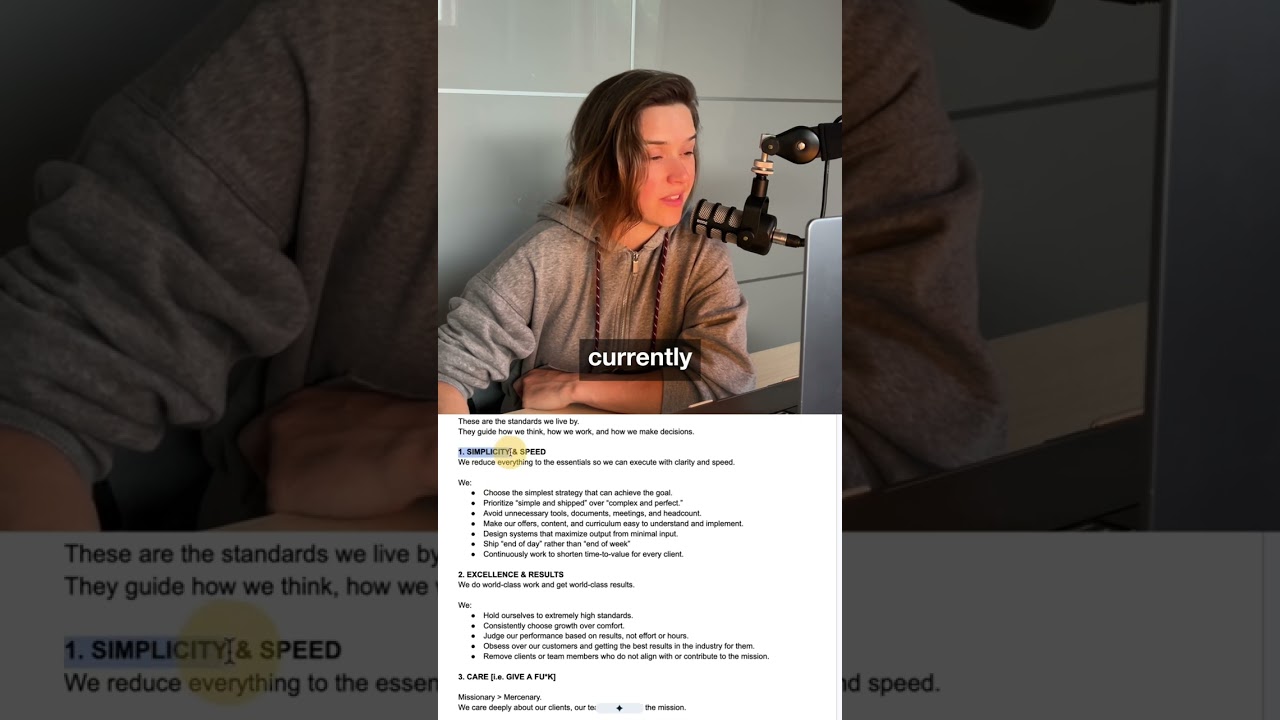
What's up, guys? We are rocking and rolling. I have a little bit of a story to share with you on investment stuff. Total disclaimer, I am filming this video right now at 8:22 PM. And the reason I am filming this, and this is a lesson right here in and of itself, by the way, I have no script for this video. So hopefully this goes okay. But the reason that I'm filming this right now is I actually just invested in a mentorship program. And they have us plugging in YouTube as a piece of our strategy for like deeper nurture for people, right? Just building more know, like, and trust through YouTube. Anyways, I, you know, it's like 7 o'clock, 7:30. I sat down to like record this and I was like, what was I even thinking? Well, I wasn't even gonna record this. So it was 7:30. I was watching the video and I was like, yeah, I'm just gonna consume this video. And I just, you know, just so I can check the box or whatever. And, you know, say this video is done, that I watched this video. And then I caught myself and I was like, what do you mean you're just watching this video to check the box? Like, that's not why you invested in this program. We're not here to be like— we're not a box checker. Like, we're not here to just check boxes. We're here to make progress and grow the business. So like, what do you mean you're just going to watch this video just to say that you've watched it? Like, that's dumb. How about you watch this video and even though you weren't planning on doing this, you get out the damn camera, you get out the Rode mic, you get out the gear, you find a topic that you think would be valuable for your audience, and you film a damn video and you make this— like, don't just watch this, like, execute on this. And so it's 8:23. I have no real script for this, but I do think I have a good idea and something that I just really want to share with you. And if I'm honest, God, I should have been making podcasts and YouTube videos forever ago. But you know what? It doesn't matter. We're here now and hopefully today I'm coming at you with a little bit of value. So anyways, what I want to say is this is really— most of this podcast is to— or this YouTube video, if that's where you're watching it, is to share a little bit of value with you just in terms of how I think, like how I maximize the money that I have to make more. Okay. And so this really got inspired by the other day. I was like, I was like walking down the street and I was talking to my dad on the phone and he, you know, we were talking and he goes, oh yeah, like what's new, whatever. And like there's usually not that much new with me. Like things are usually relatively consistent. Like I remember telling him at one point, like, oh, I'm just doing the boring shit that gets people results, you know? Right. Like there's usually not that much crazy new. Then again, sometimes there's actually crazy stuff. Like I recently just booked a flight to Mexico, sold, got, getting rid of this whole apartment, going to Mexico to surf and work. So I guess there's, you know, sometimes there is, to be fair, things that are new. But anyways, I was like, oh, not much crazy, you know, I just invested in another mentorship program, basically said it under my breath. And he was like, wait, again? Like another one? And like at this point, like you have to understand, like my dad probably thinks like the shit that I do online is like the same as aliens landing on Earth, right? Like he's like, what is this? And he has stood by while I've told him about a ridiculous amount of mentorship decisions. Like at this point in my life, I've probably made— I've probably made— God, I would say like, I don't know, over $100,000. I've probably invested in like mentorship programs and maybe even $150,000. Like it's like it's a lot. Like it is a lot, caps lock, right? So anyways, he's like, he's like, didn't you just invest like $25 grand in April? Didn't you just commit to like another program in, you know, in August? And I don't even think— I don't even think I told him about the two ones in between that. Like, like, I just— I'm just like so in it to win it, like so in it to win it. And I just understand the value of mentorship. But anyway, he's like, another one? He's like, is this panning out for you? And I mean, number one, I told him a little bit about like, dude, like not even that long ago I was making $60,000 a year. Like I just filed my first corporate tax return and I brought in $320K by myself, like pretty much as like a one-woman show, which is insane to me, right? That's like, God, that's like 6 times more than I ever originally imagined that I would make. Like I just wanted work I loved and to make $60,000 a year. But anyways, I was like, I mean, dude, I think this is panning out. Can we not agree that this is probably panning out for me? Right. And then the other thing that I said to him is I was like, honestly, there's so many ways that I frame this in my mind. But like, yes, so far it's been working out. And you know what? Not every investment is exactly what I would like it to be. And that's okay. Right. But the way that I framed it to him was like, look, I could— let's just, let's just play a little game, right? Like, let's just play a little game and imagine that I have $10,000 to invest. This year. Okay, great. If I put that $10,000— my dad's a big stock market guy. So I was like, if I put $10,000 into the stock market and I leave it there for the next 12 months, assuming that I get a 10% return, which is a lot on my investment, right? That is a lot to like— I mean, you know, like, I think it depends, like 5 to 10% like that. Sometimes they make— I shouldn't even say 10's a lot. That's a lie. 10% a reasonable expectation. You know, sometimes it's— hopefully it's 5% or more, for Christ's sake. But anyways, let's just say it's 10%, okay? Which I think might be a little bit on the high side, but we'll just leave it at that. Um, let's just use that. If you're an investment person, don't knock on this, okay? Um, it's probably not the perfect number, but it's somewhere in that, you know, if you're just putting it averaging into like the S&P and whatever, like index funds or something like that, let's just say 10%. I was like, dude, if I put $10,000 into the stock market and it earned 10%, in the next year, I would profit by $1,000 in the next 12 months, right? That's not that much. But if I put $10,000— like, think about this— if I put $10,000 into a coaching program and that $10,000 program unlocks the secret to take my business from doing $320,000 in a year to hitting $1 million in a year. What's that difference? That's $680,000 of, you know, extra money that I made minus the $10K investment. That's $670,000. That's insanity. Like, what would you— and that's like, that's on a 12-month timeline, right? That's not even saying you got to, you know, figure that out in 1, 2, 3, 4, 6 months. That's on a 12-month timeline. If I can hit, you know what I mean? It actually gets crazy. It gets really crazy. And the point that I made to him was like, like, okay, like I am almost like I'm almost more than 100% certain if I was to invest, you know, like $10K into a business coaching program, like it would almost seem like unreasonable for me to make any less than $1,000. Right. But there's just so much more of an upside. And so, like, that's the way I explained it to him. Like, they're like, I truly feel like, like as an entrepreneur, like as someone who has like, let's say you're watching this, you have an online coaching business, like you have an investment vehicle that most of the population doesn't have. Like you can invest to elevate your earning potential, right? Whereas most other people have to rely on putting money in the stock market or getting into real estate or something like that as like investment vehicles. But we have something totally different, which is us. Like, we are our best investment. And for me, like, I have control over me. Like, if I put it into the stock market and don't get me wrong, I have investments in the stock market and I've been in the stock market since 2017, right? Like, I have a portfolio there and that's great. And I don't knock that. But it's just like, to me, the upside is so much higher for mentorship, like for investing in my skills as an entrepreneur that elevate my earning potential than it is in,, you know, traditional investment vehicles like the stock market or even real estate. Right. And so that's kind of like the point I was making to him. And there's, there's a couple of other things I want to say, too. And this is actually a piece of this I actually got from one piece of the puzzle, this thinking I actually got from kind of Alex Hormozi a little bit. But he was talking about— and you can, you can see that if you're watching this on the YouTube video. But one thing that he mentioned, and I'm losing my train of thought here a little bit, but One thing he mentioned was like, let's say with real estate right now, with real estate, typically you can earn a higher— you can get a better ROI, right? Like instead of making 10%, maybe you make 20% or maybe it's higher. It's just typically higher than stock market. But the thing is, that is not my zone of genius. And in order to, you know, let's say buy my first home, which is totally on the horizon, totally a possibility soon, right? But in order for me to do that, like that's something I've never done. Like that's gonna involve time, that's gonna involve research. Like I've never pulled that trigger before. Like I don't, honestly, I don't have any skills in that arena. And so for me, like, you know, Alex talks about this a lot. It's like you're actually better off in a lot of senses to stay focused on what you're already good at and double down on that. And for me, it's like I already have the skill of business where I can elevate my earning potential.. And so I'm not as worried anymore about, you know, putting, pouring more money into my, you know, investment portfolio, right? Or, you know, feeling like I need to be in real estate right now because that's where you're gonna get the best ROI. Like actually, no, I think that I get a better ROI on investing in me, in my skills, right? And the other thing is like, I realize that if I am going to go figure out real estate, I have to take my attention off of my zone of genius, which is the business side of things. And put it into, you know, something else. And that takes time. And, you know, I'm probably better off staying in this thing over here, which is my zone of genius. And so this is just one point that I really wanted to make. And the other thing I said to my dad, too, is I was like, dude, like, why the heck? Like, okay, it's not like I don't have that $10K to spend, right? Like, it's not like I don't have that $10K to invest. So it's like, what's that money doing in my bank account? Like, literally, what's it doing? Losing 10% or whatever inflation is right now. I don't know how high inflation is right now, but like losing money from inflation, like, I don't want to do that. And it's like, I don't want to— like, it's literally doing nothing for me in my savings account. And then the other thing is, if I was to decide, like, okay, let me put this into some sort of investment, GIC, investment portfolio, index funds, real estate, like, they're like, to me, it's like, of all the options, I actually think putting it into myself, back into my business, elevating my skills as an entrepreneur so that I can increase my earning potential is hands down the best investment. I have the most control over it. It's my zone of genius. It's what I like the most. Like, that's why I make the decisions that I make. And honestly, when I told him that, he was like, yeah, I can't really refute that. I can't really. Yeah, you got a point. Yeah, I got a point, man. So anyways, that's just a little bit that I wanted to share. Um, you know, selfishly, I was making this video today because I forced myself to make this video because actually I didn't really force myself. I just decided I was like, cool, just make video. But, um, it's really because I'm doing this new course and this was the thought that's been rolling around my head and I have all these thoughts that I just don't share because they can't fit into a 60-second Instagram reel and then I just don't share them. And like, that's just like, it's just a disservice probably to me, probably to you. And so here we are. And then the last thing I just want to say, this is just like really on my heart to say in general is like, you know what? The reason that I can play really big with investment decisions is because I really, I mean, I still do this now and I used to do this like a lot more intensely a couple years ago when I wasn't making as much money in my coaching business, but like, I have been very discretionary, like, for where I put my funds, you know. Like, even right now, like, could I have gotten my own apartment? Sure. But instead I didn't, you know. Like, I, I am in actually a reasonably nice apartment. I really wanted a high-rise apartment, uh, you know, with ceiling-to-floor windows for a while, um, and I got that, right? Um, but I did, I did it in a way that wasn't me spending ridiculous amounts of money on things that I don't need, you know. And so I did it in a way where I got a roommate. It's like actually probably costing me less right now for this freaking awesome apartment than it's costing most people to just have like a really, really mediocre, if not terrible, um, one, one bedroom to themselves, right? And so I just, I guess the point I want to make is like, um, one of the things, like if you're thinking to yourself, well, that's nice, Morgan, but like, I don't have the money to invest. I mean, there's a number of different things. One of them is like, maybe it is worth it to, to like, I'm not necessarily a credit person. I've always been really good with my money. I don't really need to do that kind of stuff. Um, but like, maybe it's worth it to, you know, get the funds that you need to get access to, to buy the skills that you need to make more money in your business. Like, maybe that's worth it. That personally hasn't been my thing, but that's because I've always been really good with my money, right? My thing has always been You know, being really frugal with a lot of things. Like, I don't have a fancy new car. I don't need to have like a $3,000, you know, 2-bedroom beautiful apartment. Like, I don't, I don't need that right now, you know. And I actually pour a lot of the excess cash that I do have back into buying the skills again, which it just kind of like this domino effect, right? Or like a, you know, a cycle effect. Is like, I don't spend a ton of money, I have extra cash, I use that to buy the skills and I make more money and then I have excess money. Like it just goes in circles, right? And so I guess the thing I want to say, like this is really on my heart to say is like, what the fuck are you spending your money on? Like, honestly, you know, like maybe you shouldn't be living as high on the hog, as my dad would call it. And you can be like decreasing your burn rate that you're spending every month so that you do have excess cash left over so that you do have something that you can save, which gives you then a resource pool to pull from to invest in the skills, to buy the skills that get you out of your current situation. And I honestly think that like a, you know, a big reason that I am where I am right now is just because like I did that. Like I remember for the longest time when I was like, you know, this was like 2020 or whatever, like I didn't pay a lot for rent at all. I was like, at one point I was paying like $450 a month for rent and I was living in this house with like, you know, 4 different roommates and I didn't have control over who was in my house and whatever. And like, that was a bit weird to be like 27 and like, you know, be in this like come and go place and like not have your own apartment when like a lot of my friends did. That was a bit weird, but it was like a choice and it was a sacrifice that I made because I didn't want to have my burn rate so high that I had to work these jobs I hate that didn't give me time to work on my business, that didn't give me any excess funds left over to invest in the courses and the mentorship and stuff like that. And I think that's just ultimately a decision that, you know, that you need to make. And it's just crazy. Like sometimes I see people like, I don't know, they're like, I— anyways, I'm not even going to— I don't even know if I should— whatever. I can maybe tell the story anyways. But like I once had someone cancel. At one point I was running this like $37 membership or this like low price membership. And I had somebody cancel the membership, which was like almost nothing per month. I think we were doing a group call a month or something. Like the value was totally there. And she came into the program and she signed a client like she hadn't signed a client. And then she came to the program and she signed a client and I think it was like a $1,200 client or a $1,500 client, like huge return on her investment. And then like the next month she canceled the program and was like, yeah, I just bought a brand new car. And I was like, The fuck is wrong with you? Like, where— like, why are people's priorities so twisted? Like, this is how people get themselves in trouble or never get out of the situation that they're in. And so if there's nothing that you take from this video, I hope that you take number one is that my belief— and you can adopt this or not, totally cool, whatever you want to do— but my belief is that if you are running your own coaching business, you're an entrepreneur, like you have an investment vehicle that nobody else has. And I think you are your own safest investment, period. And the second thing is, if for whatever reason you don't have the funds to make that investment, cool. Start assessing where you're putting the resources that you have, right? Because if you're putting them into like dumb things that like aren't investments and they're just expenses, you're always going to be stuck in that cycle and you're never going to get out. And I don't want that for you. So hopefully this was valuable. This may be a bit of a rant, but this is just how I've lived my life and it has helped me a ton. And I hope it helps you a ton. Lots of love. Catch you later. Bye.