041: Chatterbox’s Mursal Hedayat on social entrepreneurship
In this All Turtles Podcast episode, co‑founder Jon Cifuentes, along with Phil Libin and Jessica Collier, interview Mursal Hedayat, the founder of Chatterbox, a platform that employs highly‑skilled refugees as language tutors and cultural trainers for professionals. Mursal explains how her mother’s refugee experience inspired her to address the under‑employment of educated refugees by creating a marketplace where refugees can monetize their professional expertise through language and cultural instruction. The conversation covers Chatterbox’s pedagogical model—blended learning, integrative motivation, and high completion rates (≈70%)—and its focus on matching learners with tutors who share professional backgrounds, which they argue improves engagement and outcomes. They discuss the market opportunity in the UK and US, where language‑skill deficits cost billions, and describe the B2B go‑to‑market strategy targeting multinational corporations and educational institutions. The hosts explore technical challenges around matching algorithms, the potential for AI to automate low‑level language drills while preserving human‑centric tutoring, and future plans for a broader marketplace of skill‑based modules (e.g., cooking, engineering). The episode concludes with an “Advice to Entrepreneurs” segment emphasizing a strong point of view, human‑first technology, and the Japanese concept of omotenashi (high‑touch service). A listener question about AI visual systems and the fear of AI overlords is discussed humorously, reinforcing the theme that technology should augment, not replace, human connection.
Chapters
TranscriptAuto-generated · 31 min
Welcome to the All Turtles Podcast, a show about entrepreneurship and AI. I'm John Cifuentes, co-founder at All Turtles. Today, my co-hosts Phil Libin, Jessica Collier, and I interview Mursal Hedayat. Mursal founded Chatterbox, an All Turtles product, which employs refugees as language tutors. She's using technology to revolutionize language learning through human connection. Then Phil, Jessica, and I share our Advice to Entrepreneurs segment, in which we talk about the importance of having a strong point of view, and we answer a listener question that may debunk the fear of imminent AI overlords. So today we're joined by Mursal Hedayat, who's the founder of Chatterbox, which is a product that lets you learn languages with refugees. Is that right?
Yes.
Welcome, Mursal. Thanks so much for joining us.
Thank you.
Hi, Mursal.
Hi.
Hello. So for our uninformed listeners on this topic or this area, what is Chatterbox? What's it designed to do?
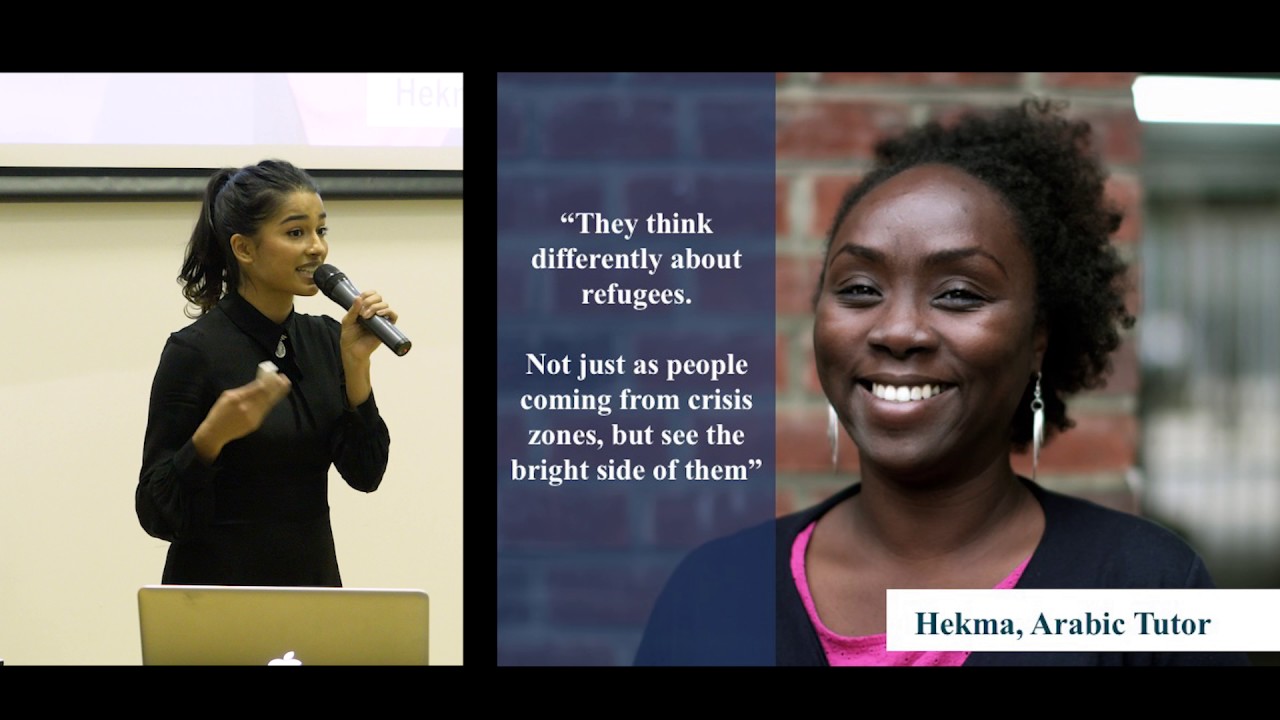
Chatterbox is a cultural training platform for professionals to use. It utilizes the human capital in the refugee community currently going wasted. So we help refugees who have been engineers, who have been doctors, to access work using their existing professional experience and skills. And one of the ways that we found to utilize that is in language teaching and cultural training.
So, so why are you working on this? That feels like sort of a personal passion product to take on upon yourself. What is it about your background that led you to want to tackle this?
Well, I sort of created Chatterbox as a solution to the problem that my mum experienced moving from Afghanistan to the UK as a refugee.
Oh, wow.
I grew up hearing the most awesome stories about her, you know, her life before we moved, how she had been one of 5 civil engineers training at Kabul University, that she was, you know, being sent to New York on behalf of the Afghani government to represent Afghanistan at UN Women conferences. But the women I knew in my life day to day was one who was significantly underemployed or unemployed most of the time. And so, I think it took me, really maturing into an adult to understand the macroeconomic reasons for why my mum had not been able to make full use of her potential. And having that direct insight into the refugee experience helped me develop the idea behind Chatterbox, which is a company that directly benefits from a recognition of the untapped talent of refugees.
I think there's a perception now about refugees that they're mostly unskilled, low-education populations, which just isn't true. I mean, I have, in some ways, a similar personal story to you. I was a refugee myself. My parents and I came over to the United States from what was then the Soviet Union. And on the one hand, we had a very, I think, different experience than refugees right now because we were, as soon as we got to the US, we were just embraced with open arms because back then, we were seen as kind of fleeing from the enemy of the country. And so it was— pretty gracious reception and people were very kind and the government was quite kind and accommodating. But the underemployment was definitely true. My parents were both professional classical musicians in the Soviet Union and they couldn't get anything like those jobs in the US. So they wound up, my mother was working in a glove factory, my dad was a night watchman at a warehouse, and they did that for years until kind of getting into more of a middle-class career track. I kind of have this, you know, I've had this understanding that there is this huge, just unused potential because there are a lot of professional, educated, skilled people in those communities. But I don't think I've ever seen any other attempt to let those people use their actual skills. I've been involved with several programs to help refugees, but it's always more about like the basics, you know, food and shelter and things like that. Why did you decide to do it to kind of work upstream, right? To work at the kind of the higher levels of Maslow's hierarchy, so to speak, rather than just providing for the basic human needs that the larger populations need.
I think that someone's life shouldn't just be measured in terms of their access to their basic needs. A life worth living and well-lived is one where you feel appreciated by your community, one where you can grow spiritually, emotionally, you can grow your capacity as a person. So it's— I don't think it's a win if every refugee in the world has access only to shelter and food. I think that's a very depressing outcome. And there are some really, really great NGOs working on providing these resources to people. What I noticed is the lack of direct economic opportunity for refugees, and actually a huge market opportunity. The human capital of refugees is a marketable thing. And because of the internet and connectivity, we can find people willing or wanting to learn what refugees know. So, for example, we pair people who are lawyers and want to learn Arabic directly with people who have been lawyers and can teach Arabic. This is a kind of language teaching that's never existed before. It would be absolutely cost prohibitive if the people involved weren't refugees. And for the refugee, taking part is a direct source of income, but it's also a springboard into better opportunities. So everybody wins.
That's really interesting, that kind of product loop, right? You're doing language learning, and the product loop of actually matching the student to someone who they're professionally and culturally interested in, not just the language teacher, is— yeah, I haven't seen anything like that. Do you think that makes the— do you think that actually makes the instruction more effective? Is there any data on that?
Well, we currently, at our sort of MVP product stage, use PDFs to teach the language course. And PDFs aren't the most engaging format for learning, but we still have 70% completion rates on our courses. This is like right at the top of online learning. And we think a large part is because of the relationship that forms between the learner and the tutor, you can't help but feel very immediately familiar with and close to someone who could be a similar age to you, comes from a similar professional background, and is, you know, you're in touch with every week or every 2 weeks. And on the question of the cultural, the importance of the fact that the refugees are teaching cultural skills, we all know, you know, we're quite far away from the Babelfish in our ear translating everything, but within 100 years, we might not need to directly have knowledge of languages in order to speak with people from different cultures. But the importance of cultural understanding to do business and other things is only going to grow as everyone from, you know, big businesses, large and small, need to know how to be culturally sensitive with their clients and their partners. So, this is— Chatterbox quite intentionally targets language and cultural training and provides this really high-value, way to learn how to conduct business in countries outside of your own with people who have direct experience in your industry.
Can you talk a little bit about— I know the outcomes for online language learning are usually not very good, right? People typically don't end up being able to speak or interact in the language that they study online. Can you talk a little bit about the pedagogical thesis behind Chatterbox? Like, why do you think this is going to be a more effective way to actually get people to be able to speak a language?
Like I said, I think that the importance of knowing how to speak a language is becoming, um, less and less pronounced. There's still situations where knowing, being proficient or fluent in a language will be important, and that will continue to be true. Um, what's even more important is knowing how to navigate in a new language and how to navigate in a different country or with a different, um, background of people. In terms of the learner outcomes, the high engagement rate that we see on our courses is directly a derivative of the matching between learners and students, but also in the way that we teach. So, we use what's called a blended pedagogy, and it means that people spend the time before their live instruction with a tutor over Skype. Mmhmm. Practicing the reading, writing, and listening skills on their own, so doing all the boring stuff before. And every Chatterbox session is a chance for them to reaffirm why they're learning that language. They come into contact with a super interesting person who will be there to, um, you know, add the cultural context, the, um, their direct pronunciation of things that you've been trying to learn, and this enhances what we know we call integrative motivation in language learners. And so that's why we think that people tend to persist on Chatterbox courses. And actually persistence is a key to accomplishment in language learning, and it's the missing piece in online language learning, as we hypothesize.
So who are the typical customers of Chatterbox?
Professionals from a very wide variety of backgrounds. So everything from, like I mentioned, lawyers, engineers, consultants. Most of our revenue comes from our partnerships with organizations, including educational institutions and corporates. And for them, amongst those, they tend to be, you know, large multinational corporations or fast-growing startups, anyone who is expanding into new territories and needs to train their their teams in international cultural skills and knowledge.
How are you distributing this product? Is there particular markets that you're focused on? Is this a particularly prescient problem in specific areas of the world, or are you just kind of going broad?
So the UK and the US are known around the world for how badly they need to learn languages and just how much of a deficit there is in cultural awareness and language skills. The UK economy is estimated suffers from a £48 billion language skills deficit, which results in missed trading opportunities because firms are unwilling to expand internationally because they don't feel that they have the skills within the team to do that. In the US, there's a huge security threat from the lack of understanding of languages like Arabic. So, these are real significant challenges in the deficit of language learning and cultural awareness that employers tend to try to supplement in the workplace. So we're not producing linguists in schools and universities anymore, but employers will roll out intensive language learning or cultural training modules for their employees. And so this is the market that Chatterbox targets.
And how are you going about recruiting tutors?
That has not been the difficult part of the equation, as we hypothesised, and as turns out to be true. So we currently deliver language learning services in over a dozen languages, including Mandarin, Spanish, Hindi, Swahili. I could go on. And we have currently a partnership pending that will give us access to a database of more than 10,000 refugees from highly skilled backgrounds like engineering and medicine and so on. So this is a very large and very talented pool of people that Chatterbox has direct access to.
Is this a particularly technical problem in matching both language and skill to this potential need? in these various parts of the world?
Well, this is the part that we're working with AllTurtles on to develop. The matching algorithm that we would develop that will smartly match learners and students, so learners and tutors, can also be used to match learners with the content that we're asking tutors to develop, which are expertise modules. So, for example, your parents, Phil, could produce a seminar or a talk or a series of classes around dance and arts and music in Russia. And somewhere in the world, because of the power of the internet in connecting people who have something and people that want to learn or buy that thing, your parents could have been teaching their knowledge and their human capital to people somewhere in the world through the Chatterbox platform. So, by thinking through this problem with AllTurtles, we've been able to identify the matching process that we implement to match learners and students as potentially a high-value source of information about what learners want to learn. So, for example, publishers might want to know what language learners are interested in to develop their own course content to align with those new learning goals. And on another side, actually, this is another exciting area that we're exploring, is by employing refugees directly on an online platform, we build a really good understanding of their soft skills, as well as their hard industry knowledge. We know how reliably they turned up to sessions, whether they were punctual, what sort of feedback they got on their communication. We have actual people currently working in their industries validating that they know things in their industries. And this kind of, proof at scale could be used by governments to develop integration policies for the refugees arriving in their countries, or to even be used as like a living digital CV for refugees to be able to access skilled work outside of Chatterbox. Obviously, we'll want them to stay with us forever, but eventually they might want to leave.
I think the other really exciting opportunity down the road to leverage AI in this is to build systems that, as you said, let the learner get through a bunch of the mechanics of language learning without the human tutor. They just actually optimize for how you do practice and drilling and vocabulary so that whenever you're spending time with a tutor, you're really there for the reinforcement and the one-to-one human connection with an interesting professional peer of yours. This is a theme that we have for several of our projects here, this idea that you can use AI and technology to let people be more human, to restore that sense of dignity and connection. In your case, I think both to the students and to the tutors. And so it's like more tech in this case equals higher value for people, which is one of the reasons why I think we were really interested when we first heard about this idea from you last year, I guess.
Well, absolutely. I think that a lot of people are worried about how technology and AI specifically is going to lead to the replacement of human beings. in certain kinds of work. But actually, models like Chatterbox point to the fact that algorithms or AI and technology can actually enhance or work really well in tandem with humans. And so, as a team, my co-founder, Guimet, and I don't believe that there's value outside of the time humans spend on things. That's for us, the basic unit of value in the world. And so if you try to push humans out of the equation, the thing that you're creating will eventually become valueless. So we're really, really interested in exploring all the ways that technology can be used to enhance the teaching process, but the teacher and a human teacher remains key.
Can you talk a little bit about how you work with refugee tutors to sort of get up to speed on helping people with language learning?
So, how do we train our tutors? So, the system of learning that we've developed doesn't require the teachers on our platform to be, you know, extremely adept at all the types of teaching and curriculum building and all these other things that teachers need to know, because we take over the burden of developing the language learning curricula. We take care of assessment. What they provide is what humans do best, engagement, practice, the cultural context of a language, and what our curriculum and Chatterbox takes care of is the boring, you know, rote learning. Yeah, stuff like that.
Yeah, the pieces that you have to cover in order to have like actual knowledge of a language that are Exactly. Sort of not that fun to do.
Exactly. So in the end, our tutors act as practice partners, motivation boosters, and experts who can provide you with the types of learning that you can't get from a textbook.
When you first explained what you did, it actually took a while to get to the language learning part. You said, I think, cultural—
Cultural training.
Cultural training platform. So it sounds like there's plans for much more than language learning in this. What are some of those future plans?
The one that we're super, super freaking excited about is the marketplace for modules created by our tutors. So imagine learning how to cook Syrian food from the best chef in Syria. Imagine learning engineering Arabic from someone who's been practicing engineering in Arabic-speaking countries for over a decade. This will be an extension of what Chatterbox already does with languages. into lots of other domains and really creates a learning platform that can engage all the whole range of skills and experience and knowledge that refugees possess, rather than just one slim view of it in terms of their language skills.
Mursal, that's super exciting, and thank you so much for joining us. We're very happy to have you in the office this week.
No worries. It's been such a pleasure, and thank you so much for supporting something like Chatterbox. It's just, I think, speaks volumes about your values as an organization.
Very easy to get behind.
Yeah. Thank you for letting us be part of the journey.
Yeah, definitely.
So now it's time for our advice to entrepreneurs segment. And actually, we just had a really great conversation with Mursal at Chatterbox, and it's just, it's easy to see why she's kind of exactly the type of entrepreneur that we want to work with at All Turtles? What, what kind of wisdom should we be thinking about dispensing upon an entrepreneur like Mursal and the problem that she's working on?
Well, I guess the most important thing, if you're trying to optimize for getting on the All Turtles podcast, just to have like a really nice accent.
Right, right.
It's definitely like we've done well with like the last few guests in terms of—
Global from the start.
Yeah.
But for real though, Mursal is an interesting case because she's like, her product is intentionally entering a fairly crowded marketplace of online language learning.
Yep.
But it's doing it with this thesis of sort of integrative motivation, where if you— your connection to a human tutor is the thing that will actually improve language learning outcomes.
I think, I think like at a meta level, there's sort of 2 things which I love about this, which I think like I would try to emulate. One is this idea that, you know, we've talked about this a lot, you know, great products aren't neutral. They have a strong point of view. And so like, it doesn't really matter whether or not there's competition, how crowded it is. What matters is that you have a strong point of view about why your thing is going to be better. And her strong point of view on language learning is that a lot of the time it's a motivational problem. And you can solve that by closing this loop of like, you are learning a foreign language from a person who shares your professional and cultural interests. And so you're just having much more interesting conversations because you're not just learning how to say, I'll meet you at the library. In different languages, you're actually learning about stuff that you care about. And like, that makes your brain much more plastic and much more receptive. And like, that's a brilliant insight. And it may turn out not to be effective, but the point is she's got a strong point of view about it. And it seems very plausible to me. So I think that was kind of the first thing is like, gonna try to make a great product. Like, you need to have a strong point of view about how should your product be used and why. Like, why is this the right approach to doing it?
Well, and Phil, you have a theory about dealing with competition that like makes my head spin because I can, for some reason, paper, rock, scissors makes my head spin, but it revolves around paper, rock, scissors.
I think we did a video about that and we should maybe talk about it more in some future episode. But yeah, it's basically you should ignore the vast majority of competition other than certain types, which you should absolutely not engage with. The other thing that I find really fascinating about Mursal and Chatterbox is there's this high-level concept. There's a word in Japanese called omotenashi. And omotenashi is a Japanese concept that basically means like high-touch, human-to-human connection. It's like high human service. It's like when you're really getting some sort of deeply personal, deeply human interaction. And in Japan, it's applied to like all sorts of things, you know, checking into a hotel room or like buying a ticket for a train, like everything you're like entitled to, to this, to this, you know, human service. And one of our investors and customers and partners, Rakuten, which is one of my favorite companies in the world, um, is really like baked in this concept of odamashi, uh, into everything they do. And they're using AI and using tech to, to enhance this, not to subtract from it. And I think Mursal is doing the same thing. And I think I would very much urge entrepreneurs who are thinking about what to start to think about it in these directions. Give you an example. Rakuten just announced that they're launching their own delivery network in Japan. So they're a big e-commerce company. They started as an e-commerce company in Japan. They're like the Amazon of Japan. Now they do a bunch of other stuff. And a couple of months ago, they announced that they're actually going to roll out their own delivery network. So they're going to have their own trucks and drivers delivering packages in Japan, and they can use a bunch of technology to kind of make that scalable. But instead of what everyone else is doing, which is trying to using technology to try to replace delivery drivers, they're using technology to try to make the delivery drivers more valuable, like literally more valuable and more important. So what they're doing is they're hiring their own drivers and their own vans to deliver packages. But then as the driver is kind of going over there, the driver is told through a CRM type system, like, who is the person, who's the customer on the other side? Are they likely to be home? Are they going to receive the package? And if they are, what should you talk to them about? And the driver then knows, well, okay, maybe we can describe this new product, or we can ask how they're doing with this previous thing, or if they need any help. Or maybe if they're an elderly person and we kind of know that they're living by themselves, maybe just sort of check in to kind of get that human-to-human connection. And so the drivers are elevated by the technology. They're going from being literally just like make like basically robots that whose job is to carry boxes from one place to another, to their job is actually becoming like humans to talk to the person on the other side and like see what else they can do to make this person's life better.
I can't imagine the number of Christmas cards those drivers are going to be getting from customers.
And that's like, and like, and this makes economic sense, right? You may not like whether or not it would make economic sense in every part of the world. I don't know. But like certainly in Japan, which is a very large market, it makes total sense. And those drivers, rather than using technology and AI to try to get them to be lower paid and lower paid and lower paid and lower skilled and lower skilled and lower skilled until you can eventually get rid of them and just replace them with droids, they're saying, no, we actually want to select drivers who, yeah, they know how to drive and they can deliver a package, but they have good communication skills and good empathy and can kind of check into people. And then we're going to use technology to let them do those things. So it's like, it's AI to make the humans feel more human. both the driver and the person receiving the delivery. Chatterbox, Mursal, is like the same concept. It's almost tenacious. It's like using technology to deepen the human-to-human connection, in her case, both for the student and for the tutor. And to me, that's a much better vision of the future world than I think the common one of AI taking over and replacing jobs. So I think my best advice to entrepreneurs is like, yeah, if you're thinking about starting something using tech, like make something like this.
Have a strong point of view and a specific thesis.
Yeah. And make something that lets the humans be more human.
Right. That's great advice.
This ototamachi thing of like, like I've been really kind of obsessed about it since I like, since I heard about this delivery thing that Rakuten is doing, which is like, just so cool.
Japan has so many cool contextual sayings and phrases. Like the language is so interesting that way. It's like it imparts like so much cultural and interpersonal context with just like a single word.
Yeah. But it's like, it's like the opposite of like Amazon delivery drones.
Right, right.
It's like, how do we make, how do we make the human delivery people like more expensive? How do we make them like worth more like to us, but also like to themselves? It's just like, it's, it's, it's kind of crazy. It's like totally against how, how things in the US are working.
Right. Now it's time for us to answer a listener question. This one is from Ari, who sent his question in via email. And he says, I recently read 2 articles related to the AI visual systems that clearly show that even a 5-year-old can perform better than an AI visual system. So for example, an algorithm that can identify a picture of a vulture, for instance, if the photo is rotated on its axes a few degrees, the algorithm thinks it's a picture of an orangutan. I thought these might be the basis for a discussion that debunks the near-term fear of AI overlords pushed by people like Elon Musk or Stephen Hawking.
Yeah, I mean, the other thing that most AI overlords don't have right now are thumbs, like opposable thumbs. That's also going to slow them down somewhat. So are they going to get better vision or opposable thumbs faster? Who knows?
But yeah, object detection is a real problem. I think we talked about this in an episode where we were talking about self-driving cars. Right. Like most neural networks can't like do double takes.
Yeah. I mean, the thing that I think we, I remember talking pretty much as the podcast, like we get more and more episodes, like everything's going to start with, well, we talked about this at some point back in whatever.
Which is annoying.
Yeah. You know, the AI and robotics limitations on how to interact with the physical world is an interesting thing. Like there was, computers are really good at interacting with the physical world at a macro scale. And not just computers, just like technology, like bulldozers and things like that. And they're pretty good at interacting with the physical world at a really, really, really high precision, like microscale, like computer-controlled engraving or something. But everything in the middle, they kind of suck at. Technology is actually really bad at human-scale interactions with the physical world, like the kind of stuff that matters to humans, like moving a package from one point to the other, or opening you know, opening a door or any of that kind of stuff, you know, carrying a cup of coffee from the coffee machine to the person. And there hasn't been that much effort focused on it. But I think if you're going to like, if you, if you want to find like a safe spot too, that says you've got another decade before the robots come after you, it's like, yeah, they're kind of clunky at this point. Although, you know, within a decade or two, that'll be solved as well. So I'm not sure. I'm not sure you have that much to hide.
20 years in the future.
As I've often said, The key to surviving the inevitable robot uprising is to be on the right side when it comes. And when the fully sentient AI do get here, they're going to have access to the Wayback Machine. So for the record, I've always been in favor of our AI overlords.
This is a very Santa Claus-esque proverb to mind your P's and Q's and be a good person.
So in other words, don't mock the AI right now for not being able to distinguish between a bird and a bicycle.
Right. Fear it. Well, if you have a listener question or anything else you'd like to tell us, almost anything else you'd like to tell us.
Not anything, please.
Yeah, a proverb or maxim is fine. Witty anecdotes are great too. But send us an email to hello@all-turtles.com. You can even send us a voice note if you'd like us to play your question on the air. Or of course, tweet us using #AskAT. This marks the end of another episode of the All Turtles Podcast. This podcast is a production of the All Turtles Worldwide Media Empire. We recorded this episode in the glorious Donatella Studios in San Francisco, California. Thanks to Mursal Hedayat for joining us to talk about the incredible work she's doing to connect the language skills of refugees to people who want to learn from them. If you have any questions, comments, or suggestions for future episodes, send us an email to hello@all-turtles.com or tweet us using #AllTurtles. Thanks to everyone who made this episode possible, including Jim Metzendorf for editing, Marie McCoy-Thompson for production supervision and editorial management, Chris Ploug for his audio expertise, Micah Rivera for our artwork, and Matt Aumerman for our theme music. On behalf of Jessica Collier, Phil Libin, and yours truly, Jon Cifuentes, and the rest of the All Turtles team, thanks for listening. Bye!
More from Mursal






MSDUK Innovation Summit - Entrepreneurs Panel: How do you build an innovative product/service?