In this interview, Mursal Hedayat, founder of Chatterbox, explains how her refugee background inspired the creation of an online language‑learning community that trains refugees as language tutors for schools, universities and individual learners. Over a year and a half, Chatterbox has trained about 80 refugee tutors, with roughly 40 % returning to further education, and Hedayat envisions linking the tutor‑training programme to national teaching qualifications to amplify social impact. Emma Rogers, co‑founder of Little Bridge, describes a safe, English‑only social network for children worldwide that combines peer‑to‑peer interaction with structured English‑learning content. The platform leverages children’s natural motivation to connect with peers across borders, and Rogers is partnering with Educate! to research how this social motivation translates into measurable language‑learning outcomes. Both founders emphasize empowerment, education as a two‑way benefit, and the potential for scalable social impact.
Chapters
TranscriptAuto-generated · 5 min
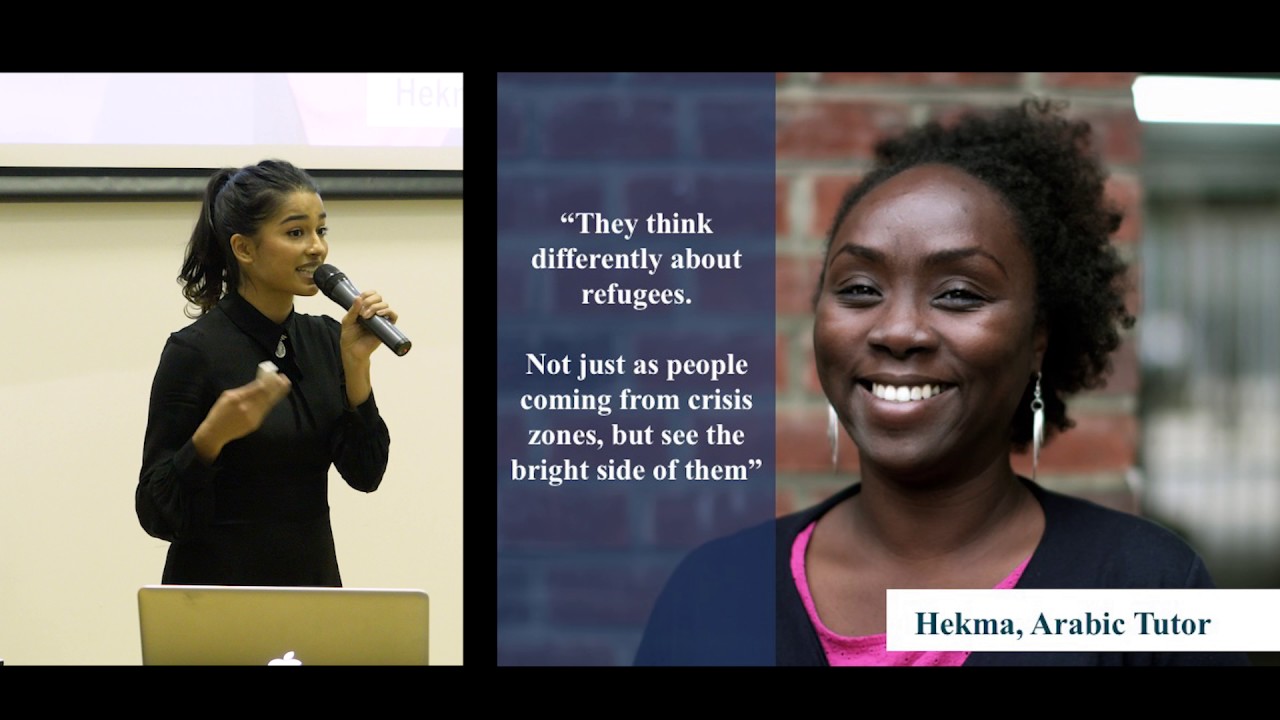
My name is Mursal. I'm the founder of Chatterbox, which is an online language learning community which brings together refugees who are teachers with learners from— in schools and in universities and just individuals interested in learning languages. The approach that I went for when I came up with the idea behind Chatterbox is to go for the biggest problem and the problem I knew best, and that related to refugees because my background is as a refugee coming to the UK when I was 4 years old with my mum. And I think tackling a problem that I knew very intimately gave me a lot of advantages over other people addressing similar issues. And of course the refugee situation is one of the defining issues of our times, so in terms of the prospects for growth and for development, they're immense, and also the prospect for social impact, which is what I was very keen to, to have. I'm very ambitious about what Chatterbox can achieve. We've been set up for about a year and a half, and in that time we've been able to train and support 80 refugees into work as language tutors online. Around 40% of those individuals are now back into further education, which I feel is a real testament to how much our collaborations with universities and schools have inspired people to aim higher than traditionally refugee communities have in the past. And in the future, what I'd really love to do is to be able to connect our tutor training programme with national teaching qualifications in the UK and in other countries as well, because I believe very passionately in the power of education education, not just for the learner but also for the teacher. And the story of a refugee being able to re-establish their professional lives in teaching is actually a copycat of my mother, who was not able to work as a civil engineer when she became a refugee but is now very happily and very rewardingly a teacher in the UK.
My name is Emma Rogers and I'm a co-founder of Little Bridge, which is a social network for children. Around the world, which operates in English. So children from anywhere in the world can join Little Bridge, but if they want to connect with any other child, then they have to use English. So when they need help with English, we also support them with a full package of English language learning content. So the idea came from the rather obvious fact that children are excited by technology, and lots of children are getting online, and in some cases they're creating social media profiles that probably they shouldn't be doing, they're a bit too young. So we very much thought there was a place for, a safe place for children to connect. And then we thought the really interesting thing would be actually to help them to connect with children around the world. In other words, to create that sense of a united world, that more— that we have more things in common than we have differences, and to help children get a sense of empathy and all the skills that we know that children in the future are very definitely going to need. So we joined Educate! because we were very interested in finding some kind of way of testing the validity of the feedback we were getting, which was, given the social side of Littlebridge, there was this huge motivation for children to learn English, that it went beyond having to learn English because your teacher told you to or your parents wanted you to, but you had an actual real drive. You wanted to connect with another child or other children around the world using English as your medium. So, as I say, we've had lots and lots and lots of anecdotal feedback from lots of users in lots of different parts of the world, and we just wanted to see whether actually there was a piece of research we could do that could demonstrate the connection between a social motivation and the learning content.