MSDUK Innovation Summit - Entrepreneurs Panel: How do you build an innovative product/service?

The panel, moderated by Amali D. Elvis, brings together five founders—Olivia Ahn (Planera), Mursal Hedayat (Chatterbox), Amit Bhattay (Snaptivity), Rotimi Alabi (Raab Microfluidics), and Jayita (Giana)—to discuss how to generate, develop, and sustain innovative products and services. The conversation covers the origins of ideas (personal passion, frustration with the status quo, and spotting underserved markets), the role of diverse backgrounds in uncovering unique problems, strategies for selecting the right problem to solve, approaches to product development (consumer‑focused R&D, lab‑on‑chip tech, smart‑stadium analytics), branding and voice, go‑to‑market tactics, fundraising (type vs. amount, aligning capital with mission, due‑diligence on investors), building high‑performing teams (culture of failure, hiring for growth stage, diversity of perspectives), and maintaining continuous innovation (creative license, lean experimentation, internal rituals). The panel emphasizes that innovation is an ongoing, intentional effort that requires empathy, resilience, and a supportive ecosystem.
Chapters
TranscriptAuto-generated · 62 min
Welcome back, everyone. I'm really excited about what's coming up in the next hour. We've got a group of amazingly talented and adventurous and successful entrepreneurs that have gone through the ups and downs of a startup to share their experience and then took that idea through a process of evolution and build a sustainable, successful business around that idea? Do they still need to keep innovating to stay ahead of the game? In this panel discussion, we will explore powerful strategies to increase the rate of novel idea generation, why it is important to constantly iterate your business model and offering in an agile way, find ways to spot gaps in the market and the journey of taking an idea to the market. And we've got an amazingly wonderful moderator for this panel session. To the startup and investor community, Amali D. Elvis doesn't need any introduction. Amali D. Elvis is the UK Managing Director of Microsoft for Startups, which supports leading B2B tech startups grow with Microsoft support. Prior to this, she was CEO of Code First Girls, a multi-award-winning training company focused on increasing diversity in tech. Outside of the day job, Amale is the board member of EDA National College for Digital Skills a member of the D&I board at the Institute of Coding, an advisory board member of the Founders Academy. She's a founding member of a Tech Talent Charter and the Commonwealth First Business Mentor. Amali is a London Tech Week ambassador and judge for the Lord Mayor's Dragon Awards and was recently inducted into Computer Weekly's Hall of Fame in recognition of her lifelong commitment to the industry. She was additionally awarded an MBE in the New Year's Honors List 2019 for services to diversity and training in the tech industry. May I request everyone to write any questions they have for the panel in the chat box? We'll try and discuss as many as we can in the last quarter. So now it is my pleasure to welcome Amali to moderate the panel session. Amali, over to you.
Thank you so much, Mayank, and an absolute pleasure to be joining. And what an amazing panel we have for you today. So really fantastic topic, obviously something very close to my heart. We're going to be talking about how do companies build innovative products and services. Thank you, Amali. The most amazing panel who are joining us, which is fantastic. This is really around exploring how do we find those really innovative ideas? How do we increase the rates of innovation in our companies? And thinking about these incredible panelists, what are the kinds of things that they have gone through? How has innovation played a part in their discovery and their establishment of their companies? And how do you generate new ideas and come to this understanding as well? So I'm going to kick off and allow everyone to introduce themselves as well. So we have, like I said, an incredible lineup today. Olivia Ahn, who's the founder and CEO of Planera, who's joining us. Mursal Hedayat, who's the founder and CEO of Chatterbox. We have Amit Bhattay, who's the founder and CEO of Snaptivity. Rotimi Alabi, who's the founder and CEO of Raab Microfluidics. And Joyita, who's joining us from Guyana as well. Very warm welcome to you all. I wonder if I can hand over to you maybe to do a little bit of intro. Olivia, if you could kick us off, could you tell us a little bit about where you're coming from and tell me a little bit about Planera as well?
Thanks so much, Amali. Hi, everyone. Thanks for having me. I'm, as introduced, I'm Olivia and I'm co-founder of Planera. Planera is a personal hygiene company and we've developed the market's first safely flushable and biodegradable sanitary pads. It's a short little one. I'll keep it short and sweet.
Wonderful. Thank you very much, Olivia. Much appreciated. Mursal, over to you. Oh, you might be on mute, Mursal.
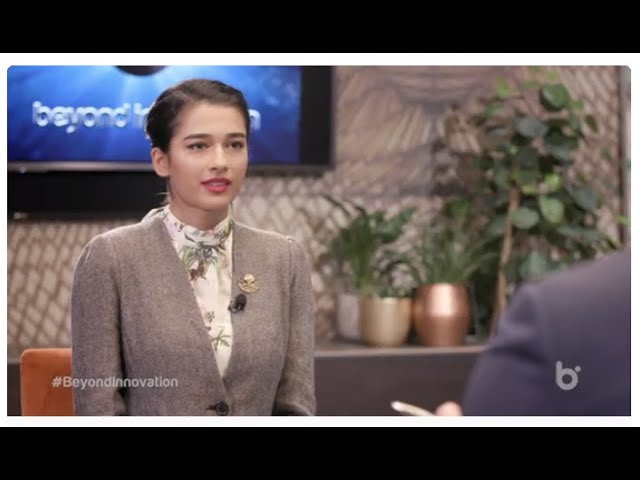
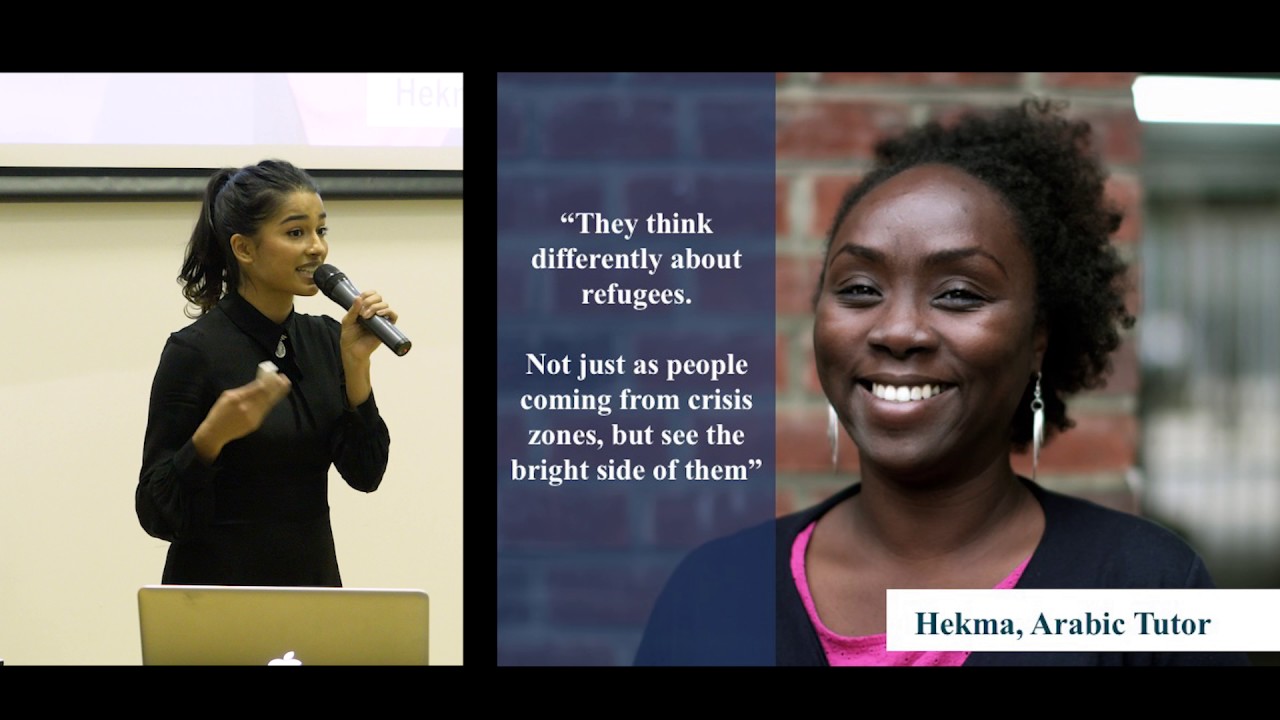
Well, there had to be a first, so here's my voice. Good to be here. As Mali said, I'm one of the co-founders of Chatterbox, which is a language services company delivering language education and translation and other services for large companies. Where we've innovated is that I believe we've identified one of the most valuable and growing resources in the world that's currently hugely underutilized. And that is the talent of marginalized professionals, including refugees, who are degree-educated, who are willing to work, and who are currently locked out of the labor market. And so we're building category-defining digital services, including in language learning and language services, for businesses like BNP Paribas, McKinsey, and so on. Our first product actually started off as a language education tool, a language course that employs refugees to teach their native languages. And I'll be very excited to talk both as someone who employs diverse talent, but also someone who myself comes from a refugee background and so also shares a perspective of innovating, having come from a different perspective than the usual entrepreneur.
Wonderful, thank you so much, Mursal. Really looking forward to hearing a bit more about Chatterbox as well. Over to you, Amit.
Hi everyone, I'm Amit, co-founder and CEO of Snaptivity. We are a smart stadium sports technology company that enhances the in-stadium fan experience and drives revenue through digital sponsorship at leading stadiums. and arenas. The innovation where we brought in is in terms of identifying the human emotions in a confined space and also unlocking the revenue potential for our clients, which was sort of a missed opportunity. And currently we are operating at some of the leading stadiums like Wembley Stadium, Etihad Stadium, and also rolling it out in different geographies. That's been a great journey and I would love to speak that in
Wonderful, thank you very much, Amit, very much appreciated. And over to you, Alabi. And just as a note, Alabi is obviously in an area which requires a face mask, so I know he, he's still very much sort of, you know, excited to be with us even if you can't see all of his face there.
Thank you guys for having me. My name is Rotimi Alabi. I'm the founder of RAB Microfluidics. RAB Microfluidics is a technology company that has developed a microfluidic lab-on-a-chip technology to diagnose early signs of failure in lubricated heavy machinery. The innovation in our technology is basically compacting an entire laboratory protocol on a small glass microchip that we are now able to deliver to companies to make automated analysis of lubricating oils on heavy machinery.
Fabulous, thank you very much, Alabi, much appreciated. And wrapping up our intros, over to you, Jayita.
Hi everyone, it's a pleasure to be here. I'm Jayita, and I'm the CEO and co-founder of Giana, that produces data science tools for business users. And we started it out of Oxford, where me and my co-founder were really interested in finding how we can scale technology, deep tech solutions for non-tech users. Our first product got acquired end of last year, and now we're on to the next one. We have over 500 global accounts. We serve all the 5 continents, and we are presently looking to expand much more.
Amazing. Thank you so much, Geeta. And I'm sure you'll all agree, a really amazing panel there who's going to be taking us through today's chat. So let's kick off. I wonder maybe if we can kick off with Olivia. And folks, do feel free to obviously post your questions in here as well. I know Mayank is Doing a bit of adjudicating as far as those questions, but do, do post any questions. We're gonna be stopping in between for some bits and pieces there. Olivia, what an amazing product, Planera, right? You're doing something which is truly groundbreaking. How did you come up with this idea? Where did it come from? What was that sort of experience to coming to that idea generation like?
Oh, thanks. I'm so pleased that you think so. So we started 3 years ago when I was in my penultimate year of medical school. Myself and my co-founder, he's an engineer, and we sort of approached it really because I wanted it. I expected a better solution. We know, I mean, I don't need to talk about how big the market is. It caters for over half the world. I mean, I really felt like when I was looking on the shelves that there should be more selection than just the conventional plastic and the organic pads that we see. We have the reusable products, but that's, you know, a habit change, and it's a slightly different product. And I was looking for essentially a guilt-free, sustainable way of disposing products. And I thought we'd cracked it when we'd made a biodegradable pad. But then we realized how wrong we were. Because we'd switched out all the plastic for biodegradable materials, realized that it made no difference because it still gets incinerated, sent to landfill, stuck in waterways where it doesn't degrade. So that's when we thought we need to rethink of how we can bin it. And that's when all this information around how recycling was broken and all of these routes to disposal was really difficult, was when we thought, oh, there's a much larger picture for us to address rather than just sanitary products. And so we created this water dispersible technology. So it absorbs anything from blood to household liquids to incontinence, to any sort of other sort of things you may need to absorb in that sort of hygiene field, and it can be flushed down the toilet. We worked really hard to get to make sure that it was within the UK flushability certification. Got the certification 2 months ago now, so ready to launch essentially this month. So it's been a long time coming. But yes, that decision and realization that we needed something other than the different category to what we have right now took us a couple of years to find.
Yeah, super interesting. And I think that point around, this is something that you had a personal passion for, right? This is something which you looked at the world and said, look, this doesn't work for me, right? I'm not happy with the way that the status quo is. And I wonder if I can maybe pull in maybe some of our other entrepreneurs here. And I know Amit and Jihita, I think you're both sort of serial entrepreneurs. Is this something that you have come across as well? And for the others as well, this idea that you saw a problem that you couldn't live with, that there was something you had to solve?
Absolutely, yes. I think it definitely came from an area of passion. And in a strange way, it does tie a little bit to the idea of diversity for me. I don't know how Amit feels about that. You know how, like, we always think about we're in particular bubbles and we leave out other bubbles? And it's the same for solutions. You have different products and technology that serve different segments, and there are many segments that get overlooked, not necessarily in a very typical way that we look at diversity, but in general. general, use cases get left out. And so, all the products that I've built so far were interestingly the reverse of what I had faced. I tried to think about, do I live in a bubble? Is there something that's really easily solved for me, but not so for my friends? And ended up thinking and finding that techies live in a huge bubble of our own. You know, we make and build tools for ourselves. Almost everything is built by tech for tech. And I thought, how about we build something that are not not techies, exactly the same way I would approach a diversity problem. So that's kind of the overall philosophy of where I tend to come from, but I'm very keen to hear what Amit thinks as well.
Yeah, I mean, I completely agree on the diversity aspect. For us, our 6 years into the startup journey being quite a roller coaster ride, we even forayed into something and completely no experience, prior experience fields. And that was only possible with a team with a diverse background. In terms of the idea and the innovation around it, yes, it's all tied to your passion and drive. But I think innovation doesn't come that easily. It's not something that the customer tells you that this is what you need. From my experience, I'd say— I will say the customer never knows what he needs. It's the— yes, they give you the right pointers where you need to look in, but the innovation comes in from your experience, from your knowledge, and then you bring all those in together to create a product that has a value and brings in sort of a commercial aspect in terms of a business to it. So yeah, that's for Snaptivity. We started with a P2P product. but finally came into a B2B business model. It was a sort of a journey of over 6 years. So I think the innovation is something where the ideas come from everywhere. It's all about how you put it together and materialize it.
Yeah, and such a valuable point. I think both of you, Juyita and Amit, sort of mentioned the points around diversity. And Mursal, I'd love to bring you in at this point, actually. And I think this is the interesting thing about innovation, isn't it? That innovation is about funding something new. It's about doing something differently. It's about finding a gap which no one has thought about. And I guess, do you think that being from a sort of a diverse background, being from a sort of an underrepresented or underserved background, do you think that helps you to be more innovative? Because the reality is that you will be seeing the world in a slightly different way to the majority background. Have you found that kind of experience? What kind of experience do you find with the people that you're working with?
Absolutely. I mean, I think at the same time that diverse entrepreneurs tend to be less well-resourced— I mean, the statistics bear out for themselves, whether we're talking about women or people from ethnic minorities in the UK— actually, I think the problems that they're solving tend to be much more innovative, have less competition, and serve a greater need. Take Charterbox, for example. I mean, the global refugee population tops 70 million people today. It's the largest number since the Second World War. And yet the majority of entrepreneurs in San Francisco will be solving problems for the top 1%, the maximal N% of life experience for a small minority of users around the world. I think there is so much more opportunity for, I guess, in the UK, what you would call diversity or diverse people's problems, who actually are the majority of the world's population, actually. So it's not really a minority. So the opportunities there are vast, and they're definitely underexplored. At the same time, you know, the role of an entrepreneur is to find a problem worth solving. And I think coming from a slightly different background from peers in the UK, it certainly does help to find problems that no one else is trying to solve or no one else has yet managed to solve. And I think picking the right problem is really part of— a huge part of the solution and success of a company. And not just that, I think that when it does come to exploring certain domains, especially— I mean, my company is definitely a social enterprise and one that hopes to socially impact the lives of marginalized people. And I think having come from a similar background to the people that I'm trying to help today gives me a bit of a competitive advantage to other people in this space. I know what refugees are going through and what they will go through because my family went through the same thing. So the ability to deeply empathize with your users, whether you're, you know, a female entrepreneur tackling women's femtech issues, or whether you're a refugee, tackling refugee tech issues. You definitely have a competitive advantage solving your own problems. And finally, I would say that, you know, the final point I would make is that, you know, coming from a diverse or minority background, solving problems for diverse people from diverse or minority backgrounds in the UK certainly gets you a lot of help. There is definitely a lot of support from programs like yours, Amali, with Microsoft, startups, the AI program that you run, which is absolutely fantastic, which specifically looks to support enterprises that are looking to make a social impact. So I think the growing ecosystem of support available for entrepreneurs from backgrounds like mine and solving problems like ours at Chatterbox is definitely something that helps along the way too.
That's really fantastic. Thank you, Mursal. And I loved your points around picking the right problems and this idea of sort of a majority being a minority. Being the majority, actually, and I'd love to explore those a little bit further. Starting with that sort of picking the right problem. This is one of the conundrums, isn't it? I guess anyone who is bright and curious looks around at the world and probably sees lots of problems. How do you pick the right problem? How did you, as a founder, how did you decide that Chatterbox, this was the concept? Did it all come to you perfectly formed? Did you have a dream about it? How did that kind
of I don't know if it's— the video has gone for everyone, but— ah, you're back, Emily. So honestly, I think I came from a very similar place to Olivia, Joyita, and Amit, because it's something that made me extremely angry, and I just felt very frustrated at the solutions that were out there. So really, in 2016— by the way, this week Chatterbox celebrates its 4th birthday, so You know, looking back has some fond feelings today, but back in 2016, this was the height of the refugee crisis in Europe, and there were lots of mostly European people solving problems for refugees arriving in Europe, and the majority of refugees living in sub-Saharan Africa. And the truth of the matter is the solutions weren't that good. They weren't very tailored to my community. They weren't respecting the diverse experiences that they were— that they had. And it really just honestly pissed me off. Like, I just thought that adding my voice and my thoughts and my solution would create genuine value for a lot of people. And it's almost that same energy, that same frustration at the status quo and that same inspiration. And I guess what you would call the founder vision for something that— or the way things could be that continues to drive me 4 years 4 years on. And it's actually, you know, I have friends who are solving problems that they don't feel very passionately about, and they're looking— they're still looking for that 3-year exit. And honestly, I don't know how closer they are to that. I think starting from a place of identifying a problem that you feel very passionately about is definitely one of the criteria for a problem worth solving.
And I'd love to sort of expand on that a little bit, and maybe if I can pull in Maybe Olivia and Olabi, coming from 2 very different sort of sides as far as the types of problems that you're tackling here, but do you recognize a kernel of truth in that as far as problems that you identified with, things where you saw that there was some sort of burning need against the others, or was it a fast process of innovation to come up with those ideas? Did it take time? I'd love to hear your thoughts about that.
So I will approach this as a strong desire for change in the particular circumstance you're facing. So if you really want to change something you don't like, you become very creative about it. And I think that is what really drives entrepreneurs to do what they do, because they see something that's not like what they want, and they say, all right, we need to do something about it. In RAB Microfluidics' instance, If you think about chemistry, you think about laboratories, you think about wet chemistry, you think about beakers where you take a sample from offsite, bring it to the lab and do analysis. And I was like, during my PhD, I was like, right, these samples are coming from somewhere. So the lab is not where the problem is. Why can't you deliver that solution out there? And it was that desire for me to see that system, to see the entire process of lab analysis turned on its head. that led me to found Lab Microfluidics, to be able to deliver the solutions that are being solved in the lab actually on the field where it is coming from. The next thing that underpins that is your passion for it, because the journey is a very difficult journey. So if it is not something you really strongly believe in, there is no way you will continue doing it. So that passion has to come from deep within. You cannot buy it. You just basically have to have a strong attachment to the problem and to desiring change for you to continue driving to see that change actually happen. With regards to innovation within that sphere, I will think about it that diversity actually helps you bring different worldviews to that problem, because if you stay on your own, you see a a particular problem from one perspective. If you have a mixture of people, you start seeing things from different angles. It is just like you viewing something in 1D, 2D, 3D, or 4D. It is as simple as that. So for when you have a collection of people from diverse backgrounds coming together to look at a particular problem, you start getting insights that you might either— you might otherwise not have gotten. by having just one worldview to the problem. And I want to re-echo Mursal's point. It is actually finding a problem worth solving. There are problems that are not worth solving and you just don't want to tackle them. But something that is worth solving, um, it gives you that longevity in the whole process. And I, I'll just pass on to Olivia and see what she has to say about it.
I think I agree with all of your points. With— I think in my personal case, I was driven by— this makes me sound like a bad dinner guest, but this was really triggered by my own sort of personal sense of responsibility when I was trying to become more sustainable. And I felt like there was really this push of responsibility. I felt like these large companies really didn't own any of their responsibility when it came to it. And I felt guilty through no fault of my own because I was left with no choice and it was very difficult. So I, and then I see that this blame of, you know, you have to take your own plastic bags or you have to split your recycling, but then why do you melt like 4 different sheets of plastic into one around your food? I can go on. And I felt like this really should be talked about more. And I wanted to see a brand, not just the— I feel like it's different because mine, mine, I wanted a brand that I connected with as well, not just the product. So we had to build a product that worked, but also a brand that didn't patronize me into feeling that I was the one responsible, whereas I wasn't producing these products to purchase. And then also, it wasn't good enough, I think, for companies to not do harm. I think at the state that we're at now with the environmental crisis, we have to give back and pay it back with interest if we're going to stop the world from burning down. And I think with the rise of Greta and all of these sort of, you know, Gen Xs and this newer generation really demanding better, I thought this is a time that we can really challenge these Unilevers and P&Gs and ask for better.
That's such a really, really poignant point, Olivia, and, you know, that point around connecting to something where You just have to, right? This is something which, doing nothing is not an option. And to your point around, it's not enough to just not do harm. No. You need to make things better. You need to improve things. And I think this is probably all of the panelists here feel that sort of urge of wanting to make things better than they were before. I'd love to actually build on that a little bit more. So maybe Alabi, over to you. Now, you've had this idea, like many of the founders on these panels here, you've got this passionate idea. You've thought about, you want to change the world. you want to make something different, you want something to be better. How do you— what next, right? How do you then go about creating that into a sort of commercial product? Could you take us through your journey sort of with RAAB Microfluidics? How did you go from the idea into, okay, we have something here which is a product and we'll go and get some customers? That probably feels quite opaque maybe to someone who's starting sort of being a founder for the first time.
Yeah, that's the classic physics question of inertia. How do you move from a state of rest to actually doing something? In my case, the tipping point for us, or the catalyst, was when I saw a competing product out there. Because when I started my PhD, I started with no background information. It was a very new area of study. And I didn't have any other resource to call on to actually compare what I was doing. So I was basically at the frontier of what we were doing. And luckily for me, a different research group was working on something. And 3 years down the line after my PhD, or 1 year after my PhD, I discovered that they had released a product. And I was like, I started this research almost at the same time with these guys. I know exactly what their technology does. And they have a product and I don't. And my research will be in the University of Aberdeen's library, rotting away in the archives forever. And I was like, that can't happen. We have to change this. I was under the illusion that you actually always needed to have money to start a business. And that was what was stopping me from actually taking that plunge. And when I saw that catalyst, I was like, right, I'm going to start this either way, with money or without money. So I started asking around, and it always starts with you asking questions of people that know more than you. So you gradually start surrounding yourself with people that understand what it is you're trying to achieve and can help you get there. So the first thing first is once you have your idea, look for the information. Where does this information— identify your knowledge gap. and then say, where does this information that I don't have reside? And then go and look for it. Because that way you can get access to people that can help you turn that technology into a commercial product. You can help people that can help you get access to funding and whatever information you need, you can actually get it out there. So we don't exist in this world alone. We are not an island. So you have people around you that you need to expand your ecosystem. You need to immerse yourself in where the answers to the problems lie. And that is how we did it.
That's super interesting to hear. Thank you so much, Olabi. And I think that point around the money and sort of, you know, where does the money come from, kind of, you know, becoming an issue. And is it really an issue? And I guess this goes back to, you know, the ideas of a lean startup. And you start small, and you start dirty, and you kind of iterate and iterate. And I'd love to actually pull in some of the other founders here. And, Jeet, I've got a question for you to come on to, but, you know, thinking about your background, right? You're a serial founder. You've seen the money kind of going in and out. You know, do you start with money? How did you kind of get the ideas? How do you take that to fruition? Where did money come into the equation?
Yeah, really good question. I started with, like, real nothing, like a student loan and not even a return ticket. And then ended up raising so many millions. I think what I learned along the way in every startup is very interesting. Fundraising is a very important strategy. People think it's coincidental. It's, it's the fuel I need to burn the fire, but it's not. Business is a socioeconomic entity and it's not a personal entity. So it is an institution and therefore it is very much a part of several other institutions. Which ones you choose to be part of will quite determine the path you're going to take. So if you are going to build, let's say, deep tech in an environment like UK where deep tech funding for the first 7 years of zero profit is very rare, then Horizon 2020 and grants are good for you, and you build a different model. You don't dilute yourself for a while because you're going to raise a lot more rounds. Whereas if you're a nonprofit, then the way you're going to approach— turn yourself into a beacon and going to the type of funding that actually prefers those sorts of things, or corporate VCs with CSR arms, is very different. Whereas if you want to go for a multiple of 200x and you're really looking at, you know, getting funded by Andreessen Horowitz, then you cannot say that the only way this will work is you're going to have to change, I'm going to stay the way I am. It doesn't work like that. You have to recognize the entity that you're going after and then create a model that suits that. Of course, some of these trends are not necessarily very ethical. You know, the funding bubbles, and then, you know, every year there is something that gets overfunded and everything else gets neglected. None of us are fond of that, but recognizing that and building that into the strategy can greatly help you understand how are you going to drive the next couple of years. So I've seen some of my most successful friends being very conscious of this. They were aware how the next couple of years are going to be for them, who are the most likely to attract, and therefore they built the whole model accordingly— how less they spent or how more they spent, the area they spent more on. Let's say if you're going for a user-driven growth, the KPIs you spend on and your burn rate looks very different from a very revenue-driven growth, which is the type of common-sense investing that's more common in Europe. So fundraising is not accidental. It's— that's what I did in my first startup. I thought, you know, one fine day I was like, ah, I don't have any money now. We need it. Where is it gonna come from? But I got better over time and I think about it beforehand and I build it into the plan. So, I think what I've learned is what is your most important currency that is defined by the external world is probably gonna be revenue or users, or in a nonprofit, whatever is the metric you measure by, number of trees planted, number of lives implanted, whatever. But for you internally, there should be a combined variable. This is what I'm tracking and this is my progress. And in order to do this, these are the people I need on board and this is the type of capital I need. Mind you, I said type, not just amount. The type highly, highly determines the outcome. I've ended up having really wrong angel investors who suddenly decided in this year 2 that they would like to leave. Can you just do me a buyout? And you're doing a random round to just please them. And then you can have really belligerent funds who fund a social impact and then they don't have the horizon of impact investment at all. So I would say there are various ways to get capital and various types. Think about the amount and the type and do a lot of due diligence, both sides. I speak to other people they've invested in. I look at the fund. I sometimes even ask questions about the LP because there was once a time when we received a really big term sheet that didn't execute. because their LPs lost their capital because of an economic situation. The economic situation is global. No one can help it. But the fact that I didn't know where their money came from put us in big trouble. So yeah, I think the due diligence should be both sides. I know lots of founders these days who are so conscious about it that they've turned down capital on the table because it didn't match the criteria of what they wanted to have on their cap table. So be very conscious and If you don't get it anytime soon, fine, go lean, cut down. We don't have to meet the criteria of a fictitious entity that in the next 3 years you need to be a unicorn. You grow at your own pace in the way that makes sense to you.
Really, really interesting points, Sreejitha. And actually, I really want to dig into that point around funding, and I think especially for any companies in sort of the mission-led space and how that kind of, you know, the type of funding, not the amount of funding, being absolutely crucial. I'm going to break just a little bit for a couple of questions which have come through. Thank you very much for your questions so far, folks, and please do keep sending them through. And I guess this is partially connected to that point around how you go out. So, you know, you've thought about your idea, you're going out to market, you're building customers, and maybe looking for investment. But thinking about— the question here is about finding your voice. So this being such a critical element, and I think especially for companies which might have a mission focus, or might be doing something which is very different, and really radical, and really innovative, trying to help you to find a way to communicate that well, and position yourself, and get people excited about you. And I guess just shooting out to all of you here, how did you find your voice? How did you find what those bits were which You know, helped you to connect with people and really inspired people to kind of support you or to invest in you or to buy your products and services? I don't know, maybe Olivia, I can see your—
Yeah, this is something that was really important to us, A, because it was a consumer product. And I— so from the start when we were making these brick-like pads with an iron in my bedroom, we were asking first of all, university housemates, and then we did qualitative testing, both through focus groups. And then it's a constant testing and iteration. Because I was so blinded by— I think everyone is blinded by their own biases. So I had my own issues within periods and with my own sort of issues with the products. But I had no idea what the general market was thinking. So I suppose there was sort of two approaches. One was this very sort of bookish approach, where we looked at all of the consumer brands within this femtech space, basically plotted them on a chart of which audiences they really spoke to. Because these newer D2C brands speak a very different tone of voice and target very different audiences and different channels compared to these legacy brands, and also the geography. So essentially, it was a bit of a mess. But then we realized there's a gap and the tone of voice and who these people are. And so we then specifically target those through market research, either paid or through people we know. But we try to have it, you know, anyone we don't know, otherwise we have our own sort of biases within our bubbles. But yeah, so it's both in life pre-COVID and then online as well.
Can I share something? Yeah, go on, Mursal, I can wait. I
was just going to say I could perhaps come in with a, with a B2B perspective. Obviously, Chatterbox delivers services for organizations, and I would say it's probably not too dissimilar. You know, when you're selling to corporations or enterprises as we do. However, I would, I would definitely keep in mind with B2B sales that at the end of the day, you're talking to a person and the vast majority of people today really care about where they're investing their money, especially people that have the power and the authority to allocate the billions in funding that companies allocate through procurement every year. So obviously this is the raison d'être of MSD UK, but I think when you're communicating with businesses, what I found very helpful is to really communicate on a human level. Initially, with an idea like Chatterbox, actually advocacy is a large part of why we exist, because whenever I say that refugees are language teachers, almost everyone hears that refugees are learning languages, not because I'm not expressing it clearly, because we have built such a mental image of refugees as being needy people, that it's important for us to have these conversations with businesses, and having them actually creates impact. Educating them actually has impact. That it's actually— there's a very careful line to tread between selling that vision, that mission to organizations, come on board and you'll be creating social impact, but also having a very effective product to back that up. I mean, Olivia, I'm sure this is something that you also have to convey, that the product is absolutely fantastic to use, and the social mission is what also keeps it in people's imaginations. I don't think that's too dissimilar in B2B sales. Joyita, sorry for cutting you off.
No, no, no, I love that. That's very inspirational. Thanks, Mursal and Olivia. I really loved listening to that. So I think— so we're not consumer, but I'll tell you the story of my company and my voice. Strangely, Amali, you won't believe, I was extremely fearful 4 and a half years ago when I started. I was afraid of what's my real voice. I knew it. But I would, you know, I would say it and then I would apologize and, or I would delete my tweet instantly, even though it was the right message that I wanted to say to people. I would say something in a panel and then I'd be like, oh my God, why did I say that? Was that too over the top? But it's exactly how I feel. And I found that the company suffered. And it only did well when I came to a point where I recognized that I will make mistakes. and I'm not possibly going to be liked by everyone, but this is how I feel about the solution, about the message and the positioning, and this is who I am. It's take it or leave it. There's not gonna be everybody on my side. And I started expressing myself that same way. So my conversations are a little bit different. I don't write very formally, even though I've been formally trained. So I'm borderline dyslexic, so the way I express and I write things is very different. And so lots of times people are like, well, you could have started with a very formal salutation and a greeting. And I was like, look, I can learn to write emails or I can run the business. Like, which one will it be? And so I recognized my problems and I was like, I can't fix them and I'm tired of being embarrassed. This is, this is the leadership you're stuck with, good or bad. There were probably some things good about me and there are probably some things not right, but the voice of the company will never be authentic if I'm not allowed to be myself. Once I came to that conclusion, everything changed. I was able to participate from strategic discussions to sales and marketing to representing Giana very fearlessly. And that has made all the difference because in the end, the passion of the company comes from the 2 co-founders. And if we are bottling up our passion because we are so afraid of how we express, that's just not gonna work. I give a lot of credit to my co-founder. He was always extremely encouraging and he would always tell me, look, I know this is how you feel. Why don't you just say it that way? And I'd be like, is that the right sentence to say? Should I put a colon? And people are gonna judge me for being like this. And he's like, this is how you feel. Just say it. And it has been game-changing. I think that the entire voice and tone and the brand of the company has only become real in the last 2 years when I discovered that I'm gonna be real.
That's an incredible sort of example, and thank you both. And what a wonderful sort of journey to kind of go through. And I think that point around— we went back to the beginning of doing something innovative is doing something different. And I think what we don't realize probably is for founders who are doing something truly innovative and truly different, that means you're going to stand out. You are going to be different. You are, by definition, saying something which— is not what has been said before or not the way that it's been said before. So I think your journey is amazing there, Joeita, to come to that level of comfort, to come to that sort of authenticity and really, I guess, connect with what you're doing, which was something sort of innovative and different and very sort of groundbreaking there as well. I'd love to take that point a little bit further actually, and I guess thinking about those connections sort of, you know, spreading that innovative message and getting that across. And we've got a couple of questions here, and first of all, thank you very much, Bipin, for the original question, but also from Mona and Maris as well. One which is around teams, and the other one which is around sort of challenges and stuff as well. But maybe if we come to the teams part first. So you've had this idea, you've managed to find some sort of, you know, you've got a co-founder, or you've maybe got a couple of people who you trust, you're then thinking, okay, we're growing, we've either brought in some revenues or we found some funding or something like that, and you need to build a team, right? It's one thing then to think about, okay, how do I believe in my message? How do I sort of convey this in a pitch? But how do you bring together teams of people? How do you find the right people to believe in your message? Maybe, I don't know, Amit, maybe from your side, you've built serial teams here. How does it work? How did it work for you? You know, how did you convince people to buy into your vision of things?
Yeah, that's a very challenging thing for an early-stage startup when you as a founder are quite passionate about your idea, but it has not taken its ground yet. People haven't seen its output results. It's quite difficult in terms of conveying that, but at the same time, you're looking for those people who believe in that root cause that you're targeting, the passion around, around that particular cause. But mainly, when you are selecting into, into your team, there are 2 main aspects. One is, do they fit into your culture format that you want to put and build in your company? But at the same time, does that culture fit into your employee? Or your teams. That's quite crucial because in initial stages they do adjust to your culture format, but after a certain time, as the time passes, it gets quite difficult in terms of getting those teams to drive innovation and drive the team forward. In terms of culture aspect, one of the things that I believe is like accepting failure should be the core part of your culture. We do have like small agile teams. We do give the responsibilities. They have the freedom to operate. We do have brainstorming sessions. But one of the most, from my experience, personal experience, one of the key factors that led to us in developing new ideas and product line being the fear of not failing. The fear of not failing and failing is because we thought about failures as a knowledge pool, as an asset, and that gave us a good learning point and as well as step to grow further. Some of the teams that we have been working— some of the members been working with us from past 6 years, and the journey has been quite helpful. We even have a few of our employees who moved on and to their greater career extent, but they always acknowledge the label and the platform they got by being a part of the team. And that is something— is the legacy that we want to carry forward.
That's really amazing. And, you know, I think it's something which I've sort of talked a lot, which is, you know, even people who leave your company, they either become sort of advocates or ideally sort of customers or clients or something like that, right? You still have that amazing opportunity to still continue a good relationship with them. As far as, I guess, did you— when you first started creating teams, what was that experience like for you? Did you always pick the right people? How do you kind of go about sort of putting people together? How do you communicate with your tech people and your sort of communications people and your salespeople? And how do you create a high-functioning team?
Yeah, well, with the tech team, it was quite easy, to be honest. I guess the age factor was not an issue. When, as soon as I moved into setting up the commercial team, the sales and marketing team, that's where we— I mean, our major base client is big institutions which has an average deal size of quite a big amount. And so we were looking for gray-haired salespeople, as they were the ones who we thought would give us an entry into. But that was my— I think that was something that I took it like we need to find into this particular direction, but that was wrong. When initially when we recruited, we did have few people who joined in with prior great experience, they did form a good value in our company. But going forward, we faced the issues in terms of adjusting to the cultural aspects, in terms of the agility that the team has. The way a startup functions is mainly in terms of diversifying as well as innovating quite quickly. And that change needs to be adopted by the team across different departments, and that was something very challenging. So interviewing some of our new team members was wherein initially it was the job of the founders, but then we further, as we expanded, we gave the responsibilities to our team members, which brought in much more of an inclusion because these were the people they got to know from day one. they were interviewing. So these are the people that they want to work with. And that gave us the flexibility as well as the assurance that this will be the right team going forward.
Yeah, and I think it's— I was talking to one of our program founders the other day who was sort of talking about some of the challenges around hiring. Like you said, you know, you're not always making the right decisions, but I think probably everyone on this panel would say hands down it is the single most important thing you probably do in your day is finding the right people. Absolutely. And maybe actually if I could bring in— so, Joeita, Mursal, as well as Alabi as well. And for example, Mursal, I know you've been hiring, I think, some roles recently. How do you find— and I guess this is that, you know, people who have, to Amit's point, the right skills, the right experience, but also can believe in your mission, right? Is that the easy part or is that the hard part? You know, how do you kind of balance that out?
It's not too easy with the best people, actually. Like, I think there are a number of massive companies that have inspiring social missions, including Microsoft. Like, these giants are hiring just as voraciously as our startups. So actually, you know, the competition for impactful work, for the world's best talent, is actually pretty steep. I think one way you can stand out in that market for talent is to correctly identify startups as crucibles for personal growth. You will never get promoted as fast as when you're working at a startup. So it's crucial to find people who are at the right stage of their careers. I tend to find these broad categories of people that are interested in the kind of growth, the accelerated growth that startups have to offer, to be people who just love startups and who don't want to work in a large organization, but who are the gems of my team and other people's teams, I'm sure. Then you have people who are kind of finding the limits of their growth inside of a large organization. The Facebooks of the world can only promote so much in a given year. So finding those people who want to move into senior leadership roles, also, that is another group that we found are interested in joining a small startup like Chatterbox. And the third tend to be late-career professionals who have achieved what they want to and really have this idea of having a broader social impact. Now, for that, you genuinely have to have a very appealing business and impact proposition for them to invest their time and their expertise into your company. But honestly, hiring is as much of a sales job as sales is. So the ability to sell your company to top talent is crucial.
Absolutely. And I think that point around sort of startups being a crucible for sort of progression and growth, and I think that's absolutely the sort of the balance really, isn't it? that we might not be able to, as startups, offer you all the same perks as maybe some of the larger companies can do. But where you don't have that, you have this incredible opportunity for growth and for learning, and for being a part of a really exciting organisation, which is being innovative and growing, and driving real change as well. I guess, maybe taking that on to that next step then. So you've built this great team, you've got your product, you've maybe started with your customers, you've got a little bit of traction. Thinking about how you grow, and I guess this is maybe a question to those of you on the panel who maybe have seen several companies through or whose companies are a little bit older, but how do you keep innovative? How do you keep kind of driving that, you know, those new ideas? You know, when do you stop? You know, is there a point? And I know there's that analogy of when you're sort of forming, storming, norming, you know, the progression of a company's growth and evolution. And maybe sort of Alabi, maybe going over to you, you know, do you ever stop innovating? When do you stop? When do you innovate? When do you sell? You know, when do you grow? How does that— how do you kind of strike a balance there?
I think if innovation stops, the company starts to basically flatline and I'm going to decline. So you cannot afford, whether as a startup or as a large corporation, you cannot afford to really stop innovating. For innovation, you have to give people license to be creative. You have to give them the license to be able to break things. You have to give them license to fail, really, because that is what innovation is all about. You're doing something new that has not been done before. You're trying, you're experimenting, you're trying new things, and it is not always going to work on day one. So it cannot be really streamlined into a system where if I put money into this, I should get these returns out. It doesn't work like that. You just basically have to see what can happen. And for startups, we go about doing things in a lean way. So we understand that there's not enough resources. So with that in mind, we actually take calculated risks because we don't have money to splurge. So in my team, I ask people, You're free to break things, but don't break things more than once because we don't have the money to actually continue with stuff. So they understand that, they know that there is a creative license for them to be able to experiment on anything new. If anybody calls me and says they want to do a new thing and they want to try a new idea, I say, how much is it going to cost? They say, this is how much it's going to cost. I say, okay, you know the budget, and I say, go for it. So there's that freedom for them to do whatever they want to do. And in that way, we are making our products better. We are addressing other problems that we didn't even really foresee in the early stages. And then we're becoming more valuable to the end customers that we are speaking with, which is really critical in any business, whether a startup or large corporation.
That's super interesting, Olabian. I think that point around, you know, you always do need to be, I think, driving new ideas and having that space to grow as well. And I know it's always a challenge, isn't it? Because, you know, driving innovation, this isn't something that just happens, right? It's work. You need to work at it. You need to build on it. And I think especially thinking about maybe sort of Olivia and Jeeta, and thinking about both the financial services sort of side of things, but also working sort of in sectors which are sort of regulated. So when you're moving into those health spaces, or where you need to kind of get sign-off around, you know, your products and stuff, Olivia, you know, how do you continue to innovate while still having something which is on sale, you know, and not so different and not so radical that you sort of lose customers, you know, from one month to the other, but also knowing that, you know, each time there is a cost of innovation, right? If you bring something out completely new, you then need to drive a whole process of, you know, getting your sign-offs, your legal compliance, all of these types of things. How does that kind of work for you, and how do you strike that balance between innovation and just making a commercial product which is repeatable as well?
Sure. I'm really glad you asked that question because innovation for us is sort of on 2 fronts. So one is the products that consumers will see. And those sort of innovations will be much slower because like exactly like you said, they are constrained by other sort of legislative and protocols. But this whole other side of innovation for us is really where I would say most of our R&D is going into, which is really in different areas like supply chain within the manufacturing process and within the technology, within the materials itself, which can be applied to, let's say, packaging or agriculture, loads of different sort of areas which are not seen by the consumers but will impact them in the sense that if we increase the efficiencies of the manufacturing ways, it will dramatically drop the cost for them, thereby giving us that competitive advantage. So whilst the innovation may not necessarily be seen in like tampons or baby diapers or whatever, it will be seen in the packaging that they get, how we get our stuff from our suppliers, is it all geography? So it'll be a different sort of innovation. So on 2 sort of fronts, on that sort of behind the scenes and sort of in front of what our consumers get.
Yeah, absolutely. And I'd love to bring you in, Drita, at this point, because your product is something which businesses build into their systems, right? So, you know, innovation, you know, how do you drive innovation whilst not breaking all the foundations, if that makes sense?
Yeah, I think I'll bring this to a point that Mursal said a bit earlier that I greatly believe in. Everything in the end is down to the individual. Look at everything as a collective, but it's really down to the individual. And so I believe, like very clichéd Steve Jobs saying, you hire smart people not to tell them what to do, they tell you what to do. So we have a room full of incredible people. I walk into those rooms and I like to hear from them, from my team, because I'm pretty sure it's not going to come from me and David. So they come up with it and I keep on thinking, how can I make them think in the best possible way? So I'm sorry, digressing for just 3 seconds. I learned it a bit from contemporary dancing. As a youngster, some of my best teachers didn't actually teach us. What they did was they taught us to stretch be very comfortable, and then they left us in the music room with no camera. Okay, and then we moved beautifully as opposed to being extremely well prepared and choreographed. Because when you are ready and you feel like you— it's okay to fail, you actually do amazing stuff. So what I do is I empower the team and I let them free in the music room, so to say, and they come up with it. So we have lots of rituals that encourage that. We have something called Failure of the Month. So, all of us share our failures and the biggest failure gets a lunch with me and I take them home and I cook them. Like, I'm vegan, so I'll make stuff for them. So, everybody's like encouraged to share their failures. We do stuff like that which creates an environment where we love the fact that we don't always succeed. The only thing that you cannot do is not try at all. And then they come up with stuff and they solve it. They tell us like, this is the next feature in the product. We should change the pricing. Can we use our positioning as a strategic advantage. I just saw this competitor walking down the street. Can we do something? This is from a 17-year-old intern from School Finder. So basically, I empowered them and, you know, they do the beautiful dancing. We don't have to choreograph for them. That's really how innovation happens, at least at Giana.
That's wonderful, Geeta, and I love that, you know, getting free dinners on the boss for good ideas. That's wonderful. I can't quite believe it. We're pretty much at time now. So we're going to wrap up. And I know there are lots of other questions as well. But I did just want to say a huge thank you to the panel. What an amazing discussion. And I think, you know, both the points around your journeys, how you encourage innovation, how you support innovation, the role that companies, products, people play into that was so useful. So thank you all for joining. And thank you all for joining the session and for your questions. as well. And I'm gonna hand back now to Mayank for our wrap-up as well. Thank you.
Thank you.
Wow, you know, I just didn't— don't want this session to end, you know. In fact, Amalia, I just messaged you that you can carry on for another 10 minutes if you want, because I think some great insight from entrepreneurs. You know, being an entrepreneur for myself for the last 34 years, I truly believe that as an entrepreneur you cannot stop. You always have to innovate. You always have to think about what you can do differently. But I think I really liked Joyita's comment about encouraging failures, because in my 34 years of entrepreneurial life, I always learn from my— once I made mistakes, I always learn from my mistakes. And I love that idea You know, maybe I should do the— start the same thing, you know, cooking for my team and who come out with the biggest failure. So, so that's a great idea. But thank you so much. Thank you everyone for taking time out to share your experiences. I'm sure the audience would have loved, you know, what you have said. Also, I would encourage everyone who's attending today to spend time on visiting exhibitors. Our summit partners, they are there live, so you can have a video call with them, message them. If you're looking for investors, you're looking for support, there is plenty available today. So make the best of— best use of your time. And thank you again, Amali, for absolutely brilliant moderation of the panel. And see you after lunch. We have a next session at the main stage. with our visionary entrepreneur from America, Rod Robinson, at 2:30. So see you then. Thank you so much.
I propose a small applause for Amali and Mayank. Thank you for having all of us.
Okay,
thank you.
Pleasure to join.
Thank you.